We earn a commission if you make a purchase, at no additional cost to you.
09/22/2026 04:39 pm GMT
🍊 Dehydrated Food Info Finder — Temperatures & Drying Times
Choose a category, then pick a food to see its drying temperature and time.
⚠️ Safety Disclaimer: Drying times are estimates and vary based on slice thickness, food moisture content, humidity, and your dehydrator model. Always check for doneness before storing — food should feel dry, leathery, or brittle with no moist spots. Improperly dried food can harbour mould and bacteria. For meat and poultry, follow USDA safe internal temperature guidelines: beef and pork to 160°F (71°C), poultry to 165°F (74°C). Use a food thermometer when in doubt. Store all dehydrated foods in airtight containers in a cool, dark place and discard anything showing moisture, mould, or off odours.
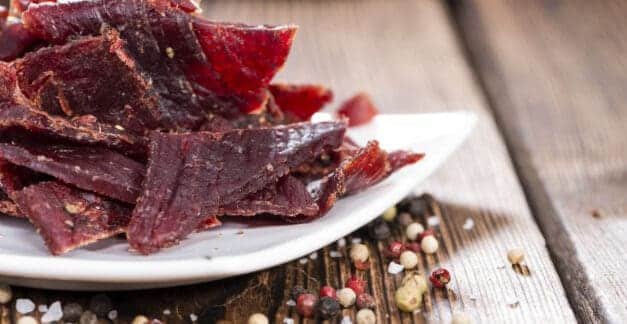
Dehydrated beef jerky slices on a white plate with peppercorns and spices.
How Long Do You Dehydrate Beef Jerky: What You Need to Know
Dehydrating beef jerky is not a speedy procedure! It’s about patience and precision. Beef jerky typically takes between 4 and 10 hours to dehydrate, depending on slice thickness and dehydrator settings. So, how long do you dehydrate beef jerky? The time varies greatly, anywhere from 4 to 15 hours, depending on the thickness of the meat and your method of making jerky. Let’s dive deeper into the matter, shall we?
Before you start dehydrating, keep in mind that the prep time—trimming, slicing, and marinating the beef—can take an additional few hours before the actual drying process begins.
Beef jerky can go one of two ways. It can be the tastiest, spiciest, most delicious thing you’ve ever tasted. Or it can taste like toughened shoe leather.
Beef jerky is utterly delicious when it’s made correctly. That’s one of the greatest benefits of making your own jerky. You can make it as tender as you want and spice it to taste.
We’re going to teach you the best way to make beef jerky, focusing on how long to leave your meat treats in the food dehydrator. When making your first batch, pay close attention to the dehydration time to avoid over-drying and ending up with jerky that’s too hard.
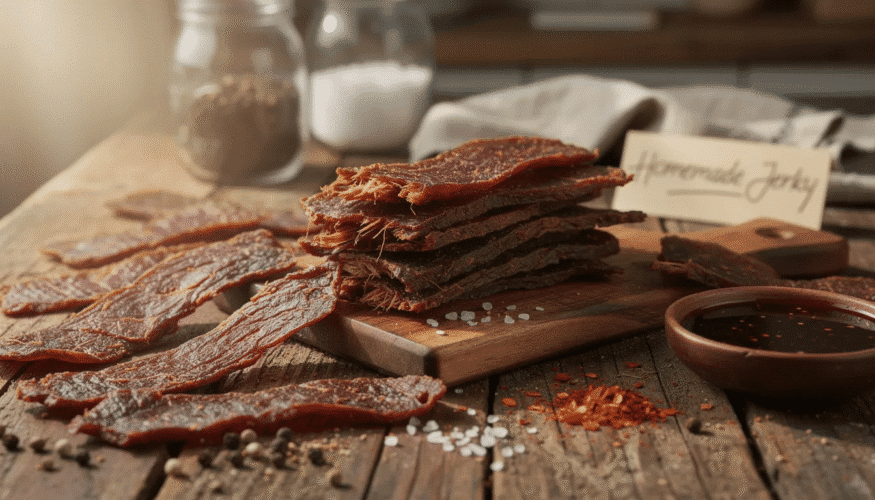
Making homemade beef jerky is a rewarding adventure that puts you in control of your snack’s flavor, texture, and quality. This guide is for home cooks and jerky enthusiasts looking to master the dehydration process. Whether you’re a seasoned jerky enthusiast or just starting out, crafting your own homemade jerky lets you experiment with different cuts of beef, seasonings, and drying methods. With just a few simple ingredients and some basic kitchen tools, you can create flavorful beef jerky that’s healthier and often tastier than most commercial beef jerky options. In this guide, we’ll walk you through the essentials of making jerky at home—from choosing the best meat to perfecting the dehydration process—so you can enjoy a delicious, protein-packed treat any time you crave it.
Knowing the correct dehydration time is crucial for both safety and quality. Proper dehydration ensures your jerky is safe to eat by eliminating harmful bacteria, and it also guarantees the ideal chewy texture and long shelf life.
How Long To Dehydrate Beef Jerky?
Beef jerky typically takes between 4 and 10 hours to dehydrate in a dehydrator, depending on the thickness of the meat and the dehydrator used. The jerky is done when it bends and cracks but does not break in half, and the internal temperature should reach 160°F to ensure safety.
When placing your beef slices in the dehydrator, remember to leave as much room between the slices as possible. This lets the air circulate freely, allowing the meat to dry more uniformly. It’s important to properly dry the meat to achieve the right jerky texture—over-drying can make it tough and brick-like.
Beef jerky takes between 4 and 10 hours to dehydrate in a dehydrator, depending on the thickness of the meat and the dehydrator used.
Next, set your food dehydrator to 160 degrees. The amount of time it will take to dry completely varies but a good rule of thumb is around 4 hours; this is the ideal beef jerky dehydrator time. After 4 hours, check for doneness by bending a strip; it should crack slightly but not snap completely in half. From this point, check the jerky every half hour to monitor the texture and prevent over-drying.
Use a meat thermometer to check the temperature. Homemade beef jerky should be dehydrated until it reaches an internal temperature of 160°F to ensure safety. When the internal temperature reaches 160 degrees, it’s done!
And voila! It’s super simple to make the most delicious beef jerky you’ve ever tasted, even if you don’t have a lot of experience in the kitchen. Not only will you have healthy snacks for ages, you’ll save a load of money while you’re at it!
Now that you understand the basics of dehydration time, let’s look at how to prepare your beef for the dehydrator.
How Long for Beef Jerky in a Dehydrator: Factors to Consider
Meat thickness: The thickness of your meat strips can significantly impact dehydration time. Thicker pieces will dry better. A general guideline is to aim for ¼-inch thick slices for optimal drying time and texture. For chewy jerky, slice the meat along the grain to achieve the desired consistency. For best results, use lean cuts such as top or bottom round or round steak, which are ideal for making jerky due to their low fat content and excellent texture.
Dehydrator temperature: Most dehydrators have a temperature range between 80°F and 160°F. The optimal dehydrator temperature for beef jerky is usually between 145°F and 165°F. Higher temperatures will speed up the drying process, but be cautious not to go too high, which can result in a tough, unpalatable final product.
Humidity: The moisture content in the air can influence the drying time. If you live in a humid area, you may need to allow for a longer dehydration time.
Meat type: While this guide focuses on beef jerky, you might also wonder how long for deer jerky in a dehydrator. The good news is that the process is similar; however, leaner meats like deer may dry slightly faster than beef.
With these factors in mind, you can better control the dehydration process and achieve the perfect jerky every time. Next, let’s explore how to choose the right meat for your jerky.
Choosing the Right Meat for Beef Jerky
Selecting the right meat is the foundation of making beef jerky that tastes great and lasts. For detailed guidance, see what meat to use for beef jerky. For the best results, opt for lean cuts like top round, bottom round, or flank steak. These cuts have minimal fat, which is important because fat can spoil quickly and shorten the shelf life of your jerky. When making beef jerky, using a meat tenderizer or slicing the beef against the grain can help achieve a more tender bite, while slicing with the grain will give you a chewier texture. Whichever you choose, starting with high-quality, lean beef ensures your jerky will be both flavorful and safe to store.
Now that you know how to select the best meat, let’s move on to preparing your beef for the dehydrator.
Preparing Your Beef For The Food Dehydrator
Selecting and Slicing the Meat
Once you’ve selected your cut of fresh meat, you’ll want to trim as much of the fat as possible. The best cuts of meat for making beef jerky are eye of round and flank steak. Then you’ll want to cut the meat as thin as possible. You can use a sharp chef’s knife, or even a meat slicer if you have access to one; learning how to slice meat for jerky like a pro will help you get consistent, high-quality results.
Slice with the grain of the meat for tougher jerky. Cut against the grain if you want tender, chewier beef jerky.
Once you’ve sliced your meat, place it in the freezer for 1 – 2 hours. Partially freezing the meat in the freezer helps create more even, uniform slices that are easier to work with. If you find that your jerky becomes too tough or brick-like after dehydration, you can use a food processor to break it down into finer pieces or flakes for improved texture and rehydration.
Marinating and Seasoning
Then you’ll want to marinate and season your jerky in whatever way you desire. Make sure the meat is evenly coated with the marinade or seasoning for optimal flavor infusion; following a guide on crafting the ideal homemade beef jerky marinade can really elevate the flavor. Consider using curing salt in your marinade to enhance food safety.
Now that your beef is prepped and seasoned, let’s look at alternative ways to add flavor and texture.
Preparing the Meat with a Dry Rub
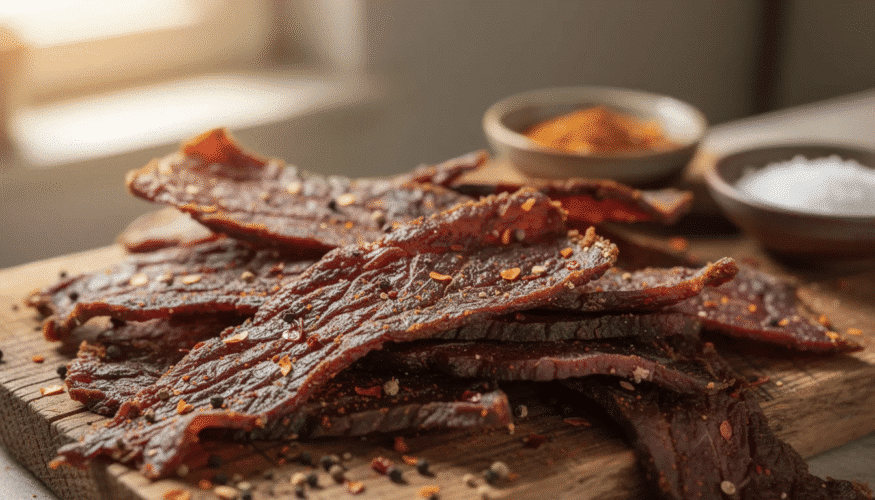
If you’re looking to pack your jerky with bold flavor and a satisfying crunch, try preparing your sliced meat with a dry rub instead of a marinade. A dry rub combines spices, herbs, and sometimes a touch of brown sugar to create a coating that infuses the jerky with intense flavor. Simply mix your favorite seasonings—think cayenne pepper, red pepper flakes, and a hint of red pepper for heat—then rub the mixture evenly over every piece of meat. For the best results, let the coated jerky sit overnight in the refrigerator. This resting period allows the flavors to penetrate deeply, ensuring every bite is bursting with taste when you dehydrate the jerky.
With your meat seasoned and ready, let’s discuss the importance of ground beef in jerky making.
The Importance of Ground Beef in Jerky Making
While traditional beef jerky is made from sliced meat, ground beef offers a unique twist for those who want a softer, more uniform texture. Making jerky from ground beef—sometimes called “jerky bits”—involves mixing the ground meat with your favorite spices and seasonings, then shaping it into strips or small bites before dehydrating. This method is perfect for anyone who prefers a tender jerky or finds classic jerky too tough to chew. Ground beef also allows for even seasoning throughout, making every piece consistently flavorful. Whether you’re making jerky for yourself or for someone with dental sensitivities, ground beef is a versatile and delicious option to try.
Now that you know your options for meat and preparation, let’s move on to other methods for dehydrating jerky.
How Long Does it Take to Dehydrate Meat in A Food Dehydrator?
Enjoy the deliciousness of home-cooked dehydrated meat, and consider experimenting with making elk jerky in a food dehydrator for a lean, flavorful alternative! Beforehand, trim off all fat to create trimmed meat and cut it into bite-sized cubes (½ inch). Spread the trimmed meat on trays, then leave to slowly dehydrate at 145 F temperature—usually taking 6 to 12 hours before they are perfectly dried out and ready for you to enjoy.
With the basics of dehydration time and preparation covered, let’s explore alternative equipment and methods for making jerky.
Using an Air Fryer to Make Beef Jerky
Don’t have a dehydrator? No problem! You can still make mouthwatering beef jerky using an air fryer. Simply slice your meat into thin strips, season or marinate as desired, and arrange the pieces in the air fryer basket. Set the air fryer to a low temperature—around 150°F—and let the circulating hot air slowly dry out the meat over several hours. The result is a crispy, flavorful jerky that rivals anything made in a traditional dehydrator. This method works not only for beef jerky, but also for pork jerky and venison, giving you plenty of options for homemade snacks. Just remember to adjust the cooking time based on the thickness of your meat and your preferred level of dryness for the perfect batch every time.
Now that you know how to use an air fryer, let’s look at other alternative methods for making jerky.
Alternative Methods for Making Jerky
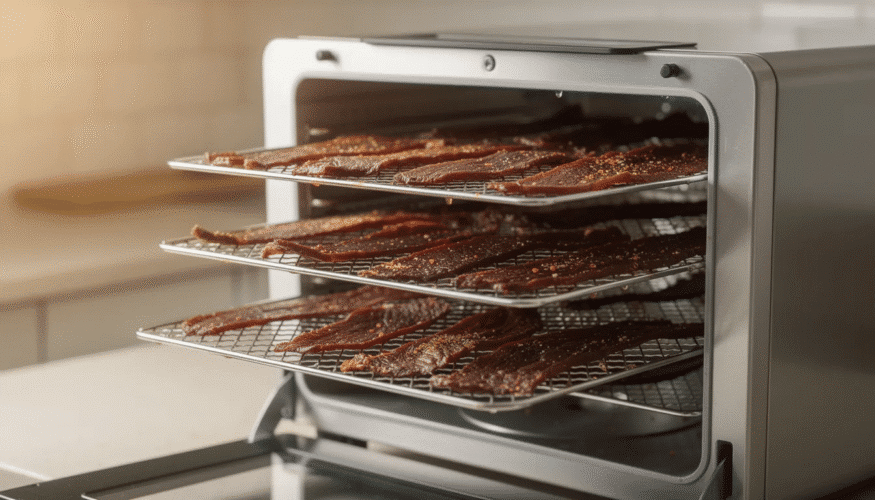
Did you know there’s more than one way to dehydrate beef jerky? While your food dehydrator is an excellent choice, you can also make jerky in an oven or even in the open air! Let’s explore these tasty alternatives. First up, making beef jerky in the oven. Thinly sliced beef, marinated to perfection with a combination of soy sauce, Worcestershire sauce, garlic powder, onion powder, a hit of cayenne pepper, and crushed red pepper for those craving a spicy beef jerky recipe, is just perfect for oven dehydration. Liquid smoke is a key ingredient that adds a savory, smoky flavor to your jerky. A good marinade for beef jerky typically includes soy sauce, Worcestershire sauce, and liquid smoke. All you need to do is arrange the beef strips on a baking sheet and dry them at a low temperature. Remember to turn the slices occasionally to ensure evenly cooked, delicious homemade beef jerky. For those looking for precision, using a jerky maker can help achieve the right level of doneness by controlling temperature and drying times. Learning to master your Nesco Jerky Xpress instructions is especially helpful if you use that style of dehydrator.
Now, if you’re feeling a bit adventurous, how about trying to air-dry your jerky? Locations with dry, hot climates traditionally use this method. Spread out the homemade jerky strips soaked in your marinade of brown sugar, apple cider vinegar, and smoked paprika in a clean, dry, and protected outdoor area. For an alternative technique, you can try Alton Brown’s method of dehydrating jerky using airflow without heat, which helps control moisture and texture. Check on them regularly, and once they reach the stage where the jerky bends, not breaks, voila! Your flavorful beef jerky is ready.
With your jerky made, let’s discuss how to keep it fresh and safe for as long as possible.
Prolonging the Shelf Life of Your Jerky
Wouldn’t it be great if the delicious homemade beef jerky you’ve painstakingly prepared could last forever? While that’s not realistic, there are definitely ways to extend its shelf life. Let’s first ensure we remove excess moisture after the marinating process. You have to pat dry all the meat with paper towels. You see, excess marinade and moisture are sneaky contributors to shorter shelf life. So why give them a chance to dampen our experience? Ensuring food safety by keeping work surfaces clean and sanitized is crucial in this process. And how about removing visible fat from the beef strips? Doing so before we dehydrate beef jerky not only promotes leaner snack cuisine but also helps extend the shelf life. Fats go rancid quicker than lean cuts, and who wants a flavorful beef jerky going bad on us? We made it with such love, after all!
Here’s an interesting trick: Try partially freezing your fresh beef before cutting it into thin slices. Once you’re comfortable with jerky basics, you can branch out into Nesco dehydrator recipes to make other creative snacks. By doing so, you can easily remove excess fat, making beef jerky preparation a whole lot easier. After making homemade jerky, store it properly! Vacuum sealed bags, glass jars, or an airtight container are your best friends here. Homemade beef jerky is best consumed within 1-2 weeks when stored in an airtight container at room temperature. For longer storage, you can refrigerate your jerky for up to 1 month, or keep it in the freezer for up to 6 months. Storing your flavorful beef jerky well wards off moisture, which is a spoiler’s best mate. Always store beef jerky away from sunlight and moisture to maintain freshness. If jerky is stored improperly, it can spoil or develop mold. Never overlook the importance of the dehydrator trays’ cleanliness during the dehydration process. The cleaner the food dehydrator, the longer homemade jerky lasts.
With storage covered, let’s troubleshoot some common jerky dehydration issues and ensure your jerky is both tasty and safe.
Troubleshooting Common Jerky Dehydration Issues and Food Safety
Jerky is too dry or brittle: When making jerky, there’s a fine balance to be struck. Too much drying and you’ll end up with jerky that’s tough and unappetizing. Over-drying jerky can result in a hard, rock-like texture that is difficult to chew. This can happen if the jerky in a dehydrator is left in for too long or the temperature is too high. The ideal internal temperature for making beef jerky should be around 160 degrees Fahrenheit. Therefore, monitor your food dehydrator and be patient – let’s not rush the drying process!
Jerky is too soft or lacks good texture: Remember, we’re not making ground meat here. We’re looking for that classic jerky texture – chewy but not too tough. The trick here is to ensure that all the meat, from your flank steak to your round roast, is thinly sliced. Use a sharp knife to create thin slices and learn the art of partially freezing the meat beforehand to make cutting easier. Also, remove visible fat to maintain the lean cut as fat can make the jerky go rancid faster.
Jerky doesn’t taste right: This could be down to your choice of marinade ingredients. For flavorful beef jerky, try a marinade with soy sauce, Worcestershire sauce, garlic powder, onion powder, and a bit of brown sugar. A spicy beef jerky recipe might also include cayenne pepper and smoked paprika. Marinating the thinly sliced beef for at least 6-24 hours will help the flavors fully penetrate the meat slices.
Excess moisture: Excess moisture can lead to bacterial growth and shorten the shelf life of your homemade jerky. Proper dehydration is necessary to eliminate harmful bacteria and ensure food safety, especially when working with raw meats. The best way to remove excess moisture is by patting the marinated beef dry with paper towels before initiating the cooking process. Many of the same dehydration principles also apply when dehydrating blueberries, such as proper temperature control and storage to extend shelf life. Post-dehydration, cool the jerky strips on a paper towel again to absorb any leftover moisture.
With these troubleshooting tips, you can avoid common pitfalls and ensure your jerky is both delicious and safe. Next, let’s learn how to recognize when your beef jerky is perfectly dehydrated.
Jerky is done when it bends and cracks but does not break in half.
If you tear a piece, it should show no signs of moisture. In other words, the jerky should not be sticky, and the interior should not look raw.
Homemade beef jerky should be dehydrated until it reaches an internal temperature of 160°F to ensure safety.
Making jerky in small batches allows for better control over dehydration and quality, making it easier to monitor doneness and ensure a premium product.
Another important indicator is color. When beef jerky is done, it typically has a dark, even color throughout. Any significant variations or light spots might suggest that the meat is not fully dehydrated. The aroma is also a telling sign. Properly finished jerky should have a deep, rich, meaty smell with no lingering scent of raw meat.
If you’re using a dehydrator, an additional way to know if jerky is done is to test it after every few hours during the latter stages of dehydration. Be sure to consult the dehydrator’s manual for guidelines specific to your device. Reading a Nesco FD-60 Snackmaster Express food dehydrator review can also give you a sense of how different models perform. Generally, beef jerky takes anywhere from 4 to 10 hours to dehydrate in most home dehydrators, depending on the thickness of the slices and the model used.
Tip: The longer you marinate beef jerky, the saltier the flavor may become, so adjust marinating time to suit your taste.
Lastly, for those still wondering how to tell when beef jerky is done or how to tell if beef jerky is done in a dehydrator, remember the process may involve a bit of trial and error. However, by keeping an eye on the texture, color, and aroma, you’ll soon develop an instinct for determining when it’s perfectly done.
Now that you know how to test for doneness, let’s see how to check jerky made in the oven.
How to Tell When Jerky Is Done in an Oven
Dehydrating beef jerky in an oven can be a straightforward process, but it requires careful attention to detail. The primary goal is to ensure that the beef jerky is adequately dried without being overcooked. Here’s how to tell when beef jerky is done:
When selecting meat, flank steak is another excellent cut of meat to use for beef jerky due to its tender texture and moderate fat content.
First, consider the texture. Properly dehydrated jerky should be dry to the touch but still pliable. It should bend without breaking. If it snaps in half, it’s overdone. To check, take a piece of jerky out of the oven and let it cool for a few minutes. Bend it slightly; it should bend and crack slightly without breaking.
For seasoning, ground black pepper is highly recommended for enhancing flavor. Coarsely ground black pepper can add a robust, spicy kick to your jerky and works well with other spices in your marinade.
The weight of the jerky is another good indicator. When jerky has lost about two-thirds of its original weight, it is generally done. Weigh a few strips before and after dehydrating to get a clearer picture.
Another classic method is the pull test. Tear a piece of jerky; if it tears into strands and fibers easily, it’s done. If it feels sticky or appears to have any moisture pockets, it needs more time in the oven.
When is jerky done in dehydrator?” you might ask. Although the process is similar, the drying time and methods can slightly differ due to the equipment used.
It’s also essential to check the internal temperature of the beef. It should reach at least 160°F (70°C) to ensure that it’s safe to eat. This step can also help in determining how to tell if beef jerky is done. If you’re shopping for equipment, a Nesco FD 37 food dehydrator review can help you decide if that model fits your jerky-making needs.
Finally, don’t forget to rotate the trays or racks if you are using multiple levels in your oven. Uneven drying can occur if this step is skipped, leaving some pieces dried perfectly while others remain under-dehydrated.
With oven dehydration covered, let’s look at optimal times for different types of beef jerky.
Optimal Dehydration Times for Different Types of Beef Jerky
Dehydrating beef jerky to perfection involves understanding both the meat type and the specific dehydrator settings. The dehydration time can vary significantly based on thickness, marination, and the efficiency of your dehydrator or oven. For example, thinly sliced beef cuts generally take between 4 to 6 hours at around 160°F. On the other hand, thicker cuts may need up to 10 hours to fully dehydrate.
When working with different types of beef jerky, it’s crucial to inspect the slices regularly. But how do you know when beef jerky is done dehydrating? A practical tip is to start checking the jerky after the initial few hours and then in 30-minute intervals. Consistency is key—checking your jerky for pliability and dryness is a reliable method for how to tell if beef jerky is done.
Now that you know the optimal times, let’s see how to package and take your jerky on the go.
Taking Jerky on the Go: Packaging and Portability
Have you ever wondered how you can enjoy delicious homemade beef jerky on the go? Well, we’ve got the answers! Let’s dive into the best ways to package and transport your snack cuisine.
The right packaging not only maintains the quality and extends the shelf life of your fresh beef jerky but is also essential for portability. The most effective way to store and transport beef jerky is in airtight containers. These can range from vacuum-sealed bags to glass jars, depending on your preference. For utmost portability, you might want to consider plastic wrap or zip-top bags!
Firstly, ensure that all the meat is thoroughly cooled before packaging, because if the jerky is even slightly warm, it could condensate inside the bag and reintroduce the excess moisture we worked hard to eliminate during the drying process—talk about an enemy of dehydrating beef jerky!
But don’t stop there, the jerky should also be pat dry with a paper towel to remove any excess marinade or oils sitting on it, and thus maximize its preservation. Now, isn’t that an amazing trick to ensure the best quality for your homemade jerky?
It’s great to have a stash of your labor-intensive, scrumptious homemade jerky handy in your backpack or office drawer. However, be careful not to over-pack. Portion out your snacks into smaller bags or containers and only take tiny batches with you. This prevents the rest of your stock from being exposed every time you dive in for a piece of delectable jerky.
Also, remember that homemade jerky, unlike most commercial beef jerky, doesn’t contain preservatives. Because of this, you might find that your jerky doesn’t last as long as store-bought jerky. But isn’t that a small price to pay for the satisfaction of biting into a piece of flavorful, preservative-free jerky?
With your jerky ready to go, let’s look at the health benefits of making it at home.
The Health Benefits of Homemade Beef Jerky
Protein Powerhouse:Homemade beef jerky is an exceptional source of protein, which we all know is essential for building and repairing tissues in our body. Plus, it’s satiating, meaning it will keep you fuller longer.
Low in Fat: As lean meat, the beef used for jerky strips has very little visible fat. This means you’re consuming fewer unhealthy fats compared to many other snacks. Even more, you can trim off additional fat before the dehydration process for extra health benefits.
Iron and Zinc: Iron is a crucial element that helps our body produce red blood cells, while zinc is instrumental in boosting immunity. Fresh beef is a great source of these nutrients which are retained in the delicious homemade beef jerky.
Easily Digestible: The dehydrating process used to make beef jerky helps to break down the meat fibers, making them easier to chew and digest compared to other forms of protein.
Control of Additives: With store bought jerky, you lose some control over what additives may be included. However, with homemade jerky, you can decide exactly what goes in. Want a cayenne pepper kick or a touch of smoked paprika? No problem! You’re in control.
Customizable: You have the power to make the beef jerky meet your dietary needs and preferences exactly. You can adjust the marinade ingredients for taste, and swap out the soy sauce for a gluten-free option if needed.
With the health benefits in mind, let’s review the risks of undercooked jerky and how to avoid them.
The Dangers of Undercooked Beef Jerky
Undercooking beef jerky can lead to bacteria growing and the jerky spoiling. This can pose health risks. Under-dehydrated beef jerky isn’t just less tasty—it’s risky business. Bacterial growth and spoilage can occur if the meat isn’t dried properly, leading to potential health hazards. Perfecting your dehydration technique is not just about achieving that perfect chewiness and flavor, it’s also crucial for ensuring food safety. A well-calibrated beef jerky dehydrator can significantly reduce these risks by effectively extending the shelf life of your homemade jerky.
Now that you know how to keep your jerky safe, let’s wrap up with a summary and more resources.
Conclusion
The answer to how long does it take to dehydrate beef jerky in a food dehydrator depends on several factors, such as the size and thickness of the cut, the heat setting used, and even the ambient humidity. On average, thin slices of beef jerky will take around four hours to fully dry and dehydrate. With that in mind, you should experiment with your food dehydrator and use the correct settings for your beef jerky recipes to get the perfect texture every time!
Looking For More Food Dehydrator Tips?
We are passionate about drying food! From tips on making beef jerky to the best recipes, we bring you everything you need to make your own delicious dehydrated snacks!
Browse the rest of our food dehydrator tips today, and become your own beef jerky specialist!
DannyContent Writer
Hey there, since 2016, my mission has been to provide you with the information and guides you need to make food dehydrating simple and fun. Whether you're a newbie or a seasoned pro, my site offers helpful guides, reviews, and recipes to enhance your dehydrating experience. I take pride in only recommending products I believe in, ensuring my readers' trust. As an affiliate of various programs, including Amazon Associates, your support helps me continue providing quality content. Thanks for stopping by, and happy dehydrating!