We earn a commission if you make a purchase, at no additional cost to you.
09/22/2026 04:39 pm GMT
🍊 Dehydrated Food Info Finder — Temperatures & Drying Times
Choose a category, then pick a food to see its drying temperature and time.
⚠️ Safety Disclaimer: Drying times are estimates and vary based on slice thickness, food moisture content, humidity, and your dehydrator model. Always check for doneness before storing — food should feel dry, leathery, or brittle with no moist spots. Improperly dried food can harbour mould and bacteria. For meat and poultry, follow USDA safe internal temperature guidelines: beef and pork to 160°F (71°C), poultry to 165°F (74°C). Use a food thermometer when in doubt. Store all dehydrated foods in airtight containers in a cool, dark place and discard anything showing moisture, mould, or off odours.
Ultimate Dehydrator Fruit Recipes: How to Make Healthy Homemade Dried Fruit
Are you ready to dive into the best dehydrator fruit recipes and successfully transform fresh produce into healthy, lasting snacks? Then you’ve come to the right place! Whether you’re an experienced expert or a curious newbie, you’ll have fun dehydrating fruit at home and savor the delicious flavors of nutritious, home dried fruit. Follow these helpful tips and tasty recipes, and you’ll discover how to successfully turn anything from overripe or damaged fruit … to rock hard fruits … into mouthwatering snacks. With a food dehydrator, a sharp knife, and just a little bit of time on your hands, you can craft ridiculously good snacks perfect for trail mix, lunchboxes, or pretty much any time or place.
Choose your own ingredients for a gluten free, all-natural treat
From dehydrating apples to making tasty fruit leathers, these dehydrator fruit** recipes** will lead you to snacks that are healthy and full of natural sweetness. So let’s get into the wonderful world of dehydrating fruit and explore just how simple it is to make home dried fruit!
Why Dehydrate Fruit?
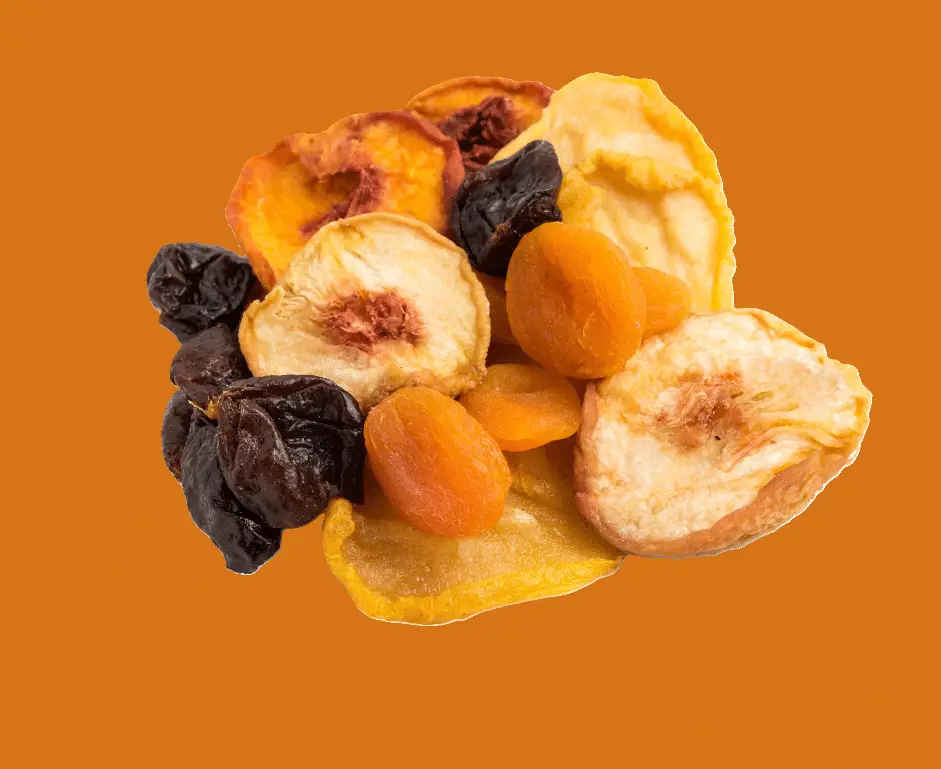
Before we get into the recipes, let’s talk about why dehydrating fruit is so cool. Dehydrating removes the water from the fruit which not only extends its shelf life but also concentrates the natural sugars and intensifies the flavor. Dried fruit is an amazing snack, a versatile ingredient for cooking and baking, and a great option for hiking and travel.
Plus dehydrated fruit retains most of its nutritional value so it’s a healthy alternative to sugary snacks. Full of fiber, vitamins, and minerals dried fruit will give you energy, support digestion, and provide essential nutrients.
Getting Started: Essential Tools and Ingredients
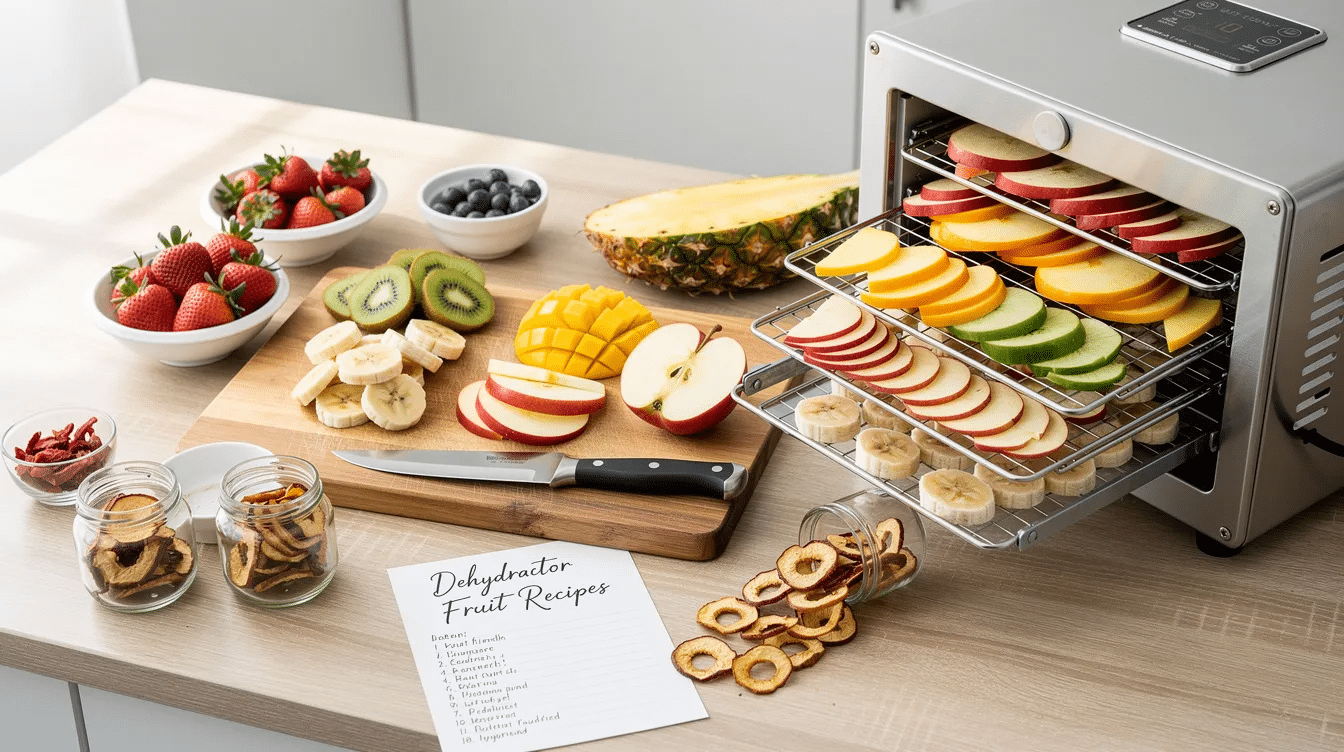
Before you dive in to dehydrating fruit, you’ll want to have the following tools and ingredients. You can dry fruit in dehydrators, ovens, or air fryers, but a dehydrator is the easiest way to get consistent results:
A food dehydrator with a fan and temperature controls (like the Excalibur food dehydrator, which has large square trays that hold more fruit at once)
This is very important. You’ll want to use firm fruits that possess the highest sugar content for the sweetest results. And it’s not recommended to use bruised or overripe fruit, as they may dry unevenly and spoil.
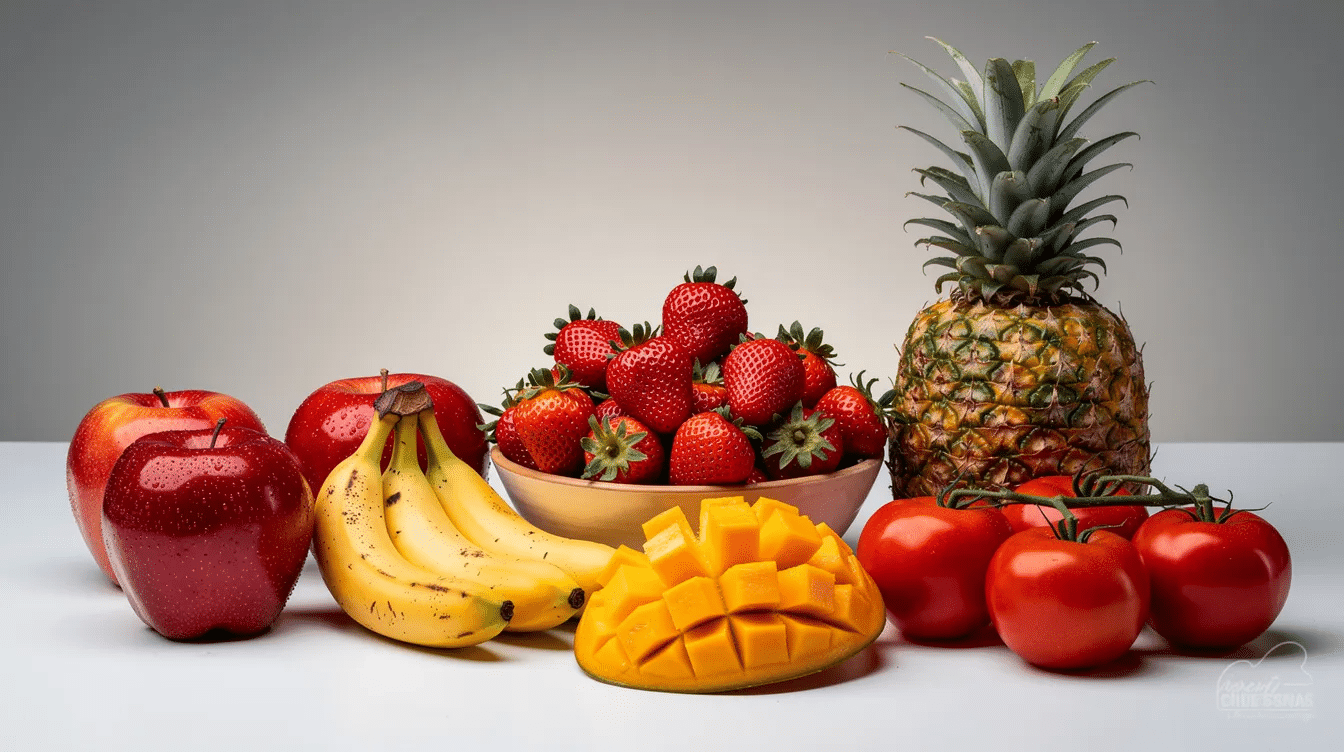
Recommended Fruits for Dehydration
Apples
Bananas
Strawberries
Mangoes
Pineapples
Tomatoes
Preparing the Fruits for Dehydration
Now you’re ready to prepare the fruits for dehydration, and ensure your dried fruit is ridiculously good:
Slice fruit into even pieces, with most fruit cut to about ⅛ to ¼ inch thick for consistent drying.
Dip light-colored cut fruit into a solution of lemon juice and boiling water or cold water with vitamin C to help prevent browning during drying.
Dry the fruit at 135°F (57°C) for about 6–12 hours, depending on the slices.
Tips for Perfect Dehydrated Fruit
Perfect dehydrated fruit takes practice and attention to detail. Here are a few tips to help you get it right:
Uniform Slicing – Make sure all fruit slices are the same thickness. This ensures they dehydrate evenly and none are overdone while others are still moist.
Pre-treatment – Some fruits like apples and bananas benefit from a pre-treatment like a lemon juice soak to prevent browning and enhance flavor.
Dehydrator Fruit Recipes
If you’re new to drying produce, following a step‑by‑step guide to dehydrate fruit using a food dehydrator will help you get consistently great results with these recipes.
Dehydrate Pineapple
Dried Pineapple
Whether using fresh pineapple or canned pineapple, you’ll love making dehydrated pineapple into this tangy and sweet snack, and you can follow a detailed guide on how to make dehydrated pineapple at home for extra tips and flavor ideas:
Snip off the leafy crown and fibrous skin from the pineapple.
Slice fruit into thin rounds or larger chunks.
Place fruit in a single layer on the dehydratortrays.
Dry the fruit at 135°F (57°C) for 12-16 hours.
Once fully dried, dried pineapple keeps well and there are delicious ways to enjoy it later, including as a simple snack.
Dehydrated Cherries
Dehydrating Cherries
These sweet and luscious fruits are great added to trail mixes:
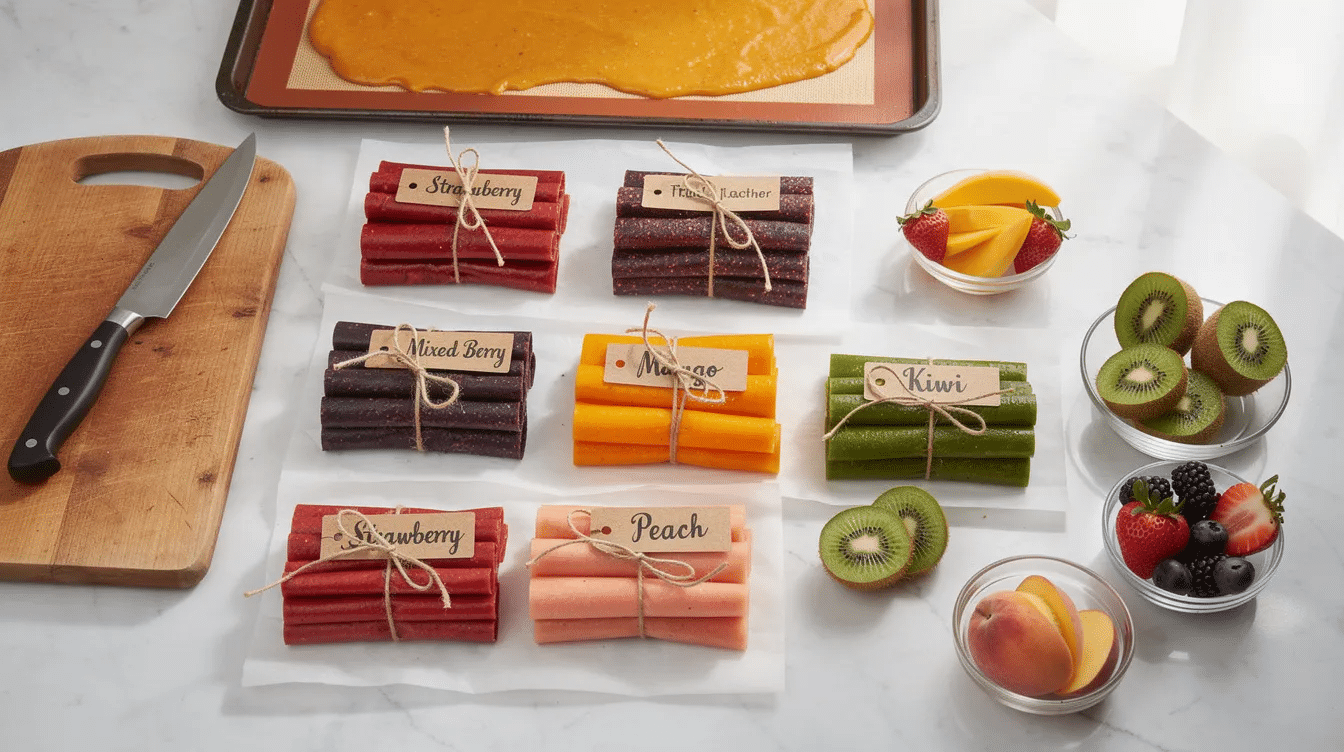
Spread the puree in a thin layer on a sheet of parchment paper.
Dehydrate at 140°F (60°C) for 6-8 hours.
Cut into strips and roll up with parchment paper for easy storage.
It also makes a handy sweet treat.
Storing Your Dehydrated Fruits
Store your dried foods in an airtight container in a cool, dark place, using glass containers such as mason jars to keep them fresh and maintain their nutritional value. Condition dried fruit by placing it in a loosely filled airtight jar for one week and checking for excess moisture. For long term storage, it is best to vacuum seal your food with oxygen absorbers.
When choosing fruits for your dehydrator fruit recipes, choose fruit that is ripe and hard. They will contain the highest amount of sugar and nutrients and make your homemade dried fruit extra delicious with natural nutrients. Turn away from any fruit that has brown speckles or soft spots as these blemishes will transfer to your final product.
If you somehow have excess overripe fruit, don’t worry! Although they won’t be the best choice for dried fruit, you can still make fruit leathers with them. Simply puree the overripe fruit and pour the puree thinly onto parchment paper laid over your dehydrator trays. Dehydrate until crispy, time will vary depending on your fruit. You’ll have a delicious, chewy snack in no time.
How long your dehydrated fruit will last is dependent on how you properly store your dried foods. When you vacuum seal your dried fruits in airtight containers like mason jars or in a ziplock bag with oxygen absorbers you’ll be able to keep your dehydrated produce fresh for much longer than the typical dried fruit. Dried fruit stored properly will last anywhere from 4 months to a year.
For long term storage, you can also place your homemade dried fruit in the refrigerator or freezer to preserve it for an even longer shelf life. This is a great method to retain the nutritional content and maximum sweetness of your dried fruits for a longer period of time.
Watch out for storage conditions. A cool, dark place is best for storing dried fruits as light and heat will break down dried fruit over time. Also, using airtight containers will prevent moisture and pests from ruining your stash. It is always good practice to check on your stored dried fruits for any signs of spoilage like an off smell or mold.
In short, your dehydrated fruit can last a pretty long time when prepared and vacuum sealed properly and stored correctly. This tasty healthy snack is perfect for your delicious trail mix or to enjoy by itself!
The Role of Natural Sugar in Dehydrated Fruits
Dehydrating fruit is a great way to enjoy the harvest of the season and preserve your favorite fruits for a long time to come. When you dehydrate fruit, you are naturally enhancing the natural sugar content of your chosen produce. During dehydration, water content is removed from the fruit, leaving the flavor and sweetness behind. Your dried fruit will have an intensely sweet flavor for you to enjoy on your hike or as a sweet snack. Fruits such as pineapples and bananas have a naturally high sugar content which will become extraordinarilysweet when dehydrated.
It is important to note that the dehydration of fruit increases the sweetness but also means that the caloric density increases. This makes homemade dried fruit a calorie dense, energy rich snack that is packed with vitamins and minerals. Although they make a perfect healthy snack, dried fruit should be consumed in moderation if you are counting calories.
Additionally, as the water content is removed, the fibrous content of the fruit remains and you’ll feel full after eating a small amount. Dehydrated fruits such as apples, mangoes, and berries are good sources of dietary fiber for maintaining digestion and blood sugar levels.
To ensure you retain the maximum sweetness and nutritional content of your dehydrated fruit, always use fresh, hard fruits and handle them gently during preparation. Avoid bruised or overripe fruits as these qualities will transfer to your final product. Utilize tools such as a sharp knife to achieve thin, uniform slices of fruit for optimal drying.
The end result of properly dehydrating fruit will be an absolutely delicious, naturally sweetened treat that will curb your appetite and provide you with a healthy, gluten free option for any snack lover.
Health Benefits of Dried Fruit
Dried fruit is not just delicious; it’s also good for you. Here are some reasons to add dehydrated fruit to your diet:
Nutrient Dense – Dried fruit retains most of the vitamins and minerals of fresh fruit so it’s a concentrated source of nutrients.
High in Fiber – The dehydration process concentrates the fiber so it’s good for digestive health and blood sugar stability.
Antioxidant Rich – Many dried fruits especially berries are antioxidant-rich and help combat oxidative stress and reduce the risk of chronic disease.
Conclusion
Dehydrating fruit at home is rewarding and fun and can make healthy snacks packed with natural sweetness. With the proper tools and a little practice, you’ll be enjoying all sorts of homemade dried fruit treats for use in trail mixes, for on the go snacks and so much more. Happy dehydrating!
DannyContent Writer
Hey there, since 2016, my mission has been to provide you with the information and guides you need to make food dehydrating simple and fun. Whether you're a newbie or a seasoned pro, my site offers helpful guides, reviews, and recipes to enhance your dehydrating experience. I take pride in only recommending products I believe in, ensuring my readers' trust. As an affiliate of various programs, including Amazon Associates, your support helps me continue providing quality content. Thanks for stopping by, and happy dehydrating!