We earn a commission if you make a purchase, at no additional cost to you.
09/22/2026 04:39 pm GMT
🍊 Dehydrated Food Info Finder — Temperatures & Drying Times
Choose a category, then pick a food to see its drying temperature and time.
⚠️ Safety Disclaimer: Drying times are estimates and vary based on slice thickness, food moisture content, humidity, and your dehydrator model. Always check for doneness before storing — food should feel dry, leathery, or brittle with no moist spots. Improperly dried food can harbour mould and bacteria. For meat and poultry, follow USDA safe internal temperature guidelines: beef and pork to 160°F (71°C), poultry to 165°F (74°C). Use a food thermometer when in doubt. Store all dehydrated foods in airtight containers in a cool, dark place and discard anything showing moisture, mould, or off odours.
We explore what a food dehydrator is and its purpose in the kitchen, as well as the benefits of using one, including nutritional and practical advantages.
Discover key factors to consider when choosing a food dehydrator, such as size, features, and price, along with top companies and their unique offerings.
Read real customer reviews and ratings for valuable insights and our final thoughts and recommendations on the best choice for you.
Key Takeaways:
Investing in a food dehydrator offers numerous benefits including preserving food, maintaining nutritional value, and saving money by reducing food waste.
When choosing a food dehydrator, consider factors such as size, features, and price to ensure the best fit for your needs.
Among the top food dehydrator companies, Companies 1, 2, and 3 stand out with their unique features and offerings. Consider customer reviews and ratings to make the best choice.
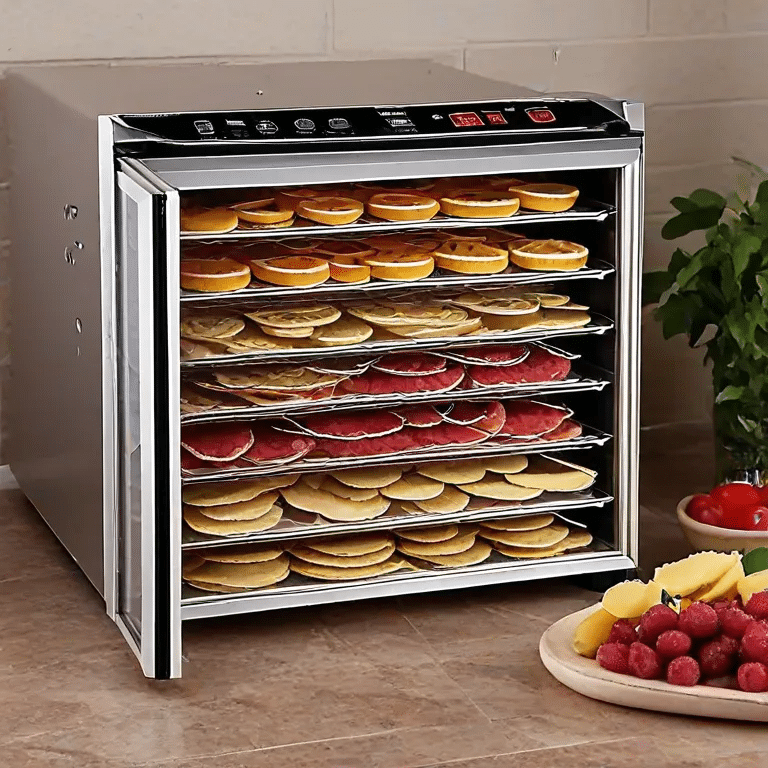
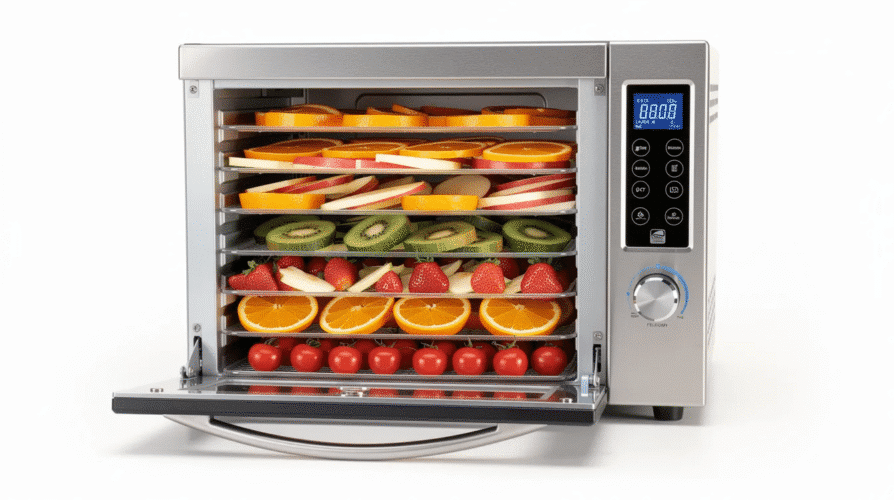
A food dehydrator is a kitchen appliance specifically engineered to extract moisture from food products. Through the strategic implementation of controlled air flow and consistent temperature regulation, this device effectively preserves a variety of foods, including fruits, vegetables, and meats, as endorsed by culinary authorities.
The primary function of a food dehydrator is to prolong the shelf life of perishable items by eliminating moisture while concurrently maintaining their nutritional integrity. The drying trays within a food dehydrator provide essential drying space and contribute to the overall drying capacity, allowing for the uniform placement of food items for the dehydration process. Proper air flow ensures hot air circulates evenly around each piece. The heating element and fan work together to maintain the internal temperature necessary for safe and effective dehydration, ensuring food safety and quality.
Remarkably versatile, food dehydrators can dehydrate a diverse array of foods, encompassing herbs, jerky, and even flowers for ornamental purposes, thus establishing themselves as critical instruments in both domestic and professional culinary settings.
Overview and Purpose
Dehydrators serve a primary function in the food preservation process, transforming various food items such as fruits, vegetables, and meats into snackable products like fruit leather, and jerky. Through the extraction of moisture from foods, dehydrators facilitate the extension of their shelf life without necessitating the use of chemical additives or preservatives.
Plus snack production, dehydrators play a crucial role in preserving seasonal fruits and vegetables for consumption throughout the year. Examples of commonly dehydrated foods include apple chips, banana chips, sun-dried tomatoes, and beef jerky. Most foods can be dehydrated, but different foods may require specific temperature and time settings to achieve the best results.
The dehydration process not only intensifies flavors but also retains essential nutrients, rendering these snacks a more nutritious option compared to store-bought alternatives. Dehydrated foods offer an easily storable solution, and dehydrated items make convenient, portable snacks suited for individuals with busy, on-the-go lifestyles.
Types of Food Dehydrators
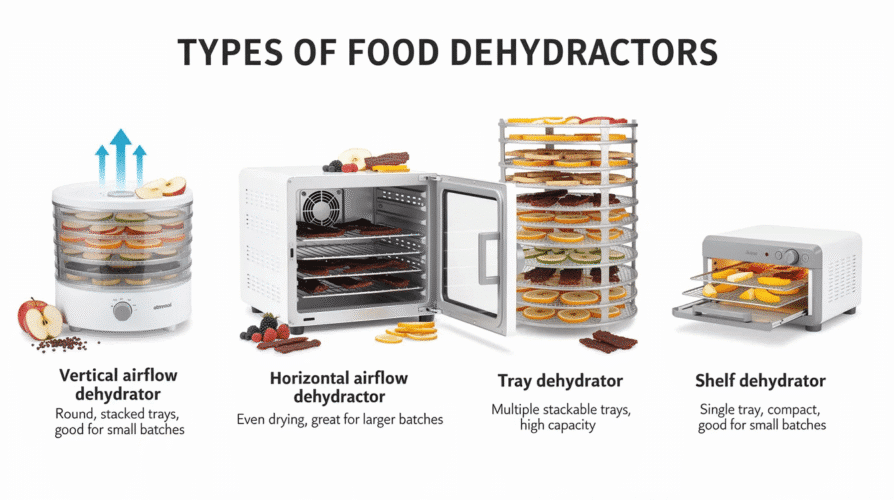
When it comes to choosing the best food dehydrator for your kitchen, understanding the different types available can help you make an informed decision. Food dehydrators come in several designs, each offering unique benefits depending on your needs and the types of food you plan to dehydrate.
Vertical airflow dehydrators feature a fan located at either the top or bottom of the unit, pushing hot air vertically through the stacked trays. These models are typically round, more affordable, and ideal for those who want to dehydrate smaller batches of food or have limited storage space. However, they may require you to rotate trays for even drying, especially when making beef jerky or dried fruit.
Horizontal airflow dehydrators are often considered the “professional” style. With a fan mounted at the rear, these square-shaped units blow hot air evenly across all trays, ensuring consistent results without the need to rotate trays. This makes them a top choice for those looking to make large batches of homemade beef jerky, fruit leather, or dried foods with minimal effort.
Tray dehydrators are designed with multiple stackable trays, allowing you to dehydrate as many trays of food as you need at once. This large capacity is perfect for families, gardeners, or anyone who wants to preserve a significant amount of food in one go. Whether you’re drying thin slices of fruit or preparing a big batch of jerky, tray dehydrators offer flexibility and efficiency.
Shelf dehydrators are best suited for those who want to dehydrate small batches of food. With a single shelf or tray, these compact units are easy to use and store, making them ideal for occasional use or for experimenting with new recipes.
When selecting a food dehydrator, consider the quantity of food you plan to process, the types of foods you’ll be drying, and how much storage space you have. For large capacity needs—like making beef jerky or dried fruit in bulk—a tray dehydrator with multiple trays is often the best option. For smaller batches or limited kitchen space, a vertical airflow or shelf dehydrator with fewer trays may be more practical.
Benefits of Using a Food Dehydrator
The utilization of a food dehydrator provides a multitude of advantages, encompassing nutritional and practical benefits, notably the prolongation of the shelf life of food items and the facilitation of diverse culinary functionalities.
Nutritional and Practical Advantages
Food dehydration is a method that preserves essential nutrients, inhibits bacterial growth, and provides a practical approach to long-term food storage.
Dehydrated foods offer the benefit of retaining a greater concentration of vitamins and minerals in comparison to fresh produce, rendering them a nutritious choice for individuals focused on their health. Popular examples include dried herbs and dried jerky, which are both nutritious, preserved foods commonly made with a dehydrator. The dehydration process involves the removal of water, significantly reducing the likelihood of spoilage and prolonging the shelf life of the food items. Through the elimination of moisture, food dehydration prevents the proliferation of bacteria and other harmful pathogens that thrive in damp settings, ensuring the safety of the food for consumption over an extended duration.
Factors to Consider When Choosing a Food Dehydrator
When choosing a food dehydrator, it is crucial to take into account essential factors such as the dimensions of the appliance, its functionalities including temperature range and airflow mechanism, and the cost range that aligns with your financial constraints.
Size, Stainless Steel Trays, Features, and Price
The market offers a wide range of dehydrators in terms of size, features, and price, catering to diverse consumer needs. Dehydrator options span from compact models with basic trays to larger units equipped with advanced features like back-mounted fans, digital display, digital control panel, and automatic shut off for enhanced convenience and safety, as well as various door styles.
Compact dehydrators are particularly suitable for individuals with limited kitchen space or those seeking a cost-effective choice. Typically, these models have tray capacities of approximately 4-6 included trays, but many models allow you to purchase extra trays to increase the number of trays and overall capacity. In contrast, larger dehydrators can hold up to 12 trays or more, allowing for the simultaneous drying of larger quantities of fruits, vegetables, or meats. Trays may be made of plastic trays, stainless steel trays, or metal trays, each offering benefits such as durability, ease of cleaning, and food safety.
The style of doors on dehydrators can vary, from pull-down to slide-out designs, each offering its own level of convenience. The positioning of the fan within the dehydrator can impact the uniformity of drying, with back-mounted fans typically resulting in more consistent drying outcomes across all trays. Tray design is also important, with the top tray being crucial for monitoring progress and ensuring even drying of tray food. These factors, in conjunction with additional features such as adjustable temperature settings, timers, and user-friendly digital displays, play a significant role in determining the price range of dehydrators.
When it comes to cleaning and maintenance, some models offer dishwasher safe trays, while others require hand wash. A drip tray is often included to collect excess moisture and make cleanup easier. Accessories like parchment paper can be used to prevent sticking, especially when making fruit leathers or drying delicate foods.
Numerous prominent companies within the market provide premium food dehydrators, such as Excalibur, Gourmia, Cosori, Magic Mill, Cuisinart, Tribest, and the Nesco Snackmaster Pro. Each of these brands is recognized for its distinctive features and dependable performance. Check out the top food dehydrator companies here.
Excalibur: Features and Offerings
Excalibur is renowned for its premium stainless steel** models** that feature horizontal airflow systems, specifically optimized for the production of jerky. Many Excalibur dehydrators also come equipped with stainless steel racks, which add durability and make cleaning easier.
This unique design guarantees uniform heat distribution across the trays, facilitating consistent drying and preserving the food’s nutritionalintegrity. Furthermore, the horizontal airflow system obviates the necessity for tray rotation, thereby enhancing user convenience during the dehydration process. Users can easily place foods on the racks, ensuring even drying results.
Beyond jerky production, Excalibur dehydrators serve as versatile appliances suitable for drying various food items such as fruits, vegetables, and herbs, in addition to facilitating the creation of homemade yogurt and granola. The robust stainless steel construction employed in Excalibur dehydrators not only ensures durability but also simplifies the cleaning and maintenance processes, providing consumers with a dependable and effective drying solution.
Cosori: Features and Offerings
Cosori offers user-friendly dehydrators that have garnered acclaim for their dishwasher-safe nature and the inclusion of accessories such as fruit roll mats. Notably, Cosori dehydrators are compatible with fruit roll sheets, which are ideal for making fruit leather and preventing sticking, making them exemplary stacking dehydrators.
The dehydrators are equipped with multiple trays that enable users to concurrently stack diverse food items, thereby maximizing space utilization and operational efficiency. The fruit roll mats accompanying Cosori dehydrators are ideal for crafting delectable and nutritious fruit-based snacks, and are especially useful for making fruit leather. Furthermore, certain models also incorporate mesh screens for the dehydration of herbs or spices, furnishing users with versatility in their dehydration endeavors.
The easily adjustable temperature settings facilitate the dehydration of an assortment of foods at precise temperatures, ensuring consistently optimal outcomes. Cosori dehydrators are also popular for making healthy snacks like kale chips, thanks to their precise temperature control.
Nesco: Features and Offerings
The Nesco Snackmaster Pro, a leading model among the best food dehydrator companies, is recognized for its versatile capabilities in herb drying, attributed to its adjustable temperature range and top-mounted fan.
With its adjustable temperature range, the Nesco Snackmaster Pro provides users with precise control over the drying process, enabling them to achieve optimal outcomes. Nesco dehydrators typically use plastic trays, which are lightweight, easy to clean, and often dishwasher safe, adding to user convenience. The utilization of a top-mounted fan ensures uniform distribution of airflow, a critical factor in the even and efficient drying of herbs. Mesh screens can be used with these trays, especially for dehydrating smaller foods that might otherwise fall through the trays, ensuring even drying and preventing loss. This design characteristic negates the necessity to rotate trays during the drying phase, thus saving time and streamlining the overall effort required. These fundamental attributes of the Nesco Snackmaster Pro facilitate the preservation of herbs’ flavor and nutrients, while simultaneously extending their shelf life.
Food Dehydrator Maintenance
Keeping your food dehydrator in top condition is essential for producing high-quality dehydrated foods and extending the life of your appliance. Regular maintenance ensures that your dehydrator operates efficiently and safely, delivering consistent results every time.
After each use, it’s important to clean your food dehydrator thoroughly. Wipe down both the exterior and interior surfaces with a damp cloth, and remove any food residue or debris from the trays and drying area. Many models feature dishwasher safe trays, making cleanup even easier—just be sure to check the manufacturer’s instructions before placing any parts in the dishwasher.
If your dehydrator is equipped with air filters, inspect and replace them as needed to maintain proper airflow and prevent dust or debris from accumulating inside the unit. This not only helps preserve the quality of your dehydrated foods but also ensures the appliance runs smoothly.
Always check that the temperature controls are functioning correctly and that the dehydrator is heating evenly. Uneven temperatures can affect the drying process and the safety of your food. For models with moving parts, such as sliding trays or doors, a light application of food-safe lubricant can help keep everything operating smoothly.
Finally, after cleaning, make sure your dehydrator is completely dry before storing it in a cool, dry place. This prevents moisture buildup, which can lead to mold or damage over time. By following these simple maintenance steps and adhering to the manufacturer’s guidelines, you’ll keep your food dehydrator in excellent working order and enjoy delicious dehydrated foods for years to come.
Dehydrated Food Storage
Proper storage is key to preserving the flavor, texture, and nutritional value of your dehydrated foods. Whether you’re storing homemade beef jerky, dried fruit, or dehydrated herbs, following best practices will help maximize shelf life and keep your food safe to eat.
Always use airtight containers—such as glass jars, BPA-free plastic containers, or vacuum-sealed bags—to protect your dehydrated foods from moisture and air exposure. A vacuum sealer is especially effective for removing air and extending the shelf life of items like meat jerky and fruit leather.
Store your dehydrated foods in a cool, dry place away from direct sunlight and heat sources. A dark pantry or cupboard is ideal, as light can degrade both the quality and nutritional value of your food over time. For added convenience, label and date each container so you can easily track what you have and use the oldest items first.
For foods with higher protein content, such as meat jerky, consider storing them in the refrigerator or freezer for long-term storage. This extra step helps prevent spoilage and ensures your jerky remains safe and delicious.
By following these storage tips, you’ll be able to enjoy your dehydrated foods for months or even years, making the most of your food dehydrator and reducing food waste in your kitchen.
Food Dehydrator Safety
Using a food dehydrator safely is essential for both your well-being and the quality of your dehydrated foods. By following a few simple guidelines, you can prevent accidents and ensure your dried foods are safe to eat.
Start by reading the manufacturer’s manual thoroughly before your first use. Each food dehydrator may have unique features or requirements, so it’s important to understand how your specific model operates. Always use the correct temperature settings for the type of food you’re dehydrating—improper temperatures can lead to food spoilage or even foodborne illness.
Monitor your dehydrator during operation to ensure it’s functioning properly and not overheating. Keep children and pets away from the appliance while it’s running, as the surfaces can become hot and the trays may have sharp edges.
Regular cleaning and maintenance are also crucial for food safety. Make sure to wash your hands before and after handling food, and always clean the trays and interior of your dehydrator after each use to prevent the buildup of bacteria or mold.
By following these safety tips, you’ll enjoy a worry-free dehydrating experience and consistently high-quality results from your food dehydrator.
Customer Reviews and Ratings
Customer reviews and ratings offer invaluable insights into the practical performance of food dehydrators. Respected culinary experts such as Fred Minnick, Christina Ward, Shimi Aaron, and Jason Goldstein contribute their experiences and feedback, enriching the discourse on this subject matter. Many reviews are based on tested food dehydrators, providing detailed comparisons of each model’s features, performance, and ease of use. Reviewers often compare the featured models to other food dehydrators available on the market, helping consumers make informed decisions. For more information, check out the top food dehydrator companies on this reputable source.
Real User Experiences and Feedback
The practical benefits and potential drawbacks of various food dehydrators are underscored by real user experiences shared by individuals such as Gia LaRussa, Pamela Salzman, and Dan Van Rite. Many users also highlight the effectiveness of their dehydrators for jerky making and making homemade beef jerky, noting the importance of suitable temperature ranges for safely drying meat.
Gia LaRussa commended the compact design of the dehydrator she utilized, highlighting its perfect fit in her small kitchen without occupying excessive space. Pamela Salzman, conversely, identified ease of cleaning as a notable feature, emphasizing how it enhanced the overall convenience of the process. Dan Van Rite raised concerns about the noise level of his dehydrator, indicating that it exceeded his anticipated volume.
Culinary experts have stressed the significance of uniform drying and consistent outcomes in food dehydrators. They have additionally emphasized that precise temperature control plays a critical role in effectively preserving flavors.
Final Thoughts and Recommendations
In summarizing our examination of food dehydrators, it is evident that the selection of the most suitable option relies on individual requirements, whether the primary focus is on ensuring jerky** safety**, producing fruit leathers, extracting essential oils, or creating a wide variety of dehydrated items. These dehydrated items offer benefits such as preservation, long shelf life, and nutrient retention, making them ideal for homemade snacks and versatile ingredients.
Which Company is the Best Choice?
Selecting the optimal company for a food dehydrator can be a matter of personal preference; however, industry experts such as Julia Skinner frequently endorse brands like Excalibur, Gourmia, and Sahara for their dependable performance and diverse array of features.
When examining these prominent companies, it is crucial to assess their strengths and weaknesses. Excalibur is acknowledged for its precise drying capabilities and user-friendly controls, rendering it well-suited for individuals who prioritize uniformity in their dehydrated food products. In contrast, Gourmia distinguishes itself with its cost-effectiveness and compact design, making it a compelling choice for those with limited space in their kitchens. Meanwhile, Sahara garners acclaim for its energy efficiency and quiet operation, positioning it as a preferred option for environmentally-conscious consumers. Each of these brands offers distinct advantages tailored to varying needs and preferences, and they often provide superior features, reliability, and ease of use compared to many other dehydrators available on the market.
Frequently Asked Questions
What are the top food dehydrator companies?
Some of the top food dehydrator companies include Excalibur, Nesco, Tribest, Presto, Hamilton Beach, and Chefman.
What makes these companies stand out in the market?
These companies stand out for their high-quality and efficient food dehydrators with a range of features, such as adjustable temperature settings, stackable trays, and even smart technology.
Which company offers the most affordable food dehydrators?
Chefman is known for its affordable yet reliable food dehydrators, making it a top choice for budget-conscious consumers.
What is the best food dehydrator company for beginners?
Presto is a great option for beginners as their food dehydrators are user-friendly and easy to operate, making the dehydrating process hassle-free.
Are there any eco-friendly food dehydrator companies?
Yes, Tribest is known for its eco-friendly food dehydrators that are made with BPA-free materials and have energy-saving features.
Which company offers the most versatile food dehydrators?
Nesco is known for its versatile food dehydrators that can be used for a variety of purposes, including drying fruits, vegetables, herbs, and even making jerky.
DannyContent Writer
Hey there, since 2016, my mission has been to provide you with the information and guides you need to make food dehydrating simple and fun. Whether you're a newbie or a seasoned pro, my site offers helpful guides, reviews, and recipes to enhance your dehydrating experience. I take pride in only recommending products I believe in, ensuring my readers' trust. As an affiliate of various programs, including Amazon Associates, your support helps me continue providing quality content. Thanks for stopping by, and happy dehydrating!