We earn a commission if you make a purchase, at no additional cost to you.
09/22/2026 04:39 pm GMT
🍊 Dehydrated Food Info Finder — Temperatures & Drying Times
Choose a category, then pick a food to see its drying temperature and time.
⚠️ Safety Disclaimer: Drying times are estimates and vary based on slice thickness, food moisture content, humidity, and your dehydrator model. Always check for doneness before storing — food should feel dry, leathery, or brittle with no moist spots. Improperly dried food can harbour mould and bacteria. For meat and poultry, follow USDA safe internal temperature guidelines: beef and pork to 160°F (71°C), poultry to 165°F (74°C). Use a food thermometer when in doubt. Store all dehydrated foods in airtight containers in a cool, dark place and discard anything showing moisture, mould, or off odours.
The Complete Guide to Dry Flowers: From Air Drying to Beautiful Blooms at Home
Dried flowers are plant blooms and foliage from which moisture has been deliberately removed to preserve their shape, texture, and color. Since around 2020, they’ve experienced a massive resurgence-driven by the pandemic disrupting fresh flower supply chains, a growing interest in sustainable home decor, and social media aesthetics like cottagecore and boho styling. Dried flowers offer a lasting and low-maintenance decor solution that brings natural texture and color into any space.
The benefits are hard to ignore: long-lasting beauty with no watering, suitability as a thoughtful gift for any special occasion, and versatility across weddings, home styling, and craft projects. Whether you want beautiful blooms on your mantel or a lovely wreath on your front door, dried and preserved flowers deliver.
The most common methods include air drying, pressing, silica gel desiccant, and glycerine preservation. This guide walks through each method step by step, covers the best flowers to dry, and explains how to choose bulk dried flowers for large events or business use.
Why Choose Dried Flowers Over Fresh?
Dried flowers last for many months or even years with zero daily care. A quality dried bouquet can decorate a room for a year or more, whereas fresh flowers from the market might need replacing weekly-quickly adding up in cost. Over time, investing in dried stems is an easy way to save money while keeping your home looking nice.
The aesthetic appeal is distinct: muted tones, vintage textures, and the tactile quality of dried grasses, seed heads, and preserved foliage add depth that fresh arrangements often lack. Picture a collection of dried lavender in a hallway filling the air with a subtle scent, or a dried eucalyptus wreath on your front door lasting from fall through winter. Dried flowers require no water or refrigeration, making them free from the constant upkeep fresh bunches demand. Many varieties also carry less pollen, which makes them a considerate choice for allergy-prone households.
From a sustainability perspective, dried flowers mean fewer refrigerated shipments, less water consumed to maintain arrangements, and the ability to reuse stems across multiple projects. Air drying flowers is an environmentally friendly method that reduces waste-and when your dried flowers have finally reached the end of their life, they can be composted rather than tossed in plastic wrap. Sustainable flower farms practice low environmental impact techniques that align with this approach.
Best Flowers for Drying: Top Varieties That Keep Their Shape
Not all blooms dry well. Choosing the best flowers matters for results that hold their shape and color over time. As a general rule, harvest flowers just before full bloom for the best drying results-flowers should be dried when fully open but not wilting, ideally cut at peak condition on a dry morning.
Roses are among the most popular choices, though roses and hydrangeas require special drying methods like silica gel for optimal color retention, just as culinary herbs like basil respond differently to the various methods you can use to dry basil for long-term use. Lavender, especially French lavender, is a standout-it keeps its fragrance and structure beautifully. Amaranth and lavender are excellent for drying and work equally well in bouquets or wreaths. Hydrangeas dry into gorgeous clusters via air drying or silica, and preserved hydrangeas can be dyed to achieve colors like terracotta or navy that nature doesn’t naturally produce.
Baby’s breath dries quickly and makes a lovely filler for airy arrangements. Strawflower has a papery texture that retains color remarkably well. Statice holds both its shape and hue in mixed bouquets. Eucalyptus-baby or silver dollar-provides wonderful foliage texture and scent. Globe amaranth keeps its spherical form, while celosia and yarrow are also great choices for drying, adding rich texture to any display. Delphinium and larkspur lend height and drama, though they’re a bit more fragile and benefit from silica support.
For color themes, burnt orange strawflower and amaranth create striking autumn wedding decor, while pink and peach blooms-roses, hydrangeas, statice-are the go-to for spring celebrations where a soft romantic palette is desired.
How to Air Dry Flowers Step by Step
Air drying is the easiest, most accessible method to dry flowers, and many of the same principles apply when you dry herbs in an air fryer for quick preservation. All you need is string, a dark dry room, and patience. Air drying takes two to three weeks for flowers to dry completely, making it a slow but reliable process.
Step 1: Choose fresh flowers harvested just at or slightly before full bloom. The best time to cut is mid-morning after dew has evaporated. Remove extra foliage from the stems and trim to your desired length.
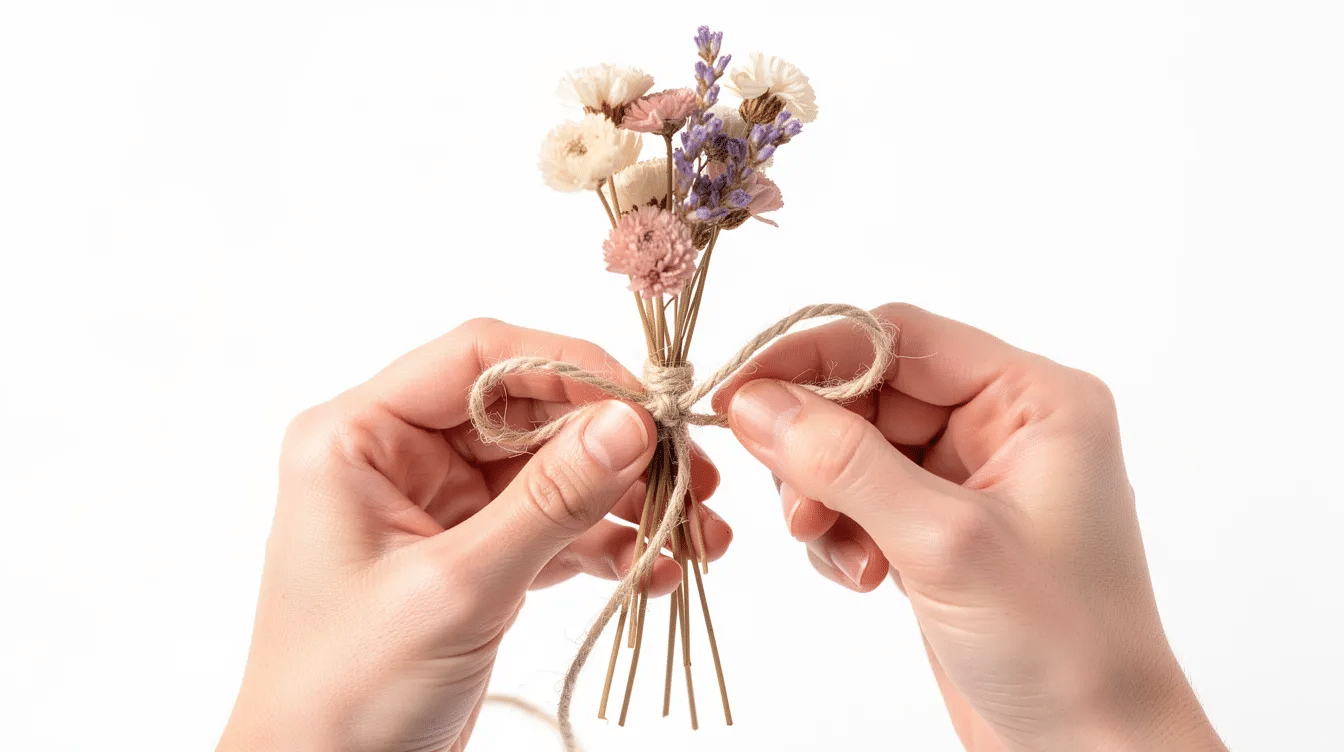
Step 2: Group stems into small bunches of similar thickness-no more than five or six stems per bunch. Tie them with twine or rubber bands, leaving enough slack to hang them.
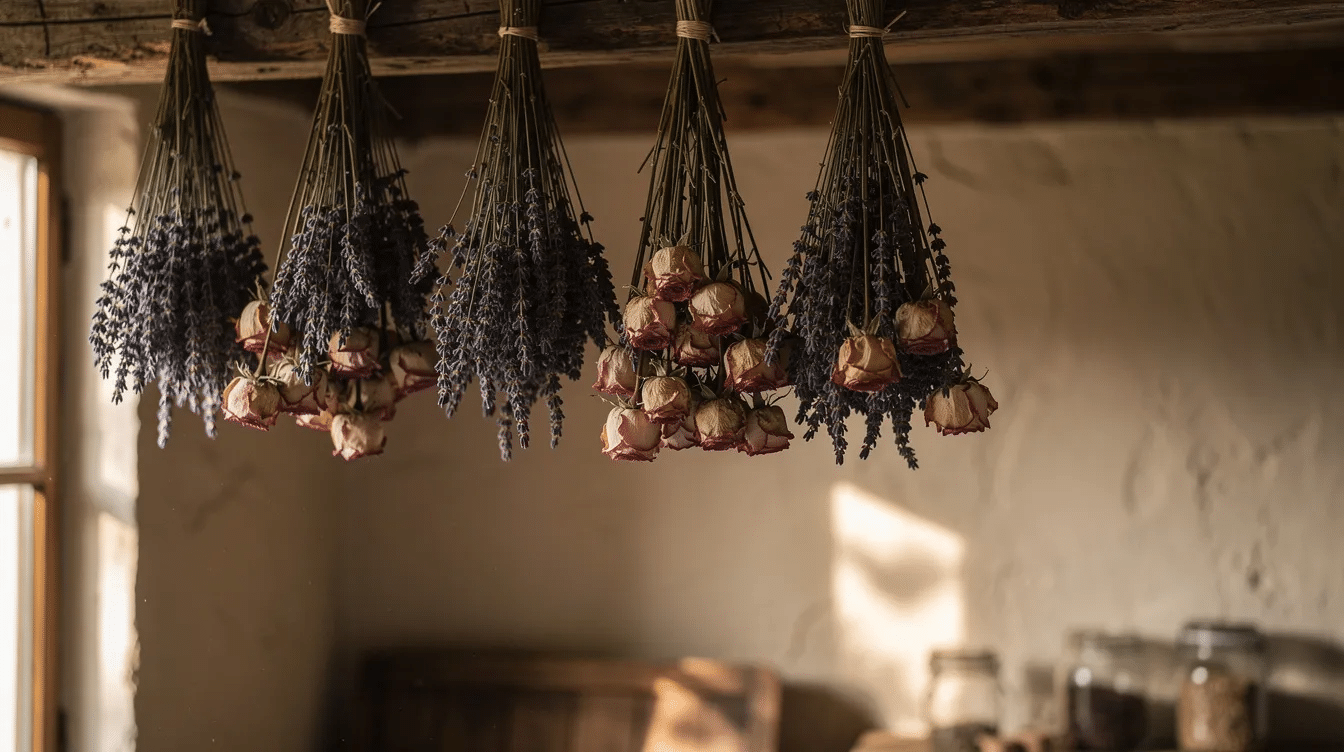
Step 3: Hang the bunches upside down in a dark, well-ventilated, dry space. A cupboard, attic, or unused closet works well. Make sure there’s enough wind circulation to keep humidity low. Avoid placing flowers in direct sunlight, which bleaches the color-to maintain vibrant colors, avoid direct sunlight during the drying process entirely.
Step 4: Leave undisturbed for about two to three weeks. Check dryness by gently bending a stem; if it snaps cleanly, it’s ready. If it still bends, give it more time.
Roses, lavender, statice, baby’s breath, and eucalyptus respond especially well to air drying. Delicate petals like those on dahlias are more prone to dropping. Common mistakes include drying in a room with too much humidity, making bunches too thick, or hanging them where afternoon sun hits-all of which cause petals to fade or go mouldy. As a practical example, you could air dry flowers from a birthday bouquet in July, then use them in a framed keepsake or shadow box later in the year.
Other Drying Methods: Pressing, Silica, and Glycerine
Sometimes air drying isn’t the right method for the job. If you want to preserve special flowers from a wedding or keep petals soft and flexible, these alternatives are worth exploring. Flower drying times vary from a few days to several weeks depending on the method you choose-and while microwave drying takes just minutes to dry flowers if you’re in a real rush, you can also dry flowers in the oven with carefully controlled heat for faster results than air drying.
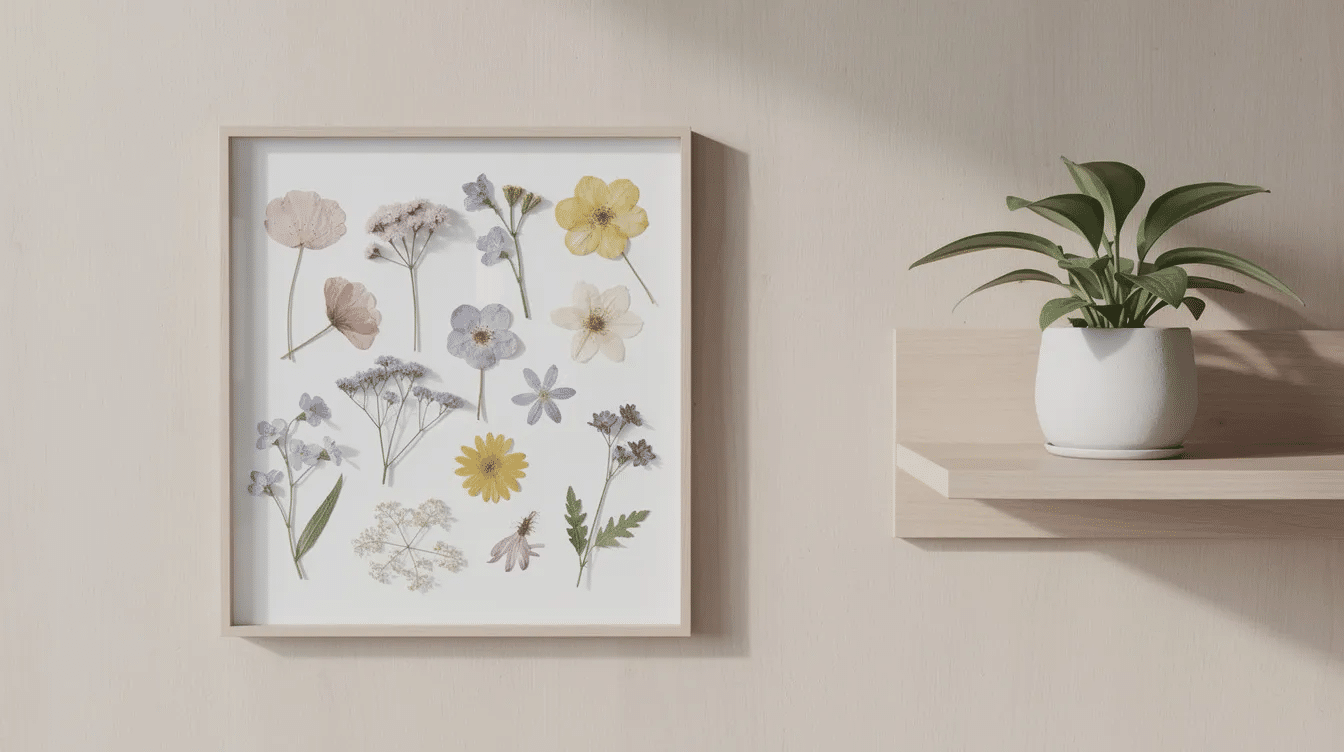
Pressing flowers is the classic approach for flat art. Arrange petals between sheets of absorbent paper inside a heavy book-or a dedicated flower press-and leave them for one to three weeks. The pages absorb moisture while pressure keeps everything flat. Pressed flowers work beautifully for bookmarks, framed art, phone cases, and wedding invitations, especially when you press flowers in a book using professional techniques that keep them flat and vibrant. Pansies and violets from a spring garden press particularly well. Dried flowers can be pressed for artwork or bookmarks with minimal effort.
Drying with silica uses silica gel crystals in an airtight container to draw moisture out while preserving three-dimensional shape. Bury delicate blooms like dahlias, peonies, or roses in the crystals and seal the container. Studies show that silica gel delivers significantly higher color retention compared to air drying. Silica gel drying takes three to seven days for flowers to dry, and the gel is reusable after regeneration in an oven-making it a worthwhile upfront investment.
Preserving with glycerine involves placing foliage stems in a solution of one part glycerine to two parts water. The stems absorb the mixture over two to three weeks, and glycerine replaces moisture in flowers, keeping them pliable and soft. The result is supple, long-lasting greenery ideal for garlands. Eucalyptus preserved this way stays flexible for months. The trade-off: glycerine tends to darken or mute natural colors a bit, and the material cost is higher than simple air drying.
How Long Dried Flowers Last and How to Care for Them
Most well-kept dried flowers can last between one and three years, with some preserved foliages and grasses lasting even longer if left undisturbed. The type of bloom matters-sturdy seed heads outlast delicate petals-and how you display and care for them makes a significant difference.
Here are practical care tips to extend the life of your arrangements. Keep them away from direct sunlight and radiators to slow fading and brittleness; over time, dried stems become brittle and need gentle handling. Avoid moisture and high humidity-bathrooms and kitchens are poor choices, as damp conditions cause flowers to go mouldy, unless you intentionally style a dried flower bathroom display designed for humid spaces with the right blooms and placement. Dust gently using a feather duster, a soft paintbrush, or a cool hairdryer on its lowest setting. Never water a dried flower arrangement, even if it’s displayed in a vase. Place arrangements in stable spots away from heavy foot traffic, children, and pets.
Natural aging is part of the charm. Colors soften from vivid reds and pink tones to muted rose and beige over the months, which many people find adds character. To keep your decor feeling seasonal, refresh arrangements periodically-for example, update a centerpiece each autumn with new dried grasses while reusing still-good stems from the previous season. This lets you enjoy the beauty of your plants across every season without starting from scratch.
Styling Ideas: Decorating Your Home with Dried Flowers
Dried flowers fit seamlessly into nearly any interior style-Scandinavian minimalism, rustic farmhouse, boho, or a modern city apartment. The key is matching your arrangements to your existing palette and letting nature do the heavy lifting.
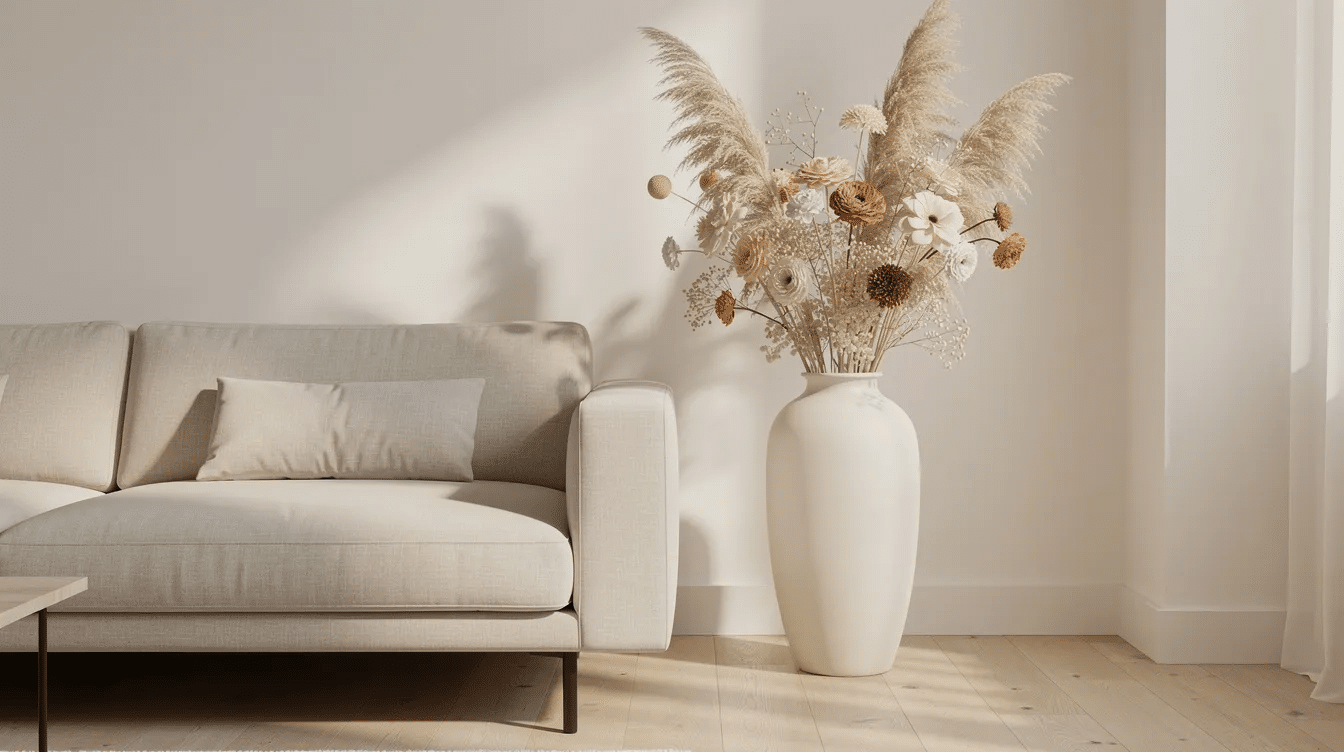
Simple bunches of dried lavender or baby eucalyptus in clear glass bottles on a windowsill create an effortless look (just keep them out of direct sun). For fall, a burnt orange autumn wreath using dried grasses, strawflower, and preserved oak leaves on the front door runs beautifully from September through November. In a living room corner, neutral-toned pampas grass and bunny tails in a tall floor vase fill empty space with texture and warmth. Small bud vases of dried roses and baby’s breath on bedside tables or desks bring a lovely, quiet elegance.
Think in seasonal color palettes: pink and burgundy for cozy winter arrangements, ivory and gold for festive December decor, and soft peach and blush for spring. You can also mix dried and fresh elements-pair a fresh eucalyptus branch with dried seed pods for a weekend centerpiece, then remove the fresh stems when they fade. Rotate your display through the year to match the season and you’ll never tire of the look.
Wedding & Event Uses for Dried Flowers
Dried flowers have become a major trend for weddings, elopements, and events since 2022. Their longevity and transportability make them ideal-bouquets can be prepared weeks in advance without wilting, and they double as keepsakes the recipient can enjoy long after the date.
Bridal bouquets and bridesmaids’ posies in themes like burnt orange and rust work beautifully for autumn weddings, while pink and peach create a romantic spring palette. Buttonholes, corsages, and flower crowns can all be assembled ahead of time and kept in a box until the day arrives. Table centerpieces with dried grasses, seed heads, and delicate filler flowers last through multi-day celebrations without drooping. Dried bouquets are easier to transport for destination weddings because they don’t wilt in travel and can be shipped in a package well in advance.
Beyond weddings, dried flowers are now mainstream in corporate events, cafe decor, and seasonal installations. Bulk dried flowers in brand colors can create dramatic backdrops. After the event, you can repurpose arrangements-gift table posies to guests, or break an arch arrangement into several home bouquets. Dried flowers can also enhance gift wrapping, adding a natural finishing touch to any present, and dried flowers can be used to create wreaths that serve as lasting reminders of the occasion.
When you browse online, look for clear product descriptions with stem counts, approximate lengths, and accurate color notes. High-resolution photos taken in natural light help you judge true color and texture. Check whether the flowers were naturally air-dried, dyed, bleached, or glycerine-treated-this affects both appearance and longevity. Common bulk choices include ivory, cream, and beige grasses for neutral decor; burnt orange and burgundy mixes for autumn; and soft pink, peach, and white selections for weddings.
Order well ahead of event dates-ideally four to six weeks before a big celebration-to allow time for conditioning, arranging, and any replacements. When your package arrives, store boxes in a cool, dry space away from heaters and damp. Avoid stacking heavy items on top of delicate stems to prevent breakage.
Creative Projects and Keepsakes with Dried Flowers
Dried flowers can extend the life and memory of a special occasion-a birthday, an anniversary, or a graduation bouquet. Creative ways to use dried flowers include framed botanical art and wall wreaths, and even a beginner can create something beautiful with minimal supplies.
Frame a flat arrangement of pressed flowers behind glass for instant wall art. Make potpourri with dried rose petals, lavender, and citrus peel to fill drawers and closets with a nice, natural scent-dried flowers can be used to make potpourri that lasts for months, and DIY dried fruit potpourri blends add another layer of color and fragrance. Decorate homemade candles or soaps by embedding small dried blooms into the surface, or dehydrate rose petals at home for richly scented embellishments that pair beautifully with natural waxes and oils. Build seasonal wreaths and garlands for doors, mantels, or stair rails using a mix of textures and colors.
To preserve a sentimental bouquet, select a few standout stems, dry them using whichever method suits the bloom, and display them in a shadow box with a date label. Dried flowers can create natural dyes for crafts-experiment with petals to tint fabric or paper, or explore drying dandelion blooms for herbal crafts and teas if you like using wild plants creatively. You can also use petals as eco-friendly confetti at outdoor celebrations instead of synthetic options, or work them into dried Christmas floral arrangements for holiday decor that can be brought out year after year. Roxanne’s Dried Flowers has been local for over 30 years, proving that the craft and love for dried flowers has deep roots in communities everywhere, much like traditional practices of drying hibiscus flowers for tea and natural color.
Dried flowers let you hold onto nature’s beauty long after their fresh moment has passed. Whether you’re styling your home, planning a wedding, or looking for an easy, meaningful gift, start with a single bunch of lavender or roses, hang them upside down in a dark closet, and see for yourself how rewarding the process can be.
DannyContent Writer
Hey there, since 2016, my mission has been to provide you with the information and guides you need to make food dehydrating simple and fun. Whether you're a newbie or a seasoned pro, my site offers helpful guides, reviews, and recipes to enhance your dehydrating experience. I take pride in only recommending products I believe in, ensuring my readers' trust. As an affiliate of various programs, including Amazon Associates, your support helps me continue providing quality content. Thanks for stopping by, and happy dehydrating!