We earn a commission if you make a purchase, at no additional cost to you.
09/22/2026 04:39 pm GMT
🍊 Dehydrated Food Info Finder — Temperatures & Drying Times
Choose a category, then pick a food to see its drying temperature and time.
⚠️ Safety Disclaimer: Drying times are estimates and vary based on slice thickness, food moisture content, humidity, and your dehydrator model. Always check for doneness before storing — food should feel dry, leathery, or brittle with no moist spots. Improperly dried food can harbour mould and bacteria. For meat and poultry, follow USDA safe internal temperature guidelines: beef and pork to 160°F (71°C), poultry to 165°F (74°C). Use a food thermometer when in doubt. Store all dehydrated foods in airtight containers in a cool, dark place and discard anything showing moisture, mould, or off odours.
How to Display Dried Flowers: Ideas, Styling Tips & Care
Dried flowers, dried grasses, and pressed flowers can be displayed just like fresh flowers-without water and with far less maintenance. They offer a long-lasting way to add texture and color to home decor.
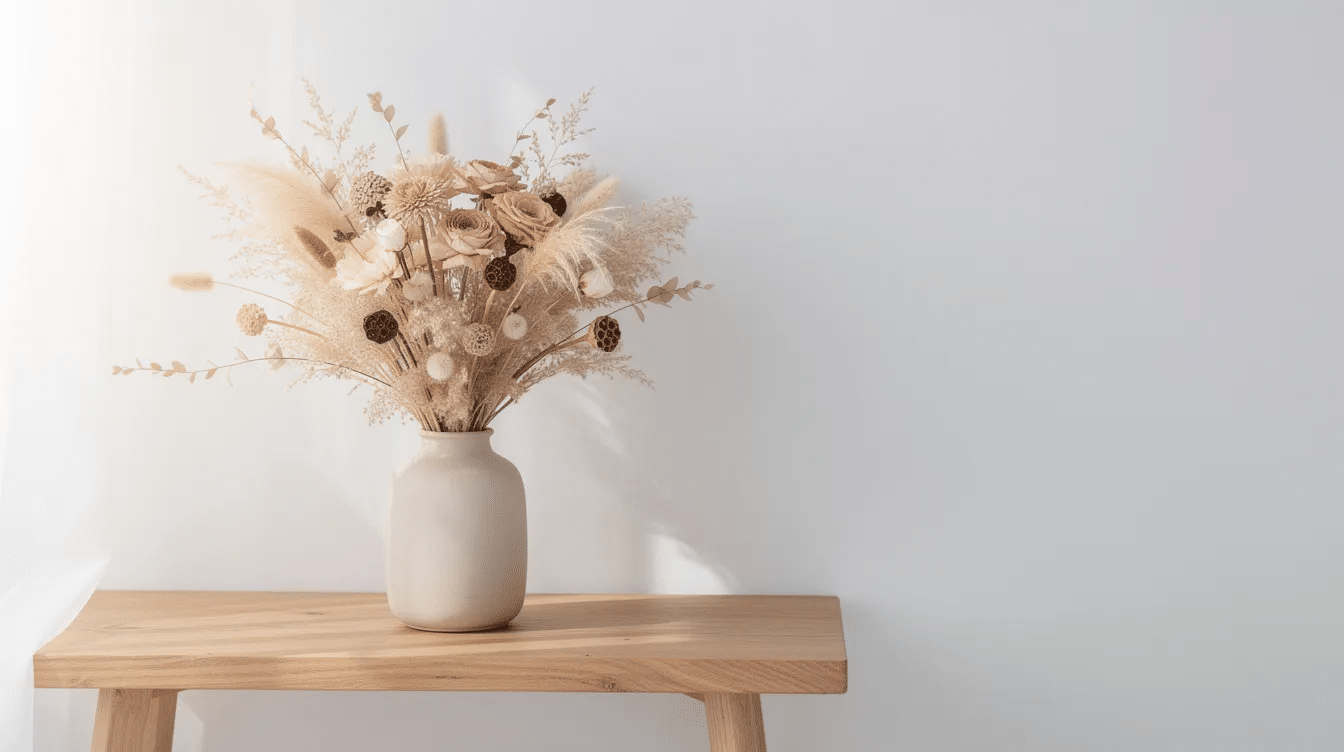
The best places to display dried flowers at home include shelves, coffee tables, bedside tables, entry consoles, and walls (frames, wreaths, hanging bundles).
Choosing the right vessel-opaque ceramic vase, clear glass cylinder, bud vase, shadow box, or grapevine wreath base-matters as much as the flowers themselves.
Light, heat, and humidity are the main enemies of dried arrangements. Simple care like dusting and avoiding direct sun means dried flowers can last two to three years.
Mixing dried flowers with fresh flowers or cut flowers and foliage can create modern, seasonal displays that feel contemporary rather than purely rustic.
Introduction: Why Display Dried Flowers at Home
If you love flowers but don’t love replacing wilted stems every week, dried flowers are the answer. Their naturally sculptural quality makes them a versatile design element that works in almost any room of the house, from a minimalist shelf display to a full wall of pressed-flower frames.
Unlike cut flowers, dried arrangements need no water, produce less mess, and hold their beauty for months-sometimes years. Many florists now shop and sell ready-made dried bouquets alongside dried grasses like pampas and bunny tails. The slow-living and sustainability trends of 2024–2026 have pushed dried flowers from a niche craft into mainstream interior design, and it’s easy to see why: dried flowers can be arranged in a variety of creative ways for home decoration, giving you a daily dose of nature without the upkeep.
In this post, you’ll find tips on choosing stems, everyday display ideas, room-by-room styling, and basic maintenance to keep arrangements looking fresh across every season.
Choosing and Preparing Dried Flowers for Display
Good display starts with the right materials. Sturdy varieties and well-dried stems are easier to style and keep tidy over time.
Pampas grass, bunny tails (lagurus), oats, wheat, phalaris-these add height, texture, and movement
Before you place anything in a vase, check that stems are truly dry: crisp petals, rigid stems, no cool or damp spots at the base. Air drying upside down in a dark, ventilated room takes roughly a few weeks-about two to three-depending on the bloom, though you can speed up the process by drying flowers in the oven when you need arrangements quickly.
Prep is minimal: remove excess leaves, trim stems to different lengths for visual interest in arrangements, and gently shake out dust from stems dried last summer in the garden. Color coordinate dried flowers with surrounding decor for harmony-neutrals (creams, beige grasses) suit minimalist spaces, while richer tones (rust, burgundy, mustard) complement autumn and winter displays.
Displaying Dried Flowers in Vases and Everyday Arrangements
Most people start by treating dried arrangements like fresh flowers in vessels-just skip the water. The vessel you choose shapes the entire look, so it’s worth thinking beyond the standard vase.
Classic spiraled bouquets work beautifully on dining tables or coffee tables. A spiraled hand-tie bouquet showcases flowers from every angle, tied with twine and dropped into a ceramic or glass vase. Front-facing tied arrangements are ideal for one-sided displays against a wall or on a console.
Vase selection tips:
Vessel Type
Best For
Tall cylinder or floor vase
Pampas and tall dried grasses
Medium belly vase with narrow neck
Mixed dried flower bouquets
Small bud vases / narrow-necked vases
Single striking stems
Unique vessels like trophies or decorative jars
Fun, creative statements
Dried flower displays can incorporate various vessels including glass, ceramic, or decorative jars-whatever means the arrangement feels at home in your space.
Step-by-step styling: Start with structure stems (eucalyptus, ruscus), add focal blooms (hydrangeas, roses), then fill with textural elements (bunny tails, thistles, seed pods). Using odd numbers in arrangements often results in a more balanced appearance. Dried flowers can be combined with different textures for visual interest.
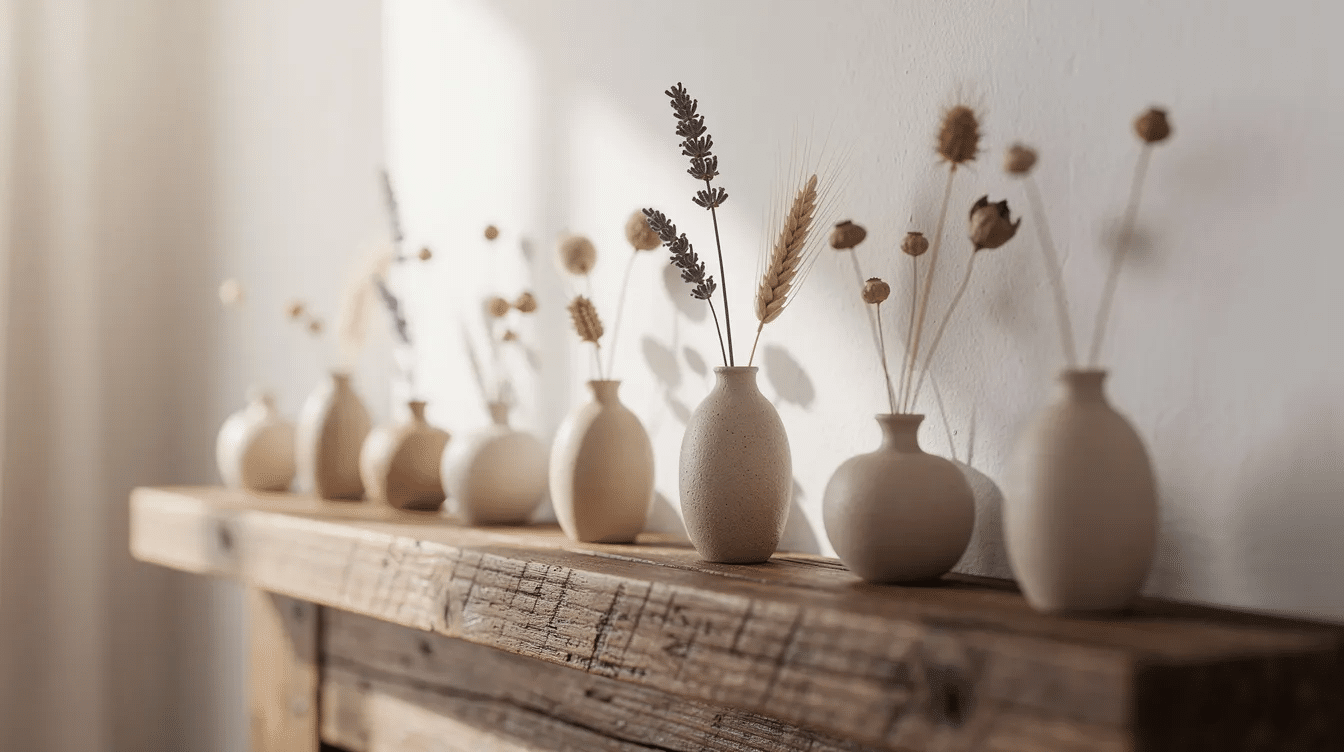
Loose-stem arrangements create minimalist displays with single stems-group one or two stems in several small bouquets across a shelf, mantel, or bedside table. Use odd numbers and different heights for interest.
Mix dried and living flowers for added interest. Try fresh tulips with dried grasses in early spring, or fresh eucalyptus with dried hydrangeas for Christmas-it’s a surprise how well they pair.
Avoid water for dried stems. To secure stems inside opaque vessels, add dry fillers like sand, gravel, or coffee beans.
Walls offer vertical space for dried flowers-ideal for small homes or when surfaces are already full of other pieces. Dried flowers can be used in wreaths, garlands, or as framed pressed-flower art.
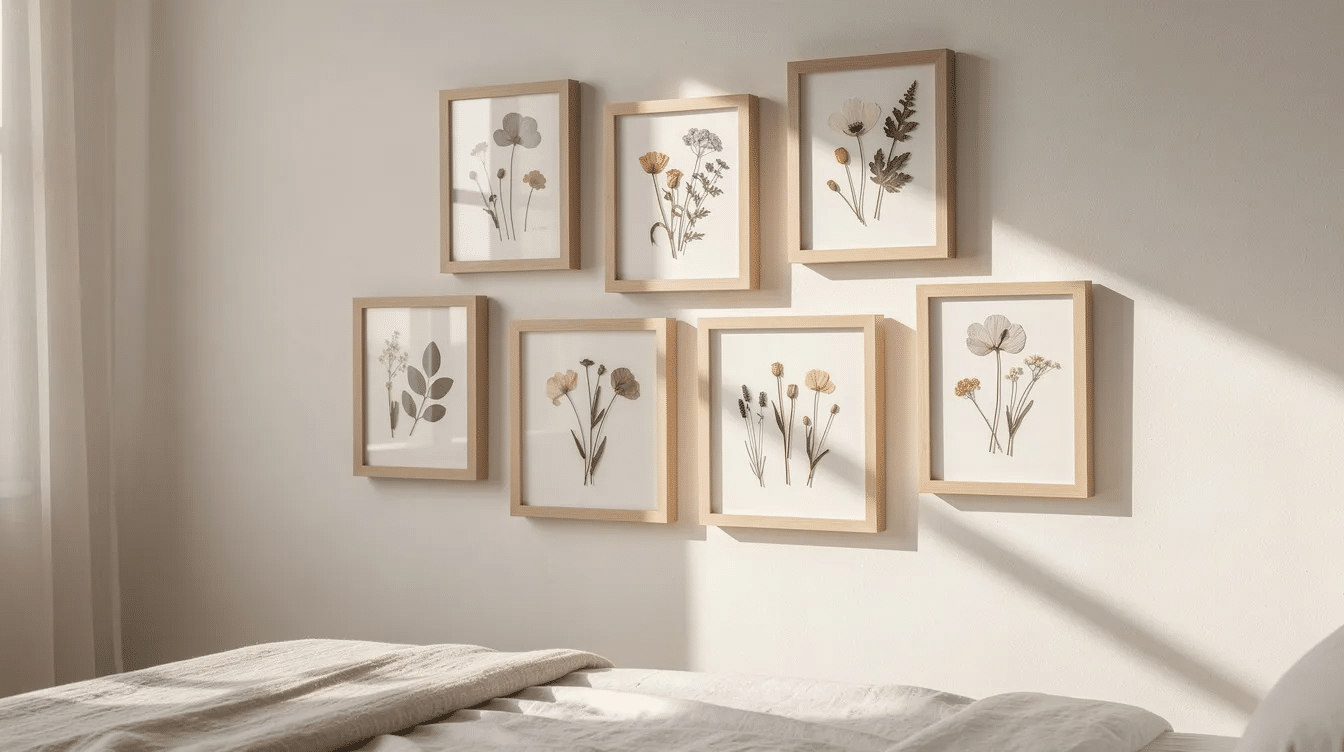
Pressed flowers in frames: Arrange flattened blooms between glass or acrylic, creating botanical “specimens” labeled with plant name and date (e.g., “Cosmos, July 2024”). If you’re new to pressing, start by pressing flowers in a book before moving on to larger frame projects. Hang in grids over desks or beds to showcase your garden finds year-round.
Shadow boxes for 3D displays: Dried flowers can be preserved in shadow boxes along with photos or keepsakes-perfect for a wedding bouquet or anniversary flowers. Wire stems to the backing and attach small mementos like ribbons. Dehydrated rose petals also work beautifully tucked into shadow boxes or sprinkled at the base for extra color and texture. This is a meaningful way to save and protect sentimental blooms, and it reminds you of that special day every time you walk past.
Building a wreath: Start with a grapevine wreath, wire, or straw base. Layer dried eucalyptus, limonium, and small roses or strawflowers, then finish with a ribbon. Seasonal color schemes-pastels for spring, warm earth tones for autumn-keep wreaths looking current.
Scent can be layered into your wall and shelf displays too; a bowl of DIY dried fruit potpourri nearby adds a subtle fragrance that complements the natural look of dried petals and grasses.
Other wall ideas:
Hanging small tied bundles upside down from wooden pegs in an entryway
Creating a “flower curtain” with individual stems tied to clear fishing line
Pinning mini bunches to a notice board
Use lightweight frames and secure hooks. Avoid bathrooms with steam, and keep wall displays away from radiators and direct light to prevent fading.
Room-by-Room Ideas for Styling Dried Flowers and Grasses
Different rooms suit different scales and styles. Here are ideas to match dried arrangements to each space in your house:
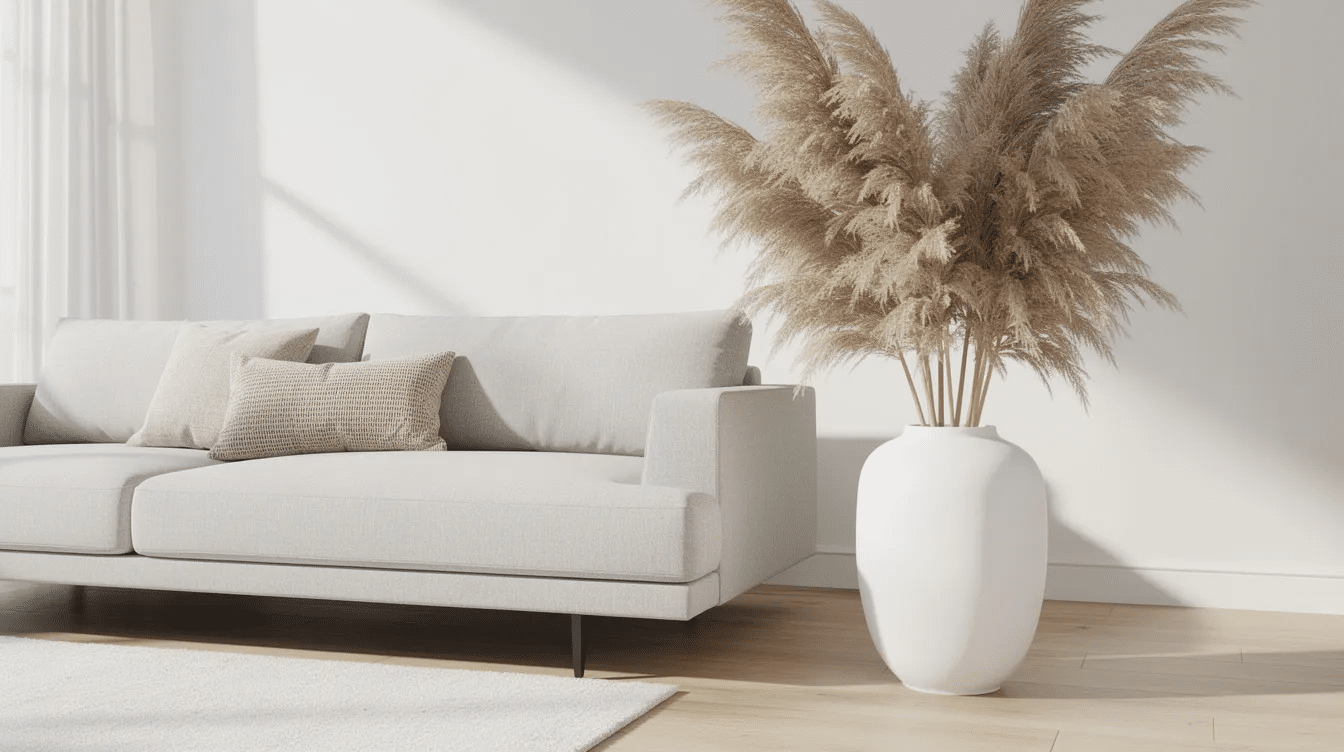
Living room: A large floor vase with pampas or tall dried grasses beside a sofa creates a sign of effortless style. Add a low mixed arrangement on the coffee table, or line a row of bud vases along the mantel. A pop of color from dyed craspedia can energize a neutral room.
Entryway/hallway: Slim vases with vertical stems on a console table, a small dried flower wreath on the inside of the front door, or a framed pressed-flower trio above a shoe bench.
Kitchen and dining: Choose compact arrangements that don’t shed heavily-statice, strawflower-in the center of the table. Dried herb bundles (rosemary, bay) near the stove double as decor. For holiday dinners or funerals, a long, low centerpiece of preserved botanicals adds understated beauty, and dried Christmas floral arrangements can carry that look effortlessly through the festive season.
Bedroom: Soft, muted dried flowers and grasses on bedside tables. A line of pressed-flower frames above the headboard. A small vase on a dressing table to match fabric colors. You can echo this calm feeling by using dried flower decor in the bathroom as well, creating a spa-like flow between rooms.
Workspace: A single uplifting stem (like craspedia) in a tiny vase gives any person a creative boost. A pressed-flower bookmark or a small wall grid with clipped dried sprigs provides inspiration.
Rotate different dried botanicals seasonally to refresh decor without replacing flowers-it keeps every room feeling alive. Of course, decor styles matter too: Scandi prefers muted tones and clean lines; boho embraces varied textures and warm hues; farmhouse leans into rustic vessels and wild shapes. Dried flowers can be displayed in minimalist arrangements just as effectively as in lush, layered ones-they’re that versatile.
Care, Cleaning, and Long-Term Storage of Dried Flower Displays
Dusting: Use a hairdryer on a low setting to gently remove dust from dried flower arrangements, or try a soft makeup brush every month or two. A cool setting held at a distance works well. You can also use a light spray of unscented hairspray to reduce shedding, but spray lightly and let it dry fully before returning stems to vases.
Enemies to avoid:
Direct sunlight can fade the colors of dried flowers over time-keep arrangements away from south-facing windows in summer
Dried flowers should be kept away from humidity to prevent mold; avoid bathrooms and steam areas
Avoid moving dried flowers frequently to prevent breakage, as petals are brittle
When to retire: If colors are badly faded, petals shatter at the slightest touch, or stems have bent beyond hope, it’s time. Reuse intact elements in smaller crafts-newspaper-wrapped mini bundles make charming gifts.
Use silica gel packets to absorb moisture in storage
Label each box with flower type and date (e.g., “Autumn arrangement, October 2025”) for easy rotation next year
Using protective sprays can help preserve the colors and structure of dried flowers. Finally, dried flowers can last two to three years when stored properly, so don’t hesitate to save your favorites for next season.
FAQ: Displaying and Caring for Dried Flowers
These FAQs cover common concerns not fully addressed above.
How long do dried flowers last on display?
Most dried flowers last one to three years on display. Natural grasses and seed pods tend to outlast delicate blooms. Factors that shorten life include direct sunlight, high humidity, and frequent handling. Color coordinate and care for them well, and you’ll be rewarded with years of beauty.
Are dried flowers safe around pets and small children?
They can pose risks if ingested, especially dyed or preserved stems. Dust accumulation may also be a concern. To protect curious pets or kids, place arrangements on high shelves or use wall displays like frames and wreaths instead of low floor vases.
Can I refresh the color of faded dried flowers?
You can lightly spray a specialist floral preservative or unscented hairspray to slow further fading, but it won’t restore original color. A more effective approach: replace only some faded stems while keeping the original vase or frame, so you create a refreshed look without starting over.
What’s the best time of year to dry flowers for future displays?
Late summer to early autumn is ideal, when garden blooms and grasses are at their fullest. Harvest just before petals begin to drop-this is the sweet spot for maximum color retention after drying.
Can I combine dried and fresh flowers in one arrangement?
Yes-place fresh stems in a narrow water container (a small jar or test tube) hidden inside a larger arrangement of dried stems. This keeps moisture away from the dried flowers while letting you enjoy the best of both worlds.
We’d love to hear your favorite way to display dried flowers-leave a comment below, or try one of these ideas this week and see what a difference it makes.
DannyContent Writer
Hey there, since 2016, my mission has been to provide you with the information and guides you need to make food dehydrating simple and fun. Whether you're a newbie or a seasoned pro, my site offers helpful guides, reviews, and recipes to enhance your dehydrating experience. I take pride in only recommending products I believe in, ensuring my readers' trust. As an affiliate of various programs, including Amazon Associates, your support helps me continue providing quality content. Thanks for stopping by, and happy dehydrating!