We earn a commission if you make a purchase, at no additional cost to you.
09/22/2026 04:39 pm GMT
🍊 Dehydrated Food Info Finder — Temperatures & Drying Times
Choose a category, then pick a food to see its drying temperature and time.
⚠️ Safety Disclaimer: Drying times are estimates and vary based on slice thickness, food moisture content, humidity, and your dehydrator model. Always check for doneness before storing — food should feel dry, leathery, or brittle with no moist spots. Improperly dried food can harbour mould and bacteria. For meat and poultry, follow USDA safe internal temperature guidelines: beef and pork to 160°F (71°C), poultry to 165°F (74°C). Use a food thermometer when in doubt. Store all dehydrated foods in airtight containers in a cool, dark place and discard anything showing moisture, mould, or off odours.
Poppy Dried Flowers: A Complete Guide to Dried Poppy Pods, Heads & Home Decor
Dried poppy pods have earned a permanent spot in the world of home decor and floral design. Their sculptural silhouettes, earthy neutral tones, and near-zero maintenance make them a go-to choice for anyone who wants lasting beauty without the hassle of fresh flowers. Whether you’re a designer building a boho bridal bouquet or a weekend crafter making an autumn wreath, this guide covers everything you need to know about dried poppies, from anatomy and grading to growing, legal considerations, and creative project ideas.
Key Takeaways
Dried poppy pods and poppy heads are the mature seed capsules of ornamental poppies, harvested after petals fall and air-dried until woody. They are popular for ornamental use because they add unique texture and height to decorative designs, require no water, and maintain their beauty for months with minimal care.
Premium dried poppy pods are valued for their sculptural form and durability, featuring rounded capsules with crown-like tops and an earthy color palette ranging from pale tan to deep brown, making them a versatile choice for rustic, boho, and minimalist interiors.
Dried poppy pods are strictly decorative and should not be ingested or processed. Laws on dried poppy pods vary by region, so buyers should review local regulations before purchasing, especially when shipping across state or national borders in the USA, UK, EU, Canada, or Australia.
Creative uses span from wedding centerpieces, autumn wreaths, and Scandinavian-style single-stem vase displays to shadow box art, potpourri bowls, and shelf styling alongside books and candles.
For long-lasting beauty, keep dried poppies away from direct sunlight and humidity, dust gently with a soft brush, and store spare bunches in breathable containers.
What Are Dried Poppy Pods & Poppy Heads?
Dried poppy pods and poppy heads are the dried seed capsules of Papaver somniferum and other ornamental poppies. After a plant finishes flowering and its petals drop, a rounded capsule develops and matures over several weeks. Once harvested and air-dried, these pods become the firm, woody structures prized in floral design.
Anatomy of a Dried Poppy Pod
The structure that makes dried poppy pods so visually striking comes down to three features:
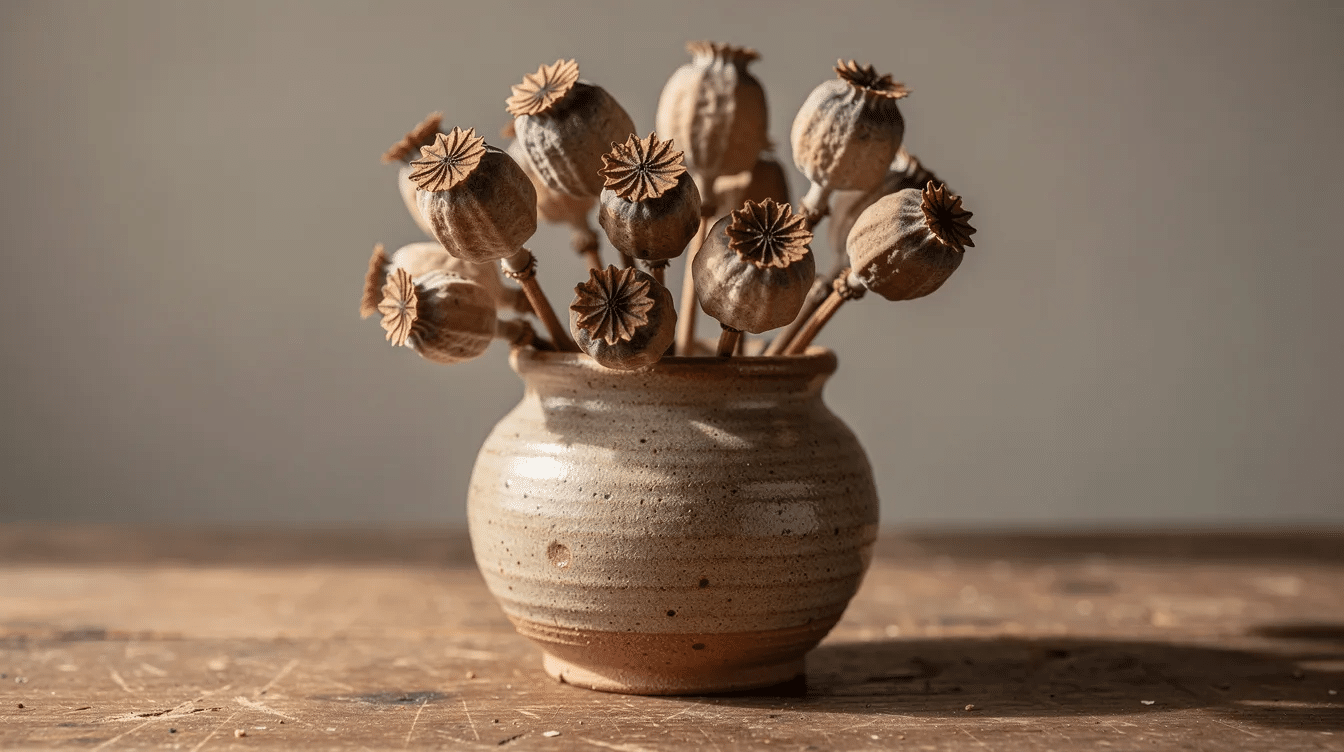
Rounded capsule – The main body is spherical or ovoid, with visible seams running vertically down its sides.
Crown-shaped disk – The top of each pod carries a rigid, star-like plate derived from the stigma. This unique shape is what gives the pod its iconic silhouette.
Internal chambers – Inside, multiple compartments hold thousands of tiny seeds that rattle when the pod is shaken.
This distinctive structure remains fully intact when dried, which is why dried poppy pods are valued for their sculptural form and durability compared to delicate dried petals.
Appearance and Size
The natural color range of dried poppies spans from pale tan and sandy beige through golden creams to deeper umber and chestnut, sometimes with subtle gray or bluish undertones depending on the variety and drying conditions. Stems typically reach 25–60 cm in length, while pod diameters fall into commercial size categories:
Grade
Diameter
Small
15–30 mm
Medium
30–42 mm
Large
42–54 mm
Extra Large
54 mm+
Product Terms to Know
When shopping, you’ll encounter a few distinct categories:
Dried poppy pods – The whole capsule with stem attached, ready for vase arrangements.
Poppy heads – Capsules with short or no stems, commonly used as bowl fillers or wreath components.
Premium dried poppy pods – Graded for size, symmetry, intact crowns, and minimal cracking or blemishes (often labeled Grade A).
Most decorative pods sold online are air-dried naturally, untreated with dyes or fragrances unless explicitly labeled. This preserves their authentic rustic look and keeps them suitable for indoor environments.
Decorative & Craft Uses: From Floral Arrangements to Home Decor
Designers and enthusiasts love dried poppies for a simple reason: they add texture, height, and visual interest to arrangements that last for months. Dried poppy pods last longer than fresh flowers, they are eco-friendly with less waste, and they require no water and minimal care. That combination makes them a versatile addition to nearly any design style.
Floral Arrangements
Dried poppy pods work beautifully alongside other dried and preserved botanicals. Here are three arrangement ideas worth trying:
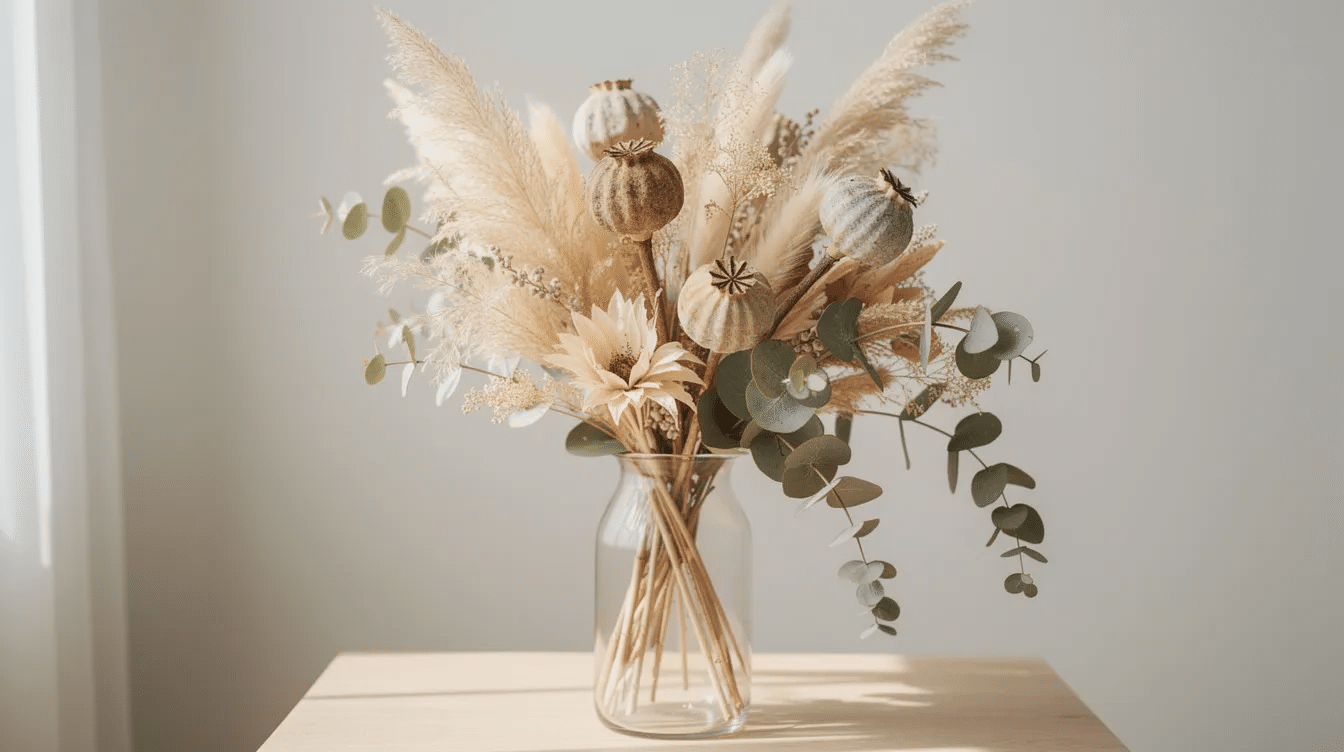
Fall dining table centerpiece – Combine large dried poppy pods with golden pampas grasses, preserved eucalyptus, and dried rosebuds in a low, wide ceramic bowl. The pods provide structure while the grasses add softness and movement.
Boho bridal bouquet – Incorporate several pods on stems with airy dried flowers, bunny tail grasses, and trailing cream ribbons. The contrast between the round pods and wispy grasses creates depth and visual rhythm.
Minimalist single-stem display – Place one large pod on a slender stem in a bud vase, or group three in small vessels of varying heights. This approach suits Scandinavian interiors perfectly.
Dried poppy pods are used in wreaths and floral arrangements across seasons, from autumn harvest displays to winter holiday garlands.
Home Decor Ideas
Dried poppies are popular for rustic home decor, but they’re equally at home in modern and minimalist spaces. A few practical styling approaches:
Shelf styling – Arrange a small bunch of dried poppy pods alongside books and candles on a bookshelf or mantel for effortless layered decor.
Coffee table tray – Combine poppy heads with pillar candles and a few preserved leaves on a wooden tray for a simple table centerpiece.
Console table display – Fill a ceramic jug with a mixed bunch of tall pods and dried grasses to transform a hallway or entryway.
Shadow box art – Dried poppy pods can be arranged inside a shadow box for display, creating a framed botanical piece that works as wall art.
Handmade gifts and art displays using pods in framed compositions, pressed flower art, or decorative bundles for farmers’ market sale
Mixed dried floral bundles for online shops or boutique retail that might also incorporate oven-dried flowers
Crafters use dried poppy pods for handmade gifts and art displays because the pods add unique texture that few other dried materials can match.
Choosing the Right Grade
For focal display pieces, select premium dried poppy pods in large or extra large categories with smooth, uncracked surfaces and intact crown disks. For filling wreath bases, garlands, and craft projects where uniformity matters less, smaller or mixed-size pods in a larger quantity work well and are typically available at a lower price.
How Dried Poppies Are Grown, Harvested & Dried
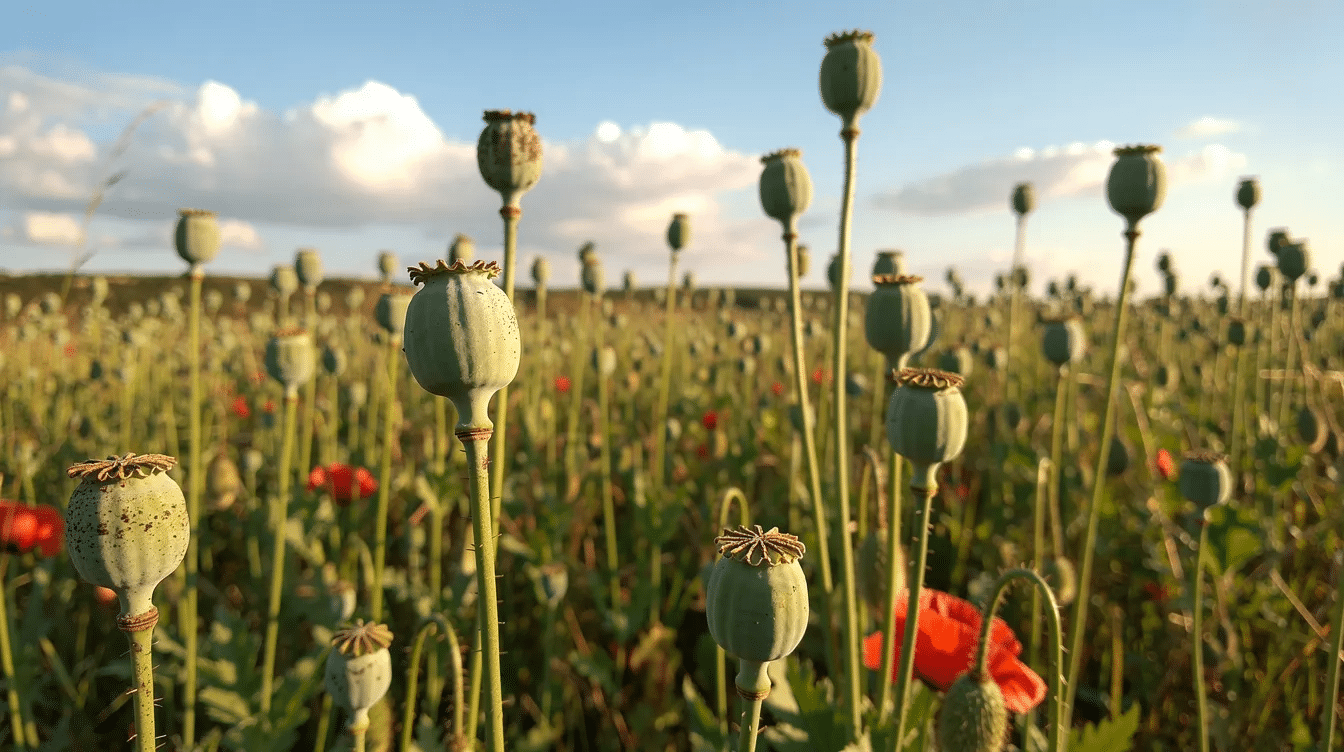
Papaver somniferum is an annual plant grown in many temperate regions, including parts of California, the Pacific Northwest, and central Europe. Historically, Papaver somniferum has been cultivated for medicinal purposes, but today many gardeners grow it for ornamental and seed use. Before sowing seeds, gardeners must check local laws, as cultivation may be regulated depending on where you live.
The Growing Cycle
The basic timeline looks like this:
Sowing – Seeds are sown in early spring (once soil can be worked) or late autumn for overwintering, depending on climate. Soil should be well-draining and moderately poor; rich soil encourages foliage over pod development.
Growth – Plants develop distinctive blue-green foliage and grow upward over several weeks.
Flowering – Large, showy flowers bloom in late spring to early summer, typically May–June in the Northern Hemisphere. The red poppy became a symbol of remembrance after World War I, and dried poppy flowers are historically associated with sleep, peace, and death in many cultures. Dried poppy pods symbolize remembrance and peace to this day.
Pod formation – Once petals fall, the seed capsule develops and matures over several weeks.
Harvesting for Decorative Use
Pods are harvested when they feel hard, have turned tan or light brown, and rattle slightly with dry seeds inside. According to Utah State University Extension, timing the harvest on dry days is critical to avoid mold. Green or damp pods harvested in wet weather are far more likely to develop problems during drying.
Cut stems at a length that suits your intended use – 25–60 cm is standard for most floral arrangements and bouquets.
Drying Method
A straightforward approach that works for most growers:
Bundle stems loosely with elastic or twine (pods should not press against each other).
Hang upside down in a dark, well-ventilated space at room temperature.
Allow 2–3 weeks for complete drying, depending on humidity levels.
Commercial producers often air-dry in barns or dedicated drying sheds for consistent results.
Avoid direct sunlight during drying – it causes excessive fading and can bleach pods to an uneven, washed-out color.
Storage and Care
Once your dried poppies are ready:
Store in low humidity (below 50%) and keep away from direct sunlight to prevent color fading over time.
Dust gently with a soft brush or a hair dryer on a cool-air setting.
Handle the crown tops carefully – they’re the most fragile part and can crack or break if crushed.
Keep away from pets and children. These are decorative items, not food.
Proper care and keeping means your pods can hold their structure and appearance for years.
Legal, Safety & Ethical Considerations
Dried poppy pods come from the opium poppy species, which means they are subject to varying legal controls around the world. This guide addresses only decorative, ornamental use. Different poppy species contain varying amounts of biologically active compounds, and the opium poppy in particular has a long history – opium poppy preparations have been used for pain relief and sedation throughout history.
Legal Status by Region
Laws differ widely, and what’s perfectly legal in one country may require a license or be outright prohibited in another:
Region
Key Points
USA
Poppy straw (including dried pods) is classified under Schedule II of the Controlled Substances Act. Small ornamental quantities rarely attract enforcement, but large-scale sales or intent to extract alkaloids is prosecutable.
UK
Growing for ornamental or display purposes is generally permitted. Licenses are required only for extraction or opiate production.
EU
Varies by country. Some nations require cultivation licenses; others regulate alkaloid content. Import/export may need customs paperwork.
Canada
Opium poppy and its plant parts are controlled under narcotics law. Seeds for food are less regulated.
Australia
“Alkaloid poppy material” is regulated. Import/export of pods may require permits depending on state definitions.
Buyers should review local regulations before purchasing dried poppy pods, especially when ordering online or across borders.
Safety
This point cannot be overstated: dried poppy pods should not be ingested or processed. Dried poppy flowers should not be consumed due to the presence of potentially harmful alkaloids. While poppy seeds are used in various traditional recipes such as pastries and cakes, the pods, latex, and other plant parts are not food-grade.
Keep dried poppy pods away from children and pets. Though dried poppies are traditionally used in teas to treat insomnia and anxiety in some folk traditions, this practice carries serious health and legal risks and should be avoided.
Ethics and Sustainability
When sourcing pods, look for suppliers who:
Focus on ornamental use and clearly label products as decorative
Practice responsible farming and drying without chemical dyes or harmful treatments
Offer transparency about origin and processing methods
Event planners, wedding stylists, and boutique owners should confirm venue rules and shipping regulations when using dried poppy pods in large displays or mailing arrangements across state or national borders.
FAQ: Dried Poppy Pods & Poppy Flowers
This section covers practical questions that go beyond the main article, addressing storage, customization, placement, and common points of confusion about dried poppies. Whether you’re a first-time buyer or an experienced designer, these answers will help you get the most from your pods.
How long do dried poppy pods last in home decor?
Well-dried poppy pods kept indoors typically maintain their shape for 1–3 years or longer. Color may gradually lighten to paler tan tones over time, especially with any UV exposure.
To extend their decorative life:
Position arrangements away from windows with direct sunlight
Avoid rooms with high moisture levels
Minimize frequent handling, which can weaken stems and crown disks
Dried poppy pods maintain their beauty for months with almost no effort – simply place them and enjoy.
Can I safely spray paint or dye dried poppy pods?
Yes. Many crafters lightly spray paint or dye dried poppy heads for specific color schemes – metallics for winter holidays, pastels for spring weddings, or even bold red for seasonal displays. Work outdoors or in a well-ventilated area and allow pods to dry completely before arranging.
One important tip: thick paint layers can obscure the natural crown detail that makes these pods so distinctive. Use thin, even coats to preserve their sculptural character. This is an easy way to customize pods for any project without losing the form that makes them special.
Are dried poppies suitable for bathrooms or kitchens?
Dried poppies can be placed in bathrooms or kitchens if humidity is controlled, but constant steam and water splashes may cause pods to soften, discolor, or develop mold over time, so it helps to follow bathroom dried flower decor ideas tailored to humid spaces.
For best results:
Place them high up, away from sinks, stoves, and showers
Choose less humid rooms (living rooms, bedrooms, entryways) for longest durability
If you love the look in a bathroom, consider rotating pods out periodically to prevent moisture damage
What is the difference between dried poppy pods and dried poppy flowers?
“Dried poppy pods” refers specifically to the rounded seed capsules – the firm, woody structures that form after flowering. “Dried poppy flowers” or “dried poppies” can include preserved petals, full stems, and seed heads together.
Pods are sturdier and far longer-lasting than delicate dried petals. Common poppy petals were historically valued for their mild herbal remedies, and dried poppy petals have antioxidant properties that have been explored for topical applications. However, in modern dried floral arrangements, pods provide structure while other flowers add color and softness – making them a perfect complement rather than a replacement.
Can I remove the seeds from decorative dried poppy pods to plant them?
Seeds from decor-grade dried poppy pods are not guaranteed viable. They may come from varieties or regions where planting is restricted or illegal. Even if seeds sprout, varietal purity is uncertain.
If you wish to grow poppies in your garden, the best approach is to buy clearly labeled, legal flower seeds from a reputable seed supplier and check local regulations before sowing. In many jurisdictions, seed-only trade is less regulated than possession of full plants or pods, but this varies – so do your homework first.
DannyContent Writer
Hey there, since 2016, my mission has been to provide you with the information and guides you need to make food dehydrating simple and fun. Whether you're a newbie or a seasoned pro, my site offers helpful guides, reviews, and recipes to enhance your dehydrating experience. I take pride in only recommending products I believe in, ensuring my readers' trust. As an affiliate of various programs, including Amazon Associates, your support helps me continue providing quality content. Thanks for stopping by, and happy dehydrating!