We earn a commission if you make a purchase, at no additional cost to you.
09/22/2026 04:39 pm GMT
🍊 Dehydrated Food Info Finder — Temperatures & Drying Times
Choose a category, then pick a food to see its drying temperature and time.
⚠️ Safety Disclaimer: Drying times are estimates and vary based on slice thickness, food moisture content, humidity, and your dehydrator model. Always check for doneness before storing — food should feel dry, leathery, or brittle with no moist spots. Improperly dried food can harbour mould and bacteria. For meat and poultry, follow USDA safe internal temperature guidelines: beef and pork to 160°F (71°C), poultry to 165°F (74°C). Use a food thermometer when in doubt. Store all dehydrated foods in airtight containers in a cool, dark place and discard anything showing moisture, mould, or off odours.
How to Make Flowers Last Longer: Practical Tips for Fresh Blooms
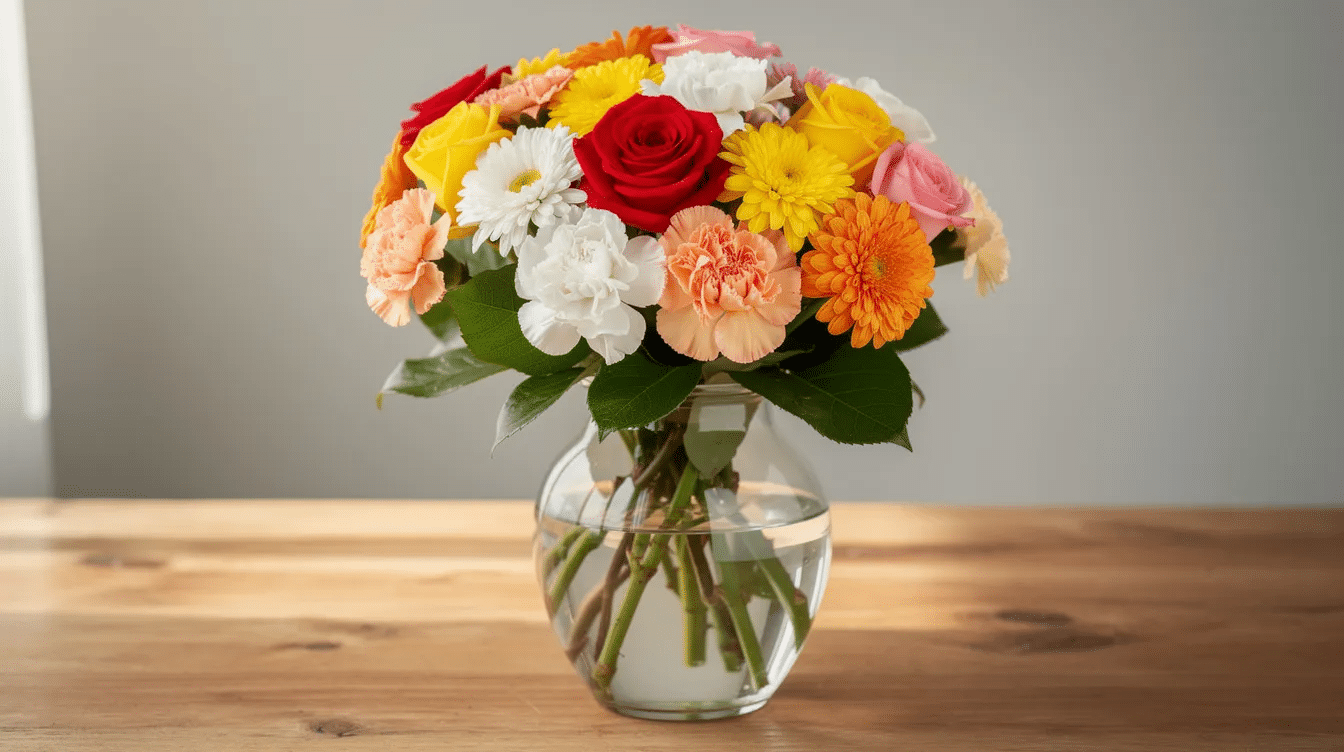
You just brought home a gorgeous bouquet, and within three days the petals are curling and the water smells like a swamp. Sound familiar? The good news is that keeping flowers fresh longer doesn’t require a floristry degree. A few consistent habits – the right cut, clean water, and smart placement – can double the life of most arrangements. Here’s exactly how to do it.
Key Takeaways
Most fresh flowers last 5–10 days in a vase, though some varieties can stretch to 21 days with proper care. Simple steps like using a clean vase, fresh water, and flower food can add several extra days of vase life to nearly any bouquet.
Trim stems at an angle and remove lower leaves below the water line before arranging.
Change water and re-cut stems every 2–3 days to prevent bacterial growth.
Keep arrangements in a cool location, away from direct sunlight, heat sources, and ripening fruit.
Commercial flower food is generally more reliable than DIY hacks, but a basic homemade mix of sugar, lemon juice, and a tiny amount of bleach works when packets aren’t available.
You don’t need special florist tools – just a sharp knife or shears, a clean vase, and consistent care.
Understanding How Long Cut Flowers Really Last
“Vase life” is the number of days cut flowers remain attractive in water. Most mixed bouquets last about 7–10 days with proper care, though flowers can last 3–21 days depending on the type and how they’re handled.
Natural lifespans vary significantly by species:
Carnations and chrysanthemums: 2–3 weeks
Roses and alstroemeria: 7–10 days
Tulips and daffodils: 4–7 days
Why do flowers age? Stems seal over after cutting, bacteria multiply in the water and plug the xylem vessels, and ethylene gas – a natural plant hormone – accelerates wilting and petal drop. Heat compounds the problem by increasing respiration rates exponentially. Florists agree that cool storage (34–40°F) and strict hygiene are the foundation of longer-lasting blooms. Home care can mimic these principles on a smaller scale, and the sections below show you exactly how.
Preparing Your Vase and Tools for Maximum Vase Life
Cleanliness is the foundation. Dirty containers and tools introduce bacteria that quickly shorten vase life, causing flowers to wilt prematurely before their time.
How to clean your vase: Wash with hot soapy water, optionally add a small splash of household bleach, and rinse thoroughly. The standard is simple – your vase should be clean enough to drink from. Use clean vases every time you arrange a new bouquet, and never reuse water from a previous arrangement.
How to prep your tools: Use sharp floral shears, a clean kitchen knife, or pruning snips. Wipe blades with rubbing alcohol or wash them in hot soapy water before cutting. Dull or dirty tools crush stems and introduce pathogens.
What to avoid:
Rusty scissors or serrated knives that crush instead of cut
Cloudy vases reused without washing
Leftover plant debris in the sink or vase
Putting flowers in decorative containers that can’t be scrubbed clean
How to Trim and Condition Stems So Flowers Last Longer
The first cut and the first few hours in water are critical. Conditioning – what florists do right after harvest – determines how well stems can drink and transport water to the blooms above.
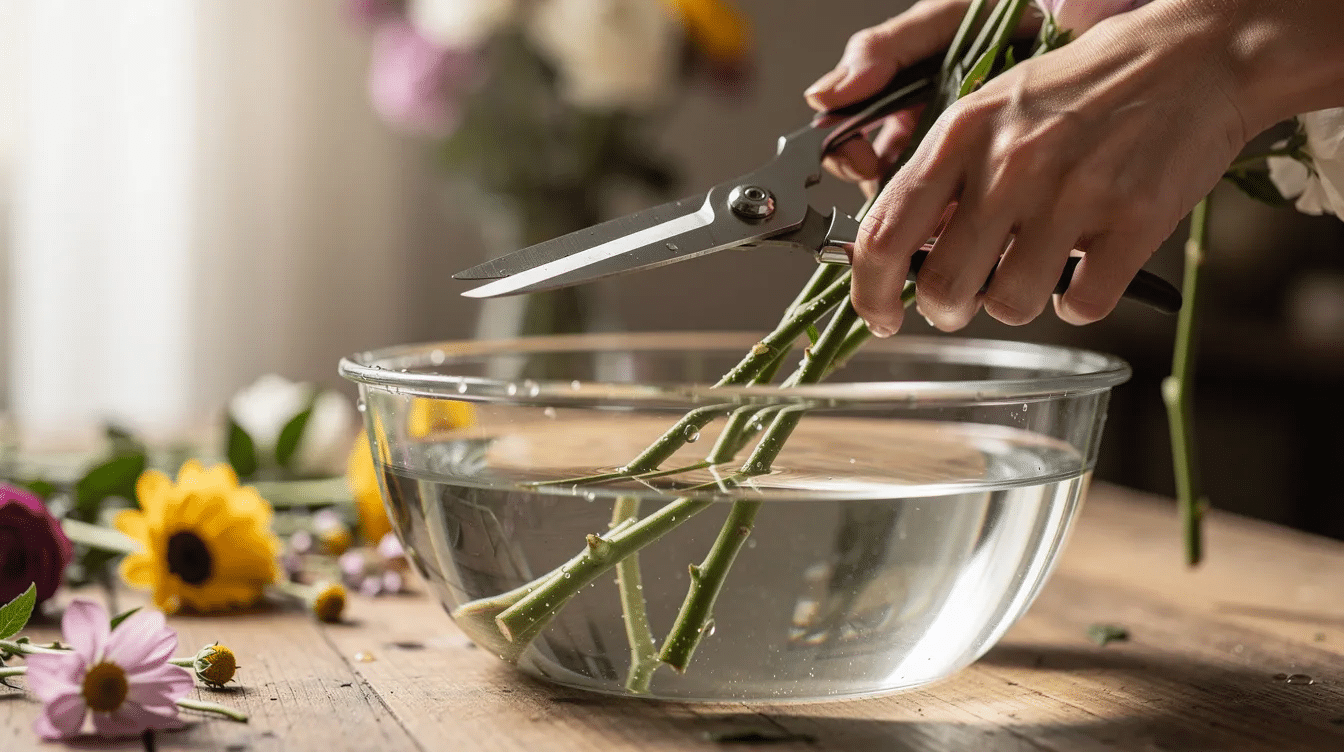
Cutting technique: Cut stems at an angle (about 45 degrees) to increase surface area and improve water intake. Do this under running water or in a bowl of water to prevent air bubbles from blocking the xylem vessels. Make deep cuts of 12–18 inches for longer stems, removing excess length. Flowers cut in heat wilt faster than those cut in cool conditions, so cut flowers early in the morning or late in the day when temperatures are lower.
Removing foliage: Strip all leaves that would sit below the water line. Remove leaves below the water line to prevent bacteria from feeding on decaying foliage – this is one of the fastest ways to shorten vase life.
Cutting stage tips:
Roses should be in the bud stage with petals just loosening
Lilies and alstroemeria with at least one bud showing color
Sunflowers and gerbera daisies mostly open
Blooms cut fully blown open usually last fewer days
Let newly cut stems rest in a cool, shaded place in deep, clean water for a few hours – or overnight – before arranging. This is especially helpful for rehydrating droopy flowers like hydrangeas and garden roses.
Water, Flower Food, and Simple Homemade Alternatives
Clean water plus balanced flower food is the single biggest factor in keeping flowers fresh longer – more important than most “tricks” found online.
Filling the vase: Use room temperature water (slightly cool is fine too). Using warm or lukewarm water initially can help flowers hydrate faster, but avoid hot water. Fill about two-thirds full so stems are well covered. Very heavily softened well water can sometimes shorten vase life, so consider using filtered water from your tap instead.
What commercial flower food does: Flower food contains sugar, acid, and bleach (or a similar biocide). Sugar provides energy to feed the blooms, acid adjusts pH to improve water intake, and the biocide works to kill bacteria. Flower food helps maintain the correct pH level in water, and adding flower food can extend the life of flowers significantly. Research by FloraLife found commercial food maintained vase life at around 10 days, while improperly formulated homemade mixes lasted only 2–5 days.
Homemade flower food recipe (per 1 litre of water):
Ingredient
Amount
Lemon juice
2 tablespoons
White sugar
1 tablespoon
Household bleach
½ teaspoon (a few drops)
This mix is not for drinking – store it away from children and pets. Homemade flower food includes lemon juice, sugar, and bleach in tiny amounts to replicate what commercial packets provide.
Aspirin and straight vinegar alone underperform compared to a proper formula
Copper coins or aspirin can help maintain water acidity and prevent bacterial growth, but they’re a close second to balanced plant food at best
Vodka in tiny amounts is sometimes suggested, but evidence is inconsistent
Daily Flower Care Routine to Keep Flowers Fresh Longer
This routine takes just a few minutes every 1–2 days and can add 3–5 extra days of vase life to most flowers.
Every 1–2 days:
Empty the vase completely
Wash it with warm water (quick rinse is fine between deep cleans)
Fill with fresh water and flower food
Wipe any slimy residue off the stems
Changing water and flower food every two to three days is recommended to keep bacteria in check. Re-cut stems by about 0.5–1 cm each time, always cutting stems at an angle. This opens clogged vessels and restores water intake. Re-cut stems every few days to maintain water intake throughout the arrangement’s life.
Remove any foliage or petals that have fallen into the water. Pinch off or snip browned outer petals – the “guard petals” on roses – to keep your bouquet looking neat while preventing decay.
Visual check: If water is cloudy, smells off, or stems feel slimy, change water immediately, even if it hasn’t been a single day. You may have noticed that some flowers like zinnias, yarrow, and daisies are especially prone to cloudy water and may need daily changes. Don’t forget – consistency matters more than any single trick.
Where to Place Your Flowers for Longer-Lasting Blooms
Location matters as much as water and food. Temperature, light, and nearby objects all affect how long your flowers last.
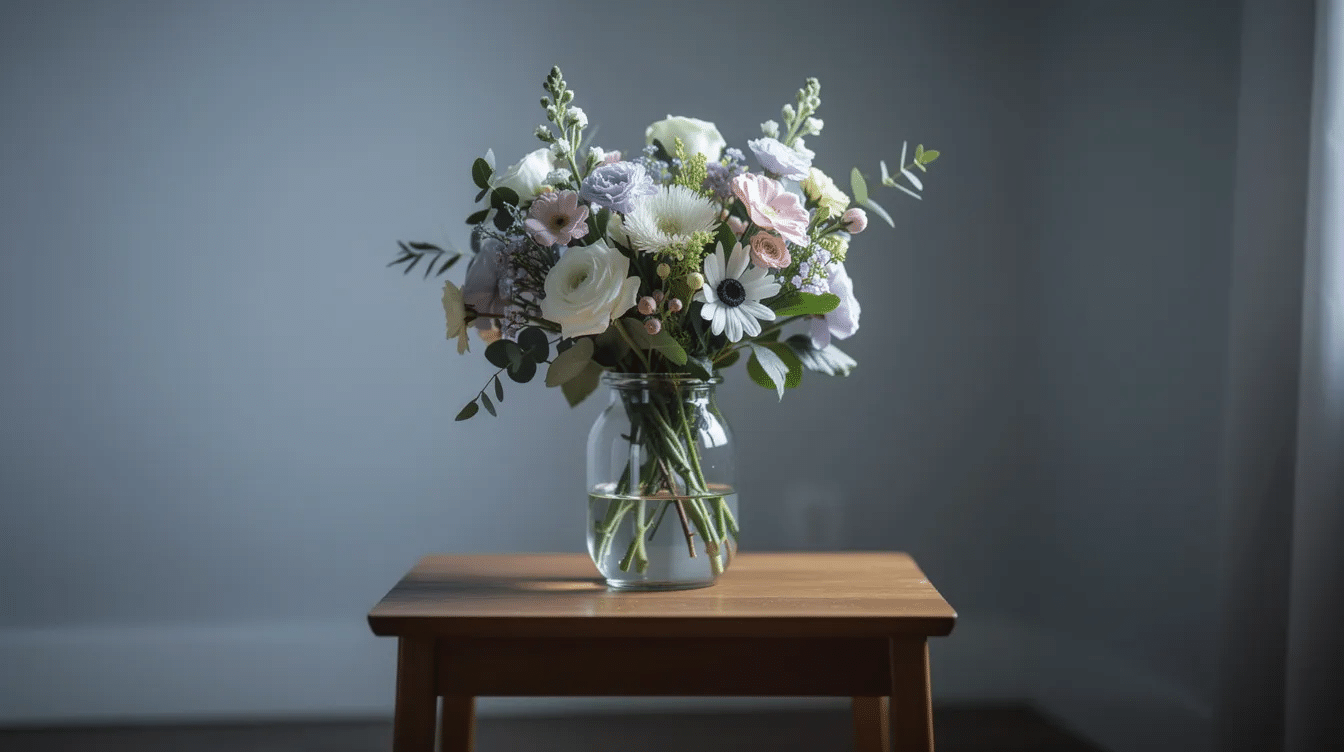
Ideal conditions: A cool room around 18–21°C (65–70°F), away from heat sources. Flowers last longer in cool temperatures. Avoid direct sunlight, as direct sunlight reduces flower longevity by accelerating transpiration and wilting. Flowers should be kept away from heating appliances like radiators, fireplaces, and ovens.
Placement mistakes to avoid:
Sunny windowsills or open windows with hot drafts
Directly under air vents
Draughty doorways
Moving your bouquet to a cooler hallway or bedroom at night can slow aging noticeably.
The ethylene problem: Ethylene gas is a ripening gas released by fruits like bananas, apples, pears, avocados, peaches, and tomatoes. Keep flowers away from ripening fruit to avoid ethylene gas exposure – this invisible gas tells flowers to age faster, causing drooping and petal drop. Ethylene gas from ripening fruit shortens flower life, so keep flowers and fruit bowls several feet apart, ideally in different rooms.
The fridge trick: Placing sturdy bouquets in the fridge overnight can extend freshness by a few days, as long as you keep them away from produce. Avoid this with tropical flowers, which suffer in cold temperatures. Most flowers benefit, but tropicals like orchids and birds of paradise prefer staying at room temperature.
Special Care for Popular Flower Types
While general flower care tips apply to most bouquets, some popular flowers benefit from extra steps.
Roses: Remove guard petals, cut stems long at an angle, and use deep water. Keep away from drafts. Drooping rose heads can sometimes be revived by re-cutting and placing stems in very warm water for 20–30 minutes to restore more water flow. Roses in bud stage will open gradually and keep flowers alive much longer.
Tulips and daffodils: Use cold water and keep in a cool spot. Tulips continue growing after cutting, so expect some bending. Daffodils release a sap that can harm other flowers – condition them in their own vase for several hours before mixing with other stems. Rinse their stems before putting them into a mixed arrangement.
Hydrangeas: These are prone to wilting due to high water demand. Cut stems at an angle, remove excess leaves, and submerge the heads or stems in cool water for 30 minutes to rehydrate. Mist blooms lightly – hydrangeas absorb moisture through petals as well as stems.
Long-lasting favorites:
Chrysanthemums and carnations generally last 10–21 days with regular water changes
Alstroemeria holds well for 7–10 days and is ideal when longevity is a priority
All three are great companions in mixed arrangements and respond well to standard care
When to Say Goodbye: Refreshing, Repurposing, and Composting Flowers
Even with the best care, cut flowers won’t last forever. Knowing when to retire a bouquet keeps your space looking fresh.
Regularly remove individual stems that are clearly past their best – brown, mushy, or with foul-smelling water. Removing dying blooms can prevent decay from spreading to healthy stems nearby via bacteria and ethylene.
Repurpose what’s still good: Trim good stems shorter for bud vases, jam jars, or tiny bedside arrangements once the original bouquet looks sparse.
Preserve selected flowers: Air-dry roses, statice, or eucalyptus upside down in a dark, dry place. Press flatter blooms in heavy books for cards or frames using simple book-pressing techniques, or dry flowers quickly in the oven for crafting and decor.
Compost spent flowers where possible, and use this moment as a natural cue to treat yourself – or someone else – to a fresh bouquet. You can also save petals for dehydrated rose projects, or transition your space from fresh bouquets to dried Christmas floral arrangements and bathroom decor with dried flowers for long-lasting, low-maintenance beauty. These are great tips to keep in mind as you cycle through seasonal blooms.
FAQs About Making Flowers Last Longer
Here are answers to common questions that go beyond the main step-by-step flower care tips covered above.
Can I use sugar or soda instead of commercial flower food?
Clear soda like lemon-lime can mimic parts of flower food because it contains sugar and acid. About ¼ cup per litre of water is usually enough. However, plain sugar water feeds both flowers and bacteria, so water must be changed more frequently to keep flowers fresh longer. Commercial flower food or a balanced homemade recipe with sugar, acid, and a biocide is generally more effective and more predictable than soda or sugar alone. When you do use soda, expect the water level to drop faster and cloudiness to appear sooner.
Is hot water or cold water better for cut flowers?
Most fresh flowers prefer room temperature water or cool water, which slows bacterial growth and helps them last longer without shocking the stems. A brief soak in warmer water can help revive very wilted stems like roses or gerberas – the warm temperature helps dissolve air bubbles in the xylem. After reviving, refill the vase with cool, clean water for ongoing care. Avoid very hot water for delicate blooms, as it can damage stem tissue and shorten vase life.
Should I remove the plastic wrap and tie from my bouquet right away?
Remove all outer packaging, rubber bands, and tight ribbons soon after arriving home so stems can spread out and air can circulate. Keeping flowers tightly bound traps heat and moisture, encouraging mold and bent stems. If you want to maintain the original shape for display, re-tie the bouquet loosely with twine or raffia once it’s in the vase.
Can I mix all flower types in one vase?
Many flowers can be mixed without issues, but some – like daffodils and hyacinths – release sap that can shorten the life of more delicate blooms. Condition “sappy” flowers alone for several hours, then rinse stems before adding them to mixed arrangements. Hardy flowers like carnations, chrysanthemums, and alstroemeria are reliable companions in any arrangement.
How can I keep flowers safe around pets and children?
Some popular flowers and foliage are toxic if ingested – lilies are particularly dangerous for cats. Keep arrangements out of reach of pets and young children. Check reputable toxic plants lists before bringing new flowers home, promptly clean up fallen petals and pollen, and consider pet-safe varieties like roses, gerberas, and snapdragons when safety is a concern.
DannyContent Writer
Hey there, since 2016, my mission has been to provide you with the information and guides you need to make food dehydrating simple and fun. Whether you're a newbie or a seasoned pro, my site offers helpful guides, reviews, and recipes to enhance your dehydrating experience. I take pride in only recommending products I believe in, ensuring my readers' trust. As an affiliate of various programs, including Amazon Associates, your support helps me continue providing quality content. Thanks for stopping by, and happy dehydrating!