We earn a commission if you make a purchase, at no additional cost to you.
09/22/2026 04:39 pm GMT
🍊 Dehydrated Food Info Finder — Temperatures & Drying Times
Choose a category, then pick a food to see its drying temperature and time.
⚠️ Safety Disclaimer: Drying times are estimates and vary based on slice thickness, food moisture content, humidity, and your dehydrator model. Always check for doneness before storing — food should feel dry, leathery, or brittle with no moist spots. Improperly dried food can harbour mould and bacteria. For meat and poultry, follow USDA safe internal temperature guidelines: beef and pork to 160°F (71°C), poultry to 165°F (74°C). Use a food thermometer when in doubt. Store all dehydrated foods in airtight containers in a cool, dark place and discard anything showing moisture, mould, or off odours.
The best food dehydrators preserve nutrients and flavor, making them a healthy and cost-effective option for food storage. When choosing a food dehydrator, consider its size, heat, and airflow options, and additional features like timers and temperature controls. Top food dehydrators on the market include Excalibur], Gourmia, and Gardenmaster, offering a range of features and benefits for all food drying needs.
What is a Food Dehydrator?
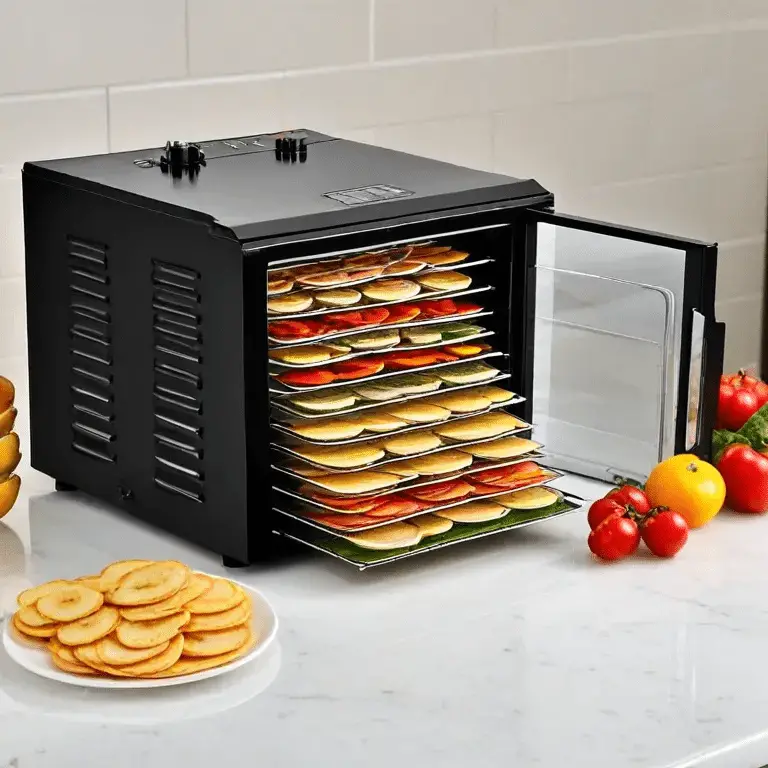
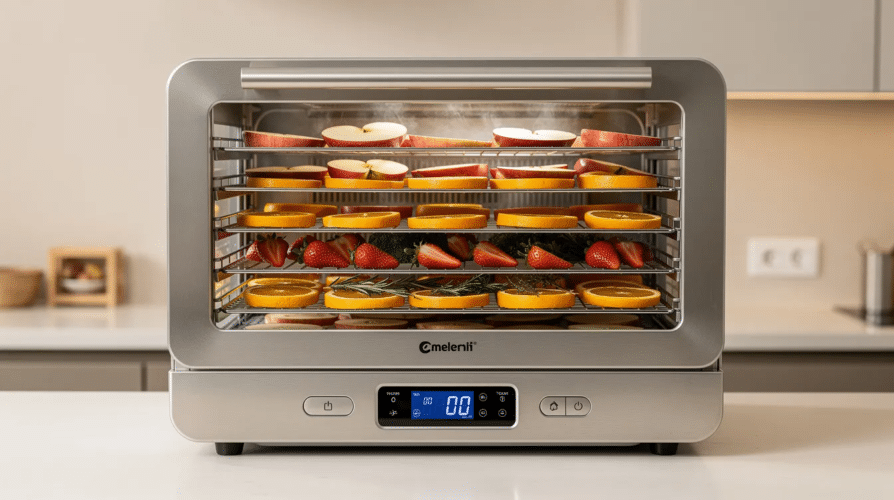
A food dehydrator is a specialized kitchen appliance designed for the purpose of extracting moisture from food items. It achieves this through a combination of controlled temperature and airflow, which serves to preserve and extend the shelf life of various food items such as fruits, vegetables, herbs, and meats like jerky.
Through the utilization of this dehydration process, a food dehydrator allows individuals to prepare healthy snacks without the need for preservatives, thereby contributing to a reduction in food waste. Different types of food dehydrators are available on the market, including stackable tray dehydrators, box dehydrators, and commercial-scale dehydrators suitable for larger quantities. Each type of dehydrator caters to specific requirements, enabling efficient dehydration of a wide variety of foods. Fruits can be transformed into chewy snacks or crispy chips, vegetables can be preserved for use in soups or powdered form, herbs can be dried for seasoning purposes, and meats can be converted into flavorful jerky.
Benefits of Using a Food Dehydrator
The utilization of a food dehydrator presents a multitude of advantages, ranging from the preservation of inherent nutrients** and flavors** in fresh produce to the provision of a stable temperature and environment that mitigates the potential for mold proliferation and bacterial contamination. This renders it an invaluable instrument for culinary professionals and household cooks alike.
Preserving Nutrients and Flavor
One of the principal advantages of utilizing a food dehydrator is its capacity to maintain the vital nutrients and flavor profiles of fresh produce, ensuring that the dehydrated food retains its nutritional value and palatability.
The process of dehydration involves extracting the water content from the food item, which contributes to extending its shelf life without compromising its nutritional integrity. By eliminating the moisture that fosters the growth of bacteria and mold, dehydrated food remains resistant to spoilage for a prolonged duration.
Moreover, this technique aids in the preservation of essential nutrients such as vitamins C and A, along with minerals like potassium and magnesium within the food, unlike several other preservation methods that often result in nutrient depletion. Consequently, the practice of dehydrating food is widely favored by health-conscious individuals seeking to uphold a dietary regimen rich in essential nutrients.
Factors to Consider When Choosing a Food Dehydrator
The process of choosing the most suitable food dehydrator necessitates a thorough evaluation of several key factors. These factors include the number of trays or shelves, the temperature range, airflow capacity, and the particular culinary requirements of the user, whether they are a seasoned professional in the culinary industry or an amateur home cook with an interest in food preservation.
Size and Capacity
When considering a food dehydrator, it is essential to take into account factors such as size and capacity. Some models use expandable tray systems for more space and increased capacity. Larger models, equipped with multiple shelf trays or stacking capabilities, offer the advantage of being able to dehydrate larger quantities of food simultaneously, whether you are drying one batch or a big batch; for example, the Nesco Snackmaster can use extra trays and expand to 12 trays for up to 7.5 lbs of jerky, though not all units support as many trays. Conversely, compact designs are better suited for smaller kitchens.
The primary benefit of larger dehydrators lies in their capacity to process greater amounts of food, thereby reducing the overall duration required for dehydration. This feature makes them particularly advantageous for individuals who intend to prepare substantial batches of dried fruits, vegetables, or jerky.
The effectiveness of a food dehydrator relies heavily on its heat and airflow options, with vertical-airflow models moving air up through stacked trays and horizontal-airflow models pushing it across shelves for more even results. These features are essential in achieving a consistent temperature and ensuring even heat distribution throughout the appliance. Fans, whether top-mounted or back-mounted, play a crucial role in optimizing the drying process.
Top-mounted fans are commonly found in dehydrators where the heating element is positioned at the bottom of the unit. These fans work to circulate air evenly across the trays, though you may need to rotate trays because the top tray can dry a bit differently from the lower levels, facilitating uniform drying across all layers of food.
Conversely, back-mounted fans are located at the rear of the dehydrator, directing hot air horizontally through the chamber. This design allows for the even distribution of heat throughout the appliance, preventing the formation of hot spots and promoting efficient food dehydration. Vertical airflow dehydrators are typically round ones and less expensive. Horizontal airflow dehydrators are usually square, feel more professional, and tend to dry more evenly than vertical designs.
Both types of fans are integral in maintaining a stable temperature within the dehydrator and ensuring consistent drying results across various food items. Nesco models, for example, use round trays with a hole in the middle.
Additional Features: Stainless Steel and More
Numerous contemporary food dehydrators are equipped with supplementary features that augment their versatility, including digital controls, and most models include built-in timers and temperature controls, plus provisions for fermentation and user-friendly designs that facilitate cleaning.
These sophisticated food dehydrators afford users the convenience of establishing precise temperatures and timers via digital controls, enabling them to effectively dehydrate a diverse range of foods with ease. A timer allows automatic shut-off for convenience. Temperature controls in the 95°F to 165°F range are essential for dehydrating foods, and many models offer adjustable settings from 105°F to 165°F because different foods require specific heat levels. Certain models also offer the capability of fermenting foods, broadening their utility beyond mere dehydration. The straightforward design of these appliances ensures that users can uphold cleanliness standards and prolong the operational longevity of their dehydrator effortlessly, whether the trays are dishwasher safe or better to hand wash in the dishwasher less often; some users also add mesh sheets or other sheets, including parchment paper, when small items might stick. Stainless steel trays are generally more durable and easier to clean than plastic trays.
Top Food Dehydrators on the Market
In the search for the optimal food dehydrator currently available, brands such as Excalibur, Gourmia, and Gardenmaster are prominent for their consistent performance, innovative attributes, and positive feedback received from novices as well as seasoned culinary professionals.
Excalibur Food Dehydrator: Features and Benefits
The Excalibur food dehydrator is highly regarded for its robust stainless steel construction and capability to maintain a uniform temperature throughout its numerous trays, positioning it as a premier choice for serious Excalibur dehydrator buyers and other food preservation enthusiasts.
This superior appliance is equipped with adjustable thermostats that enable users to establish precise temperatures tailored to various food items, ranging from herbs to jerky. Its uniform heat dispersion guarantees consistent drying of food across all levels, eliminating the necessity for rotation during the dehydration process.
Users commend the Excalibur dehydrator for its ample interior space, accommodating substantial quantities of produce without compromising operational efficiency. Its user-friendly interface and uncomplicated cleaning procedure have resulted in notable levels of satisfaction among individuals engaged in home food preservation.
Gourmia Food Dehydrator: Features and Benefits
The Cosori food dehydrator presents itself as a compact and user-friendly option with rectangular stainless steel trays that delivers exceptional performance for culinary enthusiasts seeking to preserve their preferred foods without occupying excessive kitchen space. It has a fixed capacity of 6 trays, with about 156 sq. in. of drying area per tray.
Its compact nature enables convenient storage in small kitchens or areas with limited countertop space, making it an optimal choice for individuals facing spatial constraints. Furthermore, the Cosori dehydrator features easily cleanable trays and components, reducing the time and effort necessary for maintenance.
Users can anticipate consistent outcomes and impeccably dehydrated fruits, vegetables, and meats with this efficient machine, which is very quiet during operation and works perfectly for everyday drying, even when humidity is high, so results stay just fine.
Gardenmaster Food Dehydrator: Features and Benefits
The Gardenmaster food dehydrator is distinguished by its large capacity and rear-mounted fan, which facilitates efficient heat distribution, enabling the dehydration of substantial quantities of food simultaneously. The nesco gardenmaster trays provide 144 sq. in. of drying area.
This dehydrator’s remarkable capacity permits users to dehydrate large batches of fruits, vegetables, herbs, and jerky, making it particularly suited for individuals seeking to preserve and store food effectively. The strategic placement of the fan at the rear of the unit promotes consistent air circulation, leading to uniform drying across all trays. The efficacy of the Gardenmaster dehydrator not only saves time but also ensures the preservation of the nutritional value of the food throughout the dehydration process.
Tips for Using a Food Dehydrator
Achieving optimal results with a food dehydrator necessitates a comprehensive grasp of the most effective techniques for dehydrating various food items, coupled with the implementation of measures to mitigate the risk of bacterial and fungal proliferation throughout and after the dehydration procedure.
Preparation and Storage Tips for Homemade Beef Jerky
Adequate preparation and storage procedures are crucial when utilizing a food dehydrator. This process commences with the thorough washing and slicing of fresh produce. Subsequently, it is imperative to store the dehydrated food in airtight containers to uphold its quality. For more information on the best food dehydrators on the market, check out this article.
The proper preparation of food before dehydration serves to augment both the flavor and nutritional content, in addition to guaranteeing the safety of the final product. It is essential to eliminate any imperfections or spoiled sections from the produce prior to slicing to mitigate the risk of contamination. Post-dehydration, storing the food in a cool, dimly lit area serves to extend its shelf life. Additionally, labeling containers with the dehydration date facilitates the rotation of stock, ensuring the consumption of the oldest items first and the preservation of freshness. These uncomplicated measures can yield a substantial improvement in the taste and safety of dehydrated foods.
Final Thoughts and Recommendations
Whether you are an aspiring home cook looking to embark on modest culinary endeavors or a seasoned professional chef seeking the optimal dehydrator to expand your food preservation techniques, investing in a high-caliber dehydrator can significantly augment your culinary capabilities.
It is imperative to take into account factors such as dimensions, capacity, and heating alternatives when procuring a dehydrator. Novices may find user-friendly models with pre-set temperature settings to be most suitable, whereas experienced chefs may gravitate towards dehydrators equipped with sophisticated features that provide precise control. Additionally, it is crucial to ensure that the dehydrator is straightforward to clean and maintain.
By experimenting with a diverse array of foods and recipes, you can maximize the utility of your dehydrator. Whether crafting jerky, fruit leather, or dried herbs, a top-tier dehydrator has the potential to elevate your culinary prowess and introduce a new realm of flavor and convenience to your repertoire.
Frequently Asked Questions
What are the best food dehydrators on the market?
Some of the best food dehydrators on the market include the Excalibur 3926TB, Nesco FD-75A, and the COSORI Premium Food Dehydrator.
What features should I look for in the best food dehydrators on the market?
When shopping for the best food dehydrator, look for features such as adjustable temperature settings, multiple trays, and a timer for precise drying.
Are the best food dehydrators on the market expensive?
Not necessarily. While some high-end dehydrators can be expensive, there are also affordable options on the market that are still considered to be some of the best.
Do the best food dehydrators on the market have a warranty?
Yes, most reputable brands offer a warranty for their food dehydrators. Make sure to check the specific warranty terms before making a purchase.
Can I dehydrate more than just fruits and vegetables with the best food dehydrators on the market?
Absolutely. The best food dehydrators on the market can also be used for drying herbs, making jerky, and even creating fruit leather.
What are the benefits of using the best food dehydrators on the market?
Using a food dehydrator is a great way to preserve food, retain its nutrients, and create healthy, homemade snacks. The best food dehydrators on the market make the process easy and efficient.
DannyContent Writer
Hey there, since 2016, my mission has been to provide you with the information and guides you need to make food dehydrating simple and fun. Whether you're a newbie or a seasoned pro, my site offers helpful guides, reviews, and recipes to enhance your dehydrating experience. I take pride in only recommending products I believe in, ensuring my readers' trust. As an affiliate of various programs, including Amazon Associates, your support helps me continue providing quality content. Thanks for stopping by, and happy dehydrating!