We earn a commission if you make a purchase, at no additional cost to you.
09/22/2026 04:39 pm GMT
🍊 Dehydrated Food Info Finder — Temperatures & Drying Times
Choose a category, then pick a food to see its drying temperature and time.
⚠️ Safety Disclaimer: Drying times are estimates and vary based on slice thickness, food moisture content, humidity, and your dehydrator model. Always check for doneness before storing — food should feel dry, leathery, or brittle with no moist spots. Improperly dried food can harbour mould and bacteria. For meat and poultry, follow USDA safe internal temperature guidelines: beef and pork to 160°F (71°C), poultry to 165°F (74°C). Use a food thermometer when in doubt. Store all dehydrated foods in airtight containers in a cool, dark place and discard anything showing moisture, mould, or off odours.
Dehydrated Berries: How to Dry, Store, and Use Berry Goodness All Year
Turning a flat of fresh strawberries or a bucket of peak-season blueberries into shelf stable pantry staples takes a food dehydrator, some patience, and a handful of practical techniques. This guide covers every step of the dehydrating process, from selecting and preparing berries to testing for doneness, conditioning, storing, and cooking with your finished dried berries year round.
Key Takeaways
Dehydrated berries are fresh berries (blueberries, raspberries, strawberries, cherries, blackberries, and others) with roughly 80 to 95 percent of their water removed through gentle heat and air circulation. The result is a lightweight, nutrient dense snack with concentrated flavor and a shelf life measured in months rather than days.
Dehydrating berries at 125 to 135°F preserves much of their vitamin c, fiber, and antioxidant content while avoiding the added sugar found in many commercial products.
Dehydrated fruit is lightweight and shelf-stable for easy storage, making dried berries a perfect snack for hiking, lunch boxes, and emergency pantries.
Compared to dehydrated pears, dried apples, or dehydrated pineapple, berries dry faster because of their small size and thin skins, but they also scorch more easily if the temperature creeps too high.
The core steps: wash and sort, “check” tough skins, set your dehydrator to 135°F, ensure good air circulation, and test for doneness (pliable, not sticky, no visible moisture content on the surface).
Below you will find detailed sections on equipment, dehydrating blueberries and dehydrating cherries specifically, long term storage, and creative recipe ideas using dried berries and fruit powder.
What Are Dehydrated Berries? (And How They Differ From Other Dried Fruit)
Fresh berries contain 80 to 90 percent water by weight. During dehydration, controlled heat and steady air circulation reduce that moisture content to roughly 10 to 20 percent, producing chewy, shelf stable fruit pieces that retain most of their bioactive compounds. Popular dehydrated berries include strawberries, blueberries, and cranberries, though raspberries, blackberries, cherries, and goji berries all dehydrate well.
The term dried fruit covers a wider range of methods. Sun-drying exposes fruit to weather, UV, and pests. Freeze-drying uses sublimation to produce crisp, ultra-light chips with moisture below 5 percent. Home and commercial dehydrators sit in between: low-temperature convective drying that yields a leathery, pliable texture at moderate cost. Dehydrated berries differ from larger sliced fruit like pears, apples, bananas, and pineapple in one key way: their thin skins and high surface-area-to-volume ratio let them dry faster, but that same trait makes them prone to scorching if heat is too aggressive.
Commercial dried berries often contain added sugar, fruit juice concentrates, or glazing oils. Home-dehydrated fruit can be entirely unsweetened and oil-free, giving you full control over the sugar content and ingredient list. Dehydrated berries offer a convenient way to enjoy fruit year-round. Typical final textures range from chewy (dried blueberries at about 15 percent moisture) to crispy (strawberry chips dried below 10 percent) to leathery (cranberries around 18 percent). Common uses include trail mix, baking, smoothies, fruit powder, and emergency food storage as part of a larger dehydrated fruit pantry.
Nutrition Benefits of Dehydrated Berries
Dehydrated fruit retains most nutrients when dried at low temperatures. At 125 to 135°F (52 to 57°C), the drying process preserves a large share of the berry’s original fiber, polyphenols, and flavonoids, including the anthocyanins responsible for deep blue and red pigments in blueberries and cherries. Dehydrating concentrates calories, fiber, vitamins, and minerals into a smaller volume, so a quarter-cup of dried berries delivers more fiber and phenolics per gram than the same weight of fresh fruit; this aligns with what you see when you examine how many nutrients are lost in dehydrated fruits.
Key nutrient profiles by berry type:
Dried blueberries are high in vitamin c and manganese.
Dried cherries are high in Vitamin C and antioxidants, plus potassium and melatonin.
Raspberries and blackberries supply fiber and vitamin K.
Dehydrated berries can contribute to healthy cholesterol levels due to their fiber content.
Adding dehydrated berries to foods increases their nutrient density. However, dehydrated berries pack higher sugar concentrations compared to fresh berries because removing water concentrates natural sugars alongside everything else. Sweetened commercial products amplify this effect; some brands more than double the calorie count per serving with syrup coatings. Look for “no sugar added” or “unsweetened” labels when buying, or dehydrate your own to keep the sugar content under control.
Some heat-sensitive vitamins, especially vitamin c, decline during long drying, but many antioxidants become more concentrated, and fiber remains intact. Portion size of dehydrated berries should be moderated due to calorie concentration. A typical serving of a quarter to a third cup provides the health benefits of berries without excessive sugar or calories, and replaces processed candy as a great snack in lunch boxes.
Choosing the Best Berries for Dehydrating
Select ripe, but not overripe, berries harvested during peak season for the best flavor when dehydrated. During the hot summer months, local U-pick farms and farmers’ markets sell berries in bulk at a fraction of retail price; buying several flats and dehydrating them in one weekend stocks the pantry for fall and winter.
Blueberries: Highbush cultivars (larger, firmer skin) produce plumper dried blueberries; wild lowbush berries are smaller and dry faster, with a more intense unique flavor.
Strawberries: Choose small, deeply colored fresh strawberries. Hull and slice for faster, more even drying.
Raspberries and blackberries: Pick firm fruit with intact drupelets. Avoid mushy berries that will collapse on dehydrator trays.
Cherries: Pit sweet or sour varieties. Larger berries like whole cherries take longer to dry than halved ones.
Cranberries and goji berries: These smaller berries dehydrate well but benefit from skin-checking (covered below).
Berry size and skin thickness are the two biggest other factors affecting drying time. Small wild blueberries and thin slices of strawberry dry faster than whole cherries or large table grapes. Blemished fruit is acceptable if you trim away damage, but discard any moldy or fermented berries; even minor contamination risks the whole batch.
When running mixed loads alongside different fruits, such as dehydrated pears, apple rings, or thinly cut dehydrated pineapple, group items by expected drying time and remove finished pieces early. Uniform slice thickness (about a quarter inch) across all sliced fruit keeps drying rates aligned, and the same principles apply when you explore what fruit you can dehydrate at home.
Essential Equipment for Dehydrating Berries
A dedicated food dehydrator is the safest and most consistent tool for the job. Look for an adjustable thermostat (95 to 165°F), horizontal or vertical airflow, and stackable or slide-in dehydrator trays. Mesh liners or a mesh sheet prevents small berries like blueberries and cranberries from falling through tray gaps, especially when you’re following ultimate dehydrator fruit recipes that call for mixed fruits and leathers.
For oven drying, set the temperature to the lowest available setting (often 140 to 170°F), prop the oven door open a few centimeters with a wooden spoon, and place a small fan nearby for extra air circulation. Oven drying uses more energy and offers less precise control, but it works in a pinch.
Basic accessories:
Paring knife and cutting board for hulling and slicing
Colander for rinsing, clean towels for patting dry
Bowls with lemon juice or citric acid solution for pre-treating cut fruit
Glass jars, mason jars, or vacuum seal bags for storage
A coffee grinder or small blender for turning dried berries into fruit powder later
Any method combining gentle heat, low humidity, and consistent airflow can dehydrate fruit. Automated dehydrators reduce the risk of scorching or under-drying compared to makeshift setups.
Preparing Berries Before Dehydration
Careful washing, sorting, and trimming produce safe, high-quality dehydrated berries that store well and taste great.
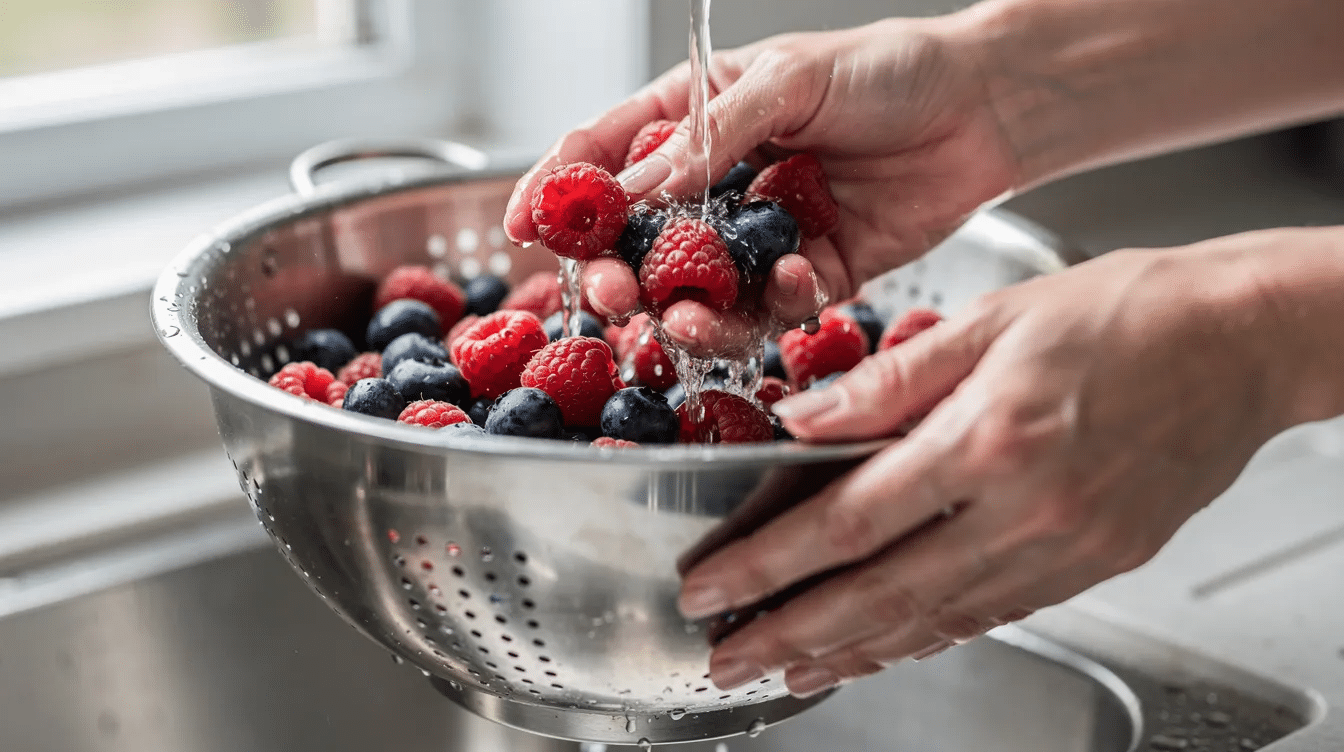
Start by rinsing berries in cool running water. Swish briefly; do not soak, because waterlogged fruit takes longer to dry and can ferment. Drain thoroughly in a colander, then gently pat dry with clean kitchen towels. Surface water that remains after washing slows the dehydrating process.
Remove stems, hulls, and leaves: hull strawberries with a paring knife, snip stems from cherries, and discard bruised or insect-damaged sections while salvaging usable flesh. For cherries, remove seeds (pit them completely) before drying. Some recipes call for you to remove seeds from other fruits like grapes as well.
Optional pre-treatments help preserve color on lighter cut fruit. Dip sliced strawberries, pears, or apples in a solution of lemon juice and cold water (one tablespoon per cup of water), or use citric acid at a similar ratio. Use lemon juice to prevent oxidation in apples, pears, and other light-fleshed fruit. Most dark berries do not brown heavily, but a quick dip can brighten flavor.
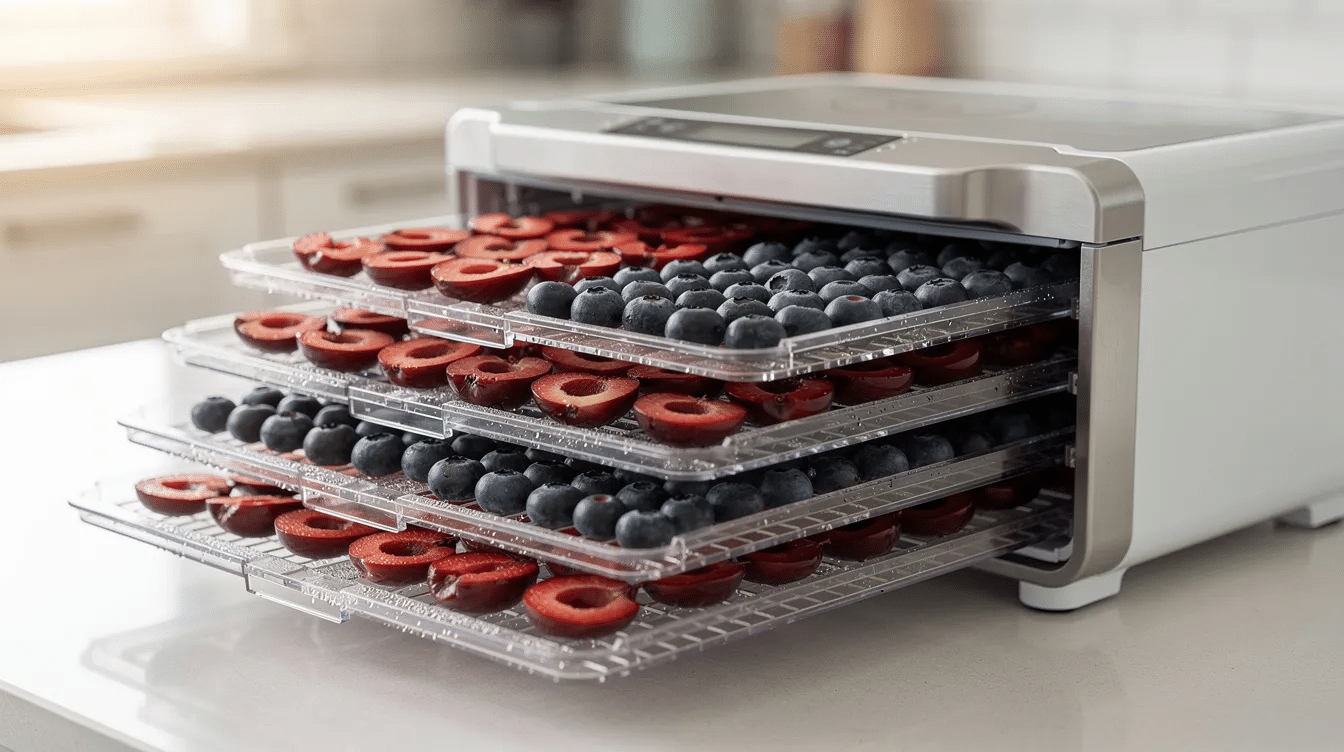
Slice larger fruits dried alongside berries (like dehydrated pears or dehydrated pineapple) into uniform thin slices of about a quarter inch so they finish at roughly the same time. Arrange all prepared berries in a single layer on dehydrator trays or parchment paper-lined baking sheets, leaving small gaps between fruit pieces to maximize air circulation from the start.
“Checking” and Pre-Treating Berry Skins
“Checking” means breaking or softening the waxy outer skin of berries like blueberries, cranberries, grapes, and cherries so moisture escapes faster during dehydrating. Without checking, the intact skin traps water inside and can double drying time.
Mechanical methods: Prick each berry with a clean needle, gently squeeze to crack the skin, or halve cherries after pitting. Cut grapes crosswise three times for faster drying. These approaches work well for small batches but become tedious at scale.
Thermal methods: Briefly blanch berries in boiling water for 20 to 30 seconds, then transfer them immediately into ice or cold water to stop cooking. This “checks” the skins without turning fruit to mush. Over-blanching softens structure and destroys nutrients, so keep the timing tight.
Freeze-checking: Spread washed blueberries or grapes on a tray, freeze them solid overnight, then load them directly onto dehydrator trays. Ice crystals rupture cell walls during freezing, letting moisture escape once heat is applied.
Raspberries and blackberries typically do not require checking. Their open drupelet structure and thin skins release moisture quickly. Handle them gently to avoid crushing.
Proper checking can cut drying time for dehydrating blueberries and dehydrating cherries from over 24 hours down to 10 to 18 hours, reducing the risk of spoilage and uneven textures where the outside is hard while remaining moisture stays trapped inside.
Step-by-Step: How to Dehydrate Berries (General Method)
This section outlines a general drying process for mixed berries: strawberries, blueberries, raspberries, blackberries, and cherries, with small adjustments for size and moisture, and you can adapt these steps to many dehydrated fruit recipes for delicious snacks.
Preheat your food dehydrator to 125 to 135°F (52 to 57°C). If your unit has a “fruit” preset, use that.
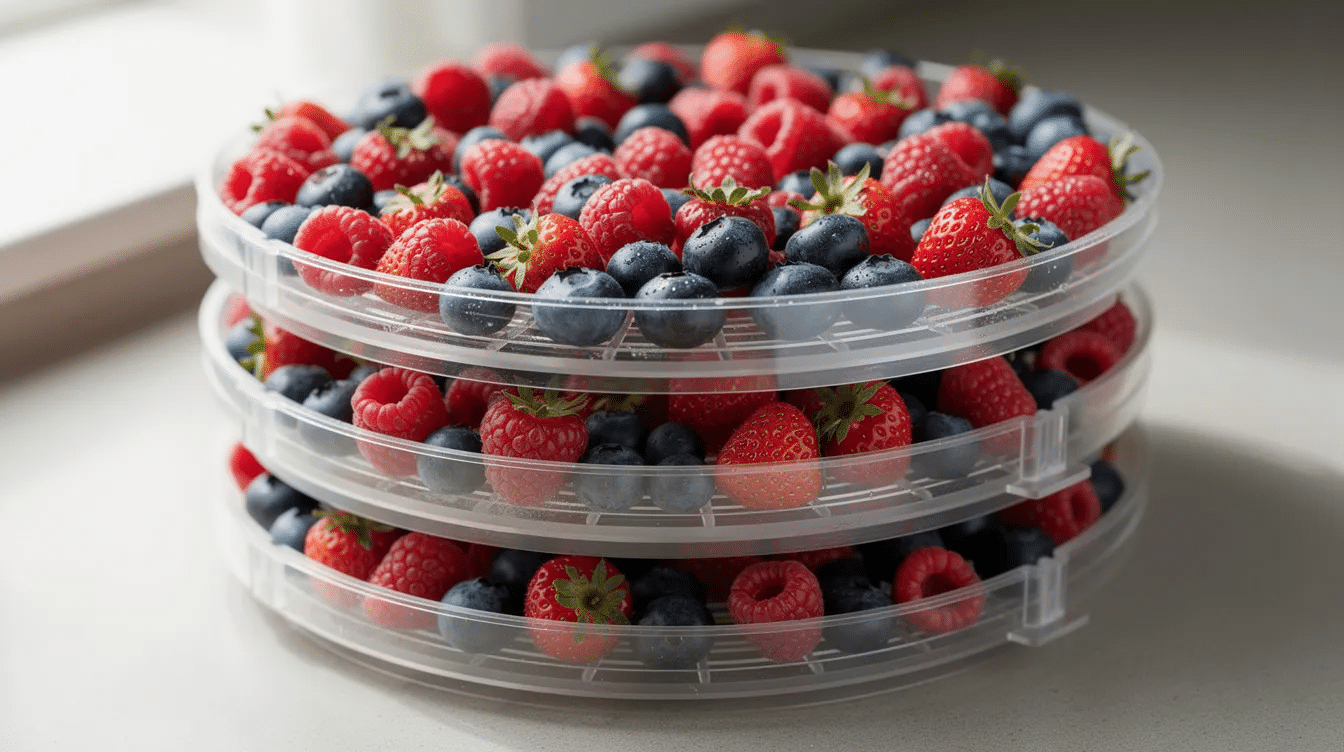
Arrange prepared berries in a single layer on dehydrator trays with small gaps between each piece. Do not stack or overlap; airflow must reach every surface.
Slide trays in and close the unit. Avoid blocking vent holes.
Expected drying times depend on berry type, size, humidity, and dehydrator model:
Berry
Prep
Approx. Time at 135°F
Sliced strawberries
Hulled, ⅛–¼ in. slices
6–12 hours
Raspberries
Whole, gentle handling
10–12 hours
Checked blueberries
Frozen or blanched
14–16 hours
Halved cherries
Pitted, halved
18–30 hours
Blackberries
Whole or halved if large
10–18 hours
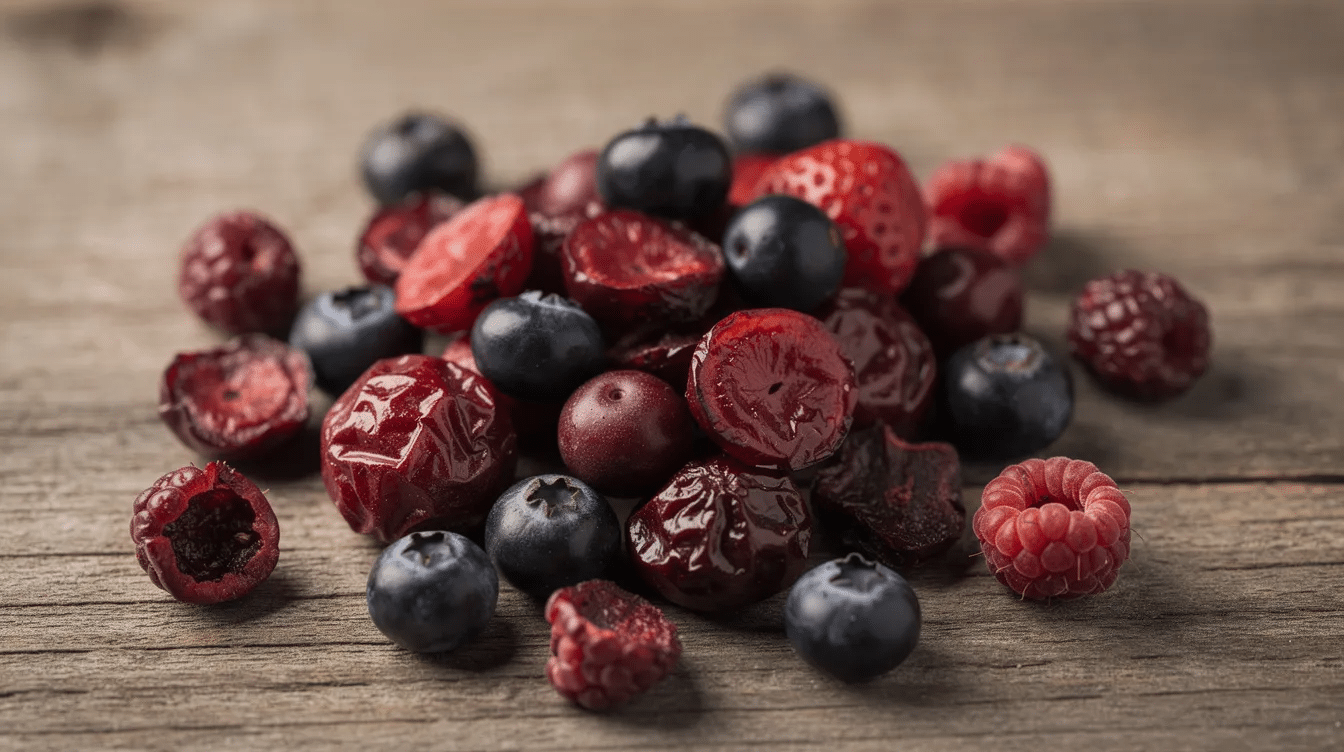
Rotate trays every 4 to 6 hours. Check for sticking and remove fruit pieces that finish early so they do not over-dry while slower pieces continue. The correct finished texture for most dehydrated berries is leathery or chewy, not wet or squishy. When torn, no beads of moisture should appear. Very small berries may become firm or slightly crisp when completely dry.
Let berries cool entirely at room temperature before conditioning and storage. Warm fruit trapped in a sealed container creates condensation, and if moisture forms inside the jar, mold follows.
How to Dehydrate Specific Berries: Blueberries, Cherries, and More
Different berries need slightly different handling. Here are focused tips for the most common varieties.
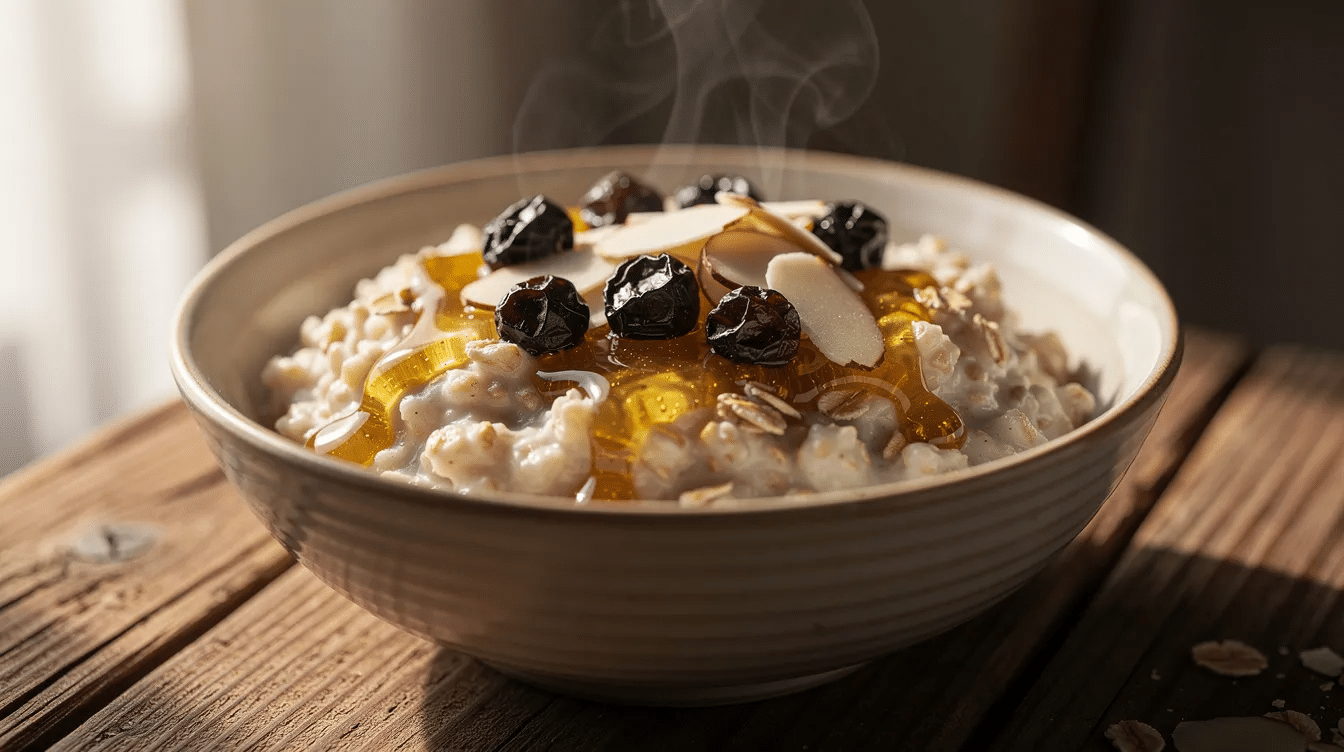
Dehydrated blueberries: Wash, drain, and check skins by freezing overnight or blanching for 20 seconds. Dehydrate blueberries at 135°F for 14 to 16 hours until berries are dry and slightly leathery. Dried blueberries may feel quite hard straight out of the dehydrator but soften during conditioning. Dehydrated blueberries are great in oatmeal and trail mixes, and there are many simple methods for dehydrating blueberries if you want to focus on this single fruit.
Dehydrating cherries: Wash and pit sweet or tart cherries, then halve or quarter them. Optionally dip in lemon juice and water to preserve color. Dehydrate at 135°F for 18 to 30 hours until leathery. Dehydrated cherries are excellent in trail mixes and baked goods, where their concentrated tartness creates bursts of flavor, and a dedicated step-by-step guide to dehydrating cherries can help you fine-tune timing and texture.
Raspberries and blackberries: Arrange gently to avoid crushing. Consider cutting very large blackberries in half. Dehydrate raspberries at 135°F for 10 to 12 hours until individual drupelets no longer feel wet but berries still bend slightly without crumbling. Dried raspberries add color and nutrition to fruit cocktails and morning oatmeal.
Strawberries: Hull fresh strawberries and slice ⅛ to ¼ inch thick. Optionally dip slices in lemon juice (without added sugar) for brightness. Dry at 135°F for 6 to 12 hours for chewy slices, or longer for crisp chips; for more detail, see how to dehydrate strawberries in a dehydrator using similar temperatures and slice thickness.
Compared to these berries, dehydrated pears and dehydrated pineapple need thicker slices (about ¼ inch), and their higher sugar content can make them sticky if under-dried. Similar principles apply to apricots, dried lemons, and other high-acid fruit.
Air Circulation, Temperature, and Safety Tips
Consistent air circulation, gentle heat, and low ambient humidity are the three factors that make dehydrating berries safe and effective. Without all three, the drying process stalls and bacteria or mold can grow before moisture drops low enough to inhibit them.
Load trays with small gaps between each berry. Avoid blocking vent holes or stacking fruit pieces so warm air moves freely across every level. In an oven, enhance airflow with a small external fan pointed at the cracked oven door.
Temperature guidance: 125 to 135°F for most berries preserves flavor and nutritional value. Temperatures above roughly 150°F can harden the outside of each berry (case hardening) while trapping remaining moisture inside. That trapped moisture raises the risk of mold during storage even though the surface feels dry.
Food safety basics: start with clean equipment and washed hands; never dry berries that show mold or fermentation; and confirm that the final texture passes the doneness tests described below. Dehydrated fruit is compact, making it ideal for on-the-go snacking, but only when dried safely.
In very humid regions, drying takes longer. Running a dehumidifier in the kitchen or timing batches for drier days can speed the process and reduce the chance of spoilage during extended runs.
How to Tell When Dehydrated Berries Are Done (and How to Condition Them)
Under-drying is the most common cause of moldy dried berries. Learning to test for doneness and to “condition” each batch prevents waste.
Tactile tests: Berries should feel dry on the surface, not cool or damp. Cut one in half; no visible moisture should bead up. When squeezed, the piece should be pliable or slightly firm, not squishy or wet.
Berry-specific cues: Raspberries and blackberries may feel light and slightly crisp around the edges. Dehydrated blueberries and grapes often feel quite hard right out of the dehydrator but soften during conditioning. Strawberry slices should be leathery or crisp depending on how thin you cut them.
Conditioning process: Condition dehydrated fruit for 7 to 10 days to prevent mold. Place completely cooled dried berries loosely in clean glass jars, filling about two-thirds full. Seal and store at room temperature, shaking jars daily to redistribute fruit and remaining moisture. Condition dehydrated fruit for a week before sealing it into final storage containers.
If condensation appears on jar walls or pieces clump together, return berries to the dehydrator for several more hours, then restart conditioning with fresh jars. After successful conditioning (no moisture forms on the glass, no sticking), berries are ready for long term storage.
Storing Dehydrated Berries for Maximum Shelf Life
Properly dehydrated berries can last for months or even years when stored correctly. Under typical home conditions, expect 12 to 18 months of good quality; dehydrated fruit is shelf-stable and can last up to a year at peak taste and color.
Container options:
Container
Best For
Notes
Glass mason jars
Daily use, conditioning
Reusable, easy to inspect
Mylar bags + oxygen absorbers
Long term storage
Blocks light and air
Vacuum seal bags
Freezer or pantry
Removes air effectively
Small resealable pouches
Travel, lunch boxes
Portion-sized convenience
Store dehydrated fruit in airtight containers. Keep dehydrated fruit in a dark, cool place, ideally around 50 to 60°F (10 to 15°C), away from ovens and direct sunlight. Heat, light, and humidity accelerate flavor loss. Use oxygen absorbers for long-term storage of dried fruit to slow oxidation of residual berry oils.
Label every airtight container with the fruit type and dehydrating date (for example, “Blueberries, August 2026”) so you can rotate stock and eat the oldest dried berries first. Dried fruit is best consumed within one year for peak nutritional value.
If any off smells, visible mold, or insect activity appear, discard the entire container. Even one spoiled piece indicates risk to all the fruit pieces in that batch. For extra-long storage, freeze properly dried berries; freezing does not change texture but slows nutrient and flavor degradation.
Ways to Use Dehydrated Berries in Everyday Cooking
Dehydrated berries can be used in various healthy recipes, from breakfast bowls to savory salads to baked goods. Dehydrated fruit is lightweight and easy to pack, so keep a bag in your desk, car, or gym bag for a nutrient dense snack, including options like dehydrated maraschino cherries for long-term storage that add a unique sweet note to mixes and desserts.
Breakfast ideas:
Use dehydrated berries in homemade granola and muffins. Toss dried blueberries and raspberries into granola, muesli, or overnight oats. Dehydrated blueberries taste amazing stirred into morning oatmeal.
Dehydrated berries can be blended into smoothies or used in yogurt. They rehydrate partially in liquid, releasing concentrated flavor.
Sprinkle over chia pudding or cottage cheese.
Baking:
Dehydrated berries can be used in baking without adding extra moisture, which means you do not need to adjust liquid ratios the way you would with fresh berries. Baked goods can benefit from the bursts of flavor from dehydrated berries folded into muffins, quick breads, scones, and cookies. Dried fruit can be used in various recipes like breads and granola; try them in your favorite recipes.
Savory and snack applications:
Dehydrated berries can enhance salads with a contrasting pop of tartness.
Dehydrated berries can make a nutritious addition to trail mixes. Dehydrated berries can provide energy when combined with nuts and seeds in a trail mix or energy balls. Dehydrated cherries pair well with almonds and dark chocolate in custom mixes that taste great and deliver sustained fuel.
Dehydrated berries can be rehydrated for use in sauces and glazes; soak them in warm water or juice for 15 to 20 minutes, then cook into compotes, pie fillings, or toppings for cheesecake.
Mixing dried berries with other dehydrated fruit (like pears, dried apples, or pineapple) provides varied texture and sweetness, encouraging experimentation with new flavor combinations.
Dehydrated Berry Powder and Fruit Leathers
Berry powders are dried berries ground into a fine dust, used for flavoring, natural coloring, and nutrition boosts without adding extra moisture. Mixed with other dehydrated fruit like dried apples or pears, they create versatile pantry ingredients that keep for months.
How to make berry powder at home: Ensure berries are very dry and crisp (if they are only chewy, dry them a few more hours until brittle). Freeze the berries for 10 to 15 minutes to reduce stickiness from natural sugars. Grind in a clean coffee grinder or high-speed blender until fine. Store in glass jars in a cool, dark cupboard.
Uses for fruit powder:
Stir dehydrated blueberry powder into smoothies, yogurt, or oatmeal
Mix raspberry powder with sugar or salt for rimming cocktail glasses
Blend strawberry powder into frosting, macarons, or meringues
Berry fruit leathers: Dehydrated berries can be blended into fruit leather. Puree fresh or thawed frozen berries (optionally combined with applesauce, peaches, or reconstituted dehydrated pineapple) and spread the mixture to about 2 to 3 mm thickness on non-stick dehydrator sheets or parchment paper. For a strawberry fruit leather, blend hulled strawberries with a splash of lemon juice and spread evenly. You can also make orange fruit leather by combining citrus puree with berry pulp for a tangy twist, or follow an apple fruit leather recipe for dehydrator to create complementary flavors.
Fruit leather dries at around 135°F and typically takes 6 to 12 hours depending on thickness and moisture. Once leathery but pliable, roll strips in parchment paper for a perfect snack. Store fruit leathers in airtight containers and consume within a few months for best color and flavor; similar timing works when making apricot fruit leather in a food dehydrator.
Dehydrated Berries vs. Store-Bought Dried Fruit
Homemade dehydrated berries differ from commercial dried berries in ingredients, texture, and cost. Some commercial dried berries may contain added sugar or preservatives, and understanding those differences helps you choose.
Sugar and oils: Many commercial dried blueberries, cranberries, and cherries are soaked in sugar syrups or apple juice concentrates and sprayed with oils for a glossy appearance. Home-dehydrated fruit can remain unsweetened and oil-free, keeping the sugar content at naturally occurring levels. This difference matters for anyone tracking carbohydrate intake.
Preservatives: Some store-bought dried fruit contains sulfur dioxide to maintain bright color. Sensitive individuals or those avoiding sulfites may prefer home-dried berries without these additives. The same applies to dried apples, apricots, and other commercially processed fruit.
Moisture content and shelf life:Industrial products sometimes target higher residual moisture for a chewier texture, then rely on preservatives for safety. Home dehydrators aim for lower moisture content (10 to 20 percent) and rely on proper air circulation, conditioning, and storage to maintain quality.
Cost-effectiveness: Buying berries in bulk during seasonal gluts (mid-summer blueberries, June strawberries) and dehydrating them at home lowers per-serving prices compared with small retail bags of dried fruit. A five-pound flat of fresh berries at a U-pick farm can yield enough dried berries for months of snacking and baking.
Both options have their place. Store-bought works for convenience; home-dehydrated gives you full control over ingredients, sweetness, and flavor combinations.
FAQ About Dehydrated Berries
The following questions address common practical issues not fully covered above, including rehydration, storage problems, and pairing berries with other dehydrated fruit.
Do I need to add sugar when dehydrating berries?
No. Added sugar is not required for safety; it is purely a taste and texture choice. Many people prefer unsweetened dried berries for lower calories and a more natural berry flavor. If you want a softer, candy-like result, a light honey or sugar syrup pre-soak works, but it increases stickiness and slightly shortens shelf life.
Can I dehydrate frozen berries?
Frozen berries are excellent for dehydrating because freezing naturally “checks” the skins, especially for blueberries and cherries, speeding moisture loss. Thaw them just enough to separate individual berries, drain off excess juice, and load them onto lined dehydrator trays. This is a practical way to handle bulk bags from the freezer during any season.
What if my dehydrated berries turn out too hard?
Very hard berries are still usable if they are completely dry and not burnt. Rehydrate them in warm water or juice for 10 to 30 minutes before adding to baking or cooking. Alternatively, grind overly hard dried berries into fruit powder for smoothies, yogurt, teas, and baked goods.
Can I mix berries with other fruits in the same dehydrator batch?
Yes, berries can share the dehydrator with pears, apples, bananas, or pineapple as long as you arrange sliced fruit by size and expected drying time. Group similar items on the same tray (all berries together, all apple slices together) so finished fruit pieces can be removed without disturbing slower items.
How long do dehydrated berries really last?
When dried thoroughly, conditioned properly, and stored in a cool, dark airtight container, dehydrated berries usually maintain good quality for 12 to 18 months. Color and flavor slowly fade over time. Rotate stock annually and enjoy each season’s batch before starting the next. Freezing extends usable life even further.
DannyContent Writer
Hey there, since 2016, my mission has been to provide you with the information and guides you need to make food dehydrating simple and fun. Whether you're a newbie or a seasoned pro, my site offers helpful guides, reviews, and recipes to enhance your dehydrating experience. I take pride in only recommending products I believe in, ensuring my readers' trust. As an affiliate of various programs, including Amazon Associates, your support helps me continue providing quality content. Thanks for stopping by, and happy dehydrating!