We earn a commission if you make a purchase, at no additional cost to you.
09/22/2026 04:39 pm GMT
🍊 Dehydrated Food Info Finder — Temperatures & Drying Times
Choose a category, then pick a food to see its drying temperature and time.
⚠️ Safety Disclaimer: Drying times are estimates and vary based on slice thickness, food moisture content, humidity, and your dehydrator model. Always check for doneness before storing — food should feel dry, leathery, or brittle with no moist spots. Improperly dried food can harbour mould and bacteria. For meat and poultry, follow USDA safe internal temperature guidelines: beef and pork to 160°F (71°C), poultry to 165°F (74°C). Use a food thermometer when in doubt. Store all dehydrated foods in airtight containers in a cool, dark place and discard anything showing moisture, mould, or off odours.
Dried Star Fruit: Your Complete Guide to This Exotic Dehydrated Snack
Dried star fruit brings the exotic taste of carambola straight to your pantry – no hunting through specialty produce aisles or worrying about a narrow ripeness window. This dehydrated tropical snack delivers a concentrated, slightly sweet and tangy flavor that’s available year long, whether fresh star fruit is in season or not. Packed with dietary fiber, vitamin C, and antioxidants, dried starfruit is one of the easiest things you can add to your snacking routine for a nutritious, convenient bite of the tropics.
Why You’ll Love Dried Star Fruit
Rich in Vitamins and Fiber – Dried star fruit is rich in vitamins A, B, and C, plus dietary fiber and antioxidants that support immune function and digestive health. One serving contains 16 mg of vitamin C and 28 IU of vitamin A, making it a genuinely nutrient-dense snack.
Naturally Sweet and Tangy – The drying process concentrates the flavor of star fruit, intensifying its unique sweet-tart taste – a combination often described as a cross between grape and citrus. No artificial additives required to make this fruit shine.
Shelf-Stable Convenience – Forget refrigeration. Properly stored, dried star fruit can last up to 12 months, giving you tropical flavor any day of the year without worrying about spoilage.
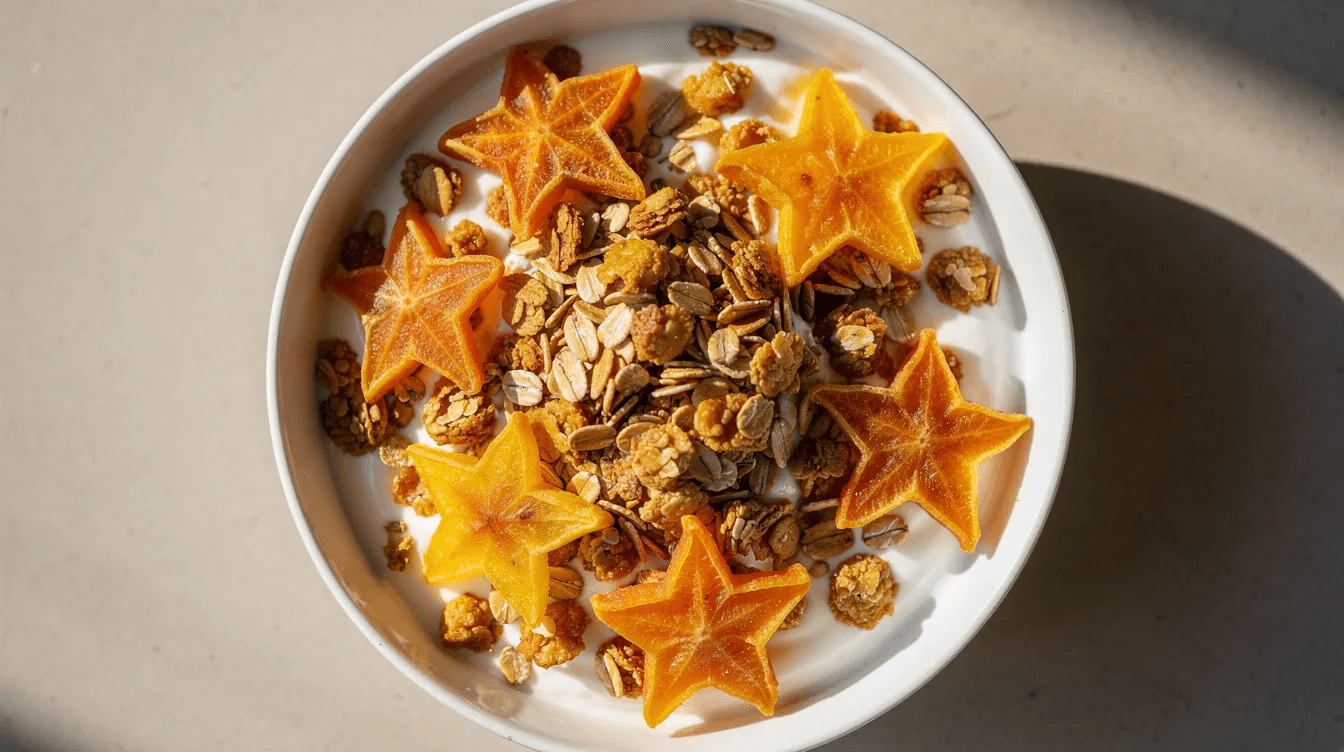
Versatile Ingredient – Dried star fruit can be used in baking, salads, and trail mixes. Toss pieces into granola, sprinkle over yogurt, fold into muffins, or enjoy them straight from the bag.
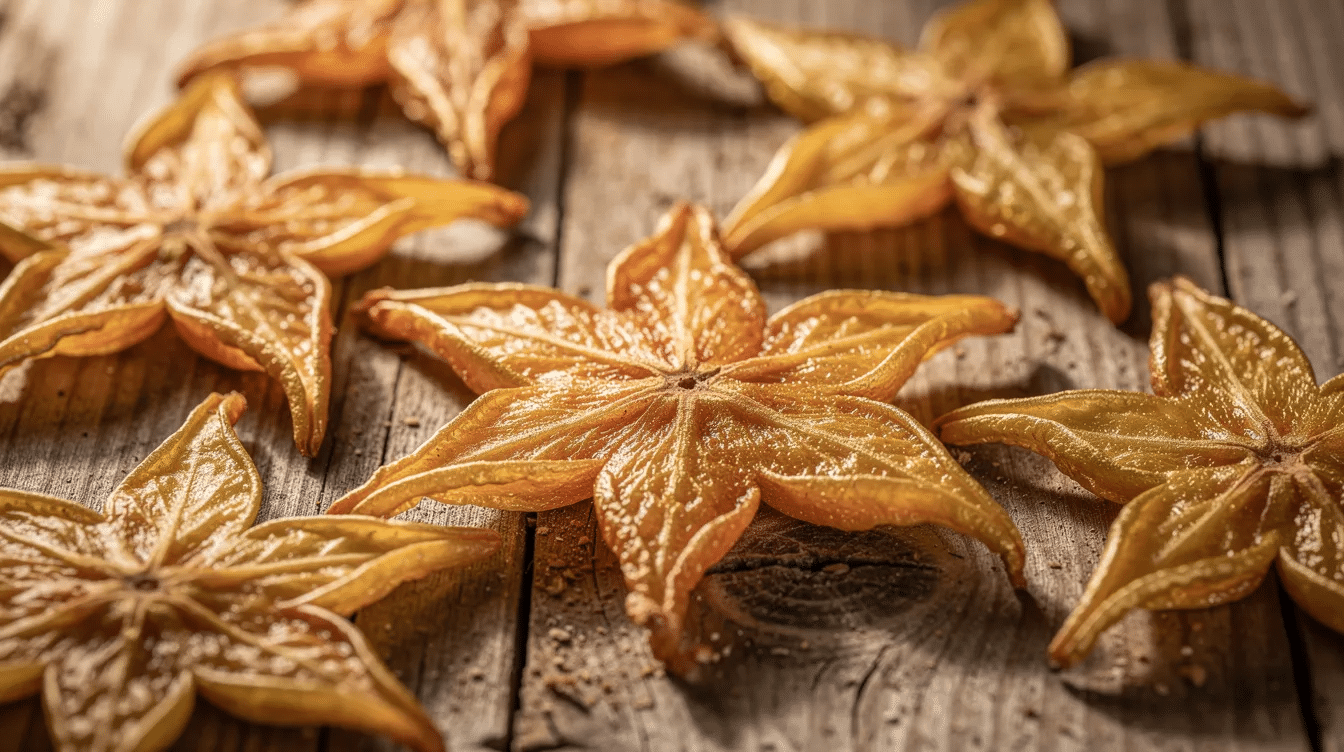
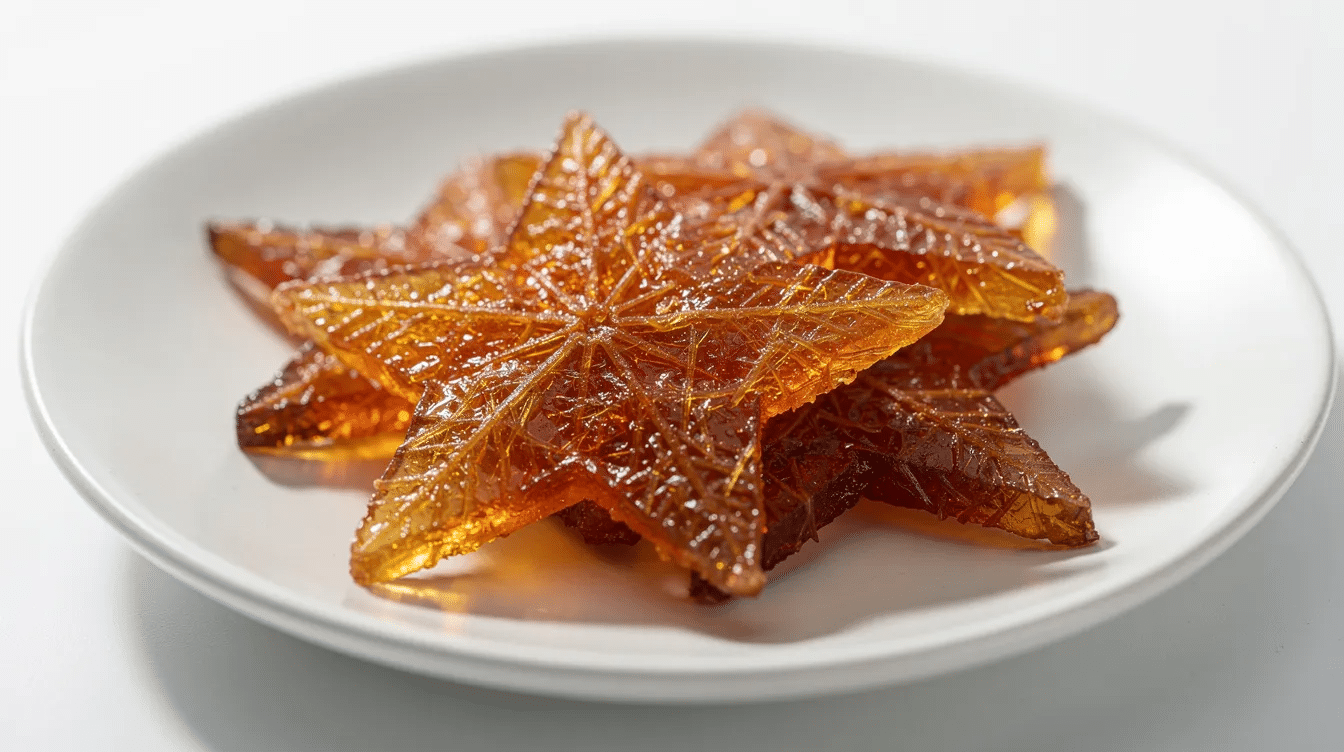
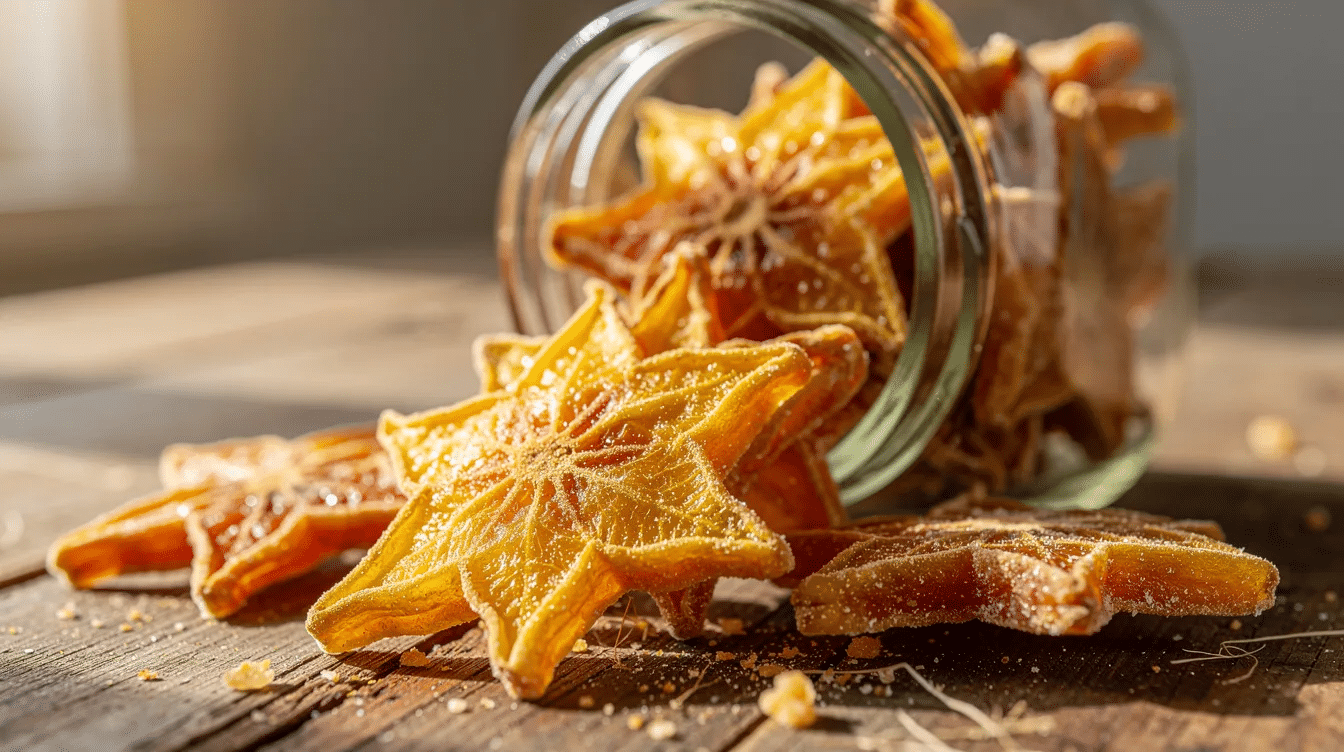
Unique Star Shape – Unlike most dried fruit that collapses into strips or formless pieces, star shaped slices retain their iconic five-pointed profile after drying, adding instant visual appeal to any dish or presentation.
Dried star fruit is lower in calories and fat compared to other snacks – just 14 calories per serving with 1 g of protein – making it easy to love without the guilt.
What Makes Dried Star Fruit Different
Most dried tropical fruits lose their distinctive shape during processing, turning into generic fruit leather or shriveled chunks. Dried mango becomes flat strips; dried pineapple turns into dense rings. You’d never recognize the original fruit at a glance.
Dried star fruit is built differently:
Retains Its Signature Star Shape – Slice a carambola crosswise before dehydrating, and each piece keeps its beautiful star silhouette. No other dried fruit delivers this kind of visual impact on a cutting board or in a bowl.
Balanced Sweet-Tart Flavor Profile – Where raisins lean purely sweet and dried apricots go heavily tart, star fruit offers a more complex flavor that balances both ends. Sweet cultivars bring mellow, slightly sweet notes; tart varieties offer sharper citrus punch. The result is far more interesting than typical dried fruit options.
Lower Sugar Content – Fresh star fruit contains roughly 6–7 g of carbohydrates per 100 g – significantly less than mango or banana. While drying concentrates sugars, dried starfruit still tends to carry less total sugar than many commercially available dried fruits, especially those without added sweeteners or fillers.
If you love exploring exotic flavors and want a snack that looks as good as it tastes, this is the dried fruit to find.
How to Use Dried Star Fruit
Straight from the Package Dehydrated star fruit is a ready-to-eat snack – no preparation required. Open the bag, grab a bite, and enjoy. The chewy texture and concentrated tropical taste make it satisfying on its own.
Rehydrate for Baking and Cooking Soak dried slices in warm water (around 100–110°F) for 10–15 minutes to restore plumpness. Drain, then add to muffins, quick breads, compotes, or chutneys. Thicker pieces may need a few extra minutes. This is an easy way to build tropical flavor into baked goods without sourcing fresh fruits, just as dehydrated apple slices can enhance baking recipes.
Add to Dishes and Mixes Crumble or cut pieces into trail mix, cereal, or granola for a sweet-tart contrast. Scatter star shaped slices over yogurt, oatmeal, or salads for an exotic garnish, or pair them with homemade dehydrated strawberries for even more color and flavor. The shape holds up well in dry mixes and adds color that brightens any bowl.
Pro tip: If you’re making dried starfruit at home, slice star fruit into ¼ inch pieces for even drying. Dehydrating star fruit takes 5 to 12 hours at 135°F in a dehydrator, depending on moisture content and slice thickness. For broader guidance and recipe ideas, explore comprehensive dehydrator fruit recipes. Set your trays with space between each slice for airflow, and condition dehydrated fruit before long-term storage to prevent mold development – simply place cooled pieces in a sealed jar for a week, shaking daily, to equalize moisture.
Product Details
Ingredients: Star fruit (carambola), sugar, citric acid, sodium metabisulfite (preservative). Quality products avoid unnecessary fillers or artificial colors.
Format: Star shaped slices, typically sliced 5–12 mm thick before drying.
Package Options: Commonly available in 8 oz, 16 oz, and bulk bag options.
Nutrition Per Serving: 14 calories, 1 g protein, 28 IU vitamin A, 16 mg vitamin C. Dried star fruit is a tropical snack with a concentrated nutrient profile – rich in dietary fiber, potassium, and antioxidants. Gluten free.
Origin: Typically sourced from Southeast Asia (Malaysia, Thailand, Indonesia), Hawaii, or Florida – regions where carambola crops are grown and picked at peak ripeness to ensure optimal flavor before dehydrating.
Preservatives: Sodium metabisulfite is commonly used to preserve color and freshness; check labels if you have sulfite sensitivity.
Storage: Store dried star fruit in an airtight container in a cool, dry place, away from direct sunlight and moisture, following the same best practices used when dehydrating fruit in a food dehydrator. Wide mouth quart mason jars are ideal for storage. Always allow pieces to cool completely before sealing to prevent condensation inside the container.
Who Should Try Dried Star Fruit
Ideal for:
Health-conscious snackers seeking a low-calorie, gluten free alternative to processed sweets and vegetables chips
Home bakers looking to add exotic ingredients and tropical flair to their recipe rotation
Trail mix enthusiasts and outdoor adventurers who want a convenient, lightweight snack that’s easy to pack
Parents wanting nutritious, interesting snacks for children’s lunchboxes – the star shape makes it fun
Food explorers curious about tropical flavors without the commitment of finding and using fresh star fruit before it spoils
If you want a snack that delivers nutrition, taste, and visual appeal in every bite, dried star fruit fits your needs, especially when you understand how dehydration affects nutrients in dried fruits.
Important note: Dried star fruit contains caramboxin and oxalic acid. People with kidney disease must avoid star fruit in both fresh and dried forms. Oxalic acid levels in tart cultivars can range from 200 to 1,840 mg per 100 g fresh weight, and these compounds remain present after drying. If you have kidney concerns or are prone to oxalate kidney stones, consult your healthcare provider before adding this product to your diet.
Frequently Asked Questions
How should I store dried star fruit? Store dried star fruit in a cool, dry place in an airtight container, away from direct sunlight. Condition dehydrated fruit before long-term storage to prevent mold – place cooled pieces in a sealed jar for about a week, shaking daily. Properly stored, dried star fruit can last up to 12 months.
Is dried star fruit as nutritious as fresh? Dried star fruit retains most minerals, fiber, and some vitamins, though vitamin C content is reduced during the drying process. Research shows ascorbic acid in solar-dried star fruit drops from roughly 338 mg/100 g (dry basis) to 124–159 mg/100 g depending on the drying method. On a per-gram basis, many nutrients become more concentrated, but heat-sensitive compounds do degrade, and you can apply the same principles when trying dehydrated fruit recipes for healthy snacks.
Can I make dried star fruit at home? Yes – it’s an easy process. Slice star fruit into ¼ inch pieces on a cutting board, optionally dip in lemon juice to preserve color, then arrange on dehydrator trays. Dehydrating star fruit takes 5 to 12 hours at 135°F. If you enjoy experimenting with other produce, there are many options for what fruit you can dehydrate at home. You can also use your oven on its lowest setting with the door slightly ajar for airflow. Store dried star fruit in airtight containers after cooling.
What does dried star fruit taste like? Expect a sweet-tart flavor similar to a grape and citrus combination. The drying process concentrates the flavor of star fruit, and depending on the cultivar, you may pick up subtle toffee or caramel notes from natural sugar concentration. Texture ranges from chewy to crisp based on how dry the slices are.
Are there any allergy concerns? Dried star fruit is generally safe for most people, but many commercial products contain sodium metabisulfite as a preservative, which some individuals are sensitive to. Always review the ingredients on the bag. Additionally, people with kidney disease must avoid star fruit entirely due to its oxalic acid and caramboxin content.
Is dried star fruit gluten free? Yes. Pure dried starfruit – with or without added sugar and citric acid – is naturally gluten free. Always check product labels to ensure no cross-contamination occurred during processing.
Ready to Experience Tropical Flavor?
Stop settling for the same old dried fruit options. Dehydrated star fruit is a convenient, nutritious, and visually stunning snack that brings something genuinely different to your day – whether you enjoy it straight from the bag, toss it into trail mix, or fold it into your next baking recipe alongside other freeze-dried fruits for healthy snacking.
Look for quality dried starfruit from specialty food retailers, online stores, or suppliers like Brothers International that carry freeze-dried tropical fruit assortments. When shopping, check for minimal ingredients, proper sealed packaging, and clear origin information to ensure you’re getting the best product.
Add dried star fruit to your cart and discover why this tropical gem deserves a permanent spot in your pantry.
DannyContent Writer
Hey there, since 2016, my mission has been to provide you with the information and guides you need to make food dehydrating simple and fun. Whether you're a newbie or a seasoned pro, my site offers helpful guides, reviews, and recipes to enhance your dehydrating experience. I take pride in only recommending products I believe in, ensuring my readers' trust. As an affiliate of various programs, including Amazon Associates, your support helps me continue providing quality content. Thanks for stopping by, and happy dehydrating!