We earn a commission if you make a purchase, at no additional cost to you.
09/22/2026 04:39 pm GMT
🍊 Dehydrated Food Info Finder — Temperatures & Drying Times
Choose a category, then pick a food to see its drying temperature and time.
⚠️ Safety Disclaimer: Drying times are estimates and vary based on slice thickness, food moisture content, humidity, and your dehydrator model. Always check for doneness before storing — food should feel dry, leathery, or brittle with no moist spots. Improperly dried food can harbour mould and bacteria. For meat and poultry, follow USDA safe internal temperature guidelines: beef and pork to 160°F (71°C), poultry to 165°F (74°C). Use a food thermometer when in doubt. Store all dehydrated foods in airtight containers in a cool, dark place and discard anything showing moisture, mould, or off odours.
How to Keep Food from Sticking to Dehydrator Trays
There’s nothing more frustrating than spending hours on a batch of dried fruit or jerky, only to tear half of it apart trying to pry it off the trays. The good news is that keeping food from sticking to dehydrator trays comes down to a handful of straightforward techniques that you can implement immediately.
In this guide, you’ll learn exactly why food sticks, how to prevent it before you even start the machine, and what to do when a batch gets stubborn despite your best efforts.
If you’re mid-batch and need help now, here are the fixes that work. Use parchment paper or silicone mesh screens as barriers between your food and the tray surface. Flip food after the first 1–2 hours when surfaces are dry to the touch but still flexible. Slice produce to roughly 1/4 inch thickness. Let everything cool completely on the tray before attempting removal.
These four adjustments solve the majority of sticking problems. Here’s a quick reference:
Use silicone mesh or solid liners for sticky fruit, fruit leathers, and marinated items—they’re reusable and let you flex the surface to pop food off.
Choose parchment paper over wax paper or aluminum foil—parchment handles heat safely while wax paper melts and foil blocks airflow.
Apply cooking spray only when food won’t be stored long-term—oil residues can go rancid during extended storage.
Let food cool fully before peeling off—cooling causes contraction that breaks the seal between food and tray.
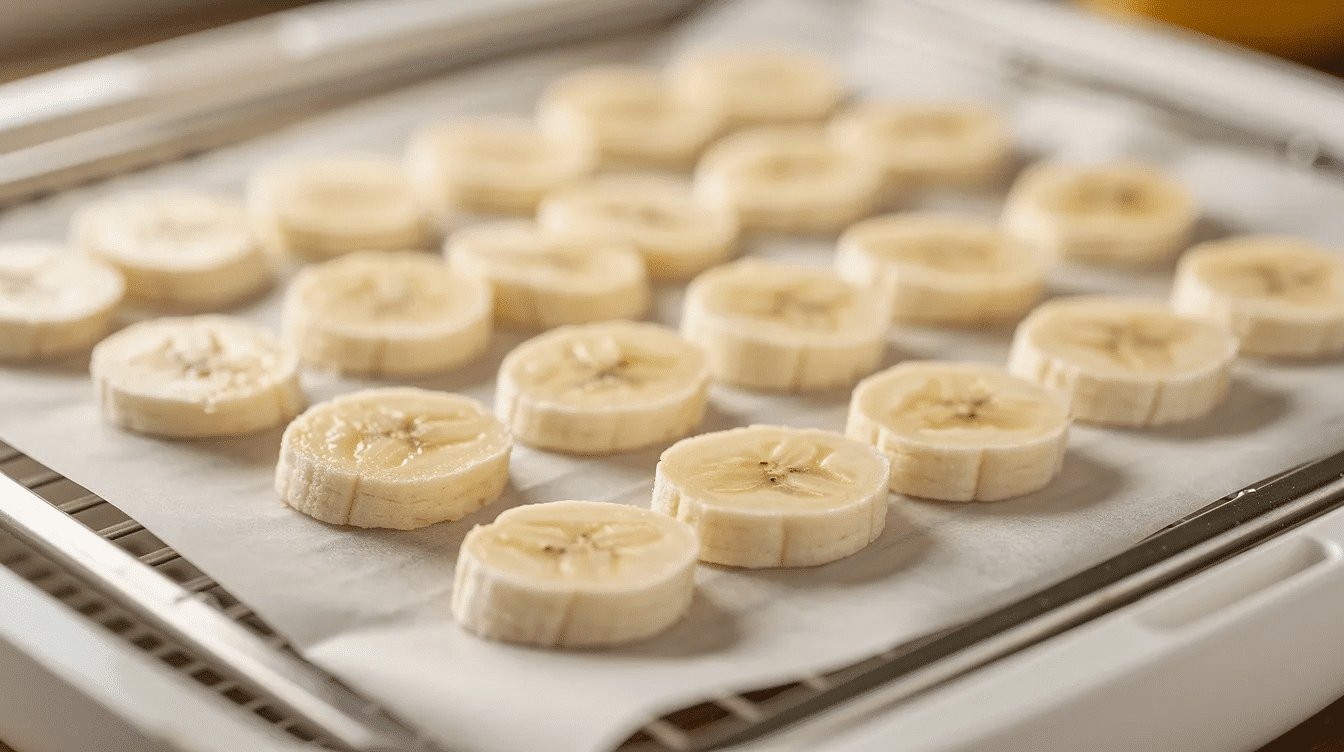
Quick example: For banana slices that release perfectly, lay parchment paper on your mesh screen, place slices with small gaps between them, flip after 90 minutes, and wait until they’re completely dry and room temperature before removing. Dried apples, pears, pineapple, and bananas pop right off good quality parchment when you follow this process.
Why food sticks to dehydrator trays
Understanding why food sticks helps you prevent it. As moisture evaporates during the drying process, sugars, proteins, and starches concentrate at the surface. This concentrated residue acts like glue between your food and the tray, especially as the food shrinks and presses harder against contact points, whether you’re using a box-style unit or a space-saving hanging dehydrator system.
Several factors increase sticking risk:
High-sugar fruits concentrate into syrup. Mango, pineapple, banana, and other sweet produce become increasingly adhesive as their water content drops and natural sugars condense.
Marinated meats and jerky bond to plastic trays. Proteins combined with salt, acid, and oils in marinades create particularly stubborn adhesion on plastic surfaces; following reliable dehydrator jerky preparation and drying guidelines helps you control marinades and thickness so they release more cleanly.
Thin slices weld to mesh as they shrink. Food that starts touching lightly can grip tightly once it loses 80% of its volume.
Trays with large holes create pressure points. Food sags into openings, creating contact edges that stick more than flat surfaces would.
Excessive heat, low humidity, and over-drying create “hard glue.” When temperature runs too high, sugars caramelize into an almost permanent adhesive layer that’s extremely difficult to remove.
This is context for what follows—the solutions address each of these causes directly.
Prep your food so it releases cleanly
Correct prep is the foundation for non-stick dehydrating. Getting slice thickness, moisture control, and pretreatments right before you load the trays prevents most sticking problems rather than solving them after the fact.
Slice to 1/4 inch (6 mm) for most fruits and vegetables. Use a mandoline for consistent cuts. High-water-content produce like tomatoes, pears, plums, mangos, peaches, nectarines, and watermelon should be cut thicker because they shrink considerably. If you dehydrate watermelon, expect significant volume loss that can cause thin slices to virtually disappear into the mesh.
Blot surface moisture with paper towel before loading. Pat marinades off meats, press excess liquid from tofu, and dab juicy fruit surfaces. Reducing sugary or oily residues on the surface means less adhesive material to bond with the tray.
Use acidic dips for browning-prone fruits. A quick dip in lemon juice or a 1:1 lemon juice-water solution for apples, pears, and bananas slows oxidation and slightly firms the surface, improving release characteristics.
Avoid overcrowding—leave slight gaps between pieces. Spacing allows edges to dry properly instead of fusing to neighboring pieces and the tray itself. Overcrowded trays create pressure points where food contacts other foods and tray surfaces simultaneously.
Choose the right tray surface and liners
The tray material and any liner you use make the biggest difference in whether food sticks. Your Excalibur dehydrator or any other machine performs better when you match tray surfaces to what you’re drying, and many Excalibur owners rely on Paraflexx non-stick sheets for their trays to keep even very sticky foods from bonding.
Stainless steel vs. plastic trays: Stainless steel offers superior durability and heat resistance, and its smooth surface often releases food better than plastic. However, plastic trays are lighter and more affordable. Note that plastic trays have a documented higher propensity for sticking, and their surfaces develop micro-scratches over time that trap particles. When comparing these options, it’s worth looking at the best food dehydrator brands and models so you can choose equipment with tray materials that match your needs.
Silicone mesh screens are flexible, reusable, and ideal for small items and fruit slices. Their flexibility lets you bend the surface to pop food off rather than scraping. Food grade silicone materials are BPA-free and handle the full temperature range safely.
Solid silicone or Teflon-style dehydrator sheets work best for purees, fruit leathers, marinated foods, and crumbly mixes. Solid liners provide complete surface coverage so nothing falls through. These restrict airflow slightly and may lengthen drying time, but good quality reusable dehydrator sheets make sticking far less likely.
Trays with large holes benefit most from mesh liners. Mesh prevents small particles like herbs, peas, corn, and seeds from falling through while reducing direct contact points that cause sticking. Large-capacity units such as the Weston 10 tray food dehydrator especially benefit from well-fitted mesh so many trays can dry evenly without losing small pieces.
Using parchment paper effectively
Parchment paper works as a simple, disposable non-stick option for home dehydrators. It’s affordable, widely available, and worked perfectly for many users who tried other methods without success. If you’re unsure about safety and best practices, it helps to understand how to use parchment paper in a food dehydrator so you can avoid common mistakes.
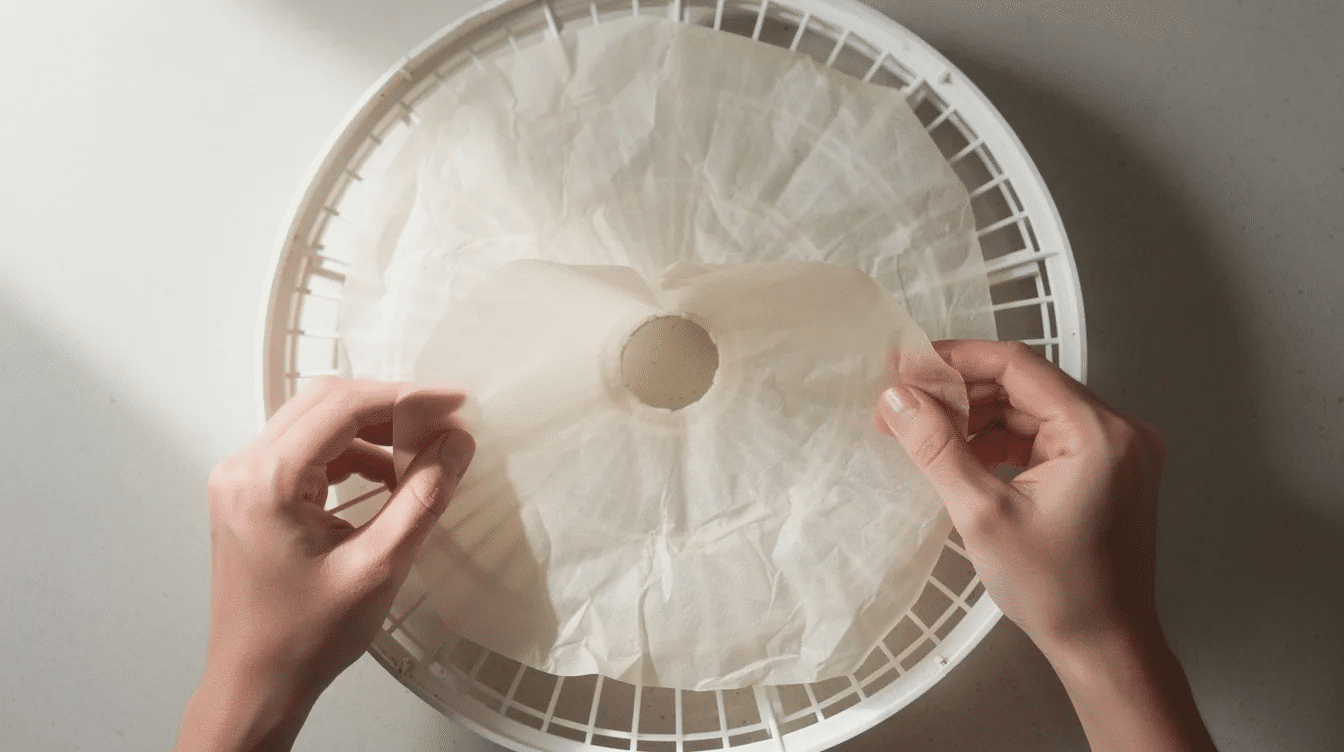
Use thick, good quality, preferably unbleached parchment sized to fit your tray. If your machine has a center airflow design, cut a hole in the middle to maintain circulation. Thin parchment tears when you try to remove delicate foods.
Parchment works especially well for apples, bananas, berries, marinated vegetables, and crumbly mixtures that are prone to tearing or adhesion. These foods release cleanly once completely dry.
Parchment may slow drying slightly. Check for doneness by testing flexibility and moisture rather than assuming standard times apply. The paper creates a barrier that can add time to your batch.
Never substitute wax paper, plastic wrap, or foil for parchment. Wax paper melts at dehydrator temperatures. Plastic wrap can transfer residues or melt entirely (exception: some dehydrator manufacturers approve plastic wrap for carefully monitored fruit leather production). Aluminum foil severely restricts airflow and reflects heat unevenly.
Non-stick sheets, mesh screens, and specialty liners
Beyond disposable parchment, reusable liners offer long-term solutions for anyone who dehydrates regularly.
Silicone mesh sheets (14 x 14 inch is a common size) can be cut to fit various tray configurations. They’re BPA-free, safe across the full dehydrator temperature range, and last through hundreds of uses with proper care. If you use a Nesco machine, dedicated Nesco dehydrator liners and inserts offer similar non-stick protection and easy cleanup.
Solid silicone liners are engineered for fruit leather, sticky marinades, and grain-based mixes where complete surface coverage prevents product loss. Cleanup requires only warm soapy water, and they’re reusable indefinitely if handled gently.
Flexible plastic mesh inserts that ship with many dehydrators help with small items but may warp over time with repeated heating cycles, especially if cleaned with hot water. They’re not as durable as silicone alternatives.
Always follow your dehydrator manufacturer instructions about liner thickness, tray fit, and approved material types. Non-compliance can block airflow, reduce efficiency, or potentially damage components.
Dehydrator settings and mid-cycle handling
Correct temperature, airflow, and handling mid-dry help prevent sticking and tearing. Your settings affect how sugars behave and whether food bonds to surfaces, but they also influence how well you capture the broader benefits of dehydrating food for storage and snacking.
Preheat the dehydrator for 5–10 minutes before loading. Food entering a thermally stable environment avoids the initial “sweating” phase where moisture deposits onto tray surfaces and later dries into an adhesive layer.
Start at recommended temperatures for your food type. Fruits generally do well around 57–63°C (135–145°F), while jerky needs approximately 68–71°C (155–160°F). Excessive heat caramelizes sugars into glue that bonds food permanently to trays.
Flip or turn pieces after the first 1–2 hours. Once surfaces are dry to the touch but still flexible, gently turn each piece to break the early “seal” with the tray. This single step prevents the seal that causes sticking later.
Rotate trays top to bottom and front to back during the dehydration process. Most machines have airflow variations that create uneven drying and “wet spots” where localized sticking occurs.
Let food cool completely on the tray before removal. As dehydrated food cools, it contracts slightly, creating microscopic separation from the surface that facilitates easier peeling. Rushing this step causes unnecessary tearing.
Safe release techniques for stuck food
Even with good prep, some batches stick. Rather than scraping and destroying your work, use these gentle methods to rescue stuck items.
Flex mesh trays or liners from the back. Gently bend the surface to pop pieces off rather than prying from the top. This leverages material flexibility to break adhesion without tearing food.
For solid trays, press gently from underneath or slide a thin, flexible spatula under edges. Avoid harsh scraping that damages both food and tray surfaces.
Try the freezer technique. Place the entire tray in a freezer for 30–60 minutes. The temperature change firms the food and causes contraction that often breaks adhesion. Push food off while still cold, then allow it to return to room temperature.
Lightly mist overdried stuck food with clean water. Let it rest for a few minutes, then peel off. The moisture softens the food-tray interface just enough for release. Return the batch to a liner-covered tray for a short finishing dry cycle.
Don’t waste badly stuck or crumbled pieces. Scrape what you can, re-dry the bits, and grind them into powders or seasonings. Fruit powder and vegetable flakes add flavor to smoothies, soups, and other foods.
What to avoid: liners and methods that cause problems
Some common “hacks” actually create safety or performance issues. Avoid these mistakes:
Wax paper and plastic wrap fail at standard temperatures. Wax paper melts, plastic wrap transfers residues or melts entirely. The exception: carefully monitored fruit leather production with plastic wrap only if your manufacturer specifically allows it.
Aluminum foil severely restricts airflow and reflects heat unevenly, leading to under-dried or scorched areas within the same batch. This uneven drying can actually worsen sticking in moist spots.
Overusing oil or cooking spray creates problems. While a light, unflavored spray can help with sticky items, heavy oil films go rancid during storage and create buildup on trays. If your shelf life goal exceeds a few weeks, skip the oil and use proper liners instead.
Check your dehydrator manual for approved liner types and maximum safe temperatures for plastics and silicone. Unauthorized materials can damage equipment or compromise food safety.
Cleaning trays and maintaining non-stick performance
Clean, well-maintained trays stick less over time. Neglected trays accumulate residue that makes every subsequent batch more problematic. Tray maintenance takes minutes but pays off across hundreds of uses.
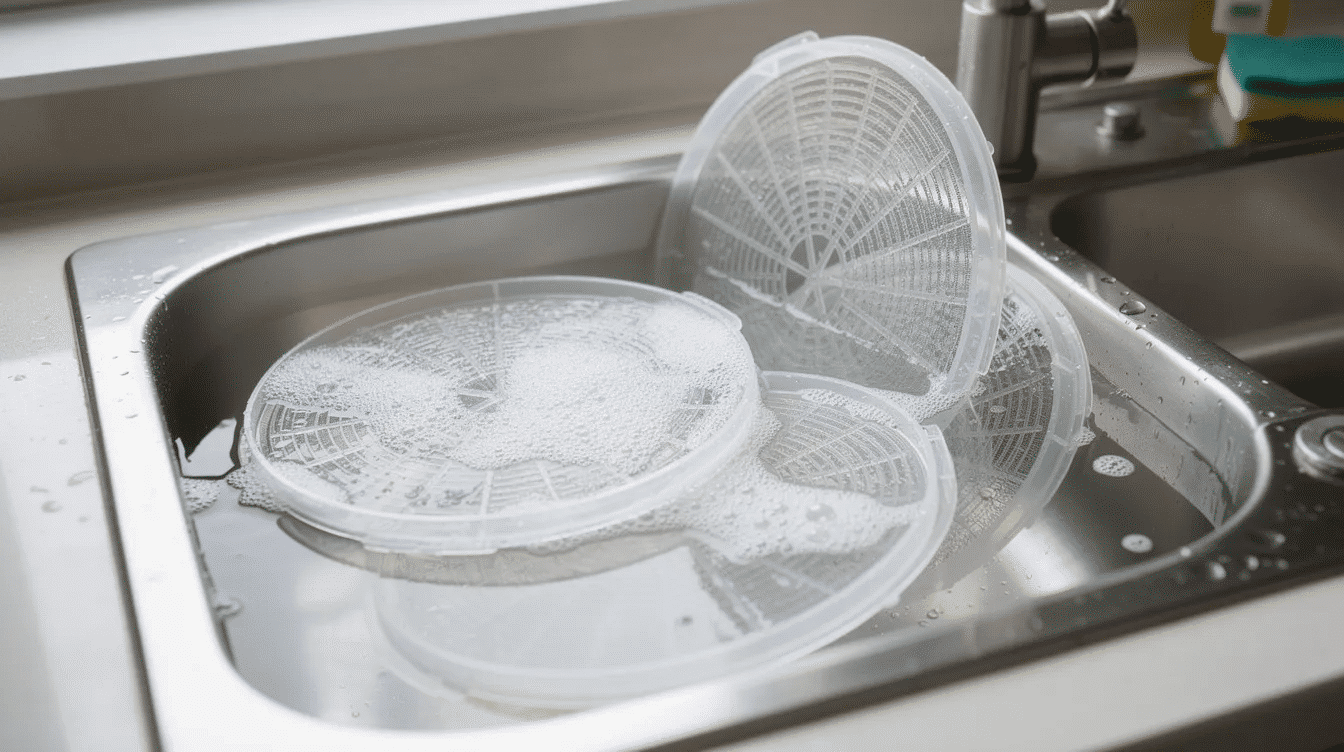
Soak trays in warm, mildly soapy water after sticky batches. Fruit leathers and jerky leave sugar and protein residues that dissolve easily when fresh but harden into permanent fixtures if left overnight.
Use non-abrasive scrubbers or soft brushes to avoid scratching plastic or coated surfaces. Each scratch creates a new location where food particles lodge, progressively worsening sticking.
Deep clean periodically with baking soda paste or food-safe degreaser if visible oil or sugar buildup appears. This maintenance prevents performance degradation.
Dry trays fully before storage to prevent odors, residue hardening, and mold growth. Moisture left on trays creates conditions where residual particles become permanent.
Inspect racks, screens, and liners regularly for cracks, warping, or surface roughness. Replace damaged equipment promptly—continuing to use degraded trays makes sticking progressively worse.
Key takeaways
Preventing food from sticking to dehydrator trays combines preparation, equipment choices, and handling techniques:
Prep correctly: slice to 1/4 inch, blot moisture, use acidic dips, and avoid overcrowding.
Use appropriate liners: parchment paper for disposable convenience, silicone mesh or solid liners for reusable non stick sheets.
Manage temperature and timing: preheat, stay within recommended ranges, and flip food after 1–2 hours.
Let food cool completely before removal.
Clean trays promptly with hot soapy water and replace damaged equipment.
Start with one change on your next batch—whether that’s adding parchment paper, flipping at the right moment, or simply letting veggies cool before touching them. Small adjustments compound into consistently clean releases that make dehydrating easier for your whole family. Store your perfectly released dehydrated food in airtight containers, and you’ll preserve both quality and your sanity for batches to come.
DannyContent Writer
Hey there, since 2016, my mission has been to provide you with the information and guides you need to make food dehydrating simple and fun. Whether you're a newbie or a seasoned pro, my site offers helpful guides, reviews, and recipes to enhance your dehydrating experience. I take pride in only recommending products I believe in, ensuring my readers' trust. As an affiliate of various programs, including Amazon Associates, your support helps me continue providing quality content. Thanks for stopping by, and happy dehydrating!