We earn a commission if you make a purchase, at no additional cost to you.
09/22/2026 04:39 pm GMT
🍊 Dehydrated Food Info Finder — Temperatures & Drying Times
Choose a category, then pick a food to see its drying temperature and time.
⚠️ Safety Disclaimer: Drying times are estimates and vary based on slice thickness, food moisture content, humidity, and your dehydrator model. Always check for doneness before storing — food should feel dry, leathery, or brittle with no moist spots. Improperly dried food can harbour mould and bacteria. For meat and poultry, follow USDA safe internal temperature guidelines: beef and pork to 160°F (71°C), poultry to 165°F (74°C). Use a food thermometer when in doubt. Store all dehydrated foods in airtight containers in a cool, dark place and discard anything showing moisture, mould, or off odours.
Canning Whole Milk at Home: Safety, Methods, and Step‑by‑Step Guide
The practice of canning milk at home has gained significant traction among homesteaders and preppers seeking self-reliance. But before you start filling glass jars with fresh cows milk, you need to understand the serious safety considerations involved. This guide walks you through everything from official safety stances to the methods rebel canners actually use.
Key Takeaways
Not USDA-approved: As of April 2026, neither the USDA nor the National Center for Home Food Preservation provides tested recipes for pressure canning milk or any dairy products at home.
Botulism risk is real: Milk is a low-acid food (pH ~6.5-6.8), creating conditions where botulism spores can potentially thrive in sealed, oxygen-free environments if heat penetration is inadequate.
Rebel canners accept personal risk: Many people do pressure can whole milk using cold-pack methods at around 10-11 PSI, but they acknowledge they’re operating outside official guidelines.
Commercial processes can’t be replicated: Industrial shelf stable milk production uses temperatures up to 130-140°C (266-284°F) with precise cooling curves that home equipment cannot match.
This article is informational only: We’re documenting existing practices, not endorsing them. Safer alternatives like UHT milk, freezing, or freeze dry methods offer validated long-term storage options.
What Is Canning Whole Milk and Why People Consider It
Canning whole milk refers to sealing fluid cow’s milk (typically 3.25% fat or higher) into Mason jars and subjecting them to pressure canning in an attempt to create a shelf stable product that doesn’t require refrigeration. This remains a highly controversial practice because food safety authorities have never released tested guidelines for it.
Interest in this method surged following events like the 2021 Texas power grid failure and subsequent outages through 2022. When freezers fail, months of stored food can be lost overnight. Combine that with dairy price increases averaging 15-20% annually through 2024-2025, and you understand why homesteaders started looking for alternatives.
The practical motivations are straightforward: managing surplus from family cows that might produce 5-10 gallons daily, preserving raw milk without commercial pasteurization equipment, saving freezer space during calving season, and ensuring you can still bake bread when fresh milk isn’t available. People want to produce their own milk storage solution rather than depending entirely on grocery store supply chains.
Here’s what you need to know upfront: canned milk isn’t like fresh milk. The canning process causes irreversible changes—darker color similar to evaporated milk, a cooked or nutty flavor from Maillard reactions, and textural shifts including butterfat flecks and possible graininess. Most users reserve home-canned milk for cooking and baking rather than drinking straight.
Is It Safe to Can Whole Milk at Home?
As of April 2026, the USDA and National Center for Home Food Preservation do not recommend home canning of any milk or cream products. This includes whole milk, half n half, heavy cream, heavy whipping cream, and sour cream. The official position is clear: these are untested processes with unknown safety margins.
The core issue comes down to chemistry. Milk is a low-acid food with a pH of approximately 6.5-6.8, which creates an ideal environment for Clostridium botulinum spore germination if heat penetration is inadequate. Unlike high-acid foods like tomatoes or fruits where you can use a water bath canner, low-acid dairy products require precise temperature control that home equipment may not reliably achieve.
Rebel canning communities push back on this stance, sharing methods passed down through generations and claiming zero botulism incidents among thousands of jars. They use processes at 5-11 pounds pressure with minimal processing time. However, experts point out that sensory checks—no bulging lids, no off-odors—cannot detect botulism toxin before it’s too late.
Educational Disclaimer: The information in this article documents existing practices for informational purposes. It does not constitute a safety endorsement. Readers must weigh risks themselves and consider the safer preservation options detailed later.
How Commercial Milk Is Canned and Made Shelf‑Stable
Commercial canned milk products like evaporated milk and UHT box milk use controlled industrial processes that differ fundamentally from anything achievable in a home kitchen. Understanding these differences helps explain why canning milk safe at home remains so challenging.
Evaporated milk undergoes a multi-step process: approximately 60% of the water is removed through vacuum concentration, bringing solids to 40-45%. The concentrated milk then goes through retort sterilization at 240-245°F (116-118°C) for about 15 minutes under 15-20 PSI. Factories also apply homogenization at 2,000-3,000 PSI to prevent fat separation and filtration to ensure sterility. The result is a product with 2-3 year shelf life at room temperature.
UHT (ultra-high temperature) milk takes a different approach. It’s heated in a continuous flow system to 135-150°C (275-302°F) for just 2-5 seconds, then immediately cooled and filled into sterile, multi-layer oxygen-barrier cartons. This flash heating achieves commercial sterility while minimizing flavor degradation, yielding 6-12 month unrefrigerated stability.
Factories tightly control milk composition, standardizing fat to 3.0-3.5% and protein to 3.2-3.5%. They monitor temperature curves with precision instruments. Home pressure canners may hit similar peak temperatures, but they cannot match this consistency in heat distribution, rapid cooling, or compositional control.
What’s Problematic About Home‑Canning Whole Milk?
The problems with home canning milk fall into three categories: variable milk composition, uncertain heat penetration, and taste/texture changes that affect both safety and palatability.
Milk composition fluctuates significantly. Store bought milk maintains relatively consistent fat content around 3.25%, but raw milk from a family cow can range from 3.5% to 5.5% fat depending on diet, lactation stage, and animal health. This matters because fat slows heat penetration by 20-30% according to food science models. A processing time that works for lean milk might leave fatty batches underprocessed.
Many popular online recipes only heat milk long enough to create a vacuum seal—essentially using steam exhaustion to achieve the satisfying “ping” of sealed lids. This is not equivalent to a validated botulism-killing process. The jar may seal perfectly while harboring dangerous conditions inside.
Palatability presents additional challenges. Even properly processed milk will exhibit lactose caramelization (producing scorched notes), whole milk tends toward creaming with fat globule coalescence, and calcium phosphate can become insoluble, creating graininess. These issues are worse in whole milk compared to regular milk with lower fat content.
The bottom line: no scientifically vetted processing time exists for whole milk in jars, which is why USDA guidelines remain absent rather than simply conservative.
Typical “Rebel Canning” Methods for Whole Milk (For Information Only)
Caution: This section summarizes what many home canners report doing. It does not represent what food safety authorities recommend. Proceeding with these methods means accepting personal responsibility for outcomes.
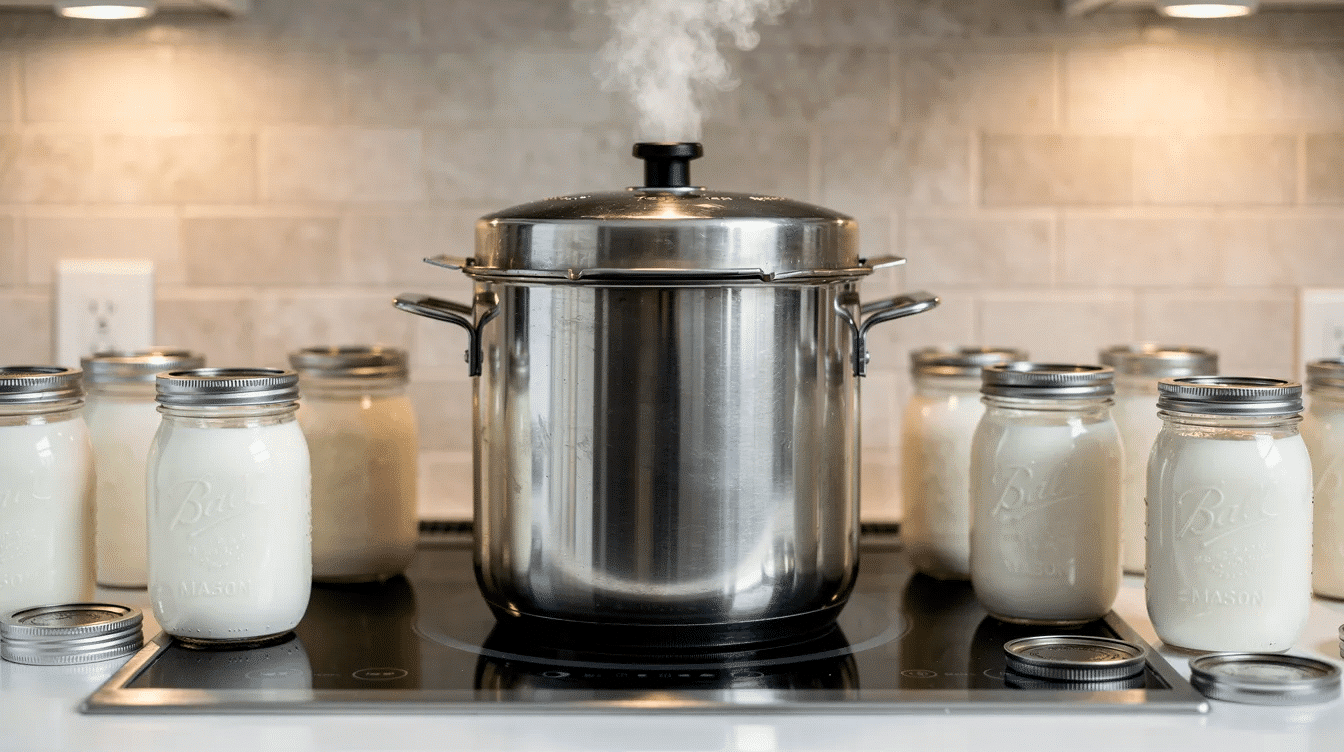
The most common pattern among rebel canners involves the cold-pack approach. Practitioners fill quart jars or pint jars with cold milk straight from the refrigerator (35-45°F), leaving 1 inch headspace. They wipe rims with a clean damp cloth—avoiding vinegar, which can cause milk protein to curdle at low pH—then apply lids finger-tight.
Typical pressures range from 10 lbs to 11 PSI using a dial gauge, adjusted for altitude (add 1 PSI per 2,000 feet above sea level). Before bringing the canner to appropriate pressure, canners vent the vent pipe with a steady stream of steam for 8-10 minutes to remove air.
Some practitioners use “no-time” methods: they bring the pressure canner to pressure, then immediately shut off the heat, relying on the 1-2 hour cooldown period for additional processing. Others maintain pressure for 10-60 minutes. Neither approach has been scientifically validated.
Reported shelf lives range from 1-5 years when jars are stored in cool (50-70°F), dark locations. These are anecdotal claims from individual canners, not laboratory-verified data. Equipment requirements include stovetop pressure canners (not electric pressure cookers), new lids for reliable seals, and annually calibrated gauges.
Step‑by‑Step Overview: How People Pressure Can Whole Milk
Important Warning: This walkthrough describes common practice among rebel canners. It is not an endorsed safe recipe. Compare with USDA guidelines for other low-acid foods like vegetables and meats, and understand that no validated process exists for milk.
Equipment Needed
Item
Purpose
Stovetop pressure canner (e.g., 23-quart)
Achieves temperatures above 240°F
Mason jars (quart or pint)
Food-safe containers
New 2-piece lids
Ensures proper seal
Jar lifter
Safe handling of hot jars
Dial or weighted gauge
Monitors pressure accurately
Clean cloths and funnel
Filling and rim prep
Jar Preparation
Wash all jars thoroughly in hot soapy water or run through a dishwasher cycle. Inspect rims carefully for chips or cracks—even minor damage can harbor bacteria or prevent proper sealing. For cold jars method, keep jars at room temperature. For hot jars approach, pre-heat in the oven at 250°F or in simmering water.
Simmer lids in warm (not boiling) water to soften the sealing compound. Never reuse lids from previous canning.
Milk Preparation
Most rebel canners use thoroughly chilled whole milk for cold-pack style, believing this reduces the cooked taste from prolonged heat exposure. Whether using fresh milk, store bought milk, or raw milk from your own animals, avoid boiling before filling—this intensifies scorching flavors.
Fill jars using a ladle and funnel, leaving exactly 1 inch headspace to accommodate expansion during processing. Tap jars gently to release trapped air bubbles.
Filling and Sealing
Wipe rims with a clean, damp cloth. Do not use vinegar—the acidity can cause milk solids to curdle and interfere with sealing. Secure lids by applying bands finger-tight only; overtightening prevents air escape during processing.
Processing
Place jars on the canner rack. Add 2-3 inches of cold water (matching jar temperature prevents thermal shock and cracked jars). Close the canner lid and heat until steam flows steadily from the vent pipe.
Allow steam to vent for 8-10 minutes, then close the vent. Watch the gauge and maintain 10-11 PSI throughout your chosen processing time—or use the “no-time” method where you simply turn off heat once pressure is reached.
Cooling and Storage
Allow the pressure canner to depressurize naturally; never force rapid cooling with cold water. Once pressure reaches zero, wait 10 minutes before removing the lid.
Use a jar lifter to place jars on a towel, leaving space between them. Let jars cool naturally undisturbed for 12-24 hours. You’ll hear the satisfying “ping” as lids seal.
Check seals by pressing the center of each lid—properly processed and canned properly jars won’t flex. Remove rings, label with month and year (e.g., “Whole Milk – March 2026”), and store in a cool, dark location.
Expected Changes in Canned Whole Milk: Taste, Color, and Texture
Even jars that process and seal perfectly will not resemble fresh refrigerated milk. Adjusting expectations helps you use the product effectively.
Color: Whole milk typically shifts to a slightly darker, creamier tan hue after processing—similar to light evaporated milk. This darkening intensifies over 6-12 months of storage and results from Maillard reactions between lactose and milk protein.
Taste: Expect a “cooked” flavor with caramelized or slightly nutty undertones. Some people enjoy this in coffee or cocoa. Others find it off-putting for direct consumption but perfectly acceptable in recipes where other flavors dominate.
Texture: You may notice small butterfat flecks, occasional graininess, and a cream layer that separates to the top. Shake vigorously before use. These changes are more pronounced with whole milk than with 2% milk.
Practical uses that work well with altered flavor include:
Yeast breads (enhances browning)
Custards and puddings
Pancake and waffle batter
Macaroni and cheese sauces
Hot cocoa and coffee drinks
Most canners report that baking applications cook well with home-canned milk because other ingredients mask the cooked taste.
Safer Alternatives to Home‑Canning Whole Milk
Building a robust dairy pantry doesn’t require taking on the risks of experimental food preservation. Several validated alternatives provide reliable long-term storage.
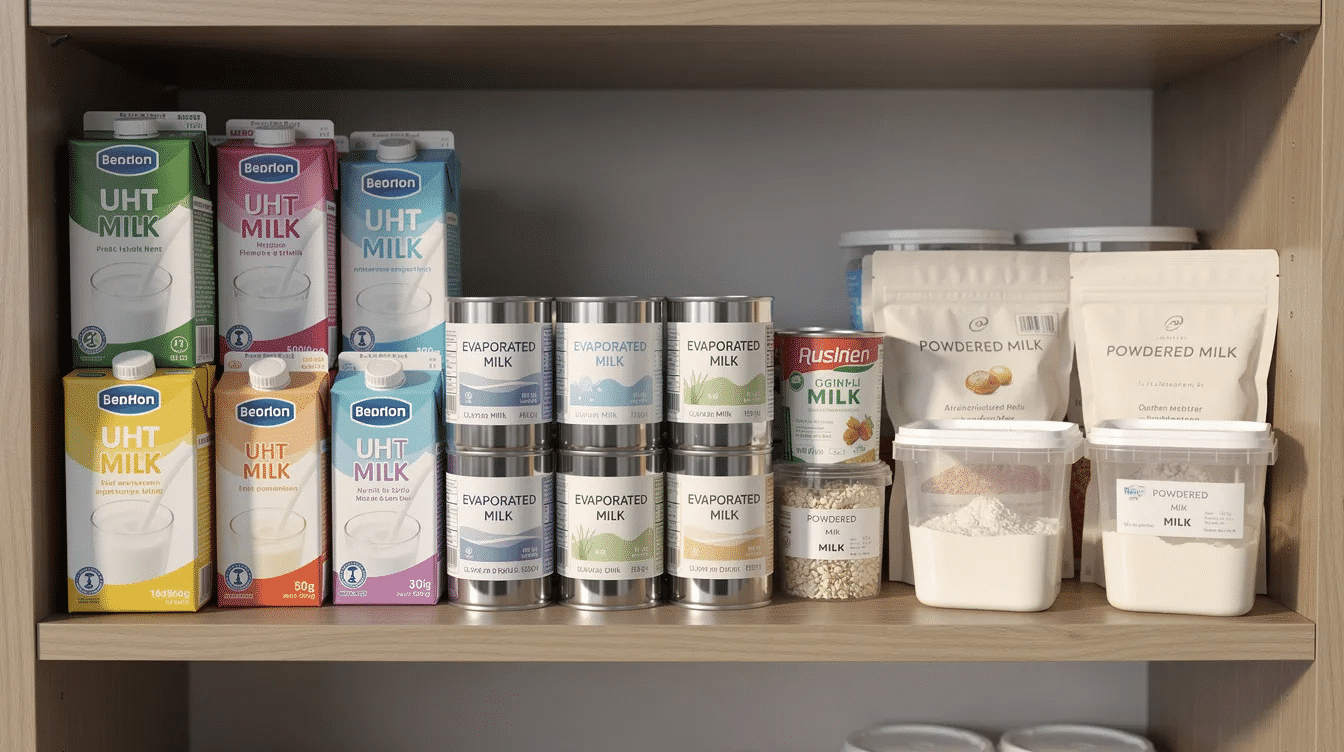
UHT and aseptic boxed milk offers the closest functional alternative to home-canned drinking milk. Brands like Parmalat and store brands are widely available and maintain 6-12 month shelf lives unopened at room temperature. The taste is nearly identical to fresh milk once opened.
Commercial evaporated milk (like Carnation) and sweetened condensed milk excel for baking, sauces, and desserts. These products carry multi-year stamped shelf lives when stored cool and dry, and they’ve been safely pressure canned using validated commercial processes.
Freezing milk works well for medium-term storage. Leave 3 inches of headspace in HDPE jugs to accommodate expansion. Frozen milk keeps 3-6 months with minimal quality loss. Texture changes mostly affect direct drinking; cooking applications remain excellent. Thaw slowly in the refrigerator and shake well before use.
Freeze dry methods without a machine using home units (like Harvest Right) or low-tech approaches produce powdered milk that reconstitutes closer to fresh taste than commercial spray-dried powdered milk. With mylar bags and oxygen absorbers, freeze-dried dairy can potentially store 25 years. The upfront equipment cost is significant but may be worthwhile for serious preparedness planning.
Diversify your approach: Rather than relying on any single method, combine limited canned dairy products, powdered milk, UHT cartons, frozen milk, and dehydrated foods stored in Mason jars. This redundancy protects against any single point of failure—whether that’s a power outage, supply chain disruption, or spoilage issue.
Frequently Asked Questions About Canning Whole Milk
Can I make home‑canned whole milk safe by boiling it before drinking?
Boiling home-canned milk before use may inactivate botulinum toxin if present—the toxin is heat-labile and breaks down above 176°F maintained for 5 minutes. However, boiling does not fix an unsafe canning process or remove spores that could produce more toxin.
Relying on post-boiling still involves risk, particularly if someone forgets the step or tastes the milk before boiling. This approach cannot retroactively make improperly canned jars safe for ongoing storage.
How long does home‑canned whole milk really last on the shelf?
No laboratory-validated shelf life exists for home-canned milk. Anecdotal reports from rebel canners suggest 1-5 years when stored in a cool (50-70°F), dark pantry with seals remaining intact.
A conservative approach is safest: rotate stock within 12-18 months and immediately discard any jars showing off-odors, curdling, unusual discoloration, foam, or bulging lids—regardless of how recently they were processed.
Is it safer to can 2% milk than whole milk?
Some canners prefer 2% because it tends to darken less during processing and forms fewer fat clumps during storage. However, there is no officially recognized safe process for any fluid milk regardless of fat level.
From a food safety policy standpoint, both whole and reduced-fat milks are low-acid dairy products that fall into the same “not recommended for home canning” category per USDA rules and USDA guidelines.
Can I water‑bath can whole milk instead of pressure canning it?
A water bath canner is unsuitable for milk because it can only reach approximately 212°F (100°C) at sea level. This temperature is not high enough to inactivate botulism spores in a low-acid food.
For all low-acid foods, pressure canning is the minimum required method to achieve the 240°F+ temperatures needed for safety. Even with a pressure canner, milk lacks tested processing times, making the water-bath canning process especially dangerous for this application.
Is powdered milk a better long‑term storage option than canned whole milk?
Commercially produced non-fat dry powdered milk, when stored in airtight packaging away from heat and light, can remain usable for 2-20 years depending on storage conditions. Decades of safety data support this method.
Compared to experimental home-canning of whole milk, powdered milk represents a more reliable, officially supported long-term option—even though flavor and mouthfeel differ from fresh milk. Almond milk and other plant-based alternatives also offer extended shelf life in aseptic packaging for those seeking variety.
For butter and cream needs, consider commercially canned options or freezing, which provide tested preservation without the uncertainty of home-processing dairy products.
DannyContent Writer
Hey there, since 2016, my mission has been to provide you with the information and guides you need to make food dehydrating simple and fun. Whether you're a newbie or a seasoned pro, my site offers helpful guides, reviews, and recipes to enhance your dehydrating experience. I take pride in only recommending products I believe in, ensuring my readers' trust. As an affiliate of various programs, including Amazon Associates, your support helps me continue providing quality content. Thanks for stopping by, and happy dehydrating!