We earn a commission if you make a purchase, at no additional cost to you.
09/22/2026 04:39 pm GMT
🍊 Dehydrated Food Info Finder — Temperatures & Drying Times
Choose a category, then pick a food to see its drying temperature and time.
⚠️ Safety Disclaimer: Drying times are estimates and vary based on slice thickness, food moisture content, humidity, and your dehydrator model. Always check for doneness before storing — food should feel dry, leathery, or brittle with no moist spots. Improperly dried food can harbour mould and bacteria. For meat and poultry, follow USDA safe internal temperature guidelines: beef and pork to 160°F (71°C), poultry to 165°F (74°C). Use a food thermometer when in doubt. Store all dehydrated foods in airtight containers in a cool, dark place and discard anything showing moisture, mould, or off odours.
Can Jams: Safe Home Canning, Freezer Options, and Low-Sugar Ideas
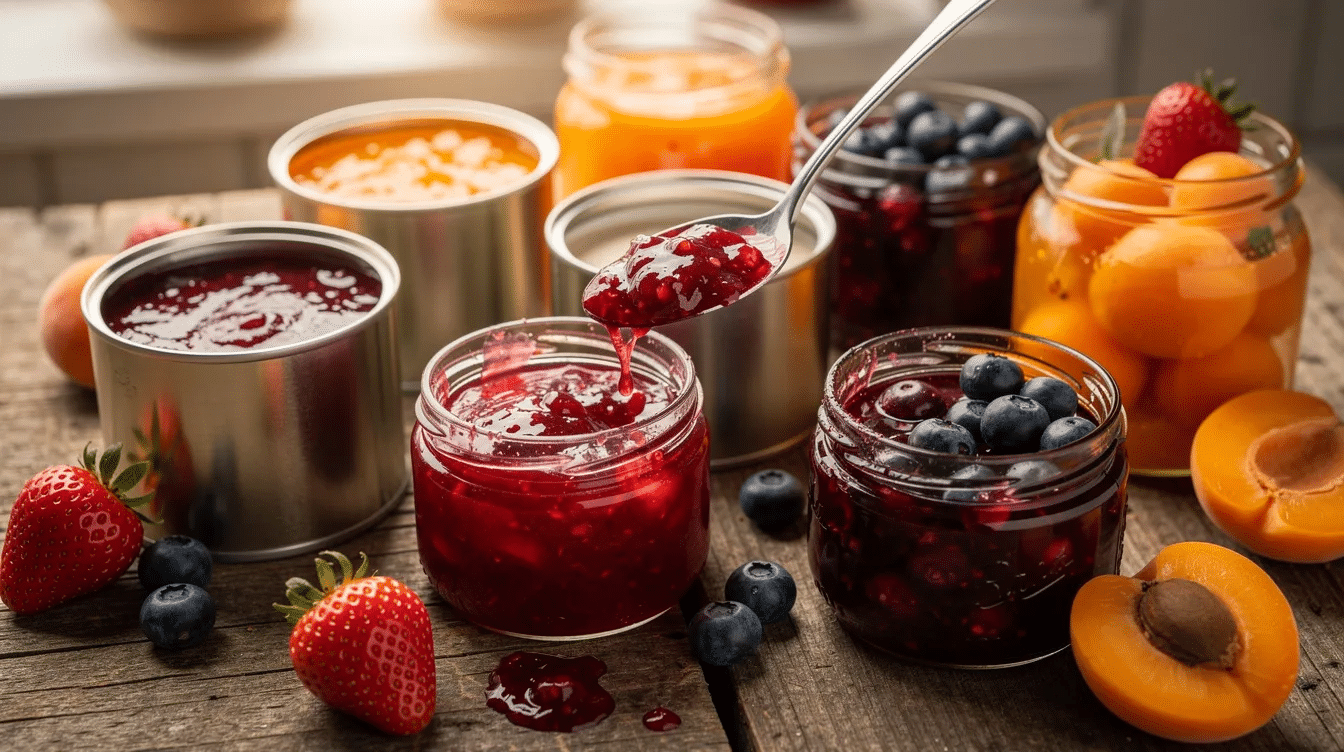
Home food preservation has experienced a resurgence as more people discover the satisfaction of making jams and jellies from scratch. Whether you’re working with a farmers’ market haul or fruit from your backyard, learning to can jams properly means you’ll have shelf-stable spreads ready for toast, baking, and gift-giving all year long.
When you can jams, you’re preserving sweet fruit spreads in glass canning jars using water bath canning. This process creates a vacuum seal that keeps your product safe at room temperature for up to one year. The method works because the combination of high acid, high sugar, and heat processing prevents mold and bacteria from taking hold.
Different fruit spreads have distinct characteristics worth understanding before you start making jams at home:
Jam uses crushed or chopped fruit and holds its shape while remaining softer than jelly
Jelly is made from clarified fruit juice, producing a clear, firm spread
Marmalade features soft fruit jellies with suspended citrus peel pieces
Preserves and conserves contain whole fruits or large pieces in a thick syrup
Fruit butters are cooked fruit pulp spread to a smooth, spreadable consistency
This guide covers how to safely can jams at home, select the right ingredients, prevent spoilage, and explore freezer jam and low-sugar alternatives. All guidance aligns with recommendations from the USDA and the National Center for Home Food Preservation as of 2025–2026.
General Information on Canning Jams, Jellies, and Marmalades
The basic canning workflow follows a consistent pattern: prepare your fruit mixture according to a tested recipe, fill hot jars with hot jam, apply lids and rings, process in a boiling water canner, cool, and store. This sequence ensures both proper gel formation and food safety.
High acid foods like strawberry jam, raspberry jelly, and orange marmalade are appropriate for boiling water bath processing—not pressure canning. A pressure canner is reserved for low-acid foods like vegetables and most fruits that lack sufficient natural acidity.
Here’s how the main spread types compare:
Jam (strawberry, raspberry): Crushed fruit with visible pieces, thick texture
Jelly (apple, grape): Strained fruit juice only, clear and firm enough to slice
Marmalade (Seville orange, lemon): Citrus-based with suspended peel strips
Fruit butter (apple butter): Smooth pureed fruit cooked until thick
Conserve/preserves (cherry preserves): Whole or large fruit pieces, often with raisins, coconut, or nuts added
The chemistry behind safe canning relies on acidity (pH below 4.6), sugar concentration, and heat working together. Older methods like oven canning or paraffin wax seals are now considered unsafe. However, you don’t need specialized equipment—a deep pot with a lid and a rack to keep jars off the bottom works as a functional boiling water canner, and many of the same cool, dark storage principles used for dehydrated food shelf life also apply to home-canned jams.
Ingredients and How Jam Gels
A good jam sets because pectin, sugar, acid, and heat interact to form a soft gel network. Understanding each ingredient’s role helps you troubleshoot problems before they happen.
Fruit contributes flavor, color, water content, natural pectin, and natural acids. Different fruits have dramatically different pectin levels, and some that are great for jam also make excellent dehydrated fruit snacks:
High-pectin fruits: tart apples, crab apples, quince, underripe citrus peels, concord grapes, while low-pectin berries like strawberries are often better handled with added pectin or preserved as dehydrated strawberries in a dehydrator
Low-pectin fruits: strawberries, cherries, blueberries, peaches, most fruits when fully ripe
Pectin creates the gel structure. Traditional recipes using high-pectin fruits need no added pectin. For fruits low in natural pectin, commercial powdered pectin or liquid pectin provides consistent results.
Acid affects both gel formation and safety. Many canning recipes call for bottled lemon juice because its acid content is consistent, unlike freshly squeezed juice which varies. This is critical for fruits with too little acid naturally.
Sugar serves three functions: improves flavor and color, binds water to slow microbial growth, and supports gel formation. Using too little sugar in traditional recipes risks creating runny jam and compromising preservation. Never reduce sugar without following a tested low-sugar formula.
To recognize proper gel stage, look for the mixture reaching 220°F (104°C) at sea level, sheeting off a spoon rather than dripping, or passing the cold plate wrinkle test.
Safe Canning Practices for Jam
Jam safety depends entirely on correct processing in a boiling water canner. Dishwashers, ovens, and open-kettle methods do not reach or maintain the temperatures needed to destroy spoilage organisms. There are no shortcuts here.
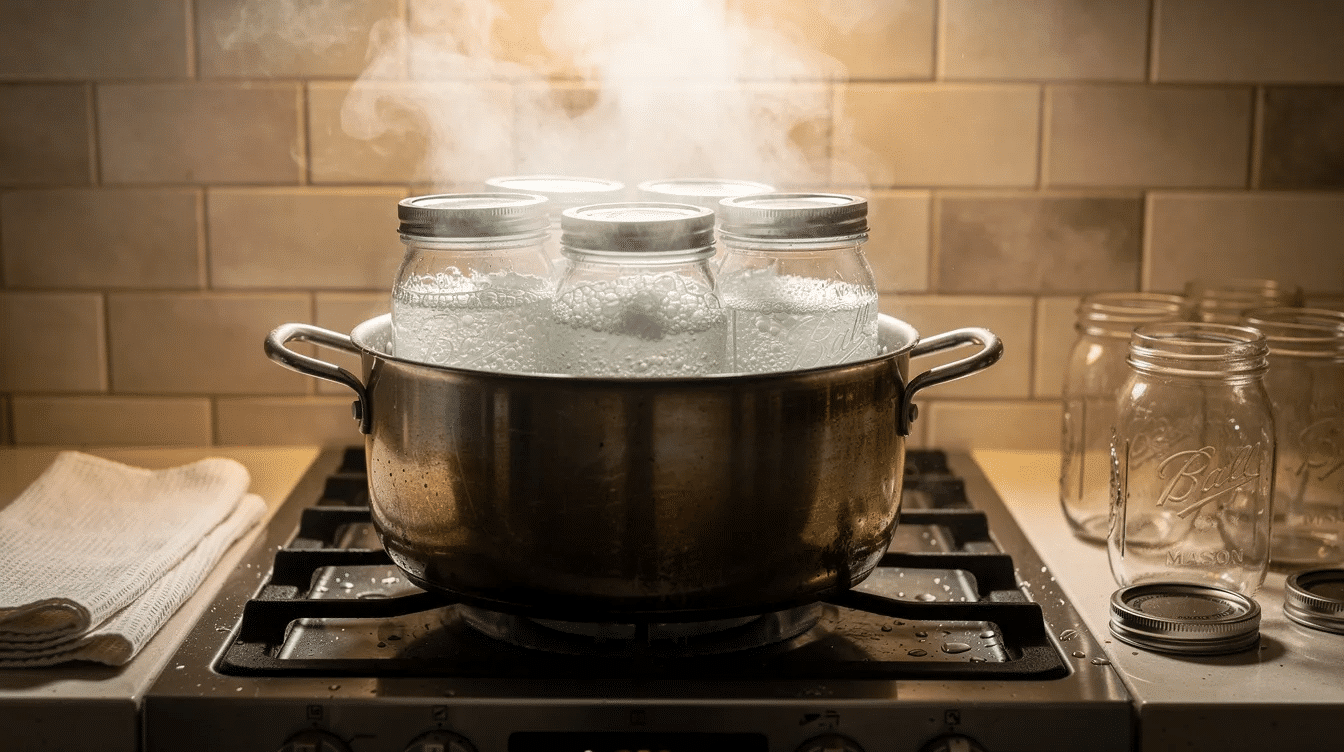
Your boiling water canner needs:
A deep pot with a lid
A rack to keep jars off the bottom (even a homemade one works)
Enough water to cover filled jars by at least 1 inch
The ability to maintain a rolling boil at 212°F (100°C) at sea level
Glass jars must be designed for canning—regular food jars can crack under processing heat. Use new two-piece metal lids each season since they’re engineered to seal only once. Empty jars can be reused indefinitely if free of cracks and chips.
Altitude matters. Processing times increase as elevation rises. A 10-minute process at sea level becomes approximately 14 minutes at 4,000 feet. Check your local Extension service for exact adjustments.
The basic water bath canning process for jam: preheat jars, fill with hot jam leaving 1/4 inch headspace, wipe rims clean, apply lids finger-tight, process for the recipe-specified time, then cool undisturbed for 12–24 hours before testing seals.
If you skip water bath processing, treat your product as refrigerator jam with a shelf life of about one month.
Methods that do NOT work:
Dishwasher processing
Oven canning
Open-kettle (hot-fill without processing)
Inverting hot jars without water bath processing
Jams and Jellies with Reduced Sugar
Interest in lower-sugar spreads continues to grow, but standard high-sugar canning recipes cannot simply be adjusted by cutting sugar. The pectin-sugar-acid balance is precise, and deviating risks both runny texture and compromised safety.
Modified pectin products enable gel formation with less sugar or alternative sweeteners:
Low-methoxyl pectins work with calcium rather than sugar to gel
Products like Sure-Jell “No Sugar Needed” or Pomona’s Pectin are designed specifically for reduced-sugar applications
These recipes often include calcium packets and require different fruit-to-pectin ratios
Important considerations for low-sugar jams:
Follow package inserts or tested recipes exactly
Lower sugar may shorten shelf life compared to traditional recipes
Some low-sugar recipes require longer processing times
Using concentrated fruit pulp or juice reductions can intensify flavor when using less sugar
Some formulas are designed as refrigerator-only spreads with 2–4 week storage life
Preventing Spoilage and Mold in Home-Canned Jams
Surface mold on jam is not safe to simply scrape off. Invisible mycotoxins may have diffused throughout the product, making the entire jar unsafe to eat. This represents a significant change from older home canning practices where removing visible mold was considered acceptable.
All jars must be processed in a boiling water canner for the time specified in a tested recipe, even if the jam is piping hot when jarred. The processing step destroys spoilage organisms while creating the vacuum seal that prevents new contamination.
Methods that do NOT reliably prevent spoilage:
Paraffin or wax caps
Simply inverting hot jars
Hot-filling without water bath processing
Proper storage requirements:
Store sealed jars in a cool, dark place (50–70°F / 10–21°C)
Shelf life is approximately one year for best quality
Once opened, refrigerate and use within about one month
Keep away from heat sources, direct sunlight, and temperature fluctuations
Warning signs requiring immediate discard:
Unsealed jars found after processing
Visible mold or fuzzy growth
Off-odors when opened
Gas bubbles or fizzing
Leaking or cracked jars
Significant color changes with texture changes
Never taste suspect product—discard without sampling.
Methods of Making Jams and Jellies
Two methods dominate jam-making: traditional recipes with no added pectin and modern quick methods using commercial pectin. Each approach offers distinct advantages.
Traditional no-pectin methods work best with high-pectin fruits like sour apples, tart plums, and black currants. These recipes often combine slightly underripe fruit (about one-quarter) with fully ripe fruit (three-quarters) to achieve proper pectin levels. Cooking times run longer, producing concentrated flavor but requiring careful monitoring to avoid overcooking.
Quick methods using powdered or liquid pectin produce more predictable results with shorter cook times, preserving brighter color and fresher flavor. These are often recommended for beginners and work well with low-pectin fruits.
Critical principles for both methods:
Make one batch at a time
Keep batch sizes within tested limits—never double recipes
Use jar sizes specified in the recipe (typically half-pints or pints)
Follow tested recipes precisely
No-Added-Pectin Jam and Jelly
This method relies entirely on natural pectin from fruit, combined with sugar and acid (usually lemon juice). It works best for naturally pectin-rich fruits like apples, quince, concord grapes, and some tart plums.
Include peels, cores, and seeds when cooking jelly stock to extract maximum pectin
Strain through a jelly bag or cheesecloth overnight for clear juice
Use the 1/4 underripe to 3/4 ripe fruit ratio for optimal pectin and unique flavor balance
Monitor for gel point using temperature (220°F at sea level), sheet test, or cold plate test
Expect longer cooking times compared to added-pectin recipes
Added-Pectin Jam and Jelly
Commercial pectin simplifies the process and provides consistent results, especially for fruits low in natural pectin like strawberries, raspberries, and peaches.
Powdered and liquid pectin are NOT interchangeable—follow package directions exactly
Mixing order and sugar amounts differ between pectin types
Boiling time after sugar addition is typically short (1–2 minutes)
Reducing sugar below specified amounts causes soft or syrupy results
A classic 4-cup strawberry jam with standard powdered pectin demonstrates the method’s reliability
Freezer Jams and Uncooked Fruit Spreads
Freezer jam offers an alternative to water bath canning that preserves exceptionally fresh flavor and bright color, similar to how freeze dried strawberries at home lock in fresh fruit taste for shelf-stable snacks. This soft-set jam is stored frozen rather than processed in boiling water.
Freezer jams use special freezer pectin products and typically require stirring together fruit, sugar, pectin, and sometimes a small amount of hot water. Some recipes involve brief heating while others are entirely uncooked, while alternative preservation methods like freeze drying food without a machine skip added pectin altogether.
Key freezer jam guidelines:
Store in refrigerator for short-term use (3–4 weeks)
Freeze for longer storage (up to 1 year following manufacturer directions)
Use plastic freezer containers or canning jars with extra headspace for expansion
Do not reduce sugar without using a tested low-sugar freezer jam formula
This method does NOT produce shelf-stable product—never store at room temperature
Freezer jam is ideal for people without canning equipment or those who prefer a fresher, less-cooked fruit taste, just as using dehydrated fruits for homemade granola is perfect for those who want pantry-ready, minimally processed breakfasts and snacks.
Uncooked and Low-Heat Freezer Jam Techniques
Some freezer jams are completely uncooked: crushed fresh fruit is mixed with sugar, allowed to stand to extract juice, then combined with pectin dissolved in water. The mixture is poured into containers and left to thicken before freezing.
Other recipes involve only brief heating to dissolve pectin or sugar but skip the long boiling required for canning. This preserves volatile fruit aromas that cooking would lose.
Follow pectin manufacturer instructions precisely—gel formation timing varies between brands
Never store these products at room temperature
Refrigerator and freezer storage only
Eaten within recommended timeframes for safety
Step-by-Step Overview: How to Can Jam Safely
This section provides a bird’s-eye view of the essential steps for safely canning fruits into jam using a boiling water bath, following current Extension-style guidance.
The seven essential steps:
Prepare equipment: Gather canner, rack, jars, new lids, and tools. Inspect canning jars for cracks or chips.
Prepare fruit mixture: Follow a tested recipe from USDA, university Extension, or the National Center for Home Food Preservation.
Preheat jars and water: Keep jars hot until filling to prevent thermal shock.
Fill jars: Ladle hot jam into hot jars, remove air bubbles, and maintain 1/4 inch headspace.
Apply lids: Wipe rims clean, center lids, and screw rings finger-tight.
Process: Submerge jars in boiling water for the specified time, adjusting for altitude.
Cool and store: Remove jars, cool undisturbed 12–24 hours, test seals, label with product name and date, and store.
Example timing: Half-pint jars of strawberry jam process for 10 minutes at sea level, increasing to 14 minutes at 4,000 feet elevation.
Troubleshooting Soft, Runny, or Over-Firm Jams
Even experienced canners occasionally produce jam that doesn’t set correctly. Understanding the causes helps you prevent problems in future batches.
Causes of soft or runny jam: When you want jam flavor without worrying about gel, you can also preserve excess berries as dehydrated raspberries with simple steps.
Too little pectin (natural or added)
Overripe or low-pectin fruit
Too little sugar or too much acid
Undercooking
Doubling recipes beyond tested batch size
Causes of overly firm or rubbery jam:
Too much pectin
Too little liquid
Prolonged boiling that over-concentrates sugar
Inaccurate measuring
Soft batches can sometimes be re-cooked within 24 hours using additional pectin and sugar following a tested “remake” procedure. Alternatively, accept the product as syrup for pancakes, yogurt, or ice cream.
Other common issues include floating fruit (caused by cooking too briefly), sugar crystals, and weeping jelly. For detailed troubleshooting, consult USDA or Extension resources rather than improvising solutions, and remember that proper storing dehydrated food in Mason jars follows many of the same principles of airtight, cool, dark storage used for canned jams.
Storage, Shelf Life, and When to Discard
Properly processed and sealed jam jars maintain best quality for approximately one year when stored in a cool, dark place below 95°F. Many jars remain safe beyond that timeframe if seals stay intact and no spoilage signs appear, though flavor and color may degrade, much like the considerations around beef jerky shelf life and expiration.
Once opened, jams and jellies should be refrigerated and used within about one month. Freezer jams have different guidelines: 3–4 weeks in the refrigerator, up to one year frozen, whereas other preserved foods like dehydrated canned corn can last significantly longer when properly dried and stored.
Best practices:
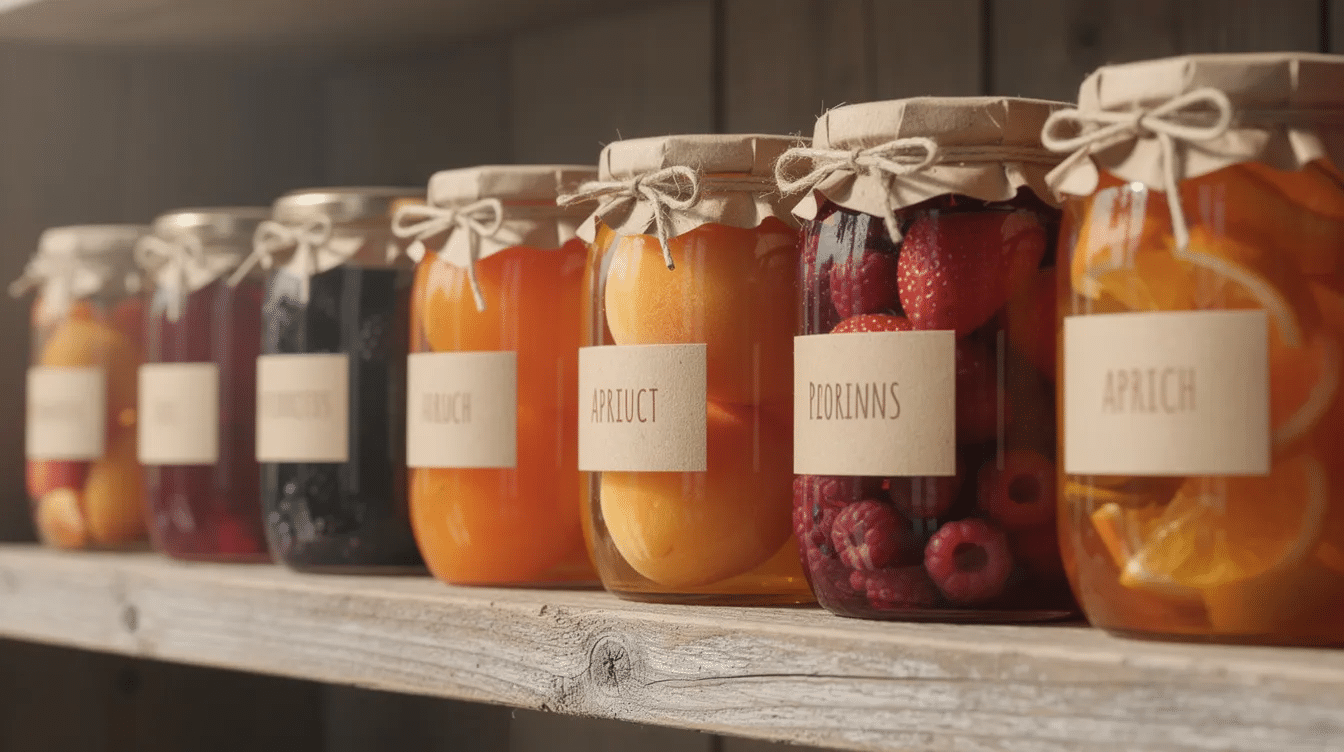
Label jars with product name and date (e.g., “Peach Jam – August 2026”)
Rotate older stock forward
Store away from heat sources and direct sunlight
Discard immediately if you observe:
Unsealed jars after processing
Any visible mold
Off-odors or unusual smells
Gas bubbles or fizzing when opened
Leaking, cracked, or bulging lids
Significant color separation or texture changes
Small batches, proper processing, and careful storage will reward you with a pantry full of homemade spreads. Start with a simple tested recipe—perhaps a classic strawberry jam—and build your confidence from there. The fun of home canning lies in transforming seasonal fruit into preserved treats you can enjoy all year long.
DannyContent Writer
Hey there, since 2016, my mission has been to provide you with the information and guides you need to make food dehydrating simple and fun. Whether you're a newbie or a seasoned pro, my site offers helpful guides, reviews, and recipes to enhance your dehydrating experience. I take pride in only recommending products I believe in, ensuring my readers' trust. As an affiliate of various programs, including Amazon Associates, your support helps me continue providing quality content. Thanks for stopping by, and happy dehydrating!