We earn a commission if you make a purchase, at no additional cost to you.
09/22/2026 04:39 pm GMT
🍊 Dehydrated Food Info Finder — Temperatures & Drying Times
Choose a category, then pick a food to see its drying temperature and time.
⚠️ Safety Disclaimer: Drying times are estimates and vary based on slice thickness, food moisture content, humidity, and your dehydrator model. Always check for doneness before storing — food should feel dry, leathery, or brittle with no moist spots. Improperly dried food can harbour mould and bacteria. For meat and poultry, follow USDA safe internal temperature guidelines: beef and pork to 160°F (71°C), poultry to 165°F (74°C). Use a food thermometer when in doubt. Store all dehydrated foods in airtight containers in a cool, dark place and discard anything showing moisture, mould, or off odours.
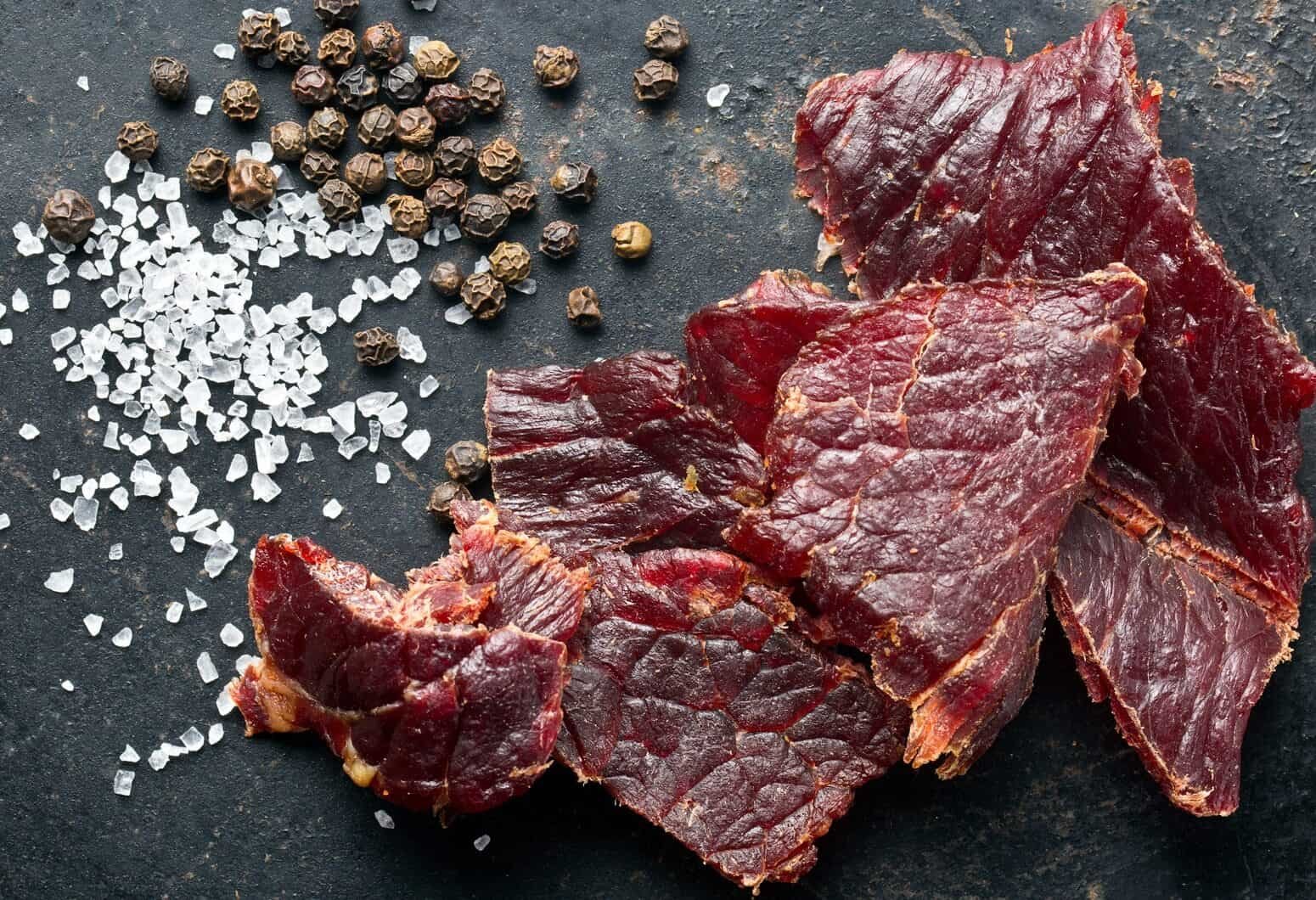
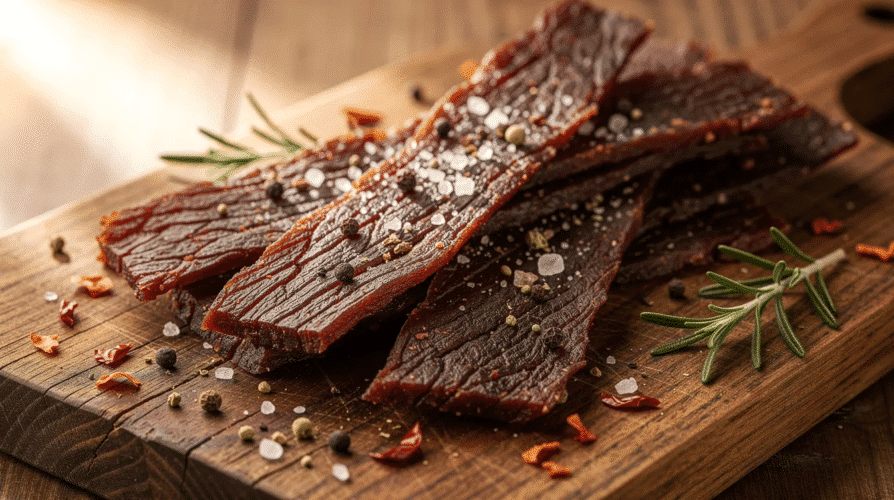
This guide is for home cooks and jerky enthusiasts looking to make beef jerky using a dehydrator. If you’re searching for a beef jerky recipe for dehydrator, you’re in the right place! We cover everything from meat selection to storage and safety tips, ensuring you have all the information you need to make delicious, safe, and long-lasting homemade jerky. Making your own beef jerky at home is not only fun and rewarding, but it also gives you complete control over the flavors and ingredients in your favorite snack. Whether you crave the classic jerky flavor, a sweet and savory teriyaki beef jerky, or a bold peppered beef jerky, homemade jerky lets you customize every batch to your taste. Plus, you can experiment with different cuts of beef and seasoning blends to create your own signature finished jerky. In this guide, we’ll walk you through everything you need to know about making homemade beef jerky, from choosing the right meat to storing your delicious creations.
Step
Instructions
Choose Meat
Select lean beef cuts like eye of round, top round, or bottom round roasts.
Slice Meat
Freeze beef for 1 hour, then slice into ⅛ inch strips against the grain for tenderness.
You can’t have delicious jerky if you don’t have a solid base. A good rule of thumb is to pick the cut of meat that has the least amount of fat—lean beef is the healthiest option. The smaller the fat content, the longer your jerky will last and the better it will taste.
The best cuts of meat for making beef jerky are lean cuts such as round roast, which includes eye of round, top round, and bottom round roasts. Eye of round roast is often recommended as the first choice for making beef jerky due to its low fat content and affordability. London broil is also a great option for beef jerky meat selection.
You’ll also want to make sure that you’re selecting the best meat for beef jerky as well. Purchase enough of it, because beef jerky will lose the greater portion of its weight when it’s dried. If you want a pound of beef jerky, buy three pounds of meat.
When preparing your jerky, slice the beef against the grain into thin beef slices or beef strips—this sliced beef or sliced meat ensures even drying and the best texture. Slicing your own meat at home gives you better control over the thickness and quality of each piece, and following pro techniques for slicing meat for jerky will further improve your results.
To prepare beef jerky, slice the meat into strips approximately ⅛ inch thick against the grain for a more tender texture. Using a mandoline slicer ensures uniform slice thickness, which contributes to even drying, and understanding how dehydration time varies for beef jerky will help you plan your drying process.
Now that you know which meat to choose and how to slice it, let’s move on to preparing your beef for marination.
The Prep Work
Once you’ve got your meat, it’s time to prep it. If you go to a butcher, you can always ask them to slice the beef for you. If you want to take matters into your own hand, freeze your beef for about an hour in order to slice it a little easier. For even thickness, cover the meat with plastic wrap before pounding it gently to flatten.
You’ll want to slice with the grain and make sure they’re as thin as you can possibly get them. After slicing, you can use a meat tenderizer if desired to improve texture. Before marinating, use paper towels to pat dry the beef slices and remove excess moisture; these same preparation principles work well when making elk jerky in a food dehydrator or other wild game jerky.
Now that your meat is prepared, let’s move on to creating the marinade, and later you can branch out into a variety of homemade jerky recipes using different meats and flavors.
Ingredients and Marinade Options
A popular beef jerky marinade includes a combination of soy sauce, Worcestershire sauce, liquid smoke, brown sugar, salt, pepper, meat tenderizer, garlic powder, onion powder, and paprika. For a peppered beef jerky marinade, combine ingredients such as beer, soy sauce, Worcestershire sauce, brown sugar, garlic, black pepper, onion powder, and red pepper flakes.
If you’re looking to make 5 pounds of jerky, here’s what you’re going to need:
2 cups soy sauce (or low sodium soy sauce for a healthier option)
3 cups Worcestershire sauce
2 cups of a high-quality teriyaki sauce
1 cup of liquid smoke
½ cup dark corn syrup (or blackstrap molasses, if you’re feeling adventurous)
3 tbs garlic powder
3 tbs onion powder
3 tbs sesame seeds
3 tbs brown sugar
1 tsp cayenne pepper
1 tbs black pepper
1 tsp crushed red pepper (optional, for extra heat)
1 tsp red pepper flakes (optional, for a spicy kick)
1 tsp curing salt (optional, for preservation and food safety)
Make sure you pick high-quality ingredients here. Mix all marinade ingredients thoroughly to ensure even coating and flavor. After marinating, discard or dry any excess marinade before dehydrating. The better your ingredient quality, the better your homemade beef jerky will be.
Now that you have your marinade ready, let’s move on to the step-by-step dehydrator recipe, building on the same fundamentals you’ll find in other dehydrator jerky recipes for homemade snacks.
Beef Jerky Recipe for Dehydrator: Step-by-Step Instructions
Mixing the Marinade
If you don’t yet own a dehydrator, comparing the best food dehydrators for jerky can help you choose a model that matches your batch size and budget before you start this process.
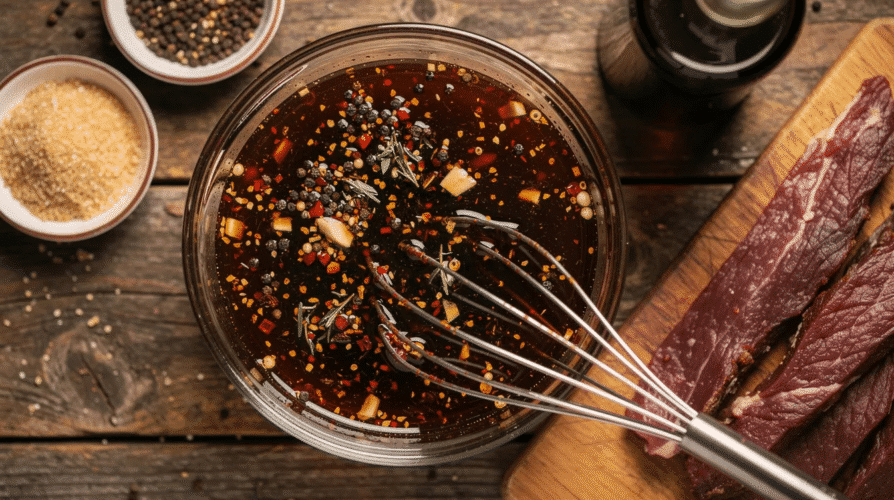
In a large bowl, combine all wet ingredients (soy sauce, Worcestershire sauce, teriyaki sauce, liquid smoke, corn syrup or molasses).
Add the dry ingredients (garlic powder, onion powder, sesame seeds, brown sugar, cayenne pepper, black pepper, crushed red pepper, red pepper flakes, curing salt if using).
Mix thoroughly to ensure all ingredients are well incorporated.
Marinating the Beef
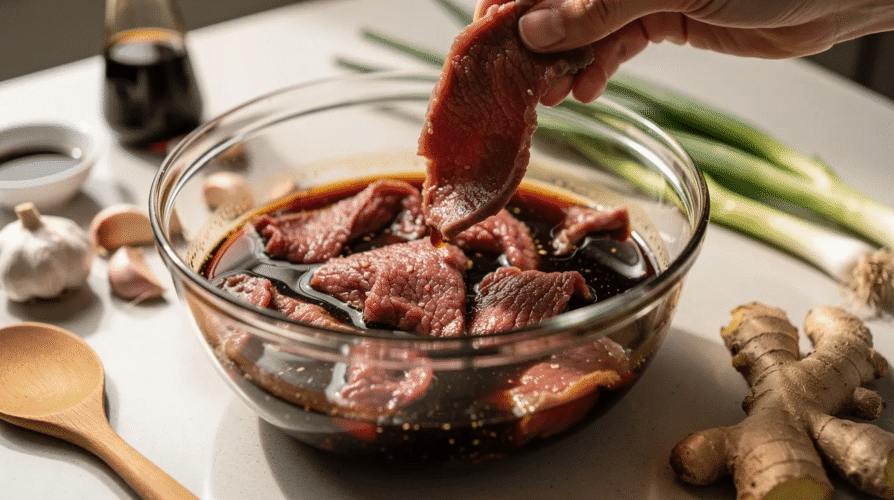
Add your sliced beef to the marinade, ensuring all pieces are fully submerged.
Cover the container and refrigerate for at least 6 hours, or overnight for better flavor absorption. Marinating beef strips for at least 6 to 24 hours enhances the flavor of the jerky, with longer marination times resulting in a stronger taste.
Arranging on Dehydrator Trays
Remove the marinated beef from the marinade and pat dry with paper towels to remove excess moisture.
Arrange the jerky slices evenly on your dehydrator trays in a single layer, making sure they don’t touch for consistent drying.
Dehydrating Process
Set your food dehydrator to a temperature of 160°F to 175°F.
Dehydrate the marinated beef strips for about 4 to 6 hours, depending on the thickness of the meat strips. The dehydrating process for beef jerky typically takes 4 to 10 hours at a temperature of 160°F (71°C), and you can also reference video guides on dehydrating beef jerky if you prefer visual instructions.
To ensure even drying, it is recommended to rotate the dehydrator racks every hour during the dehydration process.
Check for doneness by bending a piece of jerky; the jerky is done when it bends and cracks but does not break in half, indicating it has reached the proper texture and dryness.
To enhance food safety, heating the finished jerky in an oven at 275°F for 10 minutes is recommended.
Now that your jerky is dehydrated, let’s check for doneness and learn how to store it properly.
Checking for Doneness
Getting the perfect texture in your homemade beef jerky is all about knowing when it’s done. Finished jerky should be dry to the touch but still slightly pliable—it shouldn’t snap in half like a cracker, but it also shouldn’t feel soft or moist. The jerky is done when it bends and cracks but does not break in half, indicating it has reached the proper texture and dryness. To check, simply bend a jerky strip; it should bend and crack, but not break completely. For extra assurance, cut into one of the thicker jerky strips—if you see any moisture or the inside looks raw, return it to the dehydrator for another 30 minutes and check again. Always use a food thermometer to confirm that your beef jerky has reached an internal temperature of 160°F, ensuring it’s safe to eat. Following these steps will help you achieve perfectly finished jerky every time.
Once you’ve confirmed your jerky is done, it’s time to store it for maximum freshness, following best practices for beef jerky fridge life and storage.
Storing the Jerky
Storage Tips
Proper storage is key to keeping your homemade beef jerky fresh and flavorful. Here are some tips:
Once your jerky has cooled completely, transfer it to an airtight container, such as a glass jar, ziplock bag, or vacuum-sealed pouch.
Properly stored beef jerky can last for 1-2 months in a cool pantry and up to 6 months in the refrigerator.
Homemade beef jerky can be stored at room temperature in an airtight container for up to a month, but for longer shelf life, it is recommended to refrigerate it.
Using a vacuum sealer can extend the shelf life of homemade beef jerky to up to a year.
To preserve freshness, it is best to store beef jerky in a cool, dry place, ideally in an airtight container such as glass jars or ziplock bags.
Now that you know how to store your jerky, let’s review some important safety precautions.
Safety Precautions
Food Safety Guidelines
When making beef jerky at home, food safety should always come first. Always start with fresh, high-quality beef and handle raw meat with care to avoid cross-contamination. Make sure your workspace, utensils, and dehydrator are clean and sanitized before you begin. It’s crucial to heat your jerky to an internal temperature of at least 160°F to kill any harmful bacteria. To enhance food safety, heating the finished jerky in an oven at 275°F for 10 minutes is recommended. Be mindful of ingredients like soy sauce and Worcestershire sauce, which may contain allergens—always check labels if you or your family have sensitivities. By following these safety guidelines, you can enjoy homemade beef jerky with confidence.
With safety in mind, let’s look at some expert tips to perfect your jerky-making process.
Jerky Making Tips
Expert Tips for Perfect Jerky
Start by choosing a lean cut like round roast or flank steak for tender, flavorful jerky.
Use a sharp knife or mandoline slicer to slice your beef into thin strips (about ⅛ inch thick) against the grain for a more tender texture.
When marinating, combine soy sauce, brown sugar, and your favorite spices—like cayenne pepper, smoked paprika, or garlic powder—for a delicious kick.
Don’t be afraid to experiment with different flavors and cuts to find your perfect recipe.
Once your jerky is finished, store it in an airtight container to keep it fresh.
To ensure even drying, rotate the dehydrator racks every hour during the dehydration process.
With a little practice and creativity, you’ll be making mouthwatering beef jerky that’s better than anything you can buy!
We hope our beef jerky recipe for dehydrator has inspired you to give dehydrating your food a try. This is a basic recipe, but it’s a delicious base, one that you can build off of and twist once you get comfortable dehydrating your food.
If you liked that recipe and you want to give it a try, check out our tips here!
DannyContent Writer
Hey there, since 2016, my mission has been to provide you with the information and guides you need to make food dehydrating simple and fun. Whether you're a newbie or a seasoned pro, my site offers helpful guides, reviews, and recipes to enhance your dehydrating experience. I take pride in only recommending products I believe in, ensuring my readers' trust. As an affiliate of various programs, including Amazon Associates, your support helps me continue providing quality content. Thanks for stopping by, and happy dehydrating!