We earn a commission if you make a purchase, at no additional cost to you.
09/22/2026 04:39 pm GMT
🍊 Dehydrated Food Info Finder — Temperatures & Drying Times
Choose a category, then pick a food to see its drying temperature and time.
⚠️ Safety Disclaimer: Drying times are estimates and vary based on slice thickness, food moisture content, humidity, and your dehydrator model. Always check for doneness before storing — food should feel dry, leathery, or brittle with no moist spots. Improperly dried food can harbour mould and bacteria. For meat and poultry, follow USDA safe internal temperature guidelines: beef and pork to 160°F (71°C), poultry to 165°F (74°C). Use a food thermometer when in doubt. Store all dehydrated foods in airtight containers in a cool, dark place and discard anything showing moisture, mould, or off odours.
Canning Pickled Cucumbers and Onions (Water-Bath Safe Guide)
This is a high-acid, water-bath safe recipe using 5% acidity vinegar, making it safe for home canning without pressure equipment.
The article covers both a quick refrigerator version ready in 12-24 hours and a fully processed canned version with 12+ months of shelf life.
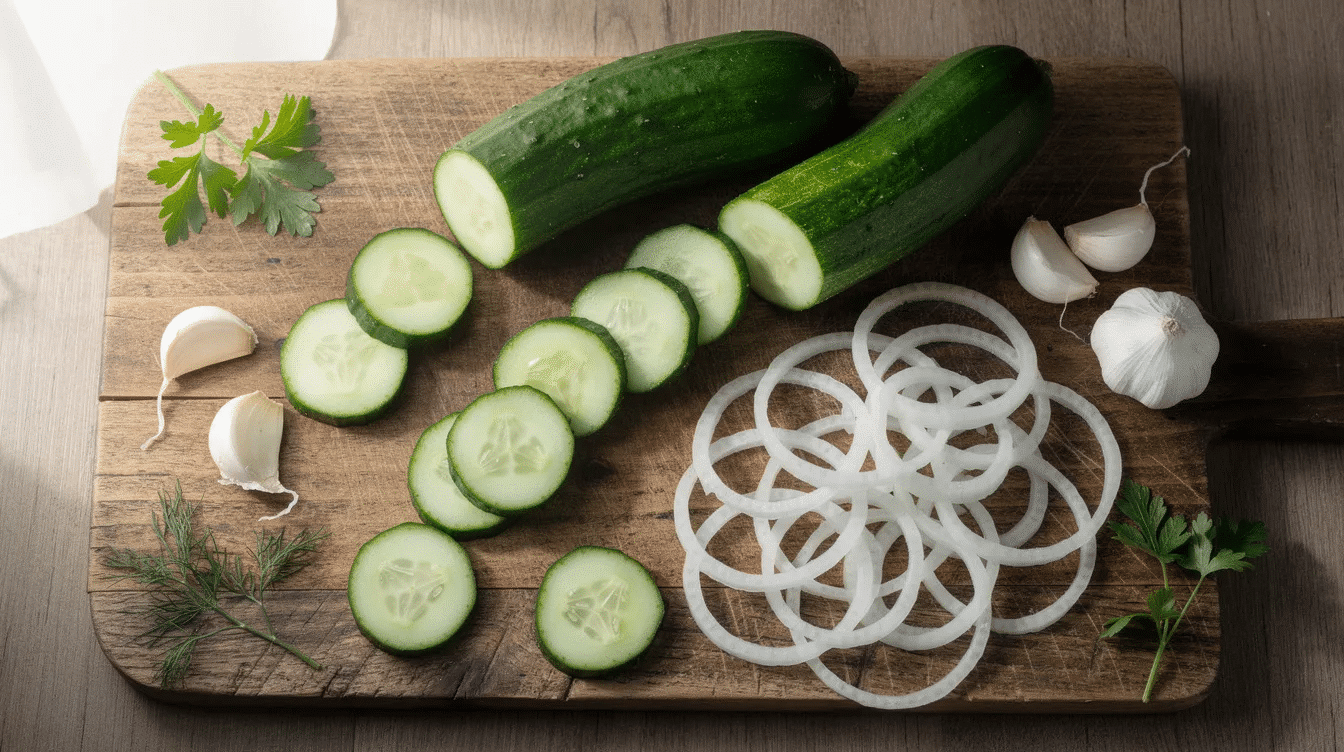
Use pickling cucumbers like kirby cucumbers or persian cucumbers paired with yellow or red onions, all sliced to consistent thickness for even pickling.
Processing takes 10-15 minutes in boiling water at sea level, with altitude adjustments required for higher elevations, yielding approximately 6-8 pint jars.
Canning pickled cucumbers and onions is approachable for beginners when you follow tested ratios and processing times exactly.
Introduction: Why Can Pickled Cucumbers and Onions?
Late summer brings an abundance of fresh cucumbers and onions from July through September, often more than any household can eat fresh. Rather than watching your summer produce go to waste, pickling transforms that harvest into tangy, crunchy additions you can enjoy year-round.
This recipe uses a classic vinegar mixture with sliced cucumbers and onions for a versatile pickle that works as a sandwich topping, burger garnish, or side dish alongside grilled meats and potato salad. The pickling brine delivers a tangy, slightly sweet profile that complements everything from pulled pork to bratwurst.
In this guide, you’ll find everything needed to successfully preserve your harvest: complete ingredients, essential canning equipment, step-by-step instructions for water bath canning, a faster refrigerator pickles variation, proper storage guidelines, and troubleshooting tips. Whether you’re new to canning or looking for a tested recipe, this method produces safe, delicious pickled cucumbers and onions every time.
Ingredients for Canned Pickled Cucumbers and Onions
The following ingredients yield approximately 6-8 pint jars of pickles. Measurements for the pickling liquid must remain exact for safe water-bath processing.
Vegetables:
4-6 pounds fresh cucumbers (3-5 inch pickling varieties like kirby cucumbers or persian cucumbers), washed with blossom ends trimmed; extra cucumbers can also be turned into dehydrated cucumbers for long-term snacking
2 pounds onions (yellow or red onions), peeled and sliced into 1/8 to 1/4 inch rings or half-moons
Pickling Brine:
5 cups white vinegar or apple cider vinegar, labeled 5% acidity
3 cups water
4 tablespoons kosher salt or pickling salt (non-iodized)
1 to 1.5 cups sugar (adjust within this range for desired sweetness)
You don’t need specialized canning equipment to get started. A large pot from your kitchen can work as long as it’s deep enough to cover jars with 1-2 inches of water during processing.
Essential Equipment:
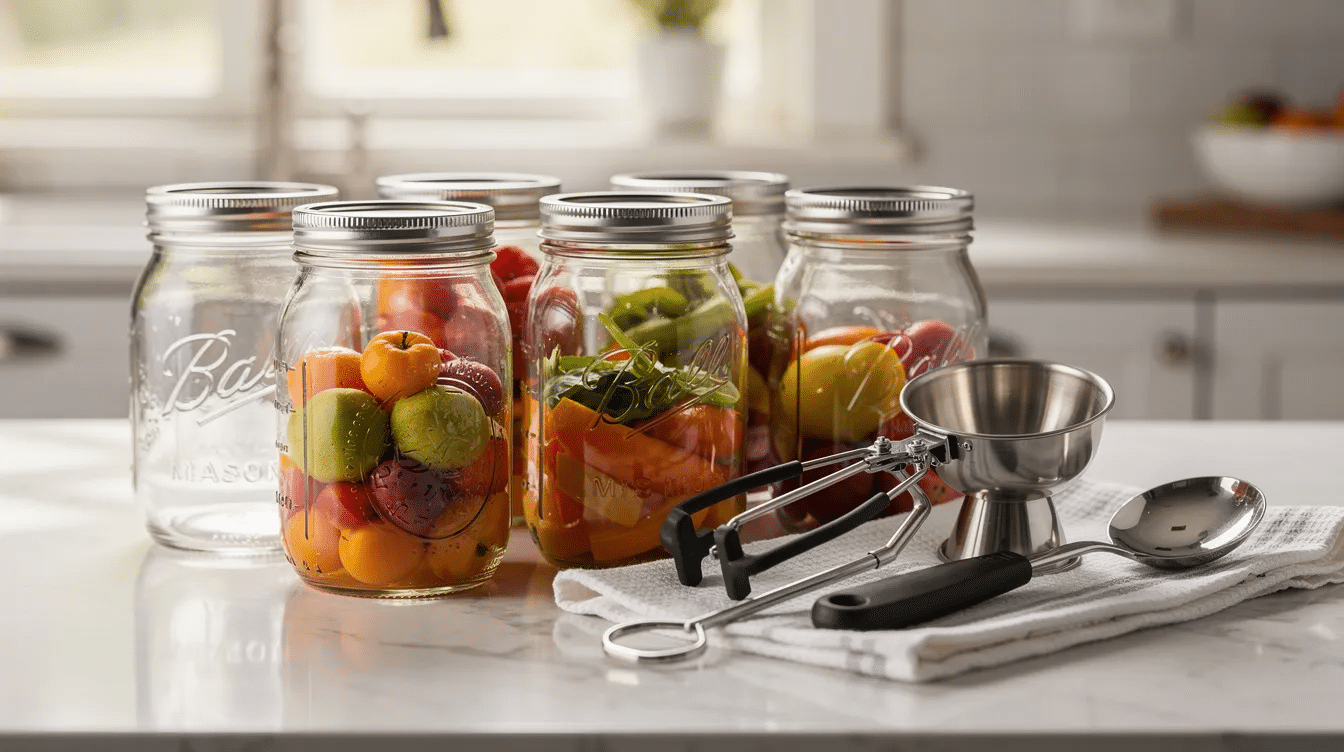
Large pot or stockpot (at least 8 quarts, 3 inches taller than pint jars) with a fitted rack, wire trivet, or folded clean towel to keep jars off the bottom
6-8 pint-size mason jars or wide mouth jars (brands like Ball or Kerr work well)
New two-piece lids (flat sealing lids and rings) for all the jars
Jar lifter or tongs wrapped with rubber bands for safe handling
Wide-mouth canning funnel
Non-metallic bubble remover (chopstick or plastic knife)
Ladle for transferring hot brine
Clean towel for wiping jar rims and cooling processed jars
Safety Reminders:
Inspect canning jars for chips, cracks, or nicks before use
Never reuse flat sealing lids—they have a 50-70% failure rate on second use
Rings and jars are reusable if undamaged
Start with hot jars from a dishwasher cycle or hot water bath to prevent cracking
Preparing Cucumbers and Onions for Pickling
Good texture starts with very fresh, firm vegetables. Cucumbers harvested within 24 hours retain significantly more crispness than those stored longer, and surplus produce can be turned into oven-dehydrated vegetables for nutritious snacks.
Wash cucumbers thoroughly under cold water, scrubbing gently to remove dirt and debris
Trim 1/16 inch from blossom ends (the end opposite the stem) to remove enzymes that cause softening—this step alone can improve crispness by up to 40%
Cut cucumber slices into 1/4-inch rounds or spears, keeping size consistent for even pickling
Peel onions and slice into thin rings or half-moons, approximately 1/8 to 1/4 inch thick; green tops from bunching onions can be preserved as dehydrated green onions at home
Discard any soft, bruised, or yellowing cucumbers and any sprouting or mushy onions
Optional Crisping Step: Place sliced cucumbers in a large bowl with ice water or a light salt water brine (1/4 cup pickling salt per 2 quarts water) for 2-4 hours in the refrigerator. Rinse thoroughly and pat dry before packing. This draws out excess moisture and helps maintain crunch after processing.
Making the Pickling Brine
The goal is a high-acid brine that’s safe for canning while delivering balanced flavor. This boiling pickling solution forms the foundation of your preserved pickles.
In a large pot, combine 5 cups 5% acidity vinegar (cider vinegar or white vinegar), 3 cups water, 4 tablespoons pickling salt, and 1.5 cups sugar
Add whole spices directly to the pot: 2 tablespoons mustard seeds, 1 tablespoon celery seed, 2 teaspoons black peppercorns, and 1 teaspoon turmeric
Bring to a boil over medium-high heat, stirring occasionally until salt and sugar completely dissolve
Reduce heat and keep at a steady simmer while packing jars—this keeps the brine hot without reducing volume
Critical Safety Note: Never reduce vinegar amounts to make pickles less sharp. This compromises the pH and creates botulism risk. If you prefer sweeter pickles, add more sugar rather than removing acidity. You can safely use more vinegar than specified, but never less. For other preservation projects like dehydrating foods, storage conditions strongly affect how long dehydrated food can safely last.
Hot Packing Jars with Cucumbers, Onions, and Spices
This hot-pack method involves pouring hot brine over raw vegetables in preheated jars, minimizing heat exposure to preserve texture.
Preheat clean jars by running through dishwasher or placing in hot (not boiling water) to prevent thermal shock
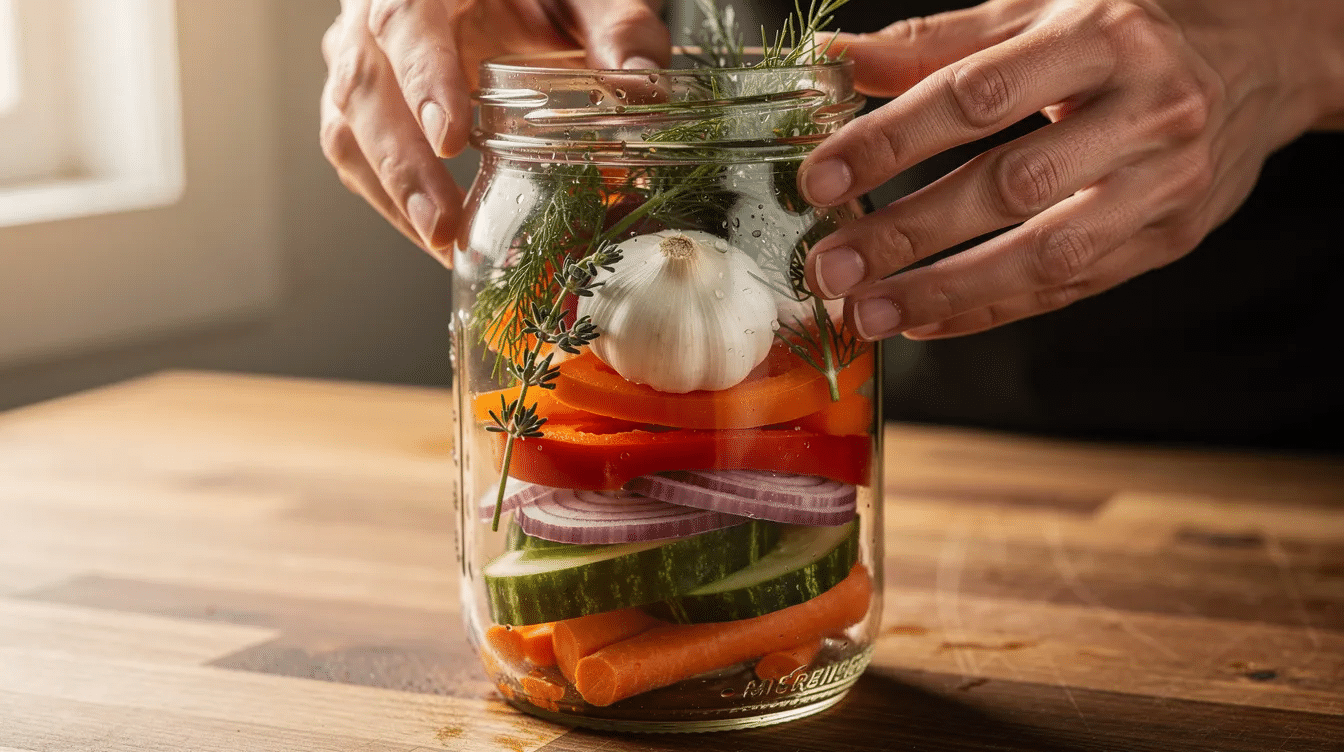
Layer onion slices and cucumber slices alternately in each warmed jar, packing firmly without crushing
Add aromatics to each jar: 1 peeled garlic clove, 1-2 fresh dill sprigs or 1/2 teaspoon dill seed, and a pinch of red pepper flakes if desired
Ladle hot brine over vegetables, maintaining 1/2 inch headspace between liquid surface and jar rim
Run a non-metallic utensil along inside edges to release air bubbles, adding more brine if level drops
Wipe jar rims with a clean, damp cloth to remove any residue that could prevent sealing
Center new flat lids on jars and screw on rings until fingertip tight—snug but not over-tightened
Pack cucumbers firmly so they stay submerged in the pickling liquid throughout storage. Floating vegetables above brine can develop off-flavors, and leftover pickle slices can even be turned into dehydrated pickle crisps in a food dehydrator.
Processing Pickled Cucumbers and Onions in a Boiling Water Bath
The boiling water bath step transforms your prepared jars into shelf-stable preserves safe for 12+ months of pantry storage.
Place filled jars on the rack in your canner or deep stockpot
Add hot water (similar temperature to jars) until jars are covered by at least 1 inch
Cover pot and bring to a boil over high heat
Once water reaches a vigorous, full rolling boil, start timing
Process pint jars for 10 minutes for crisp pickles or 15 minutes for slightly softer texture with extra safety margin
Carefully remove jars straight up using a jar lifter—never tilt
Place on a clean towel and leave undisturbed for 12-24 hours
Check seals once cool: lids should be concave and not flex when pressed
Any unsealed jars go into the refrigerator and should be used within 1-2 weeks
Remove rings, label with date, and store in a cool, dark place at 50-70°F
Refrigerator (Overnight) Pickled Cucumbers and Onions Version
For quick pickled cucumbers without the commitment of water bath canning, this refrigerator version delivers flavor in hours rather than days.
Use the same sliced cucumbers, onions, and brine recipe as the canned version
Jars need only be clean (hot soapy water or dishwasher)—no heat processing required
Pack cucumbers and onions into prepared jars with garlic, fresh herbs, and spices
Pour hot brine over vegetables to cover, leaving 1/2 inch headspace
Let jars cool to room temperature, then cap with lids (plastic lids resist vinegar corrosion better than metal)
Refrigerate immediately
These quick pickles develop good flavor after 12-24 hours and reach peak taste within 2-4 weeks. Keep vegetables fully submerged in brine for best quality. Unlike canned versions, refrigerator pickles are not shelf-stable—they must stay refrigerated at or below 40°F and should be discarded if any off odors or mold appear. Expect 3-4 weeks of refrigerator life, while properly dried foods can be stored longer in Mason jars for long-term freshness.
Serving Ideas and Flavor Variations
These homemade pickles deliver a tangy, lightly sweet crunch with soft, punchy onions that complement countless dishes.
Serving Suggestions:
Spoon over pulled pork or BBQ chicken as a sandwich topping
Tuck into bratwurst, hot dogs, or grilled sausages
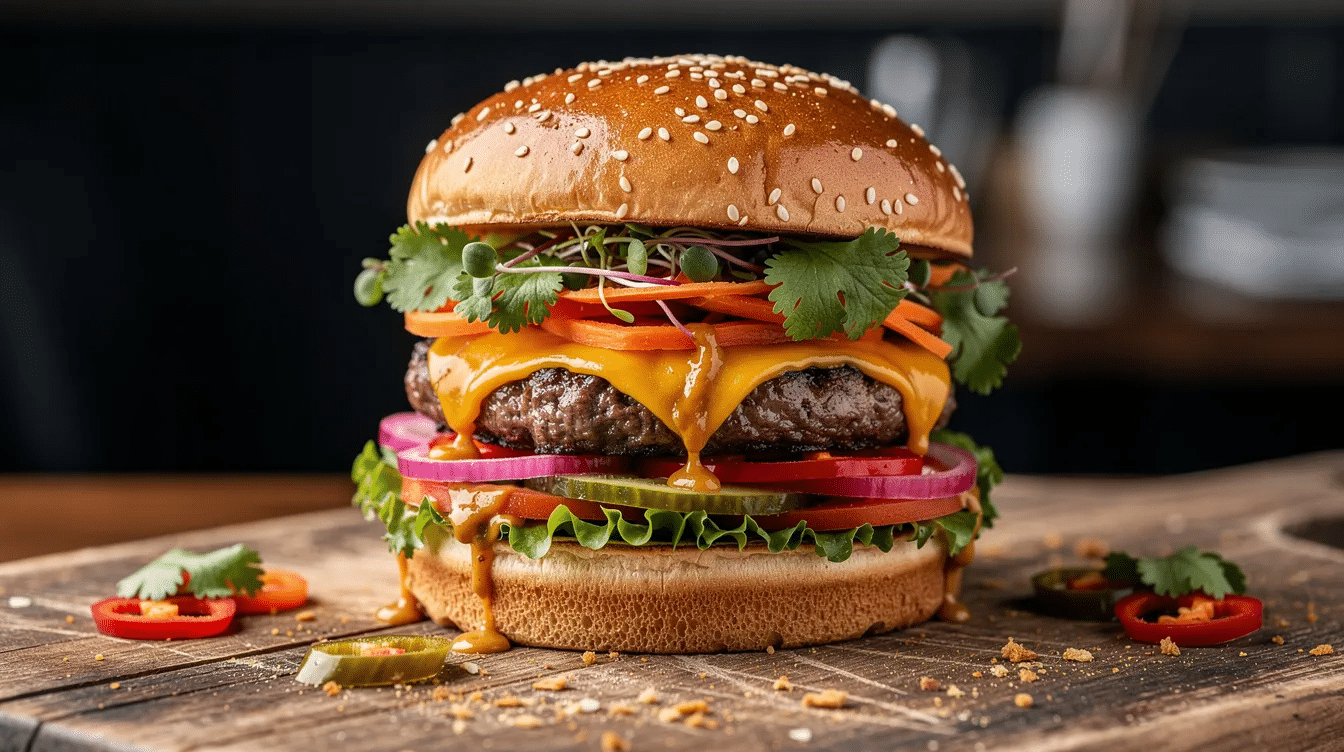
Pile onto burgers and veggie burgers for acid-fat balance
Add to potato salad, coleslaw, or other vegetables for picnic spreads; surplus cabbage from salads can be preserved as dehydrated cabbage for easy storage
Flavor Variations for Future Batches:
Classic Dill Pickles Style: Add extra fresh dill and garlic cloves
Sweet Pickles/Bread-and-Butter Style: Increase sugar to 2 cups for more sugar and sweeter profile
Spicy Version: Double the red pepper flakes and add mustard seeds generously
English Cucumbers Variation: While pickling types are preferred, english cucumbers can work for refrigerator pickles only
Remember: For water-bath canned versions, adjust spices freely but maintain exact vinegar acidity, salt type, and water ratio for safety.
Storage, Shelf Life, and Safety Tips
Proper storage differs significantly between canned jars and refrigerator pickles.
Canned Pickles:
Store sealed jars in a cool, dark pantry (50-70°F) for optimal quality
Best used within 12-18 months, though safe indefinitely if seals remain intact
Once opened, refrigerate and use within 1-2 months for best texture
Higher storage temperatures can halve shelf life through accelerated degradation
Never taste suspect pickles—botulism is colorless and odorless. Never reuse flat canning lids. Never reprocess jars that sat unsealed at room temperature for more than 24 hours.
FAQ
Can I safely use apple cider vinegar instead of white vinegar?
Apple cider vinegar works perfectly for canning pickles as long as it’s labeled 5% acidity. The color will darken your pickles slightly, giving them a tan hue, and the flavor becomes fruitier compared to white vinegar. You can also blend both types—just ensure the total volume matches the recipe. Never use homemade vinegar or any vinegar under 5% acidity, as unverified pH levels significantly increase botulism risk.
Do I have to sterilize jars before canning pickled cucumbers and onions?
If your quart jars or pint jars are processed for at least 10 minutes in the boiling water bath, pre-sterilizing isn’t strictly necessary. However, jars must be thoroughly washed in hot, soapy water or run through the dishwasher before filling. For processing times under 10 minutes, boil empty jars for 10 minutes before use. Starting with hot, clean jars reduces breakage risk and contamination.
Can I reduce the salt or sugar in this recipe?
Reducing sugar is primarily a flavor and texture decision. Cutting sugar modestly results in more sour pickles that may be slightly less firm. Salt affects both flavor and texture—minor reductions are possible, but very low salt can compromise crunch. However, vinegar volume and 5% acidity must never be reduced or diluted for water-bath processed pickles. Review recipe safety guidelines before making substitutions.
Why do my pickled cucumbers and onions turn soft instead of staying crisp?
Common causes include using overripe or waxed cucumbers, skipping the blossom-end trim, overprocessing beyond recommended cook time, or using thick slices that don’t pickle evenly. For crispest results, use very fresh pickling cucumbers, keep slices at 1/4 inch or less, consider the ice water pre-soak, and follow processing times exactly. Note that onions naturally soften more than cucumbers and will be tender rather than crunchy after processing.
Can I reuse leftover brine or pickle the next batch in the same liquid?
For canning pickles, never reuse brine for another water-bath processed batch. The acidity and salt balance change once vegetables have been in contact with the liquid, potentially compromising safety. However, leftover brine works well within one week for salad dressings, marinades, or a small refrigerator quick pickles batch that won’t be canned. Always discard brine from any jars showing spoilage signs—food safety comes before reducing waste.
DannyContent Writer
Hey there, since 2016, my mission has been to provide you with the information and guides you need to make food dehydrating simple and fun. Whether you're a newbie or a seasoned pro, my site offers helpful guides, reviews, and recipes to enhance your dehydrating experience. I take pride in only recommending products I believe in, ensuring my readers' trust. As an affiliate of various programs, including Amazon Associates, your support helps me continue providing quality content. Thanks for stopping by, and happy dehydrating!