We earn a commission if you make a purchase, at no additional cost to you.
09/22/2026 04:39 pm GMT
🍊 Dehydrated Food Info Finder — Temperatures & Drying Times
Choose a category, then pick a food to see its drying temperature and time.
⚠️ Safety Disclaimer: Drying times are estimates and vary based on slice thickness, food moisture content, humidity, and your dehydrator model. Always check for doneness before storing — food should feel dry, leathery, or brittle with no moist spots. Improperly dried food can harbour mould and bacteria. For meat and poultry, follow USDA safe internal temperature guidelines: beef and pork to 160°F (71°C), poultry to 165°F (74°C). Use a food thermometer when in doubt. Store all dehydrated foods in airtight containers in a cool, dark place and discard anything showing moisture, mould, or off odours.
Indian Dried Fruit: A Complete Guide to Types, Benefits, and Traditional Uses
Indian dried fruit holds a special place in the country’s culinary heritage—from royal Mughlai feasts to simple morning snacks. This guide covers everything you need to know about dry fruits in India, including varieties, health benefits, classic recipes, and practical storage tips for Indian kitchens.
Quick Answer: What Is Special About Indian Dried Fruit?
India plays a unique role in the global dried fruit market. The country produces local varieties like dates, raisins, and figs while importing premium dry fruits such as almonds, cashews, and pistachios from California, Kashmir, and Iran. These imported nuts are then reprocessed, blended, and integrated into traditional recipes that have been perfected over generations.
What makes Indian dry fruits stand out is their intense flavour, natural sweetness, and deep integration into everyday food culture. Whether it’s a Diwali gift hamper, a wedding sweet box, or a simple afternoon snack, dried fruits carry ceremonial and nutritional value that few other foods can match.
India ranks among the world’s largest consumers and processors of dried fruits. Major trading hubs include Delhi’s historic Khari Baoli market, along with Jaipur, Pune, Hyderabad, and Kochi. These centers handle everything from sourcing raw materials to creating the spiced, roasted, and flavored mixes that Indians love.
From a health perspective, these nutrient dense foods deliver concentrated fiber, healthy fats, and minerals. They’re commonly consumed for energy, to boost immunity, and as festive indulgences. The rest of this article covers types, health benefits, traditional Indian uses, buying and storage tips, and frequently asked questions.
What Are Dried Fruits in the Indian Context?
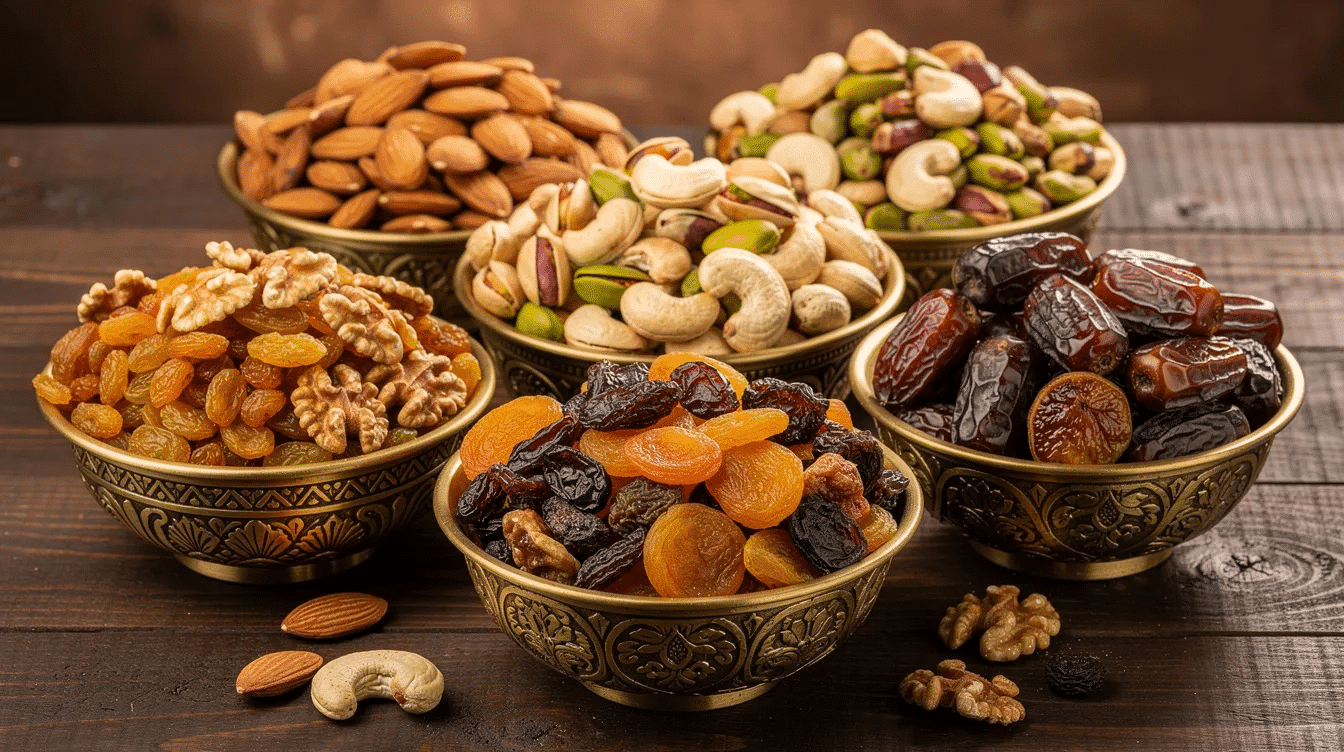
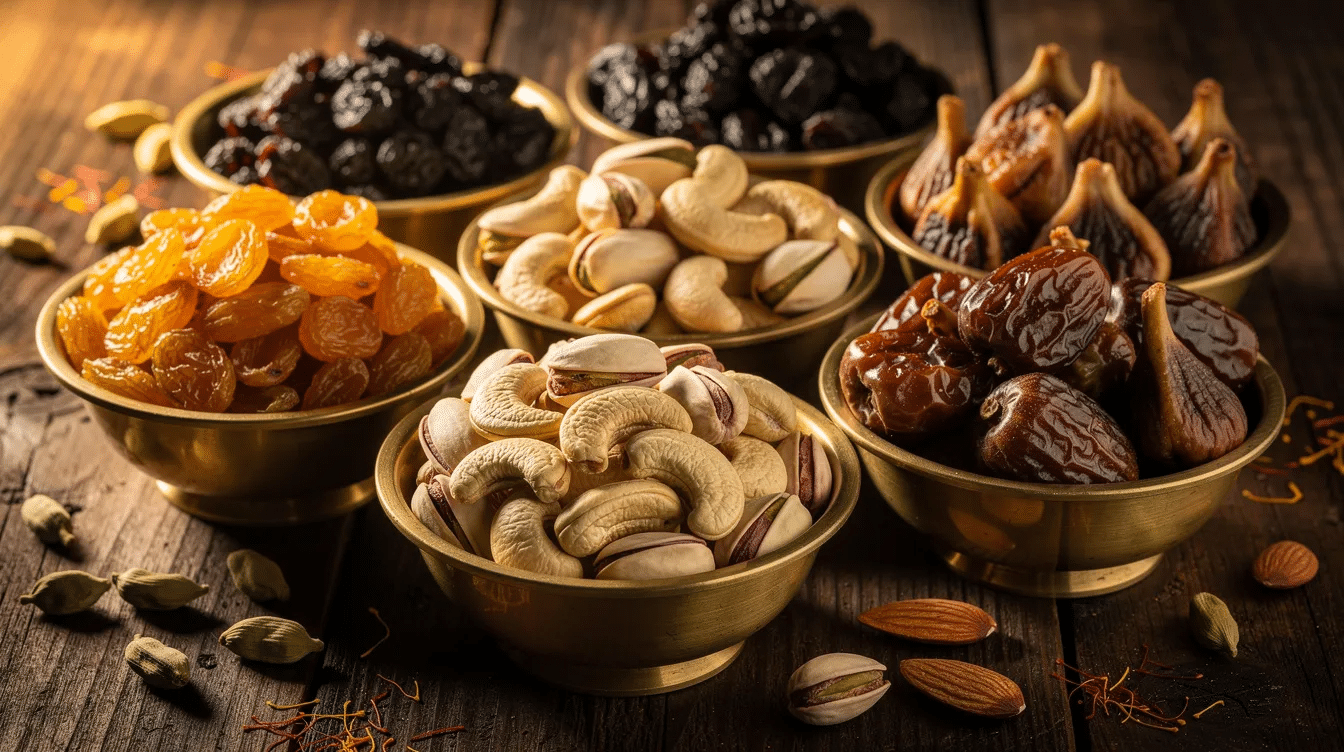
Dried fruits are fruits whose water content has been removed through sun dried methods or mechanical dehydration. In India, the term “dry fruits” collectively includes both true dried fruits (raisins, figs, dates, apricots) and culinary nuts (almonds, cashews, pistachios, walnuts).
Traditional Indian drying methods have been practiced for generations. Farmers in Maharashtra have been sun-drying grapes into kishmish since at least the early 1900s. In Rajasthan and Kutch, dates are naturally dried after the late-summer harvest using the region’s intense heat.
India both grows and imports dried fruits. Domestic production includes raisins, figs, dates, and makhana from Bihar, and many of these are suitable for traditional sun-drying methods at home. Imported almonds arrive from California and Kashmir, while pistachios come from Iran and the USA—all repackaged and flavored locally.
The selling landscape has evolved dramatically. Traditional kirana stores still offer dry fruits loose in gunny bags and glass jars, while modern brands now provide vacuum-packed, pathogen-controlled products with clear expiry dates and nutritional benefits listed on packaging.
Major Types of Indian Dried Fruit (With English & Hindi Names)
This section covers key dried fruits widely used in Indian homes, sweets, and snacks. Each entry focuses on distinct taste, common uses, and basic nutrition.
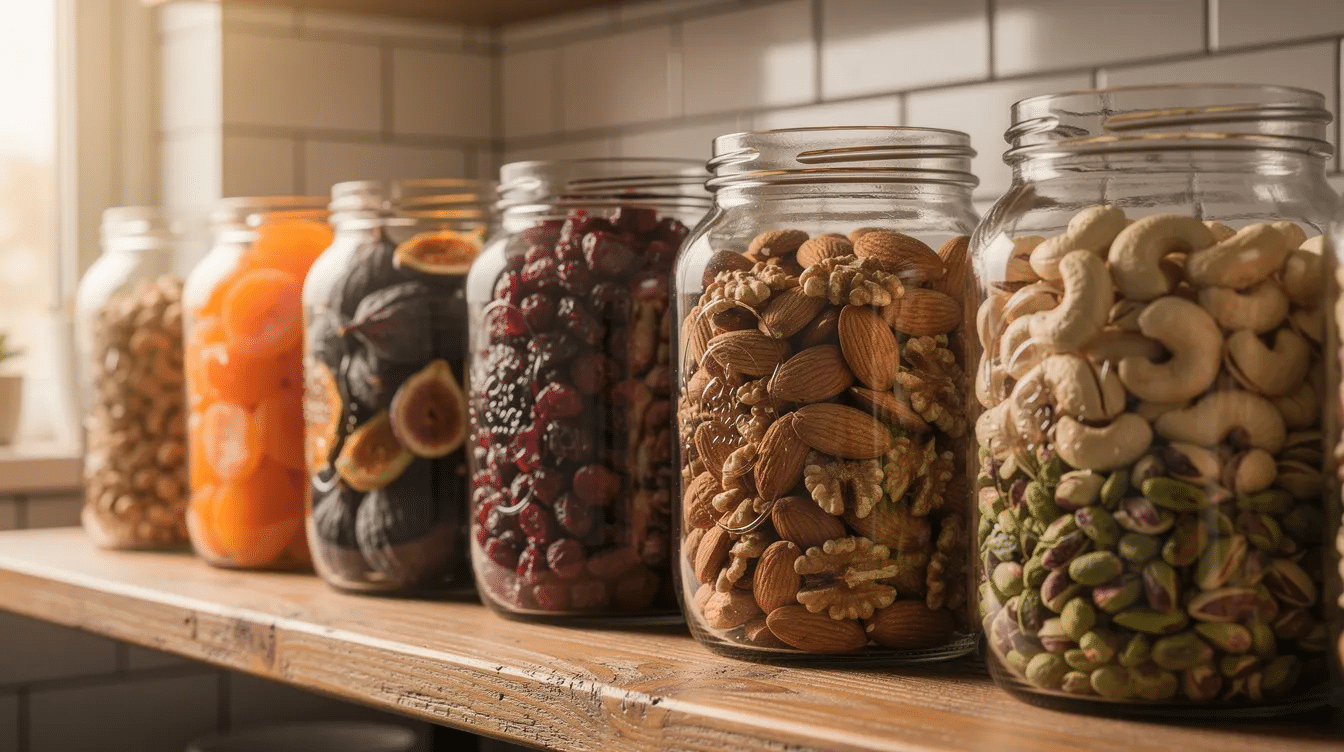
Almonds (Badam): These nutrient rich nuts have a mild, slightly sweet taste. They’re central to badam halwa, sheera, badam milk, and garnishing kheer. Rich in vitamin E and healthy fats, almonds are traditionally soaked overnight for easier digestion and better absorption—a practice followed in countless Indian households.
Cashew Nuts (Kaju): Known for their creamy texture and delicious flavour, cashews play a starring role in kaju katli, kaju curry, and festive namkeens. Technically seeds of the cashew apple, they’re treated as premium dry fruits in India and add richness to both sweets and savory dishes.
Pistachios (Pista): Their distinctive green color and buttery sweetness make them a favorite topping for kulfi, rabri, falooda, and festival barfis. Often salted or masala-roasted, pistachios add crunch and visual appeal to desserts.
Walnuts (Akhrot): With their brain-shaped kernels and slight bitterness, walnuts feature in akhrot halwa, winter laddoos, and Kashmiri cuisine. They’re naturally rich in omega-3 fats, making them especially popular during winter months for brain health.
Raisins (Kishmish/Munakka): Available in golden and black varieties from Maharashtra and Karnataka, raisins are eaten raw in poha, pulao, and kheer. Their nutrition profile, benefits, and risks include fiber that provides mild laxative effects, and their classic taste complements both sweet and savory preparations.
Dates (Khajoor/Chuara): Soft Medjool-style dates differ from the very dry chuara used in North Indian panjiri. Naturally sweet, dates serve as natural sweeteners, feature prominently in Ramadan iftar meals, and provide quick energy without added sugar when they are stored and handled correctly for freshness.
Dried Figs (Anjeer): With their seedy, jammy texture, figs work beautifully in anjeer barfi, chutneys, and dry-fruit rolls. High in iron and calcium, they’re often recommended for skin health and anemia support.
Apricots (Khubani): Soft dried apricots create the iconic Hyderabadi qubani ka meetha. Their sweet-tart taste and high vitamin A content make them valuable for both nutrition and flavour, and similar stone fruits like persimmons also lend themselves well to careful dehydration and long-term storage.
Fox Nuts (Makhana): These popped lotus seeds from Bihar are roasted for vrat (fasting) snacks, curries, and panjiri. Low in fat and easy to digest, makhana makes an ideal light evening snack—perfect for kids and adults alike.
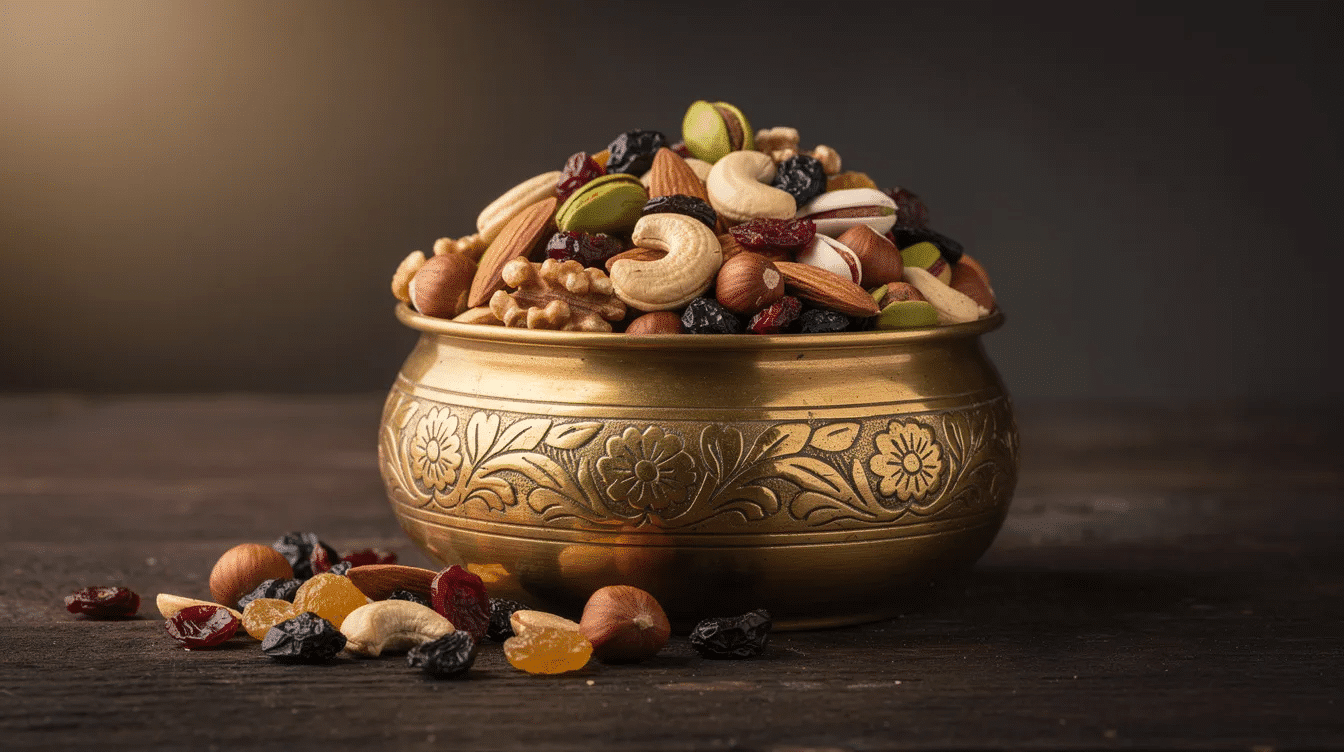
Mixed Seeds (Pumpkin, Sunflower Seeds, Chia Seeds, Flax Seeds, Sesame): Modern Indian trail mixes and laddoos now blend these seeds with classic dry fruits, much like a customizable dried fruit and nut mix snack. They boost protein, omega-3s, and fiber content, reflecting the shift toward a healthy lifestyle among urban consumers.
Health Benefits of Indian Dried Fruits
While dried fruits are calorie-dense, they pack concentrated nutrients that have supported Ayurvedic and traditional diets for centuries, and home cooks increasingly experiment with dehydrated fruit snack recipes to capture these benefits. In most cases, moderate consumption delivers significant nutritional benefits.
Energy and Stamina: A handful of almonds, raisins, or dates serves as a common pre-work or pre-study snack across India, and some people even rely on curated dried fruit subscription boxes for a steady supply. The combination of slow-release carbs and healthy fats provides sustained energy without the crash of processed sweets.
Digestive Health: Prunes (alubukhara), raisins, and figs ease constipation naturally. Many Indian home remedies include overnight-soaked raisins or munakka for improved digestion—a practice that supports gut health.
Heart Health and Brain Health: Almonds, walnuts, and pistachios deliver healthy fats, magnesium, and antioxidants. Research associates these nutrients with reduced heart disease risk markers and better cognitive function.
Bone Health and Pregnancy Support: Figs, apricots, and sesame-laced dry-fruit laddoos provide traditional calcium and iron sources. New mothers in North India consume winter panjiri specifically for postpartum recovery, benefiting from these minerals.
Skin Health and Hair: Vitamin E-rich almonds and antioxidant-loaded dried berries and dates are associated in Indian popular wisdom with glowing skin and stronger hair.
Weight Management: The best dry fruits for weight loss include portion-controlled almonds, pistachios, and walnuts. Home dehydration lets you choose exactly which fruits to dehydrate for snacks that fit your calorie needs. Conversely, calorie-dense mixes of dates, figs, raisins, and ghee support healthy weight gain for underweight individuals.
Moderation and Cautions: Indian dietitians typically recommend about 20–30 g mixed dry fruits per day for adults. Sugar-sensitive individuals and those with nut allergies should exercise caution and consult healthcare providers.
Traditional Indian Uses: Sweets, Savoury Dishes, and Snacks
Dried fruits are woven into Indian food culture—from royal feasts to simple home snacks. They add richness, texture, and ceremonial value to countless preparations. The aroma of ghee and the crunch of nuts signal celebration in Indian kitchens.
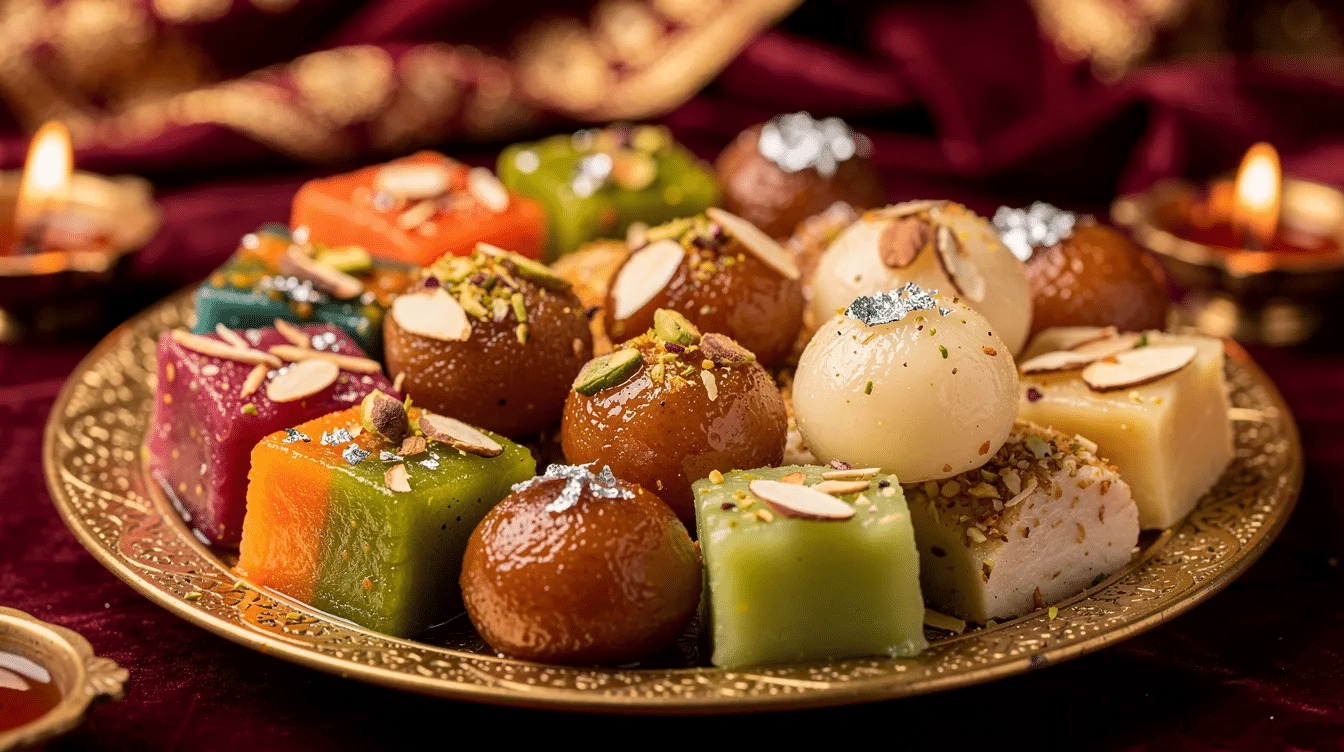
Classic Sweets (Halwa, Laddoo, Barfi): South Indian badam halwa, Diwali-special anjeer barfi, and khajoor-dry fruit rolls (often with no added sugar) showcase dry fruits’ versatility. These nutritious treats feature prominently at weddings, Diwali, Eid, and Raksha Bandhan.
Royal Curries and Pulao: Kaju curry, shahi paneer with cashew-raisin paste, navratan korma, and dry-fruit pulao using saffron, ghee, almonds, and raisins represent North Indian and Hyderabadi feast cuisine at its finest.
Chutneys and Pickles: Date-tamarind chutney accompanies chaat across the country. Anjeer-khajoor chutneys add sweetness to tiffins, while Gujarat and Rajasthan produce sweet-sour dry-fruit pickles blending cashews, raisins, and dried mango.
Winter Power Mixes: Panjiri and gond-dry fruit laddoos, prepared after childbirth and during North Indian winters (November–February), feature makhana, almonds, walnuts, dates, and edible gum. These cooked preparations sustain energy through cold months.
Fasting (Vrat) Foods: During Navratri and Ekadashi, makhana, almonds, cashews, and dates provide sustained energy without grains. Combined with rock salt and ghee, they form the backbone of traditional fasting diets.
Modern Snacks: Since around 2015, roasted and flavored nuts (peri-peri almonds, pudina cashews), mixed seed bars, dried cranberries, and dry-fruit granola have gained popularity in Indian metros, reflecting evolved taste preferences.
How to Choose, Store, and Use Indian Dried Fruits
Proper selection and storage protect both health and flavor, which is especially important given India’s hot and humid weather.
Choosing Quality: Look for uniform color, intact skins, minimal added sugar or glazing, and clear harvest/packing dates. Avoid shriveled, overly shiny (oil-coated), or insect-damaged pieces often found in open bins.
Packed vs. Loose: Modern vacuum or nitrogen-flushed packs offer longer shelf life and better safety. Traditional loose sales in markets work if you verify hygiene and product turnover carefully.
Storage at Home: Keep dry fruits in airtight containers designed for dried fruit storage in cool, dark cupboards during winter. During Indian summers (April–June), refrigeration prevents rancidity and insect infestation in indian kitchens.
Shelf Life: Most nuts last 6–9 months when stored properly. Raisins and dates maintain quality for 6–12 months. Always check for off smells or taste before use.
Daily Usage Ideas: Sprinkle raisins and almonds on morning daliya. Blend dates into smoothies for natural sweetness, or try adding high-quality dried mango slices to yogurt and salads. Add nuts to curd. Pack small mixed dry-fruit dabbas for office or school tiffins.
Soaked vs. Roasted: Many households soak almonds and raisins overnight for better digestion and milder taste. Others prefer light dry-roasting cashews and makhana in ghee for enhanced flavor and crunch.
FAQs on Indian Dried Fruit
How many dry fruits should I eat daily? A small handful—approximately 20–30 g for adults—works for most people. Children need smaller portions. Individual requirements vary based on activity level, age, and medical conditions.
When is the best time to eat dry fruits? Consuming nuts and dried fruits in the morning or as a mid-morning snack aligns with traditional Indian advice. Avoid large quantities late at night due to calorie density and digestion concerns.
Which dry fruits help with weight loss vs. weight gain? For weight management, eat almonds, pistachios, and walnuts in controlled portions. For healthy weight gain, energy-dense mixes of dates, raisins, figs, and ghee provide concentrated calories.
Which dry fruits support skin health and hair? Almonds, walnuts, and dried berries are popular choices for skin glow and hair strength due to vitamin E, healthy fats, and antioxidants.
Can diabetics eat dry fruits? Unsweetened nuts (almonds, walnuts, pistachios) in moderation are generally acceptable. Figs, dates, and raisins require limited quantities under professional guidance. Always consult a doctor or dietitian.
Which dry fruits are suitable during fasting? Almonds, cashews, makhana, and dates are traditionally allowed in many Indian fasts including Navratri and Ekadashi. They provide quick energy without grains.
Can dry fruits be stored at room temperature in India? Cool, dry conditions work for short-term storage. For peak summer months, refrigeration is safer to prevent spoilage and maintain quality.
Should I buy dry fruits online or from local stores? Online branded, sealed packs offer quality consistency, lab testing, and convenience. Local stores allow physical inspection and tasting. Both approaches work when you verify quality carefully.
When chosen well and eaten in moderation, Indian dried fruits offer a practical, tasty way to upgrade everyday meals with traditional wisdom. Start incorporating a small handful into your daily diet and experience the rich blend of taste, nutrition, and heritage that these time-tested foods deliver.
DannyContent Writer
Hey there, since 2016, my mission has been to provide you with the information and guides you need to make food dehydrating simple and fun. Whether you're a newbie or a seasoned pro, my site offers helpful guides, reviews, and recipes to enhance your dehydrating experience. I take pride in only recommending products I believe in, ensuring my readers' trust. As an affiliate of various programs, including Amazon Associates, your support helps me continue providing quality content. Thanks for stopping by, and happy dehydrating!