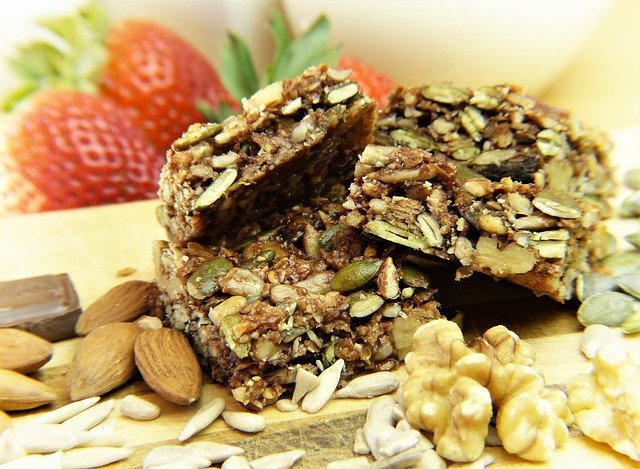
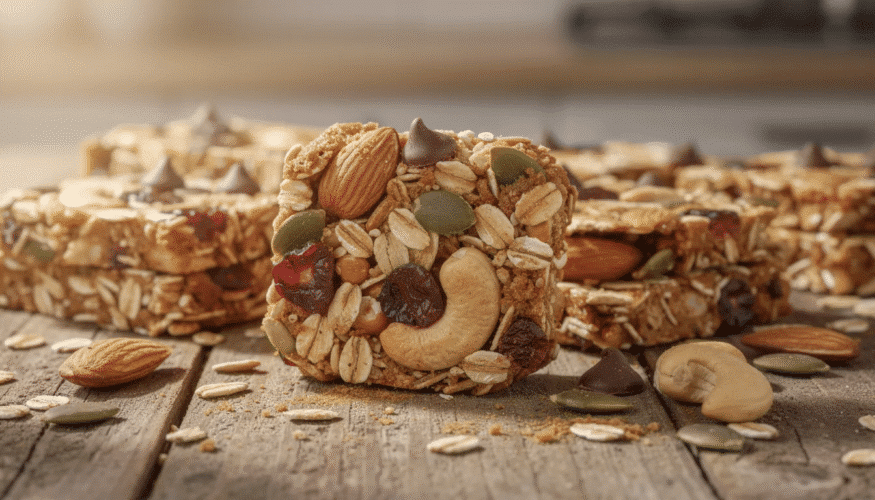
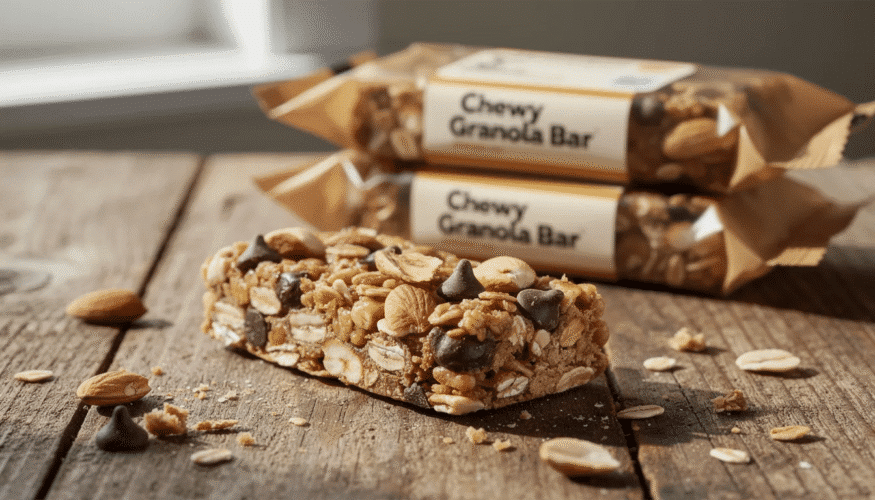
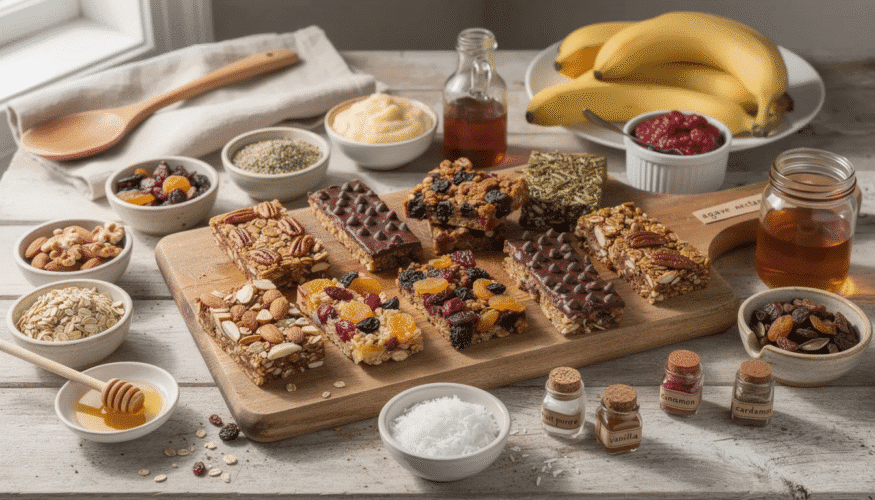
Do you love dehydrator granola bars? I know I do! The only problem is that they’re time-consuming to make. That’s why I wrote this recipe post for dehydrated granola bars. But, you can have them ready in a couple of hours. They are so easy and taste delicious too!
Let’s get started!
Ingredient
Quantity
Preparation & Notes
Rolled oats
5 cups
Use old-fashioned rolled oats for best texture; forms the base of the granola bars
Dried fruit
1 cup
Choose from dried berries, cranberries, raisins, or chopped dried apples; adds natural sweetness
Fresh apples
3
Peel, core, and chop into small pieces; adds moisture and natural binding
Dates
30 pieces
Pit and halve; soak in warm water for 15 minutes to soften before processing
Almonds
1 cup
Roughly chop or pulse in food processor until finely chopped but not too powdery
Sunflower seeds
1 cup
Lightly toast in a dry pan over medium heat for 5-7 minutes to enhance nutty flavor
Brown sugar
3/4 cup
Use packed light or dark brown sugar for natural sweetness and moisture
Honey
1/2 cup
Use raw or organic honey as a natural sweetener and binder
Oil
1/4 cup
Preferably coconut oil, melted; helps bind and adds healthy fats
Cinnamon
1 teaspoon
Ground cinnamon to add warm, aromatic flavor
Vanilla extract
1 teaspoon
Pure vanilla extract enhances overall flavor and aroma
Ripe bananas
1-2
Mash thoroughly; acts as a natural binder and sweetener, adding moisture and flavor
Salt
1/2 teaspoon
Fine sea salt or kosher salt to balance sweetness and enhance all flavors
Parchment paper
As needed
Used to line dehydrator trays to prevent sticking and ease removal
Large mixing bowl
1
For combining all ingredients evenly
Food processor
1 (optional)
To finely chop dates and almonds for better texture
Dehydrator trays
As needed
Use Excalibur dehydrator trays or similar; spread mixture evenly for consistent drying
Granola bars are a beloved snack made from a delightful mix of rolled oats, nuts, seeds, and dried fruit, all held together with a sweetener like honey or maple syrup. Many homemade recipes highlight a wide variety of granola bar ingredients, including different fruits, nuts, seeds, and natural binders such as mashed banana or fruit purees, which add flavor and help hold the bars together. These bars are not only delicious but also incredibly convenient, making them perfect for packing in a lunchbox, backpack, or purse. Some recipes specifically avoid corn syrup and white sugar, opting instead for natural sweeteners like honey or maple syrup for a healthier option. The beauty of granola bars lies in their versatility; you can easily make them at home using a variety of ingredients to suit your personal taste and dietary needs. Whether you prefer a chewy or crunchy texture, granola bars can be customized to your liking, making them a go-to snack for any occasion. Granola bars can also be adapted to be gluten-free by using certified gluten-free oats.
Benefits of Making Homemade Granola Bars
Making homemade granola bars comes with a host of benefits. First and foremost, it allows you to control the ingredients, ensuring that your bars are free from the additives and preservatives often found in store-bought granola bars. By using wholesome ingredients like nuts, seeds, and dried fruit, you can create a snack that is rich in fiber, protein, and essential vitamins. Nuts and seeds are also known to support heart health, making your homemade bars a smart choice for cardiovascular well-being. Homemade granola bars also let you avoid processed sweeteners such as corn syrup and white sugar, allowing you to choose healthier alternatives like honey or coconut sugar. Additionally, the process of making homemade granola bars can be a fun and creative activity. You can experiment with different flavors and ingredients, tailoring each batch to your preferences, and even incorporate the best foods to dehydrate for snacks into your granola bar mix. Plus, homemade granola bars can be more cost-effective than their store-bought counterparts, giving you a delicious and nutritious snack without breaking the bank.
What You Need
Five cups of rolled oatmeal
One cup of dried fruit (this can be berries, cranberries, raisins, or apples)
To whip up a batch of chewy granola bars, you’ll need a combination of rolled oats, nuts, seeds, and dried fruit. If you want to branch out beyond the basics, explore the best dehydrated fruit recipes for delicious snacks for more ideas. Here are some common ingredients to get you started:
Rolled oats
Nuts (such as almonds, walnuts, or pecans)
Seeds (such as sunflower seeds or sesame seeds)
Dried fruit (such as cranberries, raisins, or cherries)
Honey or maple syrup (as a sweetener)
Mashed banana (as a natural binder and sweetener)
Chocolate chips (optional)
Pinch of salt (to balance sweetness and enhance flavor)
The oat mixture forms the base of the bars, providing structure and texture. This recipe avoids corn syrup and white sugar, using natural sweeteners instead for a healthier option.
Feel free to get creative and add other ingredients to customize your granola bars. Coconut flakes, cinnamon, or vanilla extract can add a unique twist to your recipe. The possibilities are endless, allowing you to create a snack that perfectly suits your taste buds.
How to Make Dehydrator Chewy Granola Bars
Peel and chop apples for the recipe, then add the fruit to a mixing bowl that is large enough.
Cut the pieces of dates in half and make sure to remove the pit to make them easier to work with. Soak these pieces of fruit in water for 15 minutes.
Process the dates and almonds together in a food processor until they are finely chopped, mixing them well (make sure you don’t over mix them). Then pour into the large bowl with the peeled apples.
Add the dried fruit, sunflower seeds, brown sugar, honey, oil, cinnamon, and vanilla to a bowl. Stir the ingredients together until well combined, then add in the oatmeal until it is combined into the granola bar mixture that should be sticky but holding its shape. Play around with adding more or fewer oats if you want your granola bar mixture thicker or thinner, respectively.
Transfer mixture to an Excalibur dehydrator tray lined with parchment paper. Spread mixture evenly on the tray and press firmly to ensure the bars hold their shape. The granola bar mixture should be about half an inch thick. Dehydrate at 135°F (57°C) for 11–15 hours, taking advantage of the precise temperature control that makes food dehydrators better than ovens for drying food. Halfway through, score the mixture into bar shapes and flip them over for better airflow. Dehydrate until the bars are completely dry for best texture and preservation. Built-in fans in dehydrators ensure continuous air circulation, preventing burning at the edges and sogginess in the middle. Dehydrators are also more energy-efficient than ovens for the long drying times required, and dehydrating food in general offers lightweight, shelf-stable, nutrient-preserving benefits. Dehydrating at lower temperatures helps retain nutrients, enzymes, and antioxidants, and results in a chewier texture. Toasting nuts and seeds beforehand can further enhance the flavors.
Remove dehydrator sheets and let the bars cool completely before eating. Once cooled, cut the bars into individual pieces. If any bars fall apart during cutting, press them back together as they cool to help them stick.
You can store your granola bars in an airtight container. To increase the snack’s shelf life, you can store them in the fridge, where they will keep fresh for around one week!
Tip: If you prefer a crisp granola bar instead of a chewy one (or if it’s just taking too long!), dehydrate for an extra hour after flipping each tray in order to reach perfection – but no more than fifteen total hours because anything past this point might get brittle or even burned.
Tips for Achieving the Right Texture
Getting the texture just right is key to making delicious chewy granola bars. Here are some tips to help you achieve that perfect chewiness:
Use a combination of rolled oats and nuts to provide a crunchy base.
Incorporate dried fruit to add natural sweetness and chewiness.
Use a sweetener like honey or maple syrup to bind the ingredients together.
Avoid overmixing the ingredients, as this can make the bars tough and dense.
Spread the oat mixture evenly into a lined or greased pan or dehydrator tray before pressing.
Press the oat mixture firmly into a lined or greased pan or dehydrator tray to help it hold its shape.
Refrigerate the granola bars for at least 30 minutes to set the texture.
Dehydrating granola bars can result in a chewier texture compared to baking, making for a more enjoyable eating experience.
By following these tips, you’ll be able to create granola bars with the ideal chewy texture that everyone will love.
Customizing Your Granola Bars
One of the best things about making homemade granola bars is the ability to customize them to your liking. Here are some ideas to help you create the perfect granola bar:
Experiment with different granola bar ingredients such as various nuts, seeds, and dried fruits to create unique flavor profiles and textures.
Use natural binding agents like grated apples, mashed bananas, blended berries, or fruit purees to help hold the bars together and add nutrition.
Try a variety of dried fruits to adjust the sweetness and flavor profile.
Add spices such as cinnamon, vanilla, or cardamom to give your granola bars extra depth of flavor.
Incorporate coconut flakes or shredded coconut for a tropical twist.
Try different sweeteners, such as honey, maple syrup, or agave nectar.
Add a handful of chocolate chips for a special treat.
By customizing your granola bars with different ingredients and spices, you can create a snack that is perfectly tailored to your tastes and dietary needs. Whether you prefer a nutty, fruity, or chocolatey flavor, the possibilities are endless when it comes to making your own granola bars.
Granola Bar Toppings
Granola bar toppings are a fantastic way to add extra flavor, crunch, and visual appeal to your homemade granola bars. Whether you love a burst of sweetness or a nutty crunch, there are endless options to try. Popular choices include dried fruits like cranberries or raisins, which add a chewy texture and natural sweetness. For a satisfying crunch, sprinkle on sunflower seeds, pumpkin seeds, or chopped nuts such as almonds, cashews, or walnuts. If you’re craving something a bit more indulgent, a handful of chocolate chips or mini chocolate chips can make your bars feel like a real treat. Coconut flakes are another delicious addition, bringing a subtle tropical flavor and extra texture. For a finishing touch, drizzle a little honey or maple syrup over the top before dehydrating or baking to help everything stick together and add a glossy finish. Don’t be afraid to mix and match your favorite nuts and seeds—homemade granola bars are all about making them your own!
Ways to Eat Dehydrated Granola Bars with Chocolate Chips
There are many ways you can eat your dehydrated granola. You can eat it as a snack, add it to yogurt or cereal, or even use it as a topping on desserts. Here are a few of our favorite ideas to enjoy dehydrated granola:
As a snack: Eat your granola by the handful as a satisfying and nutritious snack.
With yogurt: Add some dry granola to your favorite yogurt for a crunchy and flavorful breakfast or snack.
On top of desserts: Sprinkle granola on top of pies, cakes, or ice cream for a delicious and easy dessert topping.
In granola bars: Use dehydrated granola as the base for homemade granola bars.
In trail mix: Mix your favorite dried fruits, nuts, and seeds with some dehydrated granola for a healthy and filling snack, or try a dedicated dried fruit and nut mix recipe as a base.
Storing Granola Bars
To keep your granola bars tasting fresh and delicious, proper storage is key. Once your homemade granola bars have cooled completely, store them in an airtight container to maintain their texture and prevent them from becoming stale. You can also wrap individual bars in parchment paper or plastic wrap, making them easy to grab for a quick snack on the go. If you live in a humid area, consider storing your granola bars in the refrigerator to extend their shelf life and keep them from getting too soft. Homemade granola bars will stay fresh for up to two weeks at room temperature, while store bought granola bars may last even longer due to added preservatives. Whether you’re storing a big batch or just a few bars, keeping them sealed and dry will ensure every bite stays as tasty as the day you made them.
Troubleshooting Common Issues
Even the best granola bar recipes can sometimes run into a few hiccups, but most issues are easy to fix. If your granola bars turn out too crumbly, try adding a bit more nut butter or honey to the mixture—these ingredients help bind everything together. For bars that are too hard, mix in extra dried fruits or coconut flakes to soften the texture and add chewiness. If your bars aren’t holding together, double-check your ratio of dry ingredients to wet ingredients, and make sure to press the mixture firmly into the pan before dehydrating or baking. Using a different type of nut butter can also help with binding. For chewy granola bars, avoid overbaking or overdrying them in the dehydrator; for a crispier texture, simply let them dry a little longer. With a few simple tweaks, you’ll have perfectly textured granola bars every time.
Homemade Granola Bars Health Benefits
Dehydrated foods are a great way to add extra nutrition to your diet and preserve food for later use. Dehydrators offer many benefits, including the ability to make healthy snacks and meals, and even budget food dehydrators for home use can handle granola bars and other snacks effectively. One of the best things about dehydrating foods is that they retain most of their nutrients and vitamins, making this option a healthy choice for people looking to get the most out of their food.
Dehydrating granola bars helps retain more nutrients compared to traditional baking methods. Using a dehydrator allows for a lower cooking temperature, which preserves enzymes and antioxidants in the ingredients. Additionally, dehydrators are more energy-efficient than ovens for the long drying times required for granola bars (8-12 hours or more).
One of the most healthy snacks you can make at home is granola. Granola is an excellent fiber and protein source packed with vitamins and minerals. The nuts and seeds commonly used in granola bars, such as sunflower seeds, also support heart health by reducing inflammation and promoting cardiovascular well-being. Toasting nuts and seeds before adding them to the mixture enhances their flavor. When making your granola, you can control the ingredients and ensure it’s as healthy as possible. Making your recipe is also a great way to save money since you won’t have to buy pre-made products that can be expensive.
The Origin of Granola
The exact origins of granola are unknown, but it is thought to have originated in the United States in the late 19th century. The first granola recipe was published in 1863 by James Caleb Jackson.
Protein bars vs . Granola bars: Which is healthier?
The debate between granola bars and protein bars has been around for years. Both bars offer a convenient, on-the-go snack option to help you reach your daily nutritional goals. So, which type of bar is the better choice?
Granola bars are typically made with a base of oats, nuts, and dried fruit. In addition, they are often sweetened with honey or syrup, and some varieties may also contain chocolate or other flavors. While granola bars can vary in nutritional content, they are generally lower in calories and fat than protein bars.
Protein bars are typically made with a base of protein powder, nuts, and dried fruit. They tend to be higher in calories and fat than granola bars, but they also pack a bigger protein punch. As a result, protein bars can help you feel fuller longer and provide your body with a sustained energy release.
So, which type of bar is the better choice? It really depends on your individual dietary needs and goals. For example, a protein bar may be the better option if you want a quick snack that will give you lasting energy. However, a granola bar may be the better choice if you are managing your calorie intake or are looking for a lower-sugar snack.
Granola Bar Recipe Ideas
There’s no limit to the delicious granola bar recipe ideas you can try at home! Start with a classic base of rolled oats, nuts, and seeds, then get creative with your mix-ins. For a high-protein option, add peanut butter, nut butter, or seeds like hemp seeds, flax seeds, or sesame seeds. Coconut oil can add healthy fats and a subtle flavor, while dried fruits such as cranberries, apricots, or raisins bring natural sweetness. If you’re in the mood for a treat, toss in some dark chocolate chips or mini chocolate chips for a decadent twist. To make your own granola bars, simply combine your chosen ingredients in a large bowl, then transfer the mixture to a dehydrator tray or a baking sheet lined with parchment paper. Firmly press the mixture into the pan, making sure it’s evenly spread, and let it cool completely before cutting into individual bars. Whether you prefer chewy, crunchy, fruity, or chocolatey, experimenting with different combinations will help you discover your favorite homemade granola bars—perfect for a delicious snack any time of day!
FAQs
Which type of nuts and dried berries should I add?
A few things to consider when adding nuts and berries to your granola. Firstly, think about the flavors you want to include. Do you want a sweet and salty mix or something more savory? Then, consider the texture. Do you want your granola to be crunchy or chewier? Lastly, consider nutrition. Nuts and berries are a great way to add healthy fats, proteins, and antioxidants to your diet.
Some of the finest nuts to add to granola include almonds, cashews, and pistachios. These nuts are all rich in healthy fats and proteins. Almonds and pistachios are also a good sources of antioxidants.
Dehydrated berries are another great way to add flavor, sweetness, and nutrition to your granola, and dehydrated strawberries are a particularly safe and tasty option. Some of the best dried berries to add include blueberries, strawberries, and cranberries. These berries are all rich in antioxidants and vitamins. Blueberries and cranberries are also good sources of fiber.
So, when adding nuts and dried berries to your granola, consider the flavors you want to include, the texture you’re going for, and the nutrition you need. With a lot of options available, the possibilities are endless!
Tip
Do not use fresh fruit when making this recipe; only use dried fruit.
Can you make a granny smith granola recipe with a dehydrator?
Yes, you can make granny smith granola in a dehydrator! The process is pretty similar to make. The process of making granola bars can be enhanced by incorporating various ingredients like chocolate chips, making the experience of making granola bars versatile and enjoyable.
Check out the recipe on Food.com.
Conclusion:
I hope you enjoy these granola bars. They are healthy and provide a great snack to have on hand for those days when your sweet tooth is craving something other than candy or cookies! Let me know what you think of them in the comments below and if this recipe has inspired any new creations that you would like help with.
DannyContent Writer
Hey there, since 2016, my mission has been to provide you with the information and guides you need to make food dehydrating simple and fun. Whether you're a newbie or a seasoned pro, my site offers helpful guides, reviews, and recipes to enhance your dehydrating experience. I take pride in only recommending products I believe in, ensuring my readers' trust. As an affiliate of various programs, including Amazon Associates, your support helps me continue providing quality content. Thanks for stopping by, and happy dehydrating!