We earn a commission if you make a purchase, at no additional cost to you.
09/22/2026 04:39 pm GMT
🍊 Dehydrated Food Info Finder — Temperatures & Drying Times
Choose a category, then pick a food to see its drying temperature and time.
⚠️ Safety Disclaimer: Drying times are estimates and vary based on slice thickness, food moisture content, humidity, and your dehydrator model. Always check for doneness before storing — food should feel dry, leathery, or brittle with no moist spots. Improperly dried food can harbour mould and bacteria. For meat and poultry, follow USDA safe internal temperature guidelines: beef and pork to 160°F (71°C), poultry to 165°F (74°C). Use a food thermometer when in doubt. Store all dehydrated foods in airtight containers in a cool, dark place and discard anything showing moisture, mould, or off odours.
Dehydrator for Cooking: How to Choose the Right One and What You Can Make
If you’ve ever tossed wilted greens or watched bananas turn brown on the counter, you already understand the problem a dehydrator for cooking solves. This compact countertop appliance circulates warm air to remove moisture from food without fully cooking it, transforming perishable produce, meats, and herbs into shelf-stable ingredients that last months instead of days. Unlike canning jars or freezer bags, dehydrated food takes up minimal space and requires no refrigeration—making it a practical solution for modern kitchens dealing with food waste, rising grocery costs, and the desire for healthier homemade snacks.
In 2026, home food dehydrators have moved well beyond novelty gadget territory. They’re now essential tools for a growing number of home cooks who want more control over what goes into their food and how long it lasts.
What Is a Dehydrator for Cooking and Why You Might Want One in 2026
A kitchen food dehydrator is a simple but powerful appliance. At its core, it uses a heating element to generate low, steady temperatures—typically around 140°F according to the National Center for Home Food Preservation—combined with a fan and vents that circulate warm air throughout an enclosed chamber. This continuous airflow systematically removes moisture from food through evaporation, preserving much of the original flavor, texture potential upon rehydration, and a significant portion of heat-sensitive nutrients like vitamins C and B.
What sets dehydrators apart from passive drying methods (like sun-drying or using an oven) is the controlled, consistent airflow. Food dries faster and more evenly, reducing the risk of spoilage or uneven results. The drying process doesn’t cook your food—it transforms it into something lightweight, concentrated, and remarkably long-lasting.
Modern Use Cases for 2026
The reasons people reach for food dehydrators today reflect broader shifts in how we eat, shop, and think about sustainability:
Preserving bumper crops from home gardens: Urban gardeners transform excess zucchini, tomatoes, and peppers from small plots into shelf-stable pantry staples, particularly valuable amid rising food prices and supply chain uncertainty.
Making 100% fruit snacks for kids: Parents create apple chips, strawberry slices, and banana coins with zero added sugars, aligning with pediatric recommendations for whole-food alternatives to commercial fruit snacks.
Preparing backpacking and camping meals: Outdoor enthusiasts dry chili, pasta sauces, and complete meals that rehydrate with minimal water, reducing pack weight by 70-80% compared to carrying fresh ingredients.
Crafting custom dog treats: Pet owners make chicken or beef jerky treats from lean cuts or sweet potato slices, often saving 50% compared to store-bought dehydrated options.
Reducing weekly food waste: Surplus produce from grocery runs that would normally last a week in the fridge extends to 6-12 months when dehydrated and stored in jars.
How Dehydration Compares to Canning and Freezing
When it comes to food preservation, dehydration offers distinct advantages over traditional methods:
Cost: Dehydration requires minimal ongoing investment—just electricity comparable to running a light bulb. Canning demands pressure canners ($100+), jars ($1-2 each), and specialized equipment. Freezing ties up valuable freezer space and increases energy bills.
Space: A single tray of apple slices compacts to a pint jar. Dehydrated foods require a fraction of the storage space needed for canned goods or frozen items—no dedicated freezer required.
Shelf life: Properly dried foods last 4-12 months in a cool pantry without refrigeration. Frozen foods remain vulnerable to power outages, and canned goods require significant upfront processing to achieve long-term stability.
Simplicity: Dehydrating involves slicing, arranging on trays, and waiting. No boiling water baths, pressure monitoring, or constant freezer reorganization.
The rest of this article focuses on home kitchen dehydrators—not large commercial dryers—and will help you pick the right model and plan your first cooking projects.
How a Food Dehydrator Works (and Why Fan Placement Matters More Than Wattage)
Understanding how a food dehydrator functions helps you make smarter buying decisions and get better results from your cooking projects. The core principle is straightforward: low-temperature convection drying uses heated air, continuously circulated, to slowly evaporate moisture from food while preserving flavor and nutrients.
The key is lowering the food’s water activity below 0.85, which inhibits microbial growth like bacteria, yeasts, and molds without the high heat of cooking that would degrade enzymes or destroy vitamins. This is why dehydrated food retains more nutrients than many cooked alternatives.
Basic Components of a Food Dehydrator
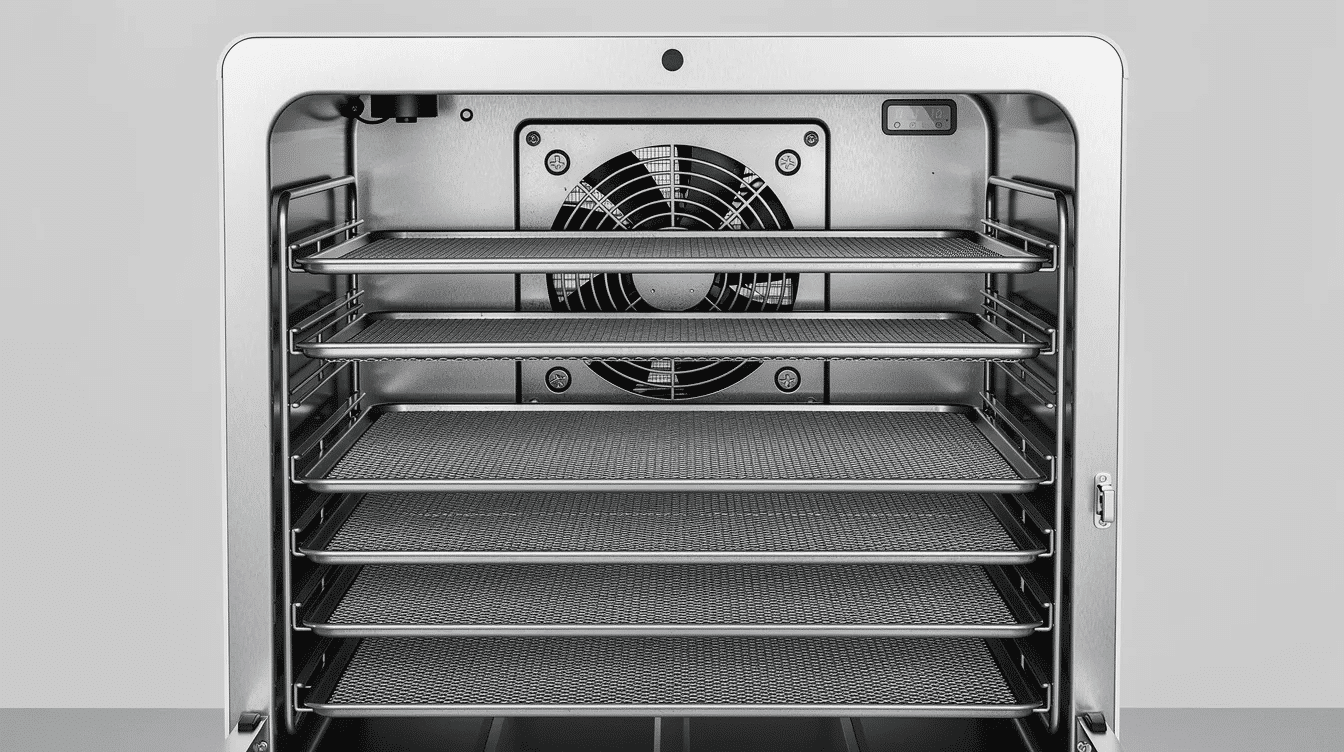
Heating element: Typically 400-1000 watts, often using coiled nichrome wire for even heat distribution. The element generates consistent warmth across a temperature range of 85°F to 165°F depending on the model and what you’re drying.
Fan or blower: High-velocity fans (centrifugal or axial types) create continuous airflow. Fan placement and design directly impact how evenly your food dries.
Trays or racks: Stackable trays, usually 4-10 per unit, made of plastic mesh or metal. Each tray typically provides 1-2 square feet of drying surface.
Adjustable vents: Control humidity expulsion, allowing moisture-laden air to escape while maintaining consistent internal temperature.
Horizontal vs Vertical Airflow
The direction hot air moves through your dehydrator determines whether you’ll need to rotate trays constantly or can simply set and forget your batches:
Horizontal airflow (back or side-mounted fan): Air moves across trays in a laminar flow pattern, achieving up to 20-30% more even drying. Models like Excalibur dehydrators or the Cosori dehydrator feature this design. Juices don’t drip onto heating elements, flavors don’t mix between trays, and you rarely need tray rotation.
Vertical airflow (top or bottom-mounted fan): Air moves up or down through stacked trays, creating turbulent flow. Bottom trays often dry up to 50% faster than top trays, requiring frequent rotating trays to achieve consistent results. Drippings can clog base vents, and crumbs accumulate in heating openings over time.
Why Wattage Doesn’t Tell the Whole Story
A common misconception is that higher wattage means faster or better drying. In reality, power correlates more with heat output than airflow quality:
A 600-watt rear-fan Excalibur dries trays more evenly and efficiently than a 1000-watt bottom-fan stackable unit because the airflow pattern matters more than raw heat.
Higher watts without precise temperature controls can cause “case hardening”—where the outer surface crisps while the interior remains moist. This leads to spoilage despite a dry appearance.
For most home loads, consistent 500-700 watts paired with superior fan design outperforms high-wattage units with poor air circulation.
Backpacking enthusiasts who dry multi-day fruit batches consistently prioritize airflow over power rating when selecting equipment.
Apple slices (84% water content): 135°F for 6-10 hours, yields crisp chips when properly dried
Herbs (retain volatile oils): 95°F for 1-4 hours, low temperature prevents loss of essential oils
Beef jerky: 160-165°F for 6-10 hours, requires higher heat to meet USDA safety standards
Tray Shape, Size, and Capacity: Square vs Round Dehydrators
When comparing dehydrator models, the tray count printed on the box tells only part of the story. What actually matters is the total usable drying area—and tray shape dramatically affects how much food you can process in a single batch.
Understanding these differences helps you match your dehydrator choice to your actual cooking goals, whether you’re drying a handful of herbs or processing a 20-pound harvest.
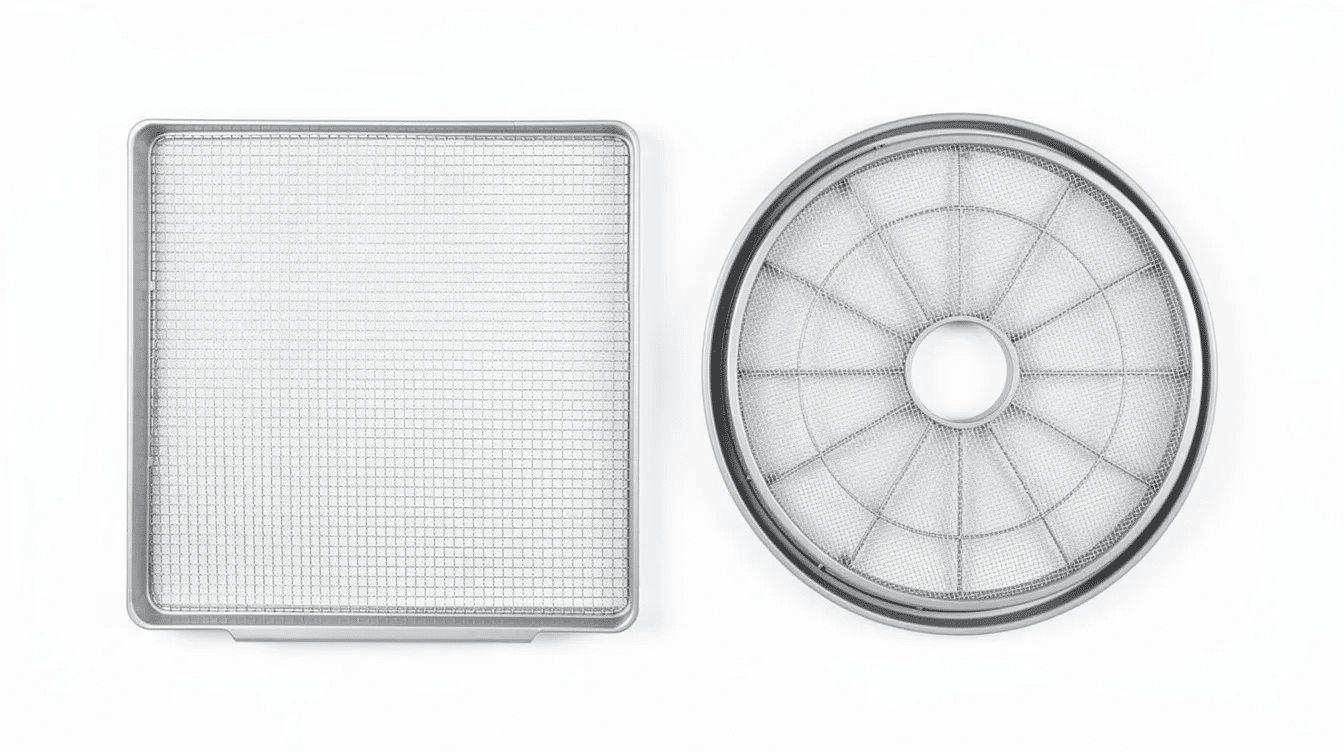
Square/Rectangular Cabinet Dehydrators
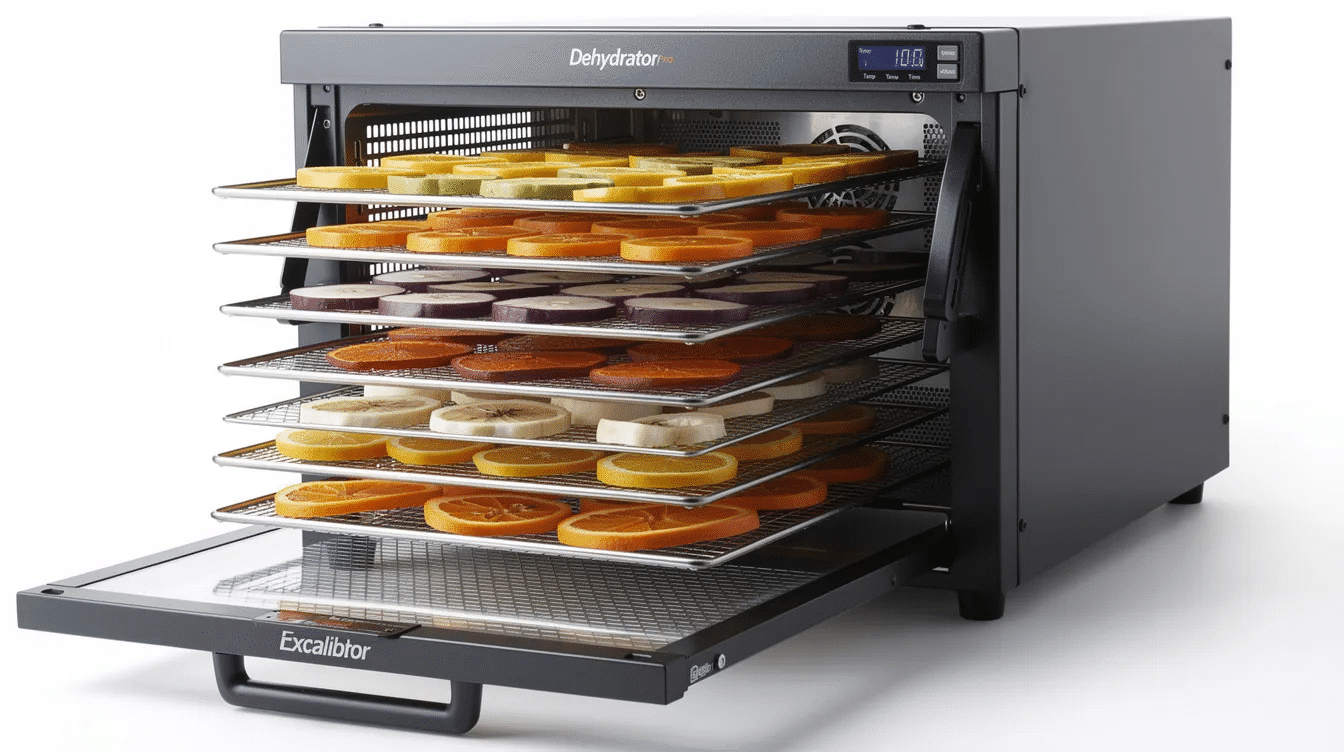
Cabinet-style dehydrators with front-loading sliding trays, like the Excalibur 9-tray model, maximize usable surface area:
Typical dimensions: 13”x12” trays (156 square inches per tray), with total capacity reaching 15 square feet across all trays
No wasted space: Every inch of tray surface accommodates food
Insulated design: Double-wall metal or high-grade plastic maintains stable microclimates for large batches
Easy loading: Front door access means you can check progress without disturbing other trays
Round Stackable Dehydrators
Round, stackable models with a central hole (common in entry-level units and many Nesco gardenmaster models) sacrifice capacity for compact storage:
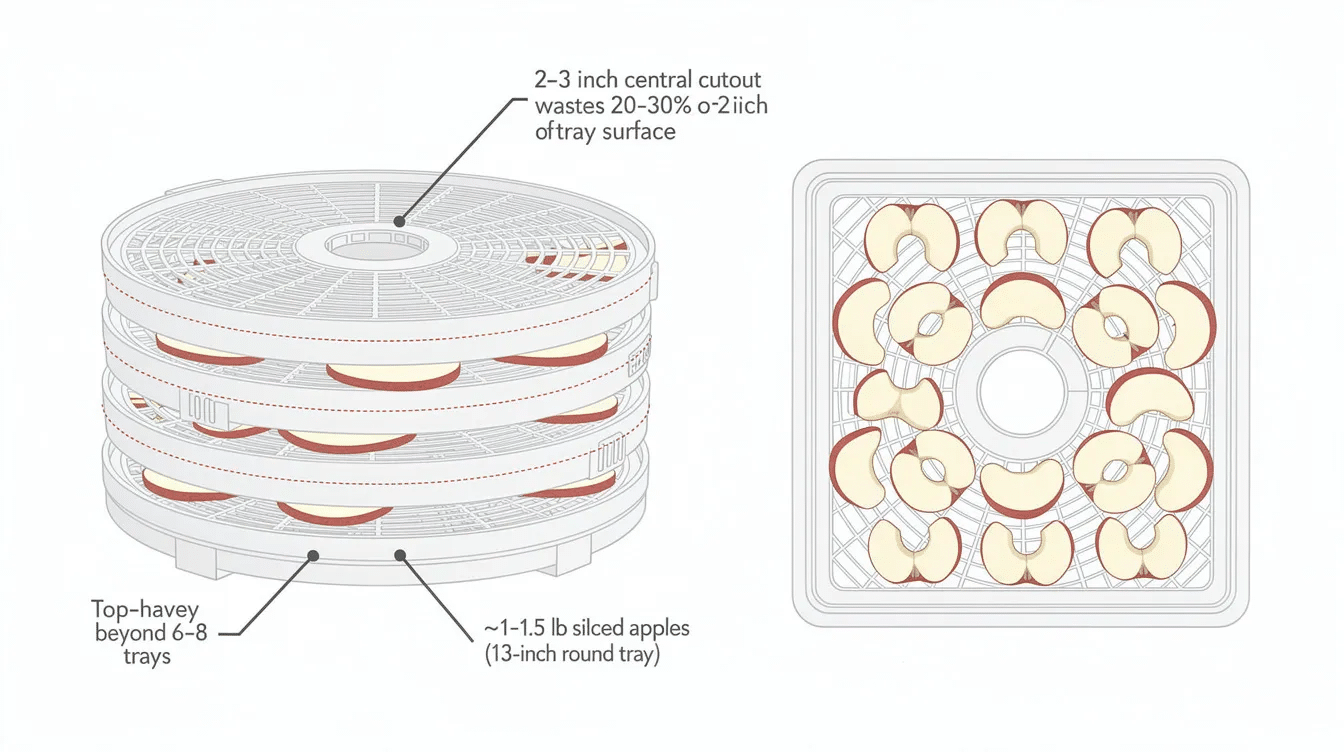
Central cutout: The 2-3 inch “donut” hole in the center wastes 20-30% of the tray surface area
Reduced capacity: A 13-inch diameter round tray holds approximately 1-1.5 pounds of sliced apples (¼-inch thick) versus 2-3 pounds on a comparable square tray
To understand how tray shape impacts your cooking projects, consider these examples:
Jerky batch: A 15”x15” square tray accommodates 4-6 pounds of beef strips (⅛-inch thick, marinated). A 13” round tray with center hole manages only 2-3 pounds.
Tomato processing: A weekend session with 5-10 pounds of late-summer tomatoes yields 1-2 pounds of powder for sauces when using a large capacity cabinet dehydrator. The same project takes multiple extended batches in a round stackable.
Fruit leather production: Rolling out sheets for school snacks benefits from full rectangular surfaces. Square trays mean more space efficient production, with fewer batches needed for a week’s worth of snacks.
When evaluating capacity, prioritize total square footage (aim for 10-15 sq ft for families) over tray count. A unit advertised as “10 trays” with small round surfaces may offer less usable area than a “6 tray” cabinet model.
Choosing Based on Your Projects
Your drying ambitions should guide your tray choice:
Small herb batches and occasional snacks: Round stackables with fewer trays work adequately and store easily
Bulk preserving for gardeners: Large rectangular trays with max capacity handle 20-50 pound harvests efficiently
Mixed projects: Rectangular cabinet designs accommodate both small and large batches without multiple runs
Key Features to Look For in a Dehydrator for Everyday Cooking
The ideal home dehydrator balances capacity, precise temperature controls, manageable noise levels, and easy cleaning for typical cooking tasks. Rather than chasing the most feature-packed model, focus on the specifications that actually improve daily use and recipe success.
This buying checklist covers the features worth paying for—and the ones that matter less than marketing suggests, especially if you’re comparing budget food dehydrators for home use.
Fan Location and Airflow Style
Rear-mounted fans in horizontal-flow units (like those in Excalibur dehydrators or the Cosori dehydrator) deliver the most consistent results across mixed loads
Horizontal airflow eliminates the need for constant tray rotation, especially important when making fruit leather (which can set unevenly) or jerky (which needs consistent heat for safety)
Vertical airflow units require more attention and manual rotation, with potential 10-20% variation in drying time between top and bottom trays
Back-fan designs also prevent flavor mixing—your beef jerky won’t taste like the apple chips drying on the tray above it
Digital Temperature Control and Timer
Digital display with adjustable temperature settings: Look for at least 5°F increments across a temperature range from around 95°F (ideal for drying herbs while retaining 80-90% essential oils) up to 160-165°F (required for jerky to meet USDA pathogen kill temperatures)
Adjustable thermostat accuracy: Analog dials can fluctuate ±10°F, risking nutrient loss, spoilage, or food safety issues. Digital controls maintain tighter tolerance.
Built-in timer: Models with 24-80 hour timers plus automatic shut off prevent over-drying and allow overnight operation without monitoring. Essential for recipes like apple chips (6-12 hours) or tomato slices (8-12 hours) that finish in the middle of the night.
Tray Material and Durability
The material your trays are made from affects cleaning, longevity, and even food quality:
Stainless steel trays: Resist warping, clean easily via dishwasher (rated for up to 500 cycles), and avoid any concerns about BPA or plastic leaching. Steel’s opacity also benefits light-sensitive items like garlic. Six stainless steel trays in a quality unit can last decades.
BPA-free plastic trays: Less expensive ($50-100 for complete units vs $200+ for metal trays), lighter weight, and widely available. Check that replacement trays can be purchased separately when needed.
Metal trays vs plastic trays: Metal holds up better to high temperatures and repeated cleaning. Plastic works fine for most home use but may warp or discolor over time with heavy use.
Size, Footprint, and Noise
Practical considerations that determine whether your dehydrator gets used regularly or gathers dust:
Countertop footprint: Choose units under approximately 20 inches deep for standard countertops or cabinet storage. A typical 5-tray unit measures around 17”x19”x12”—compact enough space for apartment kitchens.
Storage: If counter space is limited, confirm the unit fits in a cabinet when not in use. Lighter models are easier to move in and out of storage.
Noise levels: Quieter models (below 50dB) enable overnight apple drying without disturbing sleep. Newer 2026 models with brushless fans, like certain Magic Mill units, reduce vibration significantly compared to older designs.
Useful Extras That Expand Your Recipe Options
Beyond basic trays, certain add ons transform what you can realistically cook:
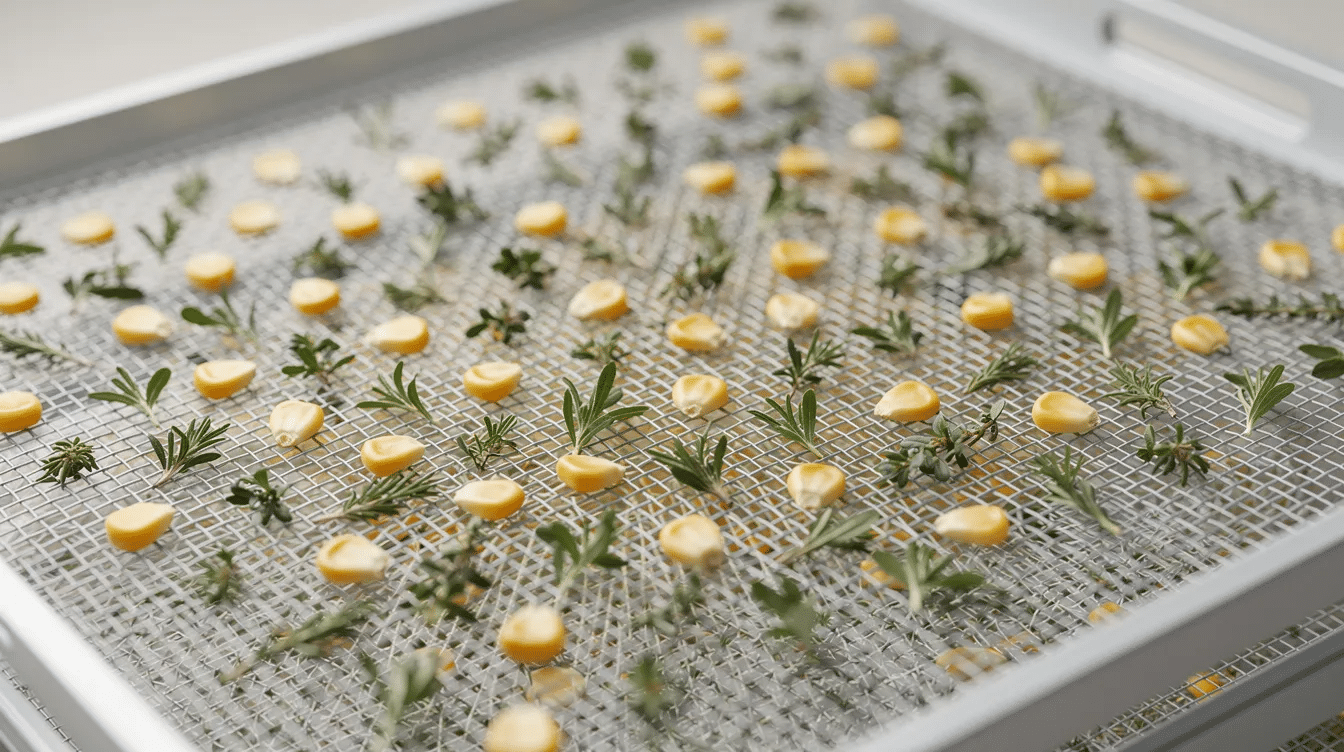
Mesh screens (silicone-coated nylon with approximately 1/16-inch holes): Prevent smaller foods like peas, corn kernels, and herb leaves from falling through standard tray openings. Essential for 20-30% yield retention when dehydrating small items.
Nonstick sheets / fruit roll sheets (flexible silicone mats, 10”x10” or larger): Contain runny purees for making fruit leather, yogurt bark, or tomato paste. Without these, liquid recipes are essentially impossible.
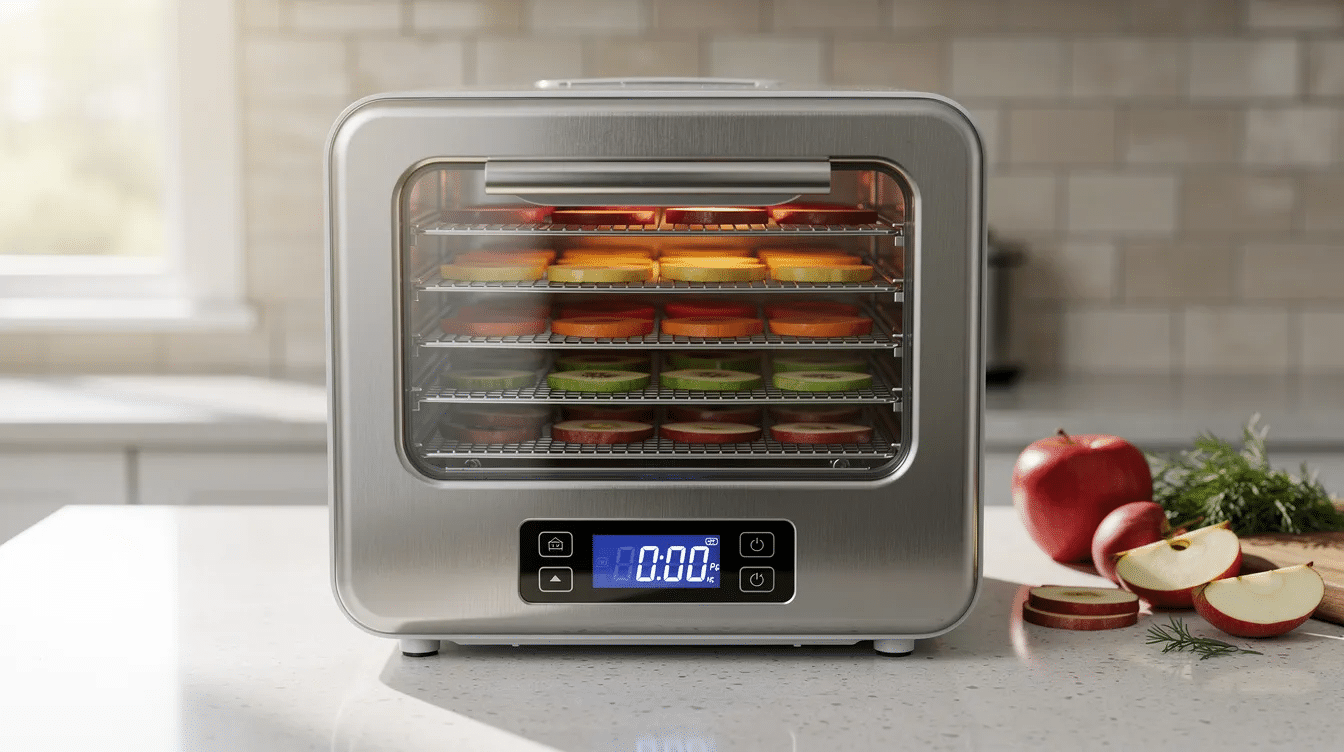
Glass door or clear polycarbonate windows: Allow you to monitor drying progress without opening the unit and losing heat. Particularly helpful for learning drying time patterns with different foods.
Extra trays: Additional trays purchased separately expand capacity for big batches or let you dedicate specific trays to different foods (e.g., meat vs fruit).
Air filters: Some models include filters to keep dust and particles out of the drying chamber, useful if your dehydrator runs in a garage or basement.
Control Panel Accessibility
Ensure the control panel is accessible when the unit is in position—front-mounted controls work better than top-mounted when stored under cabinets
Backlit digital displays make it easier to check settings in low-light kitchens
Simple temperature options (preset buttons for common temperatures) can speed up frequent tasks, though manual adjustment remains important for different foods
Mesh Screens and Nonstick Sheets: Small Accessories That Change How You Cook
The accessories included with—or sold alongside—your dehydrator often determine which recipes are practical and which remain frustrating experiments. Tiny vegetables fall through standard trays. Runny purees drip into heating elements. Sticky fruits fuse permanently to surfaces. The right accessories solve these problems before they start.
If you’re serious about getting maximum value from your dehydrator for cooking, plan to acquire mesh screens and nonstick sheets from day one, and consider using dehydrator cookbooks with step‑by‑step recipes to guide your first projects.
Mesh Screens for Small Items
Mesh screens are thin frames (typically nylon or polyester fabric with tight weave) sized to fit precisely inside your dehydrator trays. They create a fine surface that suspends small items mid-air for even airflow:
Design: Most mesh screens feature approximately 1/8-inch weave, fine enough to catch herb leaves, corn kernels, diced blueberries, and pea-sized items that would otherwise fall through standard ½-inch tray grids
Function: By keeping items suspended rather than sitting on solid surfaces, mesh screens promote 20-50% faster drying times for small pieces
Cleaning: Most mesh screens can be washed by hand or placed on the top rack of a dishwasher (though some manufacturers recommend hand wash only to extend lifespan)
Without mesh screens, dehydrating herbs becomes a battle against leaves falling into fan areas, and small vegetable pieces end up lost in crevices rather than in your storage jars.
Nonstick Sheets for Purees and Liquids
Nonstick or “fruit leather” sheets—sometimes called paraflex sheets or silicone mats—contain liquid or semi-liquid mixtures that would otherwise seep through any openings:
Materials: Food-grade silicone (tolerant from -40°F to 450°F) or flexible coated inserts. Both release dried food easily without tearing.
Flexible vs rigid designs: Flexible silicone sheets roll or fold for storage and peel away from dried foods effortlessly. Rigid inserts slide in and out like trays but don’t conform to shapes.
Uses: Essential for fruit leathers (strawberry puree at 135°F yields flexible sheets you can roll), yogurt bark (Greek yogurt with berries dried at 110°F to preserve probiotics), tomato paste reduced to powder, mashed potatoes, and blended vegetable purees.
Recipes That Require These Accessories
Several popular dehydrator recipes are nearly impossible without proper accessories:
Sweet potato bark for hiking meals: Pureed sweet potatoes spread ¼-inch thick on nonstick sheets, dried into lightweight strips that rehydrate in 10 minutes with boiling water. Without a solid sheet, the puree drips straight through the trays.
Smooth strawberry leather: Blended strawberries require a completely non-porous surface. Attempting this on mesh or bare trays creates a sticky mess that gums up fans and heating elements.
Homemade instant soup mixes: Blended vegetables (carrots, celery, onion, herbs) dehydrated into crumbles on nonstick sheets create shelf-stable soup bases that reconstitute in minutes.
Dehydrated herbs from garden harvests: Basil, oregano, and thyme leaves on mesh screens dry in 1-4 hours without falling through grids or blowing around in the air circulation.
Experts recommend purchasing multiple sets of mesh screens and nonstick sheets when you buy your dehydrator. They expand your practical capacity by 30-50% for diverse projects and pay for themselves quickly in recipe versatility.
Compatibility Considerations
When purchasing accessories, confirm they’re sized for your specific dehydrator model:
Round trays need round accessories with matching center cutouts
Generic “universal” accessories may not fit precisely, leaving gaps where small items escape
Check whether your manufacturer offers branded accessories or if third-party options are available
What You Can Make: Practical Dehydrator Recipes for Home Cooks
A dehydrator sitting unused in a cabinet provides zero value. The real benefit comes from integrating it into your regular cooking routine—transforming surplus produce into pantry staples, creating healthy snacks without preservatives, and preparing meals for camping trips or busy weeknights.
This section covers specific, realistic recipes organized by category. Think of these as starting points: once you master the basics, you’ll naturally experiment with variations based on what’s in season or on sale.
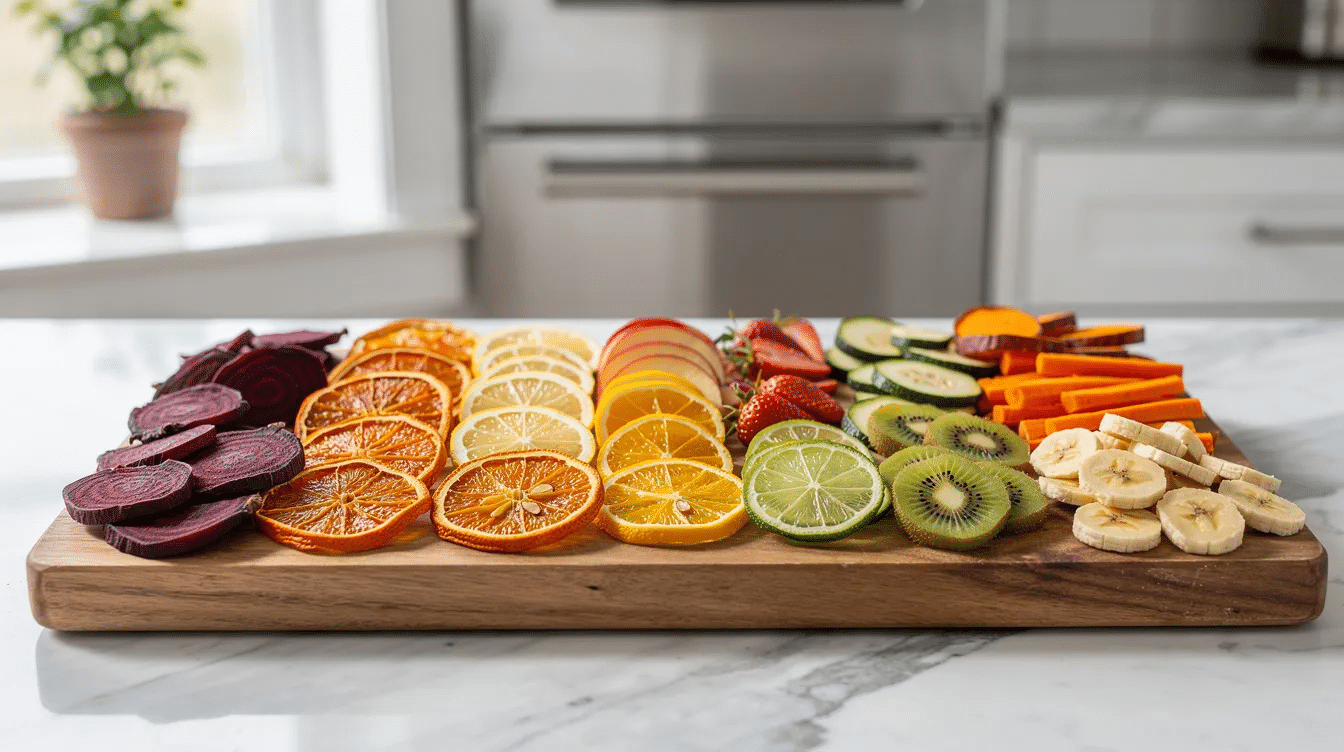
Apple and pear chips: Core fruits and slice ¼-inch thick. Dust with cinnamon if desired (helps inhibit browning). Dry at 125-135°F for 6-12 hours until crisp enough to snap. Store in jars for delicious treats that replace commercial chips.
Banana coins: Slice ⅛-inch thick. Dry at 125-135°F for 8-10 hours. Yields portable energy bites perfect for lunchboxes or trail mix.
Strawberry slices: Halve berries and place foods cut-side up on trays. Dry at 135°F for 8-12 hours. Retains approximately 70% vitamin C—far better than most commercial dried strawberries.
Pineapple rings: Peel, core, and slice into rings. Dry at 135°F for 10-14 hours. Natural sugars caramelize slightly, creating intensely sweet chewy treats.
Thin, uniform slices dry more evenly. Invest in a mandoline slicer if you plan to process large quantities of fruit regularly.
Vegetables: Faster and More Versatile
Most vegetables dry faster than fruit and make excellent soup bases, snack alternatives, and cooking ingredients, and many of them appear on lists of the best foods to dehydrate for long‑term storage:
Kale chips: Remove stems, tear leaves into pieces, and massage lightly with oil if desired. Dry at 125-135°F for 4-6 hours. Rivals store versions nutritionally while costing a fraction of commercial prices.
Carrot coins and beet crisps: Slice ¼-inch thick. Dry at 125-145°F for 6-8 hours (carrots) or 8-10 hours (beets). Store as soup bases or snacking chips.
Zucchini slices: Slice ⅛-inch thick. Dry at 125-135°F for 4-6 hours until crisp. Makes excellent low-carb chip alternatives.
Onion and garlic flakes: Mince finely. Dry at 110-125°F for 6-10 hours. Grind into powders for seasoning blends that put store-bought versions to shame in freshness.
Mixed vegetable soup bases: Combine dried carrots, celery, onion, and herbs in jars. Rehydrate in broth for quick homemade soups.
Meat and Jerky: Safety First
Dehydrating meat requires attention to temperature and food safety. Reaching proper internal temperatures kills pathogens like E. coli and Salmonella, so it’s essential to follow guidance on the correct temperature to dehydrate jerky safely:
Beef jerky: Use lean cuts like top round. Slice ⅛-inch thick against the grain. Marinate for 12-24 hours in your preferred mixture. Pre-heat the oven to bring meat to 160°F internal temperature before transferring to the dehydrator at 160-165°F for 6-10 hours.
Turkey strips: Follow the same process as beef. Leaner cuts work best, reducing fat by approximately 50% compared to fattier meats.
Lean game meat: Venison, elk, and similar meats make excellent jerky following beef protocols.
Key meat safety practices:
Always reach at least 160°F internal temperature to kill pathogens
Slice uniformly for consistent drying
Marinating adds flavor and can include ingredients with natural antimicrobial properties
Store jerky in airtight containers and consume within 1-3 months (refrigerate for longer storage due to residual fats, and follow best practices for how long beef jerky lasts in the fridge)
Pantry Staples and Cooking Helpers
Beyond snacks, dehydrators create ingredients that simplify everyday cooking:
Tomato powder: Slice tomatoes, dry at 135°F for 8-12 hours until brittle, then blend into powder. Store dehydrated food like this in jars. Reconstitute into instant tomato paste for sauces, soups, and stews.
Onion and garlic powders: Dry minced aromatics as described above, then process in a spice grinder. Fresher and more potent than year-old store-bought versions.
Mixed herb blends: Dry homegrown oregano, basil, thyme, and parsley at 95-115°F for 1-4 hours. Blend to create custom Italian seasoning or preserve garden herbs for winter cooking. Dehydrated herbs retain more nutrients than those sitting in grocery store jars for months.
Powdered vegetables: Dried carrots, beets, or spinach can be ground into powders for adding nutrients to smoothies, baked goods, or baby food.
Non-Traditional Uses
The versatility of a tray food dehydrator extends beyond conventional dried foods:
Homemade dog treats: Slice chicken breast, beef, or sweet potatoes thinly. Dry at 155-165°F for 4-6 hours. Single-ingredient treats with no additives at roughly 50% the cost of commercial options.
Yogurt bark: Pour Greek yogurt mixed with berries or honey onto nonstick sheets, approximately ¼-inch thick. Dry at 110°F for 8-12 hours (low temperature preserves probiotics). Break into pieces for protein-rich snacks.
Trail-ready full meals: Cook a pot of chili or pasta sauce, spread thin on nonstick sheets, and dry at 145°F for 10-12 hours. Crumble into bags for camping—rehydrates in 15-20 minutes with boiling water. Pack five days of meals weighing less than one day of fresh food, taking advantage of the benefits of dehydrated food for backpacking and storage.
Fruit leather variations: Blend any ripe fruit (mixed berries, peaches, mangoes) and pour onto fruit roll sheets. Dry at 135°F for 6-12 hours. Roll into tubes for portable, preservative-free snacking.
Temperature Quick Reference
To help you get started, here’s a summary of typical settings by food category:
Food Category
Temperature Range
Typical Time
Herbs
95-115°F
1-4 hours
Fruits
125-135°F
6-12 hours
Vegetables
125-145°F
4-10 hours
Jerky/Meat
155-165°F
6-10 hours
Yogurt bark
110°F
8-12 hours
These ranges provide starting points. Your specific dehydrator, local humidity, and food thickness will affect actual drying time.
Food Safety, Storage, and Shelf Life for Dehydrated Foods
Removing moisture slows spoilage dramatically, but it doesn’t make food immortal. Safe technique during dehydrating and proper storage afterward determine whether your dried foods last months or become science experiments.
This section covers the practical guidelines every home dehydrator user should follow.
Safe Temperatures by Food Type
Different foods require different heat levels to dry safely while preserving quality:
Herbs: 95-115°F. Low temperatures preserve volatile oils and prevent browning. Dried herbs should crumble easily.
Fruits: 125-135°F. Most fruits reach safe moisture levels at these temperatures while retaining natural sugars and flavors.
Vegetables: 125-145°F. Higher temperatures help vegetables dry completely. Properly dried veggies should be brittle and snap, not bend.
Meats and jerky: 150-165°F, OR pre-heated in a conventional oven to 160°F internal temperature before drying. This is non-negotiable—inadequately heated meat can harbor dangerous bacteria including Clostridium botulinum, particularly in low-acid foods like jerky.
Never skip the high-temperature requirement for meat. The USDA recommends heating meat to 160°F before or during dehydration to ensure pathogen kill.
Testing for Dryness
Visual and tactile tests help confirm your food has reached appropriate dryness for long term storage:
Fruits: Should be leathery but not sticky. Tear a piece—no visible moisture should appear on the torn surface. Some fruits (like apples) should be crisp enough to snap.
Vegetables: Should be brittle and snap cleanly, not bend or feel pliable. Pieces that bend still contain moisture and may mold in storage.
Jerky: Should bend like a green twig, cracking slightly but not breaking in half. Overly crisp jerky is over-dried; chewy or soft jerky is under-dried.
Herbs: Should crumble when rubbed between fingers. Stems should snap, not bend.
Conditioning for Consistent Results
After initial drying, conditioning equalizes moisture content throughout a batch:
Cool dried foods completely at room temperature
Pack loosely into clean glass jars, filling about two-thirds full
Seal and store in a cool, dark place
Shake jars once daily for 4-10 days
If condensation appears on jar walls, return food to the dehydrator for additional drying
This process is especially important for fruits, where individual pieces may dry at slightly different rates based on thickness or position in the dehydrator.
Storage Methods for Maximum Shelf Life
How you store dehydrated food matters as much as how you dry it:
Cool, dark location: Heat and light degrade dried foods. A pantry or cupboard away from stoves and windows is ideal. Aim for storage temperatures under 70°F.
Clean glass jars: Mason jars with tight-fitting lids work well for most dried foods. Clear glass lets you monitor for any moisture or spoilage.
Mylar bags with oxygen absorbers: For long term storage (2+ years), vacuum-sealed Mylar bags with food-grade oxygen absorbers provide maximum protection against oxidation and moisture.
Vacuum-sealed bags: Remove air to extend shelf life significantly. Vacuum-sealed and frozen, most dried foods last indefinitely—though rehydration quality peaks within the first year.
Labeling: Always label containers with contents and date. Example: “Tomato slices – August 2026.” You won’t remember what that jar of red powder is by December.
Realistic Shelf Life Expectations
Properly dried and stored foods last surprisingly long, but expectations should be realistic, and understanding how long dehydrated food can last in storage helps you plan pantry space and rotation:
Food Type
Pantry Storage
Refrigerated
Vacuum Sealed/Frozen
Dried fruits
4-12 months
12-18 months
2+ years
Dried vegetables
6-12 months
12-18 months
2+ years
Herbs
12-24 months
N/A
2+ years
Jerky
1-3 months
3-6 months
12+ months
Fruit leathers
1-2 months
6-12 months
12+ months
Notes on specific categories:
Jerky spoils faster due to residual fats becoming rancid; refrigerate or freeze for storage beyond one month
Higher-sugar fruits (mangoes, pineapple) may become sticky over time but remain safe if properly dried initially
Vegetables stored with patented technology vacuum systems and oxygen absorbers can last 5+ years
Signs of Spoilage
Even well-preserved foods can fail. Watch for:
Visible mold (any fuzzy growth)
Off odors (sour, musty, or rancid smells)
Moisture in containers (condensation, stickiness)
Discoloration beyond normal darkening
Insects or signs of pest infiltration
When in doubt, discard. The cost of a batch of dried tomatoes isn’t worth food poisoning.
Choosing the Best Dehydrator for Your Kitchen and Cooking Style
The best dehydrator for your kitchen depends on three factors: available space, budget, and how often you plan to use it. A great machine for a gardener processing 50 pounds of tomatoes differs from the best food dehydrator for an apartment dweller making occasional snacks.
This section matches dehydrator features to common user profiles.
For Beginners and Small Kitchens
If you’re new to dehydrating or working with limited counter space, start practical:
Size: Look for compact 4-6 tray models with a maximum depth under 18-20 inches. These fit on standard countertops and store in cabinets between uses.
Airflow: Choose digital models with rear fans for even drying without constant tray rotation. The Cosori dehydrator exemplifies this category well—approximately $100, 600W with rear fan, digital controls from 95-165°F.
Trays: Either stainless steel or sturdy BPA-free plastic trays work fine for moderate use. Ensure replacement trays and accessories are available to purchase separately.
Expectations: A compact unit handles 5-10 pounds of food weekly—perfect for experimenting with apple chips, dehydrated herbs, and small batches of jerky.
This configuration provides enough space and capability to learn the basics without overwhelming your kitchen or budget.
For Gardeners and Bulk Preservers
If you’re processing harvests from a vegetable garden, you need more space and features:
Size: Consider 8-10 tray units with at least 14-16 square feet of total drying space. Excalibur’s 9-tray model offers 15 sq ft total across 13”x12” trays—enough capacity for 20-50 pound weekend processing sessions.
Timer: Look for 80-hour timers with automatic shut off. Large batches of tomatoes or apples may run overnight or through multiple days.
Airflow: Back-mounted fans remain essential at this scale. Uneven drying across 10 trays wastes both food and time.
Durability: Stainless steel trays justify the higher investment ($300+) when you’re running the unit frequently for months each growing season.
Extra trays: The ability to add extra trays (even if you start with fewer) provides flexibility as your preservation projects grow.
For Jerky and Snack Enthusiasts
If meat drying and snack production are your primary goals, prioritize different features:
Temperature: Must reach 165°F maximum—non-negotiable for safe jerky production. Temperature changes should be precise and stable throughout the drying cycle.
Airflow: Robust fan systems that maintain consistent temperature options across all trays. Consumer Reports testing identified Magic Mill as performing well in this category.
Drip management: Easy-clean drip trays or removable bases simplify cleanup after marinades drip during jerky drying. Some meat juices will always escape—choose designs that contain them.
Capacity: Enough space to dry 4-6 pounds of sliced meat per batch makes the effort worthwhile.
Matching Features to Use Patterns
Consider how your dehydrator will fit into your actual life:
User Type
Priority Features
Example Models
Beginner/Apartment
Compact, digital, rear fan
Cosori, Hamilton Beach
Gardener
Large capacity, long timer, durable trays
Excalibur 9-tray, Commercial Dehydrators America
Jerky maker
High temp, robust airflow, easy cleaning
Magic Mill, Excalibur
Raw foodist
Precise low temps (95-118°F), quiet operation
Excalibur, Sedona
Practical Considerations
Beyond technical specifications, think about:
Noise: Models running 8-12 hours should operate quietly (under 50dB) for overnight use
Mobility: A dehydrator you can easily move to storage gets used more than a heavy unit taking permanent counter space
Simplicity: For most home cooks, straightforward digital controls beat complicated programming
Start Simple, Scale Up
The best dehydrator is the one you’ll actually use. Rather than over-buying initially, start with a modest unit and upgrade only if you consistently hit capacity limits.
For your first week with a new dehydrator, try these beginner projects:
Apple chips: Core, slice, arrange, dry. Foolproof results in 6-10 hours.
Herb drying: Preserve garden herbs before they bolt. 1-4 hours at 95°F.
Banana chips: Slice thin, dry overnight. Morning snacks with no added sugar.
Once you’ve mastered simple recipes and understand your machine’s quirks, move on to more advanced projects like tomato powder for instant pasta sauce, full dehydrated camping meals, or large-scale summer produce preservation.
A dehydrator for cooking isn’t a gadget you use once and forget. It’s a kitchen tool that transforms how you think about preserving food, creating snacks, and reducing waste. Whether you’re processing your first batch of kale chips or dehydrating an entire garden harvest, the principles remain consistent: even airflow, proper temperature, and patience.
The investment in a quality home dehydrator pays dividends for years in healthier snacks, longer-lasting produce, and meals that weigh ounces instead of pounds. Pick a model that matches your kitchen and cooking style, start with simple projects, and expand your recipe repertoire as you learn what your dehydrator can do.
DannyContent Writer
Hey there, since 2016, my mission has been to provide you with the information and guides you need to make food dehydrating simple and fun. Whether you're a newbie or a seasoned pro, my site offers helpful guides, reviews, and recipes to enhance your dehydrating experience. I take pride in only recommending products I believe in, ensuring my readers' trust. As an affiliate of various programs, including Amazon Associates, your support helps me continue providing quality content. Thanks for stopping by, and happy dehydrating!