We earn a commission if you make a purchase, at no additional cost to you.
09/22/2026 04:39 pm GMT
🍊 Dehydrated Food Info Finder — Temperatures & Drying Times
Choose a category, then pick a food to see its drying temperature and time.
⚠️ Safety Disclaimer: Drying times are estimates and vary based on slice thickness, food moisture content, humidity, and your dehydrator model. Always check for doneness before storing — food should feel dry, leathery, or brittle with no moist spots. Improperly dried food can harbour mould and bacteria. For meat and poultry, follow USDA safe internal temperature guidelines: beef and pork to 160°F (71°C), poultry to 165°F (74°C). Use a food thermometer when in doubt. Store all dehydrated foods in airtight containers in a cool, dark place and discard anything showing moisture, mould, or off odours.
Dehydrated Tuna: Safe, Lightweight Protein for Backpacking & Snack Storage
Lightweight, shelf-stable, and packed with protein, dehydrated tuna has become a go-to option for backpackers, emergency preppers, and anyone seeking a healthy treat that travels well. Unlike bulky canned options, dried tuna weighs almost nothing and rehydrates quickly on the trail or at your desk.
Quick Answer: Can You Safely Dehydrate Tuna at Home?
Yes, you can safely dehydrate canned tuna, pouched tuna, or cooked fresh tuna at home when you follow basic food safety rules. The process is straightforward and yields lightweight protein ideal for backpacking meals, emergency food kits, and high-protein snacking.
For safe results, tuna must be low in fat content and either packed in water (for canned or pouch products) or fully cooked to at least 145°F (63°C) internal temperature before you start the drying process. This ensures pathogens are eliminated before moisture removal begins.
Typical prep takes about 10–20 minutes, including draining, flaking, and arranging on dehydrator trays. The dehydration process itself runs approximately 4–8 hours in a food dehydrator set between 140–155°F (60–68°C). Each small serving delivers roughly 15–20g of protein content once dried.
One thing to expect: strong fish odor is completely normal when drying tuna. Even small batches can produce processing-plant-level smells. Running your dehydrator in a garage, covered porch, or utility room with good ventilation keeps the scent out of main living areas.
What Types of Tuna Work Best for Dehydration?
Lean tuna dries better and stores longer than fatty fish like salmon or mackerel. The lower the fat, the lower the risk of rancidity during extended storage.
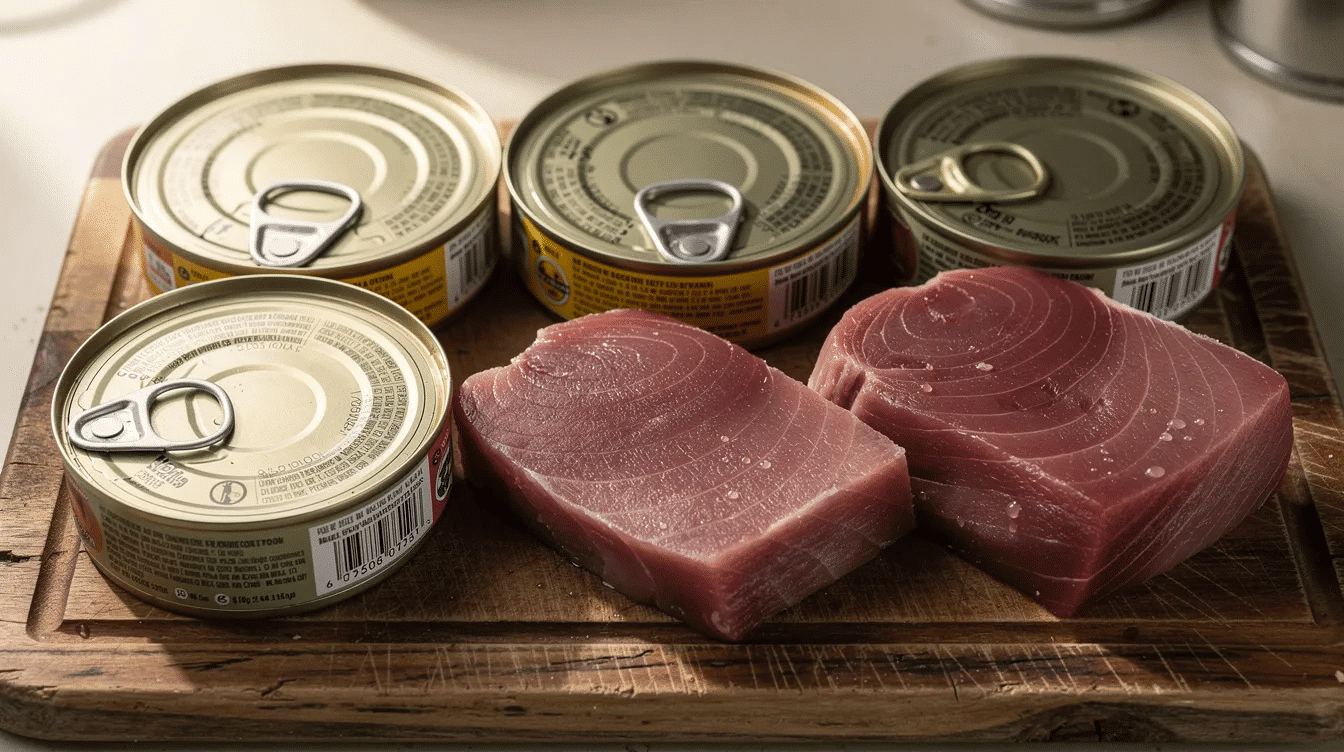
Canned tuna in water is the easiest and safest starting point. Standard 5 oz (142 g) cans or 2.5 oz (70 g) pouches work perfectly. Look for tuna packed in water rather than oil, as the remaining fat in oil-packed varieties accelerates spoilage. White tuna (albacore) typically contains under 5% fat, making it an excellent choice.
Avoid these options:
Tuna in oil
Mayo-based tuna salads
Pre-seasoned varieties swimming in oily sauces
Fresh or frozen tuna steaks also work well when handled properly. High quality tuna loins from yellowfin or albacore, sliced into thin strips and cooked before drying, produce chewy jerky-style results similar to beef jerky.
Flavored water-packed pouches (lemon pepper, chili, garlic herb) can be dehydrated as long as they contain no added oil.
For context, tuna compares favorably to other lean proteins commonly used in making jerky. Skinless chicken breast, pressure cooked chicken, leanest possible ground beef, shrimp, and even imitation crab all dehydrate well. However, tuna offers a leaner protein source than most beef jerky products and provides 20–25g protein per ounce when dried—higher than dehydrated poultry.
Is Dehydrated Tuna Safe? Key Food Safety Guidelines
Tuna dehydration is safe when you start with fully cooked fish, maintain clean working conditions, and dry the meat thoroughly until completely dry.
Canned tuna and pouched tuna are already commercially cooked to sterility during processing. No additional cooking is required before dehydration—just drain, pat dry, and proceed.
Fresh tuna requires extra steps. Before placing raw meat in your dehydrator, bake, grill, or steam the fish to an internal temperature of at least 145°F (63°C). Verify this with a food thermometer. The USDA warns that home dehydrators operating at 140–155°F remove moisture effectively but may not reach temperatures sufficient to kill Salmonella or parasites in undercooked fish.
Essential hygiene practices:
Wash hands thoroughly before handling
Use dedicated cutting boards (not ones used for turkey prior to cleaning)
Clean all utensils between steps
Avoid cross-contamination with ground meat mixture or other raw proteins
Never dehydrate tuna that smells sour, feels slimy, or exceeds its “best by” date. When in doubt, throw it out. These guidelines apply equally whether you’re working with tuna, ground beef, flank steak, or any other dehydrated meat.
How to Dehydrate Canned or Pouched Tuna (Step-by-Step)
This method works for any home dehydrator user and produces consistently good results with minimal effort, especially when you’re using a dedicated food dehydrator for jerky.
Step one: Open a standard 5 oz (142 g) can or 2.5 oz (70 g) pouch of water-packed tuna. Drain the liquid thoroughly by pressing gently. Pat the tuna dry with paper towels to remove surface moisture—this speeds up the drying process significantly.
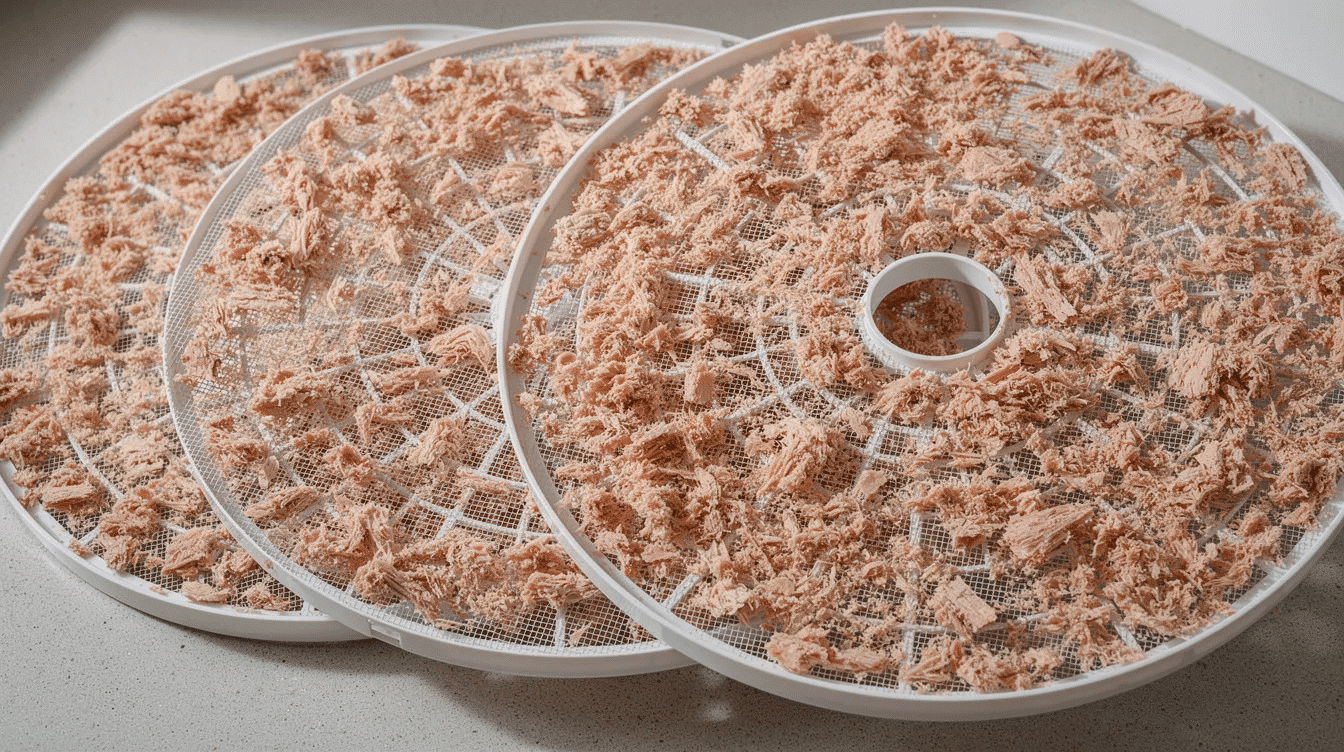
Step two: Break the tuna into small pieces, creating uniform flakes about 1/4 to 1/2 inch in size. A uniform manner of sizing ensures even drying and quick rehydration on the trail.
Step three: Season lightly if desired. Salt, black pepper, garlic powder, or smoked paprika work well. Avoid adding oil or heavy sauces, which increase fat and extend drying time.
Step four: Spread tuna in a thin single layer on mesh sheets or parchment-lined dehydrator trays. Leave small gaps between pieces for airflow—crowded trays dry unevenly.
Step five: Set your dehydrator to 140–145°F (60–63°C). Dry for 4–6 hours total, rotating trays midway through. Check after 3 hours to assess progress.
Step six: Test for doneness. Properly dried tuna feels dry, firm, and crumbly. Individual flakes should snap rather than bend. No soft or cool spots should remain.
Oven drying works as an alternative using your lowest setting with the door cracked open, though times extend to 6–10 hours and odor management becomes more challenging.
Dehydrating Fresh Tuna into Jerky-Style Strips
Tuna jerky produces slightly chewy, shelf-stable strips similar in texture to traditional beef jerky but made from lean tuna loins. Unlike a turkey jerky recipe or delicious jerky preparation using a jerky gun or pastry bag for ground meat mixture, fresh tuna requires slicing whole cuts.
Start by selecting firm fresh tuna loins (yellowfin or albacore work best) with a clean sea smell and bright, even color. Previously frozen tuna works equally well once thawed.
Trim away any visible dark bloodline or fatty portions—these develop bitter taste and oxidize quickly. Slice across the grain into uniform strips approximately 1/4 inch (6 mm) thick. Consistent thickness ensures pieces finish at the same time.
Simple marinade recipe:
Low-sodium soy sauce
Fresh lemon juice
Minced garlic and ginger
Black pepper
Optional chili flakes for heat
Marinate refrigerated for 2–8 hours. Then cook the marinated strips to at least 145°F (63°C) in an oven or skillet before transferring to your dehydrator. This cooking step is non-negotiable for safety.
Dehydrate at 145–155°F (63–68°C) for roughly 4–8 hours, depending on thickness and humidity. Finished jerky feels firm and dry to the touch, bending with only a slight crack—not creating a different textureless tough or brittle break; if you’re also making beef jerky, understanding what temperature to dehydrate jerky safely is crucial for food safety.
Texture troubleshooting:
Strips that snap cleanly = over-dried
Strips that feel soft, greasy, or bend without resistance = under-dried (return to dehydrator)
For flavor variations, try teriyaki (soy, brown sugar, ginger) or spicy harissa-inspired rubs inspired by an Asian jerky recipe with soy and chiles. If you’re branching out beyond fish, there are plenty of dehydrator beef jerky recipes for perfect homemade snacks that use similar techniques and marinades. Keep oil levels low regardless of seasoning choices. The goal isn’t producing a more attractive jerky stick—it’s creating a tasty snack with maximum shelf stability.
Managing Odor, Storage, and Shelf Life
Let’s address the elephant in the room: tuna produces a noticeable “fish processing plant” smell during dehydration, even in small batches. This is normal and unavoidable.
Run dehydrators in a garage, basement, screened porch, or near a window with a fan pointing outward. Some users report the smell lingers for hours after drying completes. Planning your batch for a day when you’ll be away helps.
Allow fully dried tuna to cool completely to room temperature (30–60 minutes) before sealing. Packing warm food creates condensation inside containers, inviting mold growth.
Storage Method
Expected Shelf Life
Air tight container (room temp, low humidity)
1–2 weeks
Refrigerator
1–2 months
Freezer (vacuum sealed bags)
6–12 months
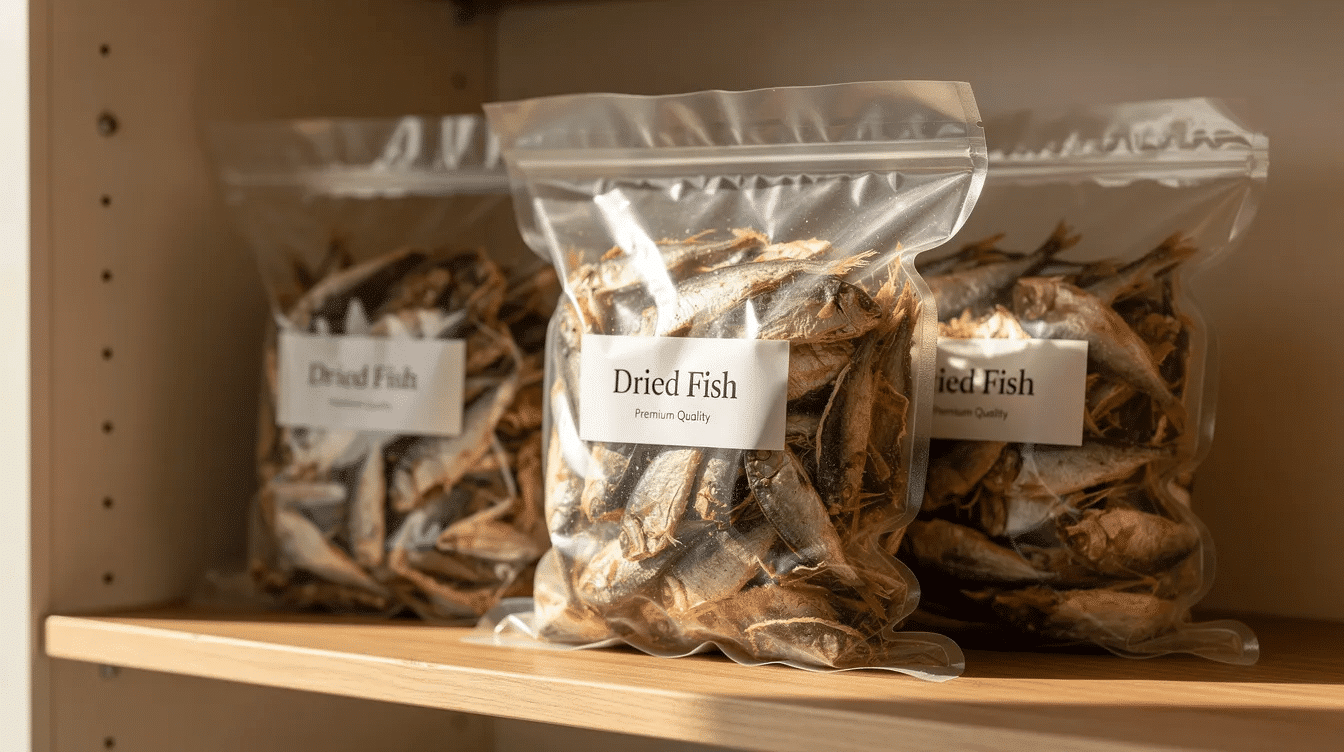
Vacuum sealed packaging extends all timeframes significantly, and understanding how long dehydrated food lasts when vacuum sealed helps you plan larger batches with confidence. In warm or humid climates, refrigerator or freezer storage becomes essential even for short-term keeping.
Before using stored tuna, perform visual and smell checks. Discard immediately if you notice rancid odor, mold, or unusual discoloration. Properly stored dehydrated tuna should smell mildly fishy but never sour or off.
Using Dehydrated Tuna in Backpacking Meals & Everyday Snacks
Dehydrated tuna delivers around 15–20g of protein per small serving while weighing a fraction of its original weight—making it invaluable for trail meals and compact snacks.
Rehydration basics: Soak dried tuna in hot water for about 5–15 minutes until it regains a soft, flaky texture. Cold water works too but requires longer soaking (sometimes overnight in the refrigerator for best results). The rehydrate process restores most of the original bite and texture and fits perfectly into dehydrated backpacking meal planning.
Tuna pasta with powdered cream sauce and freeze-dried vegetables
Tuna rice bowls seasoned with soy sauce packets
Tuna mashed into instant potatoes for a filling dinner
Tuna added directly to ramen for protein boost
For everyday use at home, add rehydrated tuna to salads, wraps, and grain bowls. Jerky-style strips work as standalone snacks with delicious flavor straight from the bag—no preparation needed, and the same principles for dehydrating beef jerky and timing the drying process apply to getting tuna strips to your preferred texture.
Pairing tuna with carbohydrates (pasta, rice, tortillas) and fats (olive oil packets, cheese, nuts) creates more balanced, calorie-dense meals for long hiking days. Just the right amount of added fat transforms simple trail food into satisfying fuel.
Portion dehydrated tuna into individual trail-ready bags (approximately 1/4 cup per person) for easy protein tracking and reduced waste. This approach works whether you’re preparing backpacking meals for a weekend trip or stocking your freezer with emergency food supplies.
Start with a single can of water-packed tuna to practice the process before scaling up to larger batches or fresh tuna jerky. Once you master the technique, dehydrated tuna becomes a reliable protein source that travels anywhere you do.
DannyContent Writer
Hey there, since 2016, my mission has been to provide you with the information and guides you need to make food dehydrating simple and fun. Whether you're a newbie or a seasoned pro, my site offers helpful guides, reviews, and recipes to enhance your dehydrating experience. I take pride in only recommending products I believe in, ensuring my readers' trust. As an affiliate of various programs, including Amazon Associates, your support helps me continue providing quality content. Thanks for stopping by, and happy dehydrating!