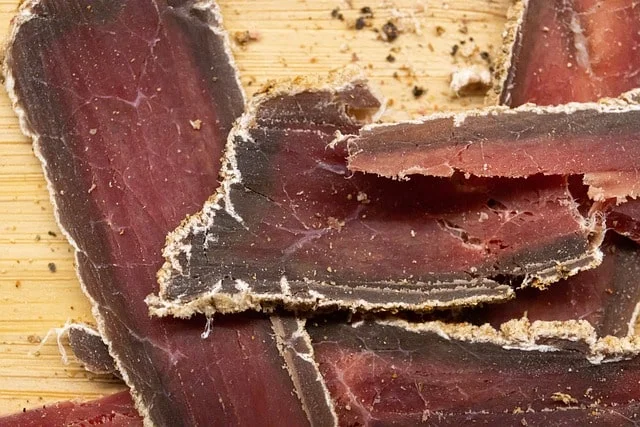
This guide is for jerky lovers, hikers, and anyone with dried-out jerky looking for ways to restore its texture. Whether you’re a fan of snacking on jerky during outdoor adventures or simply want to make the most of your store-bought or homemade stash, knowing how to rehydrate jerky can make it more enjoyable and versatile in recipes. Yes, you can rehydrate jerky using several methods. Rehydrating jerky can transform it from a tough, chewy snack into a tender, flavorful ingredient for a variety of dishes.
Beef jerky is made by dehydrating meat, a process that is crucial to its preservation and affects its texture and shelf life. The dehydration process removes moisture, which helps prevent spoilage and extends the jerky’s shelf life, but it can also make the jerky too hard and tough to eat if not done properly.
Jerky is an excellent snack because it is lightweight, packed with protein, and has a long shelf life. But what do you do when your jerky starts to get too dry? Store bought beef jerky is often drier than homemade versions and can become hard beef jerky, especially if the package is opened and not stored in an airtight container. When beef jerky is opened without being stored in an airtight container, it loses moisture and becomes too dry.
Let’s explore the best ways to rehydrate your jerky so you can enjoy it again.
What are some of the best ways to rehydrate jerky?
Microwave Method (Quickest Method)
This is the shortest and easiest way to rehydrate your jerky. All you need is a microwavable container, water, and a microwave. Covering the jerky with a wet towel can help prevent the risk of burning during microwaving.
Place your jerky in a container and add enough water to cover it a bit—microwave it for 30 seconds to 1 min or until it is soft. You can microwave the jerky at one-minute intervals, checking the texture at each stage. Then, remove the meat from the water. Using a microwave is quick, easy, and efficient, but care must be taken not to overheat the jerky.
Tip: Ensure the container is not airtight, as steam will need to escape.
Safety tip: Always have a bit of water in the container when microwaving jerky, as it can easily catch on fire. Using a dry towel or microwaving without moisture increases the risk of burning, so always use a wet towel or water to control moisture and temperature.
How to Rehydrate Beef Jerky in Broth?
- Place the beef jerky in a pot of boiling water or beef broth.
- Allow the meat to simmer until it’s soft enough to eat.
- Enjoy your rehydrated beef jerky!
How to Rehydrate Beef Jerky in Soup?
If you beef jerky fans out there have ever found yourself in a situation where you’re craving jerky, but all you have is dried-out, old jerky, don’t despair! There is a way to rehydrate your meat so that it’s moist and delicious again. All you need is some beef jerky and a pot of soup.
Here’s how to do it:
- Place your beef jerky in a pot of boiling soup or boiling water with soup ingredients.
- Allow the meat to simmer in the soup until it is soft and moist again.
- Enjoy your delicious, rehydrated beef jerky!
Beyond these methods, you can also use jerky creatively in various recipes.
Cook with The Beef Jerky
Even if your dried beef jerky is starting to go bad, there’s no need to toss it out. You can salvage it by getting creative and adding it to other recipes. You just have to think outside the box.
Beef jerky stew is a creative twist on traditional beef stew, and you can make a homemade beef jerky stew using a slow cooker on low heat for a hearty, flavorful meal.
Here are some of our favorite mouthwatering recipes that feature beef jerky as a vital ingredient:
- Curried Fried Rice With Chomps Beef Jerky
- Savory Oatmeal
- Beef Jerky Omelet
- Beef Jerky Stew (great for stews and soups, especially when using homemade jerky for enhanced flavor)
Jerky Chew as a Snack
You can also shred beef jerky in a food processor to create jerky chew, which makes a great snack or can be incorporated into recipes.
Cooking with rehydrated jerky opens up a world of possibilities for hearty meals and snacks. Next, let’s look at how to infuse even more flavor into your jerky during the rehydration process.
Soaked in Flavor: The Soy Sauce and Worcestershire Sauce Technique
Why not infuse new life into your dry beef jerky by adding a dash of flavor? Can you rehydrate beef jerky? Absolutely! You can also brush the jerky with a liquid and let it sit for a few hours to rehydrate it. Simply coat the jerky with a liquid of your choice – it could be soy sauce, Worcestershire sauce, vegetable broth, beef broth, liquid smoke, or even just water. Then place the jerky and sauce in a plastic bag or bag, seal it, and refrigerate it for about an hour or overnight to allow it to absorb moisture and improve texture. Refrigerating jerky with vegetables in a bag can also help soften it overnight. Alternatively, you can use an airtight container and let it soak up the moisture for a few hours, but no more than 24 hours. It’s best to use a liquid that matches the original flavor of the jerky, intensifying the tastes you love.
However, be mindful of the soaking time! Rehydrate beef jerky just until it softens, as leaving it for too long might make it overly mushy.
Refrigeration Tips
And here’s a smart tip to keep in mind when rehydrating beef jerky: to avoid excess moisture and potential mold growth, store your jerky in the refrigerator during this process! Rehydrated jerky must be stored in the refrigerator to prevent spoilage.
With your jerky now flavorful and tender, you can get even more creative in the kitchen.
Get Creative: Using Rehydrated Jerky in a Variety of Dishes
Cook Jerky With Noodles
Did you know that you can prepare a flavorful and easy-to-make noodle dish with beef jerky? This combination makes for a quick meal, perfect for busy days when you need something fast and satisfying. Let’s have a chat about how to rehydrate jerky and use it for a range of delicious dishes. First, place your dehydrated meat into a bowl with instant noodles, then pour over boiling hot water. If you were wondering “Can you rehydrate jerky?” – Yes, indeed, you can, and it’s as simple as that! Keep your eye on the clock, and make sure remove the jerky after about 15 minutes. This helps to ensure that the jerky doesn’t get too soft but regains just the right amount of moisture to make it enjoyably chewy.
The resulting dish is savory and salty, with the jerky adding a rich, meaty flavor to the noodles. You can use homemade or store bought jerky—store bought jerky tends to be drier, but rehydrating it in the noodles works just as well if you don’t have homemade on hand.
But what if you want your beef jerky slightly softer? Make sure to monitor the jerky and noodles as they cook, ensuring the jerky doesn’t become too soft. Once the jerky has rehydrated to your ideal texture, you’re all set to enjoy a healthy and hearty meal!
Don’t stop at soup, the question isn’t “can you rehydrate beef jerky?”, it’s “what can’t you do with rehydrated beef jerky?” Making your beef jerky softer unlocks a whole world of culinary possibilities.
Now that you know how to use rehydrated jerky in creative ways, let’s explore the benefits of doing so.
Benefits of Rehydrated Jerky
Feel that beef jerky is too hard to chew? Wondering, can you really rehydrate beef jerky? Here is the astonishing truth – not only can you rehydrate beef jerky, but rehydrated jerky can also transform from a quick bite into a delightful meal! Jerky can become tough if over-dried, making it difficult to chew. Also, jerky is best made from lean meat with minimal fat, as fat can go rancid and reduce shelf life. Astonished? Let’s delve into the why of it all.
Firstly, rehydrating beef jerky helps to soften beef jerky, making it easier on the teeth and more palatable on the tongue. That’s right – no more filling up on hard beef that seems impossible to chew! Your well-loved, dry beef jerky can return to a semblance of its original texture, soft and mouthwateringly delicious, with a few simple rehydrating techniques. Properly-dried jerky is usually dry but still a bit flexible and does not break into bits when handled. Store bought beef jerky, however, is often drier and less flexible than homemade, and can become especially tough over time.
Moreover, can you imagine having your juicy rehydrate beef jerky in a variety of novel ways? Picture this: A hearty jerky soup filled with delectable, chopped vegetables for a filling meal. Or how about layered on instant noodles just before serving for a quick flavor boost, or even gussied up with sliced onions, minced garlic, and a dash of black pepper, then sautéed on medium heat in a frying pan with a splash of olive oil for a quick bite with amplified flavor. The possibilities are endless!
Lastly, rehydrated jerky isn’t just tasty – it’s also super practical! Dehydrated meat takes up less room and can be stored for longer. Having options to rehydrate your jerky means you can enjoy meat at its best – whether that’s quickly microwaved (but avoid using a dry towel, as it can risk burning), soaked in flavorful liquid or gradually rehydrated in a slow cooker.
Understanding the benefits of rehydrated jerky is important, but it’s equally crucial to know how to do it safely.
Safety and Spoilage: What to Watch Out For
Do not attempt to rehydrate jerky that shows signs of spoilage, such as mold or off smells. Consuming spoiled jerky can be dangerous to your health. Always inspect your jerky before rehydrating, and if you notice any unusual odors, discoloration, or visible mold, discard it immediately.
Storage Tip: Once you have rehydrated your jerky, it must be stored in the refrigerator to prevent spoilage. Rehydrated jerky is more susceptible to bacterial growth due to its increased moisture content, so keep it chilled and consume it within a few days.
Now that you know how to safely rehydrate and store jerky, let’s wrap up with some final thoughts and frequently asked questions.
Final Say
Whether your beef jerky is starting to get a little too dry or you want to try something new, there are plenty of ways to rehydrate your jerky. From the quick and easy microwave method to cooking with it, there are many ways to enjoy your food again. So don’t let dry beef jerky ruin your snacking; get creative and rehydrate it!
FAQ
- Can you rehydrate jerky?
Yes, you can rehydrate jerky. - What is the best jerky meat to rehydrate?
There is no one “best” jerky to rehydrate. It depends on your personal preferences. - How long does it take to rehydrate jerky?
It depends on the method you use to rehydrate your meat. The microwave method is the quickest; simmering in soup or broth will take longer. - Can you rehydrate jerky with water?
Yes, water is one of the best liquids to use to rehydrate jerky. However, other liquids, such as beef broth or soup, can also be used. - Do you have to rehydrate jerky?
No, you don’t have to rehydrate jerky. Some people prefer the taste and texture of dry jerky. - How do you know when jerky is rehydrated?
Jerky is rehydrated when it is soft and pliable. - What are the benefits of rehydrating jerky?
Rehydrating jerky can help to improve the taste, texture, and overall quality of the jerky. - Is it safe to rehydrate all jerky?
Do not attempt to rehydrate jerky that shows signs of spoilage, such as mold or off smells. - How should I store rehydrated jerky?
Rehydrated jerky must be stored in the refrigerator to prevent spoilage.
Hey there, since 2016, my mission has been to provide you with the information and guides you need to make food dehydrating simple and fun. Whether you're a newbie or a seasoned pro, my site offers helpful guides, reviews, and recipes to enhance your dehydrating experience. I take pride in only recommending products I believe in, ensuring my readers' trust. As an affiliate of various programs, including Amazon Associates, your support helps me continue providing quality content. Thanks for stopping by, and happy dehydrating!