We earn a commission if you make a purchase, at no additional cost to you.
09/22/2026 04:39 pm GMT
🍊 Dehydrated Food Info Finder — Temperatures & Drying Times
Choose a category, then pick a food to see its drying temperature and time.
⚠️ Safety Disclaimer: Drying times are estimates and vary based on slice thickness, food moisture content, humidity, and your dehydrator model. Always check for doneness before storing — food should feel dry, leathery, or brittle with no moist spots. Improperly dried food can harbour mould and bacteria. For meat and poultry, follow USDA safe internal temperature guidelines: beef and pork to 160°F (71°C), poultry to 165°F (74°C). Use a food thermometer when in doubt. Store all dehydrated foods in airtight containers in a cool, dark place and discard anything showing moisture, mould, or off odours.
Water Dehydrator: What It Is, How It Works, and Why It Matters
If you’ve heard the term “water dehydrator” and immediately thought of dried fruit, jerky, or veggies on stainless steel trays, you’re not alone. But in industrial settings, a water dehydrator is something entirely different—and far more critical to equipment life and reliability than consumer devices used for drying food for storage and lightweight meals.
Quick answer: What is a water dehydrator and what does it do?
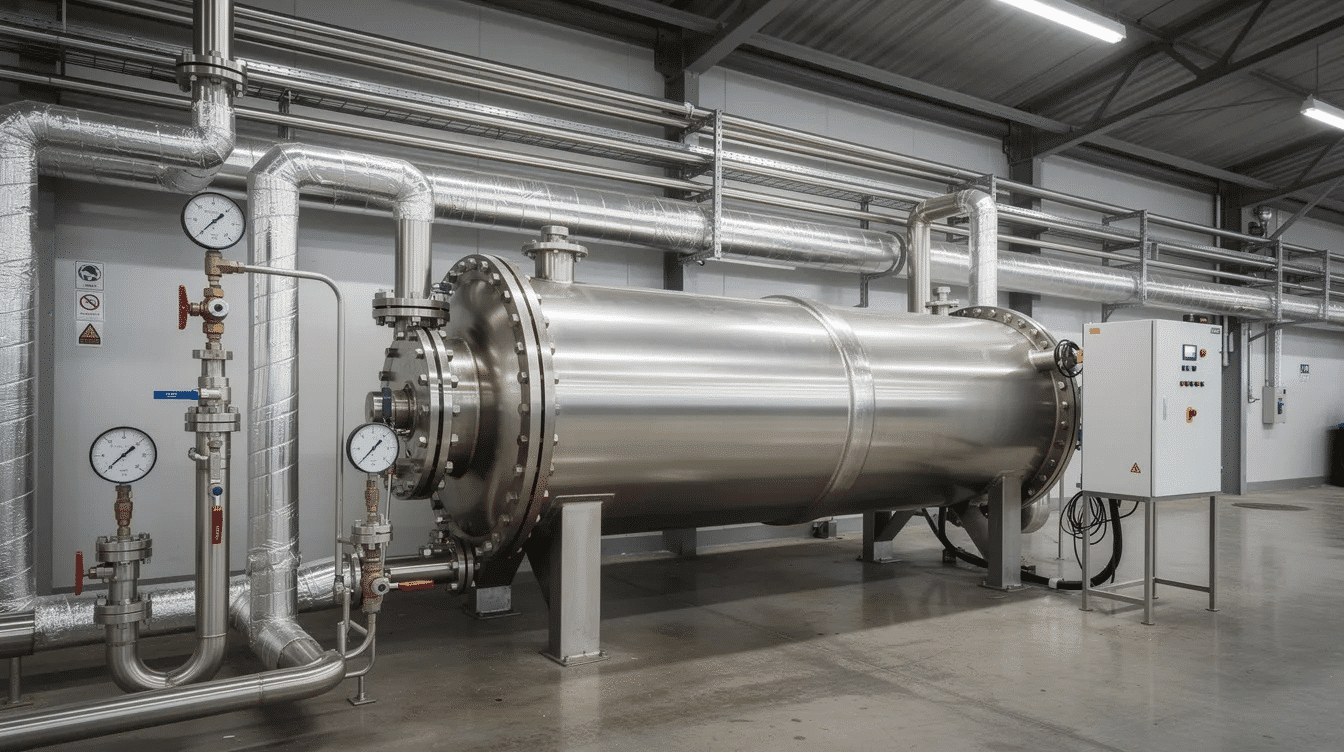
A water dehydrator in industrial contexts refers to specialized equipment designed to remove water from lubricating oils, hydraulic fluids, turbine oils, and transformer oils. This is not a food dehydrator used for preserving food or making dehydrated food like dried fruit and meat, where you’d weigh factors like how expensive a food dehydrator is to run. And no, it has nothing to do with the 1990s April Fool’s “dehydrated water” gag product (those were just compressed silica gel tablets).
Industrial water dehydrators strip moisture from petroleum-based and synthetic lubricants to prevent corrosion, wear, and catastrophic system failures. Here’s what you need to know:
What they remove: Free water, emulsified water, and dissolved water from oils and fluids
Primary technology: Vacuum dehydration, which heats oil to 130–160°F under vacuum (18–27” Hg), lowering water’s boiling point so it flashes off as vapor without degrading the oil
Achievable dryness: Water content below 100 ppm in most applications, with some systems reaching below 50 ppm
Real-world examples: A 2022 Midwest paper mill used a portable vacuum dehydrator to process 500 gallons per hour, reducing hydraulic oil contamination from 1,500 ppm to 50 ppm in 8 hours—averting a $250,000 production outage
Another case: A 2024 Texas wind farm deployed stationary units on gearbox oils to combat condensation, extending component life by 30%
For camping or hiking trips, people use portable water filters or UV systems to remove particulates and microbes from streams, while those focused on food preservation might rely on methods for dehydrating food without a dehydrator. These are entirely different tools that cannot “dehydrate” oils. True water dehydrators are heavy-duty industrial machines weighing 1,000–5,000 lbs.
Why water in oil is a serious problem
Even trace amounts of water—as little as 200–400 ppm—can trigger cascading failures in modern hydraulic and lubrication systems. When water content exceeds the oil’s saturation point, moisture transitions from dissolved to emulsified states, accelerating chemical breakdown and mechanical damage.
Specific effects of water contamination include:
Rust and corrosion: Ferrous components like bearings and gears corrode 10–50 times faster in wet conditions
Reduced film strength: Lubricity drops dramatically, increasing metal-to-metal contact
Sludge and varnish: Oxidation byproducts clog servo valves, reducing flow by 20–50%
Additive depletion: Anti-wear additives like ZDDP lose 30–50% efficacy above 500 ppm water
Pump cavitation: Vapor bubbles collapse at high pressure, causing erosion
The cost impact is substantial. A 2023 SKF case study documented a steel mill gearbox outage costing $1.2 million due to emulsified water from cooling system leaks. Maintenance costs typically rise 15–25% when water contamination goes unaddressed, with filter consumption increasing 2–5x.
Rotating equipment—turbines, compressors, and large gearboxes—prove especially vulnerable. Water accelerates fatigue cracks by 40% under cyclic loads, making dehydrators essential for achieving uptime exceeding 99%.
Types of water in oil systems
Before selecting treatment equipment, you need to understand the three distinct phases of water contamination: free, emulsified, and dissolved. The saturation point for typical Group II mineral oils hovers around 200–400 ppm at 68°F, climbing to 1,000–2,000 ppm at 140°F per ISO 12937 standards.
Basic methods like drain valves or coalescers can handle some free water but often fail against stable emulsions. This is why vacuum dehydrators remain the go-to solution for comprehensive moisture control down to 20–50 ppm.
Free water
Free water is liquid water that separates from oil due to density differences—oil’s specific gravity is typically 0.85–0.95, while water’s is greater than 1.00. This causes water to pool at reservoir bottoms.
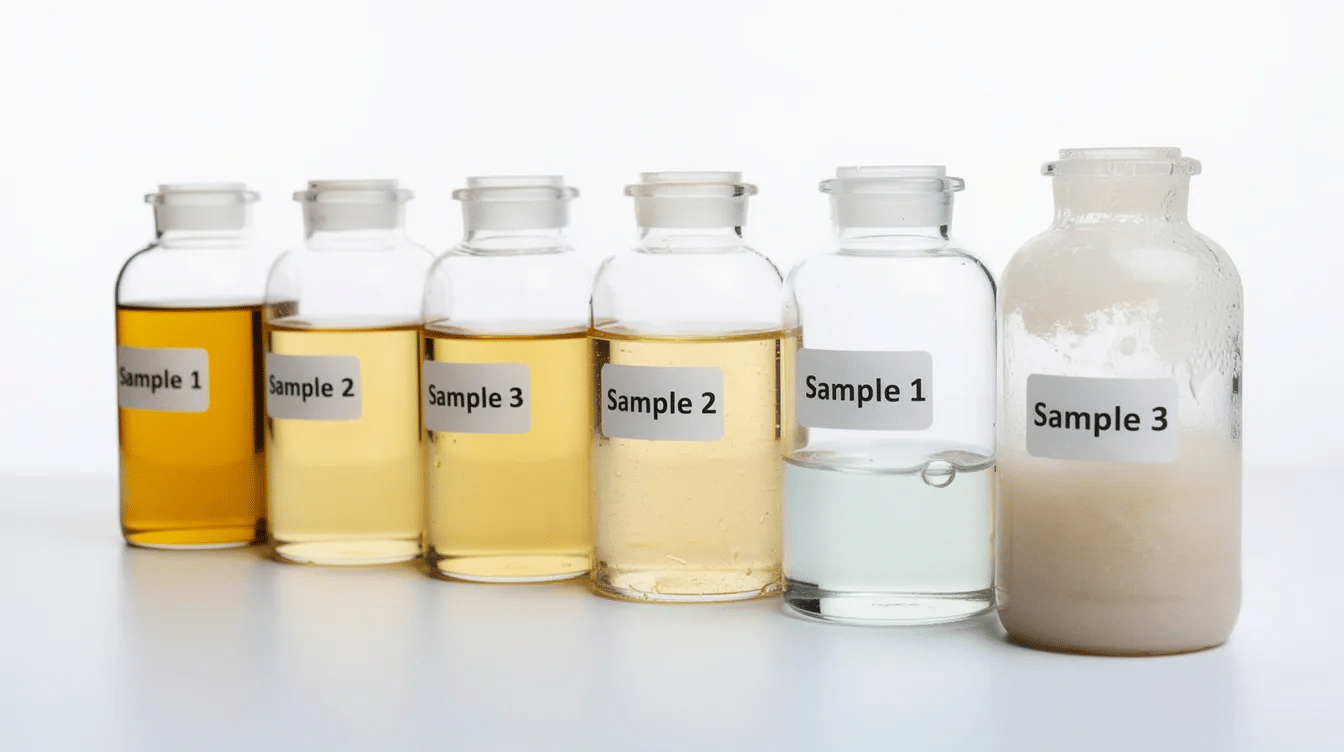
Visual identification: In a sample bottle, free water appears as a clear layer at the bottom after 30–60 minutes of settling
Volume threshold: Heavily contaminated sumps may show >5% free water by volume
Why pre-removal matters: Draining free water before vacuum dehydration improves throughput by 20–30% and prevents vacuum pump flooding
For large reservoirs exceeding 2,000 gallons, removing free water first is a great idea that significantly boosts dehydrator efficiency.
Emulsified water
Emulsified water consists of microscopic droplets (1–10 microns) dispersed uniformly throughout the oil, creating a milky “chocolate milk” appearance. Shear forces from pumps and gears, combined with emulsifiers in additives, keep these droplets suspended for hours or days.
This form of contamination is particularly damaging:
Slashes lubricity by up to 50%
Fuels anaerobic microbe growth (Fusarium species thriving at pH 6–8)
Corrodes yellow metals at 0.1–0.5 mm/year
Resists separation by conventional filters, which capture only 20–40%
A 2021 injection molding facility experienced 15% scrap rates from untreated emulsion until vacuum dehydration restored oil clarity. You can’t simply wait for emulsified water to settle out—it won’t.
Dissolved water
Dissolved water integrates molecularly into oil, much like humidity in air or sugar dissolved in tea. It’s completely invisible and evenly distributed throughout the fluid.
Temperature sensitivity: Solubility expands 3–5x with heat (150 ppm at 68°F increases to 800 ppm at 140°F)
Precipitation risk: When oil cools, excess dissolved water precipitates, driving hydrolysis of base stocks and additives
Measurement: Karl Fischer coulometry provides ±5 ppm accuracy; dielectric sensors track 0–100% saturation in real-time
Removal challenge: Conventional filters remove less than 10% of dissolved water
High-performance vacuum dehydrators achieve 95% reduction of dissolved water, making them indispensable for precision systems where even 100 ppm triggers erratic valve response.
What is a vacuum water dehydrator and how does it work?
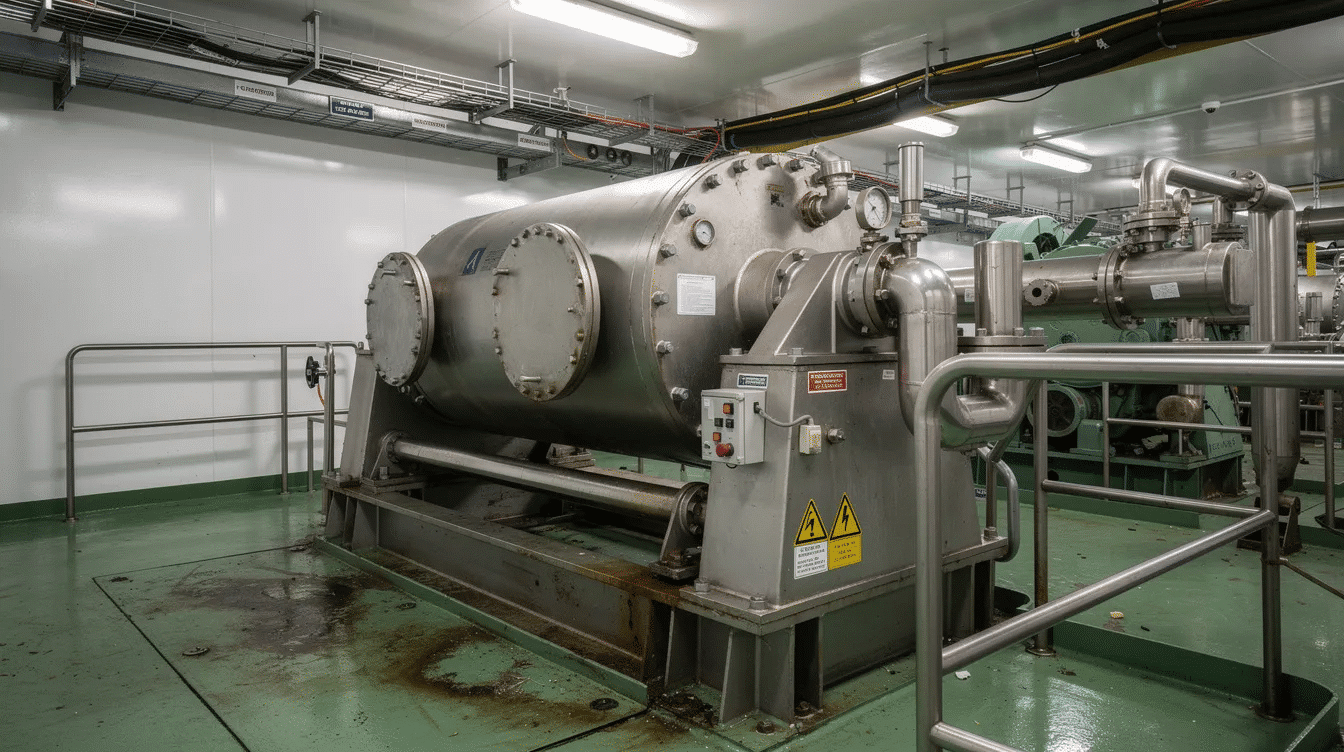
A vacuum dehydrator is a closed-loop, skid-mounted system that circulates oil from reservoirs through heating elements and vacuum exposure, evaporating water at temperatures well below its normal boiling point. This process protects oil chemistry while achieving deep moisture removal.
Main components include:
Electric heater (10–50 kW) raising oil to 130–160°F
Vacuum chamber with spray nozzles or dispersal media (increasing surface area ~100x)
Vacuum pump (typically liquid ring type) maintaining 20–25” Hg
Circulation pump (gear or progressive cavity type)
Particle filters (3–10 micron polishing elements)
Because water’s boiling point drops dramatically under vacuum, it flashes to steam at 120–140°F instead of the normal 212°F. This allows continuous online operation without shutting down the equipment being protected.
Step-by-step process inside a vacuum dehydrator
The dehydration process follows a logical sequence that transforms contaminated oil into clean, dry fluid:
1. Oil extraction: Contaminated oil is drawn from the reservoir’s low-point to avoid air entrainment.
2. Pre-filtration: A 25-micron filter traps solid particulates exceeding 10 ppm per ISO 4406 standards, protecting downstream components.
3. Heating: Oil temperature rises progressively to approximately 150°F, approaching saturation without premature flashing.
4. Vacuum exposure: Oil enters the vacuum chamber via spray nozzles or thin-film rotors, creating enormous surface area (~500 m²/m³). Under vacuum conditions below 1 psi, water reaches vapor pressure exceeding ambient and flashes instantly to steam.
5. Vapor separation: Steam travels through the demister to the condenser, where it cools to distilled water (pH 7, 0 TDS) and drains to a collection sump. A typical system might collect 10 gallons of water from processing 5,000 gallons of oil contaminated at 1,000 ppm.
6. Return and polish: Dry oil (now below 100 ppm) passes through final 3-micron filtration before returning to the reservoir.
Modern units feature PLC controls with touchscreen HMIs, monitoring for vacuum loss, over-temperature conditions, or full water tanks. Automatic shutdowns prevent oil loss and maintain safety throughout the environment.
Key performance parameters
When evaluating vacuum dehydrators, focus on these specifications:
Parameter
Typical Range
Why It Matters
Achievable dryness
<50–100 ppm
Critical for wind turbine gearboxes and servo systems
Flow rate
5–40 GPM
Determines turnover time for your reservoir volume
Temperature range
100–180°F
Must accommodate your oil’s viscosity and chemistry
Vacuum level
15–29” Hg
Higher vacuum lowers boiling point but can slow removal at extremes
Compatible viscosity
ISO VG 10–1000
Verify your oil type is within specifications
Some dehydrators operate continuously on critical machines, while portable cart-mounted units service 5–20 reservoirs monthly across a facility. Consider loading requirements and whether you can cart add the unit between locations.
Other types of water dehydrators and moisture-removal technologies
While vacuum dehydrators offer the most complete solution, other devices are marketed as water-removal systems. Each has specific strengths—and notable limitations.
Coalescing filters: Merge small droplets into larger ones for drainage; effective for clean, low-additive oils
Water-absorbing elements: Polymer beads swell to trap 100–500 ppm before saturation requires replacement
Centrifuges: Spin oil at 20,000–50,000 RPM, separating heavier water by density; common in marine applications
Membrane dehydrators: Nanofiltration rejecting ~90% water, used in specialized applications
The key difference: vacuum systems uniquely strip dissolved water by more than 95%, whereas alternatives typically achieve only 20–50% on this toughest fraction.
Coalescing and absorbing filter systems
Coalescing elements agglomerate emulsion droplets to greater than 100 microns, allowing gravity drainage. They work well for:
Diesel fuel polishing at fuel farms (processing 100 GPM to below 200 ppm)
Clean oils with minimal detergent additives
Pre-treatment before vacuum dehydration
Water-absorbing cartridges cost $50–200 each and bind 1–3% water by weight before requiring disposal. They’re practical for intermittent use on compressors but generate 10–50 lbs of waste per 1,000 gallons treated—consider environmental impact when building your stock of consumables.
Centrifuges and other mechanical separators
Self-cleaning centrifuges accelerate oil to 10,000g, flinging water and solids to bowl walls for periodic ejection. They excel at removing 1–20% free water from high-viscosity fuels but struggle below 1,000 ppm or above 1,000 cSt viscosity.
Best applications: Marine diesels, heavy fuel oil treatment, bunker fuel processing
Limitations: Higher capital cost ($50k–$200k), maintenance from rotor imbalance, less effective on low-volume hydraulic systems
Comparison: Vacuum dehydrators provide superior precision for lubrication oils requiring below 200 ppm
Applications: Where water dehydrators are used today
Industries demanding extremely low water content span the world of heavy industry and power generation:
Power generation: Turbine oil ISO VG 32, requiring below 100 ppm for bearing protection
Wind farms: Gearbox PAO 320, fighting condensation in nacelles
Steel mills: Roll neck hydraulic HLP 68, exposed to cooling water spray
Paper mills: Refiner hydraulics, handling steam leak ingress
Plastics: HPU VG 46 for injection molding precision
Mining: Shovel and haul truck gear oils
Aviation ground support: Turbine lube systems
Refineries: Compressor PAO shared across multiple assets
GE’s 2023 reliability upgrade involved dehydrating 10,000-gallon gas turbine reservoirs to below 100 ppm during outages, cutting bearing replacements by 40%. A 2024 Sinopec refinery deployed portable units across 15 hydrocracker lube systems to maintain consistent fluid health.
Hydraulic and lubrication systems
Water dehydrators protect hydraulic power units, injection molding machines, die-casting lines, and large press systems from corrosion and sticking valves. The process affects reliability metrics that maintenance teams track daily.
A 2023 case at a Tier-1 automotive supplier demonstrated the value: implementing off-line 10 GPM vacuum dehydration on a 1,500-gallon VG 46 reservoir slashed unplanned downtime by 60%, saving approximately $400,000 annually. Common targets for servo-hydraulic systems include below 200 ppm or 50% saturation.
Power generation and transformers
Turbine lube oil systems in gas, steam, and hydro plants use duplex vacuum dehydrators running continuously at 20 GPM to protect journal bearings from micropitting. This can extend bearing life 2–3x compared to unmanaged systems.
Transformer oil undergoes similar treatment—vacuum dehydration and degassing removes moisture and dissolved gases to maintain dielectric strength and prevent partial discharges in 500 MVA generator step-up units. Utilities like Duke Energy schedule spring and fall campaigns to restore oil condition in 10,000-barrel tanks, helping these assets remain operational for decades.
How to choose a water dehydrator for your facility
Selection depends on your specific oil types, reservoir volumes, contamination levels, and reliability goals. Don’t shop based on price alone—mismatched equipment wastes money and delivers poor results.
Evaluate these criteria:
Target water content (below 100 ppm for turbines, below 200 ppm for general hydraulics)
Total oil volume across all systems requiring treatment
Oil viscosity range and chemistry (mineral, PAO, ester)
Compatibility with existing filtration and storage container systems
Budget for both capital equipment and ongoing operation
Calculate your daily water ingress rate (typically 0.1–1 ppm/day, but 10–50 ppm from compromised seals) to size the vacuum dehydrator correctly.
Sizing and performance considerations
Flow rate directly determines how long it takes to dry your reservoir. A 10 GPM unit processes 1,000 gallons in 2.8 hours per pass. Reducing water from 2,000 ppm to 100 ppm (99% removal) requires approximately 5 passes or 14 hours total.
Rotational use makes sense when servicing 10+ reservoirs plant-wide
Staged approach works for heavily contaminated systems—remove bulk free water first via drains, then fine-dry with vacuum
Pre-draining free water before loading the dehydrator can cut total processing time by 20–30%.
Monitoring and verification
Establish baseline measurements using Karl Fischer test methods (ASTM D6304) and ISO 4406 particle counts before and after treatment. This data proves the dehydrator is performing as expected.
Create trend charts correlating dehydrator operation with component failure rates
Track mean time between failures (MTBF) quarterly to demonstrate ROI
Being transparent about actual vs. target water levels helps justify equipment investments to customers and management alike.
Frequently asked questions about water dehydrators
This section addresses common misunderstandings, including confusion with appliances used for food preservation and novelty products; for actual food processing operations, you’d instead look at choosing the best industrial food dehydrator.
Can a water dehydrator “dry” any oil? No. Most vacuum dehydrators are limited to oils below 1,000 cSt at 40°C. High-viscosity greases and silicone fluids prone to foaming require specialized equipment. Always verify compatibility with your oil supplier’s recommendations.
How dry is “dry enough”? Targets vary by application: turbines require below 100 ppm, hydraulics below 200 ppm, and transformers below 20 ppm per AGMA 9005 standards. Match your target to the equipment manufacturer’s specifications.
Will vacuum dehydration remove other contaminants? Primarily water and light dissolved gases (90–99% removal). Particle filters handle solids to NAS 6 cleanliness levels. Some volatile chemicals may be stripped, but heavy contaminants require different treatment.
Is vacuum dehydration safe for synthetic and bio-based oils? Yes, provided you respect temperature limits. PAO synthetics typically tolerate 180°F, while ester-based oils may limit to 140°F. Check the OEM technical data sheet.
Can I use a kitchen dehydrator or household vacuum instead? Absolutely not. A food dehydrator with trays designed for fruits, vegetables, meat, and herbs operates completely differently—circulating hot air to reduce water content for food preservation, where choices like the best dehydrator wattage for your needs and specific models such as the Waring Pro dehydrator determine speed and efficiency, making dried fruit and jerky stay fresh in storage. You might use one for dehydrating veggies or cooking preparation before adding water later to rehydrate, perhaps opting for a budget food dehydrator for home use, but these appliances cannot process industrial fluids. They lack the heat, vacuum, and dispersal systems needed to remove water from oil. Industrial water dehydrators are heavy-duty machines, not countertop stuff you’d find next to your drink station or sugar container. And while you can certainly ship a food dehydrator or raise questions about the batteries in portable units—or troubleshoot common issues with food dehydrators—these tools serve an entirely different purpose than what we’ve explained here.
What about “dehydrated water” products? Those were a joke—typically compressed silica gel sold as a gag gift. You can’t actually preserve or store water in “dehydrated” form, despite what the market for novelty items might suggest; real consumer dehydration involves equipment such as the Meykey food dehydrator for home snacks. Real industrial dehydration involves removing extra water from fluids, not creating an unlimited amount of nothing, and is fundamentally different from running a compact unit like the Vevor 5-tray food dehydrator in your kitchen.
Key takeaways
Protecting your equipment from water contamination doesn’t have to be complicated, but it does require the right tools and a practical approach. Water dehydrators—specifically vacuum dehydration systems—offer the most complete solution for removing free, emulsified, and dissolved water from oils and lubricants.
Start by establishing baseline measurements on your most critical systems. Whether you’re maintaining a single hydraulic power unit or managing fluid health across an entire facility, investing in proper water removal equipment pays dividends in reduced downtime, extended component life, and lower total maintenance costs.
Don’t wait for a catastrophic failure to take action. The money you spend on proactive dehydration today saves far more in avoided repairs and production losses tomorrow.
DannyContent Writer
Hey there, since 2016, my mission has been to provide you with the information and guides you need to make food dehydrating simple and fun. Whether you're a newbie or a seasoned pro, my site offers helpful guides, reviews, and recipes to enhance your dehydrating experience. I take pride in only recommending products I believe in, ensuring my readers' trust. As an affiliate of various programs, including Amazon Associates, your support helps me continue providing quality content. Thanks for stopping by, and happy dehydrating!