We earn a commission if you make a purchase, at no additional cost to you.
09/22/2026 04:39 pm GMT
🍊 Dehydrated Food Info Finder — Temperatures & Drying Times
Choose a category, then pick a food to see its drying temperature and time.
⚠️ Safety Disclaimer: Drying times are estimates and vary based on slice thickness, food moisture content, humidity, and your dehydrator model. Always check for doneness before storing — food should feel dry, leathery, or brittle with no moist spots. Improperly dried food can harbour mould and bacteria. For meat and poultry, follow USDA safe internal temperature guidelines: beef and pork to 160°F (71°C), poultry to 165°F (74°C). Use a food thermometer when in doubt. Store all dehydrated foods in airtight containers in a cool, dark place and discard anything showing moisture, mould, or off odours.
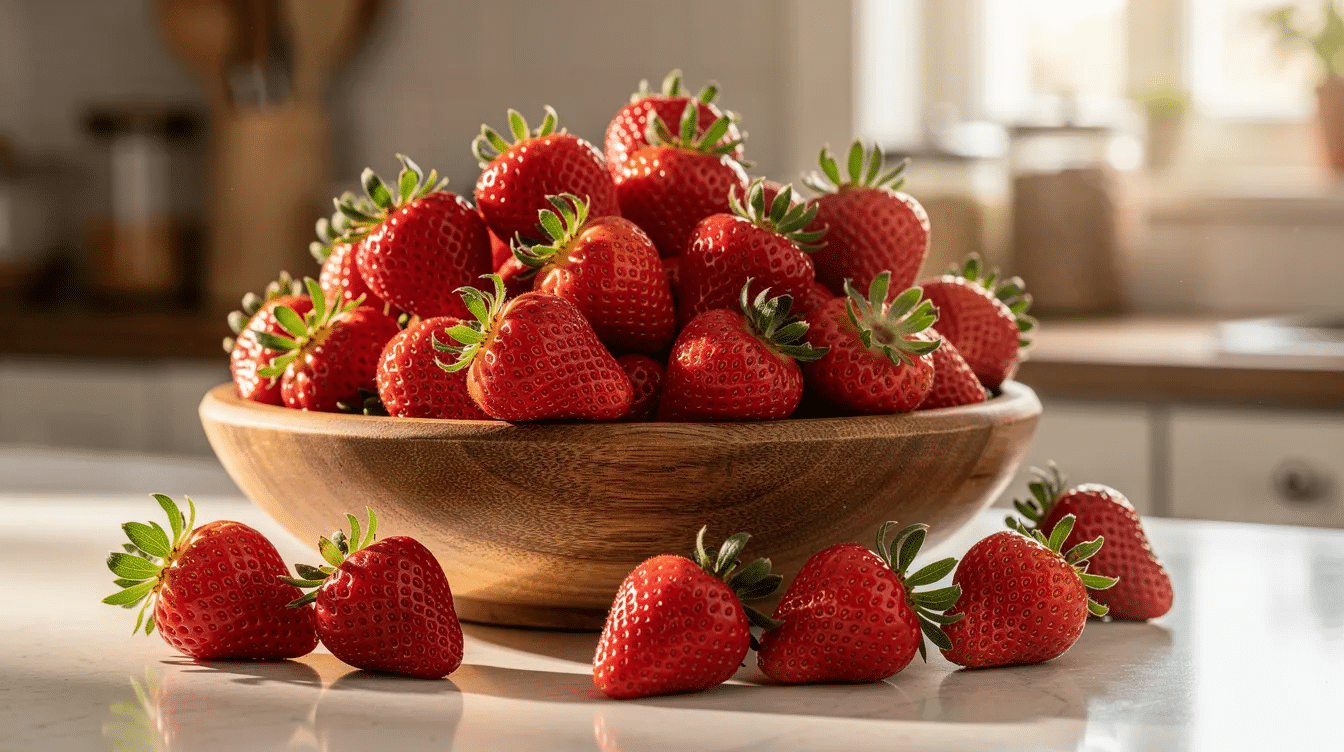
Fresh strawberries deserve better than being drowned in cups of refined sugar. This strawberry freezer jam with honey captures the bright, just-picked flavor of peak-season berries using only natural sweetness and a simple no-cook method that takes about 30 minutes from start to finish.
Key Takeaways
This easy, low sugar strawberry freezer jam uses Pomona’s Pectin and honey instead of 6-8 cups of white sugar, preserving the fruit’s natural flavor and nutrients.
The recipe takes approximately 25-30 minutes, yields about 3 pints (6 half-pint jars), and keeps up to 12 months in the freezer.
Pomona’s Pectin sets with calcium water rather than sugar, allowing you to adjust honey amounts (1/2 to 1 cup) without affecting the gel.
Fresh strawberries picked in season deliver the best color and taste, though frozen strawberries work well when thawed and drained.
A no-pectin cooked variation is included for those who prefer a stovetop method, plus detailed storage guidelines and troubleshooting tips.
How To Make Strawberry Freezer Jam
Step
Action
Details
1
Prep the Calcium Water
Combine 1/2 tsp calcium powder with 1/2 cup water in a small jar, shake well, refrigerate.
2
Prepare the Strawberries
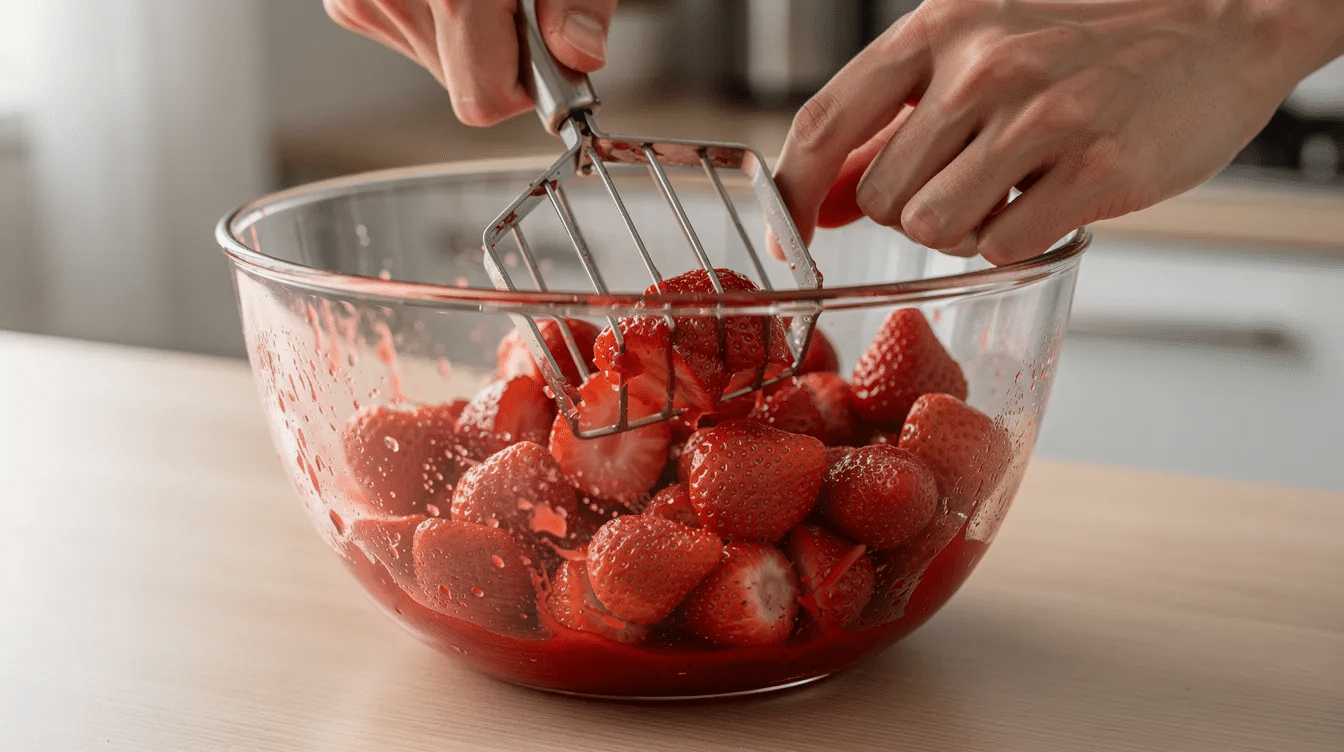
Wash, hull, dry, and mash strawberries to yield 4 cups; leave chunks or blend smooth as desired.
3
Add Lemon Juice and Honey
Stir in 1/4 cup lemon juice and 1/2 cup honey; mix until honey is fully incorporated.
4
Dissolve the Pectin
Boil 3/4 cup water; blend with 3 tsp pectin powder until smooth and lump-free.
5
Combine Fruit and Pectin
Pour hot pectin mixture into strawberry base; stir vigorously for 1-2 minutes.
6
Add Calcium Water to Set
Stir in 4 tsp calcium water; mix for 1 minute; add more (up to 12 tsp) if needed to thicken jam.
7
Jar the Jam
Ladle jam into clean freezer-safe containers, leaving 1/2 inch headspace.
8
Chill, Then Freeze
Let jars rest 30-60 minutes at room temperature, label, then transfer to freezer.
Introduction: Why Strawberry Freezer Jam With Honey?
There’s something almost magical about opening a jar of strawberry jam in December and tasting June. Strawberry freezer jam lets you capture in season strawberries at their peak—fragrant, ruby-red, and bursting with flavor—then enjoy that summer sweetness throughout the colder months.
Traditional strawberry jam recipes typically call for 6-8 cups of white sugar to every 4 cups of fruit. That’s a 1.5:1 ratio of sugar to berries, which often masks the delicate strawberry flavor entirely. This honey strawberry jam version flips that equation, using just 1/2 to 1 cup of honey for the same amount of mashed berries.
Because freezer jam skips the long boiling times required for shelf-stable canning, you retain up to 50% more vitamin C and preserve the bright anthocyanins that give strawberries their signature red color. The result tastes remarkably close to biting into a just-picked strawberry from your local farmers’ market.
This recipe focuses on fresh strawberries and raw honey for optimal flavor, though I’ll share tips for using frozen strawberries if you picked and froze berries earlier in the season. If you find yourself with an abundance of berries, learning how to dehydrate strawberries in a dehydrator is another excellent way to preserve them. The main method uses Pomona’s Universal Pectin, but a no-pectin, longer-cooked option follows for readers who prefer to skip commercial pectin altogether.
What Makes This Honey Strawberry Jam Different?
Traditional jam making relies on massive amounts of sugar not just for sweetness, but to activate the pectin and create that firm gel. This strawberry honey jam takes a completely different approach by using pamona’s pectin, which sets through calcium rather than sugar concentration.
Here’s how this recipe compares to other preservation methods:
Method
Sugar/Sweetener
Texture
Storage Life
Traditional cooked jam
6-8 cups white sugar
Firm, syrupy
1+ year (canned)
This honey freezer jam
1/2-1 cup honey
Soft, spoonable
12 months (frozen)
Chia refrigerator jam
Minimal
Pudding-like
1-2 weeks (fridge)
The honey provides natural sweetness with subtle floral notes from trace compounds, creating a fruit-forward taste rather than a candy-like one. Because pomona’s pectin doesn’t need sugar to gel, you can reduce or add more honey based on your preference without worrying about the set failing.
The texture stays bright red and soft-set—perfect for spreading on toast or swirling into yogurt. Unlike long-cooked jams that develop darker, caramelized flavors from Maillard reactions, this freezer jam retains those fresh, volatile compounds that make strawberries smell and taste like summer.
Ingredients For Strawberry Freezer Jam With Honey
This strawberry freezer jam recipe yields approximately 3 pints (six half-pint jars). Here’s what you’ll need:
About Calcium Water: Mix 1/2 teaspoon calcium powder (included in the Pomona’s box) with 1/2 cup water in a small jar. This keeps in the fridge for several months and works for multiple batches of jam recipes.
For best results, choose local strawberries that are ripe but firm—not mushy or white-centered. Using raw honey preserves beneficial enzymes and delivers deeper flavor, though any quality local honey will produce excellent results.
How To Make Strawberry Freezer Jam With Honey (Step-By-Step)
Step 1: Prep the Calcium Water
If you haven’t already, combine 1/2 teaspoon calcium powder with 1/2 cup water in a small glass jar. Shake well until completely dissolved and refrigerate. This mixture stays good for months, so you can use it for two batches or more throughout the season.
Step 2: Prepare the Strawberries
Wash your berries in cool water and hull them, removing any soft spots. Pat them dry with a clean towel—excess water will dilute your fruit mixture and affect the set. Transfer to a large bowl and use a potato masher to crush the berries until you have 4 cups of mashed strawberries. Leave some small chunks for texture, or use an immersion blender if you prefer a smooth jam.
Step 3: Add Lemon Juice and Honey
Stir the lemon juice into your mashed berries. Add 1/2 cup honey to start (you can always add a bit more honey after tasting). Mix until the honey depending on its thickness is fully incorporated into the strawberry mixture. The honey must be completely dissolved before you add the pectin, so take your time here.
Step 4: Dissolve the Pectin
Bring 3/4 cup water to a boil in a small pot. Working quickly, pour the boiling water into a blender with 3 teaspoons of more pectin powder. Blend for 1-2 minutes until the mixture is completely smooth with no lumps. You can also use an immersion blender in a heat-safe container. Speed matters here—the pectin starts to gel as it cools.
Step 5: Combine Fruit and Pectin
Pour the hot pectin mixture directly into your strawberry-honey base. Stir vigorously for 1-2 minutes to distribute the pectin evenly throughout the fruit. This step is crucial—inadequate mixing is the most common cause of poor set.
Step 6: Add Calcium Water to Set
While stirring constantly, add 4 teaspoons calcium water to the jam. Continue mixing for one minute, then check the consistency. The strawberry mixture should visibly thicken and cling to your spoon. If it’s still runny, add one teaspoon calcium water at a time (up to 12 teaspoons total) until you achieve a soft gel.
Step 7: Jar the Jam
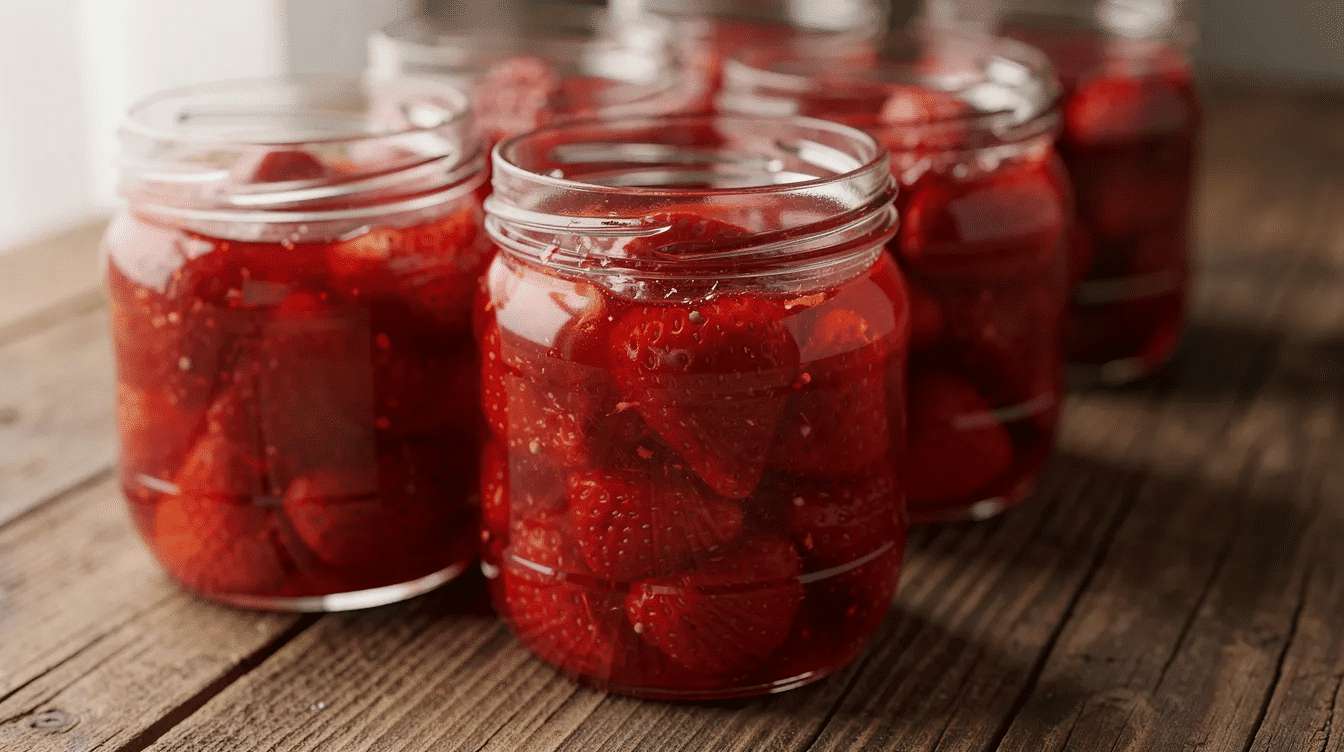
Ladle your homemade jam into clean freezer safe containers—glass jars work beautifully, as do BPA-free plastic containers. Leave about 1/2 inch headspace at the top to accommodate expansion during freezing. Wipe any drips from the rims before sealing.
Step 8: Chill, Then Freeze
Let the jars rest at room temperature for 30-60 minutes. This allows bubbles to settle and the gel to finish setting. Label each jar with the date (for example, “Strawberry Honey Freezer Jam – June 2026”) and transfer to the freezer.
The jam will firm up more after chilling. A softer set is completely normal with low sugar recipes—think spreadable rather than sliceable. This is your own jam with fruit flavor front and center.
Optional Variation: Cooked Strawberry Honey Freezer Jam (No Pectin)
For readers without access to Pomona’s Pectin, this stovetop method creates a rustic strawberry jam using only the natural pectin in the fruit.
Ingredients:
4 cups chopped strawberries
1/4 cup lemon juice
1/2 to 3/4 cup honey
Method:
Combine all ingredients in a wide, heavy-bottomed pot. Bring to a boil over medium-high heat, then reduce heat to maintain a steady simmer. Cook for 20-30 minutes, stirring frequently to prevent scorching.
The jam is ready when it slowly “sheets” off a spoon rather than dripping. You can also do a chill plate test: drop one teaspoon of jam onto a cold saucer, freeze for one minute, then push it with your finger. If it wrinkles, it’s set.
This version produces a softer, more pourable texture with deeper, slightly caramelized notes. Let it cool completely before transferring to jars. Store up to 2 weeks in the refrigerator or about 6 months in the freezer. Note that this is not suitable for water-bath canning.
Choosing and Preparing Strawberries & Honey
Ingredient quality dramatically impacts your final jam. The best jam comes from berries that are bright red all the way through—not white-centered—and fragrant enough to smell from across the kitchen. Local strawberries picked in peak season (typically May-June in most regions) deliver superior flavor compared to off-season imports.
Plan on 2 pounds of whole berries to yield 4 cups of mashed fruit. Hulling and trimming typically removes 20-30% of the original weight. If you’d like a shelf-stable, crunchy option in addition to jam, you can also learn how to make freeze dried strawberries at home for year-round snacking.
For honey selection, stick with mild varieties like clover, orange blossom, or light wildflower. These complement the berries without overpowering them. Strong honeys like buckwheat or manuka can dominate the flavor profile—save those for other uses.
Raw honey retains more beneficial enzymes and offers deeper flavor complexity than pasteurized versions. However, the hot pectin step (using boiling water) will affect some heat-sensitive compounds regardless of which honey you choose. For another way to enjoy concentrated fruit flavor without added refined sugar, consider snacking on dehydrated strawberries as a nutritious option.
Storage, Shelf Life, and Thawing Tips
This is a freezer jam, not a canned recipe. Proper storage in the fridge or freezer is essential for food safety.
Storage Guidelines:
Location
Condition
Duration
Refrigerator
Unopened
6-8 weeks
Refrigerator
Opened
3-4 weeks
Freezer
Sealed
Up to 12 months
Use glass jars (half-pint or pint sizes) that are straight-sided rather than shouldered—these handle freezing better. Always leave 1/2 inch headspace to prevent cracking as the jam expands by about 9% when frozen. If you also preserve dried foods, you can maximize their shelf life by storing dehydrated food in Mason jars for long-term freshness.
To thaw, move a jar from freezer to refrigerator 12-24 hours before you plan to use it. Avoid microwaving frozen jam in glass—the thermal shock can crack the jar. If you have limited freezer space, prioritize making smaller batches more frequently during the few weeks of peak strawberry season.
If your jam weeps a bit of liquid after thawing (called syneresis), simply stir it back together. Should the texture be softer than expected, embrace it as a sauce over pancakes, yogurt, or ice cream. The same careful attention to storage and spoilage signs that applies to jam also matters for other homemade snacks like beef jerky fridge life and storage.
Delicious Ways To Use Strawberry Honey Freezer Jam
This jam does far more than top your morning toast—though it excels at that too.
Breakfast Ideas:
Spread on sourdough toast or fresh biscuits
Swirl into Greek yogurt or oatmeal
Layer in overnight oats
Mix into smoothie bowls
Dessert Applications:
Spoon over vanilla ice cream
Fill between cake layers
Swirl into muffin or cheesecake batter before baking
Brush over fresh fruit tarts as a glaze
Savory Twists:
Blend with balsamic vinegar (1:1 ratio) for a glaze on roasted chicken or pork
Serve alongside brie or goat cheese on a cheese board
Use as a base for homemade barbecue sauce
The classic peanut butter and jelly sandwich deserves special mention—this honey-sweetened jam creates a more sophisticated version that kids and adults both love.
Consider making extra during peak strawberry season. If you review recipe quantities, you’ll see that doubling one batch gives you enough to share with friends or stockpile for autumn and winter when fresh local strawberries are just a memory. Making two batches during June means you’ll still have strawberry sunshine on your breakfast table come February. For even more berry goodness in your pantry, you can also explore how to dehydrate raspberries step by step as another long-term preservation method.
FAQ
Can I use frozen strawberries instead of fresh?
Yes, frozen strawberries work well for this recipe. Thaw them completely and drain off the excess liquid before mashing—otherwise you’ll end up with a runny jam. Berries that were home-frozen at peak ripeness often taste better than out-of-season fresh imports shipped from far away. Just measure your mashed berries after draining to ensure you have the full 4 cups needed.
Is this jam safe for water-bath canning?
This specific honey-sweetened strawberry freezer jam recipe is formulated for freezer storage and has not been tested for water-bath canning safety. The pH and acidity levels haven’t been validated by USDA standards for shelf-stable preservation. If you want a jam you can store at room temperature, seek out a lab-tested low-sugar canning recipe and follow current extension guidelines exactly.
Can I replace the honey with maple syrup or another sweetener?
Maple syrup can typically substitute for honey in equal amounts when using Pomona’s Pectin, since both are liquid sweeteners. Expect a more maple-forward flavor and potentially a slightly softer set. Granulated sugar behaves quite differently in pectin chemistry, so swapping it in would require a separately tested recipe. For this version, stick with liquid sweeteners like honey or maple syrup.
Why didn’t my jam set properly?
Common culprits include: not blending the pectin powder thoroughly in hot water (creating lumps that can’t gel properly), not adding enough calcium water, using significantly more liquid sweetener than specified, or starting with watery, overripe berries. Try stirring in a bit more calcium water one teaspoon at a time, then chill overnight. If it’s still loose, repurpose it as a pancake sauce or ice cream topping—the taste will still be excellent.
How much honey should I use if I prefer a less-sweet jam?
Start with 1/2 cup honey for 4 cups of mashed berries. This produces a lightly sweet, very fruit-forward jam that lets the strawberry flavor shine. Taste the mixture before adding pectin and blend in more if desired. With Pomona’s Pectin, you can adjust anywhere within the 1/2 to 1 cup range without affecting the jam’s ability to set properly.
DannyContent Writer
Hey there, since 2016, my mission has been to provide you with the information and guides you need to make food dehydrating simple and fun. Whether you're a newbie or a seasoned pro, my site offers helpful guides, reviews, and recipes to enhance your dehydrating experience. I take pride in only recommending products I believe in, ensuring my readers' trust. As an affiliate of various programs, including Amazon Associates, your support helps me continue providing quality content. Thanks for stopping by, and happy dehydrating!