We earn a commission if you make a purchase, at no additional cost to you.
09/22/2026 04:39 pm GMT
🍊 Dehydrated Food Info Finder — Temperatures & Drying Times
Choose a category, then pick a food to see its drying temperature and time.
⚠️ Safety Disclaimer: Drying times are estimates and vary based on slice thickness, food moisture content, humidity, and your dehydrator model. Always check for doneness before storing — food should feel dry, leathery, or brittle with no moist spots. Improperly dried food can harbour mould and bacteria. For meat and poultry, follow USDA safe internal temperature guidelines: beef and pork to 160°F (71°C), poultry to 165°F (74°C). Use a food thermometer when in doubt. Store all dehydrated foods in airtight containers in a cool, dark place and discard anything showing moisture, mould, or off odours.
Seasoning for Jerky: Complete Guide to Flavoring Homemade Beef Jerky
Seasoning is what separates bland dried meat from bold, addictive beef jerky. The right blend controls flavor, chew, and even shelf life. This guide walks you through choosing ingredients, balancing your ratios, and marinating safely.
Great jerky seasoning usually combines salt (for curing and preservation), sweetness (for balance and browning), acids (like vinegar), umami boosters (soy sauce, Worcestershire), and aromatics (garlic, onion, pepper).
You’ll get three complete seasoning formulas – classic, spicy, and sweet – with exact ingredients like brown sugar, smoked paprika, and chili flakes.
A practical “performing security verification” style checklist covers labels, cure rates, and storage so you can protect each batch.
The guide focuses on beef jerky, but the same seasoning principles apply to venison, turkey, and other lean meats. Jerky can be made from various types of meat including beef, deer, and turkey – just adjust salt and marinating time for each.
Why Seasoning Matters for Great Beef Jerky
Unseasoned dried beef tastes flat and one-dimensional. A well-designed jerky seasoning adds bold flavor, improves the chew, and can slightly extend shelf life by lowering available moisture and inhibiting bacteria. Popular seasonings for homemade jerky focus on salty, savory, and sweet flavors that work together rather than compete.
Think of “seasoning” as the total combination of salt, sugar, spices, and often curing agents – not just a single spice bottle. It includes both dry rubs and liquid marinades. Homemade jerky combines salt, savory aromatics, spices, and sweetness into a single cohesive blend. Salt is essential for both flavor and preservation in jerky because it draws out moisture through osmosis and slows bacterial growth, making it the backbone of any recipe designed for room-temperature storage.
Seasoning also impacts texture directly. More sugar and liquids produce a more tender, slightly sticky strip, while drier, salt-heavy rubs create firmer, chewier strips. Commercial seasoning packets bundle salt, spices, and cure in known ratios for convenience, but homemade blends offer more control and creativity. Home cooks can match or beat store-bought beef jerky flavor at a fraction of the price with a few pantry staples and the right technique.
Core Components of a Balanced Jerky Seasoning
This section breaks down each major component so you can confidently invent or tweak recipes on your own.
Salt and curing agents: Kosher salt, sea salt, and soy sauce all deliver sodium chloride, which drives flavor and preservation. For an extra safety margin – especially for longer storage at room temperature – some recipes add Prague Powder #1, a cure containing about 6.25% sodium nitrite. Follow package dosing instructions by exact meat weight and never exceed recommended amounts; getting it wrong risks either insufficient protection or off flavors.
Sweetness: Brown sugar, white sugar, honey, and maple syrup all balance salt and spice, aid browning, and slightly soften texture. A little sweetness helps balance spicy or salty jerky blends, but too much increases stickiness and burning risk during dehydration.
Acidity: Apple cider vinegar, rice vinegar, lime juice, and pineapple juice brighten the taste and lower pH. Pineapple contains bromelain, an enzyme that tenderizes meat strongly – one study found it reduced toughness by roughly 50% under controlled conditions – but can turn jerky mushy if marinating runs too long.
Umami boosters: Soy sauce, tamari, Worcestershire sauce, fish sauce, and mushroom powder deepen beef flavor without necessarily making the jerky taste “Asian” unless you add ginger or sesame.
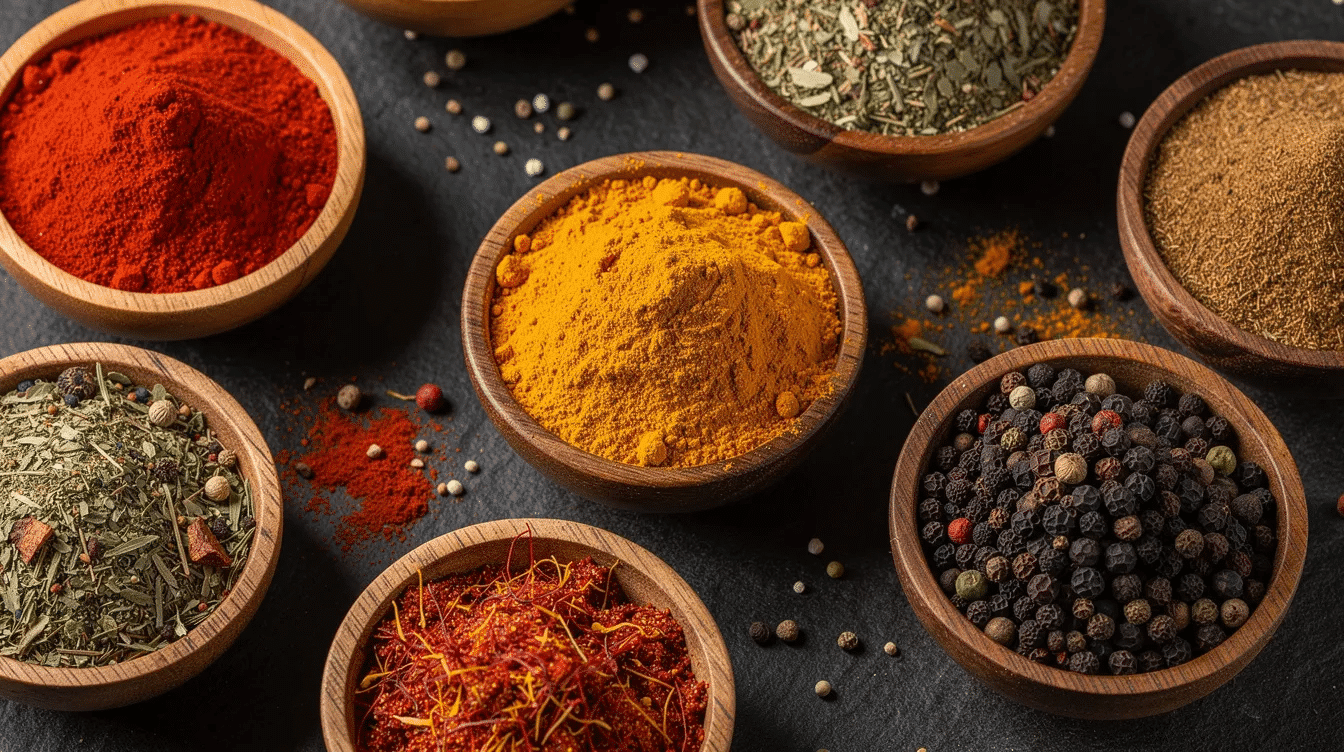
Aromatics and heat: Common staples for jerky seasoning include garlic powder, onion powder, black pepper, and smoked paprika. Garlic and onion powders form a solid base for almost any jerky recipe. Common spices include cayenne pepper, crushed red pepper flakes, and chipotle powder. Liquid smoke adds a smoky flavor if you’re not using a smoker, and smoked paprika adds smoke flavor even without special equipment.
Optional extras: Herbs like rosemary or thyme, warm spices like cumin and coriander, and regional profiles (Mexican, Korean, teriyaki, peppered) all work – just keep the total flavor balanced so no single spice overwhelms the beef. Write down your exact seasoning amounts for verification successful style repeatability: once you like a batch, you can reproduce it precisely.
Step-by-Step: Seasoning and Marinating Beef Jerky
Here’s a clear, chronological process from sliced meat to fully seasoned strips ready for drying.
Choosing and preparing the beef: The best jerky is made with lean cuts like top round or eye of round. Eye of round is an ideal lean cut for jerky and one of the best meats to use for beef jerky. Flank steak is flavorful and fairly lean for jerky. Top round and bottom round are also good choices. Trim excess fat from beef before making jerky – fat doesn’t dry well and goes rancid quickly. Partially freeze the beef for 60–90 minutes, then slice between 1/8 and 1/4 inch thick so you can slice meat for jerky like a pro. Cut with the grain for a chewy, traditional chew, or across the grain for strips that are easier to bite through.
Mixing the seasoning: Whisk dry spices together in a bowl first, then combine with liquids – soy sauce, Worcestershire, vinegar – until sugar fully dissolves. Use a mix of soy sauce, brown sugar, and spices as your foundation or follow a homemade beef jerky marinade guide for more detailed ratios. A dry rub can also be used for seasoning jerky if you prefer less liquid. Measure by weight or consistent spoons so adjustments can be tracked batch to batch.
Applying the marinade: Massage the marinade or rub into the sliced beef in a glass container or zip-top bag, ensuring all surfaces are coated. Press out excess air and label with date and flavor profile.
Marinating time: Marinating beef for at least 3–6 hours enhances flavor penetration, but marinate beef for at least 12 hours in the refrigerator for deeper taste. Refrigerate marinated beef for 24 hours for best results. Keep the fridge at or below 40°F (4°C). Your seasoning security verification checklist before drying: confirm meat is fully coated, container is sealed, fridge temperature is safe, and salt or cure amounts match your recipe.
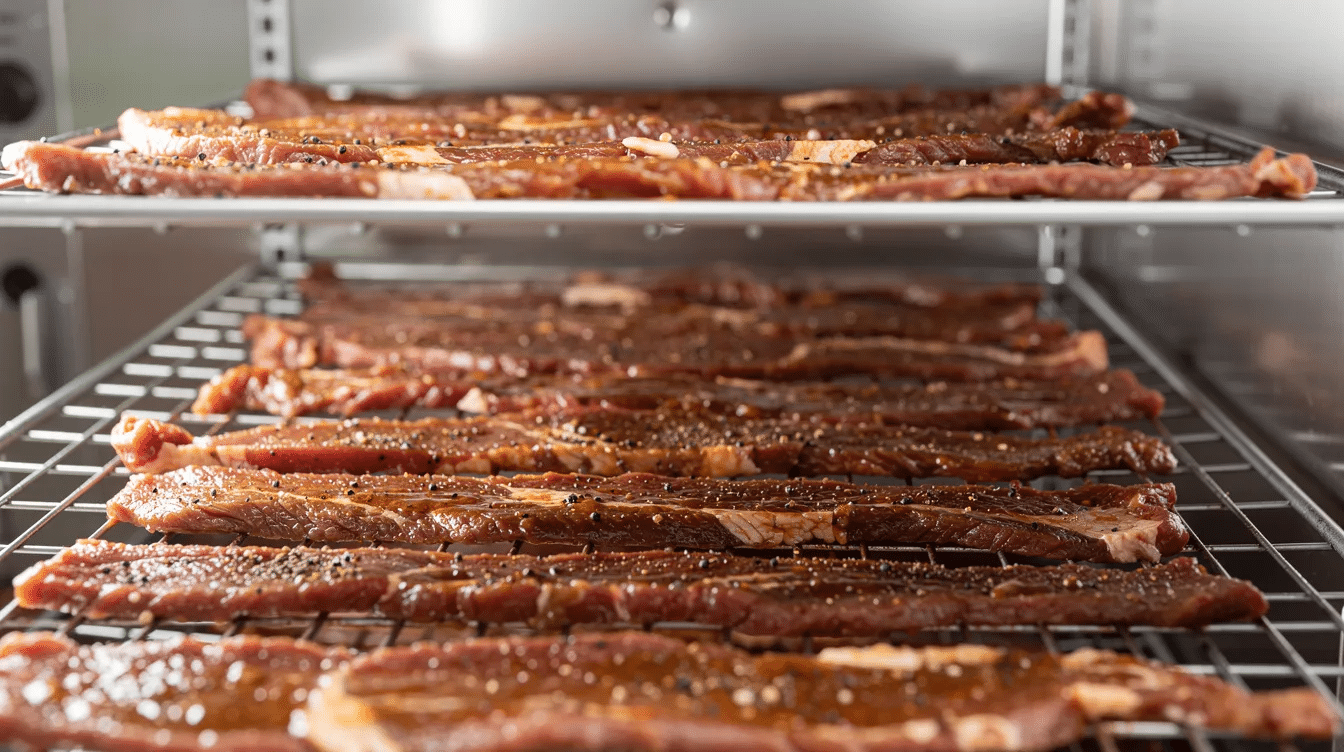
Before drying: Remove strips, let excess drip off, pat lightly with paper towels, and arrange in a single layer on trays. Use a dehydrator set to 155°F for 4–6 hours, or dry jerky in the oven at 175°F for 3 to 4 hours, following best practices for jerky dehydrator temperatures. Both methods produce excellent results, and you can explore dehydrator beef jerky recipes or broader dehydrator jerky recipe ideas without any stuff you can’t find in a regular kitchen.
Seasoning Profiles: Classic, Spicy, Sweet, and International Twists
These named flavor templates give you a starting page for experimenting. For even more ideas, you can branch out into homemade jerky recipes for different meats. Common jerky flavor profiles include teriyaki, sweet and spicy, and barbecue.
Classic black pepper beef jerky: Build around soy sauce, Worcestershire, kosher salt, coarse black pepper, garlic powder, onion powder, and a touch of brown sugar. Classic sweet and savory jerky seasoning uses soy sauce and Worcestershire sauce together. Classic jerky recipes balance savory, sweet, and spicy elements – this profile is the closest to old-school gas-station jerky but cleaner and more robust.
Spicy chili and smoked paprika jerky: Mix chili powder, cayenne, crushed red pepper flakes, smoked paprika, and a splash of vinegar for brightness. Dial back cayenne for milder palates or add chipotle for smoky heat. Different jerky recipes can feature variations like cayenne, honey, and mustard to keep things interesting.
Sweet honey-garlic or maple jerky: Combine honey or maple syrup, soy sauce, garlic, black pepper, and optionally a splash of bourbon. Higher sugar content leads to caramelized edges and a more tender, chewy bite but requires closer monitoring to avoid scorching. To enhance jerky flavor, recipes often include brown sugar, black pepper, and garlic powder.
Global inspirations: Teriyaki-style uses soy sauce, mirin or brown sugar, ginger, and sesame oil, and you can follow a dedicated teriyaki beef jerky at home guide if you love that profile. Mexican-inspired calls for lime juice, chili powder, cumin, and oregano. Korean-style features gochujang, garlic, soy sauce, and sesame seeds. Keep liquids moderate – these are jerky flavorings, not stir-fry sauces.
For non-beef meats: Reduce salt slightly for very lean game like venison or elk, and avoid over-marinating delicate poultry like turkey. Test new flavor ideas on 1–2 pounds of meat first, then scale up once the taste check passes.
Food Safety, Curing, and Storage: Keeping Seasoned Jerky Safe
Flavor is only half the equation. Proper curing, drying, and storage are what protect you from foodborne illness.
Minimum heat:USDA guidelines recommend heating beef to 160°F (71°C) before or during drying. Some recipes briefly pre-heat marinated strips in a 275°F oven until they hit that temperature, then move them to a lower-temperature dehydrator to finish. Poultry should reach 165°F. Once cooked to a safe internal temperature, the dehydration step removes remaining moisture.
Salt and water activity: Adequate salt and thorough drying reduce available moisture for microbes. Don’t drastically cut salt without compensating with refrigeration and shorter storage times. For shelf-stable jerky, water activity should generally fall at or below 0.85.
Practical security verification on each batch: Finished jerky bends and cracks but doesn’t snap. There should be no visible moisture, no soft or wet spots. Cool strips completely before sealing to avoid condensation – this is a step many people get wrong, and falling short here invites mold.
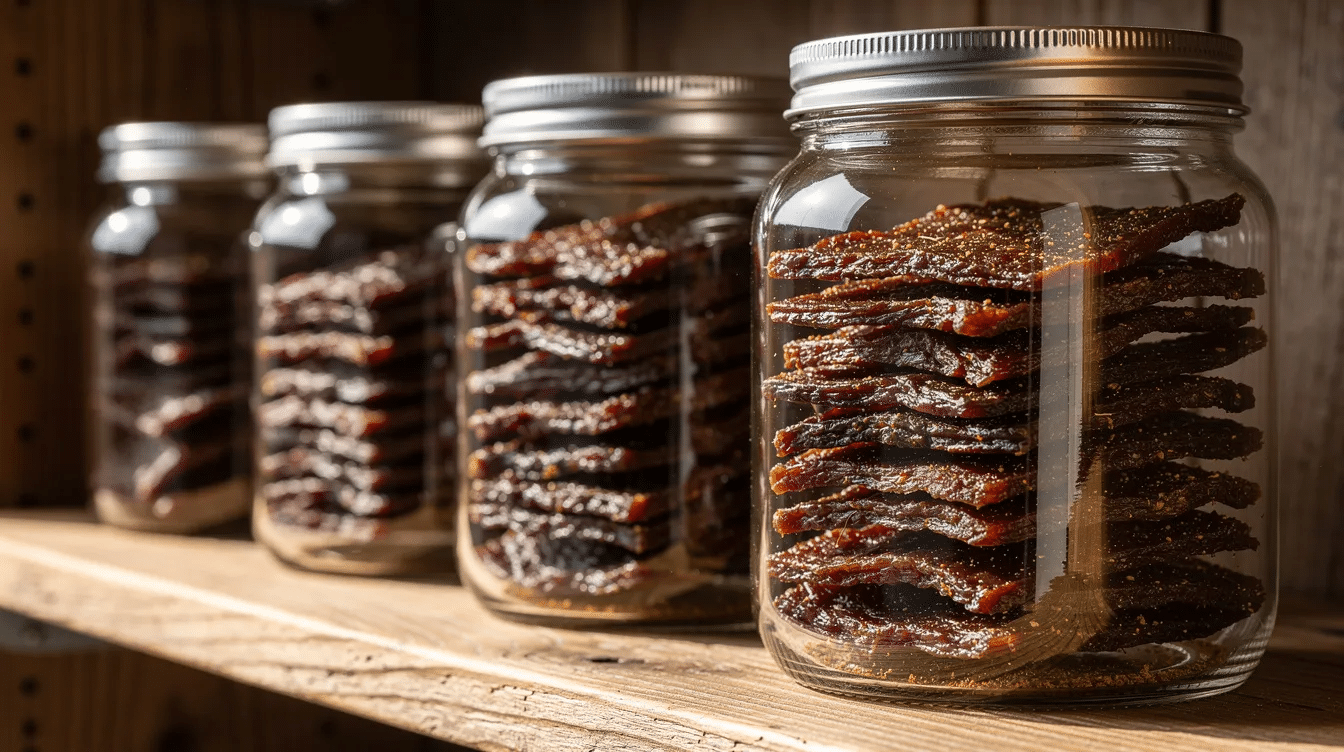
Storage: Store dried jerky in an airtight container for one week at cool room temperature. In the refrigerator, it keeps 3–4 weeks, though detailed guides on beef jerky fridge life and storage can help you fine-tune that window. In the freezer, several months. Use small batches and label containers with date and flavor so older jerky is eaten first, avoiding waiting too long before consuming displayed batches; keep in mind that jerky shelf life and expiration depend heavily on how you dry, package, and store it.
Spoilage signs: Mold growth, off-odors, or slime mean you should discard the jerky – never taste questionable stuff. Omitting curing salts or sufficient salt means stricter cold storage and faster consumption, even if your seasoning flavor is excellent.
FAQ About Seasoning for Jerky
These answers cover common seasoning questions that go beyond the main how-to steps on this post.
Can I make beef jerky without any sugar in the seasoning?
Sugar-free jerky is possible and popular for keto diets, but the flavor will be sharper and less rounded. Compensate with extra spices, black pepper, and umami ingredients like soy sauce or Worcestershire. Removing sugar slightly reduces browning and tenderness, so keep storage times conservative – sugar contributes modestly to preservation.
Do I have to use curing salt (Prague Powder #1) in my jerky seasoning?
Many home recipes rely on salt plus thorough drying and refrigeration instead of nitrite cures. Curing salt adds an extra safety margin for room-temperature and longer storage and gives jerky a characteristic cured color. If you choose to use it, follow package dosing by meat weight and never exceed recommended amounts. Think of it like a security service for your jerky – it verifies conditions stay hostile to malicious bots of the microbial world, so to speak. A website like your cure salt calculator can help you respond ray id–level precision isn’t needed, but a kitchen scale is.
How salty should my jerky seasoning taste before drying?
Marinades should taste noticeably saltier than a finished sauce because only part of the salt penetrates the meat. If a test marinade tastes pleasantly salty but not harsh when sampled on a small cooked piece of beef, it will usually translate well to finished jerky.
Can I reuse leftover jerky marinade for another batch?
Raw-meat marinades should not be reused as-is for food safety reasons. Leftover marinade can be boiled vigorously for several minutes and used as a cooked glaze, but most jerky makers simply discard it and mix a fresh batch.
What’s the easiest way to know if my new seasoning blend works?
Cook one or two marinated strips quickly in a skillet before you dehydrate the full batch – this gives a fast preview of salt, sweetness, and spice levels. Keep simple notes (date, ingredients, impressions) so once a blend passes your personal taste test, you can repeat it exactly. Drop a comment on your notes about what you’d change, and your next round of experimenting will be even better.
DannyContent Writer
Hey there, since 2016, my mission has been to provide you with the information and guides you need to make food dehydrating simple and fun. Whether you're a newbie or a seasoned pro, my site offers helpful guides, reviews, and recipes to enhance your dehydrating experience. I take pride in only recommending products I believe in, ensuring my readers' trust. As an affiliate of various programs, including Amazon Associates, your support helps me continue providing quality content. Thanks for stopping by, and happy dehydrating!