We earn a commission if you make a purchase, at no additional cost to you.
09/22/2026 04:39 pm GMT
🍊 Dehydrated Food Info Finder — Temperatures & Drying Times
Choose a category, then pick a food to see its drying temperature and time.
⚠️ Safety Disclaimer: Drying times are estimates and vary based on slice thickness, food moisture content, humidity, and your dehydrator model. Always check for doneness before storing — food should feel dry, leathery, or brittle with no moist spots. Improperly dried food can harbour mould and bacteria. For meat and poultry, follow USDA safe internal temperature guidelines: beef and pork to 160°F (71°C), poultry to 165°F (74°C). Use a food thermometer when in doubt. Store all dehydrated foods in airtight containers in a cool, dark place and discard anything showing moisture, mould, or off odours.
Red Dry Fruit: Types, Health Benefits, and Smart Ways to Enjoy Them
Quick Overview: What Counts as “Red Dry Fruit” and Why It Matters
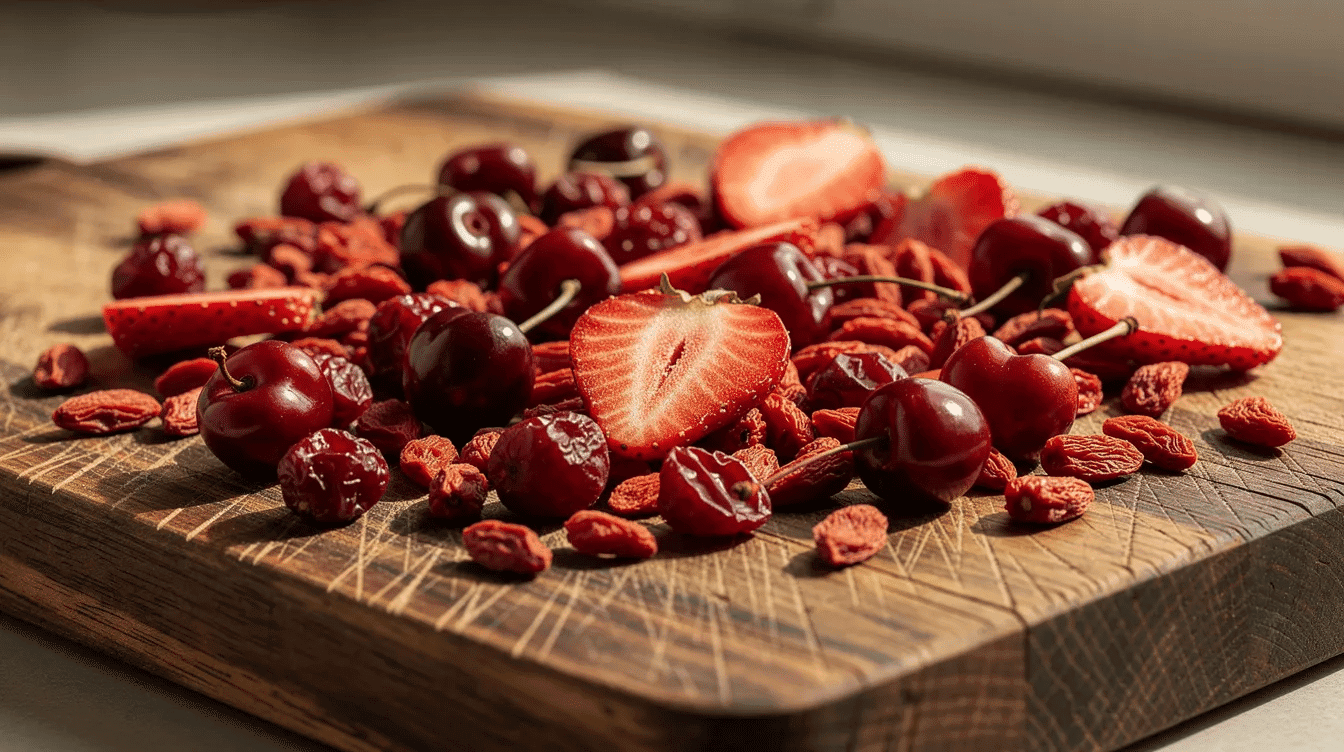
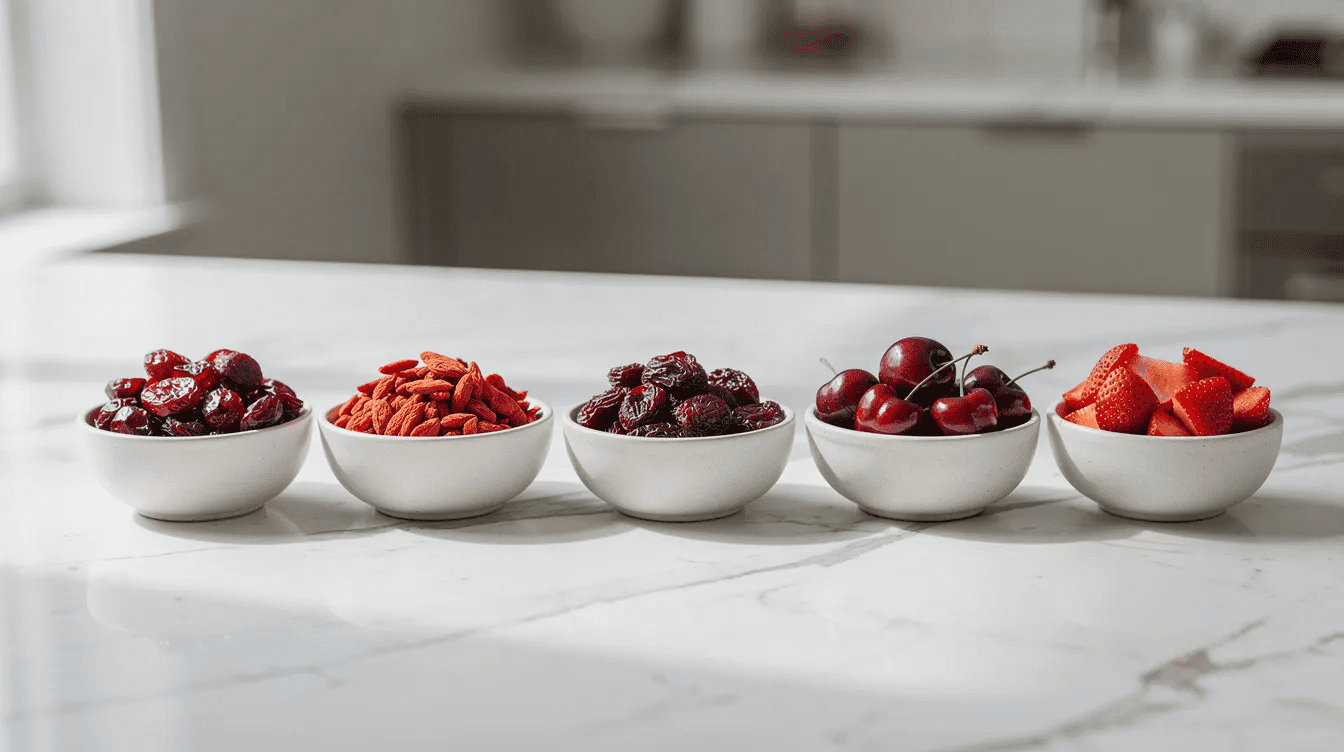
Red dry fruit refers to naturally red or deeply pigmented fruits that have been preserved through dehydration. Red dried fruits include cranberries, goji berries, and dried cherries, along with strawberries, raspberries, red raisins, and various berry mixes. Since ancient times, cultures around the world have dried red fruit to extend its usability beyond harvest season, concentrating rich color, intense flavor, and essential nutrients into shelf-stable form.
When fresh fruit is dried, most of its water is removed, which shrinks the volume dramatically but concentrates fiber, minerals, and many antioxidants. Some vitamins, particularly vitamins c, may diminish during the drying process, while nutrients like iron, potassium, and phenolic compounds become denser per serving. Dried red fruits are rich in fiber, vitamins, and antioxidants, making them a go-to for health-conscious eaters.
You can enjoy red dried fruits in countless ways: as a convenient snack on their own, stirred into oatmeal, scattered across salads, folded into baked goods, tossed into trail mix, or arranged on gift trays alongside nuts and cheese.
Red Dried Fruits vs Fresh Fruits: Nutrition and Sugar in Perspective
Dehydration fundamentally changes a fruit’s nutritional profile compared with its fresh version. Removing water means a small handful of dried fruit can pack the same calories and sugar as a much larger portion of fresh fruit.
Here are two concrete comparisons:
Dried cranberries: A quarter cup (about 40 g) of sweetened dried cranberries contains roughly 123 calories and 29 g of sugar. A full cup of raw cranberries has only about 46 calories and 4 g of sugar.
Dried cherries: About 30 g of dried cherries delivers a similar calorie count to an entire cup of fresh cherries, which clocks in at roughly 87 calories.
The natural sugars in fruit become highly concentrated once water is gone. On top of that, many commercial brands add sugar to offset tartness, especially in cranberries and strawberries. Always check labels for “no added sugar” or “unsweetened” when shopping.
Nutrients that concentrate during drying include fiber, iron, potassium, and certain antioxidants. However, heat-sensitive compounds like vitamin C often drop significantly, which raises understandable questions about whether nutrients are lost in dehydrated fruits and how to evaluate the nutritional value of dehydrated foods. The good news: dried fruits have a low glycemic index, stabilizing blood sugar, because fiber and organic acids slow glucose absorption. Still, portion control matters. A half cup may seem small, but the calories add up quickly.
Key Types of Red Dry Fruit and How They Differ
Not all red dried fruits are the same. Each has a distinct taste, texture, nutrition profile, and ideal use in your diet, just as you see when comparing the top 10 dry fruits for optimal health and nutrition. Here is a breakdown of the most common options:
Fruit
Key Nutrient
Flavor
Texture
Added Sugar?
Dried cranberries
Proanthocyanidins (PACs)
Tart to sweet-tart
Chewy, slightly sticky
Often yes
Dried cherries
Anthocyanins, melatonin
Sweet or tart
Chewy, soft
Sometimes
Goji berries
Beta-carotene, iron, zeaxanthin
Mildly sweet
Soft, chewy
Rarely
Dried strawberries
Vitamin C, fiber
Sweet
Crisp (freeze-dried) or soft
Sometimes
Dried raspberries
Polyphenols, fiber
Sweet-tart
Light, crisp (freeze-dried)
Rarely
Red raisins
Potassium, fiber
Sweet
Very chewy, sticky
Rarely
Dried cherries are high in anthocyanins and natural melatonin, making them popular for both flavor and functional nutrition. Dried goji berries are high in vitamin A, iron, and zeaxanthin, which is why they appear in both food and dietary supplements. Berry mixes combine several of these fruits, offering a delicious range of phenolic compounds in one bag.
Color varies from bright crimson in freeze-dried strawberries to deep wine-red in tart cherries to ruby-orange in goji berries. Some products are naturally gluten free by default, but always verify when buying mixed or flavored varieties.
Health Benefits of Red Dried Fruits: Antioxidants, Heart Health, and More
Red dried fruits are popular not only for their sweet taste and convenience but also for their many health benefits when eaten in moderation, even when you account for how dehydration affects different nutrients.
Antioxidants and polyphenols. The red pigments in cherries, cranberries, raspberries, and goji berries come from anthocyanins and carotenoids. Dried fruits contain antioxidants that boost immunity by neutralizing free radicals that damage cells. A comparative study on freeze-dried berries confirmed that gently processed red fruits retain high levels of phenolic content and antioxidant activity.
Heart and circulation. Dried fruits are high in fiber, aiding digestion and helping manage cholesterol. Potassium in raisins and cherries supports healthy blood pressure, and polyphenols may improve blood vessel function. Dried peaches can reduce cholesterol levels and heart attack risk, adding another reason to include a variety of dried fruit in your diet.
Digestive health. The high fiber content in dried fruit supports regularity and satiety. One cup of dried kiwi provides 20% of daily fiber needs, illustrating how effective dehydrated fruit can be for your body’s digestive system.
Immune and eye health. Goji berries support immune function and eye health thanks to their beta-carotene and zeaxanthin content. Dried apricots are high in beta-carotene and iron, making them a good source of nutrition when paired with red dried fruits in mixed snack packs.
Muscle recovery. Tart cherries may help reduce muscle soreness and inflammation, which is why tart cherry products are popular among athletes.
Energy. Red dried fruits deliver quick carbohydrates. When combined with nuts or seeds, they create a balanced snack for hiking, sports, or busy workdays. A small serving of about 30–40 g provides meaningful energy without excess calories.
Dried fruits should be consumed in moderation due to concentrated sugars. Keep portions sensible, especially if you are watching your calorie intake.
Spotlight on Popular Red Dried Fruits
This section zooms in on the red dried fruits people search for and buy most often.
Dried cranberries. Dried cranberries are popular and versatile in recipes, from holiday stuffing to everyday salads, and they shine in many of the best dehydrated fruit recipes for snacks. Most are grown in Wisconsin and Massachusetts. A Cochrane review of 50 trials found that cranberry products may reduce the risk of recurrent urinary tract infections. Try them in muffins or sprinkled over a grain bowl. Look for unsweetened versions when possible.
Dried cherries. Available in sweet and tart varieties, dried cherries work beautifully in baking, cooking, and snacking. Tart (Montmorency) cherries deliver a sharper flavor and are linked to sleep-supporting compounds like melatonin. Fold them into oatmeal cookies or pair with dark chocolate and almonds.
Goji berries. Often sun dried in China and Tibet, goji berries have a mildly sweet, slightly earthy flavor. They are a good source of carotenoids, with red goji averaging ~233 µg/g of carotenoids. Add them to overnight oats, teas, or soups. Most goji berries are sold unsweetened and organic, and they often appear in curated mixes from a top dried fruit subscription box.
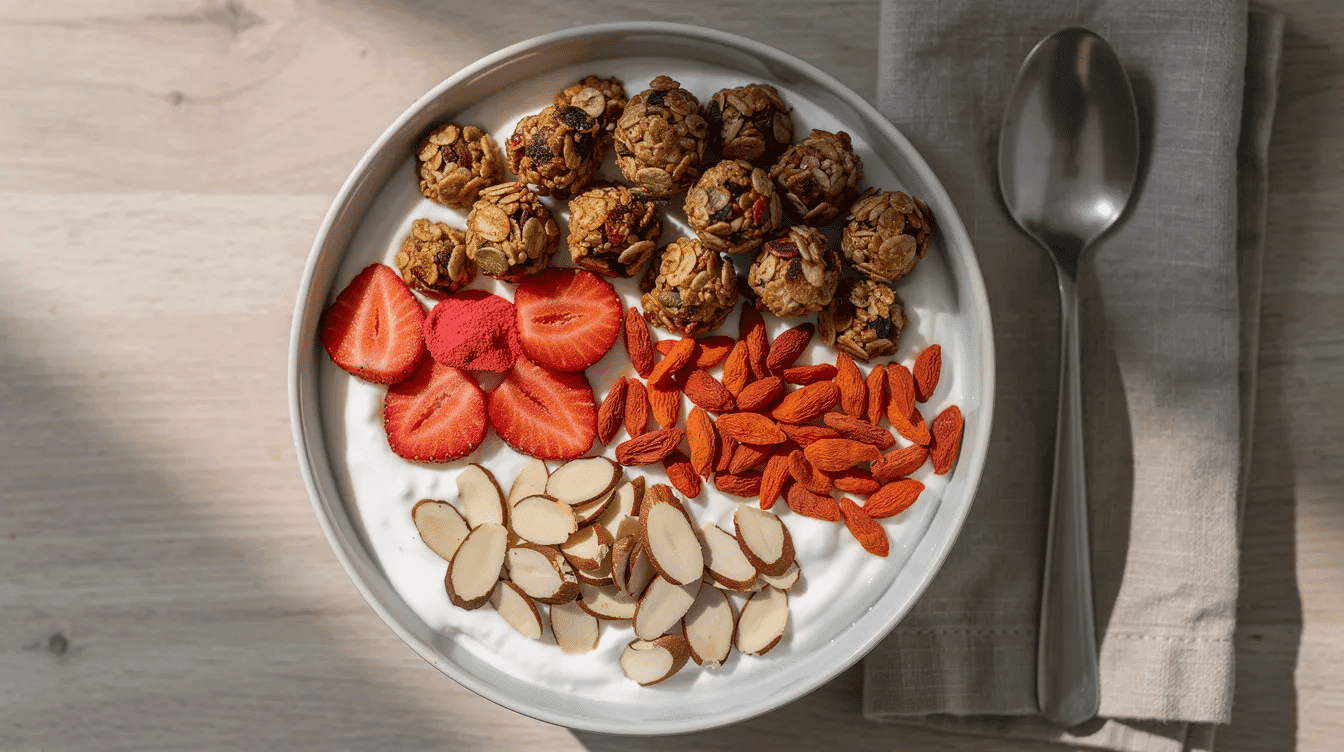
Dried strawberries and raspberries. Often freeze-dried for cereals and baking, these berries are light and crisp with a bright ruby color, and home cooks can easily dehydrate raspberries with simple steps. They are excellent atop yogurt, blended into smoothie bowls, or eaten straight from the bag as a snack.
Red raisins. Made from red grape varieties like Flame, raisins are really just dried grapes that are naturally sweet, very chewy, and typically unsweetened. Use them in pilafs, granola bars, and bread recipes.
How Red Dried Fruit Is Made: From Fresh Berries to Chewy Gems
Red dried fruits are preserved by removing water through different drying methods. Each method affects taste, color, nutrients, and shelf life differently, along with other factors like cost and energy use, just as you see when following ultimate dehydrator fruit recipes at home.
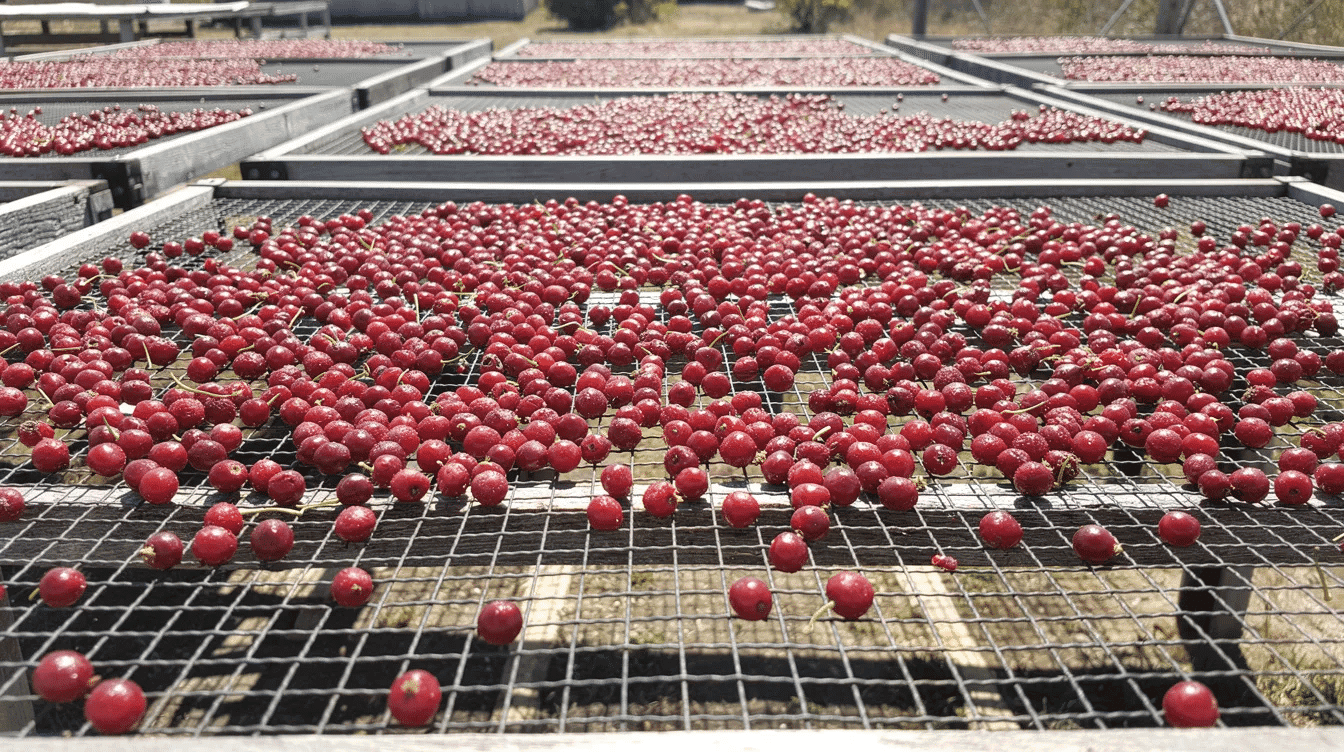
Sun drying. Sun drying is a traditional method for drying fruits, practiced for centuries in Mediterranean and Central Asian climates. Grape slices laid under the sun become raisins over several days, though many people now make raisins in a dehydrator at home for more consistent results. The process is low-cost but produces darker color and significant vitamin C loss, sometimes below 10% retention. Many sun dried raisins and apricots still use this ancient approach, and certain varieties are especially well suited according to guides on the best fruits for sun-drying.
Hot-air (tray) drying. Tray drying uses hot, dry air to dehydrate fruits in a controlled environment. This is the standard commercial drying process for cranberries, cherries, and many berry products. It yields good shelf stability but can destroy 80–99% of vitamin C in raspberries depending on temperature and duration.
Freeze drying. Freeze drying retains the original flavor of fruits by freezing them and then sublimating ice under vacuum. The result is light, crisp pieces with bright color and superior nutrient retention, similar to many top freeze-dried fruits for healthy snacking. This method is common for strawberries, raspberries, and premium goji berries and is often recommended when choosing the best dried fruit for long term storage.
Advanced methods. Microwave vacuum drying shortens the drying time significantly while preserving color and bioactives better than conventional heat methods. Infrared and refractance window drying are also emerging.
Preservatives and moisture. Some manufacturers apply sulfur dioxide to maintain vibrant color and inhibit microbial growth. Dried fruits can have moisture content between 3% to 18%, and water activity must stay low enough to prevent mold and spoilage.
Ingredients, Labels, and Added Sugar: Choosing Healthier Red Dried Fruits
Not all dried fruit is equal. Labels reveal crucial details about added sugar, oils, and preservatives that directly affect nutrition and quality.
Reading ingredient lists. The ideal label reads something like “cranberries, apple juice concentrate” or simply “cherries.” Avoid products with long lists of sweeteners, artificial colors, or glazing agents. Unsweetened dried fruits without added sugar are the healthiest option.
Types of sweetening. Manufacturers use cane sugar, corn syrup, fruit juice concentrates, and sometimes artificial sweeteners. Very tart red fruits like cranberries are almost always sweetened commercially, while some fruits such as dehydrated citrus slices rely more on their natural tangy flavor with minimal added sugars. Compare brands carefully: one brand of dried cranberries might list 25 g of sugar per 40 g serving, while a reduced-sugar version has just 12 g.
Sulfites. Sulfur dioxide preserves color and extends shelf life but can trigger reactions in sensitive individuals. If this concerns you, look for “unsulfured” on the label. Many red fruits are naturally vivid and do not strictly need this treatment.
Certifications. If organic, non-GMO, kosher, or fair trade matters to you, check packaging for verified certifications. Origin can also influence quality: U.S.-grown cranberries, Turkish dried apricots, and Chinese goji berries each follow different agricultural standards.
How to Eat Red Dried Fruits: Snacks, Breakfasts, Baking, and Beyond
Red dried fruits are incredibly versatile. Dried fruits can be incorporated into breakfast cereals, salads, and baking with minimal effort, and they work just as well in savory cooking as in sweet recipes.
Snack ideas:
A handful of dried cherries with almonds or walnuts
Goji berries mixed with pumpkin seeds and coconut flakes
Red raisins paired with cashews for a quick trail mix
Pairing dried fruit with protein or healthy fats helps balance the sugar and keeps you full longer.
Breakfast uses:
Sprinkle dried cranberries or dried pears over oatmeal
Add goji berries to smoothie bowls or acai bowls
Toss freeze-dried raspberries into granola or yogurt
Stir dried cherries into overnight oats with a drizzle of honey
Baking and desserts:
Muffins studded with dried cherries or cranberries
Cranberry and white chocolate cookies
Red berry granola bars with oats, apples, and flaxseed
Holiday breads with mixed red fruit pieces and spices
Savory applications:
Salads with goat cheese, dried cranberries, and pecans
Couscous with dried cherries, pistachios, and fresh herbs
Rice pilaf with red raisins, alongside roasted vegetables
Cheese boards featuring dried figs, red berries, and sliced plums
Dates are a popular dried fruit with a rich caramel flavor that pairs well alongside red dried fruits on any cheese or charcuterie board, especially when you follow best practices for the storage of fresh and dried dates.
Rehydrating tip: Soak dried fruit in warm water, juice, or tea for 15–20 minutes before baking or cooking to plump the texture and improve moisture in your final dish, a technique that works just as well when you dehydrate kiwi at home.
Portion control: Pre-portion into small jars or snack bags rather than eating straight from a large bag. This simple habit makes it easier to eat mindfully.
Storage, Shelf Life, and Safety Tips for Red Dried Fruits
Proper storage keeps dried fruits flavorful, safe, and colorful for months. Using top airtight containers for dried fruits helps maintain freshness, and without the right conditions, even high-quality dried fruit can spoil or lose its appeal.
Storage recommendations:
Use airtight containers or sealed bags
Store in a cool, dry, dark cupboard away from direct sun and heat
Keep away from spices, coffee, or steam-generating appliances, as dried fruits absorb odors and moisture easily
Extending shelf life:
Refrigeration adds several months to shelf life, especially for products without preservatives
Freezing in well-sealed bags can keep dried fruit quality high for a year or more
Typical shelf lives:
Commercial dried cranberries and cherries: 6–12 months in the pantry, though detailed guides on how long dried cranberries last show they can keep even longer under ideal conditions
Home-dehydrated berries: about 6 months
Frozen dried fruit: 12+ months
Signs of spoilage: Watch for mold, off-odors, fermentation notes, excessive sticky clumping, or unusual color changes beyond normal darkening.
Bulk bin caution: Use clean scoops, check store turnover rates, and make sure the food is handled hygienically.
Buying Guide: What to Look For in Quality Red Dried Fruits
Here is a practical checklist for choosing red dried fruits, whether you shop online or in-store.
Appearance. Look for vibrant, relatively uniform color without excessive crystallized sugar on the surface. Minimal broken or crushed pieces signal careful handling.
Texture by type:
Raisins and cherries should be chewy but not hard
Goji berries should be soft but not mushy
Freeze-dried strawberries and raspberries should be crisp and dry
Ingredient lists. Prefer short lists with minimal or no added sugar and no artificial colors. Many red fruits are naturally vivid and do not need dyes.
Packaging. Choose resealable bags or opaque, foil-lined packaging that protects from light. Check for clear “best by” dates before you store them in your pantry.
Origin and certifications. Pay attention to where the fruit comes from. U.S. cranberries, Turkish peaches, and Chinese goji berries each have distinct quality profiles. Look for organic, fair trade, or other certifications that align with your priorities.
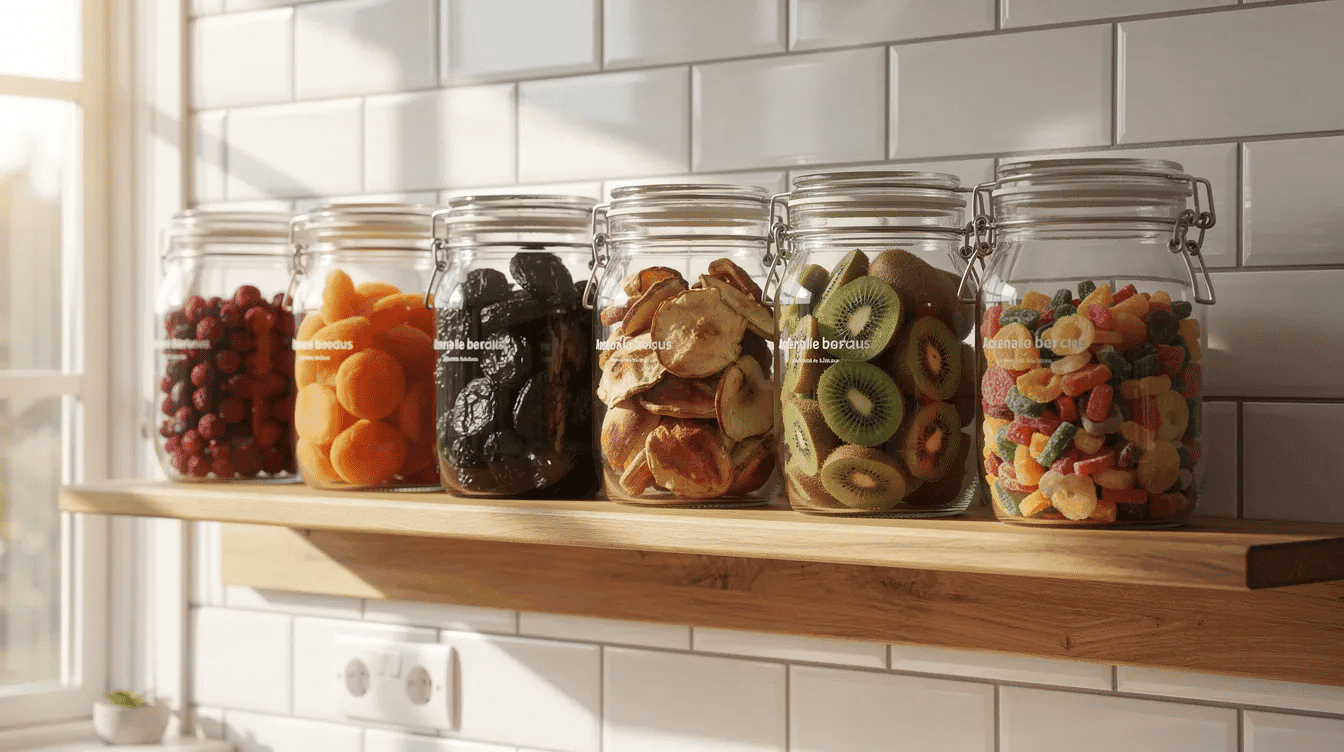
Beyond red fruits. While exploring, consider complementary options: dried mango is high in fiber and vitamin A, dried kiwi slices provide 20% of daily fiber needs per cup, and dried apricots offer outstanding beta-carotene. You can also dry persimmons easily and preserve the flavor. Dried pears and dried peaches round out a diverse fruit selection, and they pair beautifully with red varieties in mixed bags.
Start small. Try sample sizes or mixed fruit packs before committing to large bulk purchases, especially for less familiar fruits like goji berries or mango.
Moderation, Pairings, and Final Thoughts on Enjoying Red Dry Fruit
Red dried fruits are flavorful, nutrient-dense, and make a delicious convenient snack, but they work best when eaten thoughtfully. Aim for about 30–40 g per serving and pair with nuts, seeds, yogurt, or whole grains to balance macronutrients and slow sugar absorption.
The essential takeaways: red dried fruits deliver fiber, antioxidants, potential heart and immune support, and practical energy for busy days. They fit naturally into a balanced diet that also includes fresh fruit, vegetables, and whole food sources of nutrition and minerals.
Read your labels, watch for added sugar and sulfites, and choose the quality that aligns with your health goals. Whether you prefer the tart punch of cranberries, the sweet depth of cherries, or the earthy warmth of goji berries, there is a red dried fruit for every palate.
Pick up a new variety this week and try it in a specific dish. Toss goji berries into your morning oatmeal, fold dried cherries into your next batch of muffins, or build a trail mix with red raisins, apples, coconut, and almonds. Small additions lead to big flavor.
DannyContent Writer
Hey there, since 2016, my mission has been to provide you with the information and guides you need to make food dehydrating simple and fun. Whether you're a newbie or a seasoned pro, my site offers helpful guides, reviews, and recipes to enhance your dehydrating experience. I take pride in only recommending products I believe in, ensuring my readers' trust. As an affiliate of various programs, including Amazon Associates, your support helps me continue providing quality content. Thanks for stopping by, and happy dehydrating!