We earn a commission if you make a purchase, at no additional cost to you.
09/22/2026 04:39 pm GMT
🍊 Dehydrated Food Info Finder — Temperatures & Drying Times
Choose a category, then pick a food to see its drying temperature and time.
⚠️ Safety Disclaimer: Drying times are estimates and vary based on slice thickness, food moisture content, humidity, and your dehydrator model. Always check for doneness before storing — food should feel dry, leathery, or brittle with no moist spots. Improperly dried food can harbour mould and bacteria. For meat and poultry, follow USDA safe internal temperature guidelines: beef and pork to 160°F (71°C), poultry to 165°F (74°C). Use a food thermometer when in doubt. Store all dehydrated foods in airtight containers in a cool, dark place and discard anything showing moisture, mould, or off odours.
Air Dried Fruit: Simple Methods, Nutrition Facts, and Smart Uses
Air dried fruit turns seasonal produce into a lightweight snack that lasts months without refrigeration. Whether you use a food dehydrator, a convection oven, or an air fryer, the core process is the same: circulating warm air pulls moisture out of fresh fruit, concentrating its flavor, fiber, and natural sugars into compact, shelf stable pieces. This guide covers the science, step-by-step methods, storage rules, and recipe ideas you need to start drying fruit at home.
Key Takeaways
Air dried fruit has most of its water removed using circulating air at gentle heat (about 120°F to 145°F / 50°C to 63°C), leaving roughly 5% to 20% residual moisture and creating a portable, shelf stable source of fruit.
Consuming air dried fruit can lead to higher intakes of calories and sugars compared to fresh fruit; 100 grams of dried apple contains 57 grams of sugar versus about 10 to 12 grams in the same weight of fresh apple, so a reasonable serving is about one cup of fresh fruit’s equivalent: roughly ¼ cup dried.
Home cooks can dry most fruits, including apples, bananas, strawberries, apricots, and dried mango, using a food dehydrator, oven, or air fryer with a dehydration mode. Dehydrating fruit at 135°F takes 6 to 14 hours depending on the fruit.
Air dried fruit differs from freeze dried fruit in process and result: air drying uses heat and airflow, while freeze drying first freezes the fruit and then uses a vacuum chamber to sublimate the frozen water directly into vapor, producing a lighter, crispy texture with higher nutrient retention.
This article provides step-by-step instructions for the dehydrating process, storage and safety tips, and ideas for using dried fruits and fruit leather in trail mixes, oatmeal, baking, desserts, and cooking.
What Is Air Dried Fruit (and How Is It Different from Other Dried Fruits)?
Air dried fruit is fresh fruit that has had most of its water removed by warm, circulating air. The finished product typically retains 10% to 25% moisture, depending on the fruit and how dry you want it. The drying process exposes it to gentle heat rather than high-temperature cooking or frying in oil.
Common dried fruits include apples, apricots, and bananas. Dried fruits can be made from whole pieces, halves, or thin slices. Sun drying, oven drying, dehydrator drying, and air fryer drying all fall under this umbrella, as each method relies on heated air circulation.
The terms overlap: dried fruit and dehydrated fruit both describe fruit processed with controlled warm air. Freeze dried fruit works differently. Freeze drying first freezes the fruit (often to around −10°F / −23°C), then places it in a vacuum chamber where frozen water sublimates directly into vapor. The result is a very light, crispy piece that rehydrates quickly and retains more heat-sensitive vitamins.
Concrete examples: traditional raisins (dried grapes), dried apricots, dried mango strips, and apple rings are all air dried. Crunchy freeze dried strawberries and raspberries are typical freeze dried snacks found in cereals and backpacking meals. The texture difference is immediate: air dried fruit is usually chewy or leathery, while freeze dried fruit is brittle, snaps easily, and dissolves on the tongue.
Air Dried vs Fresh Fruit: Nutrition, Sugar, and Portion Sizes
Air drying preserves many nutrients from fresh fruit but concentrates natural sugars and calories because water is removed. Dried fruit retains most vitamins and minerals from fresh fruit, and air dried fruit retains about 60% to 80% of original nutrients overall. That retention varies by compound and temperature.
Dried fruits contain potassium, iron, magnesium, and calcium. Air dried fruit provides essential minerals like potassium, iron, and magnesium that survive the dehydration process intact. It also contains concentrated antioxidants that protect cells from oxidative stress. Dried fruit is rich in dietary fiber, aiding digestion; air dried fruit is a concentrated source of dietary fiber, with 100 g of dried apples delivering about 8.7 g of fiber.
Extended exposure to heat can degrade heat-sensitive vitamins, however. Vitamin c losses during air drying can reach 40% to 75%, depending on temperature and drying time. Some B vitamins, particularly folate, also decline.
Here’s where portion control matters. Weight-for-weight, the nutritional content shifts:
100 g fresh apple: roughly 52 kcal, 10 to 12 g sugar
100 g dried apple: roughly 243 kcal, 57 g sugar
That roughly 4.5x calorie increase happens because removing water leaves behind fruit solids. A practical serving of dried fruit is about ¼ cup (30 to 40 g), roughly equivalent to one cup of fresh fruit. Dried fruit has a low to moderate glycemic index, but consuming air dried fruit can lead to higher intakes of calories and sugars compared to fresh fruit if you eat by the handful without measuring. If you’re building an emergency pantry or bulk stash, focus on dried fruits best suited for long term storage and choose air dried fruit options with no added sugars or preservatives for the cleanest nutrition profile.
Air Drying Methods: From Sun Drying to Food Dehydrators and Air Fryers
Modern home cooks have three main options: a dedicated food dehydrator, a conventional or convection oven, and an air fryer with a low-heat setting. Traditional sun drying works in very dry climates but is the slowest path.
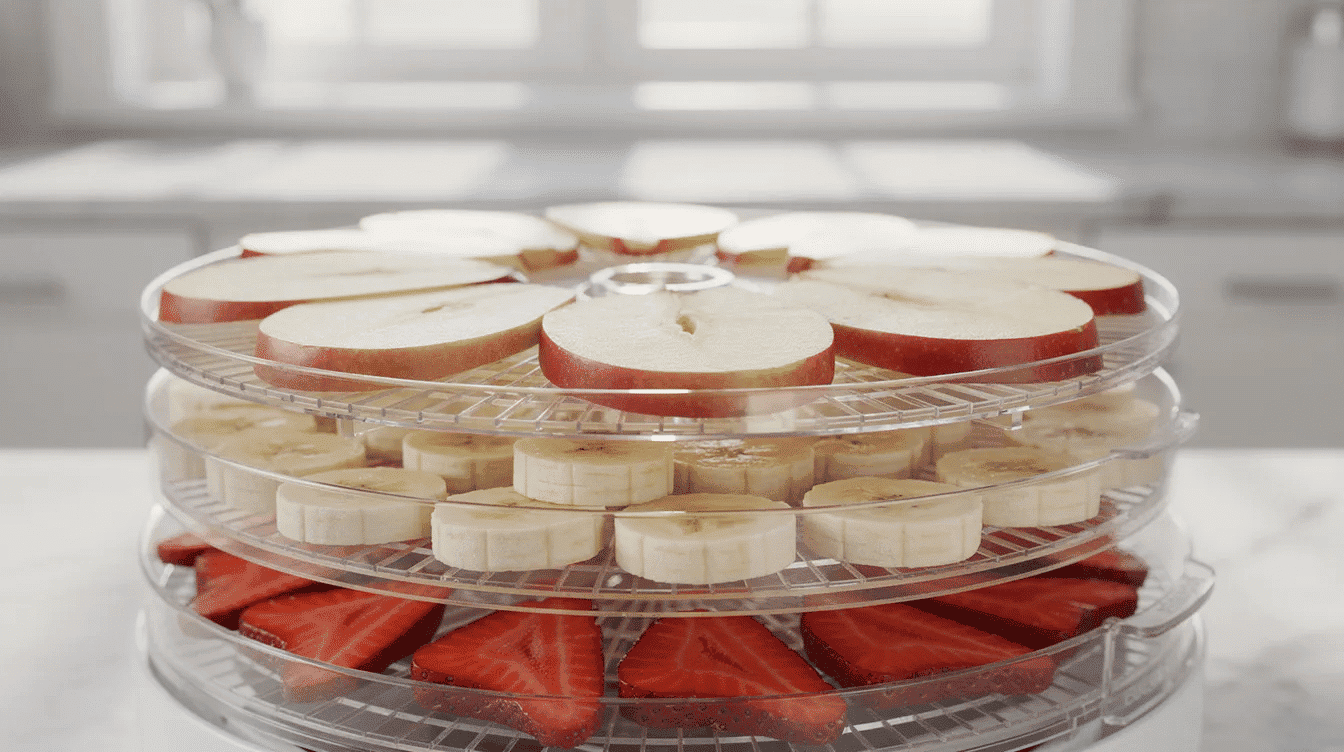
Food dehydrator. Stacked trays, a fan, and consistent low heat (typically 120°F to 145°F / 50°C to 63°C) make this the most reliable method. The recommended temperature for dehydrating fruit is 135°F (57°C). Most models have adjustable time controls and even airflow across all trays.
Oven drying. Set your oven to its lowest temperature, often around 140°F / 60°C on a “keep warm” or convection setting. Place fruit on racks lined with parchment paper, and prop the door slightly open with a wooden spoon to let moisture escape. A convection oven circulates air more effectively than a standard one, but many home cooks prefer the consistency of a food dehydrator for drying fruit.
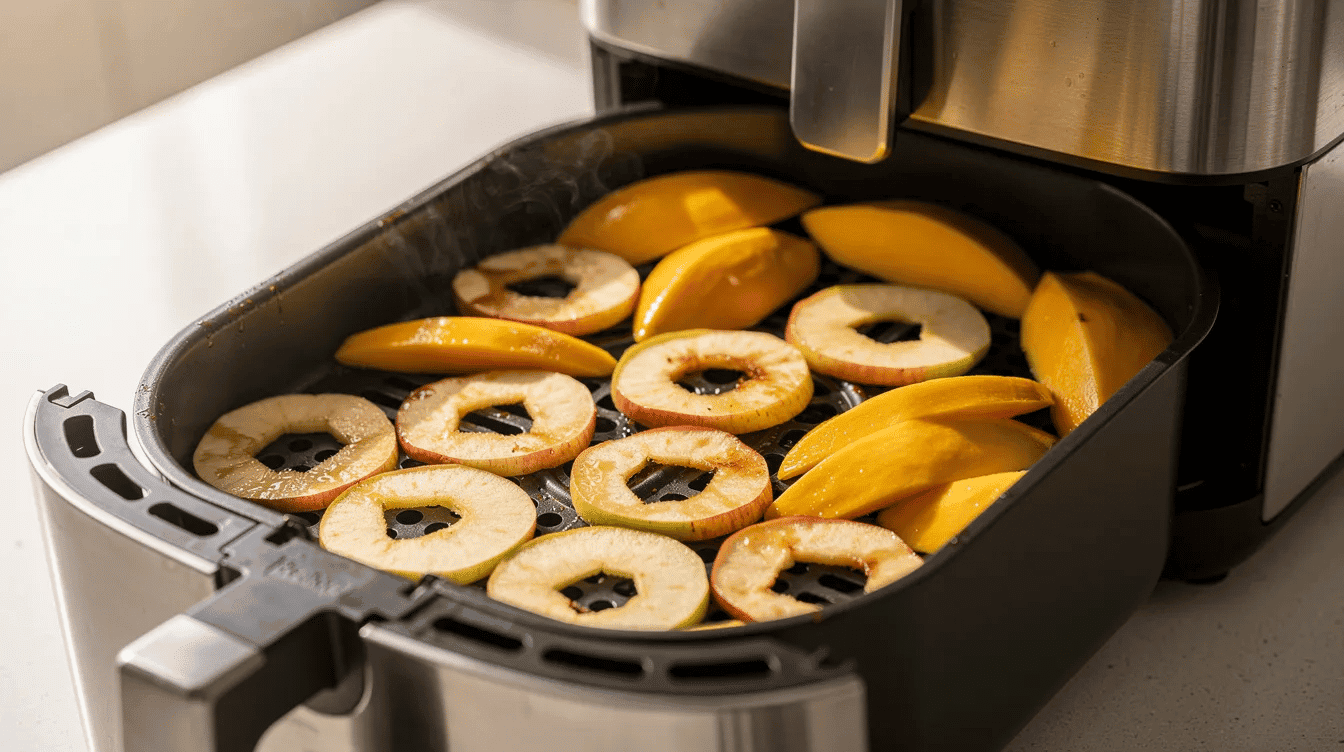
Air fryer. Air fryers can dehydrate fruit at 125°F to 145°F, and many newer models include a dedicated “dehydrate” function. They’re a compact option if you’re wondering whether you can dehydrate food in an air fryer. Air fryers use less space than traditional dehydrators, which makes them practical for small kitchens and small batches.
Sun drying. Sun drying is a traditional method but takes longer than other drying methods; it requires daytime temperatures above 90°F (32°C), humidity below 60%, and protective netting against insects. Expect multiple days of continuous exposure. It works best in hot, arid regions.
Industry-level techniques like microwave-vacuum drying and combined hot-air/vacuum systems exist, but the methods above cover what’s practical at home.
Choosing and Preparing Fresh Fruit for Air Drying
The quality of your dried fruits starts with the quality of your fresh fruit. Choose ripe but firm pieces with no bruising, mold, or insect damage. Overripe fruit collapses during drying; underripe fruit tastes sour and tough.
Pineapple, mango, and even pineapple rings for tropical snacks
Citrus slices (dried lemons, oranges) for garnishes and tea
Selection tips: pick apples and pears that are crisp. Bananas should be fully yellow with minimal brown spotting. Mangoes should yield slightly to pressure but still hold shape when sliced. Berries need to be bright and unshrivelled. Peaches and nectarines should be fragrant at the stem end.
Washing and trimming. Wash all fruit under cool running water. Pat dry, remove stems, pits, and cores. Hull strawberries. Discard any damaged or moldy areas.
Slicing thickness. Cut ⅛ to ¼ inch (3 to 6 mm) slices for faster, crisper chips. Cut ⅜ to ½ inch (10 to 12 mm) slices or halves for a chewier, more traditional texture.
Pre-treatments. A quick dip in lemon juice (or a mix of 1 tablespoon ascorbic acid per quart of water) reduces browning in apples, pears, and bananas. Light salt or spice rubs create savory-style chips. Heavy sugar dips push dried fruit closer to candy territory and make drying slower.
Step-by-Step: How to Make Air Dried Fruit in a Food Dehydrator
A countertop food dehydrator is the most foolproof way to produce evenly dried fruit with minimal monitoring. It handles large batches and maintains consistent airflow across every tray, making it ideal for a wide range of dehydrator fruit recipes.
Setup. Place the dehydrator on a stable, well-ventilated surface. Insert clean trays and preheat to 135°F / 57°C for most sliced fruits. Juicier items like pineapple or mango benefit from 140°F to 145°F / 60°C to 63°C.
Arrangement. Lay prepared fruit in a single layer without overlap, leaving a small gap around each slice so air circulates freely. Optionally line trays with mesh screens or parchment to prevent sticking from caramelized sugars.
Drying time at 135°F. Dehydrating fruit at 135°F takes 6 to 14 hours depending on the fruit. Dried apples and dried pears sliced ¼ inch thick: 6 to 10 hours. Apricot halves: 10 to 12 hours. Dried strawberries require 6 to 8 hours to dehydrate at 135°F. Dried cherries (halved): 8 to 12 hours. Rotate trays every 3 to 4 hours for the most even results.
Testing doneness. Slices should feel dry on the surface, leathery but pliable, with no visible beads of moisture. Cut a piece open; the interior should not feel wet or squish out juice.
Cooling and conditioning. Let trays cool completely, then loosely pack dried fruit in jars (about two-thirds full). Condition dried fruit by shaking it in a container for a week, once daily, to redistribute moisture. If condensation appears on the glass, return the batch for more drying time. This step catches pieces that look dry but still hold pockets of moisture.
How to Make Air Fryer Dried Fruit at Home
Many modern air fryers double as mini food dehydrators. Air fryers can dehydrate fruit without preheating, which saves time on small batches. They’re also handy for dehydrating a variety of foods in an air fryer. Air fryers allow customization of flavors and textures because you control temperature, time, and seasoning.
Temperature. Use the lowest available setting, ideally between 120°F and 145°F (49°C to 66°C), or the dedicated “dehydrate” function. Settings above 200°F will cook and brown the fruit rather than gently dry it.
Lining. Use perforated parchment paper or a thin silicone mat inside the basket or on racks. This prevents sticking from caramelized natural sugars while still allowing airflow.
Time ranges at 135°F. Dried mango slices take 12 to 14 hours to dehydrate at 135°F. Quarter-inch apple slices: 6 to 10 hours. Halved apricots: 10 to 12 hours. Quarter-inch strawberry slices: 6 to 8 hours. You can also follow dedicated methods for dehydrating figs in an air fryer if you enjoy that particular fruit. For a quick crispy result, air fryers can dry fruit in about 30 minutes at higher temperatures, though the taste and texture differ from low-and-slow dehydration; air fryers can achieve crispy textures similar to frying this way.
Example recipe: air fryer dried strawberries. Wash, hull, and slice berries ¼ inch thick. Toss with a teaspoon of lemon juice and a teaspoon of sugar per cup if desired. Spread in a single layer in the basket and dry at 135°F until leathery (6 to 8 hours) or crispy (shorter at higher heat) depending on your preference.
Monitoring. Check slices every 1 to 2 hours. Flip pieces if edges lift. Rotate racks if the air fryer heats unevenly. Remove any pieces that dry ahead of the rest to avoid burning. Air fryers use less space than traditional dehydrators, so you may need to run multiple batches for larger harvests.
Specialty Air Dried Fruit: Dried Mango, Fruit Leather, and More
Beyond basic apple or banana slices, dehydrators and air fryers create more specialized products. Turkey exported 1.5 billion dollars’ worth of dried fruit in 2021, which speaks to the global scale of this food category; at home, you can make many of the same products.
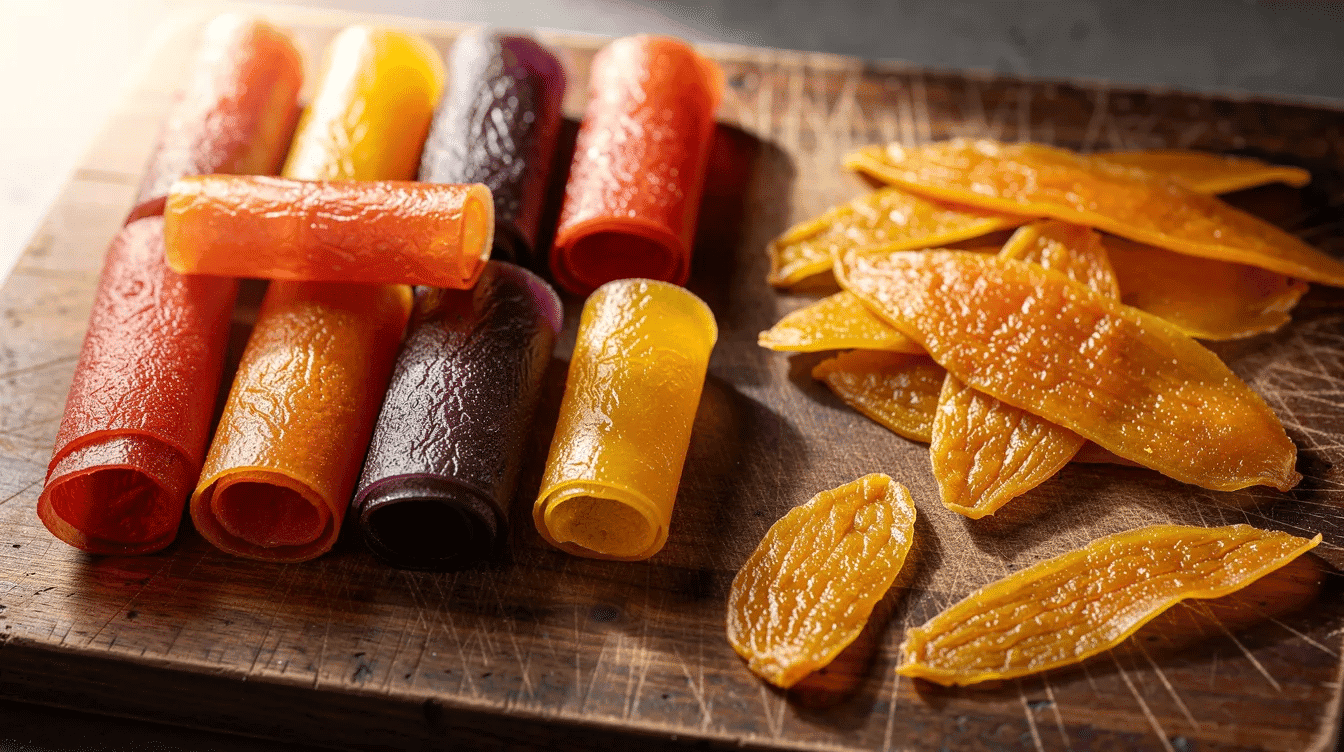
Dried mango. Cut ripe-but-firm mango into ¼-inch strips for chewier pieces or thinner slices for chips. Dry at 135°F to 140°F for 10 to 14 hours. Optionally dust with chili-lime seasoning or coconut sugar before drying for a delicious variation.
Fruit leather. Puree ripe fruit (strawberries, mango, peaches, or mixed berries) with a little lemon juice and optionally a small amount of honey. Spread the puree ⅛ inch thick on lined dehydrator or oven trays. Dry at about 135°F until the sheet is dry to the touch but still flexible, often 4 to 8 hours depending on thickness. Cut into strips and roll in parchment for storage, or follow a dedicated apple fruit leather recipe for dehydrators if you prefer a single-flavor version.
Creative combinations work well: mixed-berry fruit leather, apple-cinnamon leather, and tropical blends with pineapple and mango. For stone fruits, apricot fruit leather made in a food dehydrator gives a bright, tangy option. Adding too much sugar or syrup makes leather tacky and harder to dry properly.
Other fruits and specialty items follow the same principles: dried citrus wheels for drink garnishes, dried cherry halves for baking, and spiced pear chips all need thin, even slices, low heat, and patience.
Storage, Shelf Life, and Food Safety for Air Dried Fruit
Properly dried and stored fruit is shelf stable for months. Dried fruit can spoil within a week if moisture is present, so complete drying and correct packaging are non-negotiable.
Containers. Store dried fruit in an airtight container: glass jars, food-grade plastic bins, or heavy-duty resealable bags with minimal headspace. Choose from the best airtight containers for dried fruits to maintain freshness. Use oxygen absorbers to limit oxidation in long-term storage. Vacuum sealing extends the shelf life of dried fruit further.
Conditioning. Fill jars about two-thirds full, seal, and shake daily for 7 to 10 days to equalize moisture across pieces. If condensation or droplets appear on the glass, return the batch to the dehydrator.
Shelf life. Store dried fruit in airtight containers for up to six months in a cool, dark place around 60°F (15°C). At higher temperatures (around 80°F), expect closer to 3 to 6 months. Air dried fruit can last 1 to 5 years when properly stored, vacuum sealed, and kept frozen or at consistently low temperatures.
Safety red flags. Visible mold, off smells, slimy patches, or unusually soft spots all mean the batch should be discarded. Dried fruit must reach a water activity of 0.60 or lower to inhibit microbial growth.
Sulfured vs unsulfured. Sulfur dioxide treatments preserve color and inhibit certain microbes in commercial products, but readers with sulfite sensitivities should check labels or dry their own unsulfured fruit at home.
How to Use Air Dried Fruit in Everyday Cooking and Snacking
Air dried fruit works as a standalone snack and as an ingredient in sweet dishes, savory dishes, drinks, and decorations.
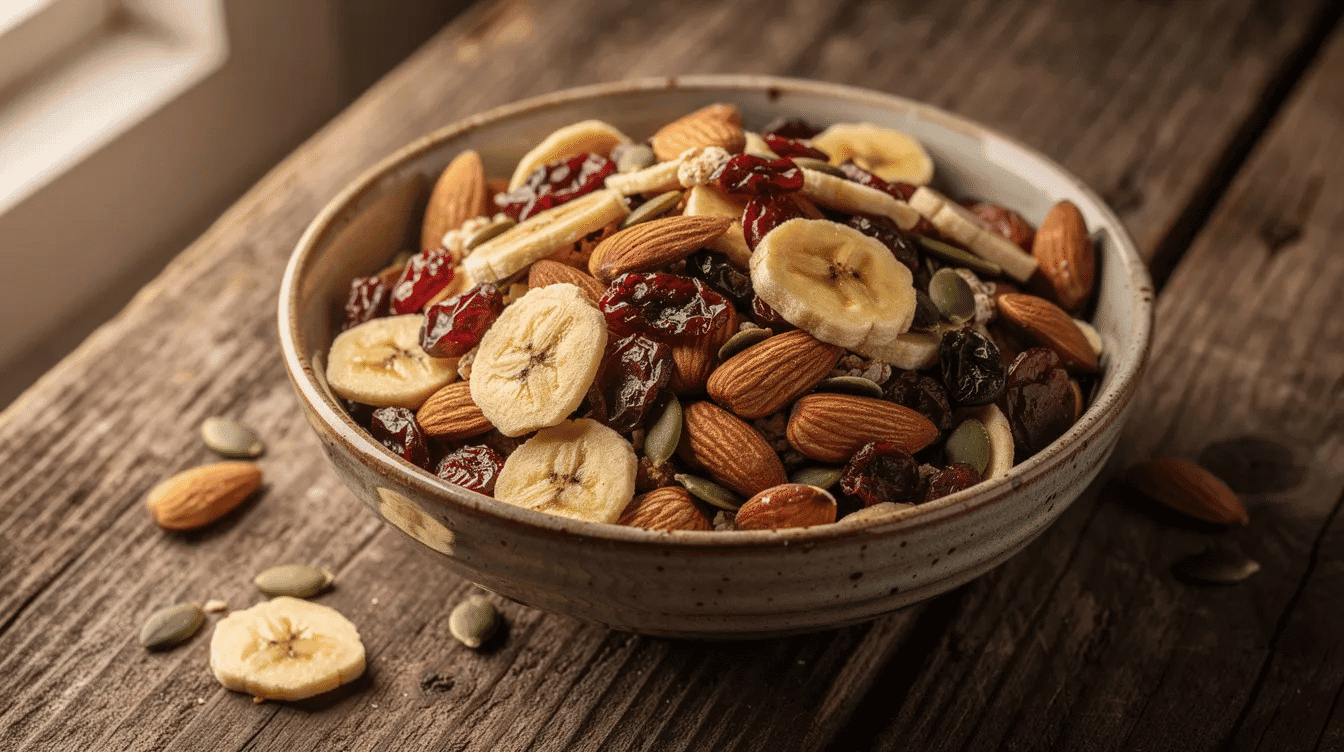
Snacks. Mix dried fruit with nuts, seeds, and a handful of dark chocolate chips to build trail mixes. Pack ¼-cup portions for portable office snacks. Dried fruits replace candies for a more natural sweetness; grapes become raisins, cherries become chewy bites, and banana coins add crunch.
Breakfast. Stir raisins or dried cranberries into oatmeal. Top cereal with dried banana chips or freeze dried berries. Bake dried mango or apricot pieces into muffins and quick breads.
Savory dishes. Add chopped dried apricots or cranberries to grain salads, couscous, or pilaf. Use raisins or dates in tagines and stews. Pair sliced dried fruits with cheeses on charcuterie boards.
Baking and desserts. Incorporate dried cherries or blueberries into cookies and brownies. Rehydrate dried apples for pies or crisps. Blend dried fruits into homemade energy bars or no-bake bites eaten as afternoon fuel.
Beverages and decoration. Dried citrus wheels make drink garnishes for cocktails and sparkling water. Thread apple and orange slices into holiday garlands. Infuse water or teas with a few slices of dried fruit for subtle flavor without added sugar.
Air Dried Fruit vs Freeze Dried Fruit and Other Commercial Options
Air dried fruit sits alongside freeze dried snacks, sugar-coated “candied” fruits, and sulfur-dioxide-treated commercial dried fruits on store shelves. The differences matter for nutrition, taste, and ingredient quality.
Freeze drying retains more nutrients than traditional dehydration methods. Studies show freeze drying preserves about 90% to 97% of many vitamins and antioxidants, compared to 60% to 75% for air drying. The texture also differs: freeze dried pieces are brittle, crispy, and dissolve quickly. Air dried fruit is chewy or leathery and holds up better in cooking.
Both air dried and freeze dried fruits are calorie-dense because they contain the same natural sugars from the original fresh fruit, just in less water. A handful of freeze dried strawberries and a half portion of air dried strawberries deliver similar calories per gram of dry weight.
Commercially, raisins, prunes, apple rings, dried apricots, and banana chips are all air dried products. Some include added sugar, oils, or sulfites to stabilize color and texture. When reading labels, look for short ingredient lists (ideally just the fruit). Watch for words like “sugar,” “cane juice,” or “glucose syrup.” Identify whether a product is freeze dried or dehydrated based on packaging claims and texture descriptions.
Combining store-bought and homemade options gives you the best of both: full control over ingredients with homemade batches, and convenience and variety from commercial products when time is short.
FAQ about Air Dried Fruit
Below are answers to questions that go beyond the step-by-step instructions covered above.
Is air dried fruit healthier than regular dried fruit from the store?
Air dried fruit and most store-bought dried fruit use similar dehydration methods. The difference is what gets added during or after processing. Homemade versions skip the added sugars, oils, and sulfites that many commercial brands include. The base nutrition is comparable: both homemade and store-bought dehydrated fruit concentrate calories and sugar while providing fiber, minerals, and other fruits’ micronutrients. Reading ingredient labels is the fastest way to tell the difference.
Can I make air dried fruit in an air fryer that doesn’t have a dehydrate setting?
It is possible if the air fryer holds temperatures around 120°F to 150°F (49°C to 66°C). If the lowest setting is much higher (for example, 300°F / 150°C), it will cook and brown the fruit instead of gently drying it. A workaround is running short bursts of heat followed by cooling periods, but results tend to be inconsistent. A dedicated food dehydrator or a low-heat oven gives more reliable control.
How do I know if my dried fruit is dry enough to store safely?
Slices should feel dry on the surface, leathery but not sticky. When cut open, the interior should not reveal wet or glossy flesh, and no moisture should squeeze out when pressed. The conditioning step (7 to 10 days in jars with daily shaking) serves as an extra safety check: any fogging or droplets on the glass mean the fruit needs more drying time.
Can I air dry fruit without any special equipment?
A regular oven set to its lowest temperature with the door slightly open and fruit on racks allows enough airflow for drying, though it uses more energy and requires more monitoring than a food dehydrator. True sun drying is practical only in hot, very dry climates and still requires protective screens or netting. In humid or cool regions, an oven, dehydrator, or air fryer is safer and more reliable.
DannyContent Writer
Hey there, since 2016, my mission has been to provide you with the information and guides you need to make food dehydrating simple and fun. Whether you're a newbie or a seasoned pro, my site offers helpful guides, reviews, and recipes to enhance your dehydrating experience. I take pride in only recommending products I believe in, ensuring my readers' trust. As an affiliate of various programs, including Amazon Associates, your support helps me continue providing quality content. Thanks for stopping by, and happy dehydrating!