We earn a commission if you make a purchase, at no additional cost to you.
09/22/2026 04:39 pm GMT
🍊 Dehydrated Food Info Finder — Temperatures & Drying Times
Choose a category, then pick a food to see its drying temperature and time.
⚠️ Safety Disclaimer: Drying times are estimates and vary based on slice thickness, food moisture content, humidity, and your dehydrator model. Always check for doneness before storing — food should feel dry, leathery, or brittle with no moist spots. Improperly dried food can harbour mould and bacteria. For meat and poultry, follow USDA safe internal temperature guidelines: beef and pork to 160°F (71°C), poultry to 165°F (74°C). Use a food thermometer when in doubt. Store all dehydrated foods in airtight containers in a cool, dark place and discard anything showing moisture, mould, or off odours.
Prune Drying: How To Dry Plums into Flavorful, Long-Lasting Prunes
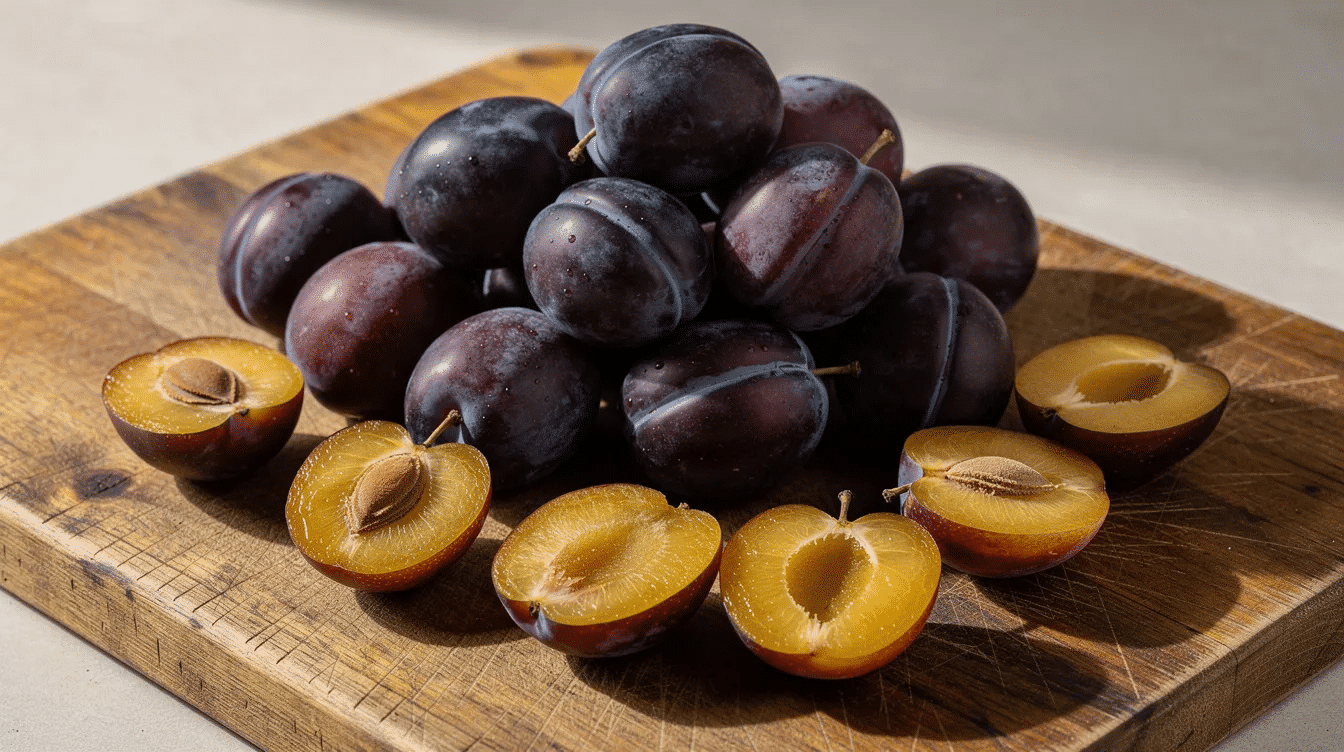
Modern prunes are simply dried European or Italian prune plums, typically harvested from late August to early October. Their naturally low moisture and high sugar content make them ideal candidates for drying without preservatives.
Home drying works well in a food dehydrator at 135–145°F for 10–18 hours, or in a regular oven at 170–200°F for 8–12 hours. Frequent checking ensures optimal texture.
Proper preparation—washing, sorting, pitting or cracking skins, and optional anti-browning pre-treatments with lemon juice—leads to better texture, safer storage, and richer flavor.
Fully dried prunes should be leathery and pliable with no visible moisture. Condition them in airtight jars for 7–10 days, then store in the pantry up to 1 month or freezer up to one year.
Dried plums are nutrient-dense snacks rich in fiber and antioxidants. Safe drying and storage practices preserve both quality and nutritional value.
Introduction: What Is Prune Drying and Why Do It?
Prune drying transforms late-season European plums into shelf-stable dried fruit that lasts months instead of days. If you’ve ever had plum trees overflow with delicious plums in September, you know the frustration of watching fruit spoil faster than you can eat it. Drying solves this problem by reducing moisture from around 80% in fresh plums down to 18–25% in the finished product, and understanding whether prunes are just dried plums can help you choose the best varieties and methods.
The term “prune plum” refers specifically to drying-optimized cultivars like Italian, Stanley, or President varieties. These European plums feature oblong shapes, blue-purple skins, and freestone pits that pop out easily. Not all plums dry equally well—round, juicy Japanese varieties produce softer results closer to fruit leather than classic chewy prunes.
Typical scenarios for home prune drying include backyard trees yielding 10–20 pound harvests, late-summer farmers’ market deals on bulk cases, or simply wanting to preserve this year’s harvest for winter long snacking and baking. Compared to store bought prunes, homemade prunes are chewier, less sticky, contain no sulfites or added sugars, and let you control the final moisture level exactly to your taste.
Best Plum Varieties for Drying into Prunes
Variety selection matters because sugar content, moisture level, pit type, and shape all affect drying time and final texture. The wrong plums can mean tough, bland prunes or frustratingly long drying sessions.
Classic prune plums include:
Italian prune plums (Prunus domestica): Bluish-purple skins, yellow flesh, oblong egg-shaped form, typically 1.5–2 inches long
Stanley and President varieties: Similar characteristics to Italian plums with excellent sugar-to-acid ratios
Peak availability runs late August through September across North America and Europe
Freestone vs. Clingstone
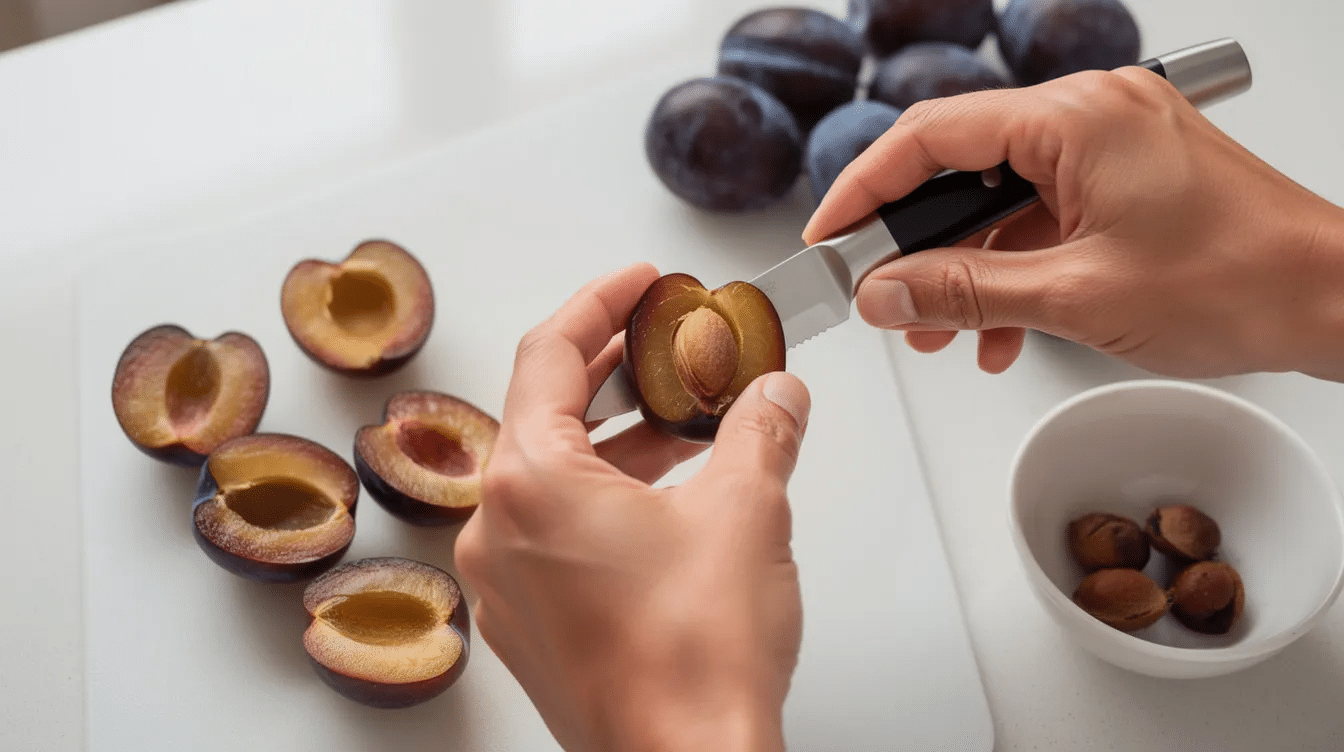
Freestone prune plums release pits with a simple twist, cutting prep time dramatically—about 15 minutes for 4 pounds of fruit. Clingstone dessert plums require quartering or careful trimming around stubborn pits, adding labor and risking uneven drying.
European Plums vs. Japanese Plums
Characteristic
European Plums
Japanese Plums
Shape
Oblong, small
Round, large
Moisture
Lower (ideal)
Very high
Texture when dried
Plump, chewy
Soft, leather-like
Drying time
12–18 hours
24+ hours
Best prep method
Halves
Thin slices
If you don’t know your variety, try a simple test batch. Slice, pit, and dry 4–6 plums to judge flavor and drying behavior before committing several varieties to full trays.
Harvesting and Selecting Plums for Drying
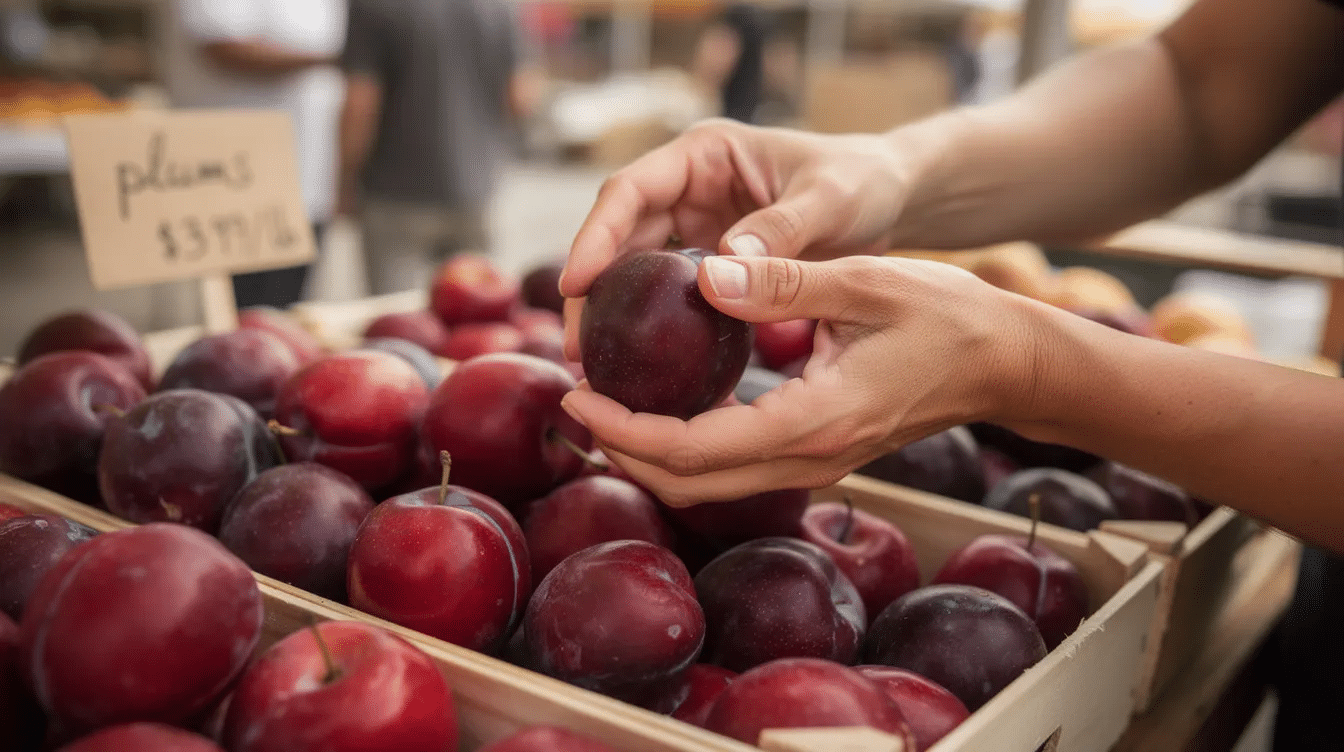
Home growers should harvest prune plums from late August through early October, when fruit displays full color and yields slightly to gentle finger pressure. The sugar content at this stage typically reaches 22–28° brix—ideal for developing rich flavor during drying.
Selection criteria:
Choose fully ripe, sweet fruit for best flavor; underripe plums yield bland, tough prunes
Avoid mold (particularly Botrytis), deep bruises, or insect damage
Trim away shallow blemishes only if damage doesn’t extend deep into the flesh
Sort by size—small, medium, and large plums should go on separate drying trays for even results
Yield expectations:
Roughly 3–4 pounds of fresh plums produce about 1 pound of dried prunes. For reference, 60 plums yield approximately 120 halves, filling a 500ml jar when dried.
Fruit from cold storage or the refrigerator should reach room temperature before drying. This simple step shortens total drying time by 1–2 hours and reduces condensation that can prolong the process.
Preparing Plums for Prune Drying
Proper preparation reduces drying time and improves texture, appearance, and food safety. Skipping steps here often means struggling with uneven results later.
Cleaning:
Rinse plums gently under cool running water to remove dust, insects, and field residues
Pat dry thoroughly with clean towels—excess surface water prolongs drying significantly
Pitting and cutting options:
Method
Best For
Drying Time
Whole, pitted
Classic plump prunes
18–24 hours
Halves, pitted
Faster drying, chewy results
10–18 hours
Quarters
Very large or juicy plums
8–12 hours
Efficient pitting technique:
For freestone prune plums, run a knife lengthwise along the natural seam, twist gently to separate halves, and lift out the seed. For stubborn pits, make a second cut and pry with the knife tip.
Optional pre-treatments:
To limit browning on cut surfaces, briefly dip in a pre treatment solution of 2 tablespoons lemon juice (or 1/8 teaspoon ascorbic acid) per 2 cups water. Note that prune plums brown far less dramatically than apples or other fruits, so this step is mostly cosmetic.
Skin-cracking for whole plums:
Dip small whole plums in boiling water for 30–60 seconds, then transfer to ice water. This cracks the skins, allowing steam to escape during drying and preventing splitting while speeding moisture loss.
Equipment and Setup for Prune Drying
Your equipment choice—dedicated dehydrator versus conventional oven—affects energy use, monitoring requirements, and final consistency, and a solid beginner’s guide to using a food dehydrator can help you get comfortable with temperature settings and food safety.
Choose a model with adjustable temperature reaching down to 135°F (57°C)
Both stackable and shelf-style dehydrators work well
Ensure drying trays allow adequate airflow around each piece of fruit
Oven:
If you plan to preserve lots of produce, it helps to review a general guide to dehydrating fruit in the oven for temperature ranges, tray setup, and even drying.
Most home ovens have a lowest setting between 170–200 degrees f
Use convection mode when available to mimic dehydrator airflow
Alternatively, prop the oven door slightly open with a wooden spoon to let moisture escape
Trays, racks, and liners:
Reusable dehydrator sheets and mesh liners make it easier to dry sticky fruits, prevent pieces from falling through trays, and simplify cleanup.
For dehydrators: mesh screens prevent smaller sliced pieces from slipping through
For ovens: place a wire rack over a rimmed baking sheet for airflow, with the baking sheet catching drips
Parchment or silicone mats work well for small or very juicy fruit on flat trays
Essential tools:
Sharp paring knife or plum pitter
Large colander for washing
Clean towels
Spatula or tongs for turning fruit
Airtight glass jars or freezer bags for storage
Set up your equipment in a well-ventilated space away from flammable materials. Plan for continuous runs of 8–18 hours where children and pets won’t disturb hot equipment.
How to Dry Prunes in a Food Dehydrator
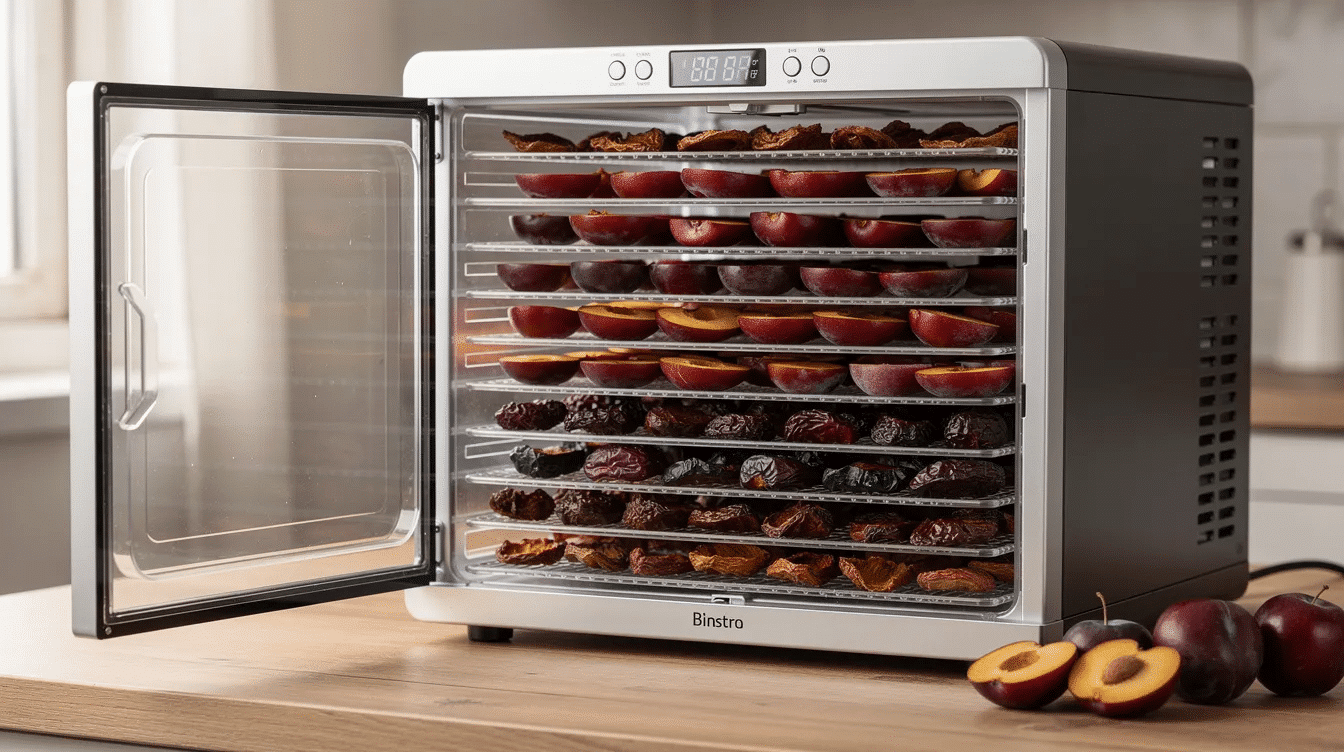
A dehydrator provides the most consistent, energy-efficient method for prune drying. Once trays are loaded, the process requires minimal active work.
Temperature and timing:
Set temperature to 135–145°F (57–63°C); starting at 140°F works well for most batches
Expect 10–18 hours for halves, depending on fruit size, sugar content, and humidity
Whole pitted plums may extend to 24–36 hours
Loading the trays:
Arrange plums in a single layer without pieces touching or overlapping
Place halves cut side up initially to prevent sticking
Leave gaps between pieces for proper airflow
Drying process:
Check trays after the first 4–6 hours
Rotate and swap trays (top to bottom, front to back) for even drying
Continue drying with checks every 1–2 hours as fruit approaches doneness
Flip halves if needed after the cut side loses its wet sheen
Testing for doneness:
The target texture is leathery and pliable—not wet, with no beads of juice when squeezed. To test doneness properly, cut a cooled piece in half. You should see no visible moisture or shiny pockets inside, only slightly tacky flesh.
Troubleshooting:
If edges feel hard but centers remain moist, lower temperature slightly and continue drying. Avoid overdrying to brittle hardness if you love prunes with classic chewy texture.
How to Dry Prunes in a Regular Oven
Oven drying works perfectly well if you don’t own a dehydrator, though it requires more monitoring and uses additional energy. Many home preservers successfully dry prunes this way each season, especially when following a step‑by‑step guide to drying plums into a nutritious snack.
Oven settings:
Set to lowest setting, ideally 170–180°F (77–82°C)
200°F serves as an upper bound when no lower setting exists
Use convection if available, or prop the oven door slightly to let steam escape
Tray preparation:
Line a rimmed baking sheet with parchment or a silicone mat for halved or quartered fruit
For whole or large halves, set a wire rack over the baking sheet for airflow underneath
The pan catches all the juice and drips
Arranging the fruit:
Place plums in a single layer without crowding, skin side down or cut side up. Leave small gaps between pieces to prevent sticking and allow circulation.
Time drying guidelines:
Fruit Type
Temperature
Time Range
Halved Italian plums
170–180°F
8–12 hours
Quartered plums
170–180°F
6–10 hours
Very juicy dessert plums
170–180°F
12–16 hours
Check hourly, releasing moisture each time you open the door. Rotate pans between racks for even results.
Signs of doneness:
Finished prunes look darker, feel leathery and flexible but not sticky-wet, and no juice seeps when pressed firmly. Let a test piece cool completely on the counter—if it feels moist or soft when cool, return to the oven for more time drying.
Conditioning and Storing Home-Dried Prunes
Conditioning equalizes moisture between pieces and helps prevent mold while ensuring uniform texture throughout your batch.
Conditioning process:
Cool prunes completely at room temperature
Loosely pack into clean glass jars (don’t compress)
Store prunes at room temperature for 7–10 days
Shake daily to separate pieces and check for condensation on glass
If condensation appears:
Droplets forming inside jars indicate remaining moisture. Spread prunes back on drying trays and return to the dehydrator or oven for 2–4 additional hours, then re-condition.
Short-term storage:
Store conditioned prunes in airtight containers in a cool, dark place
Glass jars with tight lids or food-grade plastic containers work well
Shelf life: approximately 1 month if room stays below 70°F
Longer storage options:
Method
Duration
Best For
Pantry/cellar
1–3 months
Cool, dry climates
Freezer
Up to 12 months
Warm, humid regions
Vacuum-sealed bags
12+ months
Maximum preservation
Remove as much air as possible when packaging for the freezer. Frozen plums and prunes maintain quality excellently for year-round use, and many of the same principles of airtight storage and mold checks apply when considering how long dried cranberries last in storage.
Labeling and rotation:
Label each container with variety, method, and date (e.g., “Italian prune plums, dehydrator, Sept 2026”). Use older jars first and inspect contents periodically for any sign of mold.
Nutrition and Culinary Uses of Dried Prunes
Drying concentrates both calories and nutrients, making prunes an energy-dense yet wholesome snack that many people eat regularly, just like other fruits featured in comprehensive guides to what fruit you can dehydrate at home.
Nutrition highlights:
Unsweetened home dried prunes contain no added sugar or preservatives
Fiber concentrates to approximately 7g per 100g serving
Potassium reaches about 732mg per 100g
Vitamin C and antioxidant phenols remain better preserved at lower drying temperatures
Multiple studies published between 2010 and 2024 have investigated dried plums for supporting digestion and bone density, with researchers noting the fruit’s sorbitol content and prebiotic fibers as contributing factors to nutritional value.
Snack ideas:
Review recipe options for homemade trail mixes with nuts and cherries or incorporate other dried fruits like dehydrated citrus slices for bright, tangy contrast
Add sliced prunes to yogurt, oatmeal, or vegetables and grain bowls
Pack as portable energy for hiking or travel
Baking and cooking:
Chop into quick breads, muffins, and whole-grain loaves as natural sweeteners
Add to braised meats and tagines for depth and sweetness, or experiment with other dried fruits like persimmons preserved by dehydrating for new flavor combinations
Puree to replace up to 25% of fat in some baking recipes (taste test for best results)
Rehydration:
Very dry prunes can be softened by soaking in hot water, tea, or juice for 15–30 minutes. This works well before adding to recipes requiring soft texture—comment something to share your favorite rehydration method with other readers!
FAQ
How long does it really take to dry prunes at home?
Most halved Italian plums need 10–18 hours in a dehydrator at 135–145°F, while oven drying at 170–180°F typically requires 8–12 hours. Humidity, fruit size, and how tightly you pack trays significantly affect total time. A humid September might add 2–4 hours to your expected duration. Always rely on texture tests—leathery, pliable, no visible moisture inside—rather than the clock alone for required recipe ratings of doneness.
Can I make prunes from regular supermarket plums?
You can dry standard black or red grocery stores plums, but these are typically Japanese-type dessert plums that are larger and juicier than traditional prune plums. Slice them into thin slices or small wedges to speed drying. The finished product will be softer, closer to fruit leather than classic chewy prunes. Test a small batch of 4–6 plums first to see if results match your expectations before committing several varieties to full trays.
Is it safe to dry prunes overnight while I sleep?
Many preservers run dehydrators overnight safely when following manufacturer instructions and placing units on heat-resistant surfaces with good airflow. For ovens, some cooks prefer limiting use to waking hours—follow your appliance manual and local safety recommendations. Setting a timer to check the batch early in the morning helps catch prunes approaching doneness before they overdry.
Do I have to remove the pits before drying plums into prunes?
Removing pits before drying is strongly recommended for convenience, food safety, and even results. Traditional methods sometimes dry whole small plums with pits after cracking skins, but this requires much longer drying times and careful half-by-half pit removal before eating. For most home kitchens, halving and pitting first remains the most practical approach.
How can I tell if my home-dried prunes will keep without molding?
Use a two-step check: first ensure prunes are fully dried (leathery, not sticky-wet, no visible moisture when cut), then condition for 7–10 days in glass jars, shaking daily. Condensation on jar walls or clumps that feel damp signal more drying is needed. Prunes intentionally left extra soft should go directly to the freezer for freeze storage, as higher water content shortens safe pantry shelf life dramatically.
DannyContent Writer
Hey there, since 2016, my mission has been to provide you with the information and guides you need to make food dehydrating simple and fun. Whether you're a newbie or a seasoned pro, my site offers helpful guides, reviews, and recipes to enhance your dehydrating experience. I take pride in only recommending products I believe in, ensuring my readers' trust. As an affiliate of various programs, including Amazon Associates, your support helps me continue providing quality content. Thanks for stopping by, and happy dehydrating!