We earn a commission if you make a purchase, at no additional cost to you.
09/22/2026 04:39 pm GMT
🍊 Dehydrated Food Info Finder — Temperatures & Drying Times
Choose a category, then pick a food to see its drying temperature and time.
⚠️ Safety Disclaimer: Drying times are estimates and vary based on slice thickness, food moisture content, humidity, and your dehydrator model. Always check for doneness before storing — food should feel dry, leathery, or brittle with no moist spots. Improperly dried food can harbour mould and bacteria. For meat and poultry, follow USDA safe internal temperature guidelines: beef and pork to 160°F (71°C), poultry to 165°F (74°C). Use a food thermometer when in doubt. Store all dehydrated foods in airtight containers in a cool, dark place and discard anything showing moisture, mould, or off odours.
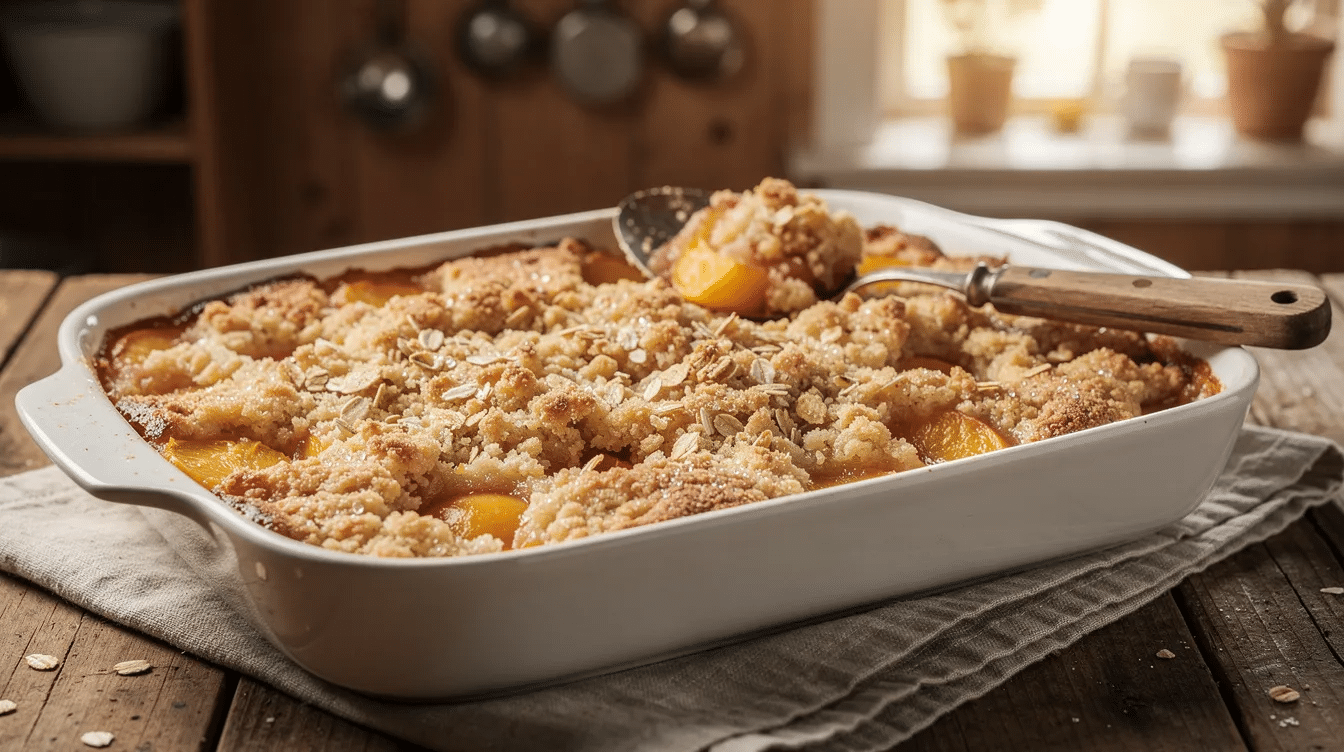
There is something deeply satisfying about pulling a bubbling pan of peach crumble from the oven in the middle of winter, knowing the fruit came straight from your pantry shelf. This peach crumble recipe with dehydrated peaches turns preserved stone fruit into a warm, golden dessert that rivals anything made at the height of summer. Below, you will find everything you need: rehydration tips, a foolproof crumble topping, and plenty of variations to keep things interesting all year long.
Key Takeaways
This easy peach crumble recipe is specifically designed for dehydrated peaches, with clear instructions for rehydrating them so the dessert turns out as juicy as versions made with fresh peaches. Peach crumble typically includes layers of a sweet filling and a buttery crumb topping, and crumble topping requires flour, sugar, and butter.
The crumble recipe can be adapted to fresh peaches, frozen peaches, or canned peaches, but the focus is on making the most of long-lasting pantry jars of home-dehydrated fruit.
Simple pantry ingredients – brown sugar, all purpose flour, spices, melted butter – and basic equipment like an 8×8 baking dish or cast iron skillet mean beginners can start immediately.
Readers from the Dehydrated Foodz community can use this easy dessert as a gateway for experimenting with other fruits like apples, berries, and pears in similar dehydrated desserts or branch out with ultimate dehydrator fruit recipes for year-round snacking.
Why Make Peach Crumble with Dehydrated Peaches?
Peak season peaches last only a few weeks each summer. Once they are gone, most bakers reach for frozen sliced peaches or recommend canned peaches as the next best option. But if you have been dehydrating fruit at home, especially using dehydrated fruit recipes for snacks, you already own a pantry full of concentrated peach flavor waiting to be unlocked. Dehydrated peaches provide concentrated peach flavor and chewy texture that, once rehydrated, delivers an almost jammy sweetness you simply cannot get from a can.
Unlike a typical peach crisp recipe or peach cobbler that relies on fresh fruit with high water content, this crumble starts with dried slices that absorb liquid and spices during soaking. The result is a fruit filling with deeper, more unified flavor. It is also a practical way to rotate your preserved peaches before the next harvest, preventing waste and rewarding the effort that went into drying them. Dehydrated peaches need rehydration to become tender before baking, but the process is simple and takes less time than you might expect.
If you do not dehydrate yet, store-bought dried peaches work, though home-dehydrated fruit from a quality dehydrator typically tastes brighter and less sugary.
Essential Ingredients and Equipment
This is a straightforward fruit crumble using common baking ingredients plus properly rehydrated dried peaches. Use 6 cups of peaches for a standard recipe – roughly 3 to 3½ cups of loosely packed dehydrated sliced peaches will yield that amount after soaking, especially if you follow a guide on how to dehydrate peaches for consistent slice size.
Filling ingredients:
Dehydrated peach slices (home-dried or store-bought)
Boiling water or hot apple juice for soaking
Light brown sugar and a small amount of granulated sugar
Lemon juice for brightness
Vanilla extract and optional almond extract
Ground cinnamon and a pinch of nutmeg
Cornstarch or arrowroot for thickening the peach filling
Kosher salt
Crumble topping ingredients:
All purpose flour (or a gluten free 1:1 blend)
Brown sugar for caramel notes
Melted butter for an effortless, sandy crumbly topping
Kosher salt and ground cinnamon
Equipment:
An 8×8 inch baking dish or similar 2-quart baking dish works perfectly. A 9–10 inch cast iron skillet is another excellent option. You will also need a large bowl, a medium bowl, a separate bowl for the topping, measuring cups and spoons, and a whisk or fork. A pastry cutter is optional if you prefer using cold butter instead of melted butter.
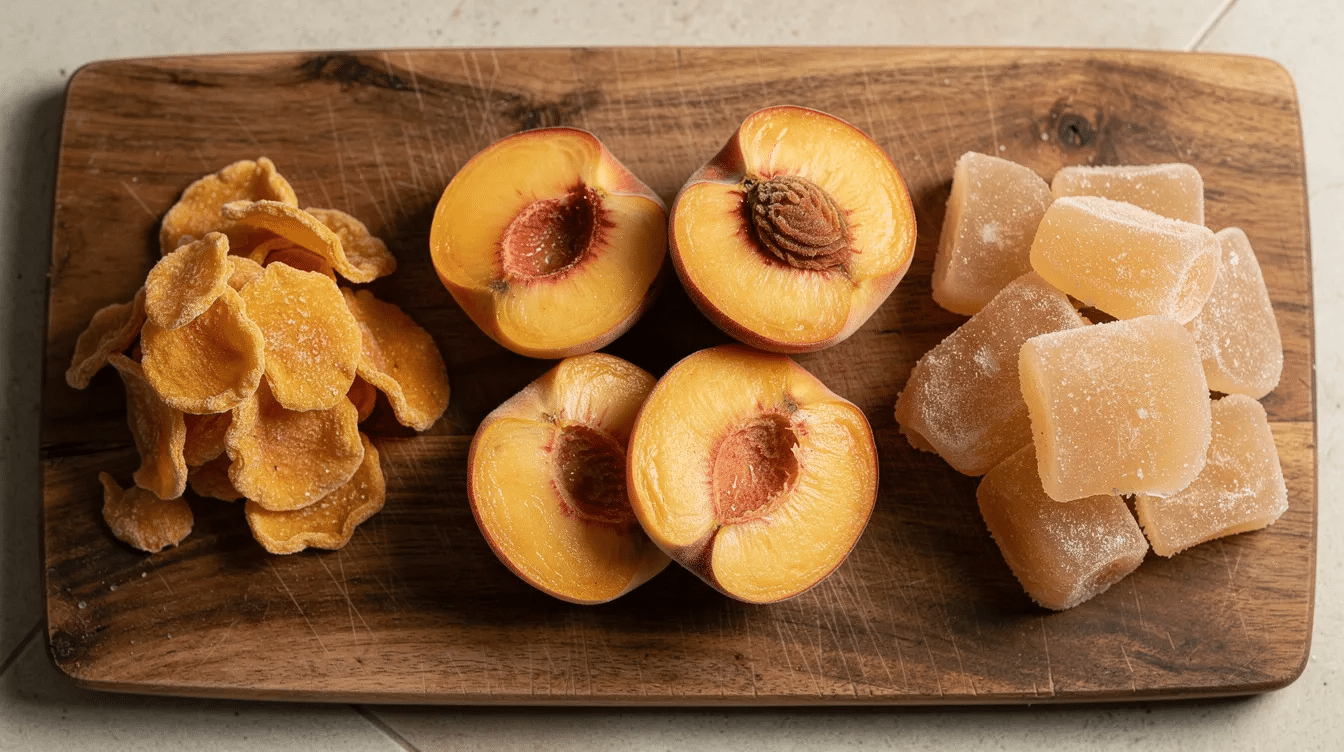
Ripe yellow peaches are best for peach crumble if dehydrating your own. When selecting peaches, they should be firm but not mushy – firm peaches dehydrate and rehydrate most reliably. Frozen peaches, canned peaches, or fresh peaches can substitute if you run out of dehydrated fruit; details are covered in the variations section below, and you can also explore homemade dehydrated pears as another versatile fruit option.
How to Rehydrate Dehydrated Peaches for Baking
Getting the moisture back into dehydrated peaches is the single most important step for an easy peach crumble that is not dry or leathery. Skip this or rush it, and the filling will taste tough no matter how good your crumble topping is.
Measuring and soaking:
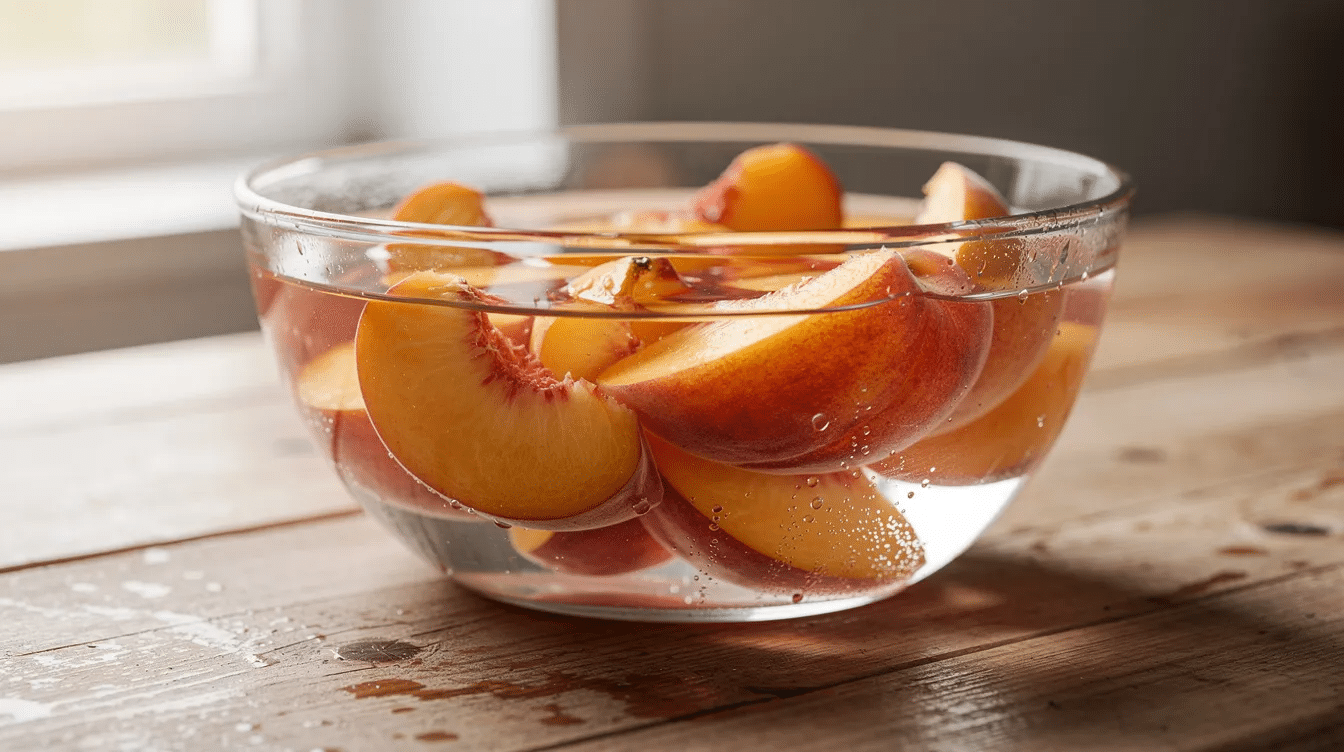
Place about 3 to 3½ cups of loosely packed dehydrated peach slices into your baking dish or a large bowl. Pour very hot water (or hot apple juice for extra flavor) over the slices, just enough to cover them. Rehydrating peaches in hot water or juice for 10–20 minutes is a common method and works well for thin, uniformly dried slices. According to UC Cooperative Extension data, room-temperature soaking takes about 75 minutes, but hot liquid cuts that dramatically. While the peaches soak, you can mix your crumble topping – efficient use of time.
Testing readiness:
Cut a slice in half. The peaches should be plump, soft, and flexible with no tough, dry centers. If still chewy, add a splash more hot liquid and soak 5–10 minutes longer.
Managing liquid levels:
For a juicy filling, leave about 2–3 tablespoons of soaking liquid in the dish. For a thicker, jammier peach layer, pour off most of the excess. The leftover soaking liquid is full of flavor – save it for smoothies or pour a bit back in if the filling looks dry before baking.
Troubleshooting:
Filling too dry: Add a few tablespoons of hot water directly to the dish before adding the topping.
Filling too soupy: Stir in an extra teaspoon of cornstarch before baking, or extend the bake time to allow more evaporation. For deeper guidance, see our full walkthrough on how to rehydrate dehydrated fruit.
Step‑by‑Step: Easy Peach Crumble with Dehydrated Peaches
This is a no-fuss walkthrough that even beginner bakers can follow for consistent results.
1. Preheat and prep. Preheat your oven to 375 F (190°C). Lightly grease an 8×8 inch baking dish or 9-inch cast iron skillet with butter or neutral oil.
2. Assemble the filling. Once peaches are rehydrated and drained to your liking, combine peaches with light brown sugar, a tablespoon or two of granulated sugar if needed, a squeeze of lemon juice, a splash of vanilla extract, a pinch of kosher salt, ground cinnamon, and about 1–2 tablespoons of cornstarch. Gently stir until every slice is coated. Spread the peach mixture evenly in the dish.
3. Mix the crumble topping. In a medium bowl, combine flour, brown sugar, a pinch of salt, and cinnamon. Pour in melted butter and stir with a fork until the flour mixture looks like coarse, sandy crumbs with some larger clumps. You are looking for a crumble mixture that holds together loosely when squeezed. This is your buttery crumble – do not overmix.
4. Top and bake. Sprinkle the crumb topping evenly over the fruit filling without pressing it down, so it bakes up craggy and crisp. Place the dish on a parchment-lined baking sheet to catch drips. Bake peach crumble at 375°F for 40–60 minutes until the topping is golden brown and the filling bubbles thickly at the edges and center.
5. Rest before serving. Let the crumble rest for 15–20 minutes before serving to allow the filling to thicken. Peach crumble should bake until the topping is golden brown and the filling bubbles – that visual cue matters more than the clock. Let peach crumble cool for 15–20 minutes before serving for the best scoopable texture.
Crumble vs. Crisp: What’s Different About This Crumble Topping?
The terms crumble and crisp are often used interchangeably, but there is a real difference. A crumble topping does not include oats – it is a flour-based streusel of flour brown sugar, butter, and spices that bakes into sandy, brittle crumbs. A crisp topping typically includes oats and sometimes nuts, giving it a chewier, heartier crunch. Meanwhile, a peach cobbler is topped with a biscuit-like batter, and cobbler has less crunch than crumble or crisp.
This recipe is written as a true crumble topping, which pairs especially well with the softer texture of rehydrated peaches. The melted butter method delivers a quick, foolproof texture – simply stir until crumbly. Using cold butter cut in with a pastry cutter, or cold cubed butter rubbed by hand, yields chunkier, more rustic clumps. Both work, but melted butter requires less equipment and skill.
Want to push toward an easy peach crisp? Add ½ cup of rolled oats to the topping. Toss in chopped almonds or walnuts and you are firmly in fruit crisp territory while keeping the core crumble recipe intact.
Filling Options: Dehydrated, Fresh, Frozen, or Canned Peaches
You might have multiple forms of peaches in your kitchen. Here is how each behaves in this easy peach crumble.
Dehydrated peaches are the star here: concentrated flavor, customizable sweetness, and months of storage life. This aligns with Dehydrated Foodz’s focus on food preservation, and is the best way to enjoy warm peaches long after summer, especially if you are looking for easy and tasty dried peach recipes beyond crumble.
Fresh peaches: Use about 6–7 medium ripe peaches (4–5 cups sliced). You can leave the peach skin on – do not peel peaches for a quicker preparation. Toss with sugar, spices, lemon juice, and cornstarch. No soaking needed. Fresh fruit releases more juice, so bump cornstarch up by a teaspoon. Nectarines can substitute peaches in crumble recipes if that is what you have on hand. Nectarines can replace peaches with no other changes.
Frozen peaches: Frozen peaches can be used if fresh ones are unavailable. Use 5–6 cups of frozen sliced peaches, thawed and well drained. Frozen peaches are a suitable substitute for fresh peaches and hold their shape nicely in the oven.
Canned peaches: Canned peaches can be used if drained properly. Choose peaches packed in juice rather than heavy syrup, and reduce the sugar in the filling to avoid an overly sweet result. The texture will be softer and more custardy.
Mixing types: Combining dehydrated peaches with a handful of frozen peaches or fresh berries is a great strategy to stretch a limited pantry supply while balancing intense flavor with a softer texture. Other fruits like apples and cherries work beautifully mixed in as well, and a broad overview of what fruit you can dehydrate may inspire even more combinations.
Flavor Variations and Gluten‑Free Adaptations
Once you master the basic method, customize freely.
Filling twists: Add ground ginger or cardamom alongside the cinnamon. A splash of bourbon or dark rum stirred into the rehydrated peaches adds warmth. Try a few drops of almond extract for a stone fruit–almond pairing. Mixing in berries creates a peach-berry crumble variation – toss in a handful of fresh berries or dehydrated berries alongside the peaches. Maple syrup drizzled over the filling before topping adds subtle depth.
Topping variations: Swap a portion of flour for rolled oats to create a hybrid crumble-crisp. Add chopped pecans or almonds for crunch. Use brown butter instead of plain melted butter for a deeper, nutty flavor that makes the crumbly topping irresistible.
Gluten free modifications: You can make a gluten-free crumble using almond flour. A good 1:1 gluten free baking flour also works, or try a blend of almond flour and certified gluten free oats for the topping. The texture will be slightly more fragile and may brown less evenly than purpose flour versions.
Dairy-free option: Replace butter with refined coconut oil or a plant-based butter substitute. The crumble structure may be a touch softer, but the flavor remains excellent.
Sweetener swaps: Coconut sugar or a partial substitution with maple syrup works, but too much liquid sweetener makes the topping less crispy. Stick to dry sweeteners for the crumble layer.
Baking, Serving, and Storage Tips
Careful baking and resting transform a simple bowl combine of peaches and crumbs into a cohesive, scoopable dessert.
Baking cues: The crumble is done when the topping is evenly golden and you see thick bubbles of peach syrup in the center – not just around the edges. If the top browns too fast, loosely tent with foil for the remaining bake time.
Serving: Serve slightly warm or at room temperature so the filling has time to thicken. Baked peach crumble can be served warm with ice cream or whipped cream. A scoop of vanilla ice cream is the classic pairing, though vanilla ice cream alongside a drizzle of heavy cream is equally satisfying. Let the crumble cool slightly before plating.
Storage: Store leftovers by covering the baking dish with plastic wrap and refrigerating up to 4–5 days. Store leftover peach crumble uncovered at room temperature if eating within a few hours. Crumble topping can be refrigerated for up to 2 days if you want to prep the topping ahead. The topping softens in the fridge but reheats well in a 350°F (175°C) oven for 10–15 minutes. Crumble topping can be frozen for up to 3 months – just wrap tightly.
Freezing the baked crumble: Cool completely, wrap tightly, freeze up to 2 months. Reheat from thawed until hot and bubbly. Leftovers also make an excellent breakfast with yogurt.
Dehydrating and Storing Peaches for Future Crumbles
This crumble recipe ties directly to Dehydrated Foodz’s core mission: showing you how to preserve peaches specifically for desserts like this and similar crisp recipes. If you dehydrate extra peaches during summer sales, you can make this easy peach crumble recipe year-round without depending on seasonal availability, and incorporate dehydrated low carb fruits for healthy snacking into your pantry plan.
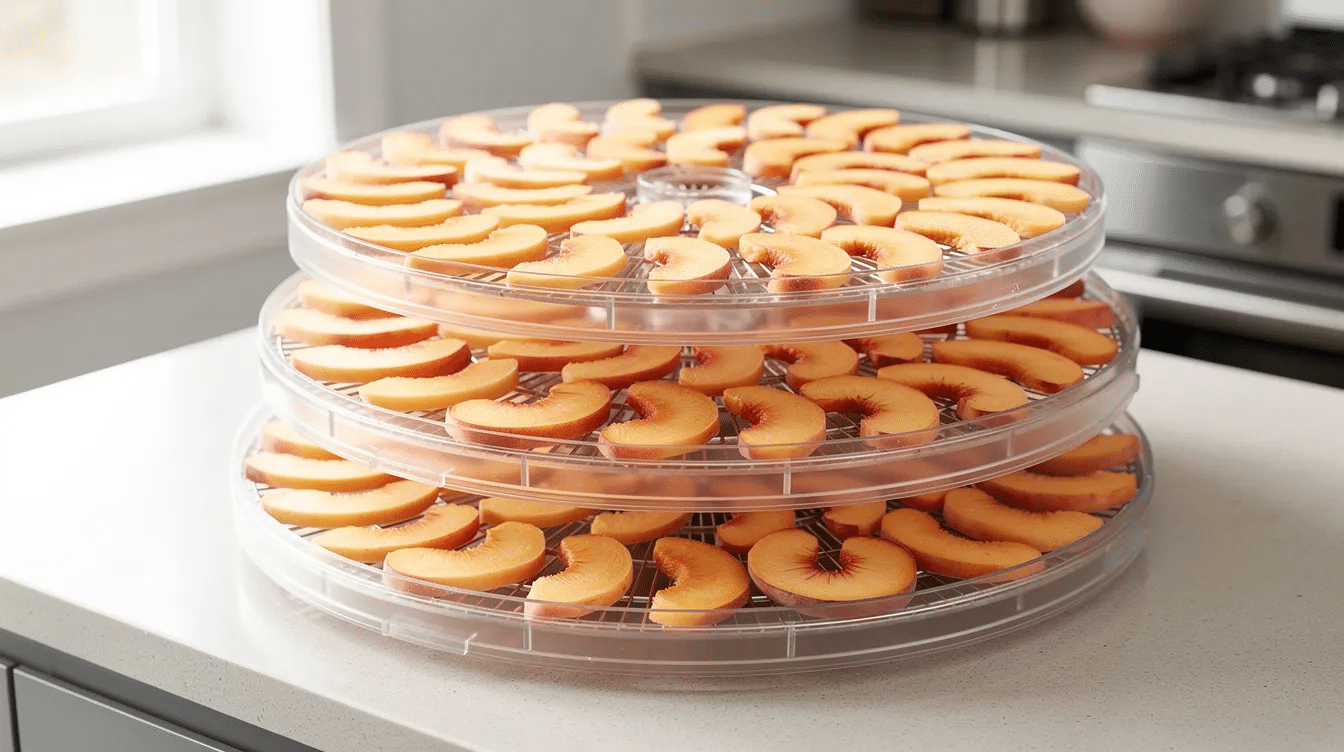
The drying process: Start with ripe, firm peaches. Blanch briefly, slip off the peach skin if desired, and slice to about ¼-inch thickness for even drying. Pre-treat slices with an ascorbic acid dip to prevent browning. Dry in a food dehydrator at roughly 125–135°F (52–57°C) until pieces are leathery but not sticky. For a detailed temperature and time reference, check our food dehydration chart. If you do not own a dehydrator, you can also dry peaches in the oven or learn how to dehydrate fruit using a food dehydrator for larger batches.
Conditioning: Place cooled slices in glass jars about two-thirds full and shake daily for 4–7 days. If condensation appears inside the jar, return slices to the dehydrator. This step equalizes moisture and prevents mold during storage.
Storage: Use airtight jars or vacuum-sealed bags stored in a cool, dark pantry. Properly treated dehydrated peaches maintain their best flavor for 6–12 months. For more tips on shelf life, explore our guide to the best dried fruit for long-term storage.
Investing in a reliable food dehydrator makes it easier to produce consistent, high-quality dried peaches. Browse our beginner’s guide to food dehydrators if you are still choosing one, or consider a dedicated raw food dehydrator if you prefer low-temperature drying.
Using Different Pans: Baking Dish vs. Cast Iron Skillet
This crumble is flexible – it bakes well in a standard glass or ceramic baking dish and in a heavy cast iron skillet, with small differences worth knowing.
8×8 or 11×7 inch baking dish: Even heating, easy portioning into neat squares, and you can store leftovers right in the same pan. This is the simplest option for a recipe developer testing the recipe for the first time.
9–10 inch cast iron skillet: Excellent heat retention produces a deeply browned crumble topping and rustic presentation straight from oven to table – ideal for serving with ice cream at casual gatherings.
Timing adjustments: Dark cast iron may brown the topping a few minutes faster than glass. Start checking at the 30-minute mark rather than waiting for 40. Whatever pan you use, it should hold about 2 quarts. Overfilling causes bubbling peach syrup to overflow, so place the pan on a foil-lined baking sheet to catch drips. Before you review recipe timing, always trust the visual cues of a golden brown top and bubbling center.
FAQ
These FAQs address common concerns from Dehydrated Foodz readers about using dehydrated fruit in baking and adapting this peach crumble recipe. If you have required recipe ratings or nutrition calories questions, check the recipe card notes.
Can I make this crumble ahead of time for a party?
Yes. You can assemble the rehydrated peach filling and crumble topping separately up to 24 hours in advance. Refrigerate both in covered containers, then in a bowl combine the topping just before sprinkling over the filling and baking for the freshest texture. Fully baked crumble can also be reheated the next day at 350°F for 10–15 minutes until warm and bubbly. A recipe developer tip: keep the topping in a separate bowl so it stays dry and crumbly.
How sweet are dehydrated peaches compared to fresh, and should I adjust sugar?
Home-dehydrated peaches made without added sugar are usually less sweet than commercial dried peaches. If you are using store-bought dried fruit, taste a rehydrated slice before mixing the filling. You may want to reduce the granulated sugar or light brown sugar by a tablespoon or two. The natural sweetness of the fruit varies, so always adjust to personal preference rather than following the measurements blindly. Think of the filling sweetness the way you would with any easy peach recipe – let the fruit guide you.
What if I don’t have enough dehydrated peaches for a full pan?
Combine whatever dehydrated peaches you have with fresh peaches, frozen peaches, or canned peaches (well drained) to reach about 5–6 cups total for an 8×8 dish. Frozen peaches can be used if fresh ones are unavailable. Keep the same sugar and cornstarch ratios, but note that juicier fresh or canned fruit may need a little extra thickener. Preheat oven to the same temperature regardless of which fruit blend you use.
Can I reduce the butter or make the crumble topping lighter?
Reducing butter too much makes the topping floury and dry, but cutting back by 1–2 tablespoons is usually safe. For a lighter option, replace part of the butter with yogurt or use a mix of oats and almond flour for a more wholesome, nutty crumble. The texture will be a bit softer than the classic buttery crumble version. You can also experiment with coconut oil for a dairy-free approach without sacrificing too much richness.
Is this recipe suitable for high‑altitude baking?
Because this is a fruit-forward crumble recipe rather than a tall cake, high-altitude adjustments are minimal. Consider increasing the oven temperature by 10–15°F and reducing sugar slightly in the filling to prevent overly runny juices. Keep an eye on doneness cues – bubbling center and golden topping – rather than following an exact timer, especially above 5,000 feet. Adding a touch more cornstarch helps if peaches seem extra juicy at altitude. For more ideas using preserved fruit at any elevation, browse our collection of dehydrator recipes.
DannyContent Writer
Hey there, since 2016, my mission has been to provide you with the information and guides you need to make food dehydrating simple and fun. Whether you're a newbie or a seasoned pro, my site offers helpful guides, reviews, and recipes to enhance your dehydrating experience. I take pride in only recommending products I believe in, ensuring my readers' trust. As an affiliate of various programs, including Amazon Associates, your support helps me continue providing quality content. Thanks for stopping by, and happy dehydrating!