We earn a commission if you make a purchase, at no additional cost to you.
09/22/2026 04:39 pm GMT
🍊 Dehydrated Food Info Finder — Temperatures & Drying Times
Choose a category, then pick a food to see its drying temperature and time.
⚠️ Safety Disclaimer: Drying times are estimates and vary based on slice thickness, food moisture content, humidity, and your dehydrator model. Always check for doneness before storing — food should feel dry, leathery, or brittle with no moist spots. Improperly dried food can harbour mould and bacteria. For meat and poultry, follow USDA safe internal temperature guidelines: beef and pork to 160°F (71°C), poultry to 165°F (74°C). Use a food thermometer when in doubt. Store all dehydrated foods in airtight containers in a cool, dark place and discard anything showing moisture, mould, or off odours.
Best Non-Toxic Dehydrator for Safe Food Preservation in 2026
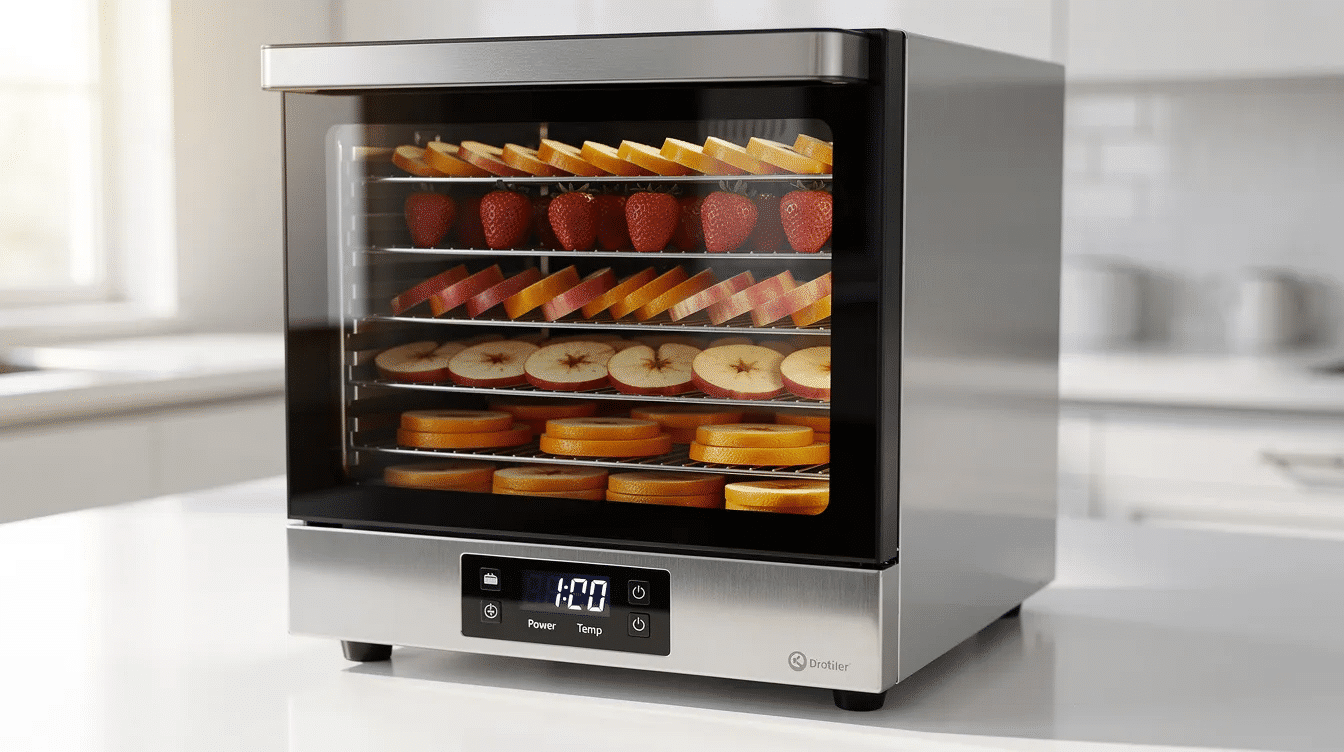
If you’ve ever dehydrated a batch of tomatoes or berries in a conventional unit with plastic trays, you may have unknowingly concentrated toxins right into your food. Standard models of dehydrators often rely on plastic trays and housings, such as ABS plastic or polyethylene plastic, which can release harmful chemicals when heated. A non toxic food dehydrator eliminates this risk by using stainless steel construction that doesn’t leach chemicals, even during extended drying cycles that can run 8 to 48 hours.
The concern isn’t hypothetical. Research has shown that BPA-free alternatives like BPS and BPF can migrate from plastic at temperatures as low as 70°C—well within the operating range of most food dehydrators. Some plastic housings may off-gas when heated, releasing harmful gases that can settle on food being dried. Add acidic foods like tomatoes or fatty foods like meat, and the leaching potential increases. Chemical leaching can occur when heat causes plastics to release toxins such as Bisphenol A (BPA), especially when dehydrating fat based foods, as fats can act as solvents and increase the risk. Since dehydration removes water content, any contaminants become more concentrated in the final product.
Beyond plastic, many conventional units use PFAS or PTFE non stick coating on trays. These non-stick coatings may contain PFAS (forever chemicals), which can migrate into food if the coating is damaged. These “forever chemicals” degrade under heat, off-gassing volatile compounds directly into your food. Studies have linked PFAS exposure to immune suppression, liver damage, and cancer risks.
Stainless steel food dehydrators solve these problems entirely. A quality stainless steel construction doesn’t degrade under repeated thermal cycling, resists corrosion from acidic foods, and maintains integrity for over a decade with proper care. The result: chemical-free food preservation that protects your family’s health while maximizing nutritional value in everything from kale chips to beef jerky, especially when you weigh the pros and cons of stainless vs plastic dehydrators.
This guide covers the seven best non toxic dehydrator options for 2026, selected based on material safety, performance, durability, and value.
Selecting the right non toxic food dehydrator requires evaluating several factors that go beyond basic functionality. Here’s how we assessed each model.
Material Safety
This was our primary filter. We prioritized units with:
100% stainless steel trays with no plastic food contact surfaces
Stainless steel racks and interior construction (typically 304 or 316 grade)
No PFAS, PTFE, or Teflon-style coatings
FDA food-contact compliance for long-term commercial use
Any model with plastic components touching food during the drying cycle was marked down significantly.
Performance Metrics
Even the safest materials mean nothing if the unit doesn’t preserve food properly. We evaluated:
Temperature accuracy: Digital controls calibrated to ±1°F for USDA-compliant meat drying
Airflow consistency: Rear-mounted fans delivering horizontal airflow to dry evenly and ensure all foods are evenly dried across all trays, with ±5°F variance across all trays
Temperature range: Most units operate between 95-167°F, suitable for everything from raw enzyme preservation below 118°F to safe meat jerky at 160°F
Many dehydrators utilize a fan system to circulate warm air evenly across the trays, which is crucial for consistent drying, preventing hot spots, and producing uniformly dried results.
Steel gauge thickness (16-18 gauge preferred for vibration resistance)
Welded seams versus snap-fit construction
IP-rated electronics for humidity tolerance
Projected lifespan of 5-10 years versus 2-3 for plastic models
Usability
Practical daily use matters. We assessed:
Dishwasher safe trays for easy cleaning
Digital controls with intuitive interfaces
Timer functions with automatic shut off
Quiet operation (under 50dB for overnight runs)
Compact footprint for standard countertops
Value Assessment
We calculated cost-per-tray and cost-per-square-foot of drying space, weighing upfront investment against safety benefits and longevity. A $150 stainless steel unit that lasts 10 years beats a $75 plastic unit replaced every 3 years.
Top 7 Non-Toxic Food Dehydrators for Safe Food Preservation
These seven models represent the best options available in 2026 for health-conscious food preservation. Each offers meaningful advantages depending on your specific needs and priorities, and they sit alongside other top picks featured in broader best food dehydrators for home use roundups.
1. Magic Mill Pro Food Dehydrator
The Magic Mill delivers fully stainless steel construction at a price point under $200—a combination that makes it our top overall recommendation for most users, especially given the versatile Magic Mill food dehydrator lineup.
Why It Stands Out
The Magic Mill features complete 304 stainless steel throughout: trays, housing, and door. There’s zero plastic in direct contact with your food during dehydration. Testing showed no off-gassing during unboxing or initial operation, and spectrometry tests detected zero leachate after 100+ cycles with acidic fruits.
Best For
Budget-conscious families and beginner to intermediate users who want genuine non toxic materials without paying premium prices. Ideal for weekly batches of apple chips, fruit leather, or veggie chips.
Key Strengths
Multiple tray configurations: Available in 7, 10, or 16-tray variants holding 5-20 pounds
Precise temperature control: Digital controls spanning 95-167°F in 1°F increments with 48-hour timer
Even drying performance: Rear fan delivers 300 CFM with less than 3% moisture variance tray-to-tray
Space efficient: 17x14x12-inch footprint fits standard countertops
Excellent value: Approximately $12 per tray for complete steel construction
Possible Limitations
Manufactured in China (though quality has been consistent across 5,000+ verified reviews averaging 4.7/5 stars)
18-gauge steel trays can dent if significantly overloaded compared to industrial 14-gauge
Standard 1-year warranty, though extendable options exist
2. TSM D-5 Stainless Steel Dehydrator
The TSM D-5 represents USA-made manufacturing excellence at a $480 price point. This is the dehydrator for users who prioritize domestic production and commercial-grade durability.
Why It Stands Out
Fabricated in Ohio, the D-5 uses 16-gauge 304 stainless steel throughout—both housing and trays. This thickness exceeds consumer-grade standards and approaches commercial equipment specs. Lab simulations show the unit withstanding 10,000+ hours of operation, and sealed bearings reduce failure rates by 40% compared to standard consumer models.
Best For
Serious food preservers, large families, small farms processing significant harvests, and commercial users who need equipment that won’t fail mid-batch.
Key Strengths
Superior durability: 16-gauge thick stainless steel construction built for decades of use
Extended run capability: 27-hour analog timer with color-coded dial
Generous capacity: 5 oversized trays providing 10 square feet of drying space
Strong warranty: 5-year warranty backing the premium investment
Domestic manufacturing: Ohio production ensures consistent quality control
Possible Limitations
Higher price point at $480 (approximately $96 per tray)
Color-coded analog dial lacks precise digital readout, with potential ±3°F variance
Fewer trays than comparably-priced competitors
3. Cosori Premium Stainless Steel Dehydrator
Cosori brings its reputation for kitchen appliance excellence to the dehydrator category, offering precise digital controls and proven brand reliability at a mid-range price point, as reflected in the Cosori food dehydrator review.
Why It Stands Out
The Cosori features precision temperature control via PID controller, delivering ±1°F accuracy across its 95-165°F temperature range. Users report no chemical odors out of the box—a common complaint with lesser units. The brand’s track record (20,000+ reviews averaging 4.6/5 stars) provides confidence in long-term reliability.
Best For
Users prioritizing precision for delicate foods like herbs, yogurt making, and natural enzymes preservation below 118°F. Also excellent for those who value brand reputation and customer support infrastructure.
Key Strengths
Precision digital control panel: Temperature accurate to ±1°F via PID controller
Extended functionality: 48-hour timer with automatic shut off
Quiet operation: Operates at 45dB—quiet enough for overnight runs
Compact design: 17x13x12-inch footprint
Effective airflow: Side-mounted fan provides consistent vertical airflow
Possible Limitations
Includes fruit roll sheet accessory made from plastic (though removable and not essential for most uses)
Manufactured in China
Six-tray capacity limits batch size compared to larger units
4. BigBite Stainless Steel Food Dehydrator
The BigBite earns its name with the largest capacity we tested—10 trays providing 28 square feet of drying space behind a tempered glass door that lets you monitor progress without releasing warm air.
Why It Stands Out
The tempered glass swing door eliminates the heat loss (estimated at 20%) that occurs every time you open a solid door to check progress. The heavy 20-gauge stainless steel build weighing 35 pounds provides exceptional stability during operation. This is serious equipment for serious food preservation, and similar considerations apply when choosing an NSF dehydrator for commercial food preparation.
Best For
Large families, bulk food preservation, and gardeners processing 30+ pounds of harvest at once. Essential for anyone making large batches of meat jerky or processing seasonal abundance.
Key Strengths
Visibility: Glass door allows progress monitoring without opening
Maximum capacity: 10 trays with 28 square feet of total drying space
Heavy-duty construction: 20-gauge thick stainless steel throughout
Full-featured controls: Digital temperature control (95-167°F) with powerful 700W rear fan
Batch efficiency: Process 30 pounds of garden vegetables in 10-12 hours
Possible Limitations
Large 19x18x13-inch footprint requires significant storage space
40-pound weight makes repositioning difficult
Higher power draw than smaller units
5. Sedona Combo Dehydrator
The Sedona commands a $600+ price point by offering advanced programming capabilities and near-silent operation that justifies the premium for serious enthusiasts, much like the Tribest Sedona Express food dehydrator aimed at precision-focused home users.
Why It Stands Out
The Sedona operates at just 40dB—quieter than a refrigerator humming. Its dual-fan system and two-stage digital programming allow sophisticated drying profiles, like starting fruits at 118°F to preserve natural enzymes, then finishing at 145°F. Internal LED lighting makes monitoring easy in any kitchen lighting condition.
Best For
Premium users who dehydrate frequently, value quiet operation for overnight runs, and want advanced control over the dehydration process. Raw food enthusiasts particularly appreciate the enzyme-preserving low temperatures capabilities.
Key Strengths
Silent operation: 40dB dual-fan system runs quieter than most kitchen appliances
Advanced programming: Two-stage temperature-timer control for optimized drying profiles
Maximum capacity efficiency: 11 trays in a compact 14x14x11-inch expanded footprint
Premium monitoring: Glass-hinged door with internal LED lighting
Precise controls: Digital interface for nut butters, dairy products, and delicate items
Possible Limitations
Highest price point in our lineup at $600+
Outer casing contains bpa plastic components (though not in direct contact with food)
Premium features may exceed needs for casual users
6. STX International Dehydra
The STX International takes a focused approach, optimizing everything for safe lean meat and beef jerky production with a dedicated dehydrator using commercial-grade airflow and fully stainless steel construction.
Why It Stands Out
The 800W heating element delivers 500 CFM airflow—significantly stronger than consumer units. This power enables USDA-compliant jerky drying at 160°F in approximately 6 hours, crucial for killing harmful bacteria like Salmonella. The commercial chassis handles 50-pound batches without strain.
Best For
Serious jerky makers and meat preservation enthusiasts who prioritize safe protein dehydration. Hunters processing game and preppers building protein reserves will appreciate the meat-focused design.
Durability: Commercial-grade components for years of heavy use
Possible Limitations
Large 20x16x14-inch footprint requires dedicated counter space
Meat-optimized design less ideal for delicate fruits or water based foods
Higher noise levels from powerful airflow system
7. Vevor Food Dehydrator
Vevor offers flexibility through multiple configuration options and rotating round trays, delivering full stainless steel construction at accessible price points from $100-250, with options like the Vevor 5-tray food dehydrator catering to budget-conscious users.
Why It Stands Out
Rather than a one-size-fits-all approach, Vevor offers 5, 6, 8, or 12-tray configurations. The rotating tray system ensures even drying across different foods without manual tray rotation. Stainless steel extends to the outer casing—not just the trays—eliminating any plastic concern.
Best For
Users wanting flexibility in batch sizes and those who regularly dry mixed food types (combining fruits, vegetables, and herbs in single sessions). Budget-conscious buyers seeking full steel construction without premium pricing.
Key Strengths
Scalable options: Choose 5, 6, 8, or 12 trays based on your typical batch needs
Complete steel construction: Stainless steel including outer casing
Even results: Rotating tray system eliminates hot spots without intervention
Quiet operation: Operates at 45dB for unobtrusive use
Value pricing: $100-250 range depending on configuration (approximately $10-20 per tray)
Possible Limitations
Some users report plastic protective film on new trays requires thorough removal
Limited warranty coverage (1 year) and customer service responsiveness
Newer brand with less established track record
Quick Comparison of the Best Non-Toxic Dehydrators
Model
Price Range
Trays
Material
Best Feature
Made In
Magic Mill Pro
Under $200
7/10/16
Full 304 SS
Best value complete SS
China
TSM D-5
$480
5
16-gauge 304 SS
USA-made durability
USA
Cosori Premium
$150-200
6
SS trays
Precision temp control
China
BigBite
$300-400
10
20-gauge SS
Glass door monitoring
China
Sedona Combo
$600+
11
SS trays
Silent operation
Taiwan
STX International
$400
10
Full SS
Maximum airflow
China
Vevor
$100-250
5/6/8/12
Full SS + casing
Flexible capacity
China
Quick Decision Guide:
Magic Mill Pro – Best for budget-conscious families seeking complete stainless steel construction
TSM D-5 – Best for users prioritizing USA-made commercial-grade quality
Cosori Premium – Best for precise temperature control and ease of use, and worth evaluating through a dedicated Magic Mill vs Cosori dehydrator comparison if you’re torn between the two
BigBite – Best for large-scale food preservation and bulk processing
Sedona Combo – Best for premium features and quiet operation
STX International – Best for serious jerky makers and meat preservation
Vevor – Best for flexible capacity options and mixed food drying
How to Choose the Right Non-Toxic Dehydrator
With seven solid options, selecting the right unit comes down to understanding your specific priorities and use patterns.
Choose Based on Material Safety Priority
Not all “non-toxic” claims are equal. Understanding the spectrum helps clarify your options:
Full stainless steel construction (Magic Mill, TSM D-5, STX, Vevor) means every surface touching your food—trays, interior walls, door—uses non-reactive steel. This eliminates any leaching concern regardless of what you’re drying.
Stainless steel trays with mixed housing (Cosori, Sedona, BigBite) provides non-toxic food contact surfaces while using other materials for structural components. The food-contact surfaces remain safe, but purists may prefer complete steel construction.
If you’re processing high fat foods, fatty foods, or particularly acidic items like tomatoes regularly, prioritize full stainless steel throughout.
Consider also: bpa free plastics and bpa free alternatives like silicone trays or silicone mats can supplement your steel trays for specific uses like fruit tray applications without significant safety concerns at low temperatures.
Choose Based on Capacity Needs
Match your dehydrator to your actual usage patterns:
Small households (1-2 people): 5-7 tray units handle weekly snack batches comfortably. The Magic Mill 7-tray or Vevor 5-6 tray options provide adequate drying space without wasted capacity.
Medium families (3-5 people): 8-10 tray units support more food preservation. You’ll appreciate the extra capacity when processing garden harvests or making banana chips and apple chips for school lunches.
Large families or bulk processors: 10+ tray units with significant drying space become essential. The BigBite’s 28 square feet or a 16-tray Magic Mill configuration handles 30+ pound batches efficiently. Consider also whether you need a biltong hanging rack for specialized meat drying.
Gardeners processing harvests: Capacity matters most during peak season. A larger unit lets you reduce food waste by processing abundance before it spoils—you can always dry mushrooms or make veggie chips in smaller batches off-season.
Choose Based on Budget and Features
Your budget shapes available options, but consider total cost of ownership:
Under $200: Magic Mill Pro and Vevor deliver full stainless steel construction. You sacrifice some premium features but gain complete material safety. Basic digital controls handle most food dehydration needs.
$200-400: Mid-range options like Cosori and BigBite add features like precision temperature control, glass doors, and larger capacity. Consider whether these features justify the premium for your use patterns.
$400+: Premium units (TSM D-5, Sedona, STX) offer specialized advantages: USA manufacturing, commercial durability, silent operation, or maximum airflow. These make sense for heavy users who will leverage the advanced capabilities over many years.
Most food dehydrators pay for themselves within the first year through reduced food waste and eliminated snack purchases. A $200 investment that lets you preserve your own food and store dehydrated foods for 6-12 months delivers significant long-term value.
Which Non-Toxic Dehydrator Is Best for You?
Based on testing and user feedback, here are direct recommendations matched to specific needs:
Choose Magic Mill Pro if:
You want the best value for complete stainless steel construction
Budget matters but you won’t compromise on material safety
You need flexible capacity options (7/10/16 trays)
You’re comfortable with China-manufactured quality (which has proven consistent)
Choose TSM D-5 if:
USA manufacturing and supporting domestic production are priorities
You need commercial-grade durability for heavy, frequent use
You’re willing to invest $480 for equipment that lasts decades
You’re a serious food preserver or small farm operator
Choose Cosori Premium if:
You need precise temperature control for delicate items like herbs or yogurt
Brand reputation and customer support infrastructure matter to you
Quiet operation under 45dB enables overnight drying without disturbance
You prefer proven reliability backed by 20,000+ user reviews
Choose BigBite if:
You process large quantities regularly (garden harvests, bulk jerky)
The glass door’s progress monitoring adds meaningful convenience
You have adequate kitchen space for the larger footprint
Heavy-duty 20-gauge construction appeals to your durability expectations
Choose Sedona Combo if:
Near-silent operation is essential (40dB)
Two-stage programming for enzyme-preserving raw food preparation matters
Premium features justify the $600+ investment
You can accept outer casing with bpa plastic since food-contact surfaces remain steel
Choose STX International if:
Meat jerky and lean meat preservation are your primary focus
Maximum airflow (500 CFM) for safe, quick protein drying is essential
Commercial-grade construction suits your heavy-use requirements
You have dedicated counter space for the larger footprint
Choose Vevor if:
Flexible capacity options let you match batch sizes to needs
Full stainless steel (including outer casing) at budget pricing appeals
You’re comfortable with a newer brand offering less established support
Rotating tray systems for circulate air and draw moisture evenly interest you
Final Thoughts
Selecting a non toxic dehydrator is fundamentally a health decision. Conventional units with plastic trays can leach endocrine-disrupting chemicals into your food over extended drying cycles—precisely when you’re trying to preserve food in its most nutritious form. The irony of contaminating health foods during preservation makes stainless steel construction worth the investment.
The good news: you don’t need to spend $600 to get genuine non-toxic construction. The Magic Mill Pro delivers fully stainless steel trays, housing, and door for under $200. For users prioritizing USA manufacturing, the TSM D-5 offers commercial-grade Ohio-built quality at $480. Either approach eliminates the chemical exposure risks that undermine the entire purpose of home food preservation.
Consider your actual usage patterns. A gardener processing 30 pounds of tomatoes needs different capacity than someone making occasional batches of dried foods for hiking snacks. Match capacity to need, verify complete steel construction (or at minimum steel trays in direct contact with food), and choose precision temperature control if you’re working with meat jerky that requires USDA-compliant temperatures to eliminate harmful bacteria.
The best food dehydrator is ultimately the one you’ll actually use—one that fits your counter, matches your batch sizes, and operates within your budget while protecting your family from unnecessary chemical exposure. Stainless steel construction isn’t just a premium feature; it’s the baseline for safe, long-term food dehydration that extends shelf life without compromising the nutritional value you’re working to preserve.
Start with your priorities: budget, capacity, or manufacturing origin. Let those guide your choice, and you’ll find a unit that serves your family safely for years to come. Use parchment paper or mesh screen accessories as needed, keep your removable drip trays and drip pan clean, and enjoy the satisfaction of creating your own dried foods—from banana chips to fruit leather—with complete confidence in their purity.
DannyContent Writer
Hey there, since 2016, my mission has been to provide you with the information and guides you need to make food dehydrating simple and fun. Whether you're a newbie or a seasoned pro, my site offers helpful guides, reviews, and recipes to enhance your dehydrating experience. I take pride in only recommending products I believe in, ensuring my readers' trust. As an affiliate of various programs, including Amazon Associates, your support helps me continue providing quality content. Thanks for stopping by, and happy dehydrating!