We earn a commission if you make a purchase, at no additional cost to you.
09/22/2026 04:39 pm GMT
🍊 Dehydrated Food Info Finder — Temperatures & Drying Times
Choose a category, then pick a food to see its drying temperature and time.
⚠️ Safety Disclaimer: Drying times are estimates and vary based on slice thickness, food moisture content, humidity, and your dehydrator model. Always check for doneness before storing — food should feel dry, leathery, or brittle with no moist spots. Improperly dried food can harbour mould and bacteria. For meat and poultry, follow USDA safe internal temperature guidelines: beef and pork to 160°F (71°C), poultry to 165°F (74°C). Use a food thermometer when in doubt. Store all dehydrated foods in airtight containers in a cool, dark place and discard anything showing moisture, mould, or off odours.
How to Dry Cheese Without a Dehydrator (Safely & Simply at Home)
Drying cheese at home is entirely possible without specialized equipment, but it comes with important limitations. You can create concentrated, flavorful cheese for short-term use, though you cannot achieve the shelf-stable, long-term storage that commercial freeze drying or a food dehydrator provides.
Quick Answer: The Easiest Ways to Dry Cheese Without a Dehydrator
Yes, you can dry cheese without a dehydrator, but only for short-term use—think days to weeks, not years of emergency storage. The drying process works best with hard or semi-hard cheeses and yields intensely flavored results perfect for cooking and snacking; if you want to go further with full cheese dehydration techniques and storage, you’ll need more controlled methods and equipment.
All methods work exclusively with hard cheeses like parmesan, aged cheddar, Gruyère, or 12-month-plus Gouda. Soft cheeses like ricotta, brie, or fresh mozzarella will spoil rather than dry.
One critical safety note: without commercial equipment, you are dehydrating cheese for flavor concentration and short storage only. No validated home methods exist for creating shelf-stable dried cheese. We’ll walk you through each method step-by-step below.
Safety First: What You Can and Can’t Do at Home
Cheese presents unique challenges for home drying food. Its high fat content (typically 30–35% in aged varieties) creates rancidity risks, while residual moisture can foster bacterial contamination if not handled properly.
The U.S. National Center for Home Food Preservation explicitly states that no validated home methods exist for shelf-stable dehydrated dairy. This means your dried cheese is for flavor enhancement and short-term refrigerated or frozen storage—not pantry storage or emergency preparedness.
Low heat and good airflow are essential, just as with other foods you might dehydrate without a dedicated dehydrator. Once temperature exceeds 180°F (82°C), cheese begins melting rather than drying, releasing oils that create greasy, potentially unsafe results prone to bacterial growth.
Discard any batch that develops slime, off smells (rancid, ammonia-like, or sour), or unexpected mold colors. People with compromised immune systems should avoid experimenting with room-temperature cheese drying methods to prevent bacterial contamination risks.
Best Cheeses to Dry Without a Dehydrator
Harder, older cheeses dry far more reliably than young or soft varieties. Their lower moisture content and dense casein structure allow them to desiccate without collapsing into greasy puddles.
Borderline options (may weep more oil and stay slightly chewy rather than crunchy):
Jarlsberg
Swiss/Emmental
Edam
Always buy cheese in solid blocks rather than pre-shredded cheese. Commercial shredded cheese contains anti-caking agents (up to 2% cellulose) that absorb oils unevenly and cause clumping during the drying process.
Method 1: Oven-Drying Cheese on the Lowest Setting
This is the fastest method for most home cooks. Standard ovens from recent decades typically have “warm” settings that work well, though you must maintain very low temperatures—ideally 150–170°F (65–75°C), which is also important if you experiment with freeze-drying food without a machine.
Step-by-step process:
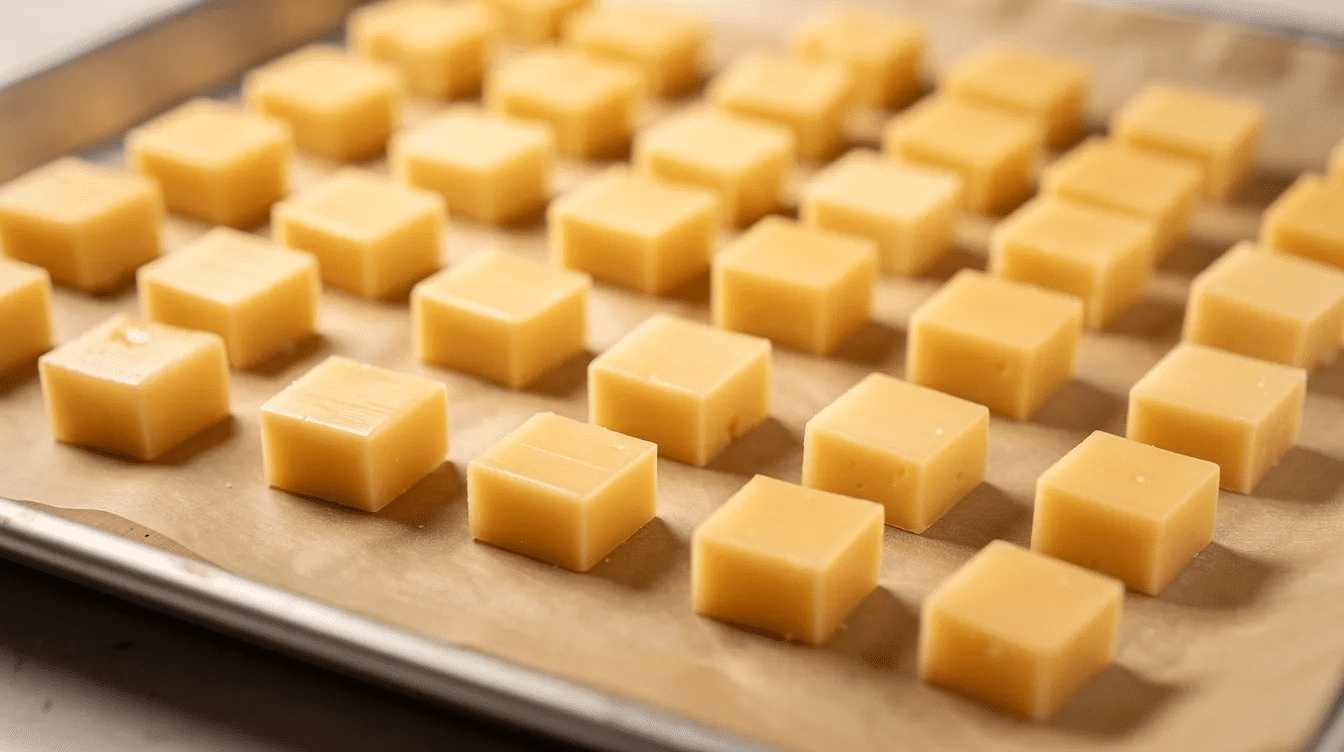
Start with chilled cheese and cut it into uniform small cubes (about ¼–⅜ inch) or thin shreds. Smaller pieces dramatically increase surface area, speeding evaporation by 2–3 times compared to larger chunks.
Blot pieces thoroughly with a paper towel to remove surface moisture and grease before heating. Line a baking sheet with parchment paper or a silicone mat, then arrange cheese in a single layer with space between pieces.
Preheat your oven to its lowest setting. If that temperature exceeds 170°F (75°C), prop the door slightly open with a wooden spoon to vent humidity and moderate heat.
Place the tray on a middle rack with space above and below for airflow. Dry for 2–4 hours, checking every 30 minutes. Flip pieces halfway through and blot off any expressed oils with fresh paper towels.
Test doneness by cooling a small piece completely—it should be very firm with minimal visible surface oil.
What to expect: Texture ranges from chewy-firm (cheddar) to crisp (parmesan), depending on cheese type and piece size. Results won’t match commercial powdered cheese but deliver concentrated flavor.
Never exceed 180°F (82°C). Above this temperature, cheese melts into oil pools and may scorch rather than dry.
Consider using an inexpensive oven thermometer to verify your “warm” setting actually maintains safe temperatures, or look into a simple unit like a budget-friendly Deni food dehydrator if you plan to dry many different foods.
Method 2: Drying Cheese in the Refrigerator (No Heat)
This is the safest, most hands-off approach for dehydrating cheese at home. A standard fridge (34–40°F / 1–4°C) naturally pulls moisture from exposed surfaces through cold, dry air circulation, while budget food dehydrators for home use rely on gentle warmth and forced airflow to achieve similar results more quickly.
How to do it:
Cut firm cheese (such as a 200g block of aged cheddar or a wedge of parmesan) into thin slices, small cubes, or coarse grated shreds. Finer pieces dry faster.
Line a rimmed tray or large plate with paper towels or a clean lint-free cloth. Spread cheese pieces in a single layer with small gaps for air circulation.
Place on the top or middle shelf of your fridge, uncovered or very loosely tented with parchment paper to protect from strong odors while allowing airflow.
Flip pieces once or twice daily and replace saturated towels underneath. Allow 3–7 days for significant drying time—exact duration varies by fridge humidity, cheese type, and piece size.
Expected results: The surface becomes noticeably drier and more concentrated in flavor. Edges may darken slightly. Properly dried pieces will be hard enough to grate or finely chop.
Label your tray with the start date (e.g., “Started drying: 17 April 2026”) for accurate tracking
This method works well for preparing firmer cheese bits for camping or backpacking meals that will be kept in a cooler and used within a week
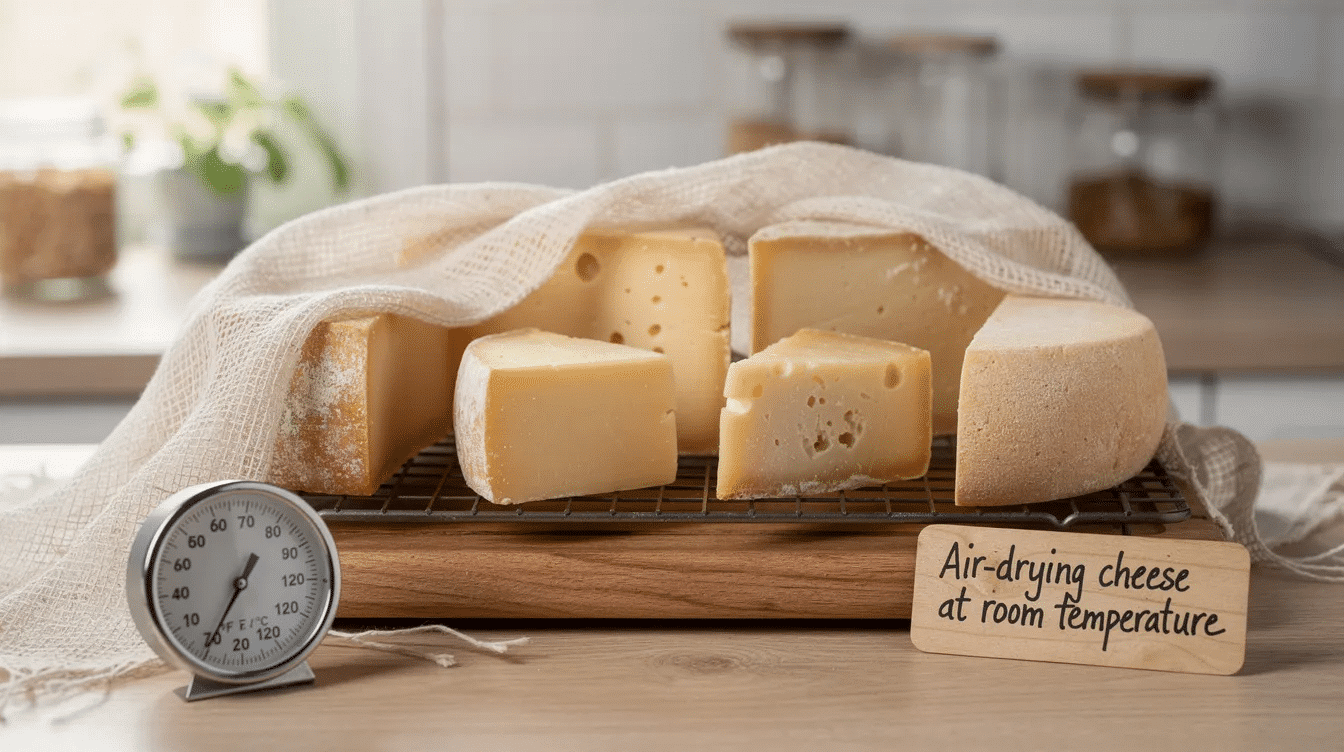
Method 3: Air-Drying Cheese at Room Temperature (Traditional Style)
This method imitates traditional aging rooms but carries the highest risk for modern home kitchens. Reserve it for very hard, aged cheeses only.
Caution: If your ambient room temp regularly exceeds 68–70°F (20–21°C), do not use this method.
The ideal environment mirrors a cellar: cool room (50–60°F / 10–16°C) with moderate humidity around 65–75%. Basements in spring or autumn sometimes provide suitable conditions.
Basic setup:
Place a wire rack over a tray to allow air circulation underneath. Cut hard cheese like Parmigiano-Reggiano or Pecorino into wedges or thick slices, leaving natural rinds intact.
Wrap loosely in breathable cheese paper or a single layer of clean cotton muslin—avoid plastic wrap entirely. Position the rack in the coolest, least sun-exposed area away from cooking smells and pests.
Turn cheese once daily and rewrap with fresh cloth if it becomes damp. Check daily for unusual mold colors (black, pink, fuzzy green) and sticky or slimy textures that signal spoilage.
This method works best for gently drying the surface of whole pieces over 3–10 days, not for fully drying small cubes intended for long term storage, where tools like non-stick dehydrator sheets in a proper dehydrator give you more even, predictable results.
Finishing Touches: Cooling, Blotting, and Testing Dryness
How you finish dried cheese directly affects both safety and texture. Rushing this stage invites condensation and spoilage.
Always let oven-dried cheese cool completely on the tray or a clean rack. This allows remaining moisture to escape rather than condensing when you store it.
Thoroughly blot cooled cheese with fresh paper towels to remove surface oils. Repeat until towels come away nearly clean—this may take 3–5 passes.
Testing dryness:
Test
What to Look For
Cubes
Hard all the way through when pressed; no grease residue on fingers
Grated
Falls freely without clumping; feels dry, not tacky
Discard any batch that remains soft and greasy after extended drying rather than pushing further. Home-dried cheese may be slightly chewier or less uniformly crisp than commercial products, but properly dried pieces will still deliver excellent flavor.
How to Store Home-Dried Cheese (Short-Term Only)
These storage methods cover short-term use only—a few days up to a few weeks—not multi-year shelf life.
Refrigerator storage (7–14 days):
Place cooled, dried cheese in a small glass jar or airtight container with a folded paper towel inside to absorb residual moisture. Label with date and cheese type. Check for mold or off smells before each use.
Freezer storage (2–3 months):
Spread dried pieces on a tray to freeze individually, then transfer to freezer bags. Expect minimal quality loss with this approach.
Vacuum sealing can extend quality by reducing oxygen exposure but does not override the need for cold storage due to fat content; similar principles apply when dehydrating meat for long-term storage.
Never store home-dried cheese in the pantry at room temp. Fat can go rancid and bacteria can grow even if the cheese looks completely dry.
When to throw it away:
Visible mold (other than original rinds)
Sour, paint-like, or ammonia smells
Unusual discoloration or slimy texture
Ideas for Using Home-Dried Cheese
Think of dried cheese as a flavor booster rather than a survival food. It’s intensely salty, umami-rich, and excellent in small amounts, especially when paired with other lightweight staples like dehydrated pasta and pasta sauces for camping or quick meals.
Practical uses:
Grind very dry parmesan or cheddar cubes in a clean food processor or coffee grinder to make coarse cheese powder for popcorn, roasted vegetables, pasta, or baked potatoes
Add dried cheese bits to homemade trail mixes intended for same-day or next-day hiking, combined with nuts and dried fruit
Stir grated dried cheese into bread or biscuit dough for an extra-savory crunchy crust
Use as a garnish over salads or soups, similar to crackers or croutons but more intensely flavored, or combine with dehydrated maraschino cherries in salads and snack mixes for a sweet-salty contrast
Sprinkle plain dried hard cheese occasionally as a topper on dog food (check with your veterinarian about salt and fat intake first)
Common Mistakes and How to Avoid Them
Most problems stem from excessive heat, too much oil, or attempting to dry the wrong cheeses entirely; fruits like persimmons prepared for dehydration are often more forgiving than high-fat cheeses.
Mistake
What Happens
The Fix
Using soft or fresh cheeses
Spoils within 48 hours instead of drying
Stick to hard, aged varieties only
Setting oven too hot
Cheese melts into oily puddles
Keep below 170°F; use a thermometer
Crowding pieces on tray
Traps moisture, encourages mold
Leave gaps; work in smaller batches
Storing while still warm
Condensation causes rapid spoilage
Cool completely before sealing in container
Start with a small test batch of 50–100g on a quiet weekend before committing larger quantities. This lets you learn your equipment’s quirks without wasting expensive aged cheese.
With careful temperature control and patience, you can safely experiment and discover what works best in your own kitchen. The results may not match commercial freeze drying, but concentrated, flavorful cheese you dried yourself is genuinely satisfying to eat and cook with.
DannyContent Writer
Hey there, since 2016, my mission has been to provide you with the information and guides you need to make food dehydrating simple and fun. Whether you're a newbie or a seasoned pro, my site offers helpful guides, reviews, and recipes to enhance your dehydrating experience. I take pride in only recommending products I believe in, ensuring my readers' trust. As an affiliate of various programs, including Amazon Associates, your support helps me continue providing quality content. Thanks for stopping by, and happy dehydrating!