We earn a commission if you make a purchase, at no additional cost to you.
09/22/2026 04:39 pm GMT
🍊 Dehydrated Food Info Finder — Temperatures & Drying Times
Choose a category, then pick a food to see its drying temperature and time.
⚠️ Safety Disclaimer: Drying times are estimates and vary based on slice thickness, food moisture content, humidity, and your dehydrator model. Always check for doneness before storing — food should feel dry, leathery, or brittle with no moist spots. Improperly dried food can harbour mould and bacteria. For meat and poultry, follow USDA safe internal temperature guidelines: beef and pork to 160°F (71°C), poultry to 165°F (74°C). Use a food thermometer when in doubt. Store all dehydrated foods in airtight containers in a cool, dark place and discard anything showing moisture, mould, or off odours.
Making your own chocolate treats at home doesn’t require pastry school training or expensive equipment. With just a baking sheet, some quality ingredients, and 15 minutes of hands-on time, you can create nutrient-dense snacks that satisfy your sweet tooth without derailing your health goals.
Healthy bark recipes have become a standout trend in 2026, with home cooks gravitating toward high-protein desserts over traditional ice cream bars and candy as part of a broader shift toward guilt-free snack ideas. This guide walks you through everything from ingredient selection to storage, so you can start making your own bark this week.
Key Takeaways
Healthy bark recipes use either dark chocolate or Greek yogurt as a base, topped with whole foods like nuts, seeds, and fruit for a nutrient-dense snack.
Most bark comes together in under 15 minutes of active prep time—just spread, top, and chill until firm.
Choosing 70–85% dark chocolate, unsweetened plain greek yogurt, and no-sugar-added dried fruit keeps these treats refined sugar free.
Every recipe adapts easily for vegan, dairy free, gluten free, or nut-free diets with simple ingredient swaps.
Proper storage in an airtight container with parchment paper between layers keeps homemade bark fresh for weeks.
Bark is a thin slab of chocolate or yogurt spread across a prepared baking sheet, topped with mix-ins, chilled until solid, then broken into rustic, irregular pieces. Traditional chocolate bark dates back to early 20th-century chocolatiers who poured melted chocolate over nuts for quick candy production.
The “healthy” spin transforms this classic by using dark chocolate with 70% cacao or higher, creamy greek yogurt as the base, and nutrient-dense toppings instead of candy corn and sprinkles. You’re essentially building a better snack from the ground up.
Specific health benefits include:
Antioxidants from dark chocolate (flavanols up to 200mg per ounce in 85% cacao)
Protein from full fat greek yogurt and nuts (Greek yogurt delivers up to 20g protein per cup)
Fiber from berries, seeds, and dried fruit (3-5g per serving)
Healthy fats from almonds, pistachios, and coconut (monounsaturated fat and polyunsaturated fat)
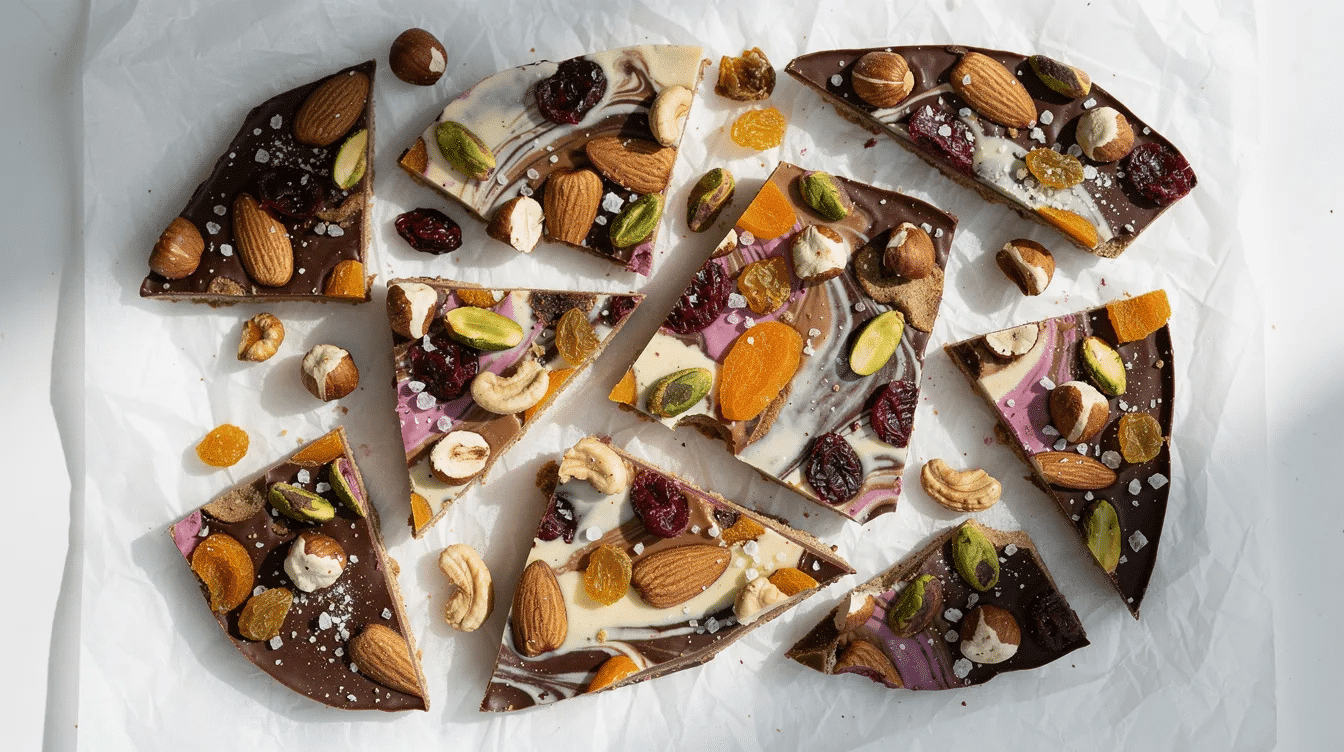
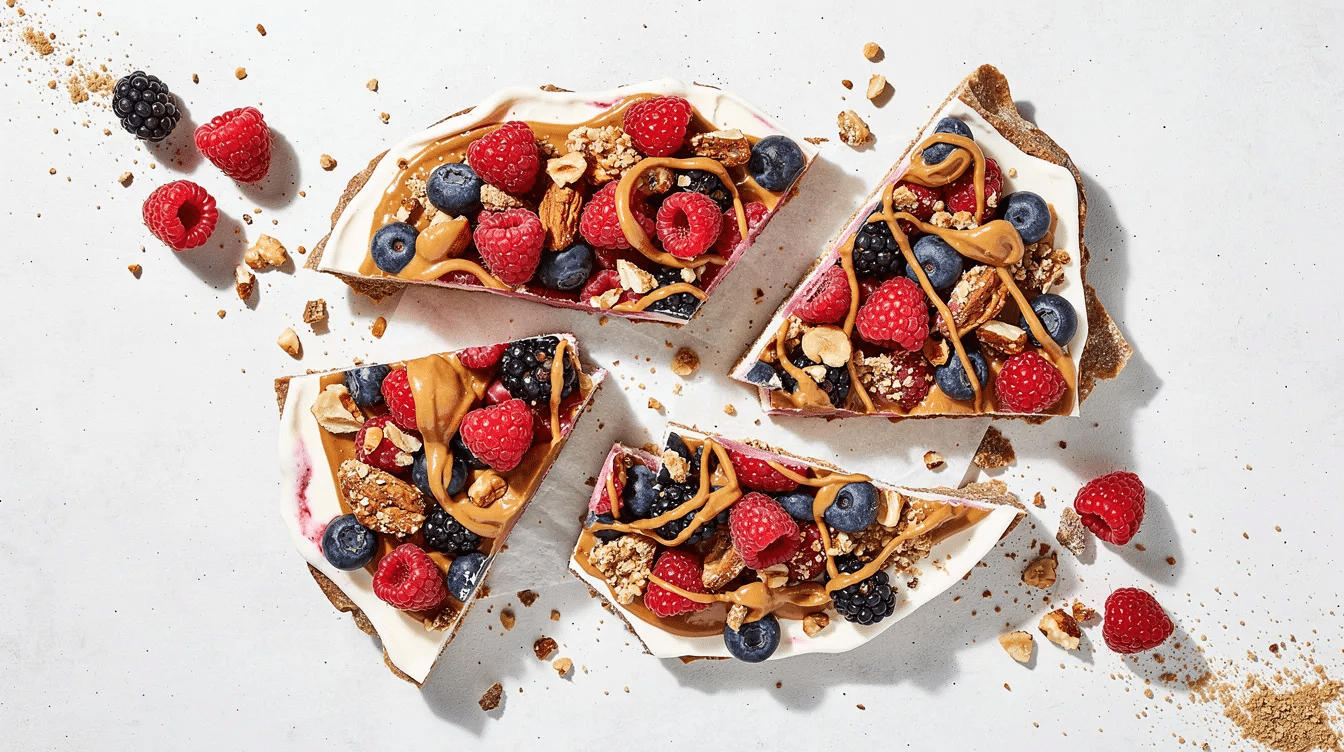
Finished bark looks like an edible mosaic—deep chocolate punctuated by ruby dried cranberries and green pistachios, or pale yogurt flecked with berry purples and nut tans. Swirls from drizzled peanut butter or cashew butter add marbled appeal that makes each piece unique.
Essential Ingredients for Healthy Bark
Before you start any bark recipe, stock a “bark pantry” with versatile staples that last months and work across multiple variations. This eliminates last-minute grocery runs and keeps costs low.
Choosing Chocolate
Select 70–85% cacao dark chocolate bars or chocolate chips
Look for fair-trade certification when possible
Avoid products with hydrogenated oils or excessive added sugar (under 5g per ounce is ideal)
Sugar free options sweetened with stevia work well for keto versions
Keep 8-12 ounces on hand for a standard batch
Selecting Yogurt
Thick Greek yogurt (2% or full fat greek yogurt) freezes creamiest
Plain yogurt or plain greek yogurt gives you control over sweetness
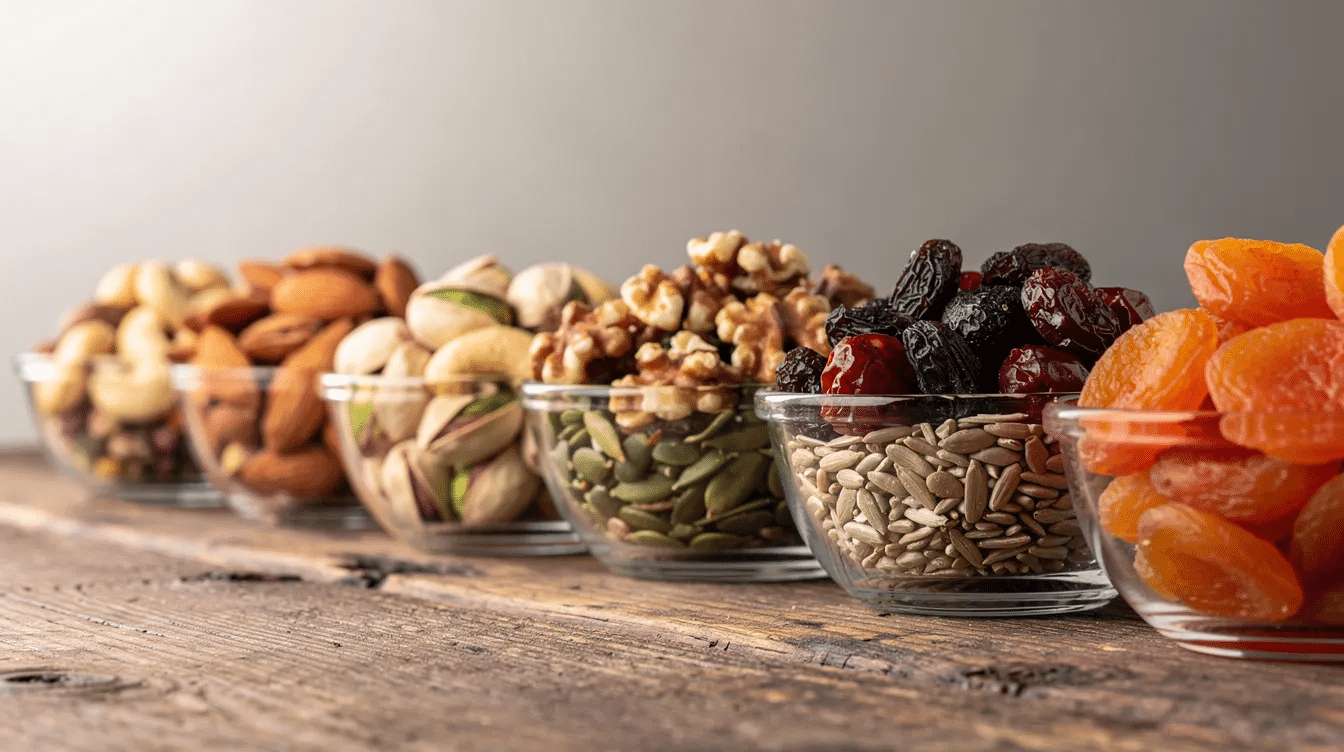
Dried cranberries, dried cherries, goji berries, dried apricots, dates, or a homemade dried fruit and nut mix
Extras
Coconut flakes, cacao nibs, mini chocolate chips, freeze-dried raspberries
Flavor Boosters & Sweeteners
Pure vanilla extract (1/2 to 1 teaspoon)
Pure maple syrup or honey (1-2 tablespoons max)
Agave nectar for vegan versions
Flaky sea salt for sweet-salty contrast
Ground cinnamon, nutmeg, or orange zest
Dark cocoa powder or cocoa powder for chocolate yogurt variations
Essential Tools
Keep parchment paper or silicone baking mats, a rimmed baking sheet (9×13 inches works well), a microwave safe bowl or heat proof bowl for melting, and a sharp knife for clean cuts.
Step-by-Step: Basic Dark Chocolate Bark
This is the master healthy chocolate bark method you can customize endlessly. Once you nail this technique, every variation becomes simple.
Step 1: Prepare your pan
Line a medium rimmed baking sheet (about 9×13 inches) with parchment paper, leaving overhang on two sides for easy lift-off. A parchment lined baking sheet ensures clean removal and tidy edges.
Step 2: Melt the chocolate
Place 8-10 ounces of dark chocolate (a chocolate bar broken into pieces or chocolate chips) in a medium bowl. Melt gently using one of two methods:
Double boiler: Set bowl over simmering water on low heat, stirring constantly until smooth
Microwave: Heat at 50% power in 20-30 second bursts, stirring between each interval
The chocolate mixture should reach 110-115°F for proper temper and shine. Avoid overheating past 120°F, which causes grainy texture.
Step 3: Add optional coconut oil
Stir in 1-2 teaspoons coconut oil for a slightly softer “snap” and glossier finish. This also helps the bark break more cleanly.
Step 4: Spread the melted chocolate
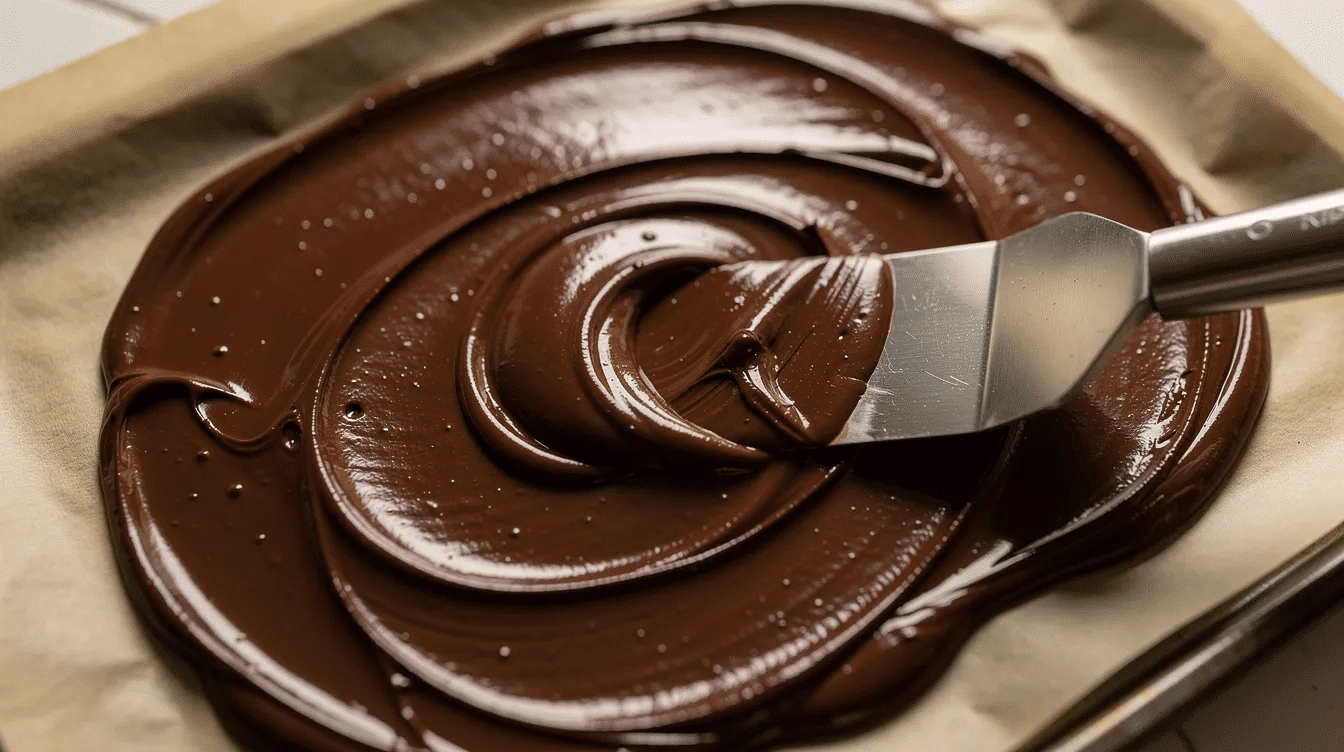
Pour onto the lined pan and use an offset spatula to spread the melted chocolate into a smooth layer about 1/8 to 1/4 inch thick. Avoid gaps or bare spots—maintain an even coating across the entire surface.
Step 5: Add toppings
Sprinkle 3/4 to 1 cup of chopped nuts, seeds, and dried fruit evenly across the surface. Press lightly so toppings embed halfway without sinking completely.
Step 6: Chill until set
Refrigerate for 20-30 minutes or leave at room temperature for about 2 hours until fully firm. The bark should snap cleanly when bent.
Step 7: Break and store
Break the hardened slab into rustic pieces by hand, or score with a sharp knife for more uniform shapes. Store in an airtight container in the refrigerator for up to 2-3 weeks.
Step-by-Step: Greek Yogurt Bark
This high-protein frozen treat rivals soft-serve ice cream but delivers probiotics, protein, and customizable toppings. It’s perfect for warm-weather snacks or post-workout desserts—and those who love greek yogurt will find this easy recipe irresistible.
Step 1: Prepare your pan
Line a large rimmed baking sheet with parchment paper or a silicone mat. Confirm it fits flat in your freezer before proceeding.
Step 2: Mix the base
In a medium bowl, whisk together:
2 cups plain or vanilla Greek yogurt
1-2 tablespoons maple syrup or honey
1 teaspoon pure vanilla extract
Whisk until completely smooth. For chocolate variation, add 2 tablespoons dark cocoa powder.
Step 3: Spread evenly
Pour the yogurt mixture onto the prepared sheet and spread into a smooth layer about 1/4 inch thick. A creamy texture depends on even thickness—thin spots crack and thick spots freeze unevenly.
Step 4: Add toppings
Scatter toppings across the surface:
Fresh strawberries or blueberries (sliced thin)
Chopped nuts or seeds
Mini chocolate chips or cacao nibs
A drizzle of nut butter or seed butter
For a nut or seed butter swirl, drop small spoonfuls across the surface and drag a knife through for marbled effect.
Step 5: Press toppings
Lightly press fresh fruit and nuts into the yogurt so they don’t fall off once frozen.
Step 6: Freeze until firm
Freeze for 3-4 hours or overnight until the yogurt is firm enough to snap when broken. The bark should feel solid throughout, not soft in the center.
Step 7: Break and store
Break or cut into 10-12 pieces. Store in a freezer-safe container with parchment between layers for up to 3 months. One batch yields approximately 51 calories per piece when using the basic maple-vanilla formula.
Healthy Bark Flavor Variations
Move beyond guesswork with these tested flavor combinations. Each one builds on the basic methods above with specific ingredient ratios.
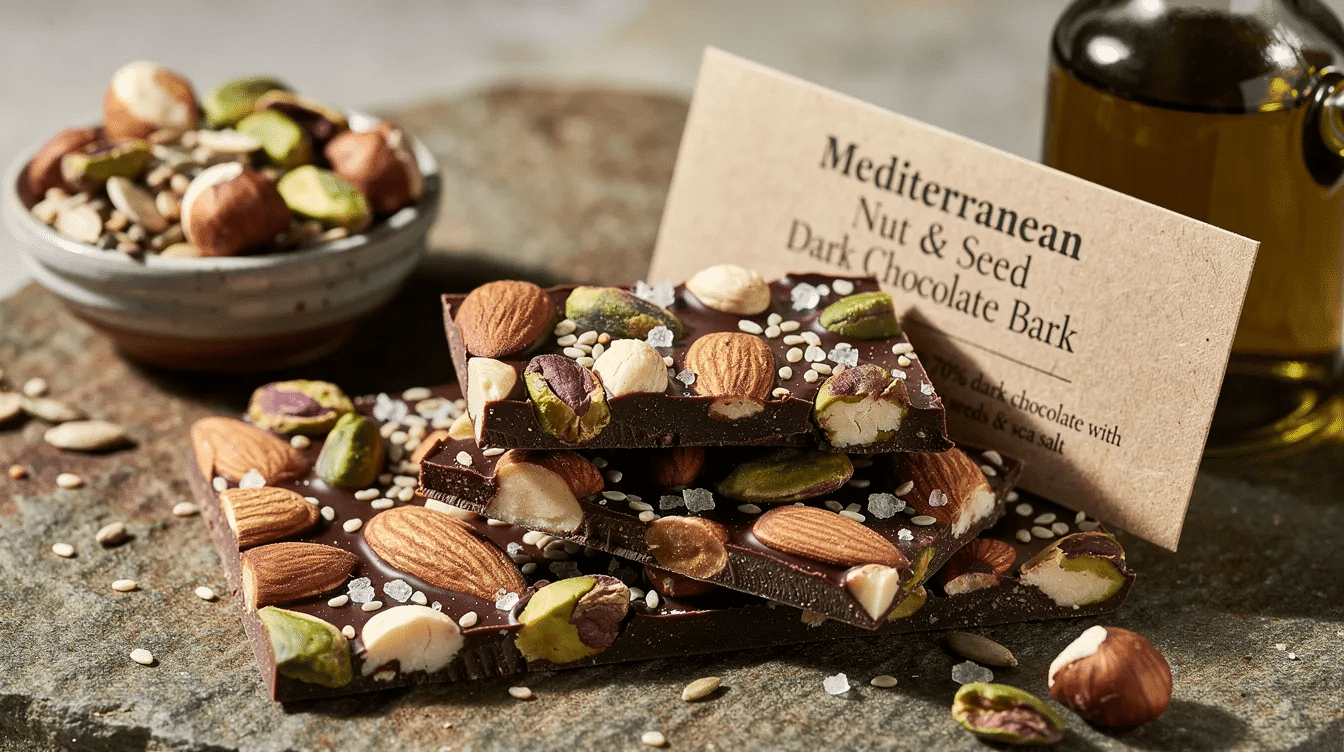
Mediterranean Nut & Seed Dark Chocolate Bark
Layer dark chocolate with:
1/4 cup pistachios
1/4 cup sliced almonds
2 tablespoons sesame seeds
Zest of one orange
Flaky sea salt to finish
This combination delivers monounsaturated fat from nuts plus the aromatic brightness of citrus.
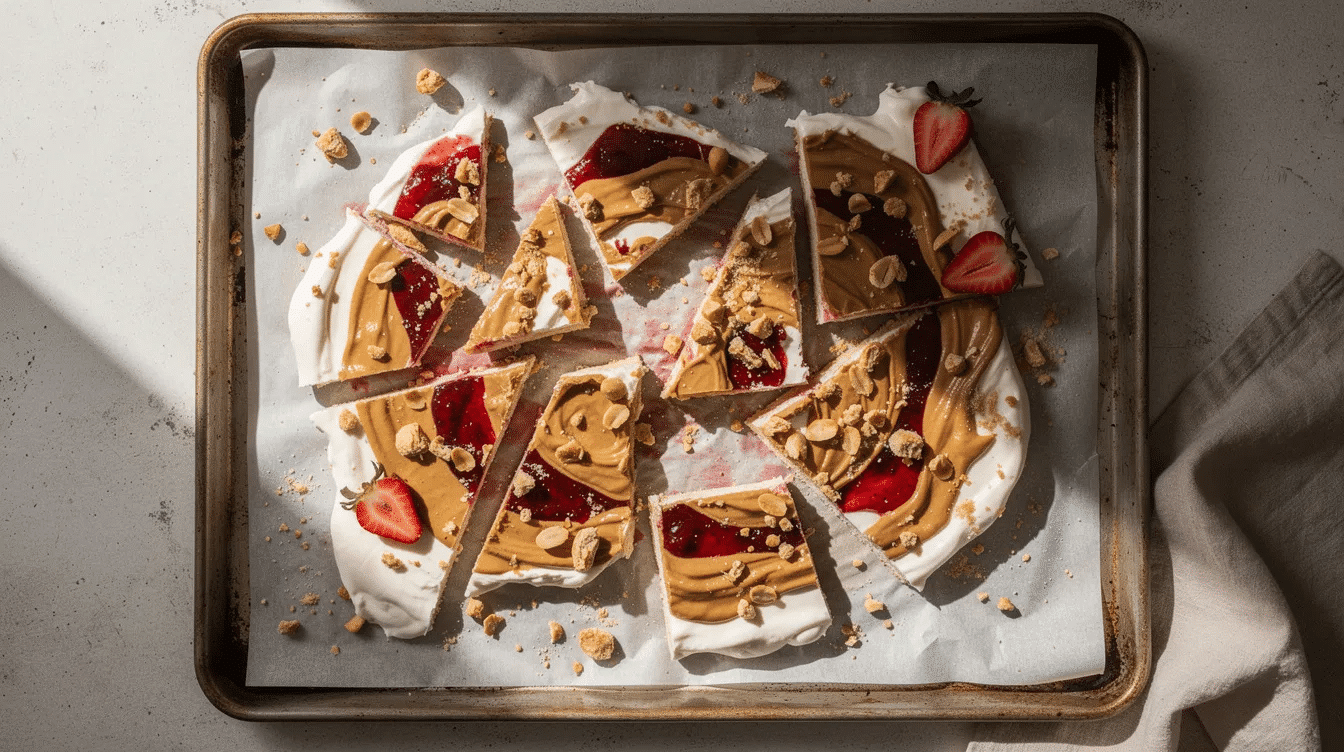
PB & J Frozen Yogurt Bark
Start with vanilla Greek yogurt base and swirl in 3 tablespoons natural creamy peanut butter. Top with:
Sliced grapes or fresh fruit like blueberries
A drizzle of 100% fruit spread
Optional almond butter for deeper flavor
This variation hits the sweet treat category while packing protein.
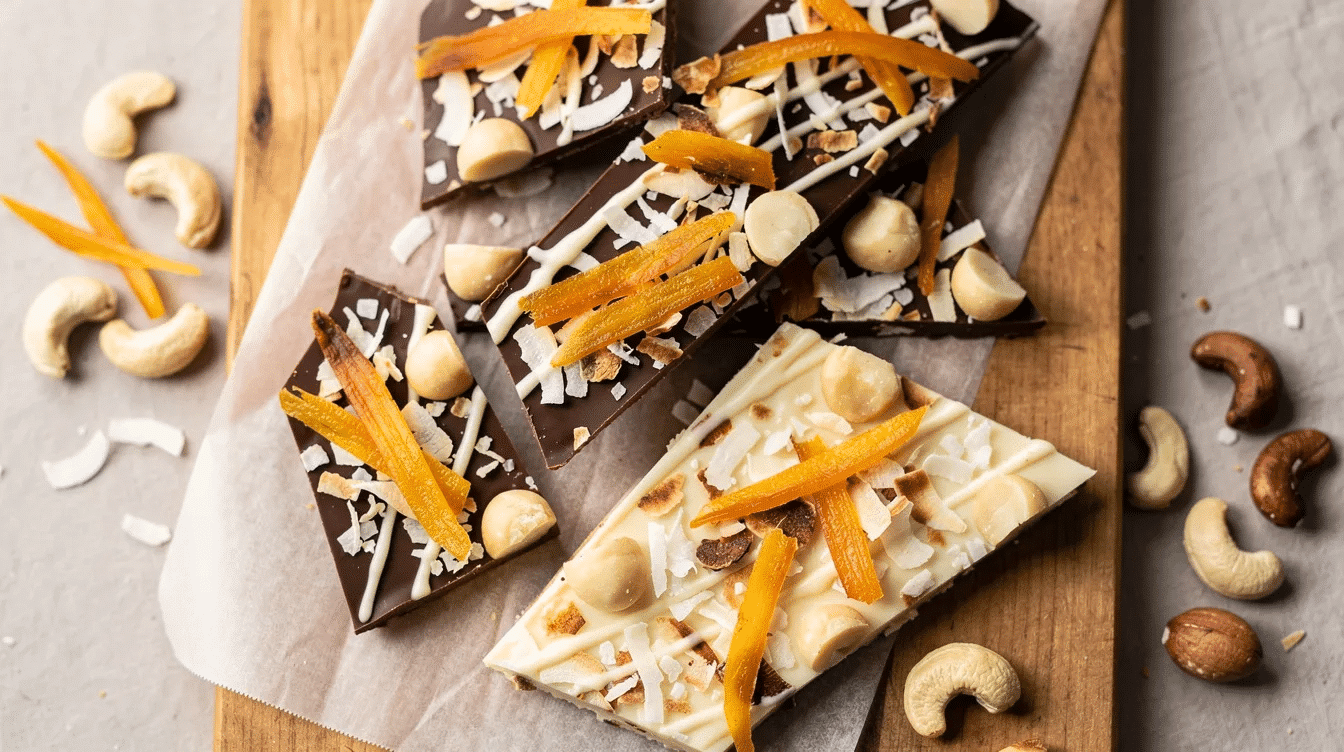
Tropical Crunch Bark
Works with either dark chocolate or yogurt base:
1/4 cup toasted coconut flakes
1/4 cup dried mango strips (no added sugar)
2 tablespoons macadamias or cashews
Optional white chocolate drizzle for milk chocolate lovers
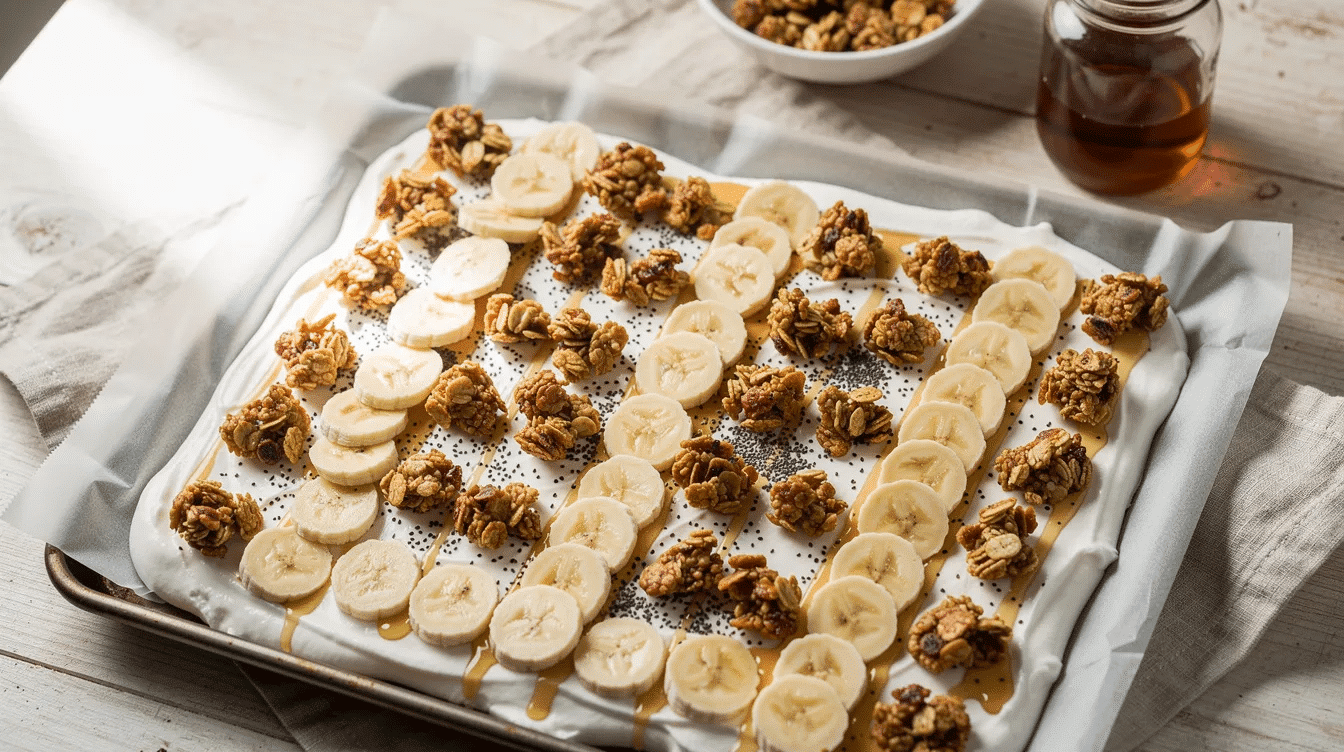
Breakfast Granola Yogurt Bark
Use Greek yogurt sweetened with maple syrup, then top with:
1/3 cup low-sugar granola
1 tablespoon chia seeds
Sliced banana
Note: Eat this version within 1-2 weeks for best texture. Banana oxidizes and softens over time.
Holiday Spice Bark
Perfect for December 2026 gifting:
Dark chocolate base
1/4 cup chopped pecans
3 tablespoons dried cranberries
Pinch of cinnamon and nutmeg
Sea salt finish
Diet-Friendly & Allergy-Friendly Swaps
Adapt any bark recipe for common dietary needs without sacrificing flavor or texture.
Vegan Options
Use dairy free dark chocolate (check labels for milk traces—20% of chocolate contains hidden dairy)
Swap Greek yogurt for thick coconut yogurt or cashew-based yogurt
Replace honey with maple syrup or agave nectar
Sun butter works as a nut butter alternative
Keto & Low-Carb Tweaks
Choose 85-90% dark chocolate bars or stevia-sweetened chocolate
Use unsweetened Greek or coconut yogurt
Top with nuts, seeds, and unsweetened coconut instead of dried fruit
Skip maple syrup; use monk fruit sweetener if needed
Watch saturated fat and trans fat content in chocolate selections
Nut-Free Guidance
Rely entirely on seeds for crunch:
Sunflower seeds and pumpkin seeds as base
Hemp seeds and chia seeds for nutrition
Sun butter or sunflower seed butter instead of nut butter
Roasted chickpeas for extra protein
Toasted oats for texture
Dairy-Free Approaches
Swap Greek yogurt for thick coconut yogurt
Use certified dairy free chocolate chips or bars
Check all toppings for hidden milk ingredients
Always check labels for hidden allergens and added sugar, especially in chocolate and dried fruit products.
Make-Ahead & Storage Tips
Bark is ideal for meal-prep and make-ahead snacking when stored correctly. Here’s how to maximize freshness.
Bark Type
Storage Location
Duration
Chocolate bark
Refrigerator
2-3 weeks
Chocolate bark
Freezer
Up to 3 months
Yogurt bark
Freezer only
2-4 weeks optimal, up to 3 months viable
Best practices:
Place parchment or wax paper between stacked layers to prevent sticking and flavor transfer
Label containers with flavor and date: “Berry Yogurt Bark – April 2026”
Yogurt bark benefits from 3-5 minutes at room temperature before eating for a creamier texture
Never refrigerate yogurt bark—it will become soggy
For chocolate bark, room temperature storage works in cool weather (under 70°F), but refrigeration maintains the best snap.
FAQ
Can I make healthy bark without any added sweetener?
Yes—skip liquid sweeteners by using very ripe fruit like sliced bananas or thawed berries that provide natural sweetness. The chocolate itself (especially 70% dark chocolate) contributes some sweetness too. Note that 85-90% dark chocolate bars are quite bitter, so include at least some fruit or a touch of stevia or monk fruit if you prefer a dessert-like taste. Review recipe sweetness levels based on your topping choices.
How do I keep my yogurt bark from getting icy or grainy?
Two factors matter most: yogurt fat content and topping selection. Use full fat greek yogurt rather than nonfat—the higher fat binds water molecules and reduces ice crystal formation by approximately 50%. Spread the yogurt in an even, consistent layer (not too thin), and avoid high-water toppings like large chunks of melon or citrus segments. Stick to berries, sliced bananas, and dried fruit for best results. The nutrition calories remain similar while texture improves dramatically.
What’s the best way to cut or break bark neatly?
For chocolate bark, let it sit at room temperature for 2-3 minutes, then use a large sharp knife to score lines before snapping along them. The slight softening prevents shattering. For yogurt bark, cut immediately after removing from the freezer—press straight down with a chef’s knife rather than sawing back and forth. This creates cleaner edges and prevents crumbling. The nutrition serving size stays consistent with uniform pieces.
Can I pack healthy bark in a lunch box?
Chocolate bark travels well in a small airtight container, especially in cool weather. It may soften in hot conditions (above 75°F) but won’t spoil. Yogurt bark requires an insulated lunch bag with an ice pack and should be eaten within 3-4 hours to maintain safe temperature and good texture. Consider chocolate bark for school lunches and yogurt bark for at-home snacking. Blood sugar response remains stable with these whole-food-based treats compared to candy.
Is homemade bark more economical than store-bought healthy snacks?
Significantly. Buying dark chocolate, yogurt, and toppings in bulk reduces cost to approximately $0.50-1.00 per serving, compared to $2-4 for pre-packaged “superfood” bars and snacks. Nuts purchased in bulk ($10/lb) yield 20+ batches of bark. You also control exactly what goes in—no hidden added sugar, no unnecessary preservatives, and full ingredient transparency. The upfront investment in staples pays off within 2-3 batches.
DannyContent Writer
Hey there, since 2016, my mission has been to provide you with the information and guides you need to make food dehydrating simple and fun. Whether you're a newbie or a seasoned pro, my site offers helpful guides, reviews, and recipes to enhance your dehydrating experience. I take pride in only recommending products I believe in, ensuring my readers' trust. As an affiliate of various programs, including Amazon Associates, your support helps me continue providing quality content. Thanks for stopping by, and happy dehydrating!