We earn a commission if you make a purchase, at no additional cost to you.
09/22/2026 04:39 pm GMT
🍊 Dehydrated Food Info Finder — Temperatures & Drying Times
Choose a category, then pick a food to see its drying temperature and time.
⚠️ Safety Disclaimer: Drying times are estimates and vary based on slice thickness, food moisture content, humidity, and your dehydrator model. Always check for doneness before storing — food should feel dry, leathery, or brittle with no moist spots. Improperly dried food can harbour mould and bacteria. For meat and poultry, follow USDA safe internal temperature guidelines: beef and pork to 160°F (71°C), poultry to 165°F (74°C). Use a food thermometer when in doubt. Store all dehydrated foods in airtight containers in a cool, dark place and discard anything showing moisture, mould, or off odours.
Does Dehydrator Use A Lot Of Electricity? (Real Costs & Savings)
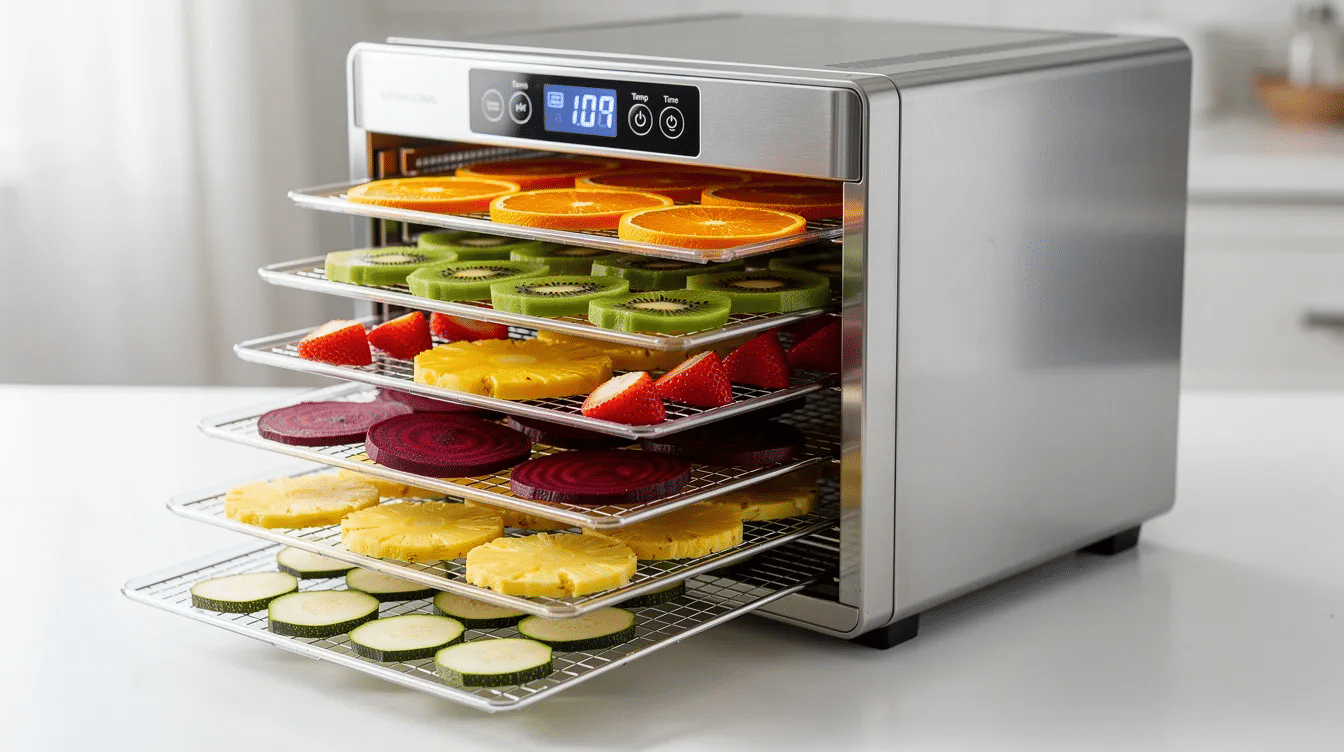
Most home food dehydrators consume relatively low amounts of electricity compared with ovens or other kitchen appliances. So, if you’re asking, does dehydrator use a lot of electricity, the answer is generally no. A typical 600-watt unit running for 8 hours consumes about 4.8 kilowatt hours (kWh), which at the projected 2026 US average residential rate of roughly $0.18 per kWh translates to about $0.86 for an entire batch of dehydrated food.
Home dehydrators typically range from 300 to 1,000 watts, with actual energy consumption depending on your local electricity price, the machine’s wattage, and how often you operate it. The cost to dry food at home is almost always lower than running an oven for several hours, and over the long run, making your own jerky, dried fruits, or herbs costs far less than buying ready-made alternatives from the store.
How Food Dehydrators Work (and Why That Matters for Power Use)
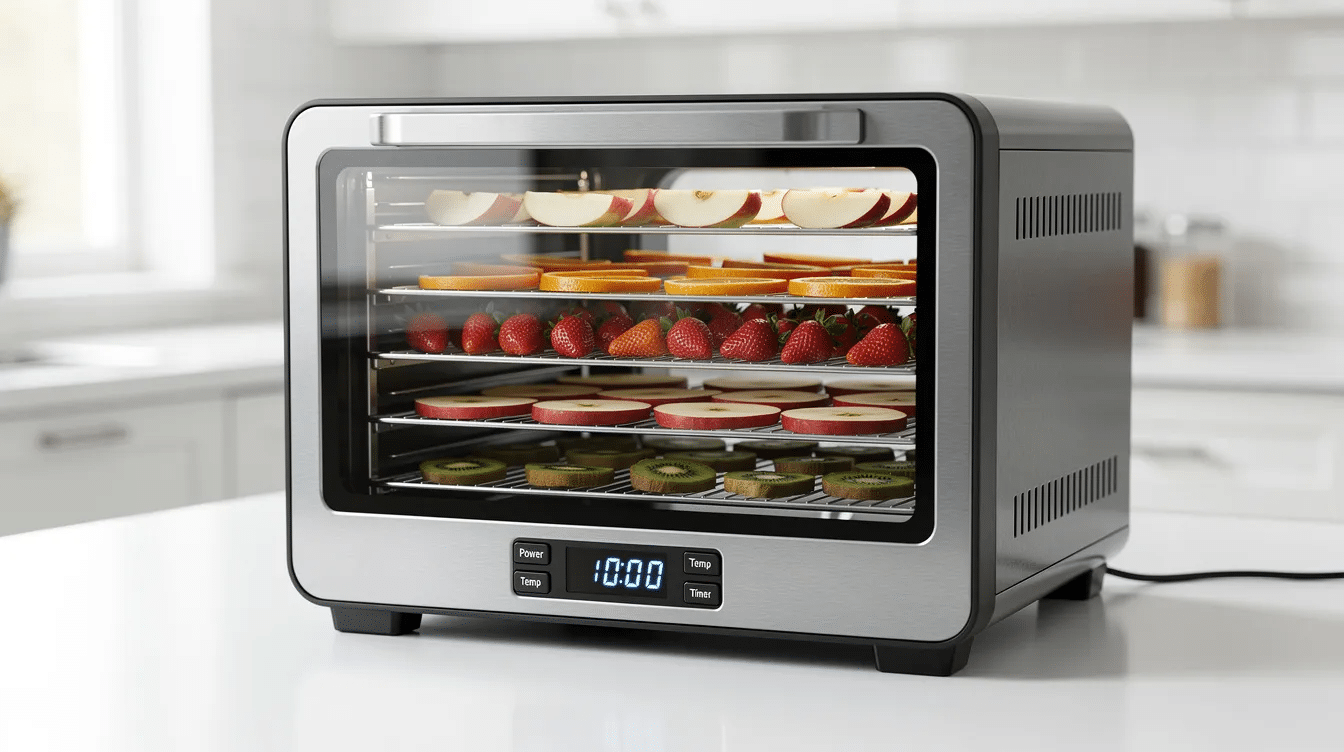
Food dehydrators use low, steady heat combined with constant airflow to remove moisture from food without cooking it. This process preserves vitamins, taste, and shelf life while keeping energy use modest.
Most home models operate between 95°F and 165°F (35°C to 74°C), relying on a heating element, fans, and vents to circulate hot air across stacked trays. This focused system heats only a compact space rather than a large oven cavity, which is why dehydrators are an efficient, cost-effective preservation tool for the same drying job.
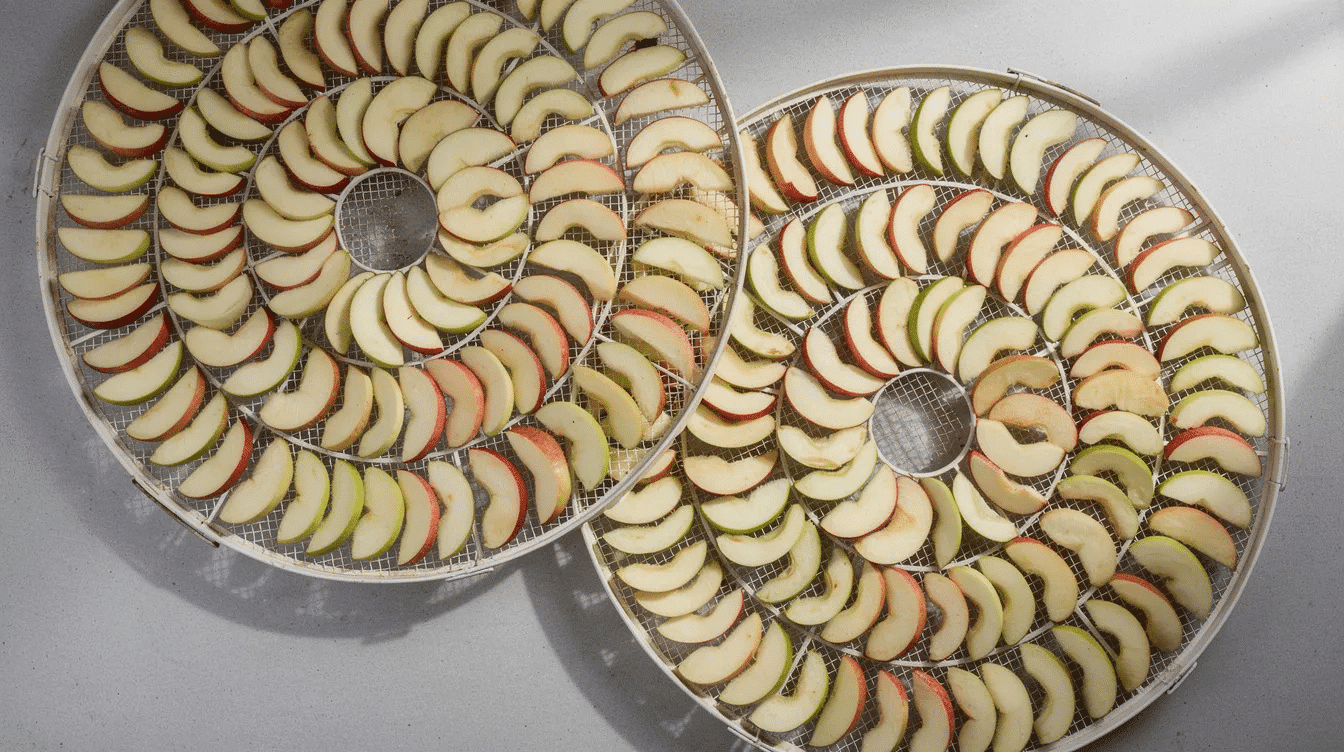
Proper airflow is essential. When warm, dry air moves evenly across thin slices of fruits, vegetables, or meats, moisture escapes efficiently. Cutting food into uniform pieces helps it dry evenly and faster, reducing total electricity usage. Thick or uneven cuts can double drying time and waste energy.
Typical Electricity Usage of Home Dehydrators
Electricity usage is primarily a combination of wattage and hours of operation. The formula is simple: multiply watts by hours, divide by 1,000 to get kWh, then multiply by your local rate to determine cost.
Compact home dehydrators typically draw 300 to 800 watts, while larger units with more trays can reach around 1,000 watts. Here are two concrete examples:
Example 1: A 600-watt dehydrator used for 8 hours consumes 4.8 kWh. At the 2026 average US rate of $0.18/kWh, that’s approximately $0.86 per batch—less than a dollar to process a full load of apple slices or jerky.
Example 2: A 1,000-watt dehydrator running 10 hours weekly uses about 10 kWh per week, or 520 kWh annually. At $0.18/kWh, this equals roughly $93.60 per year for heavy, consistent use.
By comparison, an electric oven draws 2,000 to 3,000 watts. Running a 2,400-watt oven for 5 hours uses 12 kWh—more than double the 600-watt dehydrator’s 8-hour session. Most people only run their dehydrator a few times per month, keeping actual yearly bills much lower than these “heavy use” figures.
Key Factors That Affect a Dehydrator’s Electricity Consumption
Electricity use isn’t fixed. It varies based on the machine’s design, how you dehydrate, and what you’re drying. Understanding these variables helps you choose a model and routine that balance efficiency with food quality. Modern energy food dehydrators incorporate features to reduce electricity usage, such as improved airflow and heat pump technology, making them more energy efficient than older models.
The main factors include size and capacity, dehydrator wattage and its impact on efficiency, drying time, temperature control, insulation and airflow design, and your personal usage habits.
Size and Capacity
Larger dehydrators with 8 to 10 trays can handle big harvests but typically draw more watts to heat the expanded space. However, bigger isn’t always less efficient—if you regularly fill all trays, a large batch is often more economical per pound of finished food than running many small batches.
Choose a capacity that matches your typical use. Weekend gardeners processing bulk produce benefit from larger units, while apartment dwellers making occasional snacks may find a compact model more efficient. Running a large machine half empty wastes electricity by heating and circulating air you don’t need.
Wattage (Power Rating)
Wattage defines maximum power draw. High-wattage models (900 to 1,000 watts) reach temperature faster and may finish batches sooner, while low-wattage units (300 to 500 watts) consume less per hour but require more time.
A simple calculation helps: a 750-watt dehydrator running for 8 hours equals 6 kWh. At $0.13/kWh in lower-cost areas, that’s only about $0.78 per batch. Most modern dehydrators don’t run the heating element continuously—thermostats cycle power on and off, so real consumption often falls below nameplate ratings.
Drying Time
Typical drying times vary by food: different foods you can dehydrate for snacks and meals have varying needs—apple slices need 6 to 12 hours, jerky requires 4 to 10 hours at higher temperatures, and herbs can finish in 2 to 4 hours at lower heat. Drying time depends on food thickness, water content, tray loading, and ambient humidity.
Cutting pieces uniformly and avoiding overcrowded trays significantly reduces drying time and total kWh. Properly dried foods, such as banana chips, have a better texture and are more enjoyable to eat, with a pleasant chewiness and flavor. Plan batches to run uninterrupted—stopping and restarting adds warm-up time and small energy penalties.
Temperature Control and Thermostat Use
Adjustable thermostats let you use only as much heat as needed. Settings range from 95°F for delicate herbs to 160°F for meats. Higher temperatures don’t always mean faster drying; excessive heat can case-harden food, sealing the exterior and trapping moisture inside, which actually lengthens the process.
Digital thermostats and sensors in modern models maintain stable temperatures within ±5°F, preventing unnecessary overheating and reducing waste compared to older analog controls.
Insulation, Ventilation, and Airflow Design
A well-insulated cabinet retains heat so the heating element cycles less frequently. Efficient airflow—via quality fans, proper ducting, and strategic vent placement—ensures food dries evenly without requiring you to rotate trays.
Poor airflow creates hot and cool spots, forcing longer drying cycles and can make a dehydrator seem more expensive to run than it really is. Stainless steel cabinets with tight door seals typically outperform thin plastic walls, especially when operating in cooler rooms or garages where heat loss is greater.
Usage Habits
Frequent daily batches obviously use more electricity than occasional seasonal use. Batch similar foods together—filling all trays with the same item ensures uniform drying time at one temperature setting.
Consider dehydrating during off-peak hours if your utility uses time-of-use pricing, potentially saving 20 to 40% on the same energy. Simple maintenance like cleaning fans and vents keeps the system working efficiently and can improve airflow by 10 to 15%.
Dehydrator vs Oven: Which Uses More Electricity?
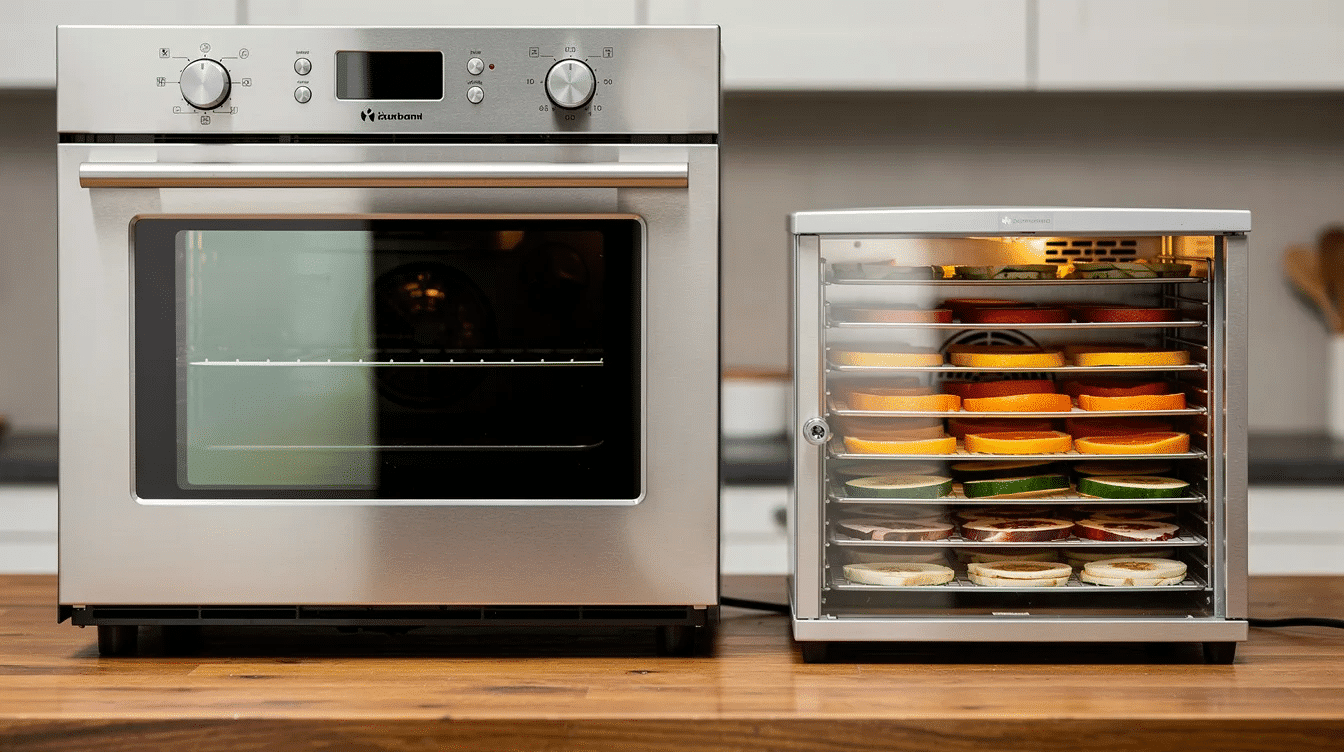
For long drying jobs, a dedicated dehydrator almost always uses less electricity than an electric oven. The difference is substantial.
An electric oven at 2,400 watts running 5 hours consumes about 12 kWh. A 600-watt dehydrator running 8 hours uses just 4.8 kWh—less than half the energy for a similar result. Ovens also require the door propped open slightly for moisture to escape, causing heating elements to cycle more frequently.
Additionally, ovens output significant room heat (500 to 1,000 BTU per hour), which is uncomfortable in summer and requires your cooling system to work harder. A dehydrator produces far less ambient heat, making it the more efficient choice for those looking to save money year-round and to enjoy the broader benefits of food dehydration for storage and convenience.
Real-World Usage Scenarios and What They Cost
The easiest way to understand electricity usage is through realistic patterns. Each scenario below uses the same calculation method—substitute your local $/kWh rate for personalized estimates.
Occasional Small Batches (Snacks and Herbs)
Using a 400-watt dehydrator once weekly for 4 hours to make herbs or fruit snacks: 0.4 kW × 4 hours × 52 weeks equals approximately 83 kWh per year. At $0.18/kWh, that’s about $15 annually—fine for year-round dried herbs and vegetable chips with minimal impact on your bills.
Weekend Batch Processing
A gardener using a 700-watt unit for 20 hours each weekend during a 12-week harvest season: 0.7 kW × 20 hours × 12 weeks equals 168 kWh, roughly $30 for the entire season. This replaces hundreds of dollars worth of store food, making it highly economical.
Seasonal Dehydration of Harvests and Bulk Buys
A 600-watt unit used 8 hours weekly for 16 peak weeks: 0.6 kW × 8 × 16 equals about 77 kWh, or roughly $14. Outside these months, energy use drops to zero. The pantry savings from reduced waste and dehydrating the best foods for long-term storage and preserved seasonal deals far exceed this modest cost.
Regular or Commercial-Style Use
A home-based business running a 1,200-watt machine 8 hours daily, 5 days weekly: 1.2 kW × 40 hours equals 48 kWh weekly. Over 50 weeks, that’s 2,400 kWh, costing about $432 at $0.18/kWh. At this level, maximizing efficiency through proper temperature settings and full tray loads becomes essential for profitability, especially when producing longer-lasting dehydrated meats.
Practical Tips to Reduce Your Dehydrator’s Electricity Use
Small changes in how you dehydrate can noticeably cut energy consumption without buying new equipment:
Group similar foods: Batch items with similar moisture content and temperature requirements to avoid running multiple partial loads at different settings.
Slice uniformly: Consistent thin slices of about 1/4 inch improve airflow and can reduce drying time by 30 to 50%.
Use timers: Built-in or external outlet timers prevent over-drying, shutting the unit off once food reaches target dryness.
Choose the right environment: Running your dehydrator in a warm, dry room rather than a cold, damp basement speeds the process significantly.
Maintain regularly: Clean trays, mesh screens, and fan inlets to keep airflow unobstructed.
Optimize storage space: Store dehydrated foods in airtight containers such as properly sealed Mason jars for long-term freshness and place them in cool, dark areas to maximize shelf life and make efficient use of your available storage space.
Do Dehydrators Use a Lot of Electricity? Final Takeaway
For most households, a food dehydrator does not use a lot of electricity. Compared to running an oven for several hours, dehydrators are remarkably energy efficient. Actual costs depend on wattage, hours of use, batch size, and simple habits like slicing uniformly and filling trays completely.
The modest energy cost is typically offset by savings from reduced food waste, bulk buying opportunities, and replacing expensive store-bought dried snacks, herbs, and jerky. When you understand how long properly stored dehydrated food can last and how vacuum sealing extends that shelf life even further, the long-term value becomes clear. An appropriately sized, well-used dehydrator remains one of the most energy-conscious ways to store food and extend shelf life in 2026 and beyond.
Calculate your own costs using the formula: (watts × hours) ÷ 1,000 × local $/kWh. You’ll likely find the expense is far lower than expected.
DannyContent Writer
Hey there, since 2016, my mission has been to provide you with the information and guides you need to make food dehydrating simple and fun. Whether you're a newbie or a seasoned pro, my site offers helpful guides, reviews, and recipes to enhance your dehydrating experience. I take pride in only recommending products I believe in, ensuring my readers' trust. As an affiliate of various programs, including Amazon Associates, your support helps me continue providing quality content. Thanks for stopping by, and happy dehydrating!