We earn a commission if you make a purchase, at no additional cost to you.
09/22/2026 04:39 pm GMT
🍊 Dehydrated Food Info Finder — Temperatures & Drying Times
Choose a category, then pick a food to see its drying temperature and time.
⚠️ Safety Disclaimer: Drying times are estimates and vary based on slice thickness, food moisture content, humidity, and your dehydrator model. Always check for doneness before storing — food should feel dry, leathery, or brittle with no moist spots. Improperly dried food can harbour mould and bacteria. For meat and poultry, follow USDA safe internal temperature guidelines: beef and pork to 160°F (71°C), poultry to 165°F (74°C). Use a food thermometer when in doubt. Store all dehydrated foods in airtight containers in a cool, dark place and discard anything showing moisture, mould, or off odours.
Dehydrator Spices: How to Dry, Store, and Use Your Own Powerful Flavors
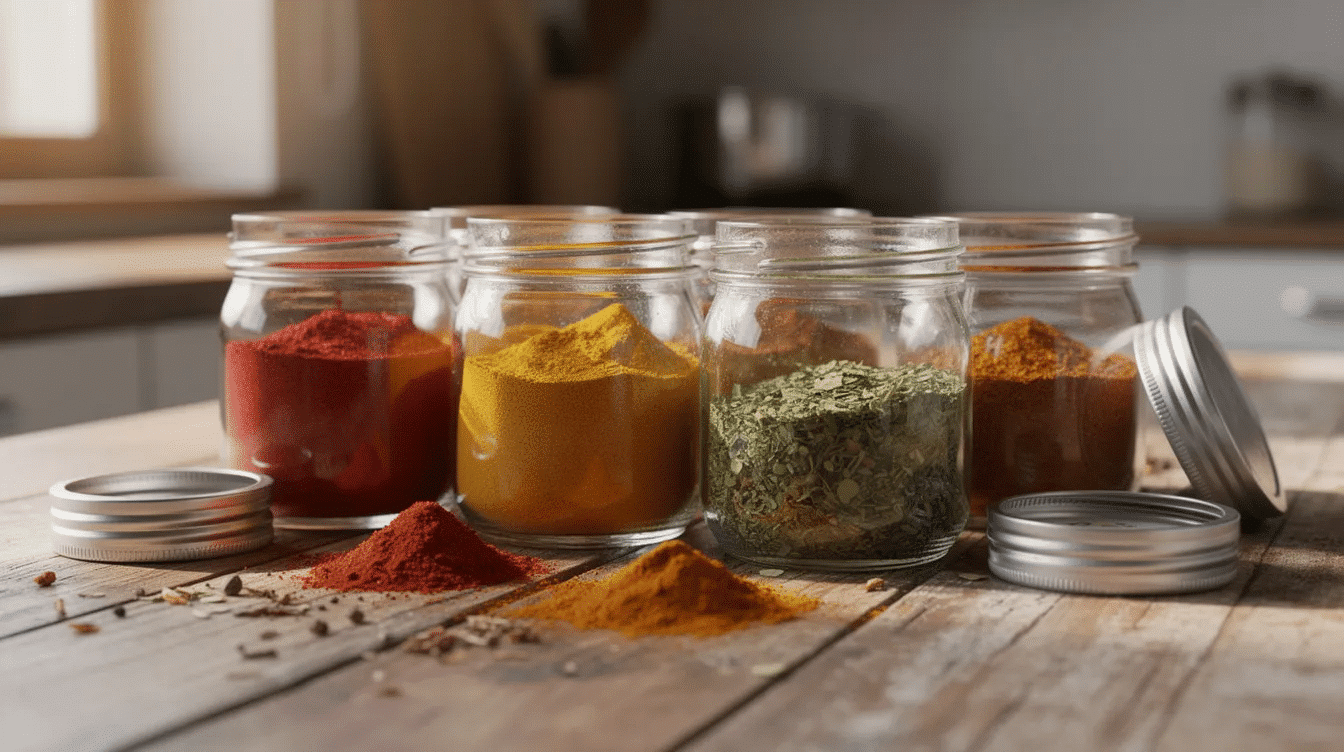
Turning fresh garden produce into potent seasonings is easier than you think. With a food dehydrator and a few simple techniques, you can create your own spices that outshine anything on the supermarket shelf—stronger flavor, longer shelf life, and zero hidden additives.
Quick Start: How to Dehydrate Spices in a Food Dehydrator
This is the fast answer for anyone ready to start dehydrating spices today. You can have your first batch of homemade garlic or onion powder ready by tonight.
Basic Equipment Needed:
Home dehydrator (tray or box style)
Silicone mats or fine mesh sheets
Sharp knife
Small airtight glass jars
Step-by-Step Example (Garlic and Onion):
Peel garlic cloves and slice to 1/8-inch thickness
Cut onions into thin rings or small dice
Arrange in a single layer on silicone mats with 1/2-inch spacing for air circulation
Set your dehydrator to 125°F–135°F (52°C–57°C)
Dry until pieces snap cleanly—no flexibility
Cool completely before transferring to jars
Typical Drying Times:
Spice
Thickness
Time Range
Garlic
1/8 inch
4–6 hours
Onion
1/4 inch
6–10 hours
Ginger
1/4 inch
6–8 hours
High humidity extends these times by 1-2 hours. Test for doneness by breaking a piece—it should be brittle with no visible moisture inside.
Immediate Benefits:
Flavor 2-3x stronger than store-bought powders
Shelf life up to 12 months
Complete control over sodium and additives
Herbs vs. Spices: What You’re Actually Dehydrating
Understanding the difference between herbs and spices helps you pick the right temperature and drying time. This distinction matters more than most people realize.
Fresh herbs come from leafy green parts—basil, parsley, thyme, oregano, sage, rosemary, dill, tarragon, and cilantro. They’re typically added late in cooking to preserve delicate flavor, and many of the top herbs to dehydrate for health benefits come from this group. Spices are seeds, bark, roots, buds, or fruits like coriander, cinnamon, ginger, and clove, usually dried and added early.
Consider cilantro versus coriander: cilantro leaves (the herb) lose 50% of their flavor if overdried and work best at 95°F for 2-4 hours. Coriander seeds (the spice) from the same plant need full dehydration at 125°F.
Seasoning blends mix both—a homemade Italian seasoning combines dried oregano, basil, thyme, and garlic powder from your own dehydrator
Knowing whether you’re drying a leaf, root, or seed determines your approach.
Why Dehydrate Your Own Spices Instead of Buying Them?
Home-dehydrated spices offer advantages that commercial products simply cannot match. For gardeners with surplus produce, the dehydrator becomes essential for preserving food efficiently.
Gentle low-heat drying preserves 70-90% more antioxidants like quercetin in onions and allyl sulfides in garlic compared to commercial processing. You control everything: no anti-caking agents, no fillers like maltodextrin, no hidden salt.
Key Advantages:
Home dried spices stay vibrant 9-12 months in glass jars
Reducing food waste by saving end-of-season garden harvests—those fall green tomatoes, extra celery stalks, or softening onions
A 3lb bag of fresh onions (~$3) yields months of onion powder worth $10-15 at store prices
A dehydrator at 300-600W uses about $0.30 of electricity per batch versus $2+ for an oven
Your own spices mean your own rules.
Choosing and Preparing Spices for the Dehydrator
Careful harvest timing and preparation make the difference between mediocre and exceptional results. This step determines your final potency and shelf life.
Harvest Timing:
Seeds and fruits: wait until fully mature (coriander pods brown, peppers fully colored)
Leafy herbs: morning of a dry day, just after dew evaporates—oils measure 20-50% higher than afternoon picks
Flowers and buds: before they fully open
Preparation Steps:
Rinse quickly in cool water (rinsing removes soil without dissolving oils)
Pat completely dry with lint-free towels
Discard any bruised, mold-spotted, or damaged pieces
Produce
Cut Size
Ginger, turmeric
1/8–1/4 inch coins
Onions, garlic
Even slices or uniform mince
Celery
1/8 inch slices, include leaves
Small seeds like mustard or celery seed go directly onto silicone mats. Remove stalks, tough cores, and woody stems from celery and peppers—stems break down poorly and slow drying.
How to Dry Spices in a Dehydrator
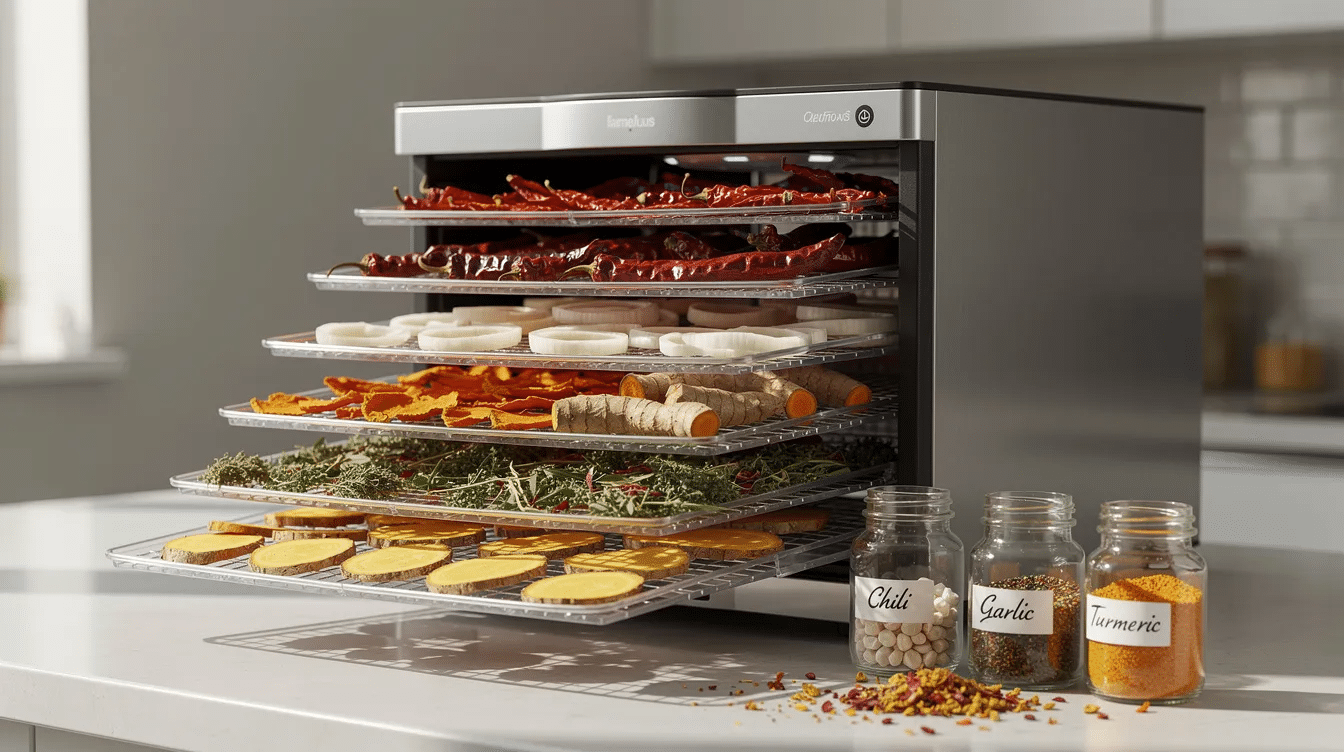
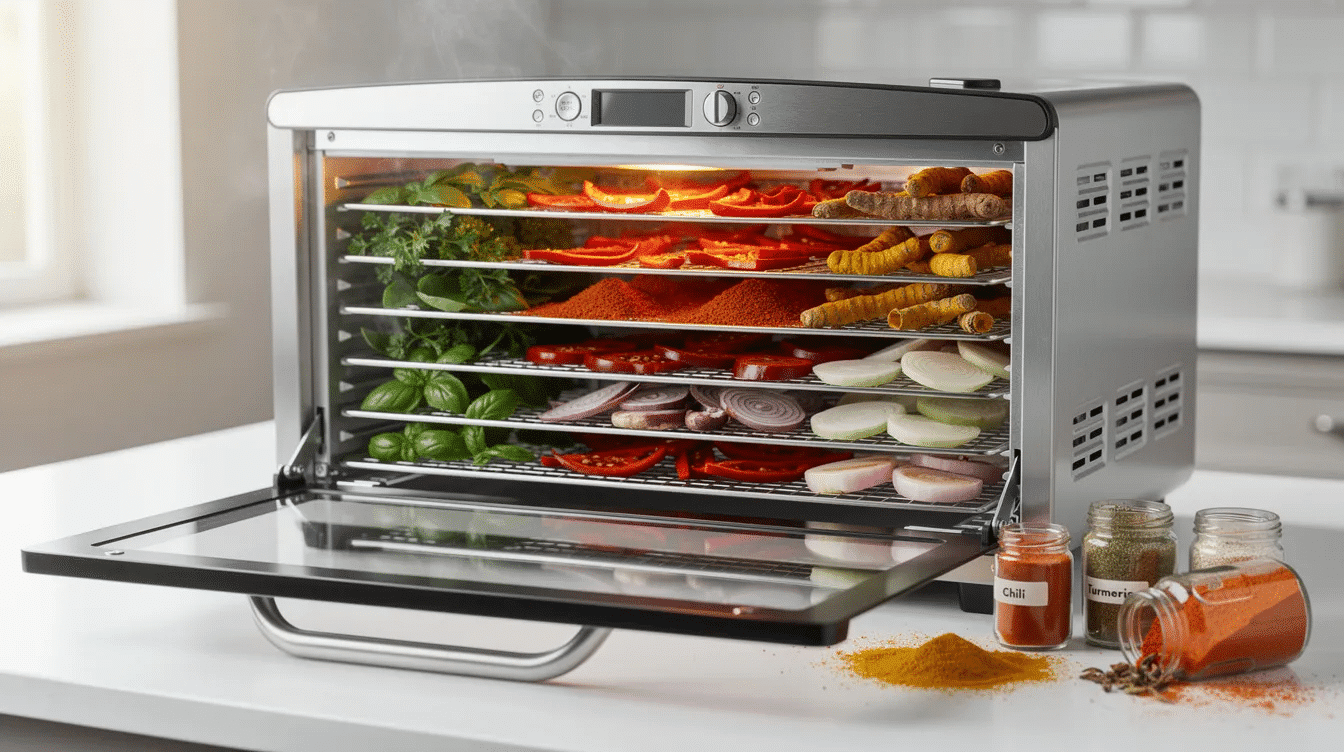
Both stackable-tray and box-shelf dehydrators work well for spices. Stackable models cost less but need tray rotation; box models offer more even airflow.
Always place herbs and small pieces on silicone mats or mesh sheets on each dehydrator tray to prevent loss and simplify cleanup, and pay close attention to the perfect temperature for drying herbs in a dehydrator to preserve flavor and nutrients.
Temperature Guide:
Material
Temperature Range
Delicate herbs (basil, dill, lemon balm)
95°F–115°F
Roots, onions, garlic
120°F–135°F
Seeds
125°F–135°F
Check periodically—every 2-3 hours—and rotate trays on stackable models. For doneness: dried leaves should crumble between fingers, roots and citrus peels should snap (not bend), and seeds should be rock-hard.
Let spices cool completely in the dehydrator with power off for 30-60 minutes before jarring. This prevents condensation that leads to mold.
Dehydrating Specific Spices: Garlic, Onion, Celery & More
For alliums, you can go even deeper with a dedicated guide on how to dehydrate garlic in a dehydrator that covers selection, drying variations, and storage.
Here’s practical guidance for kitchen staples that deliver the best flavor when dried quickly at home.
Garlic: Peel cloves, slice 1/8-inch thick, dehydrate at 125°F–135°F until brittle (4-8 hours). Grind for garlic powder that’s 2-3x more potent than typical supermarket versions. Tip: Run your dehydrator in a ventilated area—the smell is intense. If you enjoy alliums, you can apply similar techniques when dehydrating green onions at home for long-lasting, flavorful flakes or powder.
Onion: Cut into thin rings or small dice, dry at similar temperatures for 6-10 hours. Homemade onion powder has sweeter, more complex Maillard notes. Tip: Separate from other foods during drying.
Celery: Slice stalks thinly, include some leaves for extra flavor. Dry at 120°F for 4-8 hours until crisp. Grind into celery powder for soups and homemade celery salt. Pepper lovers can follow a similar process by drying peppers in a dehydrator for flakes, powders, and homemade chili blends.
Green Tomatoes: Transform fall surplus into tomato powder—slice 1/4-inch, dry at 125°F for 8-12 hours. Adds tangy depth to sauces.
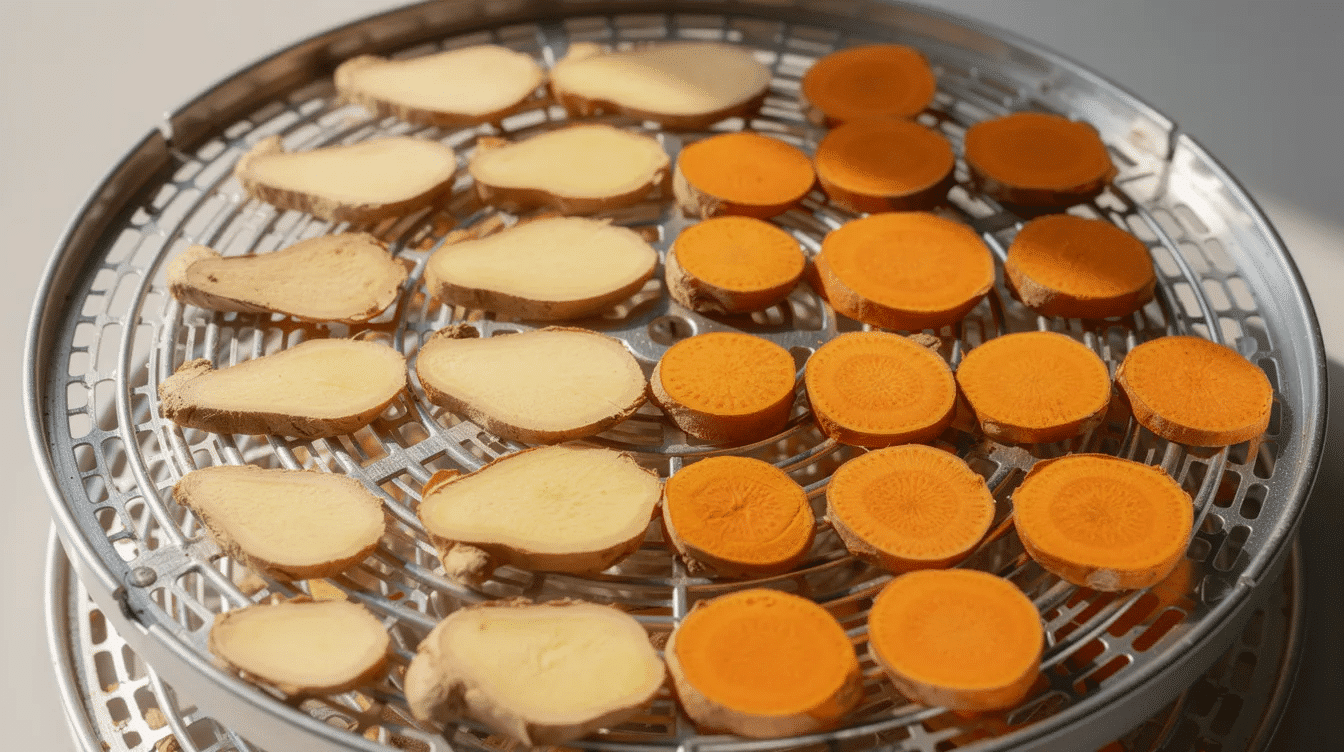
Ginger and Turmeric: Peel, slice into coins, dry until they snap. Tip: Wear gloves for turmeric—it stains everything orange.
Whole dried pieces keep their flavor longer than ground powders because less surface area contacts oxygen. But when you need powder, the process is simple.
Grinding Process:
Freeze fully dehydrated pieces for 10 minutes (reduces stickiness)
Grind in a food processor, coffee grinder, or spice mill
Process in 30-60 second bursts
Sieve through fine mesh for ultra-smooth powder
Re-grind any coarse bits
Common Homemade Powders:
Garlic, onion, celery
Ginger, turmeric
Lemon and orange peel
Tomato, mixed vegetables
Grind small batches just before use for the most potent flavor. Store some spices whole and grind as needed. Label jars with spice name and date: “Onion Powder – ground 19 April 2026.”
Storing and Using Dehydrated Spices
Proper storage protects all your dehydrating work. A few simple practices extend shelf life dramatically.
Storage Guidelines:
Cool spices to room temperature before jarring
Store in dark, cool locations (50-70°F, below 50% RH)
Use airtight glass jars filled 80-90% full
Keep away from heat source like stoves
Whole spices retain best flavor up to 12 months; ground powders stay fresh about 6 months. Shake jars occasionally—clumping indicates residual moisture that could cause problems.
Everyday Uses:
Sprinkle garlic and onion powder into soups, casseroles, and recipes
Add celery powder to sauces, meatballs, and rub blends
Mix tomato or paprika powder into seasoning combinations
Use about 1/3 the volume of dried compared to fresh
DIY Seasoning Blends and Gift Ideas
Transform plain dehydrated spices into custom blends and thoughtful homemade gifts that combine your own herbs with your own spices.
Fully dry and cool each component before grinding together. For gifts, create small labeled jars of garlic powder, onion powder, celery salt, and a signature house blend. Add handwritten usage suggestions for a personal touch.
Keep blends in tightly sealed containers with a “best by” date 6-9 months from mixing.
While sun-drying and oven methods exist, a dedicated food dehydrator offers the most consistent, convenient results for preserving food long-term, and it’s also more budget-friendly and accessible than investing in a freeze-dryer vs. dehydrator setup for home use.
Method
Pros
Cons
Stackable Dehydrator
Compact, lower cost
Needs tray rotation
Box Dehydrator
Even airflow, handles vegetables, fruits, and jerky
Higher price
Herb-Focused Dehydrator
Designed for gentle, low-heat drying of leafy herbs
UV degrades flavor 20-50%, mold risk in high humidity
A dehydrator proves especially valuable in cooler or humid climates where air-drying plants on racks invites mold. In some setups, a hanging dehydrator for easy food preservation can also be useful for saving space while still allowing good airflow. Supplements like gluten free recipes benefit from having reliable homemade seasonings.
Anyone planning to regularly dehydrate larger volumes of spices, herbs, and vegetables will benefit from investing in quality equipment. Start experimenting with different temperatures, slice thicknesses, and combinations to discover your favorite flavors.
DannyContent Writer
Hey there, since 2016, my mission has been to provide you with the information and guides you need to make food dehydrating simple and fun. Whether you're a newbie or a seasoned pro, my site offers helpful guides, reviews, and recipes to enhance your dehydrating experience. I take pride in only recommending products I believe in, ensuring my readers' trust. As an affiliate of various programs, including Amazon Associates, your support helps me continue providing quality content. Thanks for stopping by, and happy dehydrating!