We earn a commission if you make a purchase, at no additional cost to you.
09/22/2026 04:39 pm GMT
🍊 Dehydrated Food Info Finder — Temperatures & Drying Times
Choose a category, then pick a food to see its drying temperature and time.
⚠️ Safety Disclaimer: Drying times are estimates and vary based on slice thickness, food moisture content, humidity, and your dehydrator model. Always check for doneness before storing — food should feel dry, leathery, or brittle with no moist spots. Improperly dried food can harbour mould and bacteria. For meat and poultry, follow USDA safe internal temperature guidelines: beef and pork to 160°F (71°C), poultry to 165°F (74°C). Use a food thermometer when in doubt. Store all dehydrated foods in airtight containers in a cool, dark place and discard anything showing moisture, mould, or off odours.
Dehydrating Peppers for Powder: From Fresh Pods to Long‑Lasting Spice
Every late-summer harvest brings more peppers than most kitchens can handle. Dehydrating peppers for powder is the simplest way to turn that surplus into a shelf-stable spice you’ll reach for all year. Whether you grow jalapenos, cayenne, or bell peppers, the process is straightforward: dry them low and slow, grind them up, and store the results in a jar that lasts well over a year.
Key Takeaways
Dehydrating peppers at low temperatures and grinding them into powder lets you make your own chili powder, sweet pepper powder, and custom spice blends at home. Dehydrating preserves peppers for long-term storage while concentrating their flavor and heat into a form that’s easy to cook with year-round.
Three main drying options: A food dehydrator at 125–135°F for 6–12 hours is the most reliable method. The oven method works at 150–175°F for 8–24 hours. Air or sun drying suits very dry climates but takes 1–3 weeks.
Safety matters: Wear gloves when handling hot peppers, dry and grind in a well ventilated area, and let dried peppers cool completely before grinding to avoid irritating chili dust.
Storage: Place finished powder or whole dried peppers in airtight glass jars, store in a cool dark place, and expect a shelf life of 12+ months when peppers are fully crisp before grinding.
Why Dehydrate Peppers for Powder?
If you’ve ever stared at a counter piled with fresh peppers from the garden or farmers market, you know the problem. Bell peppers soften. Chili peppers wrinkle. Within a week, half the harvest heads to the compost bin. Dehydrating concentrates the flavor and heat of peppers, transforming perishable produce into spices that last months.
Dried chili peppers deliver deeper, more complex flavor than fresh peppers in stews, rubs, and sauces, without adding extra liquid. A single-variety powder like pure ancho chili powder from dried poblanos tastes nothing like the generic blends on grocery shelves. And when you make your own chili powder, you control exactly what goes in: no anti-caking agents, no mystery salt, no fillers.
The versatility is hard to overstate. Powdered sweet peppers make a “mock paprika” with vibrant color. Smoked dried chipotles produce rich, smoky heat. Superhot varieties like ghost peppers or Carolina Reapers yield powders so intense that a pinch seasons an entire pot. For any food lover looking to preserve peppers and build a custom spice collection, dehydrating is a great idea that pays off harvest after harvest.
Choosing the Best Peppers to Dehydrate
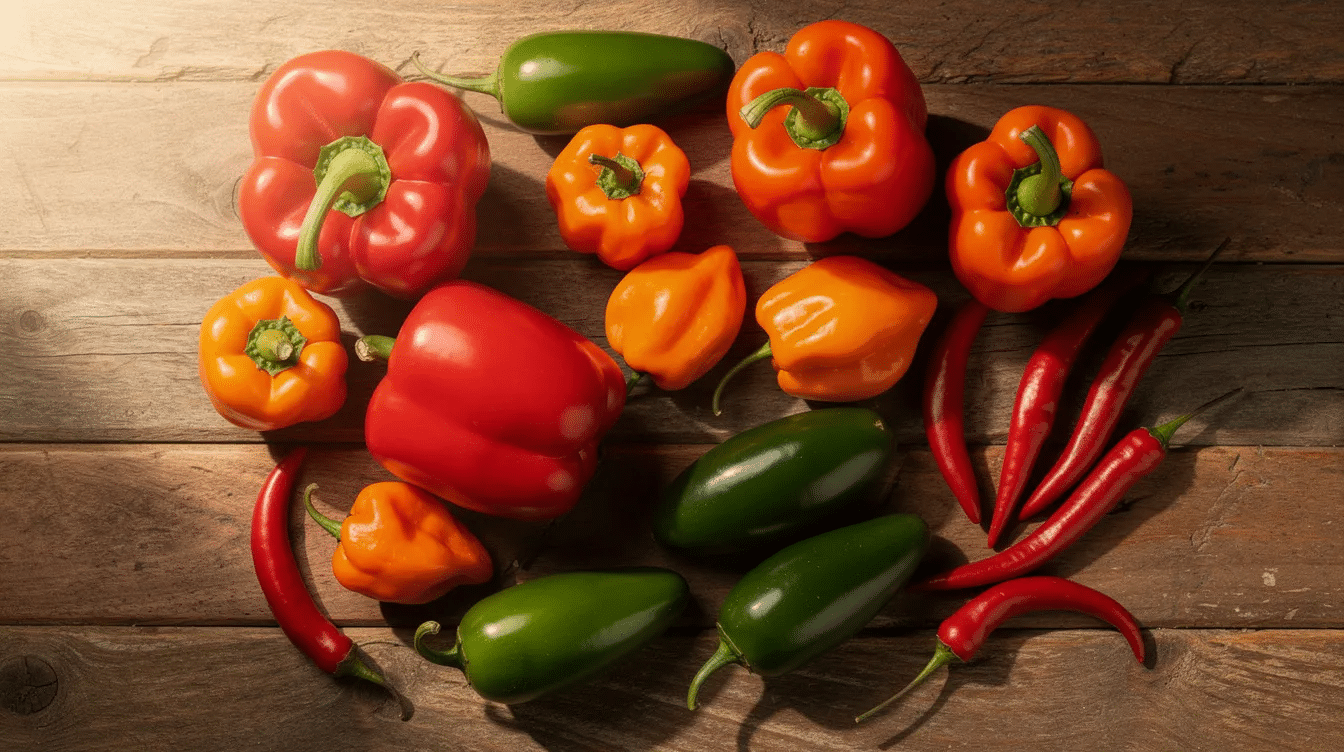
Nearly any pepper variety can be dried and ground, but the final powder’s flavor, color, and heat vary depending on what you start with.
Mild options:
Red, yellow, and orange bell peppers yield sweet, fruity powders ideal for paprika-style seasoning and adding color without heat. If you grow other mild varieties, dehydrating banana peppers follows a very similar process and gives you another sweet, versatile powder. Paprika peppers create a bright red powder with little heat, making them a favorite for garnishing and rubs.
Medium-heat peppers:
Jalapenos, serranos, and Fresno peppers produce everyday powders that work in taco seasoning, egg dishes, and chili. If you particularly enjoy serranos, you can focus on dehydrating serrano peppers for best flavor to highlight their bright heat. A good all-purpose chili powder may use ancho, guajillo, and cayenne in combination.
Hot to superhot peppers:
Cayenne peppers are the gold standard for homemade red pepper powder. When working with medium-hot chilies, understanding the time to dehydrate jalapenos helps you judge drying progress for similar varieties. Bird’s eye, habanero, ghost peppers, scorpion, and Reaper varieties deliver escalating intensity where a tiny pinch flavors an entire recipe.
When selecting peppers, choose fully ripe fruit (red or orange rather than green for most varieties), with firm skins and no soft spots or mold. Any pepper showing black or gray mold should be discarded entirely.
Thin-walled peppers dry the fastest and make the best powders since they contain less moisture. Thick-walled varieties like bell peppers take longer but still produce excellent results, especially if you follow a dedicated guide on how to dehydrate bell peppers in a food dehydrator. Mixing different dried peppers-say, 50% sweet bell, 25% jalapeño, 25% ancho-creates balanced, house-style spice blends you can’t buy anywhere.
Safety First: Handling Hot Chili Peppers
Capsaicin is a strong irritant, and its effects intensify when you concentrate hot peppers into dehydrated peppers and fine powder. A few precautions make the entire process painless.
Wear gloves whenever you cut or handle chili peppers. Disposable nitrile gloves work well. Superhots like ghost peppers can cause burning skin for hours if handled bare. Avoid touching your face, eyes, or contact lenses during prep, and wash knives, cutting boards, and hands with soap and warm water afterward.
Ventilation is critical. Run a kitchen hood fan, open windows, or place your food dehydrator in a garage, porch, or other well ventilated room when drying large batches of hot peppers. Grinding dehydrated peppers into powder is best done in a well-ventilated area since capsaicin dust hangs in the air. A dust mask and goggles aren’t overkill when processing superhots.
Use gloves when grinding hot peppers to avoid skin irritation, and keep dehydrator trays and powdered chiles well out of reach of pets and children. Avoid running dehydrators that vent directly into living spaces where sensitive people may cough.
Prepping Fresh Peppers for Dehydration
Thorough prep ensures even drying and cleaner-tasting dried peppers.
Start by rinsing fresh peppers under cool running water to remove soil and residue. Dry them completely with a clean towel-surface moisture slows dehydration. Then wash your cutting board and knife before moving to the next step.
For bell peppers and sweet peppers, remove stems, cores, ribs, and most seeds for a milder, cleaner flavor. For hot peppers, decide how much heat you want: seeds and inner membranes carry significant capsaicin and can be removed for a less spicy chili powder.
Cut peppers to uniform thickness for even drying:
Pepper Type
Recommended Cut
Bell peppers
¼–½ inch strips or small dice
Jalapeños, poblanos
Rings or cut peppers in half lengthwise
Thin cayenne, Thai chiles
Leave whole or slit once lengthwise
Slicing peppers in half improves air circulation during drying. Jalapeños dry well when sliced open first for dehydration. Smaller peppers like pequins can go in whole with just a slit. Larger peppers and thicker peppers need more surface area exposed.
Optional: blanching bell peppers in boiling water for one minute then chilling in ice water can help maintain bright color in dried pepper pieces. It reduces drying time by roughly 30%, though it’s not strictly required.
Dehydrating Peppers with a Food Dehydrator
A dedicated food dehydrator is the most reliable, hands-off way to dehydrate peppers for powder, especially if you process harvests regularly.
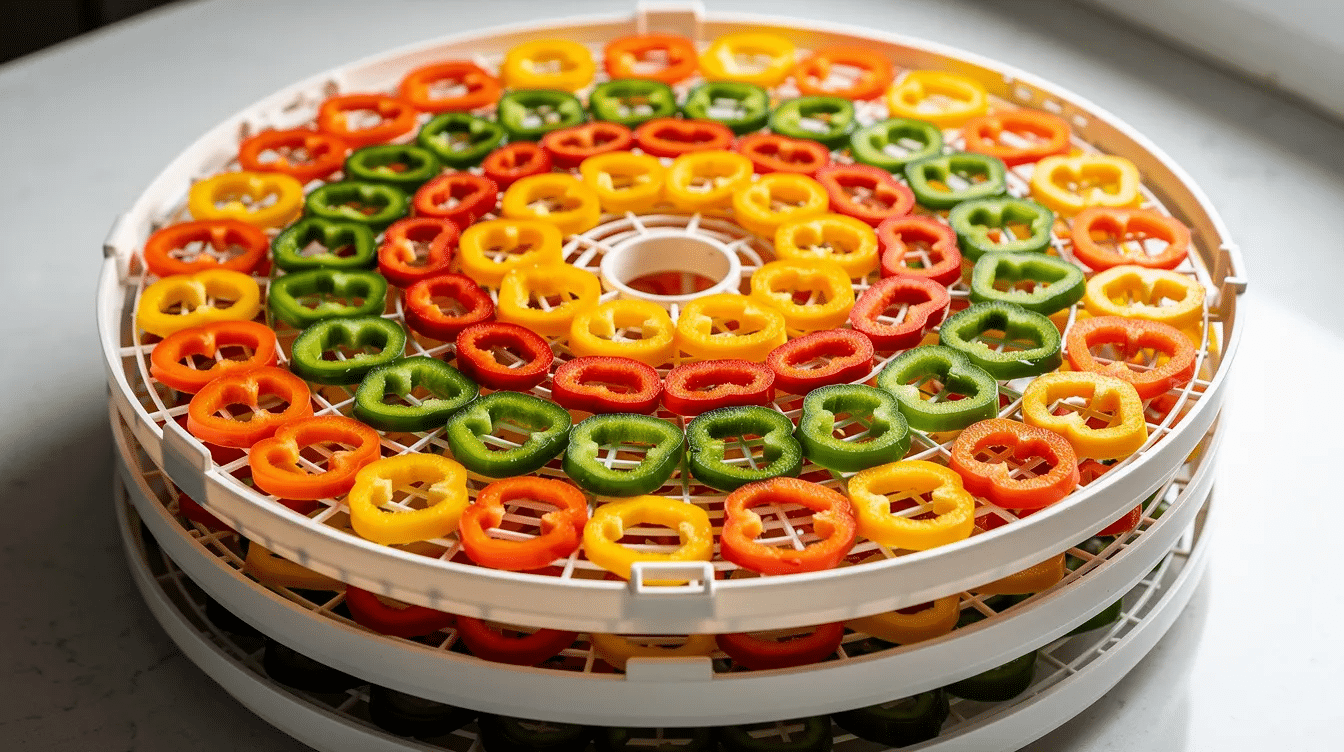
Lay prepared pepper pieces in a single layer on dehydrator trays, cut-side up, without overlapping so air circulation stays strong around each piece. For juicy bell peppers or thin chili rings, line trays with mesh screens or parchment paper cut to fit. This prevents small pieces from falling through and reduces staining.
The best method for dehydrating peppers uses a food dehydrator at 125°F to 135°F. Research on optimal drying conditions for red chili peppers confirms that moderate temperatures around 50–57°C (122–135°F) balance drying speed with quality preservation of color, flavor, and capsaicin. Use the vegetable setting if your dehydrator has one. Thicker peppers like bells may prefer 125°F to preserve color, while thin chili peppers dry quickly at 135°F.
Drying peppers can take 6 to 24 hours depending on thickness and moisture. Typical ranges, especially when dehydrating jalapeno peppers in a dehydrator or similar varieties, are:
Diced bell peppers: 6–10 hours
Halved jalapeños and serranos: 6–12 hours
Thin whole chiles: 4–8 hours
If you want a more generalized walkthrough, a step-by-step guide on how to dry peppers in a dehydrator can help you fine-tune times for different shapes and sizes.
You can dehydrate peppers at 125°F for 12–24 hours in a dehydrator depending on the size and water content of your peppers. Check periodically after the halfway point. Properly dried peppers should be completely dried and brittle-pieces snap cleanly rather than bend. Any leathery feel means they need more time.
Oven Method: How to Dry Peppers Without a Dehydrator
Spread peppers in a single layer on rimmed baking sheets lined with parchment paper. If you have wire racks, set them on the baking sheets to improve airflow underneath. Avoid crowding, which traps steam and creates uneven drying.
Oven drying requires temperatures of 150–175°F for several hours. Set your oven as low as possible. For gas ovens with higher minimums, prop the door slightly open with a wooden spoon to release moisture and reduce temperature. Peppers can be dried in an oven at low temperatures for long periods-expect 8–24 hours depending on oven calibration, humidity, and pepper thickness, and you can borrow additional tips from guides on how to dry peppers in the oven to avoid common mistakes.
Smaller peppers near the front of the oven often finish first, so rotate trays every few hours for quicker drying and even results. A convection setting circulates air like a dehydrator and can shorten drying time by several hours.
Monitor peppers periodically to prevent scorching, especially at 175°F. Scorched or browned dried peppers taste bitter in chili powder and should be discarded.
Alternative Drying Methods: Air, Sun, and Ristras
Traditional methods like sun drying and hanging peppers in decorative ristras work beautifully in very dry, hot climates but carry real mold risk in humid regions.
Air drying indoors: Thread whole, thin-walled chili peppers (cayenne, New Mexico chiles) onto string and hang in a warm, well ventilated area out of direct rain. This can take 1–3 weeks. Make sure the room stays dry and has good air circulation.
Sun drying: Place peppers on mesh racks in full direct sunlight with good airflow. Bring them indoors at night to avoid dew. This method works best in arid climates like the American Southwest where relative humidity stays low.
Ristras: The decorative strings of dried chili peppers common in New Mexico are both beautiful and functional. Once peppers are fully dried, pull them off and grind into powder.
Air fryers: A newer alternative-air fryers can dehydrate peppers at 80°C for 4–6 hours, though batch sizes are small.
If any pepper develops soft spots or fuzzy growth during drying, discard the entire affected section. Mold can produce mycotoxins that aren’t destroyed by grinding. These methods are slower and more weather-dependent than a food dehydrator or the oven method, but they appeal to traditionalists and those without electricity access.
Conditioning and Testing Dehydrated Peppers
“Conditioning” dried peppers before long term storage distributes any remaining moisture evenly and catches batches that aren’t fully dry.
Once peppers cool to room temperature, perform the snap test: bend a few pieces. Dehydrated peppers are done when they snap easily and feel crispy. Completely dried bell peppers and chili peppers should crack or snap cleanly, not bend or feel tacky.
To condition, place cooled, dried pepper pieces loosely in glass jars, filling them about two-thirds full, then seal and let sit at room temperature for 5–7 days. Shake the jars daily and inspect for signs of moisture on the glass or clumping.
If condensation appears, return the peppers to your food dehydrator or oven at lower temps until fully crisp. Any sign of mold-spots, fuzz, off smells-means those peppers should be discarded immediately.
Conditioned, fully dried peppers work equally well for storage as whole dried pods or for grinding into powder. They’re less likely to cake or spoil during long term storage.
Grinding Dried Peppers into Chili Powder
Once peppers are fully dry and conditioned, transforming them into pepper powder takes just minutes with basic kitchen tools.
Grind dried peppers using a blender or coffee grinder. Here are your equipment options:
Tool
Best For
Result
Coffee grinder or spice grinder
Small batches (¼–½ cup)
Fine powder
High-speed blender
Larger amounts (1–2 cups)
Fine to medium powder
Food processor
Coarse batches
Larger chunks and flakes
Break dried peppers into smaller pieces, remove remaining stems, then pulse until the powder reaches your desired fineness. Let any swirling chili dust settle for 30 seconds before opening the lid. Grinding in small batches retains better flavor and freshness than processing everything at once.
For extra-fine chili powder, pour ground peppers through a fine mesh sieve, returning larger flakes to the grinder for another pass. This produces a fine powder that dissolves seamlessly into sauces and rubs.
A smart batch strategy: grind only what you’ll use in 1–3 months and keep the rest as whole dried peppers. Whole pods hold flavor and color far longer than ground powder.
For conversion planning: one pound of fresh peppers yields about 4 ounces of dried pods. That same 1 pound of fresh peppers yields about 3/4 cup chili powder, though amounts vary depending on variety and thickness.
Storing Dehydrated Peppers and Chili Powder
Light, air, heat, and moisture are the enemies of dried peppers. Proper storage makes the difference between vibrant spices and a sad, faded jar of dust.
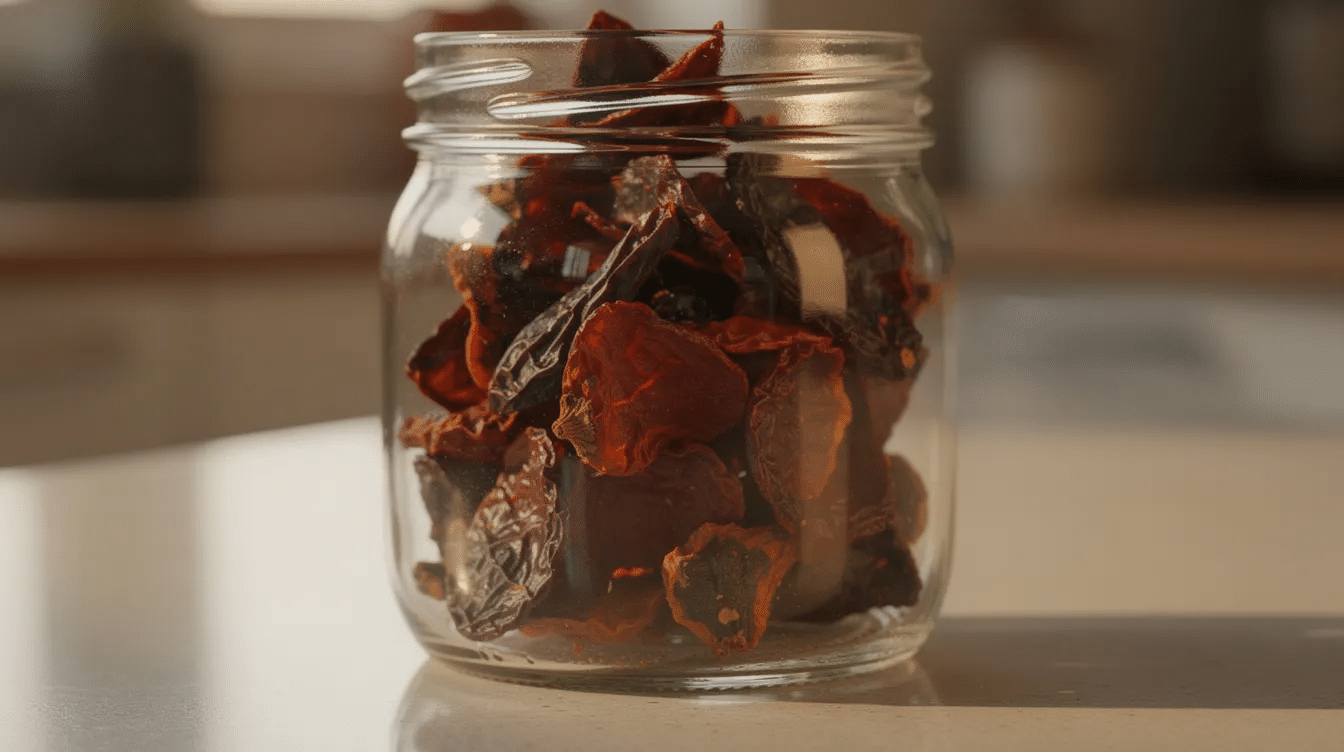
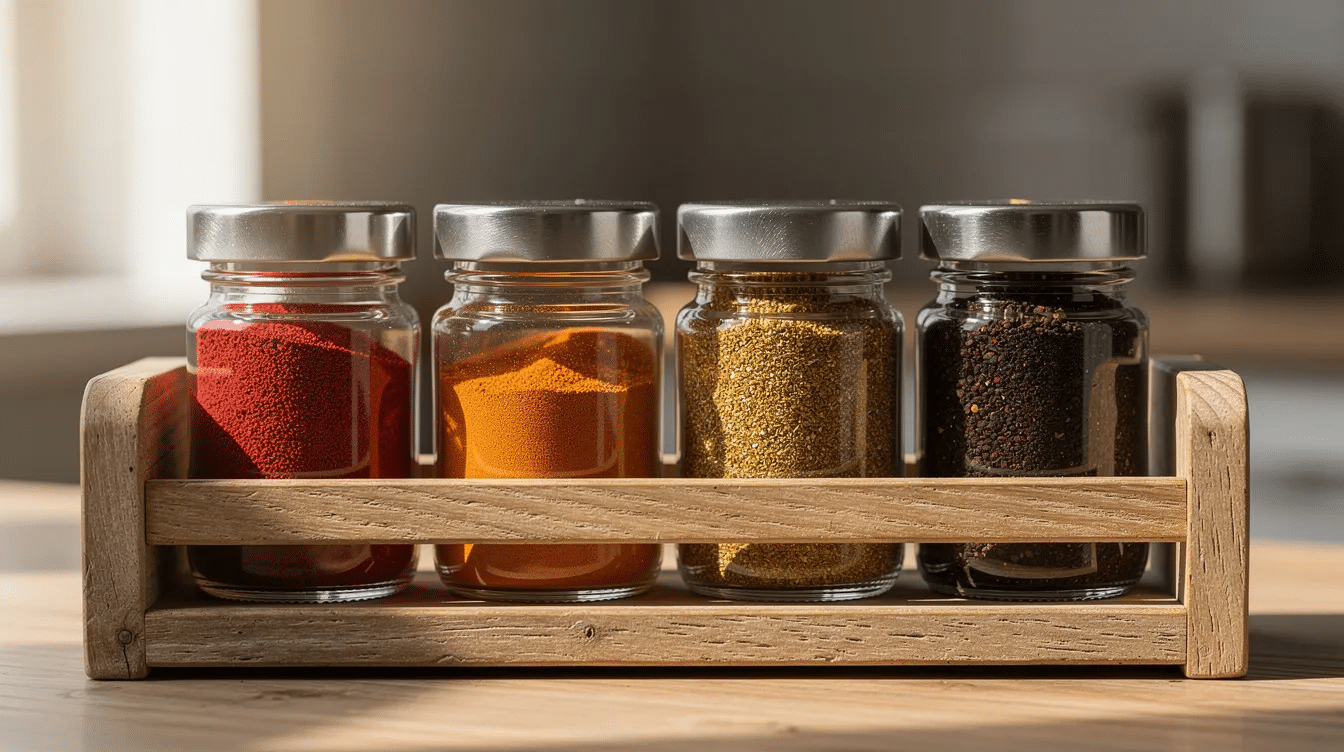
Store dried peppers in an airtight glass container. Half-pint or pint-size glass canning jars, repurposed spice jar options with tight lids, or vacuum-sealed bags all work for long term storage. Many of the same storage principles used when drying tarragon for flavorful cooking—cool temperatures, darkness, and minimal air exposure—apply here as well. Store pepper powder in an airtight container in a cool dark place-a pantry or cupboard away from stovetops, dishwashers, and direct sunlight.
Store in a cool, dry, dark location for optimal freshness. In humid climates, use desiccant packets in humid climates to keep peppers crisp. Place food-safe silica gel packets inside containers of whole dried peppers, keeping them out of reach of children.
Shelf life expectations:
Format
Storage Life
Whole dried peppers
1–2 years
Ground chili powder
6–12 months
Dried peppers last over a year when stored properly. Ground powder is more vulnerable to oxidation and volatile loss, so it’s best used within 6–12 months. Over time, flavor gradually mellows rather than suddenly spoiling.
Label every container with pepper variety, heat level (mild/medium/hot), and date-for example, “Jalapeño Powder – Sept 2025.” Future you will appreciate it when reaching for the right spice jar mid-recipe.
Using Homemade Pepper Powders in Everyday Cooking
Homemade pepper powders replace or complement store-bought chili powder and paprika in dozens of weeknight foods. Here’s where each heat level shines.
Mild powders (bell peppers, sweet paprika-style):
Sprinkle on roasted vegetables
Stir into cream sauces
Dust on deviled eggs or stuffed peppers
Use in dry rubs that need color without extra heat
Add to breakfast potatoes-½ to 1 teaspoon seasons a family-sized dish
Mix into hot sauce bases
Hot and superhot powders (cayenne, habanero, ghost pepper):
Finish on pizza or grilled meats
Boost store-bought salsa with a pinch
Build custom hot wing rubs-start small, since concentrated heat surprises
For creative spice blends, combine dried peppers with garlic powder, onion powder, cumin, smoked salt, or dried herbs like dehydrated cilantro to make house taco seasoning, barbecue rubs, and chili seasoning mixes. You can also pair chili powders with complementary spices such as homemade dehydrated ginger powder for more complex rubs and curry-style blends. If you prefer to cook with whole or flaked peppers, dried peppers can be rehydrated for soups and stews. Soak whole dried chili peppers or coarser flakes in hot water for 15–20 minutes, then blend into sauces, marinades, or soups for richer chili flavor.
Frequently Asked Questions
These questions address common practical issues that come up during first-time pepper dehydrating projects. Each answer is meant to be short and actionable so you can scan for your specific concern.
Can I dehydrate frozen peppers to make chili powder?
Yes. Frozen peppers can be dehydrated, but their cell walls are already ruptured from freezing, so they release more liquid and may take longer to dry than fresh peppers. Thaw them completely and pat dry before placing on dehydrator trays or baking sheets in a single layer. Flavor is usually good, and the softer pre-drying texture doesn’t matter once everything is ground into powder.
Do I need to remove pepper skins before dehydrating?
For most bell peppers and chili peppers, removing skins is unnecessary. Thin skins dry and grind well into powder. Some cooks who roast thick-skinned varieties for other uses peel first, but for plain dehydrating, just wash, trim, and slice. Skin fragments disappear once finely ground, especially if you sieve the final chili powder. The result earns 5 stars from anyone who tries it versus peeling every pod.
How do I prevent my chili powder from clumping?
Clumping usually means the peppers were not fully dry or that powder is stored somewhere humid. To fix it, spread the powder thinly on a parchment-lined tray, dry at the lowest oven setting for 15–30 minutes, cool completely, then return to airtight containers. Store in smaller jars, keep lids tightly closed, and consider desiccant packets near containers in very humid climates. Perfect timing on the initial drying step prevents this issue entirely.
Why does my homemade chili powder taste bitter?
Bitterness usually comes from scorching peppers at too high a temperature (especially above 175°F) or from including too many bitter seeds and ribs. Lower your drying temperatures, check more often for doneness, and remove at least part of the seeds and white membranes before drying. If you’ve already got a bitter batch, blending a small amount with sweeter bell pepper powder or paprika can sometimes salvage it.
Can I mix different dried peppers into one powder?
Absolutely, and this is where homemade pepper powder really outshines store-bought. Start with a base of mild dried peppers (like bell peppers or ancho) and gradually add hotter varieties (like cayenne or habanero) until the desired heat is reached. Write down your ratios-for example, 3 parts bell, 2 parts ancho, 1 part cayenne-so you can recreate your favorite blend from one harvest to the next. These custom spice blends make any recipe your own.
DannyContent Writer
Hey there, since 2016, my mission has been to provide you with the information and guides you need to make food dehydrating simple and fun. Whether you're a newbie or a seasoned pro, my site offers helpful guides, reviews, and recipes to enhance your dehydrating experience. I take pride in only recommending products I believe in, ensuring my readers' trust. As an affiliate of various programs, including Amazon Associates, your support helps me continue providing quality content. Thanks for stopping by, and happy dehydrating!