We earn a commission if you make a purchase, at no additional cost to you.
09/22/2026 04:39 pm GMT
🍊 Dehydrated Food Info Finder — Temperatures & Drying Times
Choose a category, then pick a food to see its drying temperature and time.
⚠️ Safety Disclaimer: Drying times are estimates and vary based on slice thickness, food moisture content, humidity, and your dehydrator model. Always check for doneness before storing — food should feel dry, leathery, or brittle with no moist spots. Improperly dried food can harbour mould and bacteria. For meat and poultry, follow USDA safe internal temperature guidelines: beef and pork to 160°F (71°C), poultry to 165°F (74°C). Use a food thermometer when in doubt. Store all dehydrated foods in airtight containers in a cool, dark place and discard anything showing moisture, mould, or off odours.
Dehydrated Zucchini Uses: From Crispy Chips to Zucchini Flour
Dehydrated zucchini in the form of chips, shreds, cubes, and powder is a space-saving way to preserve garden or market squash and eat it all year long. Here’s what you need to know:
You can use dehydrated zucchini in soups, stews, casseroles, backpacking meals, baked goods, and as a low carb snack in chip form.
Zucchini can be dehydrated as slices, shreds, noodles, cubes, and even blended “bark,” then ground into zucchini flour or powder for invisible veggie boosting.
Most drying is done at 125–135°F (52–57°C) for 6–12 hours, depending on cut size and moisture level.
Proper storage in a mason jar, vacuum-sealed bag, or airtight container keeps dried zucchini good for 12–18 months at room temperature.
Introduction: Why Dehydrate Zucchini Instead of Freezing?
In August 2026, home gardeners across the country again face the classic problem: more zucchini than freezer space. When every neighbor has already politely declined your surplus, dehydration is the answer that doesn’t require plugging in a chest freezer.
Fresh zucchini is roughly 94–95% water by weight. That means when you dehydrate zucchini, it shrinks to a fraction of its original volume. A big zucchini that filled a gallon freezer bag becomes a handful of light, shelf-stable pieces that fit in a single jar. Zucchini is low in calories with about 17 calories per cup, yet it’s a good source of vitamin C and potassium, and dehydrated zucchini retains most of its nutrients when dried properly.
Unlike frozen shredded zucchini in freezer bags that needs constant power and precious freezer space, dried zucchini stores in jars or bags at room temperature for 12–18 months. The main forms are zucchini chips for snacking, dried cubes for soups, shredded zucchini for baking, and finely ground zucchini flour used as a nutrition booster in everything from pancakes to smoothies. Let’s start with how to dehydrate zucchini well, then dive into detailed ideas for using it.
Choosing and Preparing Zucchini for Dehydrating
Pick fresh, firm zucchini harvested within the last 24–48 hours for the best texture and flavor. A medium sized zucchini (about 6–8 inches long) gives you tender flesh, thin skin, and small seeds, all ideal for drying. Avoid overgrown specimens with tough skins and fully formed seeds. If you do end up with a big zucchini, cut it in half lengthwise, scrape out the seeds and spongy pith with a spoon, and peel the skin if it’s thick or bitter.
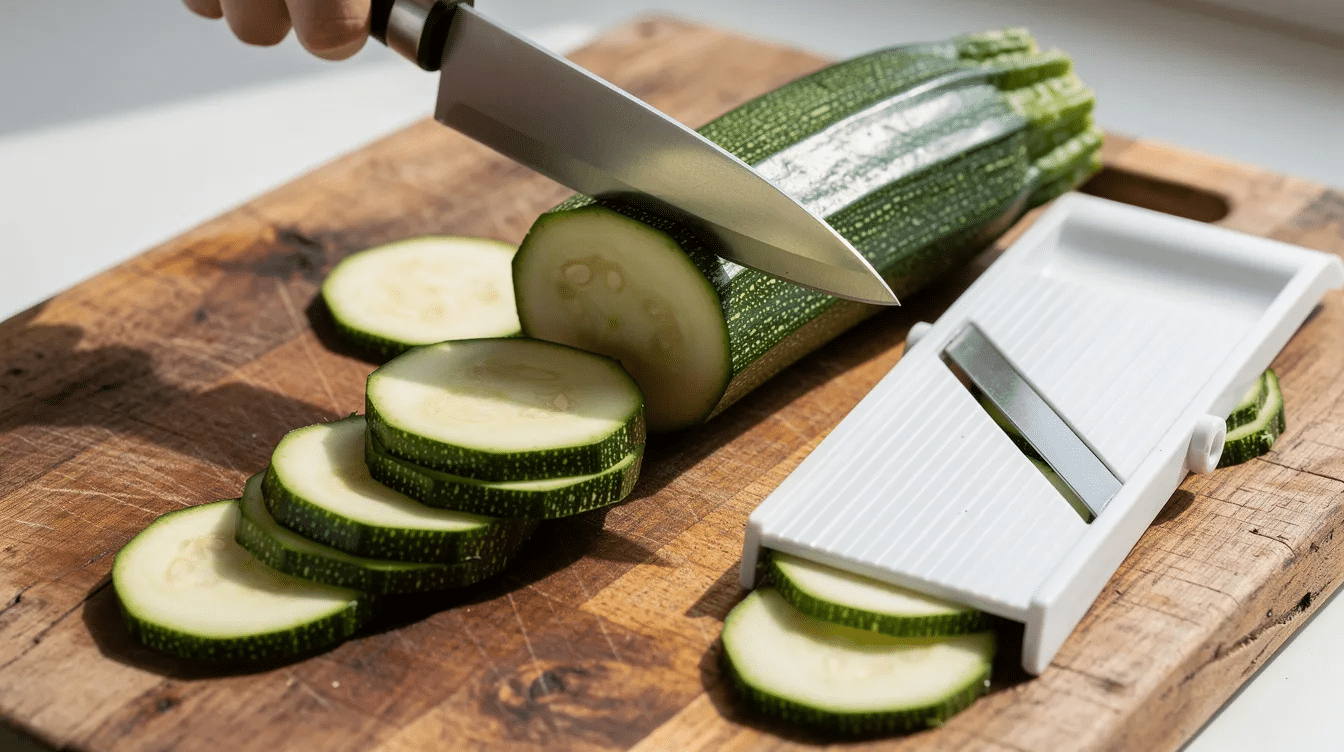
Rinse zucchini under cool water, gently scrub with a cloth towel, and trim off the stem and blossom ends. Pat dry before slicing. Your cutting style determines the end use:
Thin rounds (about 1/8 inch or 3 mm) for zucchini chips – use a mandoline for even slicing of zucchini
Slice zucchini into ¼-inch thick pieces for raw dehydration when making cubes for soups and casseroles
Matchsticks or ribbons for zoodles (zucchini noodles can be dehydrated for gluten free meals)
Fine shreds using a box grater for baking or grinding into flour
Process zucchini the same day it’s picked or purchased. Use a clean cutting board and knife, and work quickly – sliced zucchini left on the counter oxidizes and loses quality fast.
Steaming vs Raw: How Prep Changes Dehydrated Zucchini Texture
You have two paths before drying: dehydrating raw or briefly steaming. Each produces a different result, and the choice depends on how you plan to use the finished product.
Steaming zucchini before drying improves rehydration quality. For ¼- to ½-inch zucchini slices or cubes destined for soups and casseroles, steam them for about 5–6 minutes over boiling water. This softens cell walls so the pieces rehydrate evenly and don’t turn rubbery when cooked later. Here’s the method: bring 1–2 inches of water to a boil in a pot, set a steamer basket on top, add zucchini in a single loose layer, cover, and steam until just tender. Cool completely on a cloth towel before placing on dehydrator trays.
Raw dehydrated zucchini chips and noodles, on the other hand, keep a slightly firmer, chewier bite that works well for snacks and pasta-style dishes. If you’re making crispy chips or dried zoodles, skip the steaming entirely. One caution: if you peel large zucchini, steam skins and flesh in separate batches. Thin skins overcook quickly and turn mushy once dried, while thicker flesh needs the full 5–6 minutes.
Seasoning Ideas Before You Dehydrate Zucchini
Dehydrated zucchini can pair well with strong seasoning before dehydration because salt pulls out moisture and flavors concentrate as water evaporates. This is especially true for zucchini chips and snackable pieces.
The basic method: toss about 1½–2 pounds of sliced zucchini in a large bowl with a drizzle of olive oil (optional), salt, pepper, garlic powder, and onion powder. Massage gently to coat all sides. Then try these specific mixes:
Savory snack: ½ tsp salt, ¼ tsp black pepper, ½ tsp garlic powder, ½ tsp smoked paprika, ¼ tsp dried oregano
Italian-inspired: ½ tsp salt, ½ tsp onion powder, ½ tsp basil, ¼ tsp oregano, a pinch of red pepper flakes
Dill pickle chips: ½ tsp salt, 1 tsp dried dill, ½ tsp onion powder, a splash of apple cider vinegar, 1 tsp oil
Bouillon mix for soups: ½ tsp salt, 1 tsp vegetable bouillon powder, ½ tsp tomato powder, a pinch of thyme
Zucchini chips can be flavored with spices like ranch or smoked paprika for variety, just like other homemade dehydrated vegetable chips. For raw zucchini, season before drying. For steamed pieces, pat dry first, then season lightly so the softened pieces don’t tear. Keep in mind that flavors intensify after drying, so start lighter on salt and heat, then adjust in future batches.
Basic Methods: How to Dehydrate Zucchini Slices, Cubes, and Shreds
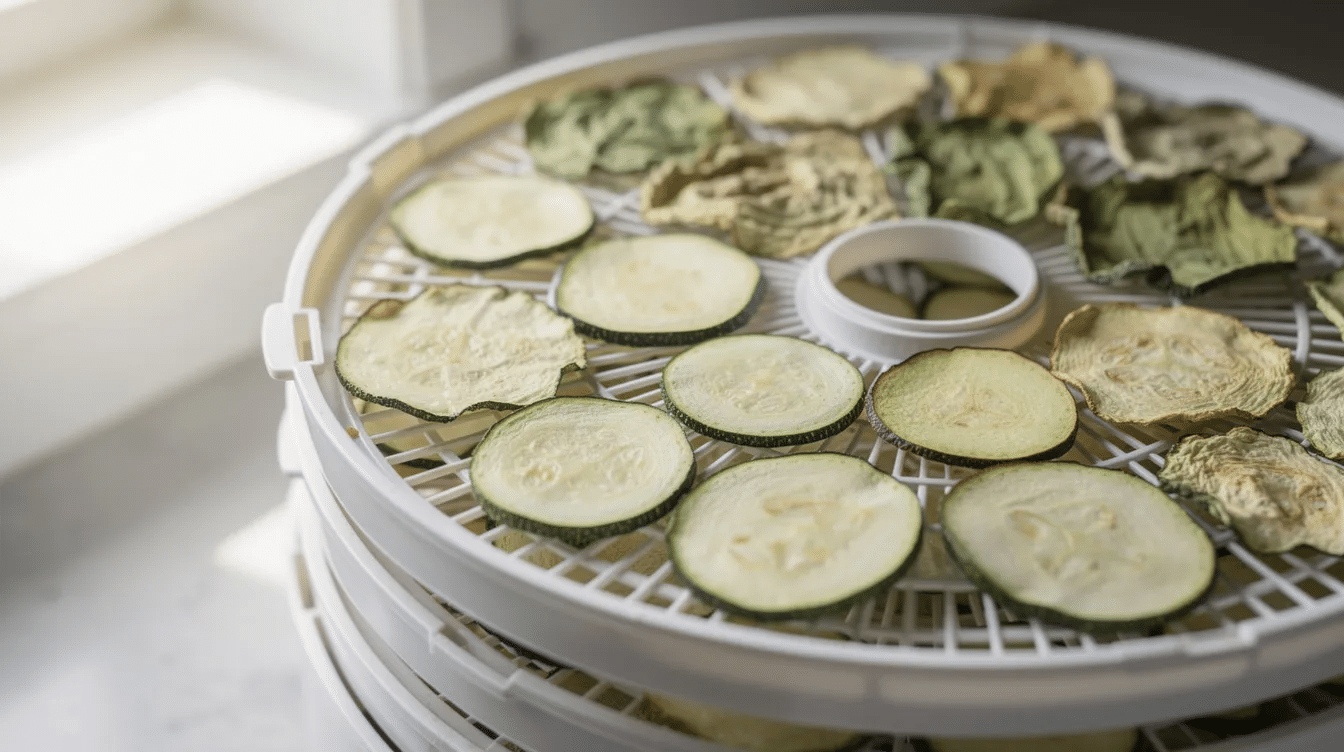
Set your dehydrator to 125–135°F (52–57°C). At 135°F, most cuts will dry in 6–10 hours depending on thickness. Place pieces directly on mesh dehydrator trays in a single layer without overlapping. Skip nonstick sheets for chips and cubes – direct contact with the mesh means better airflow and faster drying.
Time ranges by cut:
Thinly sliced zucchini chips (about 1/8 inch) take about 8 hours to dehydrate until crispy or very firm
Thicker steamed zucchini slices and cubes (¼–½ inch): 8–12 hours until dry and leathery
Fine shredded zucchini: 6–8 hours until completely brittle
Test for doneness after cooling a few pieces to room temperature. Chips should snap cleanly. Shreds should crack when bent. Cubes should feel dry throughout with no visible moisture when broken in half. If pieces are still tacky or pliable, return them to the trays for another hour or two.
For oven drying without a dehydrator, spread zucchini on parchment paper-lined baking sheets, set your oven to its lowest temperature (often 170–200°F), prop the door open slightly for airflow, and rotate the pan every 1–2 hours until fully dry. Expect slight color changes – cubes may turn golden, and chips become a deeper green. This is normal and signals concentrated flavor.
Storing Dried Zucchini Safely for Long Shelf Life
Properly dried zucchini should feel completely dry to the touch. According to Penn State Extension research, target a water activity of 0.54 or lower for shelf-stable chips, which translates to roughly 3–8% remaining moisture. At this level, mold can’t grow and the product stays stable at room temperature for a year or longer.
Before sealing anything for long-term storage, condition your dried zucchini. Loosely pack pieces into glass jars for 5–7 days, shaking daily. If you see condensation or sticking, spread the pieces back on trays and dry them further. This conditioning step catches batches that look done but still hold hidden moisture.
For storage containers, use a wide mouth mason jar with a tight lid, mylar bags with oxygen absorbers, or vacuum-sealed jars. Keep everything in a cool, dark place (pantry or cupboard away from the stove), ideally below 70°F. According to UC ANR guidance, silica packets inside jars help in humid climates. Label each airtight container with the date and form – chips, shreds, cubes, or powder – so you grab the right one when cooking. Expect best flavor and color within 12 months.
Dehydrated zucchini can be used as a low-carb snack when made into chips, replacing potato chips with far fewer carbs and calories, and it pairs well with other dehydrated low carb fruits for healthy snacking. One cup of zucchini provides 2 grams of dietary fiber and barely any sugar, making these a guilt-free grab.
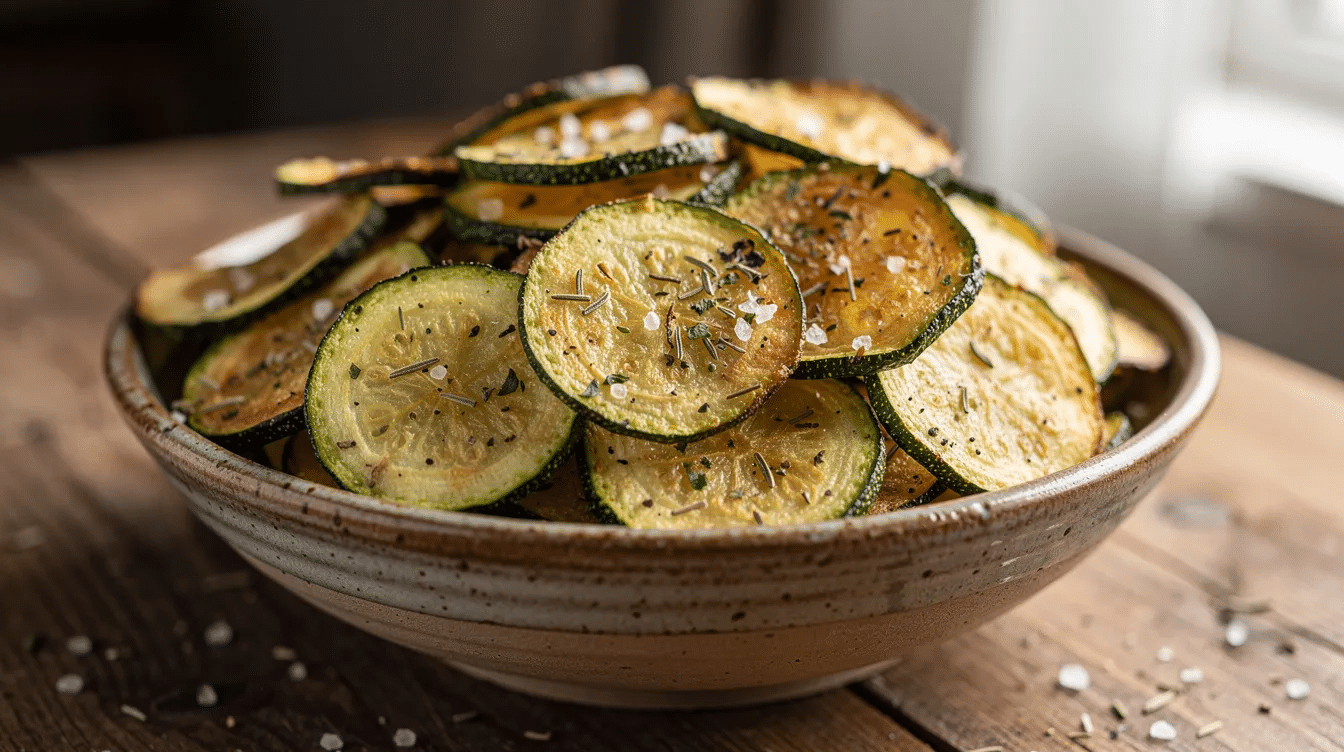
To make basic zucchini chips: use a mandoline to slice zucchini into 1/8-inch rounds. Toss in a bowl with a light coating of oil and your chosen seasonings – dehydrated zucchini chips can be seasoned with salt and spices of any kind. Lay them in a single layer on mesh trays and dehydrate at 135°F for 8–10 hours until crisp. Zucchini chips can be dehydrated at 135°F for 8–10 hours to reach that satisfying snap.
Raw chips stay a bit chewy in the center. If you want a thinner, more uniformly crispy result, steam thicker slices for 5–6 minutes first, then dry them. The steamed version collapses flatter and crisps more evenly.
Serving ideas for these chips – and even other veggie-based snacks like dehydrated lettuce chips – include:
Eat them straight as a stand-alone snack
Pair with guacamole, hummus, or ranch dip
Crumble over salads and soups for a crunchy topping
Make mixed trays with different seasoning sections (salt only, spicy, dill pickle) for a taste test spread
Backpacking and Camping Meals with Dehydrated Zucchini
Dehydrated zucchini is ideal for storage and camping meals. It’s light, compact, and rehydrates quickly, adding vegetables to trail dinners without any refrigeration. Dehydrated zucchini can be used in homemade instant meals requiring just boiling water, especially if you already have a backpacking-focused food dehydrator setup.
Zoodles and beef in tomato sauce: Combine dried zucchini noodles, dried ground beef or chicken, tomato powder, a handful of small pasta, garlic flakes, and Italian seasoning in a zip bag. At camp, add 1½ cups of water, soak 5 minutes, bring to a boil, then reduce heat and insulate the pot in a cozy for 10–15 minutes. Stir and eat.
Trail zucchini casserole: Mix dehydrated zucchini cubes, instant rice, dried beans or cooked dried meat, bouillon powder, onions, and pepper in a bag. Add water, boil briefly, then insulate. The zucchini absorbs moisture rapidly during cooking, plumping up to blend with the rice.
Trail ratatouille: Pack dried zucchini, dried onion, bell pepper flakes, garlic, and tomato flakes together. Simmer in water for 15 minutes until everything rehydrates into a thick vegetable stew. Dried zucchini ratatouille can be rehydrated for meals that taste surprisingly close to fresh, and it pairs well with pre-made dehydrated camping meals if you want a mix of homemade and packaged options. Sprinkle cheddar cheese on top if you’re carrying it.
Pack each pre-measured meal kit in a labeled bag with instructions written directly on it (e.g., “Zucchini Mac, add 1½ cups water, boil 2 min, cozy 12 min”).
Soups, Stews, and Casseroles Using Dehydrated Zucchini
Dried zucchini is a workhorse vegetable for everyday cooking. It disappears into brothy dishes, adding body and fiber without dominating the taste. Dehydrated zucchini can be used in soups and casseroles as a direct substitute for fresh.
Dried zucchini can be added directly to soups and stews during cooking – no pre-soaking needed. Drop cubes or shreds in at the start of simmering and give them 15–20 minutes to soften fully. Dehydrated zucchini adds fiber and nutrients without changing dish flavor significantly, and it’s a great way to sneak extra vegetables into family meals.
Zucchini-potato soup: Sauté diced onions and garlic in oil over medium heat until soft. Add broth, a handful of dehydrated zucchini cubes, dried potato slices, diced carrots, salt, pepper, and thyme. Simmer 20 minutes until tender. Blend if you want it smooth, or leave it chunky.
Baked zucchini casserole: Combine rehydrated zucchini (or dried cubes plus extra liquid), cooked ground chicken or beef, tomato sauce, cooked pasta or rice, and herbs in a baking dish. Top with cheese and bake at 375°F until bubbly, about 25 minutes.
Dried zucchini can also enhance the texture of risottos and grain dishes – stir cubes into simmering risotto about halfway through cooking. Rehydrated zucchini skins work especially well in tomato-based dishes, adding color and a slightly firmer chew. Dehydrated zucchini can replace fresh zucchini in various recipes; just increase your liquid by ¼–½ cup per cup of dried pieces.
Baking with Dried Zucchini: Breads, Muffins, and Zucchini Flour
Fine shredded or powdered dehydrated zucchini works beautifully in zucchini bread, cakes, and muffins without the excess water that makes batters soggy when you use fresh grated zucchini. Dried zucchini can be rehydrated before being mixed into baked goods for a texture nearly identical to fresh.
Rehydrating for baking: Soak equal volumes of dried shreds and warm water (e.g., 1 cup dried to 1 cup water) for 10–15 minutes. Drain off any remaining liquid, then squeeze gently to remove excess water before folding into batter.
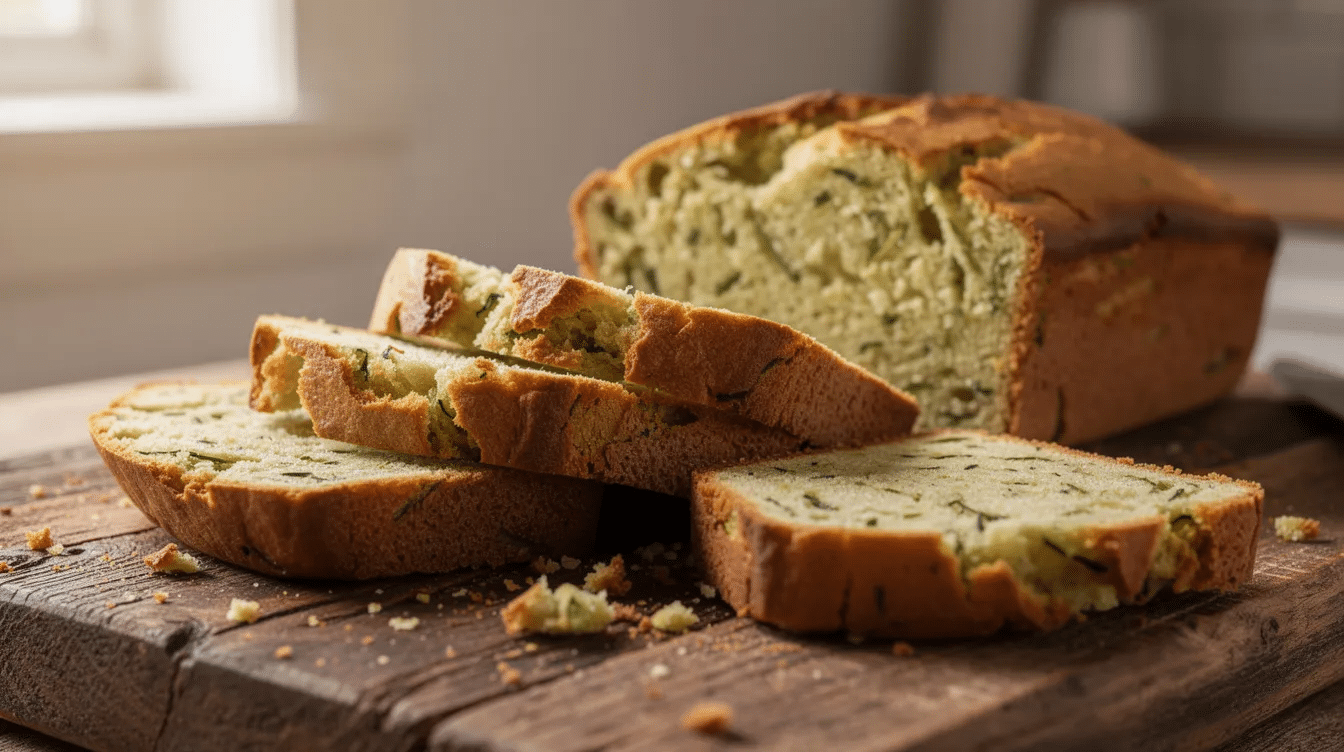
Zucchini bread example: Use your standard recipe – regular flour, sugar, oil, eggs, baking soda, baking powder, cinnamon, and salt – and add about 1–1½ cups of rehydrated zucchini shreds. The dried-then-rehydrated shreds hold less water than fresh grated zucchini, so your loaf bakes more evenly.
Making zucchini flour: Grind fully dried shreds in a food processor or high-speed blender until fine. Sift to remove larger bits and store in an airtight jar. According to UC Master Food Preserver data, approximately 3½ pounds of fresh zucchini yields about 2 cups of dried shredded zucchini, which grinds down to roughly ½ cup of zucchini flour.
Using zucchini flour: Replace 2–4 tablespoons of wheat flour per cup in pancakes, waffles, or muffins. It also works as a swap for coconut flour in some gluten free recipes. Mix it into no-bake cookies or energy balls with nuts, seeds, and honey. The flavor is mild and slightly sweet, pairing naturally with cinnamon, chocolate chips, and warm spices in baked goods.
Zucchini Powder and “Bark”: Invisible Veggie Boosters
Zucchini “bark” is a blended puree of cooked zucchini (often with potatoes or other vegetables, including previously frozen vegetables you’ve dehydrated) spread thin on dehydrator trays, dried at 135°F for about 6–8 hours until brittle, then broken into shards.
Simple zucchini-potato bark: Steam peeled zucchini chunks and potato cubes with a pinch of bouillon for about 8 minutes until soft. Blend until smooth in a blender or food processor. Spread the puree 1/8–¼ inch thick on nonstick trays and dehydrate until completely dry and crisp. Break into pieces for storage.
Grind bark or dried shreds into zucchini powder using a high-speed blender, coffee grinder, or food processor. Store in labeled glass jars. Ground dehydrated zucchini serves as a mild vegetable booster in sauces – it dissolves almost invisibly. Dehydrated zucchini is rich in flavor and nutrients after moisture removal, and the powder form makes it effortless to use daily.
Specific uses for the powder:
Whisk 1–2 tablespoons into soups, sauces, curries, and gravies to thicken
Stir into smoothies for extra fiber
Mix into burger or meatball mixtures to keep them moist
Add to scrambled eggs or omelets
Start with 1 tablespoon per 2–3 servings and increase once you’ve tested the flavor impact. A small amount goes a long way.
Creative Everyday Uses for Dehydrated Zucchini
Once you have jars of dried zucchini on your shelf, the trick is remembering to use them. The same everyday benefits of dehydrated foods that apply to fruits and other vegetables also make zucchini incredibly versatile. Here are quick, practical ways to slip them into daily meals:
Pasta sauces: Add a handful of dried zucchini cubes or shreds to jarred pasta sauce as it simmers over medium heat. They plump up within 10–15 minutes and blend right into the sauce.
Omelets and frittatas: Soak dried pieces briefly in warm water or milk, squeeze out moisture, then sauté with onions or peppers in a pan before adding beaten eggs and cheese. Rehydrated zucchini works well in egg mixes like frittatas or omelets – it adds bulk without watering things down.
Party snacks: Use zucchini chips as a base for toppings – layer on hummus, feta, or bean dip, or mix them with crispy dehydrated cucumbers for a fun veggie chip assortment. Crumble them on top of baked mac and cheddar cheese for extra crunch.
Savory grain bowls: Stir 1–2 teaspoons of zucchini powder into cooking liquid along with salt and seasonings. This works in oatmeal, quinoa, or rice bowls for a more vegetable-rich meal.
Quick veggie boost: Toss a scoop of dried cubes into any simmering pot – chili, curry, or even ramen. They rehydrate in minutes and add fiber without altering the overall taste much.
Keep a jar of dried zucchini within arm’s reach on the counter as a reminder to use all the zucchini from your harvest, one scoop at a time.
FAQ About Dehydrated Zucchini
Here are answers to common questions that come up when people start dehydrating zucchini at home.
How long does dehydrated zucchini really last?
When fully dried, conditioned, and stored in airtight containers in a cool, dark place, dehydrated zucchini typically keeps good flavor for 12–18 months. For a broader context on how long dehydrated food lasts, note that according to Oregon State University extension guidance, dried vegetables generally stay best for 4–12 months depending on conditions, with cooler storage extending that range. If color fades or flavor goes flat after a year, the product is usually still safe to eat as long as there’s no mold or off smell – quality is just reduced.
Do I need to blanch or steam zucchini before dehydrating?
Blanching isn’t strictly necessary for safety. However, steaming for 5–6 minutes noticeably improves texture and rehydration for cubes and thick slices you plan to use in cooked dishes like soups and casseroles. For zucchini chips and noodles, many people prefer to dehydrate raw to keep a firmer, snack-like texture.
How do I rehydrate dried zucchini before cooking?
Cover dried zucchini with hot water and soak for 10–20 minutes, then drain and use like fresh. For soups and stews, skip pre-soaking and simmer directly in broth. As a rule of thumb, 1 cup of dehydrated zucchini rehydrates to roughly 4–6 cups, depending on cut size and how dry the pieces were.
Can I dehydrate zucchini in an oven if I don’t own a dehydrator?
Yes. Set your oven to its lowest temperature (often 170–200°F), arrange zucchini on parchment-lined trays, and prop the door slightly open for airflow. Flip pieces every couple of hours until fully dry. Oven temperatures are less precise than a dehydrator, so pieces may dry faster at the edges and need closer monitoring to prevent scorching.
Why did my dried zucchini go soft in the jar?
Softness almost always means pieces weren’t fully dried or properly conditioned. Moisture equalized inside the container, making pieces flexible or sticky. Spread them back on trays immediately and dehydrate at 125–135°F until crisp or leathery again. Then re-condition in a clean, dry jar for 5–7 days before sealing for long-term storage.
DannyContent Writer
Hey there, since 2016, my mission has been to provide you with the information and guides you need to make food dehydrating simple and fun. Whether you're a newbie or a seasoned pro, my site offers helpful guides, reviews, and recipes to enhance your dehydrating experience. I take pride in only recommending products I believe in, ensuring my readers' trust. As an affiliate of various programs, including Amazon Associates, your support helps me continue providing quality content. Thanks for stopping by, and happy dehydrating!