We earn a commission if you make a purchase, at no additional cost to you.
09/22/2026 04:39 pm GMT
🍊 Dehydrated Food Info Finder — Temperatures & Drying Times
Choose a category, then pick a food to see its drying temperature and time.
⚠️ Safety Disclaimer: Drying times are estimates and vary based on slice thickness, food moisture content, humidity, and your dehydrator model. Always check for doneness before storing — food should feel dry, leathery, or brittle with no moist spots. Improperly dried food can harbour mould and bacteria. For meat and poultry, follow USDA safe internal temperature guidelines: beef and pork to 160°F (71°C), poultry to 165°F (74°C). Use a food thermometer when in doubt. Store all dehydrated foods in airtight containers in a cool, dark place and discard anything showing moisture, mould, or off odours.
Dehydrated Sliced Sweet Potatoes Bake: Crispy Chips, Dog Treats & Meal Prep from One Pan
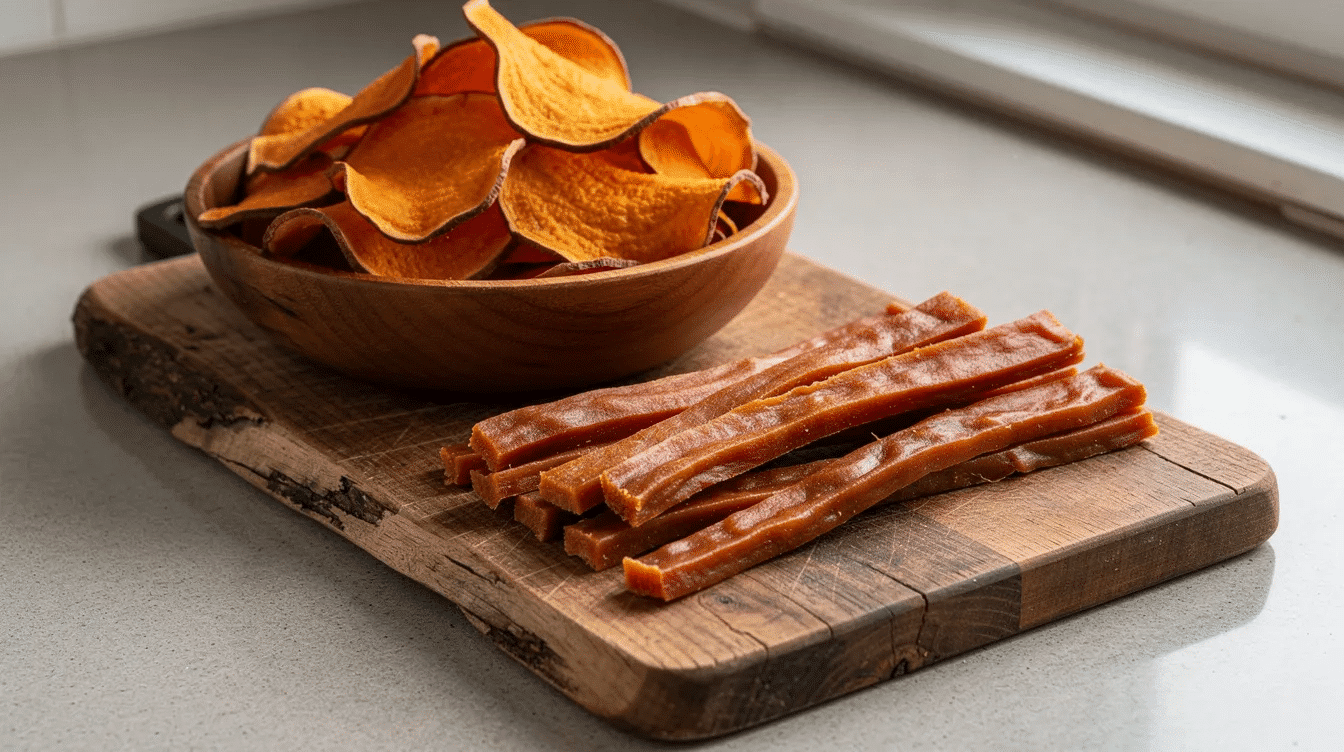
A single batch of sliced sweet potatoes on a baking pan can become crispy chips for movie night, plain sweet potato dog treats for your best friend, and shelf-stable meal-prep cubes for winter soup. This guide walks you through the full bake-then-dehydrate workflow so you get the most from every slice.
Key Takeaways
This recipe shows how to bake sweet potato slices low-and-slow, then finish them in a food dehydrator or oven to make long-lasting snacks, sweet potato chips, and homemade dog treats from the same batch.
You can use a standard oven (200–250°F), a countertop food dehydrator, or an air fryer with dehydrator mode to dry potato slices safely and evenly.
Properly dehydrated sweet potato-whether for humans or dogs-should be fully dry or leathery all the way through, then conditioned and stored in an airtight container or glass jar.
At Dehydrated Foodz, we specialize in food dehydration, so we include specific dehydrator tray loading tips, temperature ranges, and time estimates tested on common home dehydrators including Excalibur-style cabinet units, stackable round units, and air fryer dehydrator trays.
Baking sliced sweet potatoes before dehydrating intensifies their natural sweetness through gentle caramelization, improves digestibility, and creates a versatile base for multiple uses. Sweet potatoes are rich in fiber, aiding digestion, and they provide essential vitamins like Vitamin A and C. Dehydrated sweet potatoes are low in calories and fat, making them a healthy snack whether you eat them yourself or share with your dog.
Baking sweet potatoes at low temperatures helps to preserve nutrients-research shows that baking causes roughly 31% beta carotene loss, but gentle pre-baking combined with low-temperature dehydration keeps that number manageable. Sweet potatoes can be used for both crunchy chips and chewy treats post-dehydration. Here’s what one batch can become:
Lightly seasoned sweet potato chips for a healthy treat at your desk
Plain, one ingredient sweet potato treats for dogs (skin on, no seasoning)
Dried cubes or wedges to rehydrate into mashed sweet potatoes or add to chicken soup on cold nights
This super easy process suits home cooks wanting pantry-stable veggies, backpackers needing lightweight food, and dog owners looking for additive-free dog treats.
Ingredients & Equipment for Dehydrated Sliced Sweet Potatoes
This flexible base recipe works for both people and pets. Season part of the batch for humans and keep part completely plain as dehydrated sweet potato dog treats.
Ingredients:
3–4 large sweet potatoes (about 2–2.5 lb total), orange-fleshed varieties like Beauregard or Jewel
Optional human-only seasonings: olive oil, sea salt, smoked paprika-or add cinnamon and a pinch of sugar for a sweet version
Optional dog-friendly flavor dip: low-sodium chicken broth (no onion, garlic, or artificial sweeteners)
Equipment:
A sharp knife or mandoline slicer for consistent thickness
Large cutting board
2 rimmed baking sheets (standard 18×13″) lined with parchment paper or baking paper
For dehydrators, we often review models like the 9-tray Excalibur dehydrator (horizontal airflow, excellent even drying) and 5-tray stackable units from brands like Nesco. Look for adjustable temperature ranges from 95–165°F and BPA-free, non-toxic tray materials for the safest dried sweet potato results.
Here’s the complete workflow from wash to finished dehydrated sweet potato treats.
Prep the sweet potatoes. Wash each potato under cold water, scrubbing the skin thoroughly. Peel if you prefer a smoother texture, but keeping the skin on adds extra fiber for humans and most dogs. Trim any blemishes or dark spots. To prevent discoloration, soak sweet potato slices in cold water for 10–15 minutes before dehydrating. Blanching sweet potatoes briefly also helps prevent discoloration before dehydrating.
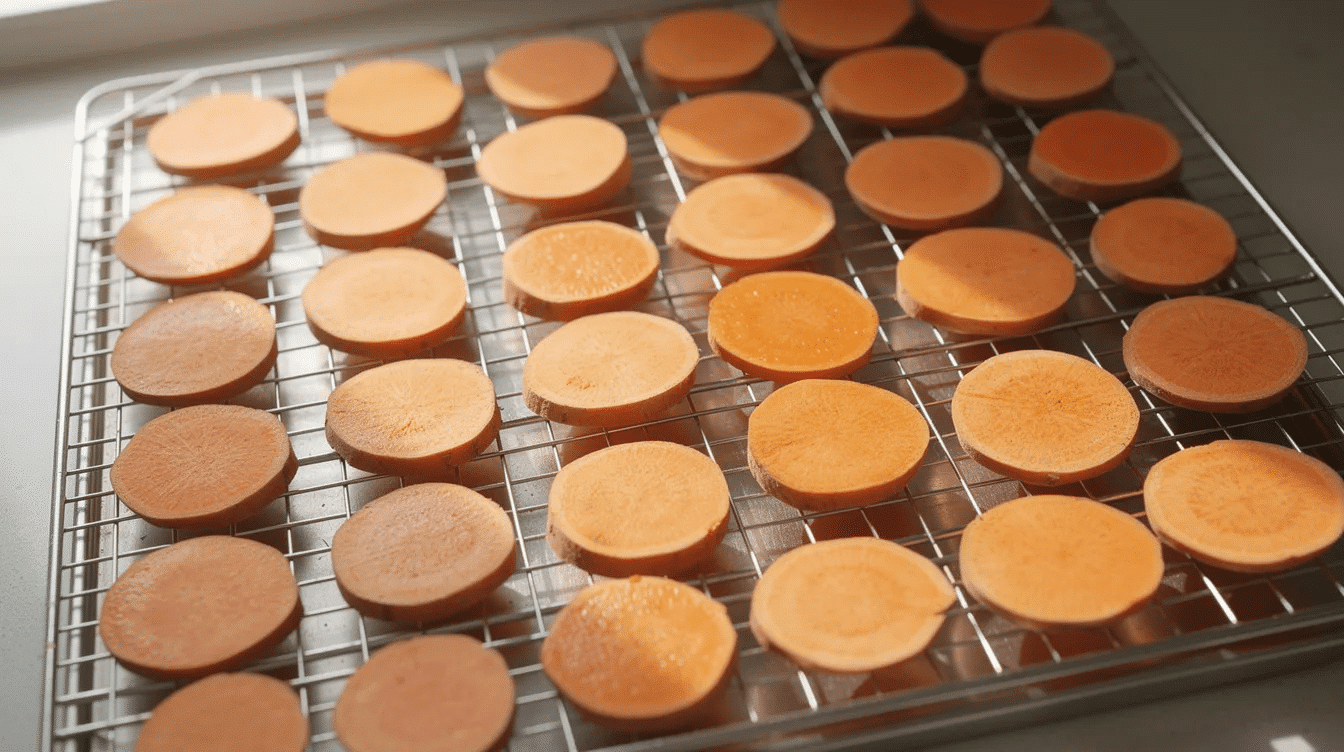
Slice the sweet potatoes. Use a mandoline for consistent slice thickness-uniform pieces ensure even drying. Slice sweet potatoes to a maximum thickness of 1/4 inch:
For crispy chips: 1/8″–3/16″ thin rounds
For chewier sweet potato dog treats: 1/4″ coins or lengthwise strips
For meal prep (future mashed sweet potatoes): 3/8″ half-moons or small pieces that rehydrate well
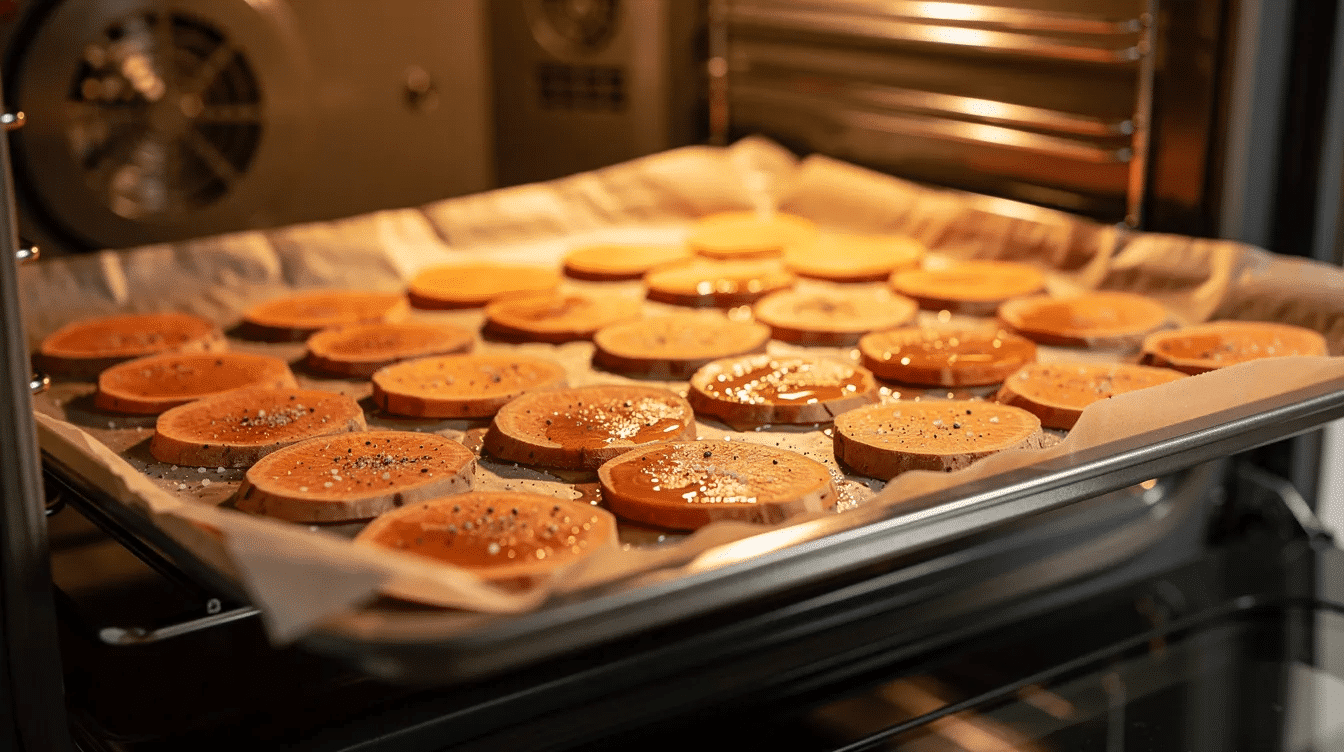
Bake. Preheat oven to 200–225°F. Arrange slices in a single layer on a parchment lined baking sheet-do not overlap. Mist the human portion with a tiny amount of oil and seasoning if desired; dehydrated sweet potatoes can be seasoned before drying to enhance flavor. Bake 60–90 minutes, flipping once. Slices should look dry at the edges but still pliable. Note that cooking at temperatures above 200°F may cook sweet potatoes rather than dehydrate them, so stay at the low end for the pre-bake. This step shortens total dehydration time and boosts sweetness, illustrating one of the key benefits of dehydrating food for storage and snacking.
Dehydrate. Preheat your dehydrator before adding sweet potatoes. Transfer baked slices to dehydrator trays with space between each piece-dehydrating sweet potatoes requires proper air circulation and spacing between slices. For a detailed temperature breakdown, see our guide on what temp to dehydrate vegetables. Dehydrators typically operate at 135°F for vegetables. Set yours to 125–135°F and dehydrate sweet potatoes in a dehydrator at 135°F for 6–7 hours. Dehydrating sweet potatoes takes about 6–8 hours total; thin chips may finish in 4–6 hours, while thicker slices need 6–10. Rotate trays every 2–3 hours on stackable units. Total drying time varies based on slice thickness and desired texture of sweet potatoes.
Oven-only option. If you skip the dehydrator, keep the oven at its lowest setting (170–200°F). Prop the oven door open slightly to let moisture escape during the dehydration process. Extend drying time to 5–8 hours at low temperature, checking frequently. At 250°F, oven drying takes 2.5 to 3 hours, but watch closely to avoid scorching. Our full how to dehydrate sweet potatoes guide covers additional oven tips.
How to Tell When Dehydrated Sweet Potato Slices Are Done
Doneness depends on intended use: brittle for long-term store and backpacking, leathery for dog chews, crisp for sweet potato chips served the same week.
Allow dehydrated sweet potatoes to cool completely to enhance crispness-warm slices feel softer and mislead you. Wait 10–15 minutes, then test:
For crunchy chips: dehydrated sweet potatoes should snap easily when done, with minimal bend
For jerky-style treats: the slice should bend slightly, then tear, with no visible moist center or moisture left inside
For rehydration pieces: fully dry and firm with no soft, spongy spots
Visually, look for uniform color without darker wet-looking patches. No beads of moisture should appear when you press a slice between your fingers. Edges should not feel tacky or sticky.
Low-temperature drying maximizes crispness in dehydrated sweet potatoes. Avoid case hardening (outside hard, inside moist) by keeping temperatures below ~150°F, maintaining consistent thick slices, and breaking open a test piece to check the interior. First-time users of a new food dehydrator should keep a simple log of slice thickness, temperature, total hours, and resulting texture. You’ll dial in the perfect batch within two or three tries.
Conditioning is a 5–7 day process where fully dried sweet potato slices rest in a loosely covered container to equalize any remaining internal moisture before long-term storage. This step catches batches that need more time before you commit to sealing them.
Conditioning steps:
Place fully cooled slices in a large glass jar filled no more than 2/3 full
Seal lightly, shake once per day
Check for condensation on the inside of the jar or slices sticking together-if present, return slices to the dehydrator for another 1–2 hours and restart
Storage guidelines after conditioning:
Storage Method
Duration
Best For
Airtight container, dark cupboard
6–12 months
Fully brittle chips and meal-prep pieces
Room temperature, air tight container
About 1 week
Leathery dog treats consumed quickly
Refrigerated, airtight container
2–3 weeks
Semi-moist sweet potato treats
Frozen, airtight container
Up to 3 months
Long-term dog treat storage
Store dehydrated sweet potato treats in an airtight container, labeled with the bake date. Dehydrated sweet potatoes can be stored in an airtight container for up to three weeks at room temperature if fully dry. Check for mold if treats are stored longer than 2–3 weeks. Discard any slices with mold, off smells, or slimy texture. Never store still-warm slices in sealed containers-trapped steam encourages spoilage. Follow our dark instructions: keep containers in a dark, cool cupboard away from sunlight. Use small oxygen absorber packs only for very dry human snacks, not for semi-moist dog chews that belong in the fridge or freezer.
Variations: Sweet Potato Chips, Dog Treats & Meal Prep Ideas
Once you master the basic bake-and-dehydrate workflow, one batch branches into multiple tasty variations by changing slice size, seasoning, and final dryness level.
Human snack variations (seasoned, not for dogs):
Kettle-style sweet potato chips: ultra-thin slices brushed with oil, seasoned with smoked paprika or chili-lime, dried until crispy
Trail mix: small dried cubes mixed with nuts, pumpkin seeds, and dried apple-a great travel snack for hiking
Fruit leather alternative: blend cooked sweet potato with cinnamon and spread thin on baking paper before dehydrating for a chewy sheet snack
Thick baked-then-dehydrated strips for large dogs who prefer a serious chew-dogs love these; our oven-dried sweet potato dog treats guide walks through this method step by step
Thin coins broken into small pieces for training treats for smaller dogs
A quick dip in cooled low-sodium chicken broth before baking adds aroma; just avoid onion and garlic in any liquid used for dehydrated sweet potato dog treats
Dehydrated sweet potatoes are easy for dogs to digest, making them a reliable addition to your dog’s diet when kept to under 10% of daily calories. Check out our dehydrated pet treat recipes for more ideas.
Meal-prep uses:
Dried niblets added to winter stew or slow-cooker chili-sweet potatoes can be soaked in hot water to improve rehydration and texture (20–30 minutes), and properly stored dehydrated potato products for long-term food storage can play a similar role in pantry planning
Ground dried sweet potato powder from a bag of brittle slices, crushed in a blender, to thicken soup or boost nutrition serving sizes when fresh produce is scarce
Oven, Food Dehydrator, or Air Fryer: Which Method Works Best?
All three appliances can handle sliced sweet potatoes, but a dedicated food dehydrator offers the most control and capacity for anyone serious about home preservation.
Standard oven: Widely available and easy to use, but most ovens bottom out at 170–200°F, which can risk overbrowning or uneven drying. Best for occasional small batches when you don’t own a dehydrator. Prep time is minimal but cook and dry time is long.
Food dehydrator: Consistent low temperatures (95–165°F) ideal for dehydrating sweet potato without cooking out nutrients, and understanding the differences between air fryers and food dehydrators helps you choose the right tool. Stacked or shelf-style dehydrator trays maximize capacity-a 9-tray Excalibur or similar cabinet unit dries evenly without constant tray rotation. Usually more energy-efficient than running a large oven all day.
If you plan to dehydrate regularly, investing in a quality mid-range dehydrator pays for itself in consistent results and energy savings. Browse our reviews and buying guides to find the right fit, and try projects like dehydrating figs in an air fryer once you’re comfortable with the basics.
FAQ: Dehydrated Sliced Sweet Potatoes Bake
These questions cover practical issues around safety, texture, and troubleshooting for baked and dehydrated sweet potato slices.
Can I dehydrate raw sweet potato slices without baking them first?
Yes, you can skip baking and dehydrate raw slices directly at 125–135°F, but baked-then-dehydrated slices usually taste sweeter, have better color, and rehydrate into softer mashed sweet potatoes. Raw-dehydrated slices may be slightly harder for some dogs to digest, so many owners prefer at least a quick blanch or partial bake before dehydrating for dog treats.
Are baked and dehydrated sweet potato slices safe for all dogs?
Plain, fully dried sweet potato with no oil, salt, or spices is generally safe as an occasional healthy snack for dogs. However, consult your veterinarian if your dog has diabetes, kidney disease, or a history of pancreatitis. Introduce dehydrated sweet potato dog treats gradually in small pieces to watch for digestive upset, and always ensure dogs have access to fresh water.
Why did my sweet potato chips turn dark or bitter while drying?
Too-high an oven or dehydrator temperature-or placing slices too close to the heating element-causes overbrowning and slight bitterness on thin edges. Lower the temperature to 125–135°F, use the middle oven rack, and rotate dehydrator trays regularly to prevent hot spots that scorch dried sweet potato.
How can I make my dehydrated sweet potato slices rehydrate faster for cooking?
Cut slices into thin half-moons or small niblets and dry them until completely brittle. Very dry, thin pieces rehydrate more efficiently than thick, leathery ones. Soak dried sweet potato in hot water or broth for 20–30 minutes before adding to soups or mashing, and cover the container to retain heat during the soak.
DannyContent Writer
Hey there, since 2016, my mission has been to provide you with the information and guides you need to make food dehydrating simple and fun. Whether you're a newbie or a seasoned pro, my site offers helpful guides, reviews, and recipes to enhance your dehydrating experience. I take pride in only recommending products I believe in, ensuring my readers' trust. As an affiliate of various programs, including Amazon Associates, your support helps me continue providing quality content. Thanks for stopping by, and happy dehydrating!