We earn a commission if you make a purchase, at no additional cost to you.
09/22/2026 04:39 pm GMT
🍊 Dehydrated Food Info Finder — Temperatures & Drying Times
Choose a category, then pick a food to see its drying temperature and time.
⚠️ Safety Disclaimer: Drying times are estimates and vary based on slice thickness, food moisture content, humidity, and your dehydrator model. Always check for doneness before storing — food should feel dry, leathery, or brittle with no moist spots. Improperly dried food can harbour mould and bacteria. For meat and poultry, follow USDA safe internal temperature guidelines: beef and pork to 160°F (71°C), poultry to 165°F (74°C). Use a food thermometer when in doubt. Store all dehydrated foods in airtight containers in a cool, dark place and discard anything showing moisture, mould, or off odours.
Dehydrated Risotto: How to Make Creamy Mushroom Risotto for Backpacking
Dehydrated risotto lets you enjoy risotto with rich creaminess on the trail using only a fraction of the fuel and cooking time compared to making it from scratch at camp.
Using arborio rice, low-fat vegetable broth, and dried mushrooms creates a flavorful mushroom risotto that dehydrates and rehydrates safely.
The core process: cook a full batch of creamy risotto at home, spread it in a thin even layer, and dehydrate at 135–145°F (57–63°C) until completely dry and brittle.
Correctly packed dehydrated rice or risotto can last many months in an airtight container, becoming an easy, high-calorie backpacking meal that requires just boiling water.
Removing water weight allows dehydrated risotto to be lightweight and portable, making it ideal for any backpacking trip.
What Is Dehydrated Risotto and Why Backpackers Love It
Dehydrated risotto is fully cooked risotto that has been dried at low temperatures until brittle, then rehydrated with hot water to produce a creamy risotto-style meal wherever you are. It is popular for camping and backpacking meals because it packs serious flavor into very little weight.
Traditional risotto demands 30–40 minutes of active stirring over a stove, burning through fuel and patience. A dehydrated version reheats in about 5 to 10 minutes at camp, slashing both cooking time and fuel consumption dramatically. Rehydrating risotto takes a fraction of the time compared to cooking it fresh, which matters when you are tired and hungry after a long day on the trail.
Short-grain rice varieties like arborio rice are ideal because their high amylopectin starch content recreates a creamy texture when rehydrated-something instant rice or plain dehydrated rice simply cannot match. This is comfort food that belongs in your pack, not just another bland noodle pouch. The technique also works for emergency food storage and quick weeknight dinners, and dehydrated meals reduce food waste by extending the usability of leftovers you might otherwise toss.
Core Ingredients for a Dehydrated Mushroom Risotto
Here is exactly what goes into a reliable dehydrated mushroom risotto that rehydrates well and stays shelf-stable.
Dry staples and aromatics:
Use short-grain Italian rice like Arborio (Carnaroli or Vialone Nano also work) for the creamiest results
Finely diced onion and minced garlic
Dried mushrooms such as porcini, cremini mushrooms, or shiitake-dehydrated mushrooms deliver deep umami and a nutty taste that intensifies during drying
Fresh thyme or dried thyme, and a pinch of salt
Liquids and fats:
Low-fat vegetable broth or chicken stock (use low-fat broth to prevent rancidity in the finished dehydrated ingredients)
A splash of white wine for deglazing
Use only 1 tablespoon of olive oil for low-fat risotto-extra virgin olive oil is more shelf-stable than butter or cream
If you want richness without spoilage risk, pack butter powder separately to add at rehydration
Add-ins for nutrition:
Peas, finely diced zucchini, or chopped spinach all dehydrate easily without adding significant fat
Finishing ingredients (pack separately):
Grated parmesan cheese, a small vial of olive oil, and a spoonful of basil pesto
A bouillon cube for boosting broth flavor at camp
Avoid high-moisture, high-fat ingredients like heavy cream or large chunks of soft cheese in the batch going into the dehydrator. These don’t dry safely and can turn rancid quickly.
How to Cook a Creamy Risotto Before Dehydrating
Cooking proper homemade risotto at home is the foundation of great dehydrated risotto on the trail. The goal is to handle all the time consuming parts in your kitchen so camp takes only minutes.
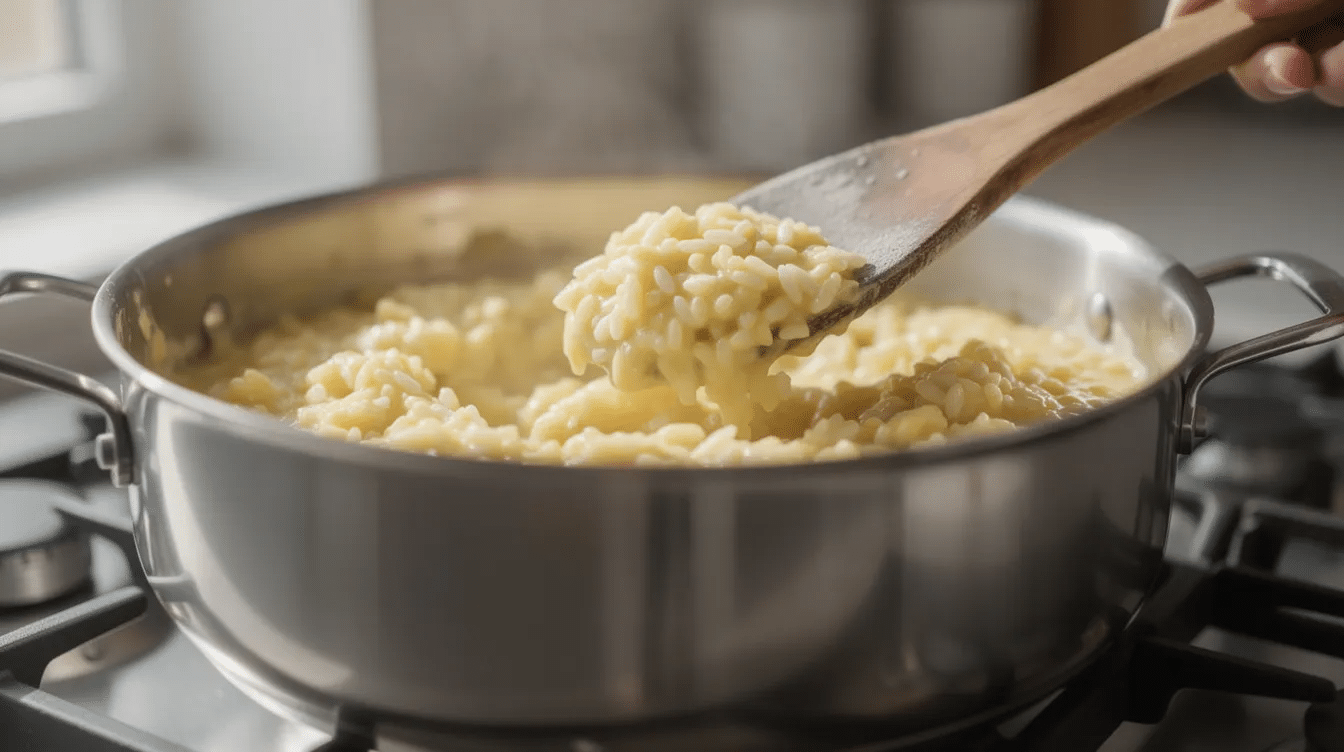
Start by warming your heavy bottomed pot over medium high heat. Add 1 tablespoon of olive oil, then sauté finely chopped onion until translucent-about 3 minutes. Add garlic and cook for another 30 seconds until fragrant. Pour in your arborio rice and stir continuously for 2 minutes until the edges of the rice grains turn slightly translucent. This toasting step unlocks all that starchy goodness that makes risotto creamy.
Deglaze with a half cup of dry white wine and stir until the liquid is absorbed. Then begin ladling in hot vegetable broth, about a cup at a time, over medium heat. Stir frequently and wait until each addition is completely absorbed before adding more liquid. This gradual process coaxes amylopectin starch from the rice grains, building the starchy goodness and rich creaminess that defines the dish.
Total cooking time runs about 20–25 minutes. Aim for rice that is soft but still slightly chewy in the center-a touch firmer than you would serve at the table. If the risotto needs more liquid to reach this stage, add it. Then reduce heat to low heat and give a final stir.
Keep this cook low-fat: skip butter and heavy cream entirely. They don’t dehydrate well for backpacking food and shorten shelf life significantly. Season with salt and black pepper, then pepper to taste before moving to the dehydration step.
Step-by-Step: How to Dehydrate Risotto Safely
Properly drying your cooked risotto is the most critical step for both food safety and quick rehydration time later. Bacillus cereus, a spore-forming bacterium commonly found in cooked rice, can multiply rapidly if the food sits in the 40–140°F danger zone too long.
Cool and transfer promptly. Let the risotto cool on a rimmed baking sheet or shallow pan until just warm to the touch-you can blot any excess surface moisture with a paper towel. Cool risotto before spreading it on dehydrator trays, but do not leave it sitting at room temperature for more than 30 minutes. Transfer it to the dehydrator while still slightly warm to minimize bacterial risk.
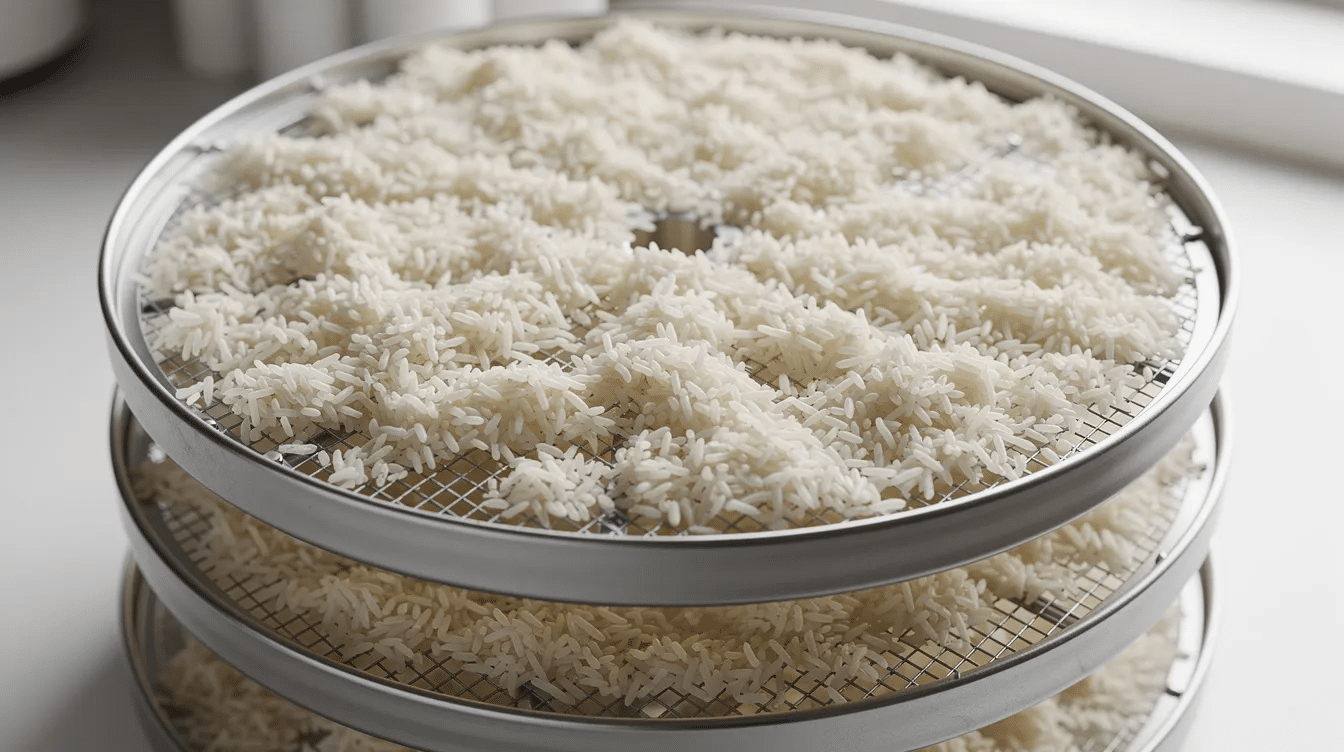
Spread thin. Distribute the risotto in a thin, even layer (about ¼ inch thick) on lined dehydrator trays. Use mesh or fruit leather liners so rice grains don’t fall through the grates. A solid tray liner works especially well for wet, sticky risotto. If one tray isn’t enough, use an additional dehydrator tray and spread evenly across both.
Set temperature and time. Dehydrate risotto at 135°F for 4–8 hours. According to June 2023 safety updates, dehydrating rice is safer at 145°F, so consider bumping to that temperature if your machine allows it. The recommended dehydration temperature is around 135°F to 145°F-this range minimizes spore germination while drying efficiently.
Check halfway. At the 3–4 hour mark, break up any clumps and redistribute for uniform airflow. You can also line a tray with parchment paper if needed for very sticky batches.
Test for doneness. The dehydrated risotto and vegetables should be completely dry, brittle, and snap cleanly. If any pieces are leathery or bendable, they need more time. The mixture should be totally dry before you move to storage-no soft spots.
How to Rehydrate Dehydrated Risotto on the Trail
This section covers the simple directions for turning your dehydrated rice back into a creamy risotto-style backpacking meal.
Pot method (recommended): Add one serving of dehydrated risotto to a small backpacking pot. Add 2 cups of water per serving and bring to a boil. Then reduce heat and simmer for a few minutes to rehydrate-typically 5 to 10 minutes at moderate elevations. Use a pot to simmer and stir the risotto while rehydrating, stirring frequently to prevent sticking and ensure even rehydration. If it looks like it needs less liquid, hold back; if it thickens too fast, splash in more liquid.
Altitude and cold weather: At high elevations or in freezing conditions, rehydration time stretches to 15–20 minutes. Water boils at lower temperatures at altitude, so you may need to cook longer and add extra splashes of hot water as the meal absorbs it.
In-bag rehydration: For minimal fuel consumption, pour boiling water directly into a heat-resistant food soak bag or insulated jar. Seal and let dehydrated risotto soak for 15–20 minutes. Let dehydrated risotto soak to reduce cooking time and save fuel, though texture may be slightly softer than the simmered version.
Finishing touches: Parmesan cheese is typically added just before serving risotto-sprinkle it on top along with a drizzle of olive oil or a spoonful of basil pesto. Stir in any separately packed dehydrated mushrooms or herbs. This is how you enjoy risotto that rivals what you would make at home.
Dehydrated Mushroom Risotto Recipe: Trail-Ready Version
This concrete risotto recipe is tailored for backpacking meals using dehydrated rice and dried mushrooms. It yields about 4 servings.
Ingredient list:
Ingredient
Amount
Arborio rice
1½ cups
Low-fat vegetable broth
5 cups
Olive oil
1 tablespoon
Onion, finely diced
1 medium
Garlic, minced
3 cloves
Dried mushrooms (porcini/shiitake mix)
1 oz
Frozen peas
½ cup
Dry white wine
½ cup
Fresh thyme
1 teaspoon leaves
Salt and black pepper
To taste
Preparation notes: Pre-soak the dried mushrooms in 1 cup of hot water for 20 minutes at home. Strain the soaking liquid through a fine mesh sieve and add it to your broth-this deepens umami flavor dramatically. Dehydrated risotto often includes dried mushrooms for flavor, and using the soaking liquid captures every bit of it.
Cook the risotto following the method in the previous section: sauté onion and garlic, toast rice, deglaze with wine, then ladle in broth a cup at a time until the rice is al dente. Fold in rehydrated mushrooms and peas during the last 5 minutes of cooking time. Season with salt, pepper to taste, and thyme.
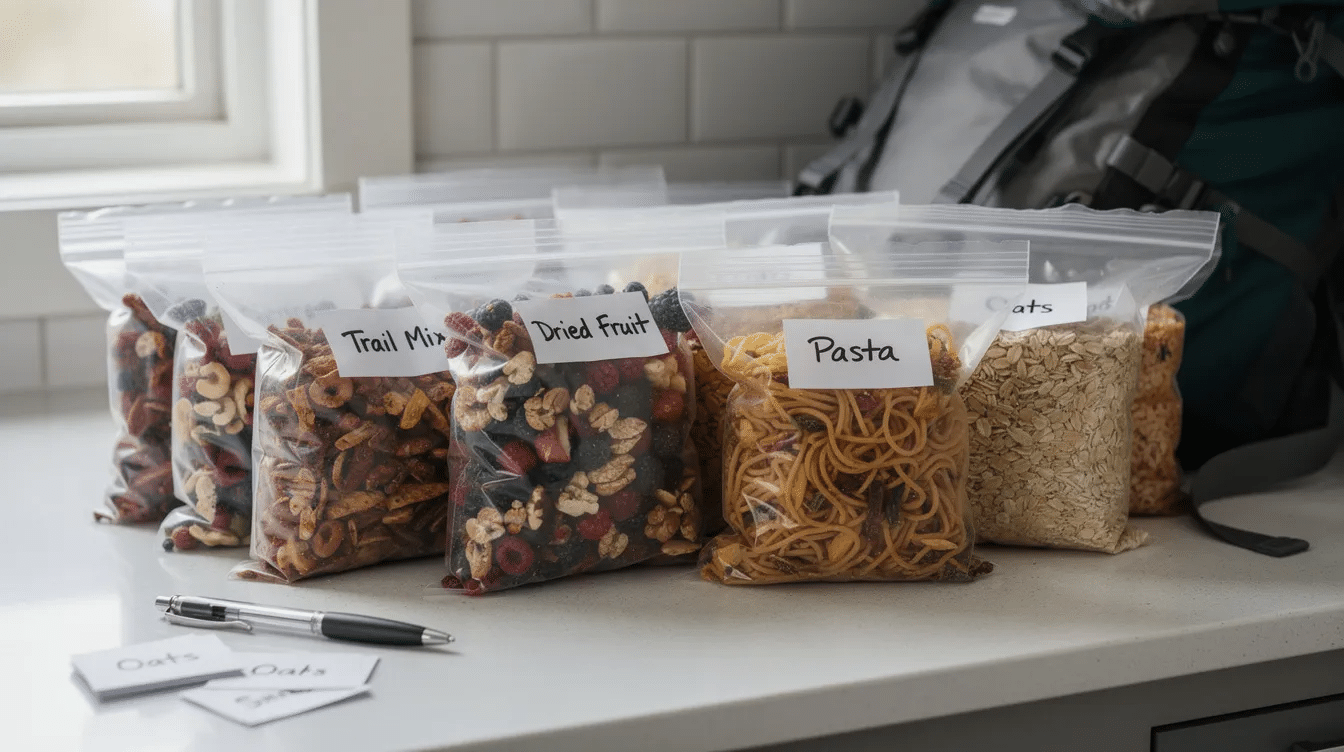
Portion into bags: Divide the completely dry risotto into single-serving zip bags. Label each with the date, “add 2 cups water,” and estimated rehydration time (5–10 minutes simmer). If you don’t have a bouillon cube already mixed in, toss one into each bag for extra flavor at camp.
Variations: Add dehydrated chicken or canned chicken (drained and dehydrated) for extra protein. Toss in freeze-dried vegetables or extra dried mushrooms for a loaded version with a different flavor profile each time.
Equipment You Need for Dehydrating Rice and Risotto
Simple, reliable equipment makes the dehydrating process safer and more consistent. You don’t need a commercial setup.
Dehydrators: Stackable models like the Nesco Snackmaster are a recommended starter dehydrator and handle risotto batches well. Box-style dehydrators with rear-mounted fans provide more even airflow. The key feature is adjustable temperature controls so you can hold 135–145°F accurately, and choosing the right backpacking dehydrator for trail-ready meals makes the process much easier.
Tray accessories: Use mesh or fruit leather liners in dehydrators for even drying. A solid tray liner prevents small rice grains from falling through. Keep a silicone spatula handy for spreading.
Oven alternative: If you don’t have a dehydrator, use rimmed baking sheets lined with parchment paper, set your oven to its lowest temperature (ideally around 170°F with the door cracked), and check with an oven thermometer. Results are less consistent but workable, so looking at affordable dehydrators under $100 can be a smart upgrade.
Storage tools: A vacuum sealer is ideal. High-quality zip-top freezer bags with oxygen absorbers work too. Small leak-proof containers hold olive oil and parmesan cheese for trail finishing.
Camp gear: A lightweight camp stove, an insulated pot cozy (to let the food soak after boiling), and a heat-resistant bag for in-bag rehydration round out the kit for your next camping trip.
Storage, Shelf Life, and Food Safety for Dehydrated Risotto
Safely storing dehydrated risotto is essential for long shelf life and avoiding foodborne illness on a camping trip or backpacking trip, especially when it is part of a broader plan for homemade dehydrated backpacking meals.
Cool before packing. Let the risotto cool completely to room temperature after dehydrating. Sealing warm food traps steam inside the bag, raising residual moisture and creating conditions where bacteria can grow. Let the risotto cool fully-this step is non-negotiable.
Pack smart. Store each serving in a moisture-proof airtight container or vacuum-sealed bag. Oxygen absorbers help prevent fat oxidation from any residual olive oil. Dehydrated meals can last longer when stored in airtight containers, and dried risotto should be stored in an airtight container away from light and humidity—similar to dehydrated meals in jars for adventures.
Shelf life: Low-fat, properly dried dehydrated risotto lasts several months at cool room temperature and up to roughly one year in a dark, cool, low-humidity environment. Higher fat content (more oil or cheese mixed in) shortens this to 1–2 months unless refrigerated.
Food safety cautions: Bacillus cereus spores survive cooking and can produce heat-stable toxins if vegetative growth occurs during slow cooling or incomplete drying. Prompt dehydration at proper temperature and avoiding long warm holding periods are critical. Discard any dehydrated risotto that smells off, shows visible mold, or has soft, sticky clumps-even if it was originally dried correctly.
Once you know how to dehydrate risotto, you can create many variations for backpacking food without extra complexity. The prep work stays the same; only the ingredients change, just like the range of dehydrated camping meal packs such as mushroom risotto.
Spring vegetable risotto: Swap mushrooms for peas, asparagus tips, and lemon zest. These vegetables dehydrate and rehydrate well, producing a bright, lighter dish.
Barley or farro “risotto”: For extra chew and lower glycemic impact, use pearled barley or farro. Increase dehydration time by 1–2 hours since these grains are denser. The result has a pleasant nutty taste.
Vegan version: Use vegetable broth, omit cheese and butter entirely, and pack nutritional yeast and olive oil separately for rich creaminess without dairy; keto hikers can instead plan ketogenic backpacking meals for lightweight adventures using higher-fat, low-carb ingredients.
Loaded mushroom risotto: Combine porcini, shiitake, and oyster mushrooms for deep umami. Adding white wine during the cook and finishing with cold water–rehydrated dried herbs at camp amplifies the flavor, and you can even dry your own mushrooms without a dehydrator if you’re working with a basic kitchen setup.
Custom seasoning packets: Tuck chili flakes, truffle oil mini-ampoules, or dried herb blends into each serving bag. This lets you tweak each meal on the trail without carrying extra weight. It is a great way to enjoy risotto differently every night of a long hike.
FAQ
These questions cover practical details about water ratios, rice types, and meal planning that weren’t fully addressed above.
How much water do I need to rehydrate one serving of dehydrated risotto?
Start with about 1¾ to 2 cups (415–475 ml) of water per cup of dried risotto and adjust as it cooks. Rice varieties, how thoroughly you dried the batch, and altitude can all change the exact amount, so be ready to add small splashes if it gets too thick. Aim for a slightly soupy consistency at first-creamy risotto thickens as it cools in the pot.
Can I dehydrate store-bought mushroom risotto or packaged rice mixes?
Many boxed mushroom risotto and rice mixes can be cooked according to package directions and then dehydrated, as long as they are relatively low in fat. Check ingredient labels for heavy cream, large amounts of cheese, or high oil content-these reduce shelf life and dehydrate poorly. Test a small batch at home first to confirm that texture and flavor hold up after dehydration and rehydration.
What kind of rice works best if I don’t have arborio rice?
Other short-grain Italian rices like Carnaroli or Vialone Nano are the closest alternatives and actually offer a wider forgiving window during cooking thanks to higher amylose content. Medium-grain or sushi rice can work in a pinch and still produce a relatively creamy result. Long-grain varieties like basmati or jasmine will yield less liquid absorption and less creaminess, but they still make a serviceable dehydrated rice dish for trail meals.
Is dehydrated risotto suitable for cold-soak backpacking meals?
Risotto generally rehydrates best with hot water because of its dense, starchy texture. Determined cold-soakers could test long pre-soak times of 1–2 hours in cold water inside a thermos-style container, but results tend to be softer and less creamy. For most backpackers who want reliable texture and full flavor, a hot-soak or simmer method is the way to go.
How can I increase the protein in dehydrated risotto for long hikes?
Add dehydrated chicken, freeze-dried peas, edamame, or extra parmesan cheese packed separately to boost protein. Canned chicken can be added for extra protein in risotto-just drain and dehydrate it alongside your batch. Vegetarian options include dehydrated lentils or textured vegetable protein (TVP) mixed into the cooked risotto before dehydration. Balancing carbs from arborio rice with fat from olive oil and protein add-ins helps make dehydrated risotto a more complete backpacking meal for sustained energy on long days.
DannyContent Writer
Hey there, since 2016, my mission has been to provide you with the information and guides you need to make food dehydrating simple and fun. Whether you're a newbie or a seasoned pro, my site offers helpful guides, reviews, and recipes to enhance your dehydrating experience. I take pride in only recommending products I believe in, ensuring my readers' trust. As an affiliate of various programs, including Amazon Associates, your support helps me continue providing quality content. Thanks for stopping by, and happy dehydrating!