We earn a commission if you make a purchase, at no additional cost to you.
09/22/2026 04:39 pm GMT
🍊 Dehydrated Food Info Finder — Temperatures & Drying Times
Choose a category, then pick a food to see its drying temperature and time.
⚠️ Safety Disclaimer: Drying times are estimates and vary based on slice thickness, food moisture content, humidity, and your dehydrator model. Always check for doneness before storing — food should feel dry, leathery, or brittle with no moist spots. Improperly dried food can harbour mould and bacteria. For meat and poultry, follow USDA safe internal temperature guidelines: beef and pork to 160°F (71°C), poultry to 165°F (74°C). Use a food thermometer when in doubt. Store all dehydrated foods in airtight containers in a cool, dark place and discard anything showing moisture, mould, or off odours.
Dehydrate Oven Setting: How to Use Your Oven as a Food Dehydrator
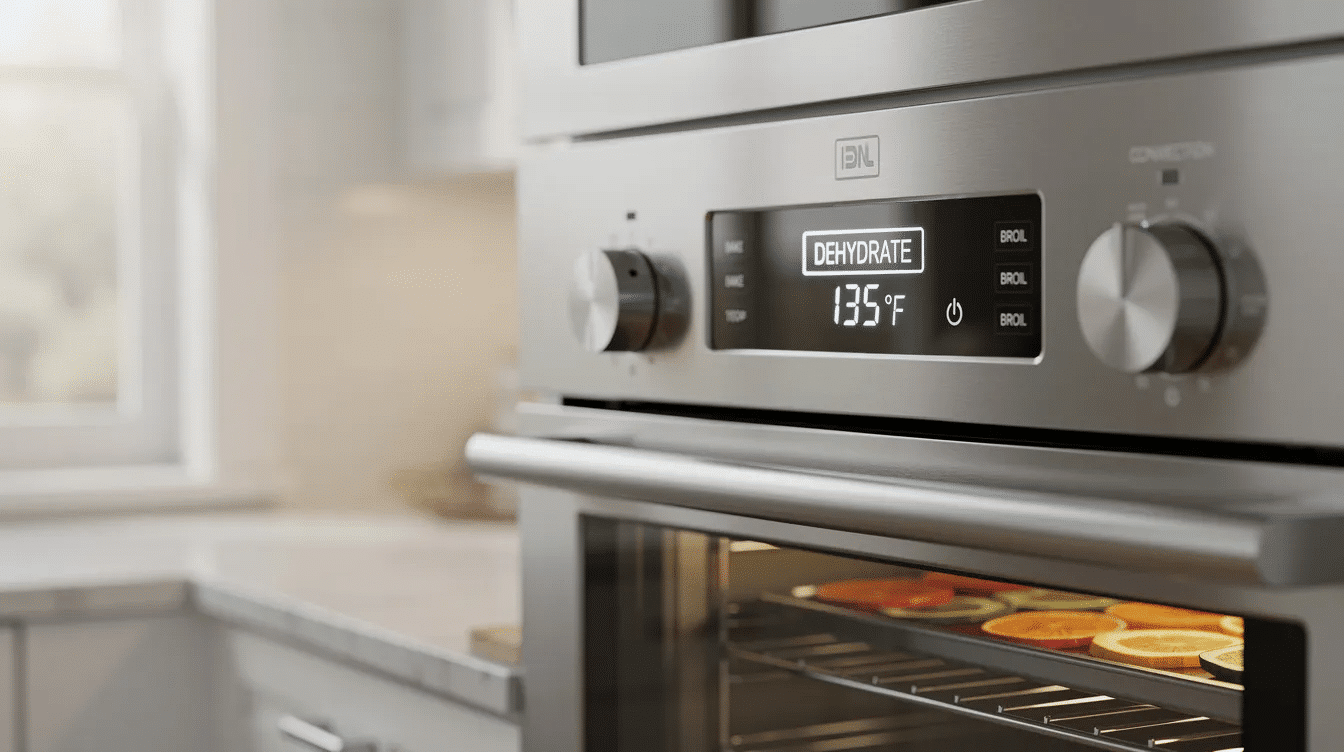
If you’ve been wondering whether you need a standalone dehydrator to make homemade jerky, dried fruits, or herbs, here’s the good news: your oven might already have everything you need. The dehydrate oven setting transforms your existing appliance into a capable food preservation tool, and even ovens without this dedicated feature can handle oven drying with a few adjustments.
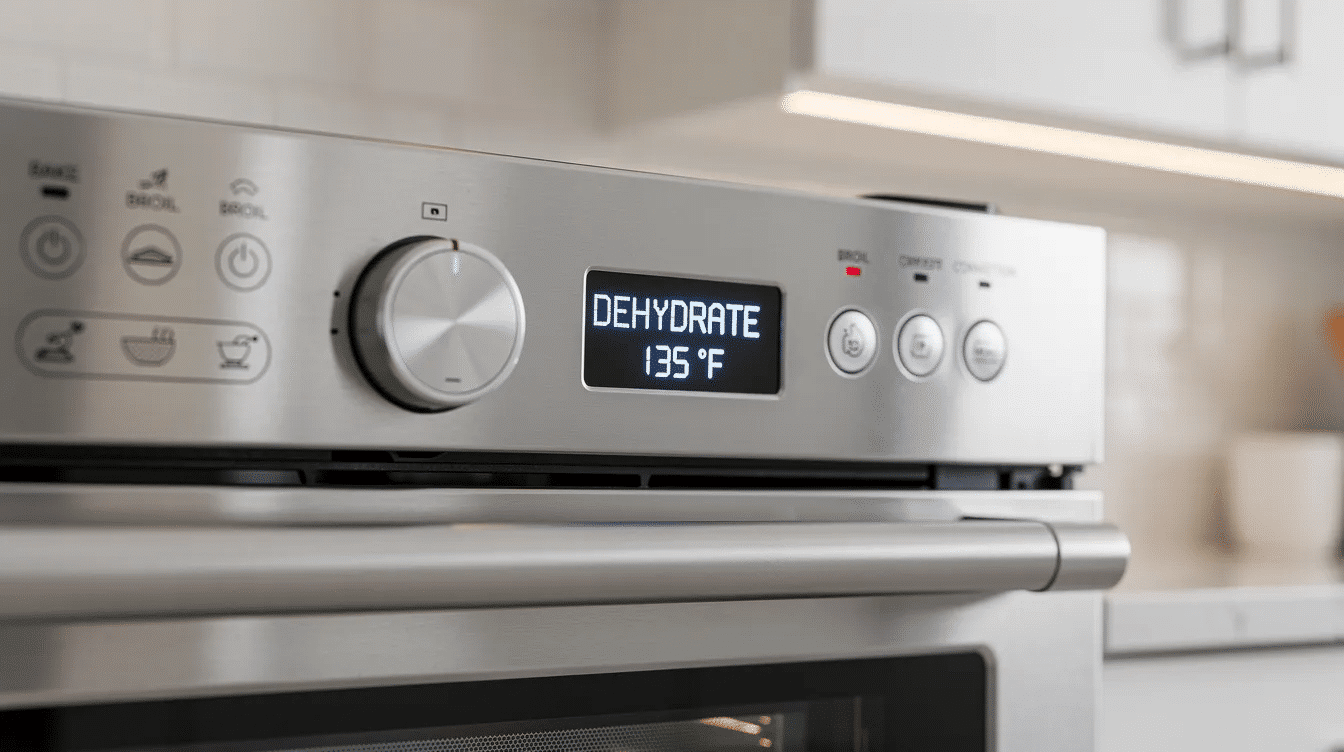
Many modern ovens released from 2018 onward include a dedicated Dehydrate mode designed to run at low temperatures for extended periods. This feature represents a significant shift from traditional cooking methods.
Dehydrating means slowly using heat and airflow to remove moisture from food—fruits, vegetables, herbs, and lean meats—without actually cooking them. The goal is to preserve food by eliminating the moisture that bacteria need to grow.
A true Dehydrate setting typically operates between 120°F and 160°F (50–70°C), much lower than normal Bake or Roast modes
This setting uses the convection fan to move air around the food, mimicking a standalone dehydrator
Most ovens automatically maintain steady, gentle heat rather than cycling on and off aggressively
If your oven lacks a dehydrate feature, you can still dry food by setting the lowest setting and propping the door open with a wooden spoon for ventilation
Most major brands—including Samsung oven models, GE, Wolf, and Miele—introduced dehydrate or “warm dry” modes in appliances released between 2018–2024
Dehydrate vs. Bake: Key Differences in Oven Use
The fundamental difference comes down to purpose: Dehydrate mode removes moisture without cooking, while Bake mode cooks food with higher heat and retains internal moisture.
Bake typically operates at 300–350°F (150–180°C), while Dehydrate stays under 170°F (75°C) to prevent turning brown or actually cooking the food. The dehydrate feature prioritizes long, steady air circulation with gentle heat, whereas baking cycles heat on and off more aggressively.
Factor
Bake Mode
Dehydrate Mode
Temperature
300–350°F
120–160°F
Duration
10–60 minutes
4–12+ hours
Goal
Cook food, develop browning
Remove moisture, preserve
Airflow
Moderate
Continuous, essential
Result
Moist interior, browned exterior
Leathery, crisp, or dry texture
Best Temperature Ranges for Dehydrating in the Oven
Precise temperature control is the most critical factor for safe, even dehydration. Unlike cooking, where a 10-degree variance rarely matters, dehydrating is exceptionally sensitive to heat fluctuations, so it helps to understand temperature guidelines for different dehydrated foods.
Fruits and fruit leathers: 120–140°F (49–60°C)
Vegetables and herbs: 120–135°F (49–57°C)
Lean meats for jerky: 145–160°F (63–71°C) for food safety
Oven thermostats can drift 10–25 degrees from what the dial shows. An inexpensive oven thermometer placed at food level provides accurate temp readings.
If your oven’s lowest setting is 170–200°F (77–93°C):
Select the absolute lowest available temperature
Prop the oven door slightly open to let heat and excess moisture escape
Position a fan near the door open gap to improve good airflow
Monitor food more frequently to avoid cooking or scorching
Convection ovens maintain lower, more stable temperatures, making them better for dehydration than older non-convection models, and many countertop units like the Nesco-style machines are designed specifically for consistent dehydrator drying times and temperatures.
How to Dehydrate Food in the Oven Step by Step
This process works for most ovens made after 2010, whether or not they have a dedicated dehydrate mode.
Step 1 – Prep the food:
Wash and dry produce thoroughly
Cut fruits and vegetables into uniform slices (around 1/4 inch for most items; thinner for crisp chips—a mandolin slicer helps achieve consistency)
Remove pits, cores, tough stems, and any bruised areas
Step 2 – Optional pretreatments:
For fruits prone to browning: soak slices for 5 minutes in water plus lemon juice (about 1 tablespoon per cup of water) to preserve color
For vegetables: blanch firmer items like carrots for 2–3 minutes, then cool in ice water
For jerky: use a tested marinade and follow current food safety guidelines
Step 3 – Prepare the pans:
Line baking sheets with parchment paper or use oven-safe wire racks over a cookie sheet for better airflow
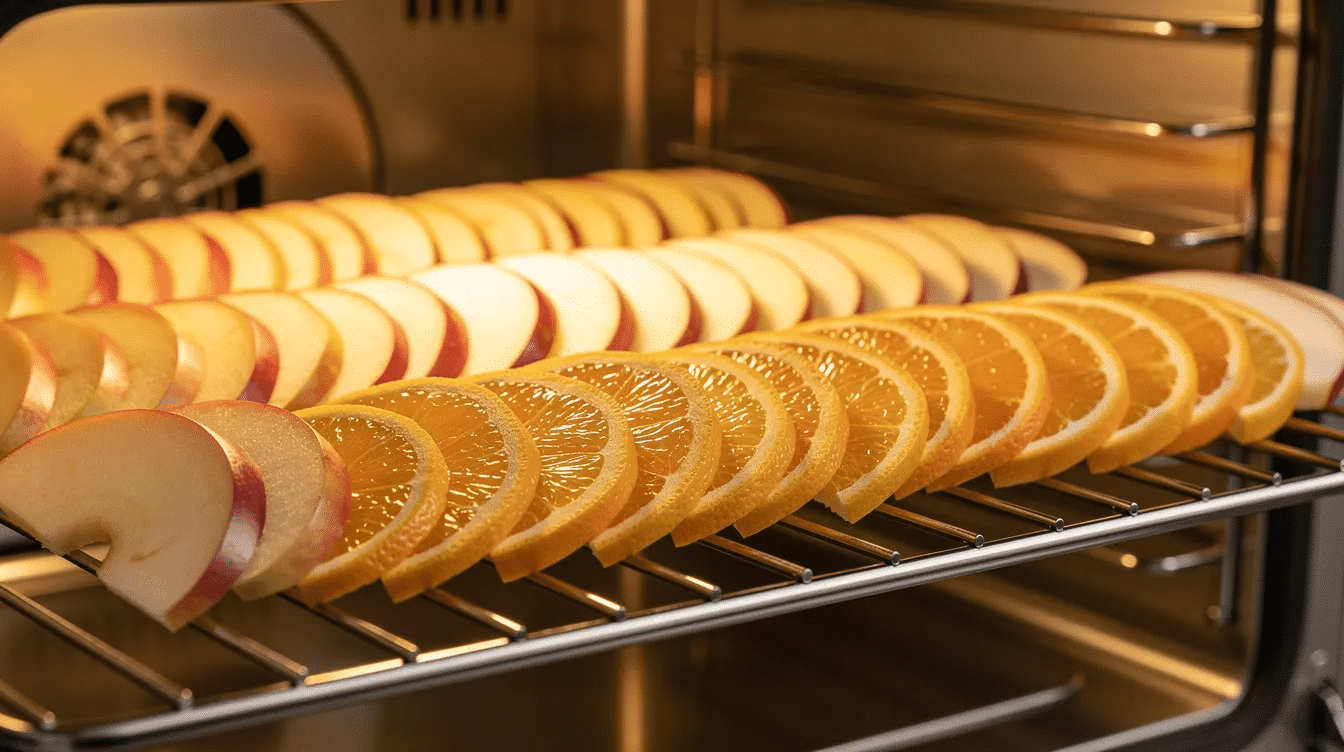
Arrange food in a single layer with pieces not touching
Step 4 – Set up the oven:
If your oven has Dehydrate mode: select it and set temperature according to food type
If no Dehydrate mode: use Bake or Convection Bake at the lowest possible temperature
For non-convection ovens, crack the door using a wooden spoon to allow moisture to escape
Step 5 – Dehydrate:
Place trays on middle oven racks for balanced heat
Rotate trays every 1–2 hours for even drying
Flip food pieces once or twice during the process
Step 6 – Check for doneness:
Fruits should be pliable and leathery with no visible moisture
Vegetables become crisp and dry
Jerky should be firm and crack when bent but not snap; for longer storage, follow best practices for homemade beef jerky fridge life.
Cool food completely on trays (30–60 minutes minimum)
For conditioning, place dried foods in loosely filled jars, shake daily for 5–7 days, watching for condensation
Using Your Oven’s Dehydrate Setting for Specific Foods
Different foods require specific temperatures and approaches for best results, and mastering ideal food dehydration temperatures helps you fine-tune both safety and texture. Here’s targeted guidance for popular items.
Common choices: apples, bananas, strawberries, peaches, oranges, and blueberries
Slice 1/8–1/4 inch thick; expect 4–10 hours drying time
Optional: dust apples with cinnamon or lightly sweeten tart fruits like apricots
Vegetables:
Temperature: 125–135°F (52–57°C)
Popular options: bell peppers, tomatoes, zucchini, carrots, onions, mushrooms, which all make excellent oven-dehydrated vegetable snacks
Blanch harder vegetables first to improve color and texture
Herbs and leafy greens:
Temperature: 95–110°F if possible, or 120°F with door closed partially
Basil, parsley, thyme, and rosemary dry in 1–3 hours
Check frequently—they can burn quickly
The oven light method works for delicate herbs: leave them on a tray with only the oven light on overnight
Jerky and lean meats:
Temperature: 145–160°F (63–71°C); for beef, ensure the internal temperature reaches safe levels as outlined in what temp to dehydrate jerky
Use lean cuts with visible fat trimmed (fat doesn’t dehydrate and can turn rancid)
Slice 1/8–1/4 inch thick
Reference regional food safety guidance for preheating requirements
Fruit leathers:
Spread puréed fruit about 1/4 inch thick on parchment-lined tray
Dry at 140–150°F until no longer sticky—typically 6–9 hours
Peel away from parchment when cool
Oven Features, Safety Tips, and Storage for Dehydrated Foods
Proper use of oven features, safety practices, and correct storing methods maximize quality and shelf life of your dried foods, just as learning how to use a dedicated food dehydrator can expand your preservation options.
Helpful oven features:
Convection fan for consistent air circulation
Dedicated Dehydrate modes with precise digital temperature control
Some ovens disable door propping—follow manufacturer guidance
Safety considerations:
Dehydrating runs for many hours; don’t leave completely unattended, and be prepared to troubleshoot any issues similar to common problems with food dehydrators
Keep children and pets away from a hot oven with door open
Position door-propping tools away from heating elements to prevent fire
Kitchen heat management:
Long cycles add heat to your kitchen, especially in summer, and they can also use more electricity than a purpose-built unit, so some people compare them with energy-efficient food dehydrators when deciding on equipment.
Plan to run dehydration during cool morning or evening hours
How to store dehydrated foods:
Cool completely before packing to prevent condensation
Use an airtight container, vacuum-sealed bags, or quality freezer bags
Store in a cool, dark, dry place
For long-term storage, refrigerate or freeze—especially for high-sugar fruits and meats
Shelf life guidelines:
Herbs: 1–3 years
Fruits: 6–18 months
Vegetables: 6–12 months
Jerky: 1–2 months at room temperature (longer in fridge or freezer)
Check periodically for off smells, visible moisture, or mold. Discard anything suspect immediately.
With the correct dehydrate oven setting, careful prep, and smart storage, you can safely build a pantry of homemade dried foods without buying extra appliances. Whether you’re making chicken jerky for dinner prep, preserving summer tomatoes, or creating healthy snacks, your oven is ready to handle the job. Start with a simple batch of apple chips this weekend—you might never worry about buying store-bought dried snacks again.
DannyContent Writer
Hey there, since 2016, my mission has been to provide you with the information and guides you need to make food dehydrating simple and fun. Whether you're a newbie or a seasoned pro, my site offers helpful guides, reviews, and recipes to enhance your dehydrating experience. I take pride in only recommending products I believe in, ensuring my readers' trust. As an affiliate of various programs, including Amazon Associates, your support helps me continue providing quality content. Thanks for stopping by, and happy dehydrating!