We earn a commission if you make a purchase, at no additional cost to you.
09/22/2026 04:39 pm GMT
🍊 Dehydrated Food Info Finder — Temperatures & Drying Times
Choose a category, then pick a food to see its drying temperature and time.
⚠️ Safety Disclaimer: Drying times are estimates and vary based on slice thickness, food moisture content, humidity, and your dehydrator model. Always check for doneness before storing — food should feel dry, leathery, or brittle with no moist spots. Improperly dried food can harbour mould and bacteria. For meat and poultry, follow USDA safe internal temperature guidelines: beef and pork to 160°F (71°C), poultry to 165°F (74°C). Use a food thermometer when in doubt. Store all dehydrated foods in airtight containers in a cool, dark place and discard anything showing moisture, mould, or off odours.
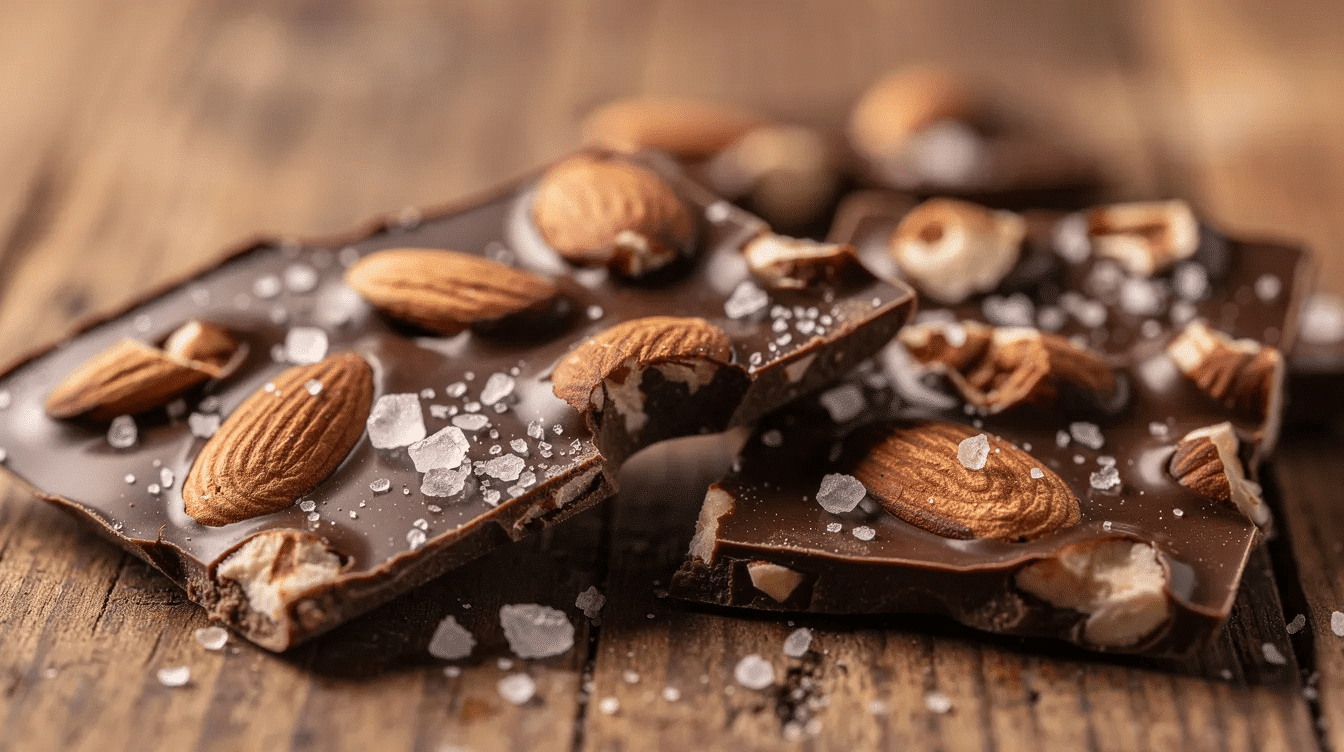
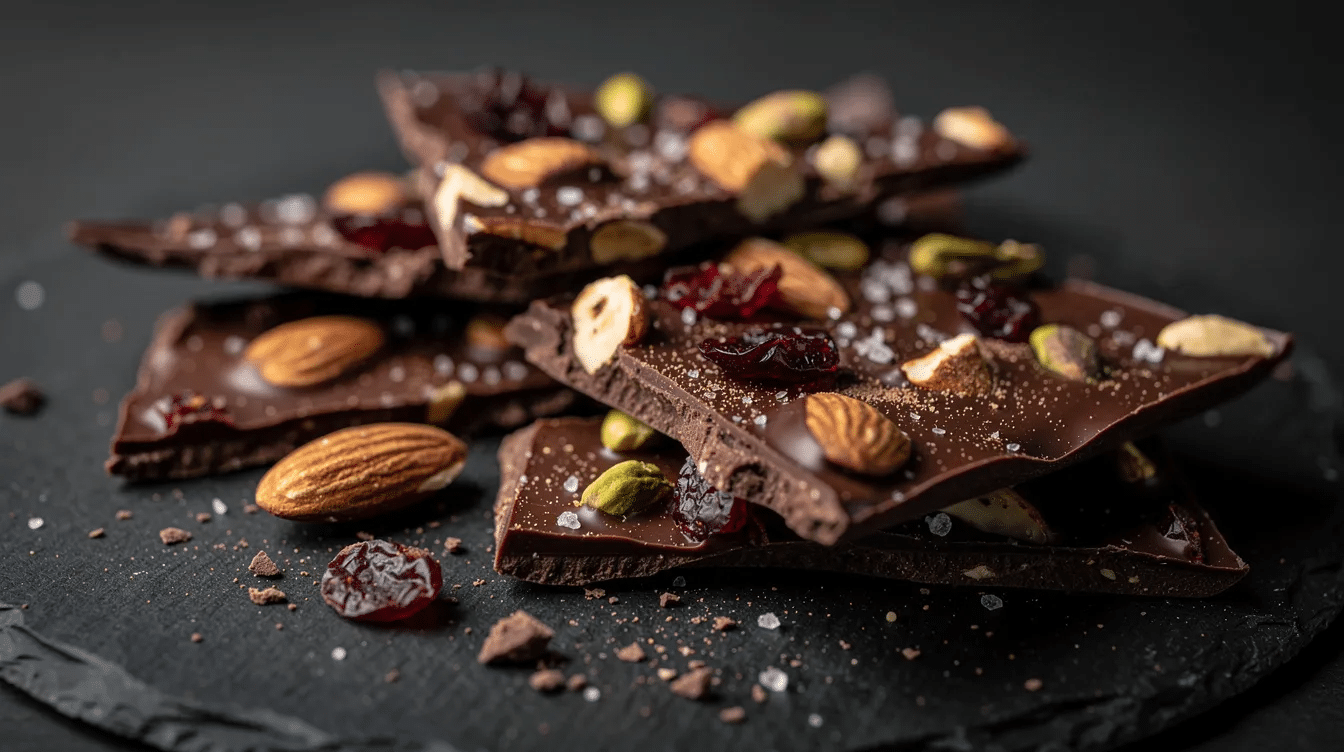
Dark chocolate bark is a thin sheet of melted dark chocolate topped with nuts, dried fruit, sea salt, or other mix-ins, then cooled and broken into rustic, irregular pieces.
This basic recipe uses 70% dark chocolate bars and flaky sea salt, requiring only about 15–20 minutes of active time plus chilling.
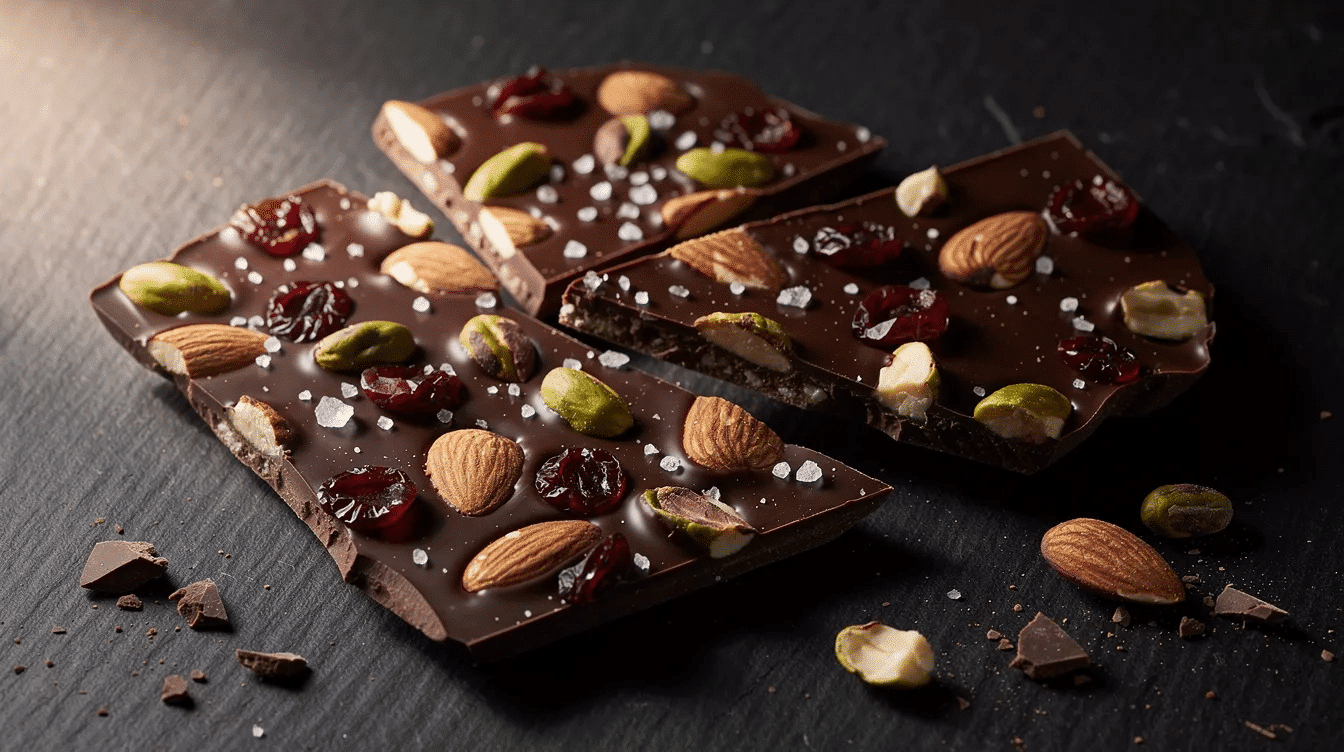
You can customize the bark with roasted almonds, pistachios, pretzels, dried cranberries, or seasonal toppings without changing the core method.
No special equipment or advanced tempering is required, but a simple “cheat” tempering method is included for those wanting extra shine and snap.
Stored in an airtight container, the bark lasts 1–2 weeks at room temperature or 2–3 months in the freezer.
Picture a tray of glossy dark chocolate scattered with crystals of flaky sea salt, clusters of roasted nuts, and jewel-like dried fruit. That’s dark chocolate bark—and it’s one of the most rewarding chocolate recipes you can make at home.
Dark chocolate bark is a freeform chocolate slab made by melting dark chocolate, spreading it thin on parchment paper, topping it with whatever your pantry offers, and breaking it into irregular shards once set. Think of it as a flexible “method” recipe rather than a rigid formula, perfect for using up half-bags of nuts, seeds, and dried fruit sitting in your cupboard.
Unlike a standard chocolate bar, bark is thinner, loaded with more toppings, and delivers a satisfying crunch in every bite. The recipe below focuses on a 70% dark chocolate base with flaky sea salt, then expands with several topping ideas and variations for any occasion.
Ingredients for Simple Dark Chocolate Bark
This main recipe keeps the ingredient list refreshingly short: just good chocolate and quality salt, with optional toppings for customization.
Core ingredients:
10–12 oz (280–340 g) dark chocolate bars, 70% cocoa
1–2 teaspoons flaky sea salt (such as Maldon or pink Himalayan)
The base works best with dark chocolate between about 63% and 72% cocoa. Chocolate bars generally melt smoother than dark chocolate chips because chips contain more stabilizers and less cocoa butter. That said, high-quality chocolate chips can work if that’s what you have.
Avoid chocolate with lots of added oils, soy lecithin in excessive amounts, and waxy coatings. Fewer additives yield better flavor and texture in the finished bark.
Choosing the Best Dark Chocolate
The chocolate itself matters most in this easy recipe. Because dark chocolate bark is so simple, every nuance of flavor shows through—from the first snap to the final melt on your tongue.
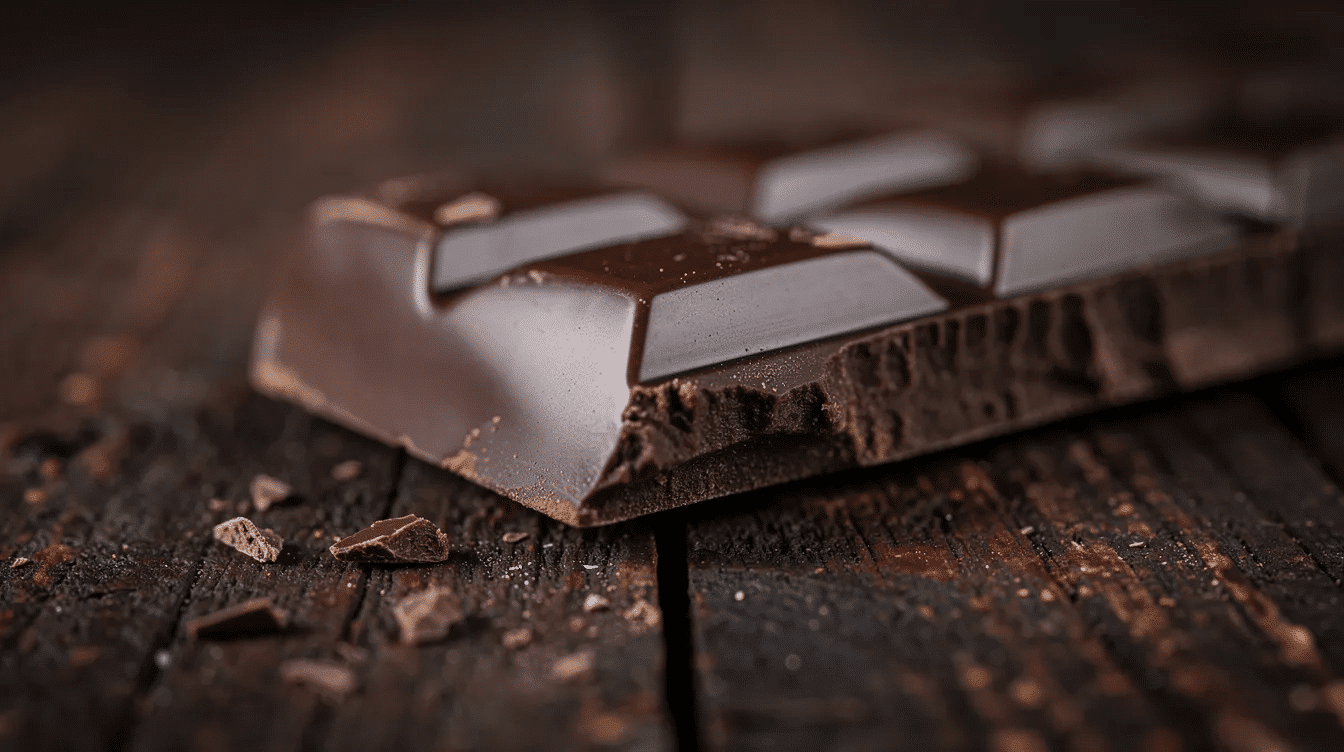
Look for dark chocolate with cocoa content of at least 63%. Around 70% is a solid balance of bitterness and sweetness for most people, delivering rich cocoa depth without overwhelming astringency. Organic dark chocolate bars or couverture-style baking bars are excellent choices.
What is couverture chocolate?
Couverture contains a higher cocoa butter content (typically over 31% versus 25–30% in standard bars), which means it melts more fluidly and spreads evenly. Chocolatiers love it, but it’s nice rather than necessary for home bakers.
When scanning ingredient labels, look for:
Cocoa mass (or cocoa liquor)
Cocoa butter
Sugar
Minimal lecithin
Limit bars that include palm oil, artificial flavorings, or excessive emulsifiers, as these create a waxy mouthfeel and muted flavor.
Understanding Cocoa Percentages
Cocoa percentage represents the combined total of cocoa solids and cocoa butter in the bar. This number directly affects sweetness and intensity.
Higher percentages deliver deeper cocoa flavor and less sugar, but can taste too bitter if toppings aren’t sweet or crunchy enough to balance them. If you love chocolate but find 70% too intense, blend it with some semi sweet chocolate for a softer profile.
Equipment and Prep
Chocolate bark requires only basic kitchen tools and no special candy equipment, making it perfect for beginners.
What you’ll need:
Rimmed baking sheet (approximately 9×12 inches works well)
Parchment paper
Microwave safe bowl or heat proof bowl for a double boiler
Offset spatula or the back of a large spoon
Sharp knife and cutting board for chopping
Small bowls for pre-measured toppings
Critical prep step: Fully dry all bowls and utensils beforehand. Even a teaspoon of water can cause melted chocolate to seize and turn grainy. This is the number one reason homemade chocolate recipes fail.
Set up your mise en place before you start melting. Pre-measure toppings into small bowls so you can work quickly once the chocolate is ready. Chocolate waits for no one.
How to Make Dark Chocolate Bark (Step-by-Step)
This method takes roughly 15 minutes of hands-on time plus 10–20 minutes of chilling. Here’s how to make perfect dark chocolate bark every time.
Step 1: Prepare your baking sheet
Line a baking sheet with parchment paper, letting it overhang on two sides for easy lifting later. A prepared baking sheet makes removal effortless.
Step 2: Chop the chocolate
Using a sharp knife, roughly chop the dark chocolate bars into small, even pieces on a cutting board. Simply chop into pieces about the size of a thumbnail. Smaller pieces melt uniformly and reduce the risk of scorching.
Step 3: Melt (microwave method)
Place chopped chocolate in a microwave safe bowl. Heat at 50% power in 20–30 second bursts, stirring thoroughly after each interval. Stir occasionally between bursts until just smooth. The chocolate should be warm but not hot to the touch.
Step 4: Melt (stovetop option)
Alternatively, create a double boiler by placing chocolate in a heat proof bowl over a pot with gently simmering water—the water should not touch the bowl. Use medium heat and stir until just melted, then remove from heat immediately.
Step 5: Let chocolate cool slightly
Let the chocolate cool for about 2–3 minutes. This prevents it from spreading too thin and helps toppings adhere better. The chocolate mixture should still be fluid but not screaming hot.
Step 6: Spread the chocolate
Pour the melted chocolate onto the parchment-lined pan. Use an offset spatula or the back of a spoon to spread the chocolate to an even thickness of about 1/8 to 1/4 inch (3–6 mm). The chocolate should spread evenly across your desired area.
Step 7: Add salt
Quickly sprinkle flaky sea salt evenly over the surface, holding your hand high above the tray so the salt disperses in a fine, attractive pattern. Kosher salt works too, though flaky varieties provide better visual appeal and texture.
Step 8: Add toppings
If using toppings like roasted nuts or dried fruit, scatter them over the chocolate while it’s still glossy and fluid. Lightly press with a clean hand so they adhere. Work quickly before the chocolate begins to set.
Step 9: Chill
Transfer the tray to the refrigerator and chill until firm—typically 10–20 minutes depending on thickness. The bark should look fully set and no longer shiny. Thicker slabs may need up to a few hours.
Step 10: Break into pieces
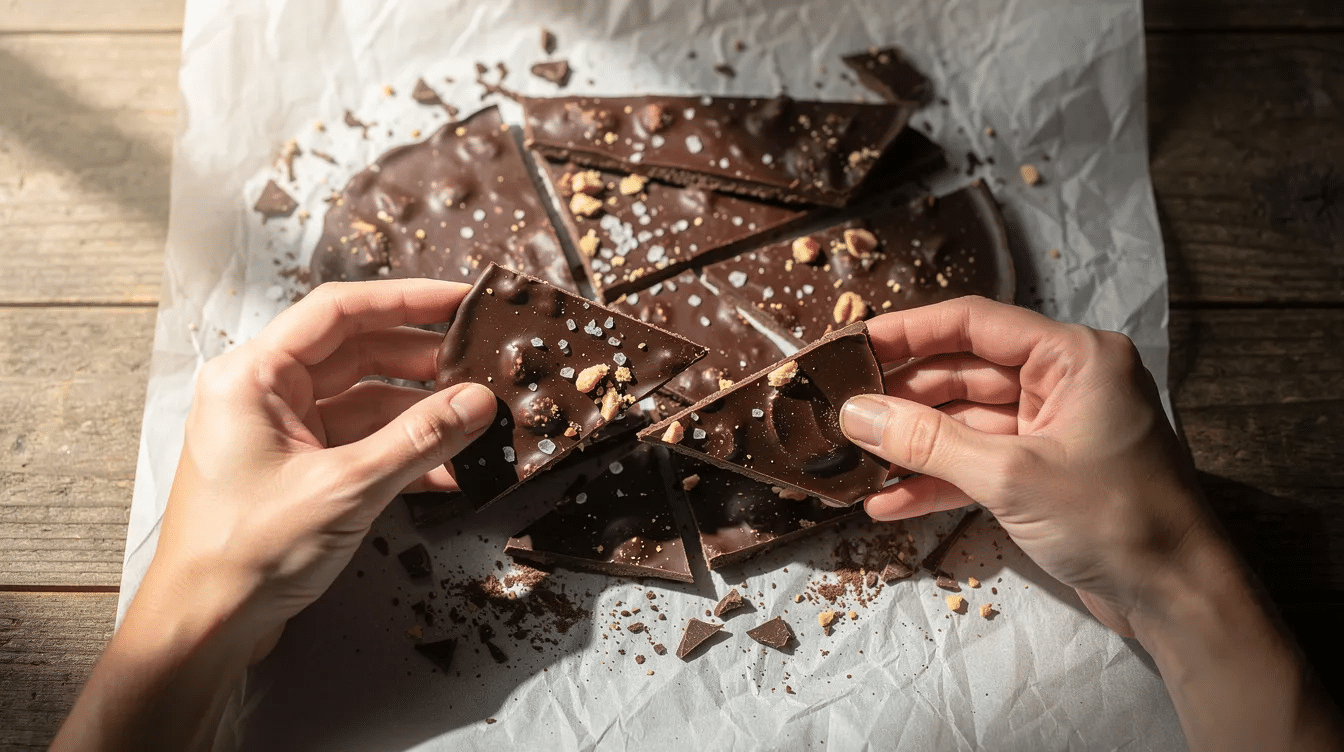
Once set, lift the bark out by the parchment overhang and break it by hand into rustic shards. For neater pieces, use a sharp knife to cut into rectangles. The irregular shapes are part of the charm—this is chunky bark at its finest.
Quick “Cheat” Tempering for Extra Shine
Classic tempering is precise and technical, but home cooks can mimic the effect with a simple, low-tech method that yields shinier bark with a firmer snap.
The method:
Reserve about two thirds of your chopped chocolate (or about 25–30% for a smaller reserve)
Melt the remaining portion using low heat until smooth
Remove from heat and stir in the reserved chocolate
Continue stirring constantly until fully melted and slightly cooled
The target temperature is warm and fluid but not hot—roughly 88–90°F (31–32°C) for dark chocolate. You can do this without a thermometer by testing: it should feel barely warm on your lower lip.
Constant stirring as the chocolate cools helps align cocoa butter crystals, creating that professional glossy finish. Even if your cheat tempering isn’t perfect, the bark will still taste excellent—this is just a bonus for those who want that extra visual appeal.
Dark Chocolate Bark Topping Ideas and Variations
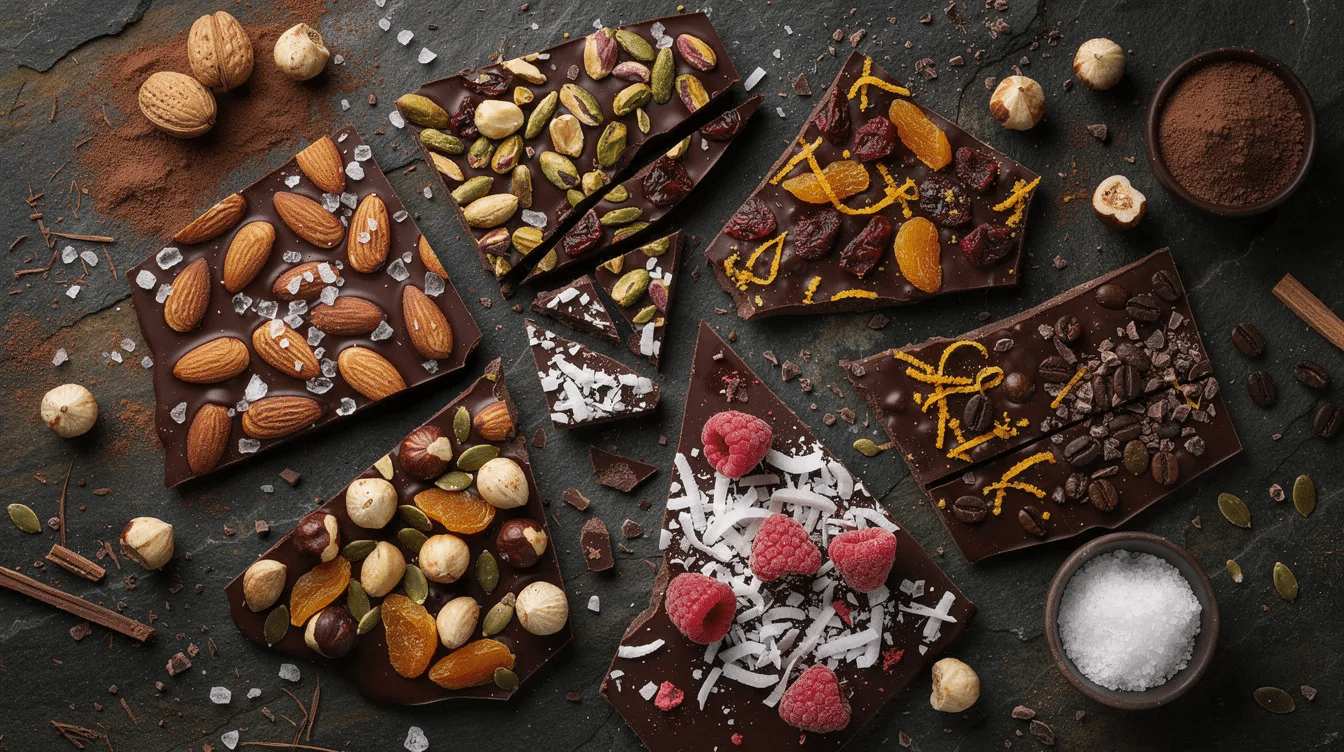
Treat the basic bark as a blank canvas, ideal for holiday themes, pantry clean-out sessions, or personalized gifts. Your personal preference guides everything here.
Pretzels, crushed potato chips, raw nuts with sea salt
If you like figgy flavors, chopped dehydrated figs fit right into the dried fruit category—just be sure you know how to store dehydrated figs for freshness so they stay soft and sweet.
Almonds, pretzels, and sea salt for sweet-salty crunch
Pistachios with dried cherries for fruity elegance
Pecans, candied ginger, and orange zest for warm spice
More chocolate appeal: swirl white chocolate over dark for visual contrast
For themed barks, try peppermint pieces for December holidays or pastel-colored dried fruits for spring gatherings. Dear friend, this is a great idea for last-minute gifts.
French-Style vs. Mixed-In Bark
Two popular approaches exist for adding toppings:
French-style: Toppings sprinkled over the surface after spreading. This creates visually striking bark with colorful toppings clearly visible on top—ideal for gifting and party platters.
Mixed-in: Toppings stirred directly into the chocolate mixture before spreading. This produces slightly more rustic bark but delivers intense flavor with bits of nuts and fruit distributed throughout each bite.
Combine both methods for the best of both worlds: stir some toppings into the chocolate and reserve a portion for sprinkling on top.
Serving, Gifting, and Storage
Dark chocolate bark is ideal for casual snacking, dessert platters, and homemade edible gifts that look far more impressive than the effort required.
Serving suggestions:
Arrange irregular shards in a loose pile on a wooden board
Mix with fresh fruit or additional nuts for contrast
Serve at room temperature for the best chocolate flavor and snap
Gift ideas:
Pack pieces into cellophane bags tied with ribbon
Fill small metal tins lined with parchment paper
Add a handwritten label noting the flavor and date made
Storage guidelines:
Storage Method
Duration
Notes
Room temperature
1–2 weeks
Cool place away from sunlight
Refrigerated
Up to 2 weeks
Keep in airtight container
Frozen
2–3 months
Wrap well to prevent moisture
In warm climates or during summer months, refrigerating bark in an airtight container prevents softening. For longer-term pantry planning, many home cooks also keep dehydrated foods stored for years alongside homemade bark and toppings.
Let chilled or frozen bark come closer to room temperature before serving—this allows the full flavor and texture of the chocolate to shine. Store in a cool place away from strongly aromatic foods like onions.
Note: Nutrition calories vary based on toppings, but a basic serving with nuts runs approximately 276 calories. For precise values, use an online nutrition calculator or consult a professional nutritionist’s advice. Typical concerns include saturated fat and trans fat from added ingredients—keep portions reasonable. If you’re packing snack boards with savory options like jerky alongside bark, review safe storage times for homemade beef jerky in the fridge so everything stays food-safe.
This post may contain affiliate links.
FAQ
Can I use milk or white chocolate instead of dark chocolate?
Yes, both milk and white chocolate work for bark, but they’re sweeter and softer than dark varieties. Consider mixing them with some dark chocolate to balance flavor and firmness. White chocolate technically contains cocoa butter but no cocoa solids, so its flavor and melting behavior are more delicate. Reduce very sweet toppings when using milk or white chocolate to avoid cloying results.
Why did my chocolate bark develop white or gray streaks?
White or gray streaks are usually bloom, specifically called sugar bloom or fat bloom, caused by changes in sugar or fat crystals when chocolate warms and cools unevenly. The good news: bloomed chocolate is completely safe to eat and still tastes fine—it just looks dull or dusty on the surface. Prevent bloom by storing bark in a cool, dry spot and avoiding frequent temperature swings, and consider using Mason jars for long-term dehydrated food storage if you also keep dried toppings on hand.
How thick should I make my dark chocolate bark?
Aim for roughly 1/8 to 1/4 inch (3–6 mm) thickness. This gives a satisfying snap without being too hard to bite. Spread thinner bark when using lots of chunky toppings like raw nuts or pretzels, and slightly thicker for simpler versions with just salt or finely chopped nuts. Some uneven thickness is part of the charm, but avoid very thick areas that set slowly and break awkwardly.
Can I make dark chocolate bark ahead of time for an event?
Absolutely—bark is an excellent make-ahead treat. Make it 2–3 days before a party for peak flavor and texture, then store in an airtight container until serving. The prep time is minimal and cook time is essentially just chilling, making it perfect for busy schedules. Just keep it sealed away from strongly aromatic fridge neighbors. Follow these dark instructions and you’ll have perfect results.
What can I do if my chocolate seizes while melting?
Seized chocolate looks thick and grainy, usually due to contact with water or overheating. For a simple rescue, whisk in a small amount of neutral oil or warm cream to create a smooth ganache-like mixture, then proceed. The texture changes slightly, but you’ll still have a tasty, sliceable confection rather than wasted chocolate. Use cook mode prevent overheating on your microwave if available, and keep cook time brief. Monitor carefully—if chocolate doesn’t melt properly on the first try, add more chocolate and restart with lower heat.
DannyContent Writer
Hey there, since 2016, my mission has been to provide you with the information and guides you need to make food dehydrating simple and fun. Whether you're a newbie or a seasoned pro, my site offers helpful guides, reviews, and recipes to enhance your dehydrating experience. I take pride in only recommending products I believe in, ensuring my readers' trust. As an affiliate of various programs, including Amazon Associates, your support helps me continue providing quality content. Thanks for stopping by, and happy dehydrating!