We earn a commission if you make a purchase, at no additional cost to you.
09/22/2026 04:39 pm GMT
🍊 Dehydrated Food Info Finder — Temperatures & Drying Times
Choose a category, then pick a food to see its drying temperature and time.
⚠️ Safety Disclaimer: Drying times are estimates and vary based on slice thickness, food moisture content, humidity, and your dehydrator model. Always check for doneness before storing — food should feel dry, leathery, or brittle with no moist spots. Improperly dried food can harbour mould and bacteria. For meat and poultry, follow USDA safe internal temperature guidelines: beef and pork to 160°F (71°C), poultry to 165°F (74°C). Use a food thermometer when in doubt. Store all dehydrated foods in airtight containers in a cool, dark place and discard anything showing moisture, mould, or off odours.
This guide covers two safe methods: vinegar-based stuffed pickled peppers processed in a boiling water bath, and deconstructed stuffed peppers with meat preserved through pressure canning.
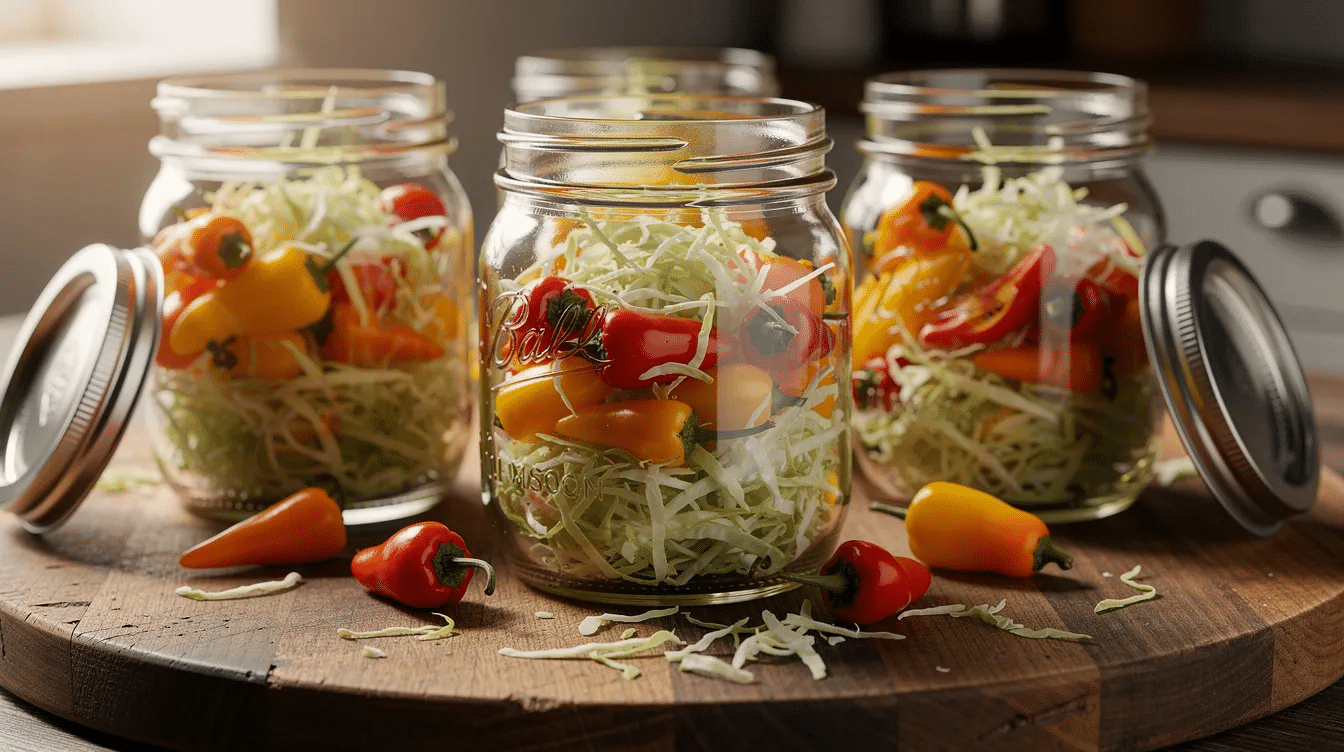
The core quick recipe uses small sweet bell or hot banana peppers stuffed with shredded cabbage and processed 10 minutes at sea level.
Pressure-canned deconstructed stuffed peppers must be processed at 10–11 PSI for 75–90 minutes, then boiled 10 minutes before serving.
Unopened jars store 12–18 months in a cool, dark pantry, with best flavor developing after at least 2 weeks of resting.
Low-acid fillings containing meat require a pressure canner—water bath canning is only safe for high-acid, vinegar-based recipes.
Late-summer pepper harvests don’t have to end when the first frost hits. With the right canning recipes, you can transform those colorful peppers into shelf-stable jars that deliver comfort food flavors well into January.
While preparing and stuffing peppers can be time consuming, the results are amazing and absolutely worth the effort. Canning stuffed peppers lets you preserve family heirloom recipes—like cabbage-stuffed sweet peppers or hot banana peppers packed with sauerkraut—for a year or more without refrigeration. This tradition traces back through generations of Eastern European home canners who passed down techniques like capping each stuffed pepper with a cabbage leaf to prevent filling from escaping during processing.
Vinegar-based recipes are ideal for beginners since they rely on water bath processing. Pressure-canned deconstructed versions with ground beef suit experienced canners comfortable with longer processing times.
Ingredients for Classic Pickled Cabbage-Stuffed Peppers
This Eastern European–style recipe preserves small peppers stuffed with tangy, salted cabbage in a vinegar brine. The following measurements yield approximately 6 pints.
Main Ingredients:
3 lb miniature sweet bell peppers or small red peppers (2–3 inches long, about 36–48 peppers)
1 lb green cabbage, cored and finely shredded
4 cups water
4 cups 5% distilled white vinegar (or apple cider vinegar for milder flavor)
3–4 tablespoons pickling salt (non-iodized)
2–3 tablespoons sugar for balance
Optional Flavorings:
6–8 garlic cloves, peeled
2 teaspoons black peppercorns
2 teaspoons mustard seeds
2–4 bay leaves
Fresh dill sprigs
Small peppers provide the best pepper-to-cabbage ratio and pack tightly into pint jars. Using a mix of red, yellow, and orange peppers can add extra sweetness and aromatic flavor to the finished product. Hot banana peppers work beautifully for a spicier version—just wear gloves when seeding to avoid capsaicin burns or consider preserving banana peppers by dehydrating them for shelf-stable heat.
Always use vinegar with exactly 5% acidity. Diluting below this threshold creates unsafe conditions even in pickled recipes.
Step-by-Step: How to Make Pickled Cabbage-Stuffed Peppers (Water-Bath Canning)
This section walks through prepping peppers, mixing the cabbage filling, packing pint jars, and processing in a boiling water bath for 10 minutes at sea level.
Time Estimates:
Prep: 40 minutes
Cook: 20 minutes
Total: approximately 1 hour
Yield: 6 pints
4.4 When packing the stuffed peppers into jars, be sure to leave a half inch of headspace at the top of each jar. This ensures proper sealing and allows for expansion during processing.
4.6 Pour hot brine over the stuffed peppers in each jar, covering them completely while still maintaining the half inch headspace. Filling jars with hot peppers and hot liquid helps maintain a vacuum seal and reduces the processing time needed to reach safety temperatures. Remove air bubbles by running a non-metallic utensil around the inside edge of the jar. Trapped air pockets can harbor bacteria and should be removed to ensure safety during canning.
Prepare Equipment
Wash six pint jars (regular-mouth preferred over wide mouth jars to minimize floating) and inspect for cracks.
Sterilize jars by boiling 10 minutes or keeping in 180°F hot water.
Set up your water bath canner with a rack and fill with enough water to cover jars by 1–2 inches once loaded.
Prepare lids and rings—modern lids don’t require simmering.
Prep the Peppers
Rinse 3 lb small sweet peppers under cool water.
Slice off stems, creating a small opening at the top.
Carefully remove seeds and membranes using a small paring knife or spoon while keeping pepper walls intact.
Rinse out remaining seeds and drain peppers upside-down on clean towels.
Make the Cabbage Filling
Finely shred 1 lb green cabbage using a mandolin for uniform texture.
Mix cabbage with 1–2 teaspoons pickling salt in a bowl.
Let sit 10–15 minutes to wilt slightly and draw out moisture.
Optionally stir in minced garlic or grated carrot for color.
Stuff and Pack
Firmly pack each pepper with shredded cabbage, pressing down without tearing walls.
Leave space at the top so stuffing doesn’t protrude.
Place optional spices (garlic, peppercorns, dill) in the bottom of each hot pint jar.
Pack stuffed peppers vertically or horizontally as tightly as possible, leaving 1/2-inch headspace.
Cook the Brine
In a non-reactive pot, combine 4 cups water, 4 cups vinegar, 3–4 tablespoons pickling salt, and 2–3 tablespoons sugar.
Bring to a rolling boil over medium heat.
Stir until salt and sugar fully dissolve.
Fill and Process
Pour hot brine over peppers using a canning funnel, maintaining 1/2-inch headspace.
Remove air bubbles with a plastic tool or chopstick, working around each pepper.
Adjust headspace as needed with additional brine.
Wipe jar rims with a clean cloth dampened with hot water.
Place warm lids on top and screw bands on finger tight.
Lower jars onto the rack in the boiling water bath canner.
Ensure water covers jar tops by 1–2 inches; add boiling water if needed.
Return to a vigorous boil and process 10 minutes at sea level.
Altitude Adjustments: | Altitude | Processing Time | |———-|—————–| | 0–1,000 ft | 10 minutes | | 1,001–3,000 ft | 15 minutes | | 3,001–6,000 ft | 20 minutes |
Cool and Store
Turn off heat and let jars rest 5 minutes in the canner.
Remove jars without tilting and place on a towel.
Cool undisturbed 12–24 hours.
Check seals—flexible lids indicate failure; refrigerate those jars.
Remove rings, label with date, and store in a cool, dark pantry.
Never invert jars for sealing. Unsealed jars should be refrigerated and eaten within a few weeks.
Deconstructed Stuffed Peppers for Pressure Canning (Tomato & Beef Version)
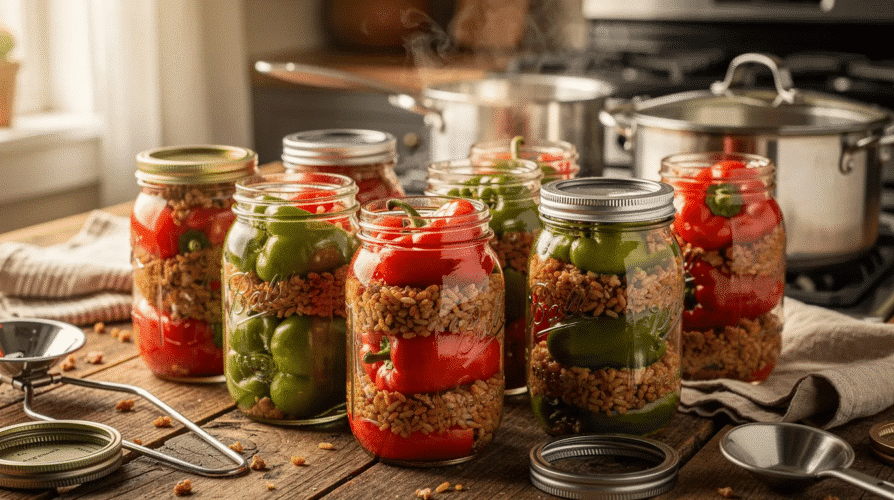
This hearty deconstructed stuffed pepper mixture—bell peppers, rice, tomatoes, and ground beef—requires pressure canning for safe preservation. Processing times run significantly longer than water bath methods.
Why Pressure Canning? Meat and low-acid vegetables cannot reach safe temperatures in a water bath. A pressure canner achieves 240–250°F under pressure, destroying botulism spores.
Ingredients (Yields 5–7 Quarts)
17 large green peppers or mixed bell peppers, seeded and chopped
Avoid thickeners like flour or cornstarch, which interfere with heat penetration. For other preserved foods, learn how to store dehydrated food in Mason jars to keep your pantry organized and shelf stable.
Preparation Process
Brown ground beef thoroughly in batches over medium heat, draining all visible fat.
Sauté onions and pepper pieces briefly in tomato liquid until just softened.
Combine meat, peppers, onions, tomato juice, and seasonings in a large pot.
Simmer 10–15 minutes to heat through—do not fully cook rice inside the mixture.
Prepare quarts or wide mouth jars and lids; keep jars hot.
Add 2–3 inches of hot water to the pressure canner and preheat.
Fill jars with hot mixture, leaving 1-inch headspace.
Remove air bubbles, wipe rims, apply lids finger tight.
Pressure Canning Protocol
Lock the canner lid and vent steam for 10 minutes.
Apply weight at 10–11 PSI (adjust for altitude).
Process pints 75 minutes; process quarts 90 minutes.
Allow pressure to return to zero naturally.
Wait 10 minutes before removing lid, angling it away from your face.
Critical Safety Note: Boil all pressure-canned meat dishes in a pot for at least 10 minutes before eating to reduce botulism risk.
Use this deconstructed mixture as a base for stuffed pepper soup, skillet meals, or simply heat and serve over freshly cooked rice with parsley.
Variations: Hot Banana Peppers, Sauerkraut Stuffing, and No-Cook Fermented Versions
Once you’ve mastered the basic methods, you can branch into spicier peppers, explore drying peppers in a dehydrator, and experiment with fermented fillings while respecting safety guidelines.
Hot Banana Peppers with Cabbage
Follow the same water bath method using 3 lb hot banana peppers instead of sweet varieties. These deliver serious heat (30,000–50,000 Scoville units) and pair amazingly with sausage or antipasto platters. Spice lovers who enjoy extreme heat, like Carolina Reaper beef jerky, should definitely wear gloves when you remove seeds.
Ferment at cool room temperature for 2–3 weeks, burping jars daily.
Refrigerate after active fermentation.
This produces delicious probiotic-rich peppers but requires cold storage—not shelf-stable.
Cabbage and Carrot Mix
Add thin carrot strips and celery seeds to your cabbage stuffing for extra color and crunch. You can also preserve extra peppers by dehydrating bell peppers in a food dehydrator. Maintain the standard vinegar-to-water ratio for safety.
Important Distinctions:
Vinegar pickling = water bath canned, shelf-stable
Natural fermentation = refrigerated after fermentation
Pressure canning = required for meat or low-acid vegetables in broth
Consult USDA guidelines or extension services when altering ingredients or jar sizes.
Serving, Storage, and Shelf Life
Canned stuffed peppers deliver their best flavor after adequate resting time and proper storage.
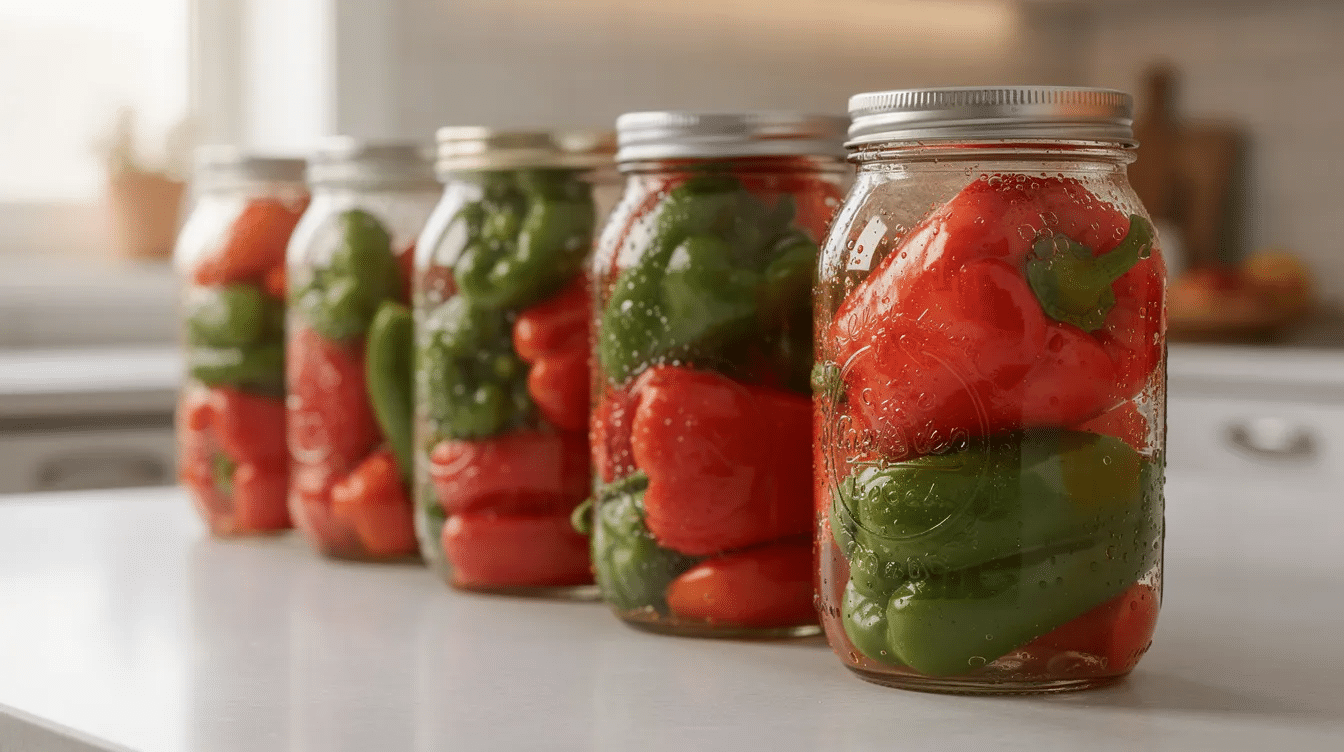
Resting Period: Let pickled stuffed green peppers sit at least 2 weeks before opening. For best results, wait at least 2 weeks before you eat the canned peppers to allow the flavors to fully develop. Process in August, open from early September onward for optimal taste.
Shelf Life:
Unopened jars: 12–18 months in a cool, dark location (50–70°F)
Opened jars: refrigerate with tight lid, use within 1–2 months
Serving Ideas:
Plate whole pickled peppers on an antipasto platter
Slice into rings for sandwiches
Chop into salads with onions and fresh vegetables
Serve warm deconstructed mixture over rice with fresh parsley
Use as a base for stuffed pepper soup—simply heat with additional broth and potatoes, and add rehydrated peppers such as dehydrated jalapenos if you like more spice
Texture Expectations: Pickled peppers soften over time. Smaller peppers remain pleasantly firm while larger bell pepper walls become more tender and potentially mushy. For firmer, shelf-stable options, you can preserve extra chilies by dehydrating jalapeno peppers in a dehydrator or drying peppers in the oven for later use in soups, stews, and spice blends.
Spoilage Checklist:
Bulging lids
Off smells or odors
Spurting liquid when opened
Cloudy brine (especially in meat jars)
Visible mold
When in doubt, throw it out. Label each jar clearly—“Cabbage-Stuffed Sweet Peppers, Sept 2026”—for easy rotation.
Frequently Asked Questions
Can I safely water-bath can stuffed peppers that contain meat or cheese?
No. Meat, cheese, and other low-acid ingredients make jars unsafe for water bath canning, even with added vinegar. The temperature simply doesn’t reach high enough to destroy botulism spores in dense, low-acid food. Stuffed peppers containing meat, cheese, or plain rice must be processed in a pressure canner using tested recipes and appropriate processing time for your jar size. Reserve water bath canning exclusively for high-acid, vinegar-based recipes like cabbage-stuffed pickled peppers.
What peppers work best for cabbage-stuffed pickled peppers?
Small sweet bell peppers, miniature red or yellow bells, or small cherry peppers (2–3 inches long) are ideal. They pack efficiently into pint jars and maintain better texture than larger varieties. Hot banana peppers also work well and offer more heat—wear gloves when seeding. Very large bell peppers can be used in quarts but will soften more during processing and may require adjusted packing methods to fill jars properly.
How long do home-canned stuffed peppers last, and how do I know if they’re still good?
Properly processed and sealed jars typically maintain best quality for 12–18 months when stored in a cool, dark place. Before opening, inspect each jar for broken seals, rust, leaks, or bulging lids. Check for cloudy or discolored contents. If a jar spurts when opened, smells off, or shows any mold, discard it immediately without tasting.
Can I adjust the vinegar or salt in the brine to make it less sour or salty?
For water bath canning, the vinegar-to-water ratio and minimum salt levels directly impact safety. Small flavor tweaks like adding extra sugar or herbs are fine, but reducing vinegar strength or diluting it too much creates unsafe, low-acid conditions. Maintain at least a 1:1 ratio of 5% vinegar to water for this type of recipe and follow tested brines from reputable canning guides.
Do I need to cook rice fully if I include it in pressure-canned deconstructed stuffed peppers?
Many safe recipes either omit rice before canning or add it only partially cooked because fully cooked rice becomes unpleasantly mushy during 75–90 minutes of processing. The safest approach is to pressure can the pepper, meat, and tomato mixture without rice, then cook fresh rice when serving and stir it in. If you specifically want rice inside the jars, follow a tested pressure-canning recipe rather than improvising ratios and processing times.
DannyContent Writer
Hey there, since 2016, my mission has been to provide you with the information and guides you need to make food dehydrating simple and fun. Whether you're a newbie or a seasoned pro, my site offers helpful guides, reviews, and recipes to enhance your dehydrating experience. I take pride in only recommending products I believe in, ensuring my readers' trust. As an affiliate of various programs, including Amazon Associates, your support helps me continue providing quality content. Thanks for stopping by, and happy dehydrating!