We earn a commission if you make a purchase, at no additional cost to you.
09/22/2026 04:39 pm GMT
🍊 Dehydrated Food Info Finder — Temperatures & Drying Times
Choose a category, then pick a food to see its drying temperature and time.
⚠️ Safety Disclaimer: Drying times are estimates and vary based on slice thickness, food moisture content, humidity, and your dehydrator model. Always check for doneness before storing — food should feel dry, leathery, or brittle with no moist spots. Improperly dried food can harbour mould and bacteria. For meat and poultry, follow USDA safe internal temperature guidelines: beef and pork to 160°F (71°C), poultry to 165°F (74°C). Use a food thermometer when in doubt. Store all dehydrated foods in airtight containers in a cool, dark place and discard anything showing moisture, mould, or off odours.
There’s something magical about watching fresh fruit transform into glistening, jewel-like confections. Whether you’re craving the dramatic crack of a sugar-coated strawberry or the chewy sweetness of candied pineapple in your holiday baking, candy fruits offer a world of textures and techniques worth exploring.
Quick Answer: What Are Candy Fruits & Which Type Should You Make First?
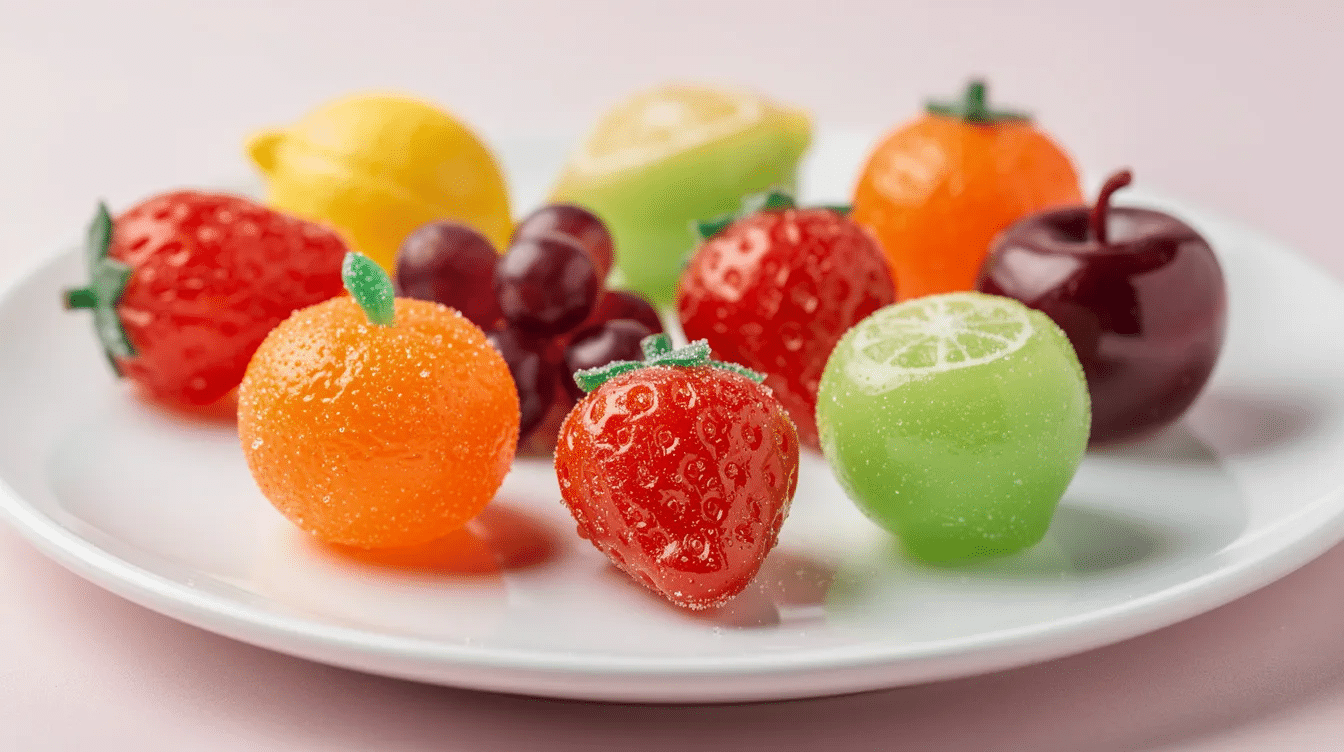
Candy fruits fall into three main categories: glassy Chinese tanghulu featuring fresh fruit dipped in hard-crack sugar, syrup-preserved traditional candied fruit with a chewy interior, and commercial hard candy fruit slices that mimic fruit flavors without actual fruit pulp.
Tanghulu is your best bet for a same-day fun treat—the hard candy coating creates that viral crunch you’ve seen across TikTok and Instagram throughout 2024-2026, but it must be eaten within hours before humidity softens the shell.
Slow-candied fruit takes 3-7 days of patient simmering but rewards you with preserved fruit that lasts months in the fridge, perfect for fruitcakes, panettone, and holiday bakes.
Commercial fruit slice candies contain no real fruit but offer convenient, shelf-stable options for candy buffets and gifts.
This guide covers how to make fast tanghulu at home, the classic multi-day candying process for chewy preserved fruit, and when to use commercial alternatives.
You’ll learn specific temperatures, troubleshooting tips, and safety precautions for working with hot sugar syrup.
By the end, you’ll know which technique works best for your timeline and intended use.
What Are Candy Fruits?
The term “candy fruits” encompasses a surprisingly diverse category of confections. At its core, candy fruits include any preparation where fruit meets sugar in a transformative way—from fresh strawberries encased in crackling glass-like shells to citrus peels slowly saturated with syrup until they become chewy, translucent gems.
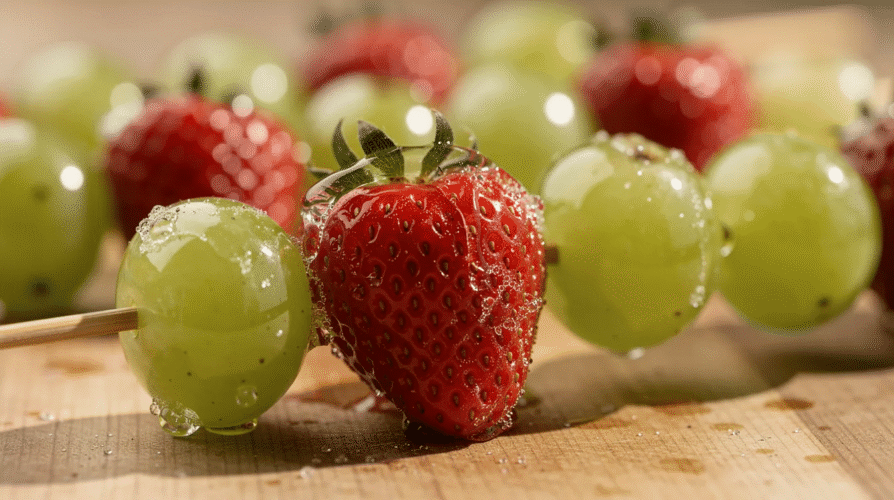
Fresh fruit coated in hard sugar (tanghulu) creates a thin, glass-like shell that cracks loudly when you bite through it, revealing juicy fruit inside.
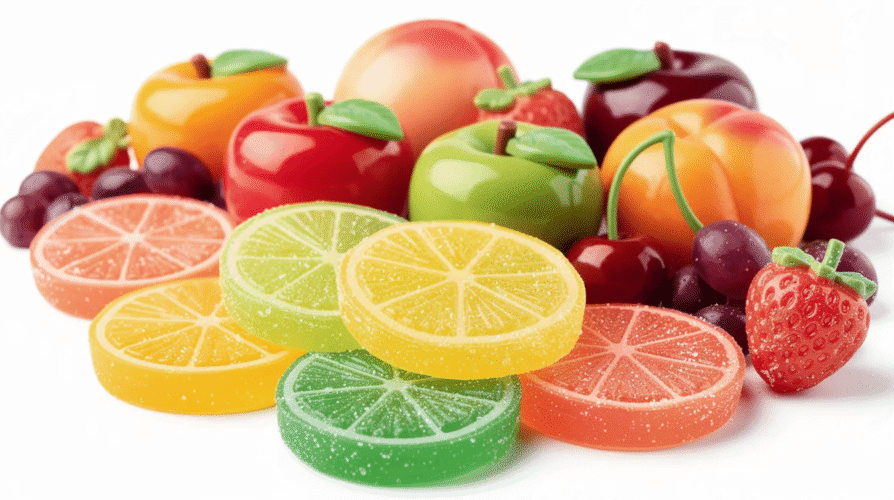
Fruit slice candies are completely dry hard candy with no real fruit—just sugar, corn syrup, citric acid, and artificial flavors shaped to look fruity.
Candying fruit dates back centuries across Europe and Asia, originally serving as a preservation method for winter storage and festive celebrations.
The science is straightforward: sugar concentrations above 65-70% draw moisture from fruit cells through osmosis, replacing water with sugar and inhibiting microbial growth—extending shelf life from days to potentially a year or more.
Crunchy Tanghulu (Chinese Candied Fruit on Sticks)
Tanghulu originated as a Northern Chinese street snack, traditionally made with hawthorn berries and sold along Beijing’s Wangfujing snack street during winter months. Around 2020, this delicious treat exploded in popularity online, with ASMR videos capturing the dramatic crack of the sugar shell accumulating millions of views.
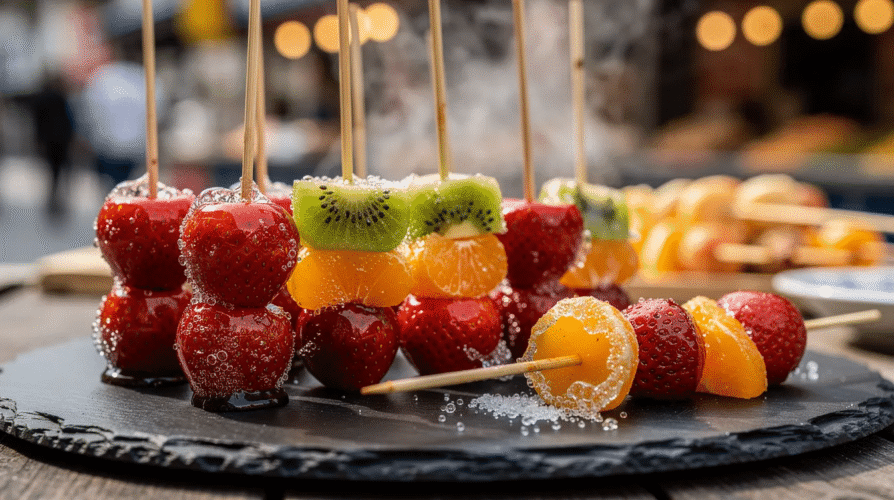
This section focuses on a home kitchen version using widely available fruit like strawberries and grapes instead of traditional hawthorn. The basic formula is simple: skewer fresh fruit, cook a sugar water mixture to 300°F (149°C), dip quickly, and let cool. The result is nature’s candy wrapped in an amazing glass-like shell.
One important note: tanghulu is a same-day dessert. The hard crack coating softens within hours due to ambient moisture, so plan to eat your creations promptly for the best snap and juiciness.
Best Fruits for Tanghulu
Firm, smooth-skinned fruits with minimal surface moisture produce the best results. Excess juice causes the sugar coating to slip off or become sticky rather than crisp.
Strawberries work beautifully—hull them but leave whole for maximum visual impact and that satisfying pop of juicy sweetness when you bite through.
Red or green seedless grapes are beginner-friendly, offering a consistent size and naturally smooth skin.
Blueberries create bite-sized treats, though their small size requires careful skewering.
Mandarin or clementine segments need thorough drying with paper towels before dipping; any surface moisture ruins the coating.
Kiwi slices cut 0.5-1 cm thick and patted completely dry offer a tangy contrast to the sweet shell.
Traditional Chinese hawthorn berries (shan zha) remain the iconic choice if you can find them at Asian markets.
Avoid raspberries, blackberries, and ultra-soft fruits like very ripe peaches—they leak juice and create uneven, sticky coatings that won’t achieve proper crunch.
Simple Tanghulu Ingredients
A small batch requires minimal ingredients, and the recipe scales easily for larger gatherings.
2 cups (400 g) granulated white sugar produces the clearest, glassiest coating
1 cup (240 ml) cold water
Optional: 1/4 cup (60 ml) light corn syrup—this isn’t essential, but it helps prevent crystallization by interfering with sucrose molecule alignment, yielding a smoother, more stable shell
20-30 pieces of prepared fruit threaded onto bamboo skewers
Standard white granulated sugar creates the transparent coating that photographs so well. Brown sugar works but produces a darker, more caramel-like appearance. No flavor extracts or colors are necessary—the fruit itself provides the visual appeal, though a drop of vanilla extract stirred in after removing from heat adds subtle complexity.
How to Make Tanghulu Step by Step
The entire process takes roughly 20-25 minutes: prep your fruit, cook the sugar mixture to hard crack stage, dip quickly, and cool. Speed matters once the syrup reaches temperature.
Prep fruit thoroughly: Wash and remove stems, then dry on paper towels or a rack for at least 10-15 minutes. Any surface moisture causes problems. Thread 2-4 pieces onto each bamboo skewer.
Set up your station: Line a baking sheet with parchment paper or a silicone mat. Prepare a bowl of ice water nearby for testing syrup and emergency burn treatment.
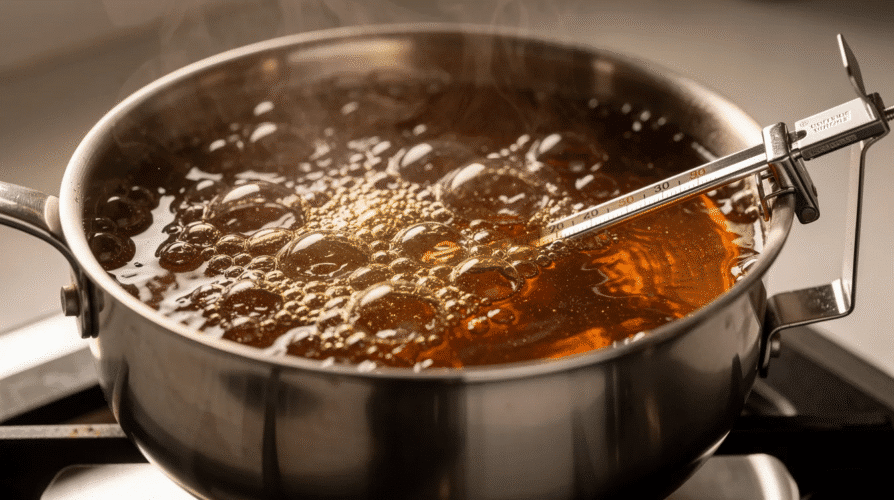
Cook the syrup: Combine sugar and water (plus optional corn syrup) in a heavy-bottom pot. Heat over medium heat without stirring until the mixture reaches a rolling boil.
Monitor temperature carefully: Clip a candy thermometer to the pan and cook until it reads 290-300°F (143-149°C). This takes approximately 8-12 minutes depending on your stove. Do not stir—agitation causes crystallization.
Test for hard crack: Drizzle a small amount of syrup into ice water. If it hardens instantly and snaps cleanly when bent, you’ve reached hard crack stage.
Once the syrup hits temperature, reduce heat to the lowest setting and work quickly. Tilt the saucepan slightly, dip each fruit skewer while rotating to coat evenly in a thin layer, let excess drip back into the pot, then place the skewer on your prepared tray. The candy coating sets in under a minute at room temperature.
Safety, Equipment & Troubleshooting Tanghulu
Working with 300°F sugar syrup demands respect and preparation. Here’s what you need and how to handle common problems.
Essential equipment:
Heavy-bottom saucepan (conducts heat evenly, prevents hot spots)
Candy thermometer reading at least to 320°F (160°C)
Bamboo skewers or disposable wooden sticks
Parchment paper or silicone baking mat
Large bowl of fresh water with ice
Critical safety notes:
Boiling sugar at hard crack temperature causes severe burns—the thick, sticky syrup clings to skin. Keep children and pets completely away from the stove.
Turn the pot handle inward and never lean over the bubbling syrup.
If syrup contacts skin, immediately plunge into ice water and seek medical attention for serious burns.
Troubleshooting common issues:
Sticky or chewy coating: The sugar mixture didn’t reach full hard crack (likely below 295°F). You’ll need to cook a fresh batch to the correct temperature—there’s no fixing undercooked syrup.
Grainy or cloudy coating: You stirred the syrup, used a pot with residue, or sugar crystals formed on the sides and fell back in. Next time, use a wet pastry brush to wash down the sides without stirring, and ensure your equipment is spotlessly clean.
Syrup darkening rapidly: Heat was too high, pushing toward caramelization (above 320°F). Use medium heat and allow 8-12 minutes for gradual cooking.
To clean hardened sugar from your pan, fill with hot water, bring to a gentle simmer until the sugar dissolves, then wash normally.
Soft & Chewy Candied Fruits (Preserved in Syrup)
Traditional candied fruit—also called glacé fruit or crystallized fruit—takes a completely different approach than quick-dipped tanghulu. This European-style preservation method slowly replaces fruit’s natural moisture with concentrated sugar syrup over multiple days, producing chewy, jewel-like confections that taste good for months.
Unlike same-day tanghulu, this technique works best for patient cooks who enjoy the process. The basic concept involves blanching firm fruit, then simmering in progressively denser syrups over 3-7 days until the fruit turns completely translucent. The result is preserved fruit perfect for holiday cakes, stollen, and panettone—the kind your family loved in traditional baked goods.
The method traces back to 14th-century Europe and earlier Middle Eastern practices. By the 18th and 19th centuries, monasteries in Provence, France had perfected the art, creating luxurious candied citrus, cherries, and figs for royal celebrations and Christmas feasts.
Best Fruits and Produce for Slow Candying
Successful candying requires produce that holds its shape through multiple heating cycles. Firm texture is essential.
Pineapple slices or chunks work exceptionally well—the fibrous structure maintains integrity throughout the process, much like other classic treats such as homemade candied ginger.
Citrus peel and small whole citrus like kumquats create classic confections; prick the skins with a skewer so syrup penetrates evenly.
Pear wedges, quince slices, and firm apples hold up beautifully and develop gorgeous translucency.
Cherries (pitted) and apricots are traditional choices for holiday fruitcakes.
Pumpkin cubes, carrots, and angelica stems offer unusual but striking decorative options.
Select slightly underripe fruit when possible—firmer flesh resists collapsing and maintains shape better than fully ripe specimens.
Very juicy, delicate berries like raspberries break down during extended candying. If you want candied berries, use them for quick decorative purposes and eat promptly.
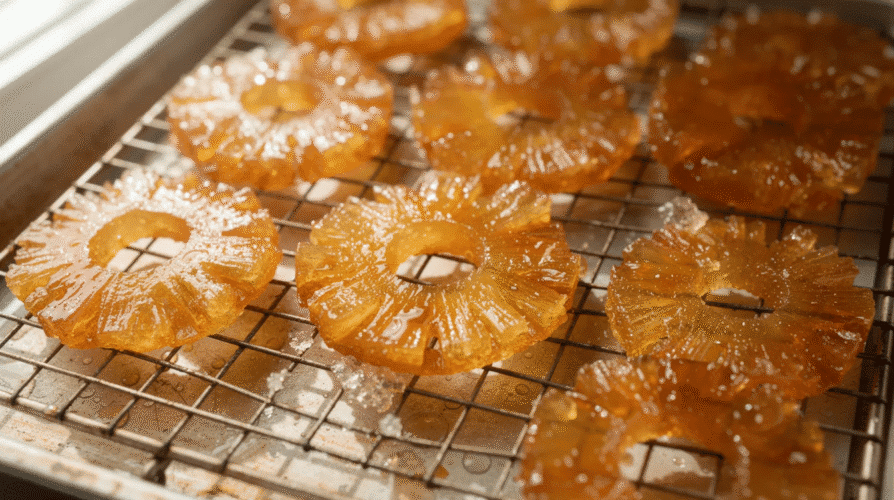
Step-by-Step Example: Candied Pineapple Rings Over 4–7 Days
Pineapples are widely available and demonstrate the multi-day process perfectly. Here’s how to transform fresh pineapple into yummy candied rings.
Day 1:
Peel a fresh pineapple and cut into approximately 1.25 cm (1/2-inch) thick rings. Remove the core.
Blanch in simmering water for 10-15 minutes to soften, then drain.
Prepare a light syrup using equal weights of sugar and water (e.g., 500g each). Bring to a boil until sugar dissolves.
Add pineapple rings, simmer for 10 minutes, then let cool completely. Transfer to the fridge overnight.
Days 2-3:
Remove pineapple from syrup, add fresh water if needed to adjust consistency, then stir in additional sugar to increase concentration—add roughly 100g sugar per session.
Return pineapple to the pot, bring to a simmer for 10 minutes, then cool and refrigerate overnight.
The syrup should become noticeably thick and slow-dropping by Day 3.
Days 4-7:
Continue the daily cycle: brief simmer, cool, rest overnight.
The pineapple is ready when it appears translucent throughout with no opaque or pale spots in the center.
Adding 1 tablespoon of invert sugar (light corn syrup or golden syrup) during later stages helps keep the fruit plump and glossy while reducing crystallization.
The only problem most beginners encounter is impatience—rushing the process creates fruit with soggy centers that won’t preserve properly.
Drying, Storing & Using Homemade Candied Fruit
Once fully candied, you have storage options depending on your intended use.
For dried candied fruit, drain on a rack for 1-3 days at room temperature (up to a week in humid conditions for thick or whole fruits), then roll in granulated sugar for that classic sugary, crystal-coated finish.
Decorate holiday cakes like stollen, fruitcake, and panettone with jewel-like candied citrus and pineapple.
Garnish cheesecakes and pavlovas with glistening candied orange slices for impressive presentation.
Package in small jars as delicious homemade gifts—good quality candied fruit makes a tasty and memorable present.
Reuse leftover syrup in cocktails (try a pineapple old fashioned or other holiday cocktails with dried fruit), lemonade, or brush onto sponge cake layers for extra moisture and fruity flavor.
Hard Candy Fruit Slices & Commercial Candy Fruits
Not all candy fruits involve actual fruit. Commercial hard candy fruit slices are molded confections typically sold in bulk bags of around 454g (1 lb), containing roughly 100-120 individually wrapped pieces.
These brightly colored slices come in flavors like orange, lemon, lime, and cherry, achieving their taste through artificial flavoring rather than real fruit. The typical ingredient list includes sugar, corn syrup, citric acid, artificial flavors, and FD&C dyes (Red 40, Yellow 5, Yellow 6, Blue 1), sometimes with titanium dioxide for opacity.
For large events, these offer practical advantages: shelf-stable storage, no refrigeration required, consistent quality, and easy portion control. They’re perfect for candy buffets, office desk bowls, and treat bags where convenience matters more than artisanal appeal.
Always check labels for allergen information, particularly corn derivatives. And remember—these are sweet indulgences, not health food.
When to Choose Hard Fruit Slice Candy vs. Fresh Candied Fruit
The choice depends on your specific needs and timeline.
Choose hard fruit slice candy for large events like weddings, corporate gatherings, or sports team snacking where you need long shelf life and zero refrigeration concerns.
Choose homemade candied fruit or tanghulu when texture, freshness, and presentation take priority—dinner parties, holiday tables, and baking projects where you control the timeline.
Hard candies excel for mailing in gift boxes or keeping in office candy jars where they’ll sit for weeks.
Soft candied fruit shines at in-person celebrations where guests experience peak quality immediately.
Both can coexist on a dessert table: bowls of colorful hard fruit slices for casual snacking alongside a platter of glossy tanghulu or chewy candied citrus for those who want something more special.
Food Safety & Best Practices for Candy Fruits
While the high sugar content in candy fruits inhibits many microbes, proper handling of both fresh produce and hot syrup remains essential for safe results.
Hot sugar safety:
Sugar syrup at 300°F sticks to skin and causes severe burns. Keep an ice water bowl within reach at all times.
Use long bamboo skewers or tongs to maintain distance from the pot when dipping fruit skewers.
Never leave hot syrup unattended, and always test temperature with a thermometer rather than guessing.
Fruit handling:
Wash and thoroughly dry all fruit before candying to remove dirt and potential pathogens.
Discard any bruised, moldy, or fermented pieces—damaged fruit compromises both safety and final taste.
Storage guidelines:
Tanghulu: Eat immediately, within a few hours maximum. Do not refrigerate—condensation from the fridge softens the hard shell into a sticky mess.
Syrup-candied fruit: Store covered in the fridge submerged in syrup, or fully dried in airtight containers. Always use clean utensils to prevent contamination.
Remember that candied fruit is a sweet food indulgence, not a health supplement. Those with specific conditions like diabetes should consider the sugar load and consult healthcare professionals as needed.
Inspiration: How to Serve & Enjoy Candy Fruits
Picture a dessert spread that stops conversations: skewers of shiny tanghulu strawberries catching the light, bowls of soft, chewy candied citrus glowing like amber gems, and colorful hard candy fruit slices offering a bit of nostalgic sweetness for casual snacking.
Serving ideas:
Create a Valentine’s Day 2026 dessert board featuring red strawberry tanghulu, dark chocolate pieces, and sparkling drinks for an amazing romantic spread.
Serve tanghulu grapes and blueberries over ice at summer parties for a cool, crunchy treat that stays fresh outdoors.
Arrange candied kumquats alongside cheese boards—the sweet-tart flavor pairs beautifully with aged cheddar, especially when combined with other tangy additions like homemade dried cranberries.
Add candied citrus peel to ice cream sundaes or pair it with homemade dehydrated mango slices as cocktail garnishes at celebrations throughout 2026.
Gifting ideas: For a non-edible option, you can also turn some of your dried fruit into DIY dried fruit potpourri as a fragrant companion gift.
Pack assortments of homemade candied fruits in small glass jars with handwritten labels and dates.
Mix in a few commercial fruit slice candies for color contrast and variety, or add a packet of sun-dried fruit snacks for a lighter option.
Layer honey, candied peel, and dried mango pieces in decorative jars for edible gifts that look as good as they taste.
Start with one technique—perhaps a quick batch of tanghulu strawberries this weekend or a simple multi-day project with candied citrus peel. As you master the basics, experiment with other fruit varieties and more complex preparations. The world of candy fruits rewards patience and practice with results that are truly delicious.
DannyContent Writer
Hey there, since 2016, my mission has been to provide you with the information and guides you need to make food dehydrating simple and fun. Whether you're a newbie or a seasoned pro, my site offers helpful guides, reviews, and recipes to enhance your dehydrating experience. I take pride in only recommending products I believe in, ensuring my readers' trust. As an affiliate of various programs, including Amazon Associates, your support helps me continue providing quality content. Thanks for stopping by, and happy dehydrating!