We earn a commission if you make a purchase, at no additional cost to you.
09/22/2026 04:39 pm GMT
🍊 Dehydrated Food Info Finder — Temperatures & Drying Times
Choose a category, then pick a food to see its drying temperature and time.
⚠️ Safety Disclaimer: Drying times are estimates and vary based on slice thickness, food moisture content, humidity, and your dehydrator model. Always check for doneness before storing — food should feel dry, leathery, or brittle with no moist spots. Improperly dried food can harbour mould and bacteria. For meat and poultry, follow USDA safe internal temperature guidelines: beef and pork to 160°F (71°C), poultry to 165°F (74°C). Use a food thermometer when in doubt. Store all dehydrated foods in airtight containers in a cool, dark place and discard anything showing moisture, mould, or off odours.
Candied Dried Peaches: From Fresh Fruit to Irresistible Snack
Turn peak-season peaches into a chewy, golden treat you can enjoy year-round. Here’s everything you need to know about making candied dried peaches at home.
Quick Answer: What Are Candied Dried Peaches?
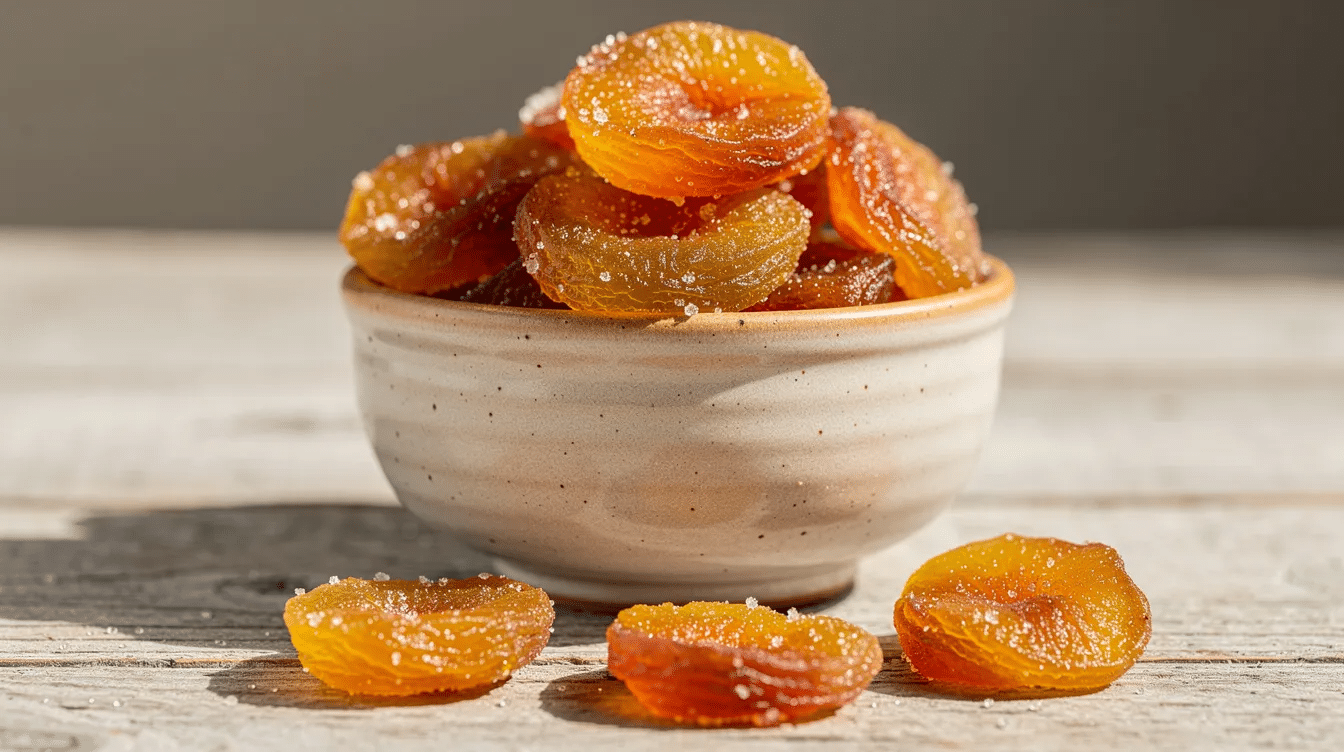
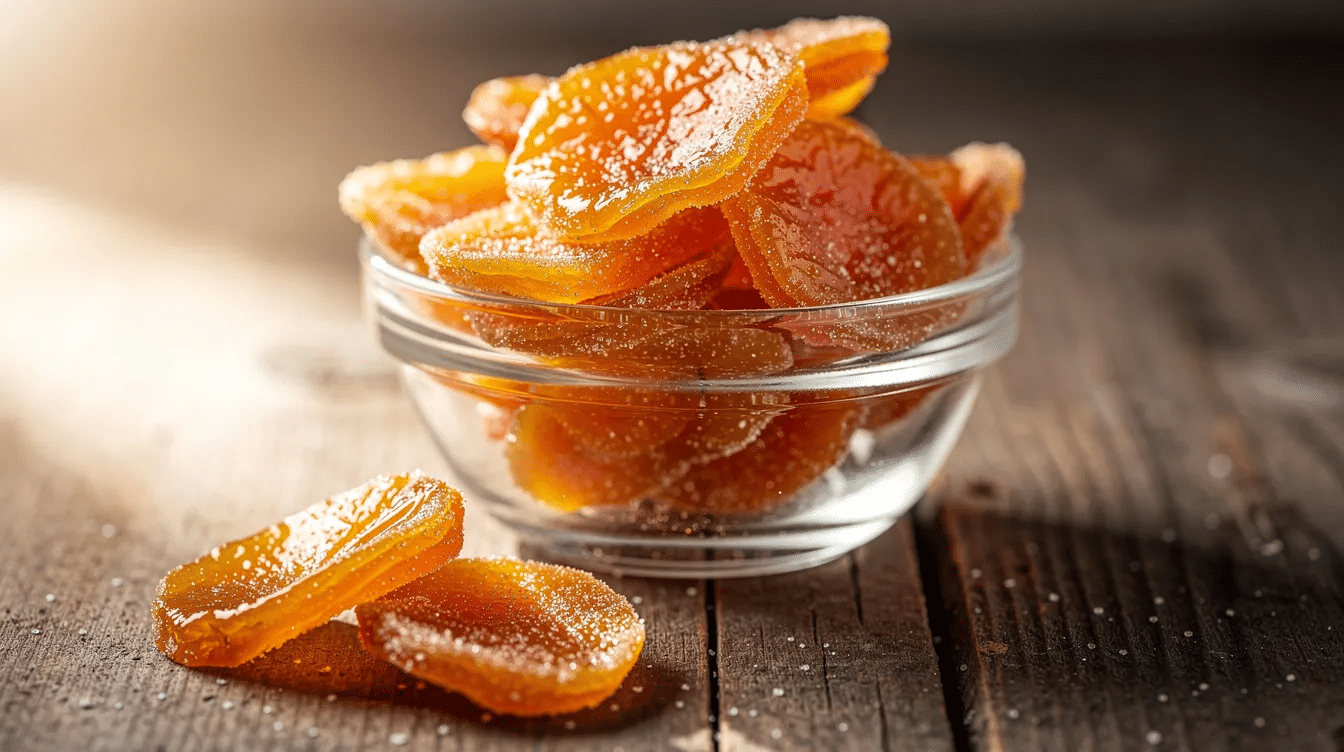
Candied dried peaches are peach slices that are first simmered in sugar syrup-a classic candied fruit technique-then dehydrated until chewy and shelf-stable. The result is a dried fruit snack with concentrated peach flavor and sweetness, a glossy, crystallized exterior, and a sweet and chewy texture that sits somewhere between candy and preserved fruit. Candied dried peaches are made by infusing dried peaches with high sugar syrup, which sets them apart from plain dried peaches (which have no added sugar) and from canned peaches sitting in liquid.
You can make them at home from fresh peaches during peak season (June through August in the U.S.) or pick up ready-to-eat candied fruits sold by your preferred brand in 250 g bags or larger bulk packs.
Core uses include:
Snacking straight from the jar or taking them along as convenient snacks for outdoor activities
Folding into baking recipes like scones, muffins, or fruitcake
Topping yogurt, oatmeal, and cereal bowls for a delicious breakfast upgrade
Using them to decorate cakes and pastries as a jewel-toned garnish
Adding them to trail mixes alongside nuts and chocolate for balanced sweetness
Fresh Peaches vs. Dried and Candied: What’s the Difference?
Fresh peaches, dehydrated fruit, and candied dried peaches represent three distinct ways to enjoy the same fruit-and each one serves a different purpose in your kitchen.
Fresh peaches are juicy, aromatic, and highly perishable. Once ripe, they last roughly three to five days at room temperature before they start to soften and bruise. They’re perfect for eating out of hand during summer but impractical for long-term storage. Their water content hovers around 85–90%, which is what makes them so fragile.
Plain dried peaches have most of that moisture removed through gentle heat and airflow. The flavor concentrates, the texture turns leathery or chewy, and shelf life extends to six to twelve months in proper storage. No added sugar is necessary, and a 100 g serving delivers roughly 239 calories with about 8 g of fiber.
Candied dried peaches go a step further. A common method for candying involves simmering fruit in sugar syrup before dehydrating, which makes them sweeter than plain dried peaches due to added sugar. The result is a soft, translucent slice with a candy-like chew and a more dessert-leaning flavor. Think of it this way: toss plain dried peaches into homemade granola for an unsweetened crunch, but chop candied dried peaches into cookie dough or scone batter when you want that extra hit of sweet richness. All three forms have a place in a balanced diet, but candied versions are best treated more like confectionery than everyday fruit.
Selecting the Best Peaches for Candying and Drying
Starting with good peaches is non-negotiable. The quality of your finished product depends almost entirely on what goes into the pot.
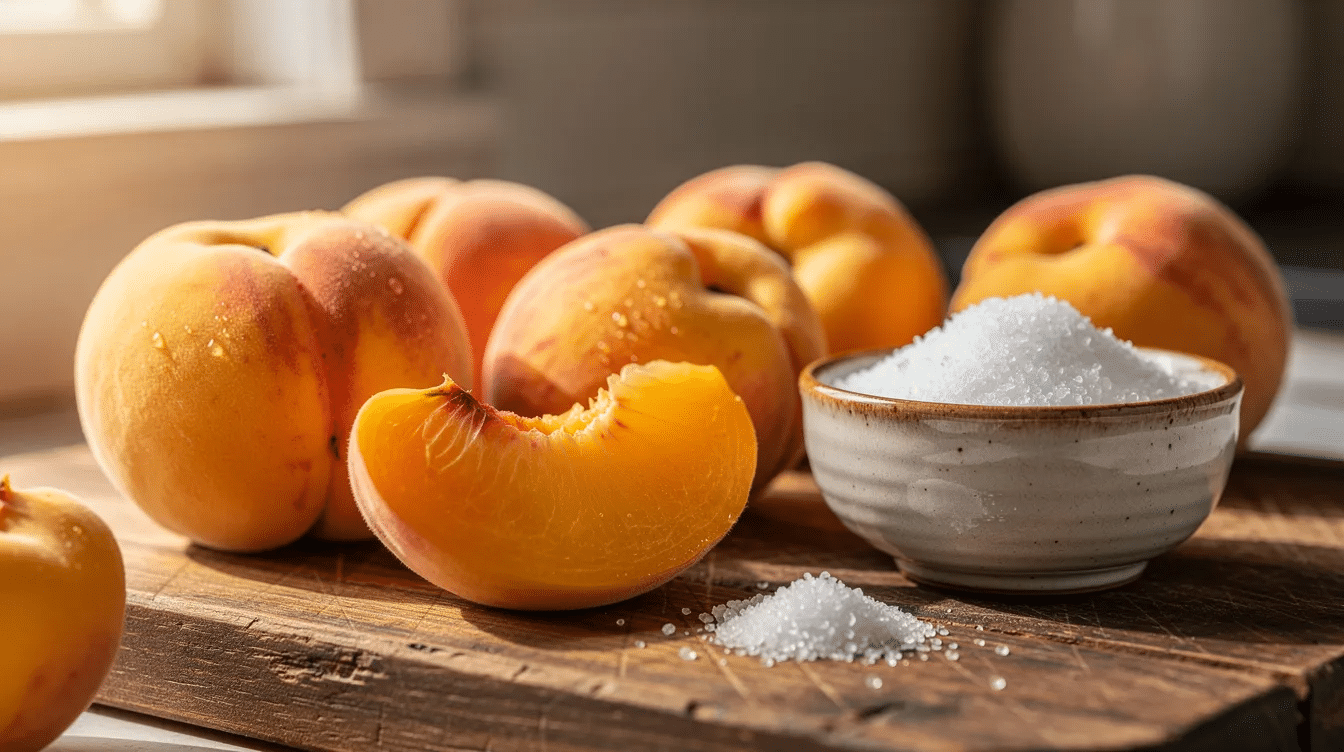
Choose freestone peach varieties like Elberta, Redhaven, or O’Henry. Their pit separates cleanly from the flesh, which makes slicing far easier than working with clingstone types typically reserved for canning. Look for peaches that yield slightly to gentle pressure near the stem, give off a strong peach aroma, and show rich yellow or orange skin without large green patches. Avoid overripe, bruised, or mold-spotted fruit-these darken unevenly and turn mushy during the candying process.
For quantity planning, about 2.5 to 3 pounds of fresh peaches typically yield around 1 pound of plain dried peaches. Expect slightly less finished weight when you candy them first, since the syrup step and extended dehydrating reduce the final mass further.
If you’re working outside peak season, frozen sliced peaches (unsweetened) can stand in. Partially thaw them before handling and pat them dry to avoid excess moisture that leads to uneven results. They won’t be quite as plump and fragrant as summer-picked fruit, but they’ll still produce a solid finished product.
Essential Equipment and Ingredients
You don’t need a professional kitchen to make candied dried peaches. A few basic tools and a dehydrator will get you there with consistent results.
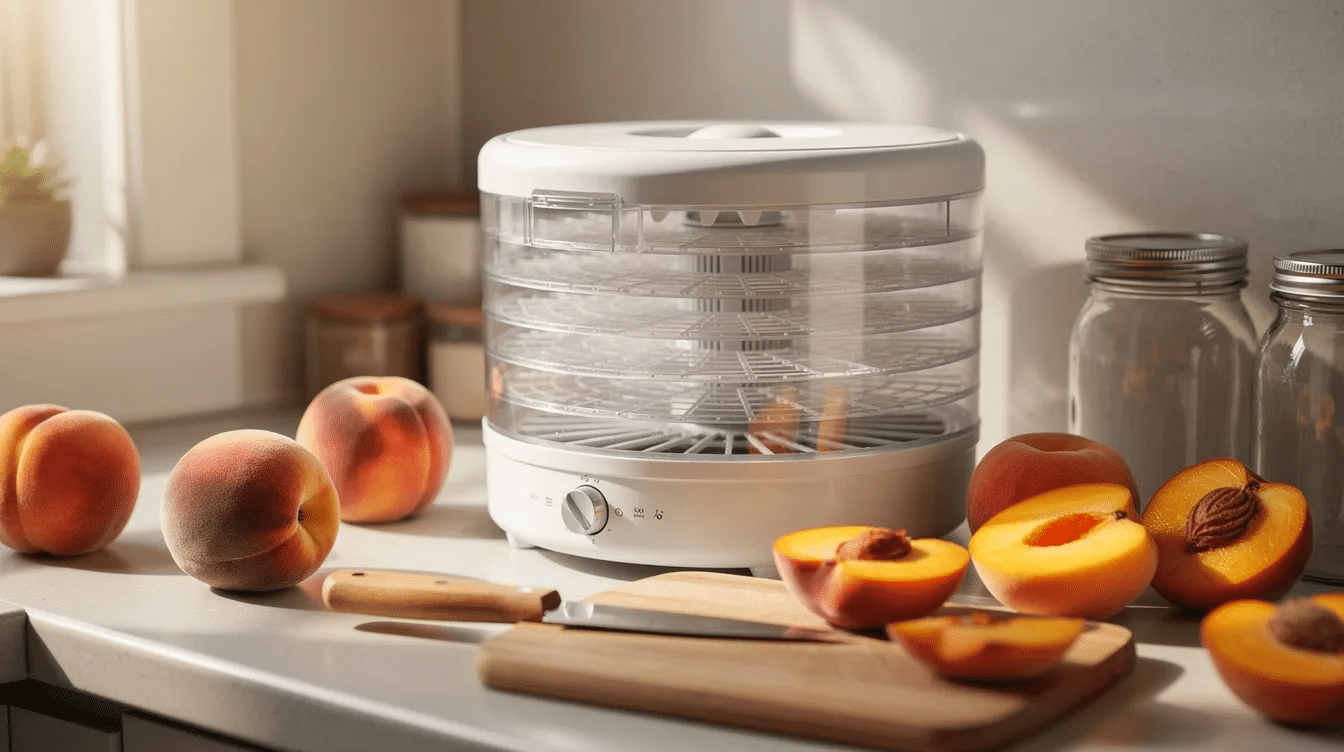
Gather a sharp paring knife and cutting board for prep, a large pot for blanching, a medium saucepan for your syrup, a slotted spoon for lifting fruit, and a large bowl filled with ice water. For drying, a food dehydrator with mesh trays is ideal-it holds a steady temperature around 135°F (57°C) with even airflow across multiple trays, and it runs efficiently over the long drying times this recipe demands. Alternatively, use baking sheets lined with parchment paper in your oven at its lowest setting. A dedicated dehydrator makes it easier to dehydrate a variety of fruits consistently, especially if you plan to preserve produce regularly. You’ll also want airtight glass jars for conditioning and storage.
For ingredients, you need ripe fresh peaches, granulated white sugar (or a mix of white and light brown sugar for deeper flavor), water, and lemon juice to prevent browning. Optional add-ins for the syrup include cinnamon sticks, a split vanilla bean, or thin slices of fresh ginger. You can experiment with honey or maple syrup as partial sweetener substitutes, but expect a stickier texture and stronger flavor that changes drying time slightly.
Step‑by‑Step: Preparing and Blanching the Peaches
The goal here is to peel, pit, and slice your peaches into uniform pieces so they candy and dry evenly. Consistent thickness is everything.
Start by washing your peaches under cool running water, gently rubbing the skin to remove fuzz and debris. Then score a small “X” on the bottom of each peach with your paring knife-this lets the skin release quickly after blanching.
Bring a large pot of water to a rolling boil. Blanch peaches in boiling water for about 1 minute, working in batches of three or four to keep the water at a full boil. Use your slotted spoon to transfer them immediately into the ice-water bath. The hot water loosens the skin; the cold water stops the cook instantly.
Once cool, peel each peach by slipping the skin off with your fingers. Halve the fruit along its natural crease, twist to separate, and remove the pit. Slice each half into uniform wedges about 1/8 to 1/4 inch thick. Thinner slices dry faster and absorb syrup more evenly.
As you work, hold finished slices in a bowl of water with a tablespoon of lemon juice per quart. This acidulated water will prevent browning and keep your slices looking bright until you’re ready to candy them.
Making the Candied Fruit Syrup
This section covers the sugar syrup that transforms plain peach slices into candied fruit before they ever touch the dehydrator.
Start with a basic ratio: 2 cups granulated sugar and 2 cups water for approximately 2 to 3 pounds of sliced peaches. Combine the sugar and water in a medium saucepan, add 1 to 2 tablespoons of lemon juice, and heat over medium until the sugar dissolves completely and the mixture reaches a gentle simmer. Don’t crank it to high heat-you want a clear, slightly thickened but still pourable syrup, not caramel.
For flavor variations, drop in a cinnamon stick and a strip of lemon zest for a warm, spiced profile. A split vanilla bean adds a dessert-like aroma. Thin slices of fresh ginger introduce a subtle, pleasant heat. The candying process preserves fruit by inhibiting microbial growth through osmotic pressure-sugar replaces water inside the cells, lowering water activity enough to suppress spoilage organisms.
Once you’ve used the syrup, don’t toss it. Strain, cool, and refrigerate it for up to a week. Reuse it to candy another batch of fruit, sweeten iced tea, or stir into fruit tea recipes for a peach-kissed drink, or pair it with homemade candied ginger for a more complex flavor combination.
Candying and Dehydrating the Peach Slices
Now your prepared slices meet the syrup, and the real transformation begins.
Gently lower peach slices into the simmering syrup in a single layer or loose arrangement. Maintain a low simmer-never a hard boil-for about 10 to 20 minutes. The slices should look slightly translucent and feel tender while still holding their shape. Use a slotted spoon to lift them from the syrup, letting excess liquid drain back into the pot. Work in batches to avoid crowding and tearing the fruit.
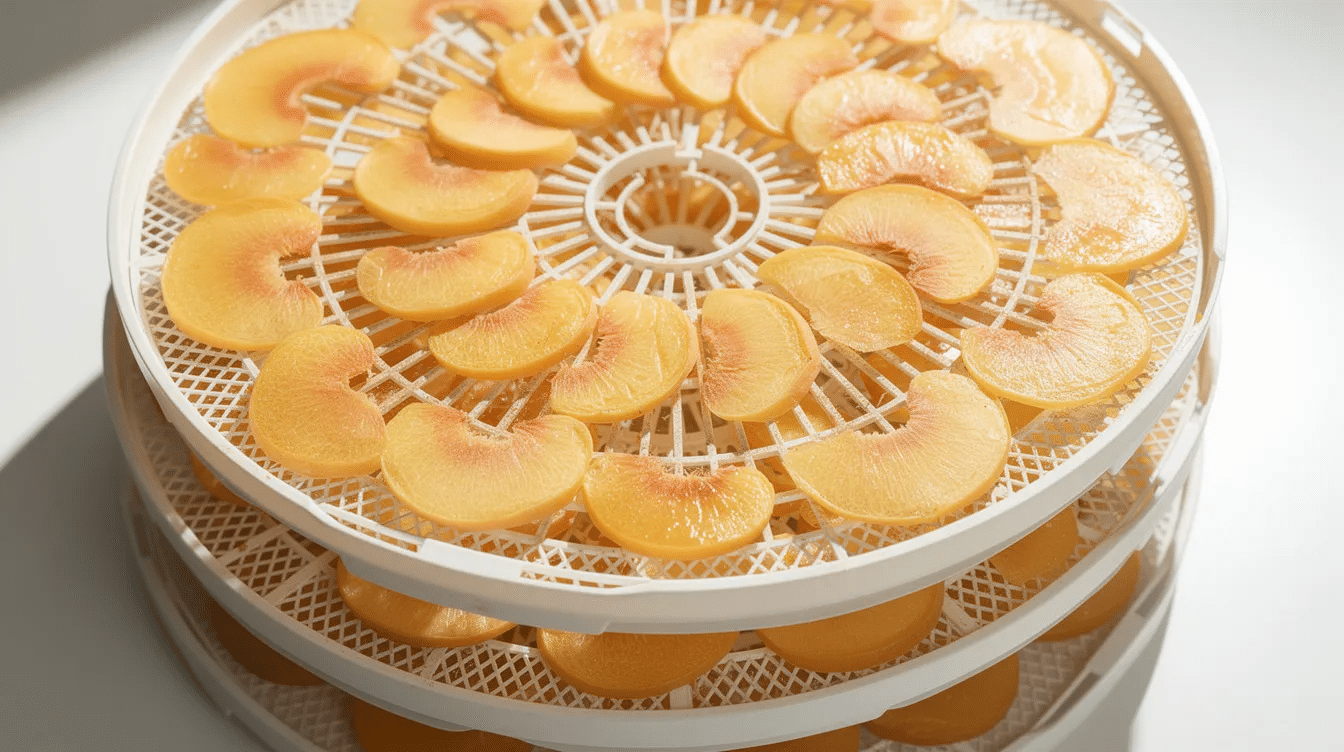
Arrange the slices in a single layer on lightly oiled dehydrator trays or parchment-lined baking sheets, leaving space between each piece for airflow. Peaches should be dried at 135°F for 10 to 12 hours in a dehydrator, or at your oven’s lowest setting (usually 150–170°F) with the door cracked slightly for ventilation. Thicker slices or humid conditions can push drying time to 18 to 24 hours. Some people prefer to dry overnight and check progress in the morning.
Test for doneness by bending a slice. It should feel pliable and chewy with no visible wet spots or beads of syrup. It shouldn’t snap like a chip. The drying process creates a shelf-stable confection that holds up in your pantry for months. If slices feel too soft or sticky, return them for another hour or two of dehydrating. You can also toss finished pieces in granulated sugar for an extra sweet coating and to reduce surface tackiness.
Conditioning and Storing Candied Dried Peaches
Conditioning is the step most people skip-and it’s the one that prevents mold and evens out texture across your entire batch.
Let your dried peach slices cool completely on the trays. Then pack them loosely into clean, dry glass jars, filling each jar about two-thirds full so there’s room to shake the contents. Condition dried peaches for 7 to 10 days in glass jars: seal each jar, store at room temperature away from direct sunlight, and shake once daily. This redistributes residual moisture so no single slice retains a damp pocket that could harbor mold.
If condensation appears on the inside of the glass or pieces feel noticeably moist, return the fruit to the dehydrator or a low oven for an additional one to two hours, then restart conditioning. Review your slices carefully each day-any sign of off odors means that batch should be discarded.
Once conditioning is complete, store dried peaches in airtight containers away from light. A cool, dark pantry is ideal. Properly stored, they keep 6 to 12 months at room temperature. Stash them in the fridge for extended freshness, or freeze them for even longer storage. Many of the same storage principles apply to other dehydrator fruit recipes you might keep on your shelves. Label each jar with the date and flavor variation-something like “Cinnamon Candied Peaches – August 2026”-so your pantry stays organized.
How to Use Candied Dried Peaches in Everyday Cooking
This is where candied dried peaches earn their keep. They work as both a standalone snack and a versatile ingredient in sweet and savory dishes, and once you start using them, it makes so much sense to always have a jar on hand.
For snacking and breakfast, candied dried peaches can enhance yogurt and oatmeal dishes with concentrated sweetness. Mix them into cereal for breakfast, layer them into parfaits, or scatter them over granola. They can replace raisins or dried apricots in recipes where you want a more nuanced stone-fruit flavor. Added to trail mixes for sweetness, they pair beautifully with almonds, pumpkin seeds, and dark chocolate pieces.
In baking, chop candied dried peaches and fold them into muffin, scone, or quick bread batter. They’re a natural fit in fruitcake alongside cherries and mixed peel-anywhere you’d use candied fruit, these belong. To rehydrate for denser cakes, soak chopped pieces in hot water, fruit juice, or tea for 15 to 30 minutes, then drain and pat dry before adding to your batter. Candied dried peaches can be used in baking and as toppings without much extra effort.
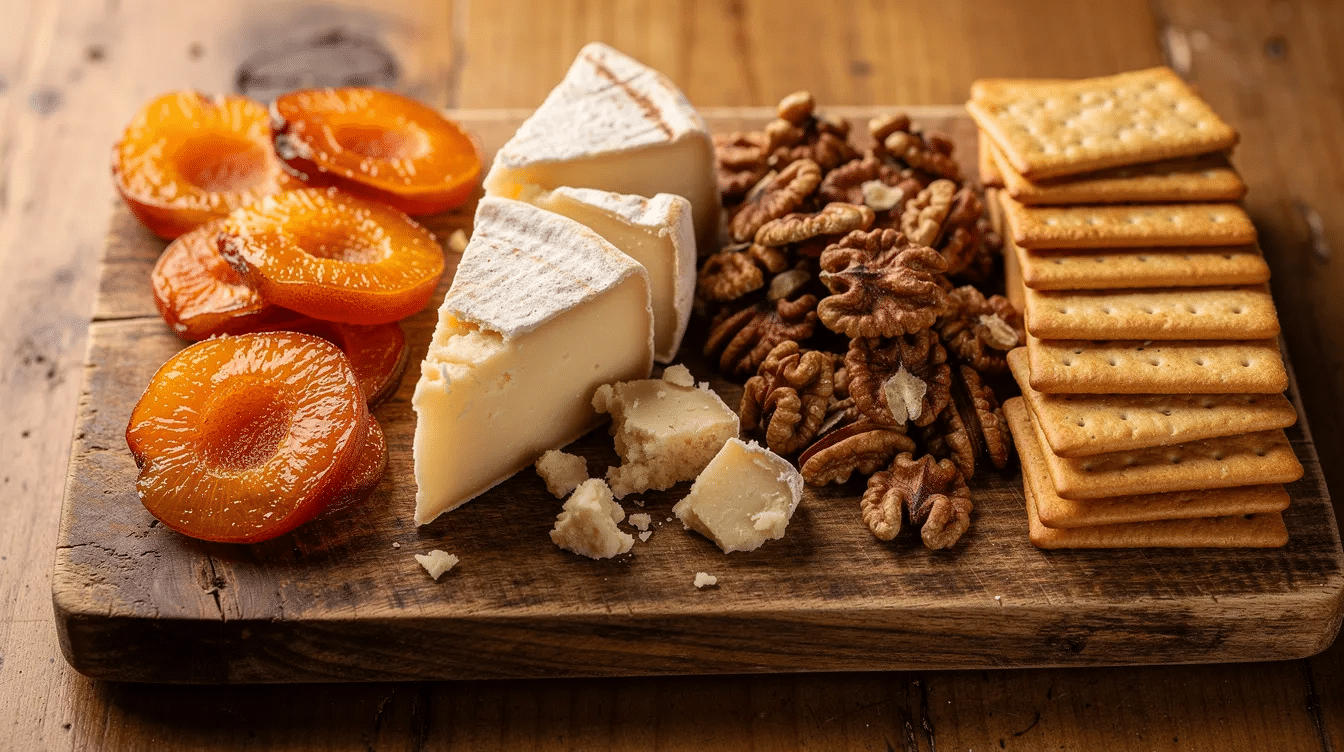
For decoration, press whole slices onto the sides of frosted layer cakes, use them as cupcake toppers, or place them as a garnish for various desserts like tarts and custards. They also pair well with cheese in a cheese board setting-try them next to aged cheddar or creamy goat cheese.
On the savory side, candied dried peaches can be used to make a glaze for meats like pork chops or roasted chicken. Chopped candied peaches can be used in salads with arugula and toasted walnuts, or stirred into a warm grain pilaf. You can also look to easy dried peach recipes for ideas that span breakfast dishes, desserts, and appetizers. Candied peaches can also be used in yogurt for desserts when you want something richer than fresh fruit. They’re a food that bridges the gap between snacking and serious cooking.
Nutritional Notes, Tips, and Variations
Peaches are naturally rich in vitamins and fiber, but the candying process significantly increases sugar content and calorie density. Dried fruit is more concentrated than fresh, so portion sizes should be smaller-think a small handful rather than a bowlful. If you’re looking for lighter ways to enjoy dried produce, explore healthy dehydrated fruit recipes that emphasize minimal added sugar. Candied dried peaches still offer dietary fiber and peach-derived micronutrients, but they’re best enjoyed as an occasional treat rather than a daily fruit serving.
To moderate the sugar impact, pair candied dried peaches with protein or fat. A few slices alongside nuts or stirred into yogurt slows sugar absorption. Use them sparingly as accents in cereal or baked goods, and balance them with unsweetened dried fruit in trail mixes. Unlike vegetables, which you can eat in volume, these are a treat-sized food.
For flavor variations, add warm spices like cinnamon, nutmeg, or star anise to the syrup for autumnal depth. Candied peaches can be infused into spirits like bourbon or rum-steep a handful in a jar for two to three weeks for a delicious cocktail ingredient. A portion of honey in the syrup lends a floral note, though it creates a slightly stickier finished product. Stirring a splash of bourbon into the syrup before dehydrating (cooking off the alcohol) adds gourmet complexity.
Always store your finished product away from moisture and heat, and discard any pieces that develop mold or off odors. Once you’ve mastered this recipe, experiment with the same technique on apples, pears, pineapple, strawberries, and even kiwi. You can also keep things simple with basic dehydrated peach slices when you want a less-sweet snack than fully candied fruit. If kiwi catches your eye, a focused tutorial on how to dehydrate kiwi will cover both dehydrator and oven methods. Dehydrated pineapple is another naturally sweet option, and a guide to drying pineapple at home can walk you through that process. When you’re ready to branch out, consider some of the best apples for dehydrating to make crisp, long-lasting snacks. A broader guide to what fruit you can dehydrate can help you decide which produce to try next. The world of homemade dehydrated fruit and candied snacks is wide open.
Frequently Asked Questions About Candied Dried Peaches
Here are answers to the questions that come up most often when people start making candied dried peaches at home.
Can I make candied dried peaches without a dehydrator? Yes. Set your oven to its lowest temperature (usually 150–170°F), arrange slices on parchment-lined baking sheets, and prop the door open slightly. Rotate trays every two hours for even drying. It takes longer and uses more energy, but it works.
How do I keep my dried peaches from being too sticky? Make sure slices are fully dried-pliable but not tacky-before you start conditioning. If they still feel sticky after conditioning, return them to the dehydrator at the right temperature for another hour or two. You can also dust them lightly in granulated sugar to cover the surface.
Can I reduce the sugar in the syrup? You can cut it by up to a quarter, but less sugar means a less effective candying process, softer texture, and shorter shelf life. The sugar is doing preservation work, not just adding sweetness.
What’s the difference between store-bought and homemade? Control. At home, you choose the sweetener, the slice thickness, and the flavor profile. Commercial versions from any brand often include preservatives or sulfites that some people prefer to avoid.
Can I use nectarines instead of peaches? Absolutely. The method is identical-skip the blanching peel step since nectarine skin is thinner and doesn’t need removal.
Do candied dried peaches need refrigeration? Not if they’re well dried and stored in airtight containers in a cool, dark place. Refrigeration or freezing simply extends quality further, which is helpful if you’ve made a large batch.
Your next box of ripe summer peaches is waiting to be transformed. Start with a small batch, pick one flavor variation, and adjust from there. Once you taste the first slice, you’ll wonder why you ever let peak-season peaches go to waste.
DannyContent Writer
Hey there, since 2016, my mission has been to provide you with the information and guides you need to make food dehydrating simple and fun. Whether you're a newbie or a seasoned pro, my site offers helpful guides, reviews, and recipes to enhance your dehydrating experience. I take pride in only recommending products I believe in, ensuring my readers' trust. As an affiliate of various programs, including Amazon Associates, your support helps me continue providing quality content. Thanks for stopping by, and happy dehydrating!