We earn a commission if you make a purchase, at no additional cost to you.
09/22/2026 04:39 pm GMT
🍊 Dehydrated Food Info Finder — Temperatures & Drying Times
Choose a category, then pick a food to see its drying temperature and time.
⚠️ Safety Disclaimer: Drying times are estimates and vary based on slice thickness, food moisture content, humidity, and your dehydrator model. Always check for doneness before storing — food should feel dry, leathery, or brittle with no moist spots. Improperly dried food can harbour mould and bacteria. For meat and poultry, follow USDA safe internal temperature guidelines: beef and pork to 160°F (71°C), poultry to 165°F (74°C). Use a food thermometer when in doubt. Store all dehydrated foods in airtight containers in a cool, dark place and discard anything showing moisture, mould, or off odours.
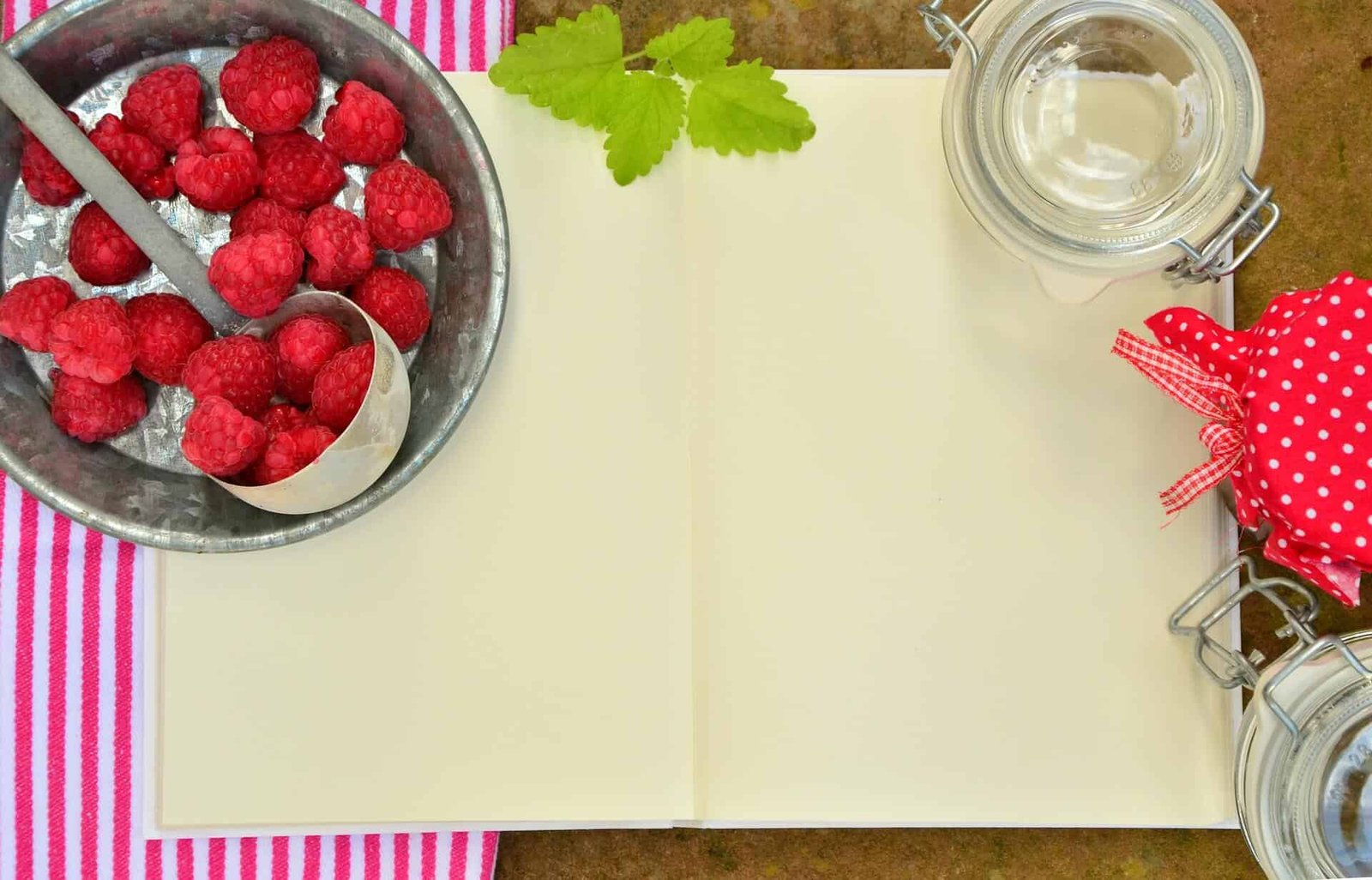
Fresh raspberries and a jar of water on a kitchen table, ready for dehydration.
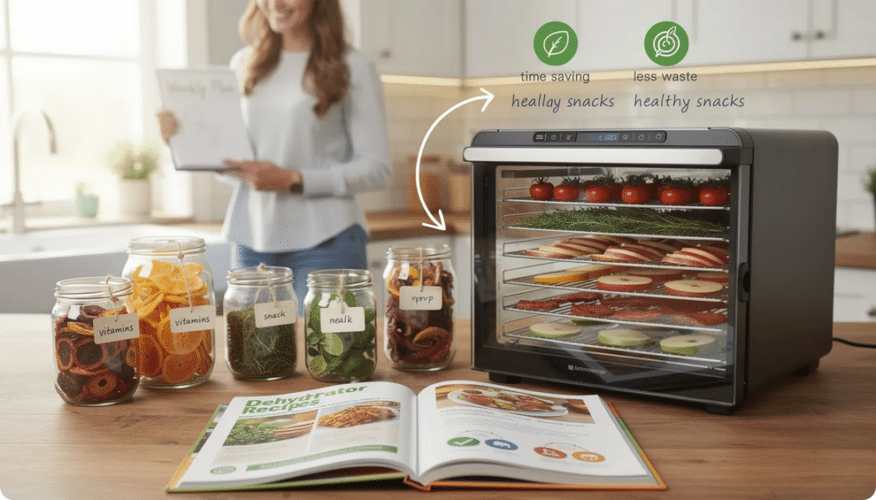
Are you looking to get the most out of your food dehydrator? Choosing the right dehydrator recipe book is essential for home cooks, beginners, and food preservation enthusiasts who want to maximize their dehydrator’s potential. This page is dedicated to reviewing and comparing the top dehydrator recipe books for home use, helping you find the perfect guide to suit your needs and culinary ambitions. With the right dehydrator recipe book, you’ll be able to confidently preserve seasonal produce, create healthy snacks, and explore a world of delicious, shelf-stable meals.
Selecting the best book matters because it provides you with reliable recipes, expert techniques, and essential tips for food safety and storage. Whether you’re just starting out or looking to expand your repertoire, the right resource will ensure your dehydrating efforts are successful, efficient, and enjoyable.
Dehydrating food is one of the oldest and most versatile methods of food preservation, with roots stretching back to ancient Egypt and the salty air-dried fish that sustained Viking ships on long voyages. Aboard Viking ships, dehydration was crucial for preserving food during extended sea journeys, ensuring sailors had reliable nutrition. Air-dried fish aboard was a traditional method used on these ships, showcasing the global and historical significance of air-dried seafood preservation.
How Dehydration Works
This time-honored technique works by removing moisture from food, which not only prevents spoilage but also locks in nutrients and flavor. The result? Dehydrated foods that are lightweight, compact, and perfect for everything from quick snacks to deliciously easy meals on the go. Additionally, dehydrated food takes up less space than canned food, making it an efficient option for storage.
Modern Uses
With a quality dehydrator and a reliable dehydrator cookbook, you can master the art of dehydrating food at home. Whether you’re interested in preserving seasonal fruits and vegetables, crafting your own jerky, or experimenting with dried herbs, the possibilities are nearly endless. Dehydrated foods are ideal for busy lifestyles, camping trips, or simply stocking your pantry with healthy, shelf-stable options. By learning the versatile methods of food dehydration, you’ll be able to enjoy the taste of fresh food all year round, while also reducing waste and saving money. Dehydrating food is also an easier form of preservation than canning, making it accessible to beginners and experts alike.
So, whether you’re inspired by the ingenuity of ancient civilizations or the convenience of modern kitchen gadgets, dehydrating food is a rewarding way to preserve and enjoy your favorite foods.
Transition: Now that you understand the basics and benefits of food dehydration, let’s explore how to choose the right dehydrator for your kitchen.
Choosing the Right Dehydrator
Selecting the right dehydrator is a crucial first step in your food preservation journey, especially if you want to create deliciously healthy recipes and make the most of seasonal crops.
Key Features to Consider
Adjustable temperature controls: Experiment with low temp settings for big flavors, which is essential when dehydrating a variety of foods like fruits, vegetables, and meats.
Capacity: If you plan to prepare protein-packed camping snacks, such as fruit leathers or mixed vegetable bread, or want to batch-make deliciously easy meals, a dehydrator with multiple trays or a large drying area will save you time and effort.
Airflow design: Consider whether a vertical or horizontal airflow model suits your kitchen space and needs; horizontal models often provide more even drying, which is great for recipes like double chocolate biscotti or salty dried almonds.
Material:Stainless steel dehydrators are durable and easy to clean, while high-quality plastic models can be lighter and more affordable.
Whichever you choose, make sure it’s built to last and simple to maintain. With the right dehydrator, you’ll be ready to preserve seasonal crops, whip up snacks like fruit leathers, and enjoy a world of homemade, healthy treats.
Transition: Once you have the right equipment, the next step is to find the best resources to guide your dehydrating journey.
Benefits of Dehydrator Cookbooks
A good dehydrator cookbook is your essential companion on the journey to mastering food dehydration. These cookbooks are packed with practical knowledge, offering easy-to-navigate guidance that takes the guesswork out of preserving food.
Why Use a Dehydrator Cookbook?
Step-by-step instructions: With detailed directions and troubleshooting tips, even beginners can confidently create a variety of delicious dehydrated dishes.
Wide range of recipes: Dehydrator cookbooks typically feature recipes for classic fruit leathers, mixed vegetable bread, protein-packed camping snacks, instant baby food, breads, crackers, cookies, and more.
Creative pairings: They show you how to pair delicious dehydrated foods in creative ways, turning simple ingredients into meals and snacks that are both nutritious and satisfying.
Whether you’re looking to preserve a bumper crop of vegetables, whip up a quick snack for the kids, or prepare a backup meal for busy days, a good dehydrator cookbook will walk you through every step.
What Sets Dehydrator Cookbooks Apart
Accessibility: Clear instructions, helpful tips, and a variety of recipes for fruits, vegetables, and more make food dehydration accessible and enjoyable.
Transition: To help you choose the right book, let’s compare the features and recipes found in the most popular dehydrator cookbooks.
Most Popular Recipes and Features in Dehydrator Recipe Books
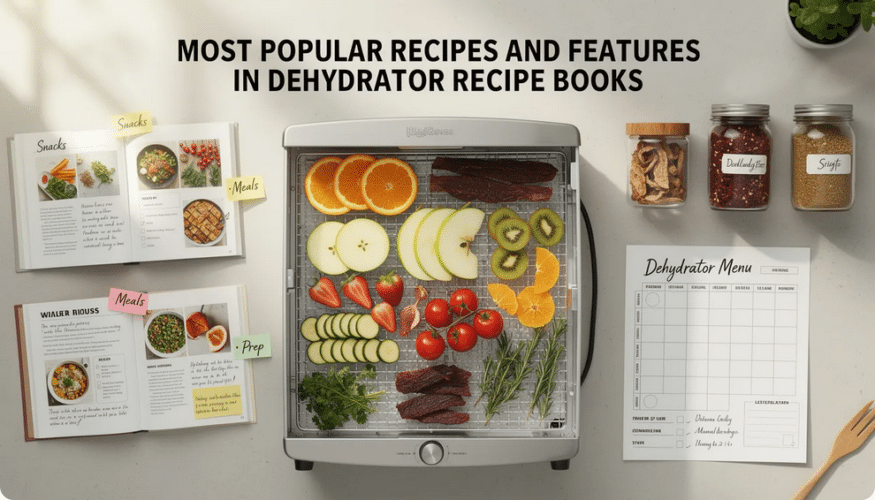
Top dehydrator recipe books are packed with a variety of recipes and features that appeal to home cooks and enthusiasts alike. Here’s a summary of the most popular recipes and features you’ll find:
Popular Recipes
Beef Jerky: Jerky can be made from beef, turkey, or fish marinated in soy sauce, spices, and liquid smoke.
Fruit Leathers: Made by pureeing fruits such as strawberries, mangoes, and bananas and spreading them on solid sheets.
Kale Chips
Dried Apple Rings
Sun-Dried Tomatoes
Granola
Just-add-water camping meals
Stews and Curries
Herbal Teas
Spice Blends
Key Features
Consistent preparation and proper storage guidance
Step-by-step instructions for dehydrating, storing, and rehydrating foods
Recipes for a wide variety of foods, including snacks, meals, and beverages
Tips for preserving seasonal crops and making portable camping snacks
For example, The Complete Dehydrator Cookbook includes 125 simple dehydrator recipes for various foods, with a variety of recipes for stews, curries, herbal teas, and spice blends. It also provides guidance on dehydrating, storing, and rehydrating a wide variety of foods.
Transition: Now that you know what to look for in a recipe book, let’s dive into how to compare dehydrator cookbooks to find the best fit for your kitchen.
How to Compare Dehydrator Cookbooks
When choosing the best dehydrator book, look for a book that offers these features:
Lots of recipes
A variety of options
Easy to follow instructions
Color images and illustrations
Detailed drying techniques
Recipes for spice blends
The best dehydrator cookbooks are essential resources for anyone interested in food preservation. The number of recipes is perhaps the most important feature. You may not like every dehydrated recipe that you try. When the book contains a lot of recipes, there is a greater chance that you will discover at least a few new favorite snacks.
A quality cookbook should also provide a variety of meal options. A good dehydrator cookbook takes you through the process of dehydrating various foods, offering guidance for everything from quick snacks to backup meals. Some of the best cookbooks include recipes for breakfast, lunch, dinner, dessert, and even spice blends. Look for books that feature camping snacks this dehydrator can make, such as portable, protein-packed foods ideal for camping trips and outdoor activities.
The recipes should also be well written. Most books contain excerpts or samples. Read one of the recipes and ensure that you can follow the instructions.
There are many books out there that are thrown together without any editing, which may result in recipes that you cannot complete. You may even find that some of the meals taste horrible due to unclear instructions.
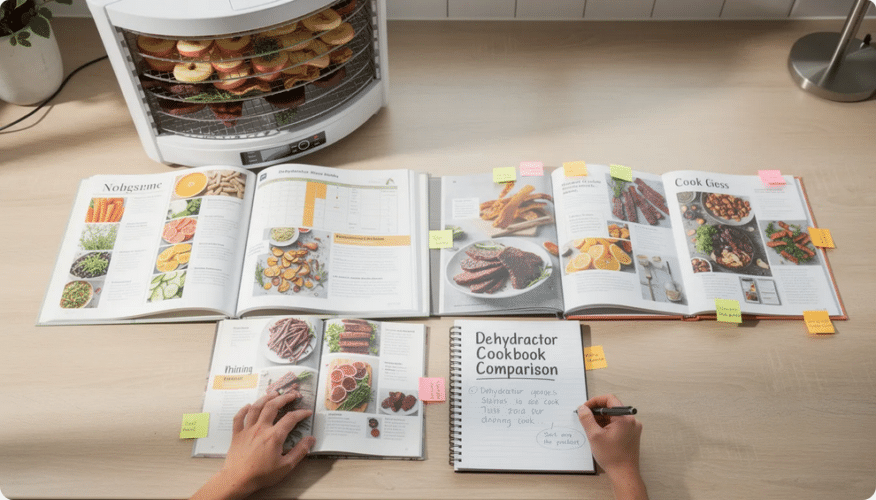
Besides easy to follow instructions, the recipes should include images or illustrations. While pictures are not always needed to follow a recipe, they do help make the content easier to browse. The pictures can also provide an example of what the completed meal should look like. A complete dehydrator cookbook includes a wide range of recipes, tips, and essential information to help you get the best results from your dehydrator.
Transition: Let’s take a closer look at some of the best-reviewed dehydrator cookbooks and what they offer.
What Is the Best Dehydrator Book with Recipes?
There are dozens of cookbooks with dehydrator recipes. However, some only contain a handful of recipes or lack simple instructions.
Two of the most popular dehydrator cookbooks include The Ultimate Dehydrator Cookbook and The Dehydrator Bible.
When looking at the number of positive reviews, The Ultimate Dehydrator Cookbook is the best dehydrator book. It offers the most variety of recipes, including many recipes for meals and desserts that use dehydrated ingredients such as ready to eat breads, portable dishes, and just add water meals. The book also features recipes focused on making protein packed camping snacks, with high-protein, portable foods ideal for outdoor activities.
It is the best-reviewed cookbook for dehydrating food and using the dehydrated foods to prepare meals. You get 18 chapters of recipes and tips. The book also includes an explanation of how the dehydration process works, including how to dehydrate fruit and the use of a time dehydrator for optimal results.
The Dehydrator Bible is also a quality choice. 150 of the 400 recipes are dedicated to dehydrating various foods, including dehydrated meals, fruits, meats, and herbs. It also includes 250 meal recipes that incorporate dehydrated foods and covers long term food storage techniques.
Keep in mind that these are just two of the best choices for dehydrator cookbooks. There are many other options, including cookbooks that are dedicated to dehydrated snacks.
No matter which book you choose, dehydrating provides a simple way to prepare a variety of foods. Dehydrated food tastes great and the foods that you prepare are easy to take with you, whether you need a snack for work or hiking.
Transition: Next, let’s review some standout dehydrator cookbooks and what makes them unique.
The Ultimate Dehydrator Cookbook: The Complete Guide To Drying Food
This book includes a plethora of recipes and a bunch of tips on selecting the right dehydrator for your needs. Written with easy-to-follow guidelines in regards to sanitation, storage, and rehydrating of the dry goods, this book has a wealth of value to it that anyone can use.
The book takes the time to break down each of the different fruits, vegetables, and other goods that can be dehydrated into exactly the steps for preparation as well as other key factors like temperatures and times. With over 400 recipes, this book is definitely a good investment for someone who is looking for a top-notch cookbook to use alongside their dehydrator.
Transition: If you’re looking for a comprehensive manual, the Complete Dehydrator Cookbook is another excellent choice.
Complete Dehydrator Cookbook: How to Dehydrate Fruit, Vegetables, Meat & More
This dehydrator cookbook is an all-in-one manual that can guide even the newest dehydrator through the process. Taking time to go through the whole process from dehydrating to storing to rehydrating, this book has 125 recipes that range from stews to herbal teas. The Complete Dehydrator Cookbook provides guidance on dehydrating, storing, and rehydrating a wide variety of foods, making it a valuable resource for both beginners and experienced users.
Starting with a detailed direction on all the essential equipment and even troubleshooting tips, this book guides you through 75 different types of food and gives you ways to use them in delicious recipes. On top of that, there is a specific section for low temp foods that are perfect for those that are following a plant-based, raw food diet. Recipes for dehydrated foods can include stews, curries, and herbal teas, offering a wide range of options to suit various tastes and dietary preferences.
Transition: For those just starting out, a beginner-focused dehydrator cookbook can be especially helpful.
Dehydrator Cookbook for Beginners: A Guide to Dehydrating Fruits, Vegetables, Meats, and More
Many people are starting to think about more sustainable ways of preserving food, which means that many people are investing in dehydrators. But it can be quite a daunting challenge at first if you’re unfamiliar with the process, so having a book that focuses on the simpler aspects of the process as a beginner could be vital.
In this dehydrator cookbook, the author goes over the basics of how dehydrating works and gives some great tips to help get started. Along with that, you’re offered a deep look at how to dehydrate a number of different foods and even some amazing recipes to craft those foods with.
Transition: If you want to expand your skills further, consider a guide that covers both traditional and specialty dehydrated foods.
The Beginner’s Guide to Dehydrating Food, 2nd Edition: How To Preserve All Your Favorite Vegetables, Fruits, Meats, and Herbs
In this beginner’s guide to dehydrating food, you will be granted access to 50 delicious recipes as well as a wealth of different ways to dehydrate a ton of different types of food. Not only does the writer focus on the traditional things like dehydrating fruit and vegetables to create things like mango slices and banana chips, but they also go into more specialty items.
This means that within the binding of this book, you’ll find sections on how to create meat jerky, fruit leather, and dried herbs and spice mixtures. This book has so much information that it is a great investment for just about any beginner looking to get started in dehydrating food.
Transition: For those interested in meal prep and convenience, soup mixes are a great use for your dehydrator.
Pantry Stuffers Soup Mixes: Using Dehydrated Products
One of the coolest things to do with the dehydrator is to dehydrate herbs and other food so that you can create your own soup mixes. This book takes out some of the guesswork by giving you a measured list of ingredients so that you can create the perfect soup mixes in a multitude of different serving sizes.
That means that no matter if you live alone or with a family of four, the soup mixes you dehydrate and create will be perfect for that household. These soup mixes can then be stored or used immediately so that there’s always a cup of warm comfort and love on your stove. Prepared dehydrated meals can also be stored in mylar bags for convenience, ensuring they remain fresh and ready to use whenever needed. Proper storage of dehydrated food includes using airtight containers and keeping them in a cool, dry, and dark place.
Transition: To make the most of your dehydrator cookbook, it’s helpful to know what expert guidance to look for.
Expert Guidance: What to Look for in a Dehydrator Cookbook
When it comes to choosing the right dehydrator cookbook, expert guidance makes all the difference. Look for books written by authors with a strong background in food preservation and food science—these experts know the ins and outs of dehydrating foods and can offer invaluable advice on everything from selecting the best produce to mastering rehydration techniques. Tammy Gangloff, for instance, is considered an expert and leading authority on food dehydration, and her insights can be particularly valuable for those looking to deepen their knowledge.
What Should a Complete Dehydrator Cookbook Offer?
A diverse collection of recipes, ranging from simple snacks to more complex, deliciously healthy recipes
In-depth information on preserving seasonal crops
Topics like food safety, equipment maintenance, and troubleshooting
Tips for enhancing smoothies and meals with dehydrated ingredients
Accessibility is key, so seek out a dehydrator cookbook that’s written in a friendly, approachable tone. Whether you’re a beginner or a seasoned pro, clear instructions and practical tips will help you get the most out of your dehydrator. With expert guidance at your fingertips, you’ll be able to confidently create a wide variety of dehydrated foods, from everyday snacks to gourmet meals, all while preserving the best of each season for yourself and your loved ones.
Transition: Once you’ve mastered the basics, you can explore advanced dehydrating techniques to expand your culinary repertoire.
Advanced Dehydrating Techniques
Pairing Dehydrated Foods with Fresh Ingredients
Once you’ve mastered the basics, it’s time to elevate your dehydrating game with advanced techniques that unlock even more flavor and versatility. One exciting approach is pairing delicious dehydrated foods with fresh ingredients—think adding sun-dried tomatoes to salads or blending dried fruit into yogurt for a burst of natural sweetness. These combinations create unique, deliciously healthy recipes that are sure to impress.
Experimenting with Spice Blends
Experimenting with spice blends is another way to add depth to your dehydrated dishes. Try seasoning your fruit leathers with cinnamon or chili powder, or create custom blends for dehydrated vegetables and meats. The possibilities are endless, and a little creativity goes a long way in transforming simple snacks into gourmet treats.
Dehydrating Beyond Fruits and Vegetables
Don’t be afraid to branch out beyond the usual fruits and veggies. Dehydrate tofu, meat, pasta, or rice to create convenient, ready-to-eat meals perfect for busy days or outdoor adventures. With a dehydrator that offers precise temperature control, you can fine-tune the drying process to achieve the perfect texture for every ingredient.
By exploring different drying techniques and experimenting with new foods, you’ll soon be crafting a wide array of delicious dehydrated foods—from snacks like fruit leathers and chips to hearty meals like stews and curries. The more you practice, the more confident you’ll become in creating your own signature dehydrated recipes.
Transition: Let’s discover some new and exciting recipes you can try with your dehydrator.
Discover New and Exciting Dehydrator Recipes
Imagine the thrill of opening up a new cookbook filled to the brim with dehydrator recipes; exciting flavors, and inventive techniques leap off the page, sparking your culinary inspiration. We’re here to dive into the treasures these dehydrator cookbooks have in store for you!
First off, the power of dehydration allows you to create foods with concentrated flavors that pop. Imagine savoring the sweetness of apple chips or the tangy kick of your very own homemade beef jerky. Jerky can be made from beef, turkey, or fish marinated in soy sauce, spices, and liquid smoke. That’s right, you’re not just restricted to fruits and vegetables. Meat, fish, and even dairy products can all be dehydrated. The Dehydrator Bible, often considered a home preserving bible, contains over 400 recipes that showcase this variety, ensuring you’ll never run out of ideas. Pairing delicious dehydrated foods—like fruit with cheese or jerky with nuts—can enhance flavors and make snack time more exciting.
Food dehydration, a technique as old as civilization itself, isn’t just about preserving food; it’s about creating flavorsome meals, snacks, and ingredients that satisfy your tastebuds and the nutritional needs of your body. In fact, how indigenous foods were traditionally preserved through sun drying and other methods has greatly influenced modern dehydration techniques and continues to shape culinary heritage today.
Now, take a second to picture yourself making leathery fruit rolls packed with tropical flavors. Fruit leathers are made by pureeing fruits such as strawberries, mangoes, and bananas and spreading them on solid sheets. Or how about crafting your non-GMO, all-natural granola bars? Glimpses of The Spicy Dehydrator Cookbook might be fluttering through your mind right now. This gem focuses on infusing spiciness into dehydrated food, transforming ordinary ingredients into culinary wonders.
Fiery pineapple rings that explode with heat and sweetness
Aromatic garlic and chili dehydrated tomatoes that pack a punch
Rich, smoky chipotle dehydrated mushrooms that offer a burst of umami flavor
Combine dehydration with other cooking techniques, and there you have a true revelation! The dehydrated components can add dimensions of flavor and texture not achievable by any other means. This approach is masterfully demonstrated in Preserve It Naturally, a comprehensive guide that covers dehydration and its integration with various culinary practices. For further inspiration and trusted advice, reputable sources like Mother Earth News frequently feature expert tips and articles on food preservation and sustainable living.
In conclusion, embarking on this dehydrating journey promises an adventure filled with exploratory flavors and revolutionary techniques. With the right dehydrator cookbook in your hands, your culinary universe is about to expand in ways you never thought possible!
Transition: To further support your dehydrating journey, let’s look at some additional resources and tips for choosing the right cookbook.
Dehydrator Cookbook Resources
If you’re eager to expand your dehydrating journey, there’s a wealth of resources available to help you master the art of food dehydration. The Complete Dehydrator Cookbook is a definitive guide to deliciously easy meals, offering everything from simple snacks like herbal teas and spice blends to more complex dishes such as mixed vegetable bread and hearty stews. This all-in-one guide is perfect for anyone looking to explore the full potential of their dehydrator.
For those seeking even more inspiration, the Ultimate Dehydrator Cookbook includes a vast array of recipes and expert tips, making it a go-to resource for both beginners and seasoned dehydrators. You’ll find ideas for portable dishes, backup meals, and even historical recipes like dried fish aboard Viking ships—showcasing just how versatile food dehydration can be.
Online communities and blogs are also fantastic places to connect with fellow enthusiasts, share tips, and discover new techniques. Publications like Mother Earth News regularly feature articles on food preservation, including dehydrating, and can introduce you to innovative recipes and troubleshooting advice.
Whether you’re interested in making snacks like fruit leathers, experimenting with mixed vegetable bread, or learning about the history of food preservation, these resources will guide you every step of the way. Dive into the world of dehydrator cookbooks and discover the definitive guide to deliciously healthy recipes, creative portable dishes, and the timeless art of food dehydration.
Transition: Now, let’s review some top tips for choosing the right dehydrator cookbook for your needs.
Top Tips for Choosing the Right Dehydrator Cookbook
Congratulations, you’re on your way to dehydrator-mastery! Now, how do you choose the perfect guide from the exceptional collection of 2023’s most acclaimed dehydrator cookbooks? Unravel the mystery with these expert tips.
Analyze Your Culinary Preferences:
What kind of food excites you the most?
Are you a fan of dehydrated fruits or does your heart skip a beat for brittle snacks?
Choose a cookbook that specializes in your preferred type of food. Some books offer comprehensive guides, while others focus on a specific category such as dehydrating meats or baking with dehydrated ingredients.
Check the Recipe Complexity:
If you’re a beginner, a book with complex recipes could well be a recipe for disaster.
Look for one that suits your skill level, offers step-by-step instructions, and utilizes easy-to-find ingredients.
Illustrations and Visual Aids:
Cookbooks with vivid photos, diagrams, or infographics can be particularly helpful, especially when you’re attempting a new technique or recipe for the first time.
Reviews and Recommendations:
Look for customer reviews and expert recommendations.
Some readers mention that they struggled with or returned two prior attempts before finally finding a comprehensive and helpful guide with clear instructions and scientific explanations.
A high-rated cookbook with positive feedback might just be the guide you need on your dehydrating journey.
Consider the Author’s Expertise:
Choose books written by professional chefs, experienced home cooks, or Certified Master Food Preservers.
For example, Carole previously developed a Food Preservation Expo and has a background in food science and nutrition, highlighting her extensive experience in food preservation.
Events like a Food Preservation Expo are excellent opportunities to see preservation techniques showcased by experts in the field.
These individuals bring a wealth of knowledge, including essential safety measures and best practices, ensuring your dehydrating journey stays trouble-free!
Now, armed with these tips, are you ready to dive into the exciting realm of dehydration cooking? Remember: the perfect cookbook for you exists—it just awaits your discovery!
Transition: Let’s wrap up with some final thoughts on finding your perfect dehydrator cookbook.
Conclusion: Finding Your Perfect Dehydrator Cookbook
And there you have it! You’ve navigated the sea of endless choices and now find yourself at the shore of decision. It’s time to pick out the dehydrator cookbook that will elevate your culinary skills to the next level! But remember, the best dehydrator cookbook is the one that matches your personal cooking style and nutritional needs. Are you into creating snappy snacks and quick bites, or do you prefer crafting a gourmet meal with dehydrated ingredients? The choice is yours!
Think about the recipes you want to try. Do you have a hankering for some tangy dehydrated fruit or do you want to take your jerky-making game up a notch? Maybe you are enthusiastic about raw foods and want a cookbook that can guide you on how to incorporate dehydrated foods into a raw diet. Your choices are as varied as your palette, and that’s what makes this exciting!
Take a moment to consider recipe complexity. You don’t want to dive into a cookbook that’s way out of your culinary reach or over-simplistic for your refined skills, do you? Choose a cookbook that provides a touch of challenge while still being within your comfort zone.
Lastly, consider the educational value of the cookbook. A good cookbook does more than just providing recipes – it educates you about the intricacies of the ingredients, the science of dehydration, and tips to get the best texture and taste. Does the book provide insight on how to best use your dehydrator? Does it guide you on how to store dehydrated food for maximum shelf-life? Dehydrated ingredients can also reduce meal prep time by being pre-packaged in jars or bags, making them a practical choice for busy individuals. Truly, there is more to a dehydrator cookbook than meets the eye.
Therefore, making an informed decision is key. Look closely, think carefully, and most importantly, listen to your gut (quite literally!). Your perfect dehydrator cookbook is waiting for you to discover it. Happy cooking!
In the end, the path to the perfect dehydrator cookbook is lit by your preferences and seasoned by your desires. So grab that apron, fire up your dehydrator, and get ready to embark on a fantastic culinary journey that will unleash the hidden chef within you!
Check out our eBooks page where you can find some of the best eBooks to download.
DannyContent Writer
Hey there, since 2016, my mission has been to provide you with the information and guides you need to make food dehydrating simple and fun. Whether you're a newbie or a seasoned pro, my site offers helpful guides, reviews, and recipes to enhance your dehydrating experience. I take pride in only recommending products I believe in, ensuring my readers' trust. As an affiliate of various programs, including Amazon Associates, your support helps me continue providing quality content. Thanks for stopping by, and happy dehydrating!