We earn a commission if you make a purchase, at no additional cost to you.
09/22/2026 04:39 pm GMT
🍊 Dehydrated Food Info Finder — Temperatures & Drying Times
Choose a category, then pick a food to see its drying temperature and time.
⚠️ Safety Disclaimer: Drying times are estimates and vary based on slice thickness, food moisture content, humidity, and your dehydrator model. Always check for doneness before storing — food should feel dry, leathery, or brittle with no moist spots. Improperly dried food can harbour mould and bacteria. For meat and poultry, follow USDA safe internal temperature guidelines: beef and pork to 160°F (71°C), poultry to 165°F (74°C). Use a food thermometer when in doubt. Store all dehydrated foods in airtight containers in a cool, dark place and discard anything showing moisture, mould, or off odours.
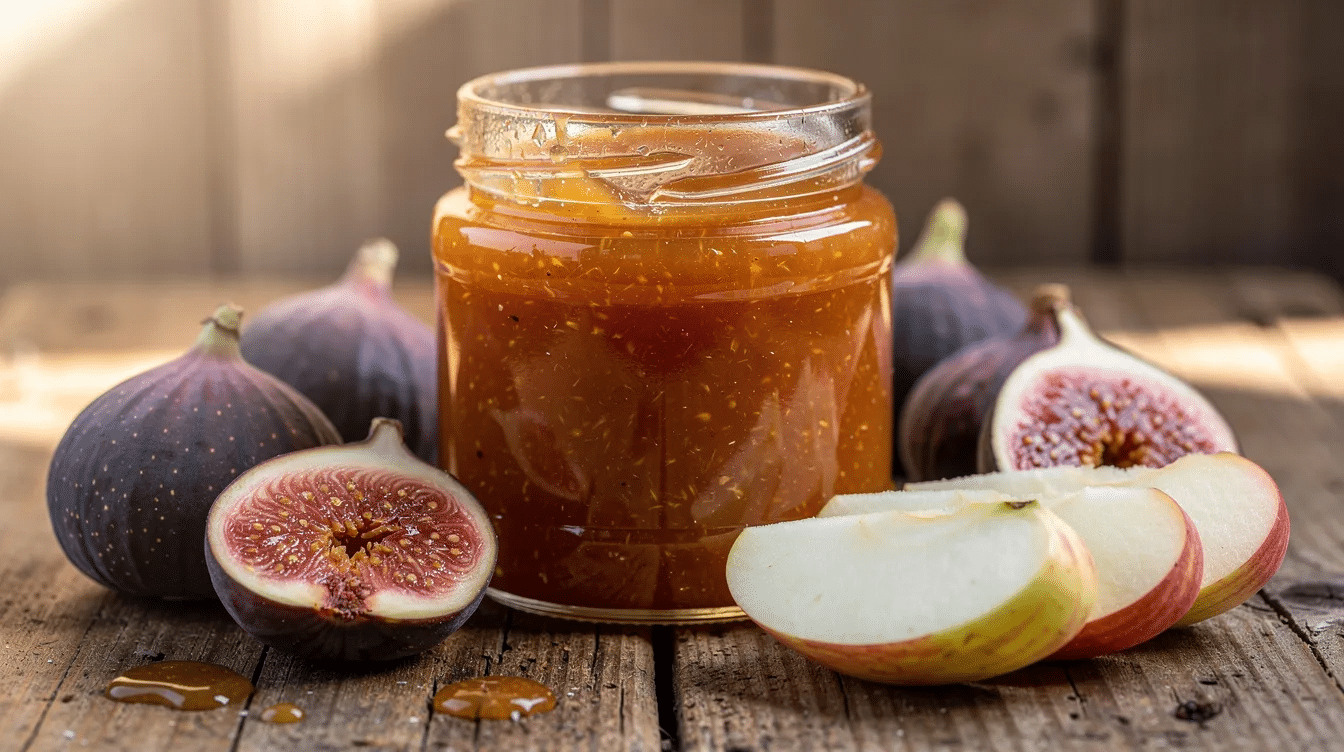
Apple fig jam blends fresh figs with apples for a rich, naturally thick jam that’s perfect for toast, cheese boards, and baking projects.
Apples like Honeycrisp or Granny Smith add natural pectin, allowing the jam to set well without commercial pectin additives.
The recipe works with both fresh and frozen figs and can be stored in the refrigerator for several weeks or canned for up to 1 year.
You can customize the jam with spices such as cinnamon, cardamom, and vanilla for a cozy fall flavor, or keep it simple for everyday use.
Using a thermometer and proper jar sterilization makes the process safer and more reliable, especially for beginners.
Step
Description
Prepare the Fruit
Wash figs thoroughly, remove stems, chop into 1/4 to 1/2 inch pieces. Peel, core, and dice apples into similar-sized cubes for even cooking.
Macerate (Optional)
Combine chopped fruit, sugar, and lemon juice in a large nonreactive pot or bowl. Let sit 1–2 hours at room temperature to draw out juices and dissolve sugar, preventing crystallization.
Initial Cooking
Place pot over medium heat. Add apple juice or water and optional spices like cinnamon or ginger. Stir until sugar dissolves and mixture simmers. Skim foam from surface to clarify jam.
Simmer to Jammy Texture
Maintain gentle boil for 25–35 minutes, stirring occasionally to prevent scorching. Lightly mash figs and some apple pieces with a potato masher to achieve a thick, spreadable texture with some chunks.
Adjust Consistency
If too dry before tender, add water by tablespoon. If too liquid near end, increase heat to evaporate moisture. Jam thickens more as it cools.
Finish and Jar
When jam reaches set point, remove from heat. Stir in vanilla extract if using. Ladle hot jam into sterilized jars, leaving 1/4 inch headspace. Seal and cool.
Introduction to Apple Fig Jam
Late summer figs and early fall apples make a perfect pair. When combined in a pot with sugar and a bit of lemon juice, they transform into a jammy, deeply flavored preserve that captures the transition between seasons. This apple fig jam is the kind of recipe that fills your kitchen with sweet, caramelized aromas and leaves you with jars you’ll want to give away as gifts—or keep entirely for yourself.
The pairing works beautifully because figs bring their inherent sweetness, tiny edible seeds for subtle texture, and rich caramel-like flavors when cooked. Apples contribute brightness, structure, and most importantly, natural pectin from their skins and cores. This means your jam will set properly without needing commercial pectin.
This recipe draws inspiration from classic European-style preserves but has been simplified for modern home cooks. Whether you’re making jam for the first time or you’ve been preserving fruit for years, the directions are clear and adaptable.
Serve this jam spooned over creamy yogurt at breakfast, layered in oat crumb bars, spread on a crusty baguette with soft Brie, or alongside a cheese board with crackers and apple slices. The sections below provide step-by-step instructions plus options for canning or simply storing in your refrigerator.
Ingredients for Apple Fig Jam
This recipe makes about 4–5 half-pint (8 oz / 240 ml) jars, which is ideal for gifting or stocking your pantry through the cooler months.
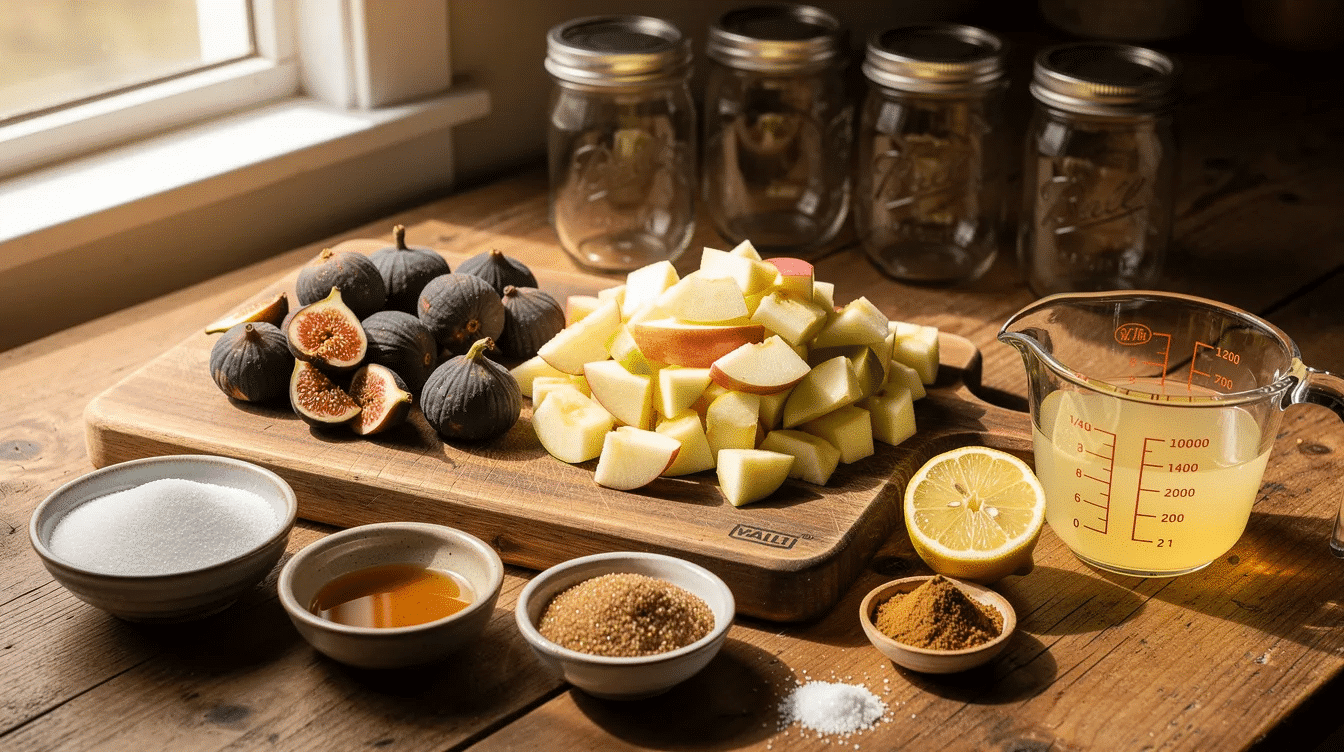
What you’ll need: 1 lb (450 g) fresh ripe figs with stems removed and chopped; 1 lb (450 g) apples such as Honeycrisp apple or Granny Smith, peeled, cored, and diced; 2 cups (400 g) granulated sugar (adjust slightly to taste); 1/4 cup (60 ml) fresh lemon juice from about 1 large lemon; 1/2 cup (120 ml) apple juice or water. Optional flavorings include 1 tsp ground cinnamon, 1/2 tsp ground ginger, 1 tsp vanilla extract, and a pinch of salt.
Choosing your figs: Look for soft, ripe fruit with no mold or off smells. Fresh figs from fig trees in your area are ideal. Varieties like Black Mission or Brown Turkey deliver deep flavor and rich color. If you can’t find fresh figs, frozen ones work well too—just thaw before using, or preserve a larger harvest by dehydrating fresh figs in a food dehydrator.
Choosing your apples: A Honeycrisp apple or Pink Lady provides a balanced sweet-tart profile with about 12-15% natural sugars. Granny Smith apples have higher pectin content and create a more tangy, firmer-textured jam. Either works beautifully depending on what you prefer.
Sugar substitutions: Brown sugar or honey can replace part of the white sugar for a deeper, caramel-like flavor. Keep in mind that this will darken the finished jam and may slightly alter the texture.
Step-by-Step: How to Make Apple Fig Jam
This method is broken into clear stages so you can follow along without confusion. Read through once before you begin, then cook with confidence.
Prepare the Fruit
Wash your figs thoroughly under cool water. Remove the stems and chop into small pieces, roughly 1/4 to 1/2 inch. For the apples, peel, core, and dice into similar-sized cubes. Uniform pieces ensure even cooking and help the fruit break down at the same rate.
Macerate (Optional but Recommended)
Combine the chopped fruit, sugar, and lemon juice in a large nonreactive pot or bowl. Let the mixture sit for 1–2 hours at room temperature. This step draws out natural juices through osmosis and begins dissolving the sugar, which prevents crystallization later. You’ll notice a syrupy liquid forming at the bottom—that’s exactly what you want, and any leftover figs can be turned into dehydrated figs in the air fryer for snacking.
Initial Cooking
Place your pot over medium heat. Add the apple juice or water and any optional spices like cinnamon or ginger. Stir until the sugar is fully dissolved and the mixture begins to simmer. Skim any foam that rises to the surface—this is normal and removing it helps clarify your jam.
Simmer to Jammy Texture
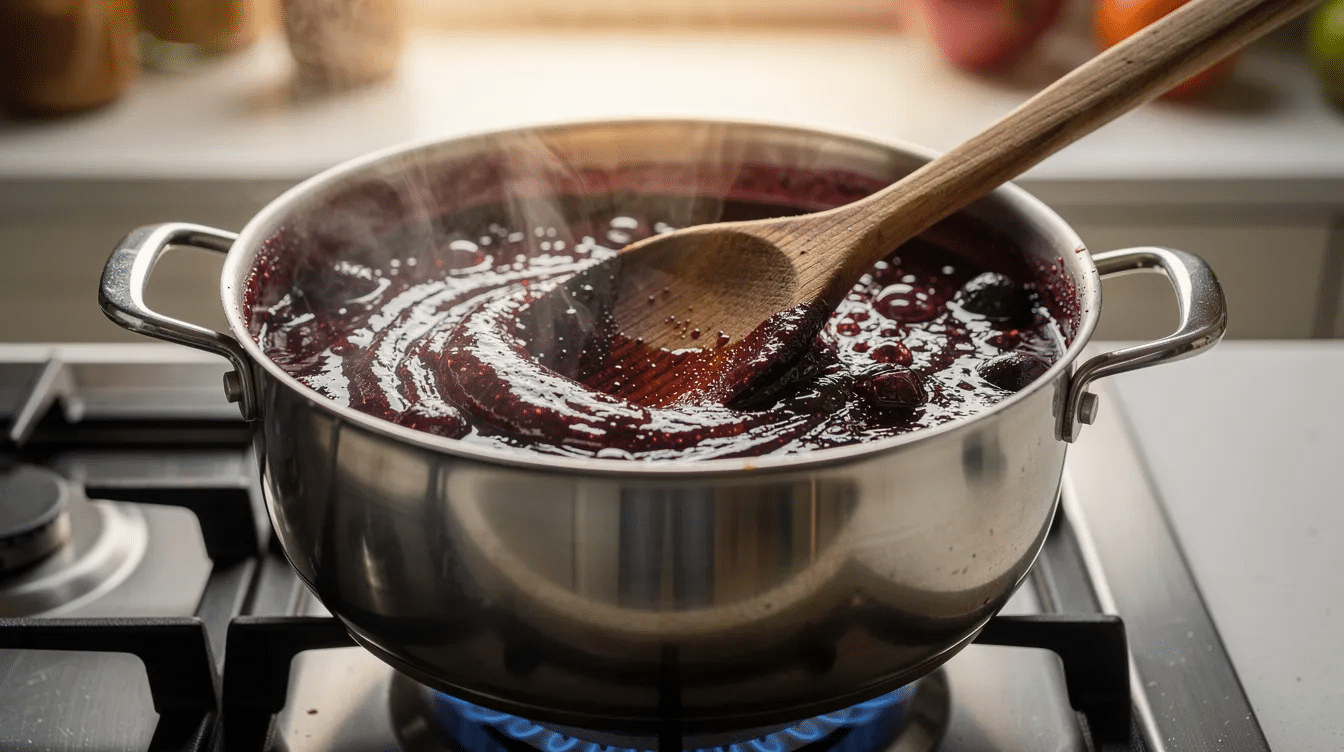
Maintain a gentle boil for about 25–35 minutes, stirring occasionally to prevent scorching on the bottom. As the fruit softens, use a potato masher to lightly mash the figs and some apple pieces. You want a thick, spreadable texture while still retaining some pleasant chunks.
Adjust Consistency
If the mixture looks too dry before the fruit is tender, add a tablespoon or two of water. If it remains very liquid near the end of cooking, increase heat slightly to evaporate excess moisture. The jam will thicken further as it cools.
Finish and Jar
Once the jam reaches the proper set (see next section), remove from heat. Stir in vanilla extract if using. Immediately ladle the hot jam into sterilized jars, leaving about 1/4 inch headspace at the top.
How to Know When Your Jam Has Set
Apples contribute significant pectin to this recipe, but you still need to verify that the jam has reached its gel point before removing it from heat.
Thermometer Method
The most reliable approach uses a candy or instant-read thermometer. At sea level, jam typically sets around 220°F (104°C), which is about 8°F above water’s boiling point. Cook until your thermometer reads this temperature, adjusting for your local conditions.
Cold Plate Test
Place a small plate in the freezer before you start cooking. When the jam looks thick, drop a teaspoon onto the cold plate and wait 30 seconds. Push the edge with your fingertip—if it wrinkles and holds its shape, the jam is set. If it runs, continue cooking and test again in a few minutes.
Spoon Test
Dip a chilled spoon into the hot jam and lift it above the pot. If the jam falls off in thick, slow sheets rather than quick drips, it’s likely ready.
Altitude Considerations
Water boils at lower temperatures at higher elevations, so your target temperature will differ. At 5,000 feet, for example, expect a set point around 206–215°F. Adjust accordingly based on where you live.
Don’t worry if your jam is slightly softer than expected—it still makes a delicious sauce. Overcooked jam will be thicker and darker but remains perfectly usable for baking or spreading.
Storing, Canning, and Food Safety
This section separates simple refrigerator storage from full water-bath canning for shelf-stable jars. Choose the method that fits your needs.
Refrigerator Storage
Ladle hot jam into clean glass jars, leaving about 1/4 inch headspace. Let cool to room temperature on a rack, then cover and store in the refrigerator for up to 3–4 weeks. Once opened, use within about 2 weeks for best quality; for longer keeping of dried ingredients, you can use dehydrated food stored in Mason jars.
Freezing Option
Cool your jam completely, then transfer to freezer-safe containers. Leave extra headspace since the mixture will expand when frozen. Frozen jam keeps for about 6 months and thaws well, though texture may soften slightly. If you also enjoy dried fruit, proper storage of dehydrated figs for freshness lets you keep them on hand alongside your frozen jam.
Water-Bath Canning
For long-term shelf storage, you’ll need a deep pot, canning rack, jar lifter, and new lids. This process creates commercially sterile jars safe for pantry storage.
Canning steps: First, preheat oven to 250°F to keep empty jars warm, or simmer them in water. Fill hot jars with hot jam, leaving 1/4 inch headspace. Wipe rims clean with a damp cloth. Apply lids and screw bands fingertip tight—not too firm. Process in boiling water for 10–15 minutes depending on jar size and altitude. Remove jars and let them rest on a rack for 12–24 hours. Check seals by pressing the center of each lid; it should not flex.
Food safety note: Discard any jar with mold, off smells, leakage, or an unsealed lid. Never attempt to reprocess spoiled jam.
Properly processed and stored jars can last up to 1 year in a cool, dark pantry. For the best taste, use within 6–8 months.
Flavor Variations and Serving Ideas
Apple fig jam is a versatile base that pairs well with spices, citrus, and savory elements. Mix and match these ideas to create your perfect version.
Warm Spice Variations
Add 1 tsp ground cinnamon and a pinch of nutmeg or cardamom during cooking for a cozy autumn version. This spiced jam makes an excellent holiday gift in November and December. The spices enhance the natural sweetness without overpowering the fruit.
Citrus Twists
Stir in finely grated orange zest at the end of cooking for a brighter, slightly bitter note that balances the jam’s sweetness. Lemon zest works too if you prefer to keep the flavor profile closer to the original, and you can garnish plates with perfectly dehydrated citrus slices for an elegant touch.
Vanilla and Honey
Swap part of the sugar for honey and finish with vanilla extract or vanilla bean paste. This creates a dessert-like jam that’s ideal for oat crumb bars, thumbprint cookies, or layering in cakes.
Cheese Pairings
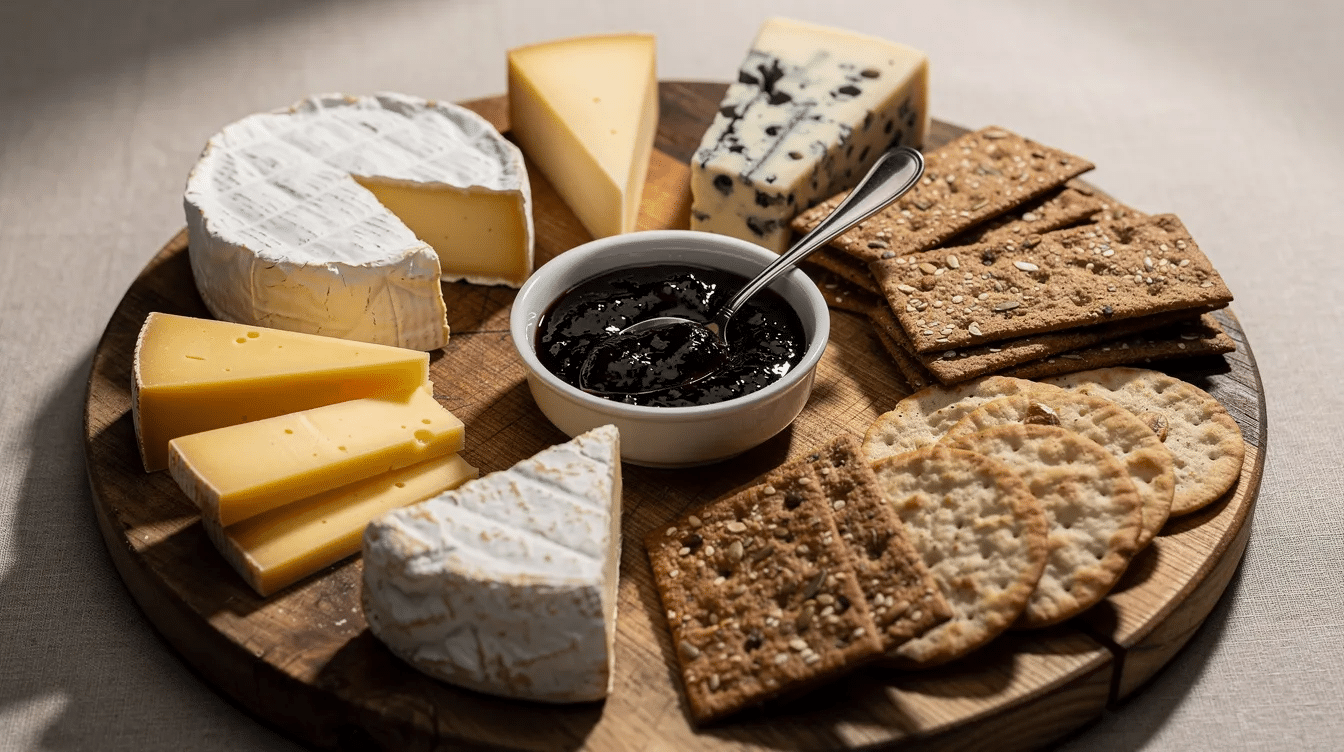
This jam shines on a cheese board alongside creamy Brie, tangy goat cheese, sharp Cheddar, or nutty Manchego, and it pairs beautifully with many sweet and savory dried fig recipes. For a quick appetizer, spread a dollop of jam on crostini and top with thin apple slices and soft cheese. Serve with crackers for a crunchy contrast.
Baking and Breakfast Uses
Layer the jam between oat crumble dough for tasty bars. Swirl into plain yogurt or oatmeal for a sweet breakfast upgrade. Use as a cake filling, or spread inside grilled cheese with thin apple slices for a delicious sweet-savory sandwich. It’s also excellent on simple toast with butter.
Keep the base recipe the same but adjust spices to suit the season—lighter and citrusy in late summer when fresh figs are at their peak, deeper and spiced in early fall as the weather cools.
FAQ
This section answers common questions about making jam that go beyond the main recipe and storage guidance.
Can I make apple fig jam with dried figs instead of fresh?
Yes, dried figs work well but require preparation. Chop them and soak in hot water or apple juice for 20–30 minutes to rehydrate before cooking. Dried figs create a thicker, more concentrated jam with an intensified caramel-like flavor. You may need to add extra liquid and simmer a bit longer, especially if you started with figs dried following a full guide on how long to dehydrate figs. This version pairs especially well with cheese as an appetizer or condiment cuisine addition.
Do I need to peel the figs for this jam?
No peeling required. Fig skins are thin and soften completely during cooking, adding color and subtle texture. Simply trim the stems and cut away any bruised or moldy spots before chopping. The skins mostly disappear into the jam, leaving only the tiny seeds that give fig jam its characteristic pleasant crunch.
Can I reduce the sugar in the recipe?
Sugar serves two purposes: it helps the jam set and acts as a preservative by lowering water activity. Significant reductions will shorten shelf life and may affect texture. Modest reductions of about 20–25% are safe if you plan to eat the jam quickly and store it only in the refrigerator. Expect a softer, more spoonable consistency. For canning, stick closer to the original amounts.
Why is my apple fig jam grainy or crystallized?
Graininess typically results from undissolved sugar or syrup that over-concentrates at the pot’s edges. To prevent this, dissolve sugar completely over low to medium heat before bringing the mixture to a full boil. Stir frequently, especially around the sides and bottom. Adding a tablespoon of corn syrup or an extra squeeze of lemon juice can help prevent crystallization in future batches, just as proper techniques do when dehydrating limes with simple steps.
How do I fix jam that turned out too thick?
Overcooked jam can be salvaged by gently reheating with a small amount of water or apple juice—start with 1–2 tablespoons per cup of jam. Heat slowly, stir constantly, and stop once it reaches your preferred consistency. Let it cool and refrigerate rather than re-canning. Very thick jam also works wonderfully as a filling for cookies, bars, or pastries where a firmer texture is an advantage rather than a problem.
DannyContent Writer
Hey there, since 2016, my mission has been to provide you with the information and guides you need to make food dehydrating simple and fun. Whether you're a newbie or a seasoned pro, my site offers helpful guides, reviews, and recipes to enhance your dehydrating experience. I take pride in only recommending products I believe in, ensuring my readers' trust. As an affiliate of various programs, including Amazon Associates, your support helps me continue providing quality content. Thanks for stopping by, and happy dehydrating!