We earn a commission if you make a purchase, at no additional cost to you.
09/22/2026 04:39 pm GMT
🍊 Dehydrated Food Info Finder — Temperatures & Drying Times
Choose a category, then pick a food to see its drying temperature and time.
⚠️ Safety Disclaimer: Drying times are estimates and vary based on slice thickness, food moisture content, humidity, and your dehydrator model. Always check for doneness before storing — food should feel dry, leathery, or brittle with no moist spots. Improperly dried food can harbour mould and bacteria. For meat and poultry, follow USDA safe internal temperature guidelines: beef and pork to 160°F (71°C), poultry to 165°F (74°C). Use a food thermometer when in doubt. Store all dehydrated foods in airtight containers in a cool, dark place and discard anything showing moisture, mould, or off odours.
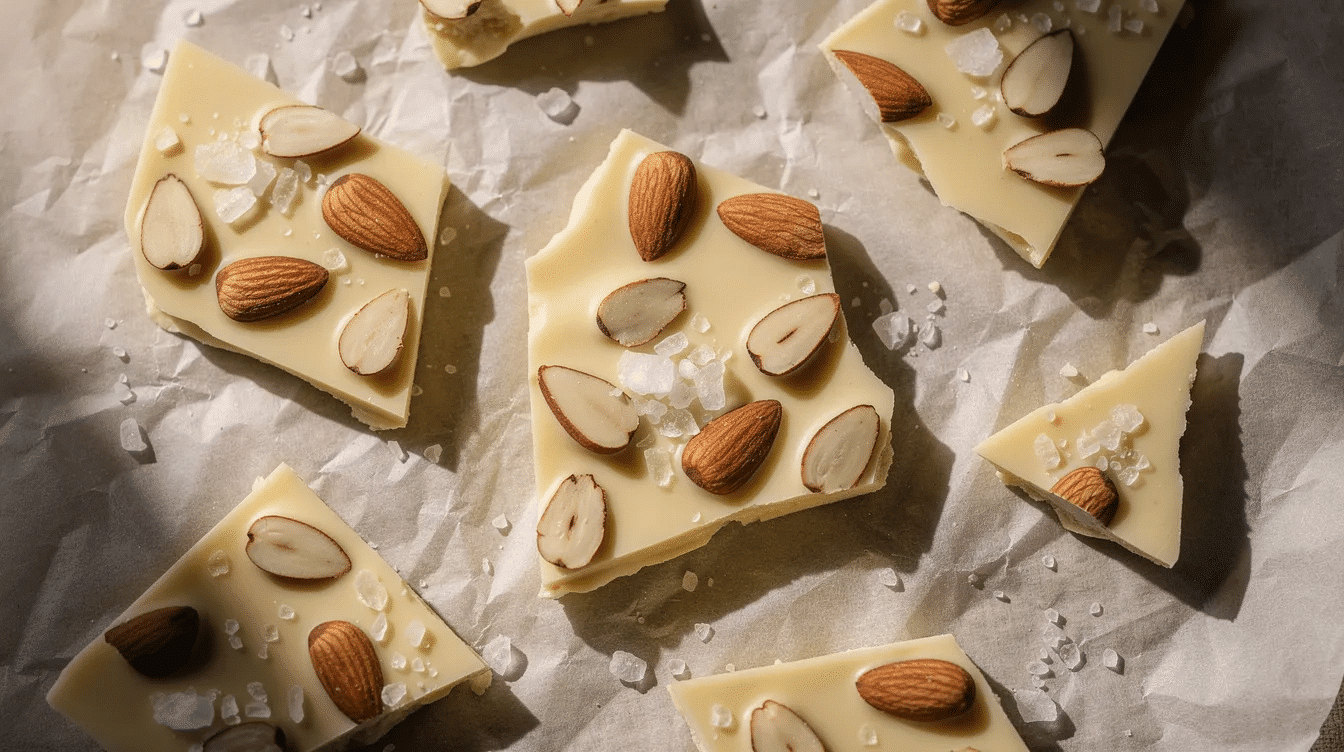
This white chocolate bark with almonds requires just 5 minutes of active prep time, sets in under an hour, and yields roughly 20–24 pieces from a standard baking sheet.
The core flavor profile combines creamy white chocolate with deeply toasted almonds, enhanced by a touch of sea salt and vanilla or almond extract for more complex taste.
The recipe works with either real white chocolate (containing cocoa butter) or white almond bark (made with vegetable fats)—real chocolate offers richer flavor while almond bark melts more easily.
Perfect for christmas cookies trays and edible gifts during christmas time, but super easy enough for year-round snacking.
You’ll find flavor variations including dried cranberries, candy cane pieces, and mixed nuts, plus storage tips and make-ahead guidance for busy holiday schedules.
Introduction: Why White Chocolate Bark with Almonds Belongs in Your Holiday Rotation
White chocolate almond bark is one of those recipes that looks far more impressive than the effort required to make it. Picture a glossy slab of smooth, ivory chocolate studded with crunchy roasted almonds, broken into rustic pieces and piled onto a holiday cookie platter. It’s the kind of treat that makes people ask for the recipe.
Late November through December is peak bark season, when this easy recipe pairs naturally with classics like gingerbread, peppermint bark, and toffee. The contrast between the sweet, milky chocolate and the deeply caramelized nuts creates a bakery-quality taste with minimal hands-on work.
Because this is a no-bake recipe relying on microwave or double boiler melting, it’s accessible to beginner cooks and terrific for making with kids. In this guide, you’ll learn the base recipe, how to properly toast almonds, creative variations, storage methods, gifting ideas, and troubleshooting tips.
Equipment needed: Large baking sheet or sheet pan, parchment paper or waxed paper, microwave safe bowl or glass bowl with saucepan, spatula
Ingredients for White Chocolate Bark with Almonds
Main ingredients:
12–16 oz white chocolate chips or chopped white chocolate bars
1 cup raw almonds (or pre-roasted almonds)
1 teaspoon unsalted butter or vegetable oil
1/2 teaspoon vanilla extract (or almond extract)
1/4 teaspoon flaky sea salt
Understanding your chocolate options: Real white chocolate contains cocoa butter and offers a richer, more nuanced dairy flavor. White almond bark uses vegetable fats instead—it’s sweeter and more neutral but melts more easily without temperamental behavior. Either works; choose based on preference and availability.
High-quality white chocolate from brands like Ghirardelli, Guittard, or Valrhona improves flavor noticeably, but standard baking chips produce perfectly delicious results.
How to Toast Almonds for Maximum Flavor
Toasting transforms plain raw almonds into something far more flavorful. The Maillard reaction develops deep, nutty notes while adding satisfying crunch that holds up against the smooth chocolate.
Oven method (recommended):
Preheat oven to 350–375°F (175–190°C)
Spread whole almonds in a single layer on a parchment-lined cookie sheet
Toast for 10–15 minutes, stirring once halfway through
Watch for dark roasted almonds that are deep golden brown with a fragrant, nutty aroma
Stovetop alternative: Toast almonds in a dry skillet over medium heat, stirring constantly for 5–8 minutes until golden. This requires more attention but avoids heating the oven.
Let toasted almonds cool completely before adding to melted chocolate. Hot nuts can cause the mixture to seize or develop a grainy texture.
Step-By-Step: Making White Chocolate Bark with Almonds
This straightforward method requires just a few basic steps with no baking involved after toasting your nuts.
Prepare your pan: Line a rimmed baking sheet with parchment paper or a silicone mat. This ensures the bark releases cleanly once set.
Melt the chocolate: Place white chocolate chips in a microwave safe bowl. Add butter for a smoother consistency. Microwave in 20–30 second intervals, stirring between each burst. Stop when chocolate is almost completely melted—residual heat will finish the job. This prevents overheating, which causes chocolate to burn or seize.
White chocolate is thermally sensitive and burns easily. Consider reducing microwave power to 50–70% for better control.
For stovetop melting, use a double boiler setup: place a heatproof glass bowl over simmering water, ensuring the bowl doesn’t touch the water. Stir constantly until fully melted.
Combine and spread: Once chocolate is smooth, stir in vanilla extract and a pinch of salt. Fold in most of your toasted almonds, reserving some for topping. Pour the mixture onto your prepared sheet pan and spread to about 1/4 inch thickness using a spatula.
Add toppings: Press remaining almonds and any optional toppings gently into the surface while chocolate is still soft. Sprinkle with additional sea salt if desired.
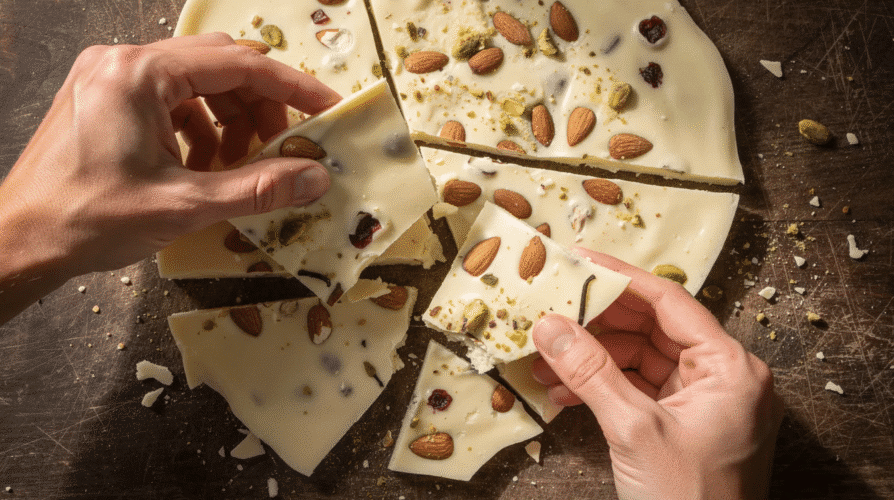
Set the bark: Refrigerate for 30–60 minutes until completely firm, or let bark set at room temperature for several hours in a cool kitchen. Once solid, break into pieces by hand for rustic shapes or score with a knife for cleaner squares.
Flavor Variations and Holiday Twists
This recipe serves as a flexible base that adapts easily for different seasons and occasions.
Cranberry-almond bark: Add 1/2 cup dried cranberries on top or mixed in for festive color and bright tartness—ideal for November and December gifting
Candy cane peppermint version: Replace half the almonds with crushed candy cane pieces and add 1/4 teaspoon peppermint extract for a classic December holiday flavor
Salted almond bark: Use extra flaky sea salt and deeply dark roasted almonds for a sophisticated sweet-salty balance adults love
Mixed-nut festive bark: Combine almonds with pistachios and dried cranberries for a red and green palette perfect for christmas cookies platters
Marbled chocolate bark: Drizzle cooled bark with thin lines of melted dark or milk chocolate for visual appeal and added flavor complexity
Using White Almond Bark vs. Real White Chocolate
Many grocery stores sell “white almond bark” or candy coating alongside baking chocolate. Understanding the difference helps you choose wisely.
Composition differences: Real white chocolate contains cocoa butter, milk solids, and sugar—giving it a creamy, dairy-rich taste. White almond bark substitutes vegetable fats for cocoa butter and typically contains soy lecithin as an emulsifier.
Melting behavior: Almond bark is more forgiving and melts smoothly without careful temperature control. It won’t seize as easily, making it convenient for beginners. Real white chocolate requires gentler handling to slowly melt without scorching.
Flavor and texture: Creamy white chocolate has richer, more nuanced vanilla and dairy notes. Almond bark tastes sweeter and more neutral—perfectly acceptable but less complex.
Substitution guidance: Swap cup-for-cup by weight. When using almond bark, you may need less added butter since it melts thinner. Both options set up firmly and break cleanly into small pieces.
Storage, Shelf Life, and Gifting Tips
Storage guidelines:
Keep bark in an airtight container at cool room temperature for 1–2 weeks
Refrigerate for slightly longer storage, but bring to room temperature before serving
Store away from direct sunlight, heat, and moisture to prevent bloom or stickiness
Freezing instructions: Freeze bark in a sealed container for up to one month. Thaw in the refrigerator, then bring to room temperature before serving to prevent condensation.
Reusable glass jars with a handwritten recipe card
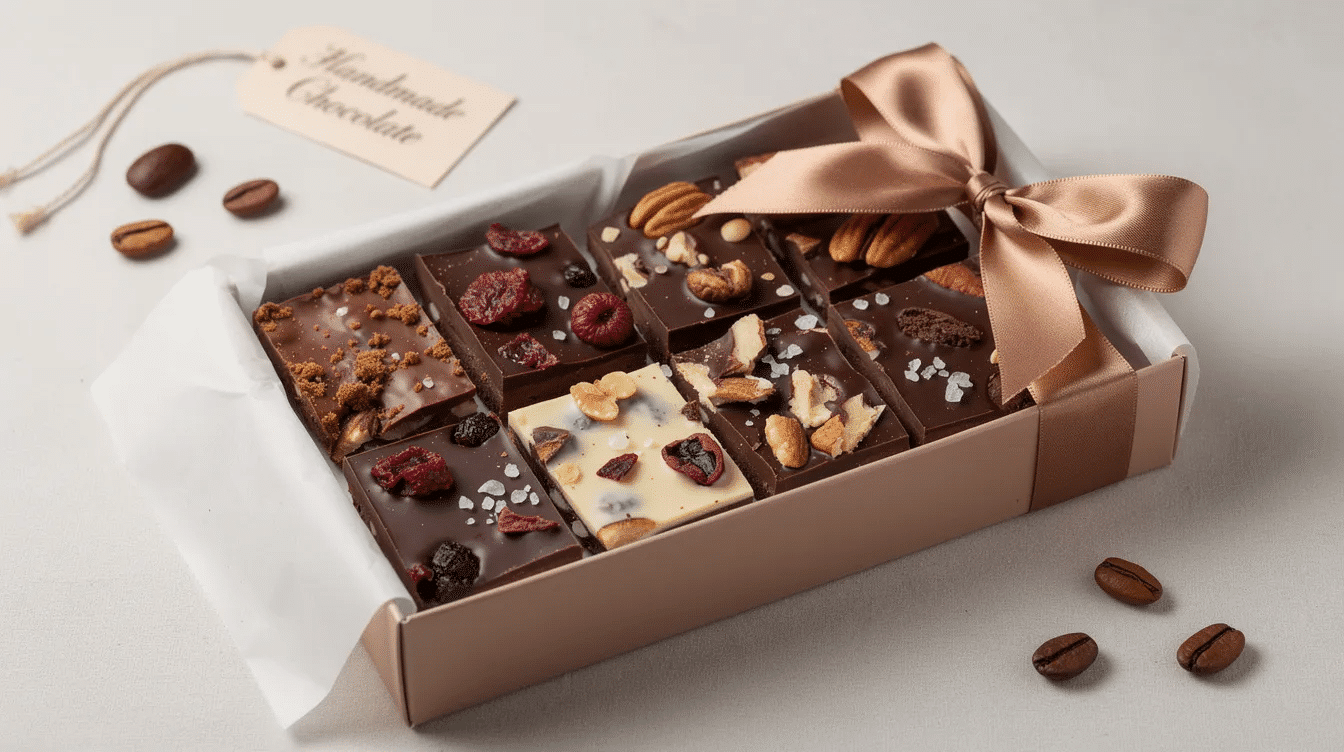
Decorative boxes lined with tissue paper
Package gifts closer to the giving date to keep toppings crisp and tree nuts fresh.
Troubleshooting and Pro Tips
Even simple recipes occasionally go sideways. Here’s how to fix common issues.
Seized chocolate: Contact with moisture or overheating causes chocolate to clump into a grainy mess. Try stirring in 1 teaspoon of vegetable oil slowly to rescue it. Prevention is best—ensure bowls and utensils are completely dry.
Bark won’t firm up: Chill longer in the refrigerator. If your kitchen is warm, the bark may struggle to set properly. Using chips or coating with higher fat stability helps in humid environments.
Uneven nut distribution: Reserve a portion of almonds to sprinkle on top after spreading the chocolate mixture. Press gently so they adhere before the bark begins to set.
Cleaner shapes: Lightly score the bark with a knife before it’s fully hardened if you want uniform squares or rectangles instead of rustic broken pieces.
Cleanup tip: Wipe warm melted chocolate from bowls with a paper towel before washing. This prevents greasy residue from coating your sink.
FAQ
Can I use sliced or slivered almonds instead of whole almonds?
Sliced almonds work well and create a thinner, more delicate crunch throughout the bark. However, they toast faster than whole almonds and can burn easily. Reduce toasting time by a few minutes and check frequently, stopping when lightly golden. Whole almonds provide bigger, chunkier bites—choose based on your preferred texture.
Is this recipe gluten-free?
The basic bark—white chocolate, almonds, salt, and extract—is naturally gluten-free when you use certified gluten-free chocolate and flavorings. Be cautious with add-ins: some candy cane pieces, sprinkles, or cookie crumbs may contain gluten. Always check labels carefully, especially for anyone with celiac disease.
Can I reduce the sweetness or make this less rich?
Combine white chocolate with a portion of semi-sweet or dark chocolate in a marbled or layered design to cut the sweetness. Adding more nuts and salty toppings helps balance the sugar. High-quality white chocolate with lower sugar content also tastes more balanced than standard baking chips. Note that nutrition calories and saturated fat, polyunsaturated fat, monounsaturated fat, and trans fat content vary by chocolate brand—check labels if tracking macros. Some products also contain vitamin c in added fruit.
How far in advance can I make white chocolate almond bark for gifts?
Make bark 7–10 days ahead and store in an airtight container in a cool, dark place. Package closer to the gifting date to keep everything crisp. For busy December schedules, make batches on weekends and store until your holiday events. Required fields are marked on most recipe card sites if you want to rate this recipe or review recipe details, though required recipe ratings aren’t necessary to save and print.
Is it safe and easy to make this recipe with kids?
Absolutely—this is a family-friendly recipe since there’s no oven work after toasting almonds. Adults should handle hot melted chocolate and the toasting step. Kids can help line pans, stir the mixture, sprinkle toppings, and break the cooled bark into pieces. Supervise microwave use closely and make sure chocolate isn’t overheated when little helpers are involved. Comment something below if you try this with your family!
DannyContent Writer
Hey there, since 2016, my mission has been to provide you with the information and guides you need to make food dehydrating simple and fun. Whether you're a newbie or a seasoned pro, my site offers helpful guides, reviews, and recipes to enhance your dehydrating experience. I take pride in only recommending products I believe in, ensuring my readers' trust. As an affiliate of various programs, including Amazon Associates, your support helps me continue providing quality content. Thanks for stopping by, and happy dehydrating!