We earn a commission if you make a purchase, at no additional cost to you.
09/22/2026 04:39 pm GMT
🍊 Dehydrated Food Info Finder — Temperatures & Drying Times
Choose a category, then pick a food to see its drying temperature and time.
⚠️ Safety Disclaimer: Drying times are estimates and vary based on slice thickness, food moisture content, humidity, and your dehydrator model. Always check for doneness before storing — food should feel dry, leathery, or brittle with no moist spots. Improperly dried food can harbour mould and bacteria. For meat and poultry, follow USDA safe internal temperature guidelines: beef and pork to 160°F (71°C), poultry to 165°F (74°C). Use a food thermometer when in doubt. Store all dehydrated foods in airtight containers in a cool, dark place and discard anything showing moisture, mould, or off odours.
If you have a bag of dried strawberry slices and no idea what to do next, this guide covers just what you need: practical, tested ways to turn those chewy pieces into snacks, breakfasts, bakes, savoury dishes, desserts, and homemade gifts.
Quick Answer: The Best Ways To Use Dehydrated Strawberries
Dehydrated strawberries can be used whole, chopped, or ground into a powder, and each form opens a different set of recipes. They add an intense sweet-tart fruit flavor to everything from porridge to salad dressings, and because they do not add extra moisture to dishes, they work where fresh berries would cause problems. So what makes them worth keeping in your kitchen? Concentrated flavour, a shelf life of six to twelve months, and less food waste from surplus summer fruits.
Here are the top uses at a glance:
Eat them straight from the jar as a chewy, naturally sweet snack.
Stir chopped pieces into porridge or overnight oats the night before.
Fold them into cake or muffin batter for bursts of strawberry in every slice.
Blitz fully dried slices in a blender to make strawberry powder for icing and dusting.
Mix small pieces with loose-leaf tea for a homemade strawberry tea blend.
Toss them into trail mix with nuts, seeds, and dark chocolate chips.
Rehydrate in warm water or juice and simmer into a quick strawberry sauce.
Whether you dried your own berries in a fan oven or picked up a packet from Tesco or Sainsbury’s, every idea here applies to standard dehydrated slices or halves. Freeze dried strawberries are crisp and brittle; dehydrated ones are chewy and pliable. Both work for most of these recipes, but the texture difference matters in snacking and decorating.
Understanding Dehydrated Strawberries (And How They Differ From Freeze-Dried)
Dehydrated strawberries are fresh berries dried at low heat, around 55–65°C, until most water is removed. The result is a chewy, leathery piece of fruit with concentrated flavour. This is not a lecture on food science, but the difference between dehydrated and freeze-dried matters: dehydrated fruit retains roughly 60–75% of its original nutrients, while freeze-dried fruit keeps around 95–98% because the cold-vacuum process avoids heat damage to vitamins like C and B. If you’re curious about how drying affects vitamins and minerals more broadly, it’s worth looking at whether nutrients are lost in dehydrated fruits.
Written in british english on UK packaging, “dried strawberries” usually means dehydrated unless the label specifies “freeze-dried.” Check the ingredient list: some packets read “strawberries, sugar” (sweetened), while others list only “strawberries.” That distinction affects how much sugar you add to recipes.
Drying fruits for preservation has roots stretching back centuries. In the middle english era, people across Europe dried apples, berries, and stone fruits to last through winter. Strawberries were less common in those preserves than rosehips, but the practice is the same in its true nature: remove water, concentrate flavour, extend shelf life.
Dehydrated strawberries come as pieces, slices, halves, or powders. All of these are referenced throughout this article. Their concentrated taste makes them ideal for recipes where fresh berries would release too much liquid and turn a sponge heavy or a muesli bar soggy.
How To Store And Revive Dehydrated Strawberries
Poor storage leads to mould, faded colour, and off flavours. Worse, it can make the fruit unsafe to eat. Proper storage keeps dehydrated strawberries good for six to twelve months at room temperature, and even longer in a fridge or freezer, which directly affects how safe dehydrated strawberries are to eat.
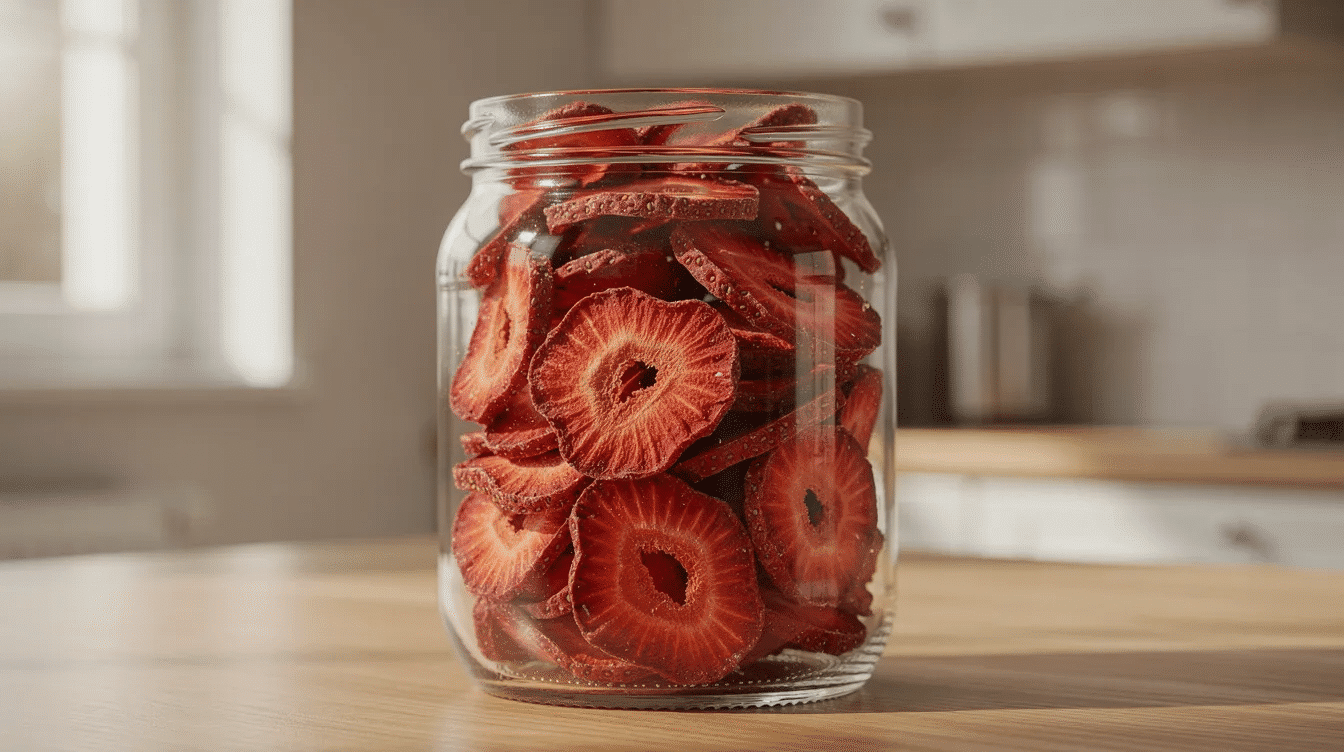
To store: Place dried pieces in airtight glass jars or zip-seal bags. Keep them in a cool, dark cupboard. For storage beyond six months, add a food-grade silica gel pack or oxygen absorber, and label the jar with the drying date. Vacuum sealing extends shelf life further.
To check dryness: Properly dehydrated strawberries feel leathery and bend without snapping. Press a cut surface; if no moisture appears, they are ready. Pieces that feel sticky or release liquid need more drying time. Conditioning for several days in a loosely packed container, shaking daily and watching for condensation, redistributes residual moisture.
To rehydrate: Soak pieces in warm water, orange juice, or rum for ten to thirty minutes. For baked puddings like bread-and-butter pudding, allow an extra five to ten minutes so pieces soften without becoming mushy. Rehydrated strawberries should be refrigerated and used the same day.
Discard any pieces with mould, a fermented smell, or unusual colour changes. Rehydration lets you use dehydrated strawberries almost like fresh berries in sauces, compotes, and jams, which is the practical reason this step matters.
Simple Snacking Ideas With Dehydrated Strawberries
Dehydrated strawberries are naturally sweet, portable, and won’t crush in a bag the way fresh berries do. Unsweetened versions contain only fruit sugars, so they avoid the added calories of many shop-bought sweets and can sit alongside other dehydrated low carb fruits for healthy snacking.
Straight from the jar: Eat them as a chewy snack between meals. They satisfy a sweet craving without the wrapper. Dehydrated strawberries can also be added to homemade energy bites made with oats, nut butter, and honey; roll the mixture into balls and press a piece of dried strawberry into each one.
Trail mix: Dehydrated strawberries enhance trail mix recipes. Combine one part dried strawberries with two parts mixed nuts (almonds, cashews), a handful of pumpkin seeds, and dark chocolate chips. Melted chocolate can be combined with dehydrated strawberries to create a different snack: dip pieces halfway, set on baking parchment, and refrigerate until firm.
Lunch boxes: Pack small reusable tubs of dried strawberries with oat biscuits or rice cakes. They don’t release moisture, so sandwiches stay dry.
Cheese pairing: Arrange dehydrated strawberries on crackers with mature Cheddar or goat’s cheese for a savoury-sweet evening nibble. The sweetness balances the salt.
For softer chew, soak pieces in apple juice for five minutes. For a crunchier bite, keep them dry and cut small.
Using Dehydrated Strawberries In Breakfasts
Breakfast is the easiest place to start because dehydrated strawberries add colour and strawberry flavour without making dishes soggy. They serve as a nutritious topping for cereals and yogurt, and they hold their shape in warm porridge.
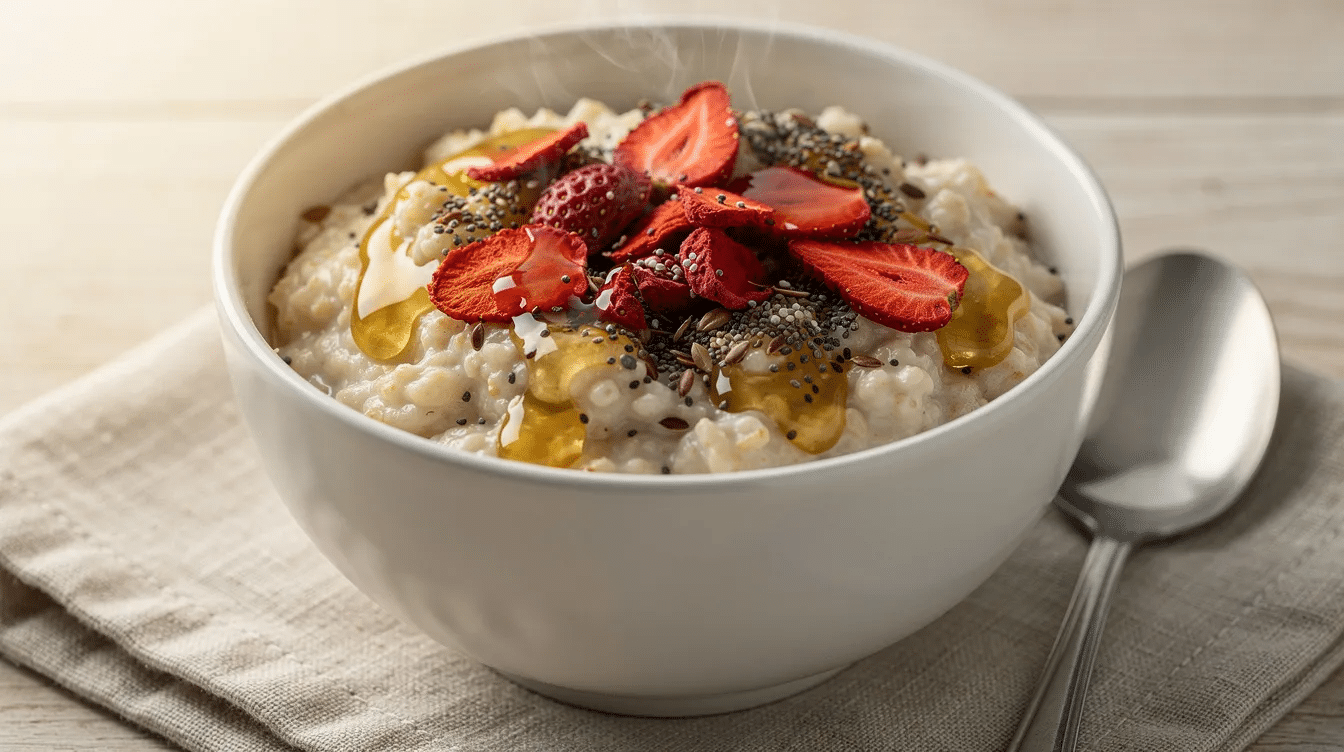
Porridge and overnight oats: Use dehydrated strawberries in oatmeal for added flavor. Stir one to two tablespoons of chopped pieces into your oats the night before. By morning, they soften and release a pink sweetness through the bowl.
Yoghurt topping: Dehydrated strawberries make a great topping for yogurt. Spoon greek-style yoghurt or skyr into a bowl, scatter dried strawberry pieces on top with granola, and drizzle honey. Ready in under five minutes.
Homemade granola: Bake oats with nuts and seeds at around 150°C. Add dehydrated strawberries only after the granola has cooled, because high oven heat scorches the fruit and turns it bitter.
Cereal upgrade: Sprinkle ten to fifteen grams over bran flakes or cornflakes for natural sweetness and chew.
Parfait jar: Layer muesli, yoghurt, and dehydrated strawberries in a jam jar. Seal, refrigerate overnight, and grab on your way out. Dehydrated strawberries can be added to smoothies too; drop a small handful into a blender with banana and milk for a thick, fruity shake. They work in smoothies and shakes because they blend into a naturally sweet paste without added sugar.
Baking With Dehydrated Strawberries: Cakes, Biscuits, And More
Dehydrated strawberries add flavor to baked goods like muffins and cakes without the excess liquid that fresh berries bring. A fresh strawberry releases water as it heats, which can sink through sponge and create a dense, wet layer. Dried pieces avoid that problem and fit neatly into a wider range of dehydrated fruit recipes for delicious snacks.
Sponge cakes and fairy cakes: Use 50–75 g of finely chopped dehydrated strawberries for a 20 cm cake. Soak pieces in a little warm milk for five to ten minutes before folding into the batter. This brief rehydration step softens them just enough to distribute evenly. Incorporate dehydrated strawberries into baked goods like muffins by stirring small dice through the batter before spooning into cases.
Biscuits and shortbread: Finely chop the pieces and work them into oat biscuit or shortbread dough. Keep them inside the dough rather than pressing onto the surface, where they scorch at high temperatures. In british baking terms, “biscuits” covers what other countries call cookies; the approach is the same either way. At 180°C (gas mark 4), the fruit warms through without burning.
Loaf cakes and tea breads: A strawberry and lemon drizzle loaf works well. Fold dried strawberry pieces through the batter and scatter a few on the icing as garnish. The degree of sweetness depends on whether your strawberries are sweetened or not; adjust caster sugar accordingly.
Adapting recipes: Swap raisins or cranberries for equal weights of dehydrated strawberries in flapjacks, rock cakes, or fruitcake. Repetition of this swap across different recipes builds confidence. The flavour shift from raisin to strawberry is precisely triggered by the fruit’s acidity, which cuts through butter and sugar in a way dried grapes do not.
Strawberry Powder: How To Make It And What To Do With It
Strawberry powder is made by blitzing fully dry, cooled dehydrated strawberries in a blender or spice mill. The result is a fine, brightly coloured powder with concentrated strawberry flavour, much like the intense taste you get from other ultimate dehydrator fruit recipes.
To make strawberry powder: Ensure the fruit is bone dry and at room temperature. Blend in short bursts to avoid heating the powder. Sieve out larger bits and return them to the blender for another pass. Store in a small airtight jar away from light and humidity.
To use strawberry powder: Stir one to three tablespoons into buttercream for naturally pink icing. Mix into cream cheese frosting. Dust over pavlovas and meringues. Swirl into yoghurt or smoothies for colour and taste. Combine with icing sugar to make a strawberry dusting sugar for finishing a Victoria sponge or traybake. A phrase like “icing with strawberry powder on top” is itself a prepositional phrase, and a prepositional phrase beginning with “with” or “on” is exactly how you describe where the powder goes on labels and in recipe instructions.
Savoury-sweet option: A tiny pinch of strawberry powder whisked into vinaigrette made with olive oil and balsamic vinegar adds a fruity note to salads. The additional possibilities for this powder grow the more you experiment: stir it into pancake batter, fold it into whipped cream, or sprinkle it over hot chocolate.
Savoury And Salad Uses For Dehydrated Strawberries
Strawberries belong in more than puddings. Their sweetness balances salt, acid, and bitterness in savoury dishes, just as many other options do when you explore what fruit you can dehydrate.
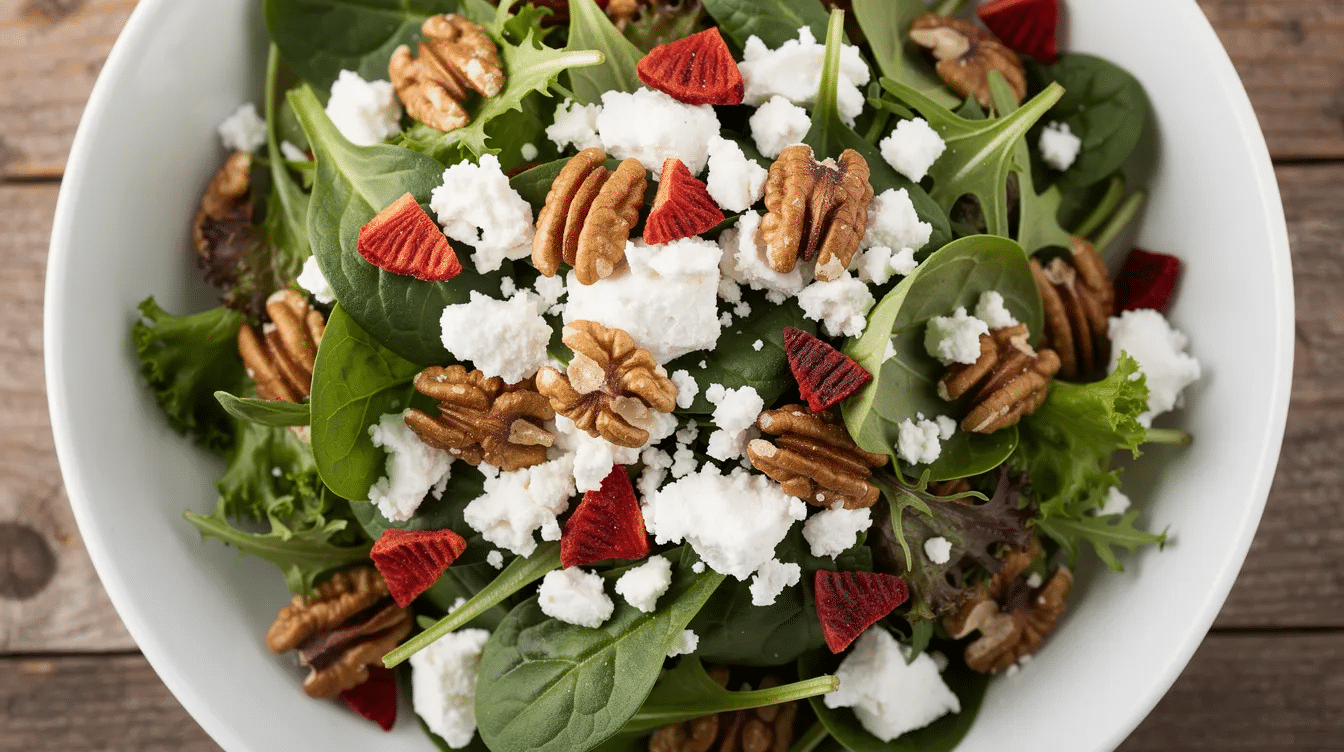
Green salad: Chopped dehydrated strawberries can complement green salads with nuts and cheese. Toss mixed leaves with crumbled feta or goat’s cheese, toasted walnuts, and dried strawberry pieces. Dress with olive oil and lemon juice. The chew of the fruit against crisp leaves and creamy cheese gives each mouthful a different texture.
Grain bowls: Add small pieces of dehydrated strawberries to quinoa or bulgur wheat with roasted sweet potato, chickpeas, and fresh herbs. Rehydrate briefly in hot stock before mixing through for a softer result.
Cheese boards: Place a ramekin of dehydrated strawberries alongside nuts and chutney. They pair well with aged Cheddar, Stilton, and Brie. Even friends who claim to dislike dried fruit tend to reach for them once they try the combination.
Couscous salads: Finely chop dried strawberries, rehydrate in hot stock, and fold into couscous with mint and cucumber. These ideas turn surplus dried fruit into main-meal components rather than letting it sit forgotten in the cupboard, which is the whole point. Think of it like crop rotation for your pantry: rotate dried strawberries through different meals so nothing goes to waste.
Desserts, Puddings, And Sweet Sauces
Dehydrated strawberries can be rehydrated for use in desserts, standing in for fresh fruit in classic british puddings when berries are out of season. Anyone starting from fresh fruit can first learn how to dehydrate strawberries in a dehydrator or oven before using them this way.
Trifle: Soak dried strawberries in hot water, fruit juice, or a splash of rum for twenty minutes. Layer the softened pieces with sponge fingers, custard, and whipped cream. The fruit absorbs liquid and releases flavour into the surrounding custard.
Rice pudding and semolina: Stir rehydrated pieces into rice pudding just before serving. The fruit adds soft texture without watering down the pudding base the way fresh berries do when they burst.
Strawberry sauce: Simmer rehydrated strawberries with a tablespoon of sugar and a squeeze of lemon juice for five minutes. Blend until smooth. Pour over ice cream, pancakes, or yoghurt. Infusing beverages with dehydrated strawberries enhances flavor too; drop a few pieces into a jug of cold water or lemonade for a subtle strawberry note.
Quick garnish: Scatter dry pieces over shop-bought cheesecakes, panna cotta, or chocolate mousse right before serving. The chew contrasts with creamy textures and adds colour.
Dried fruits in cakes and puddings are not a modern idea. Preserved fruits appeared in European cookery long before refrigeration, from the sweetmeats of the middle english period to the candied peels in Victorian baking. Dehydrated strawberries continue that tradition in a form any kitchen can manage.
Homemade Gifts, Decorations, And Tea Blends
Dehydrated strawberries make charming homemade gifts, especially around Christmas, Valentine’s Day, or birthdays. Even the most unusual chap on your gift list will appreciate a jar of handmade strawberry tea or chocolate-dipped fruit, especially once they understand the broader benefits of dehydrating food for storage and gifting.
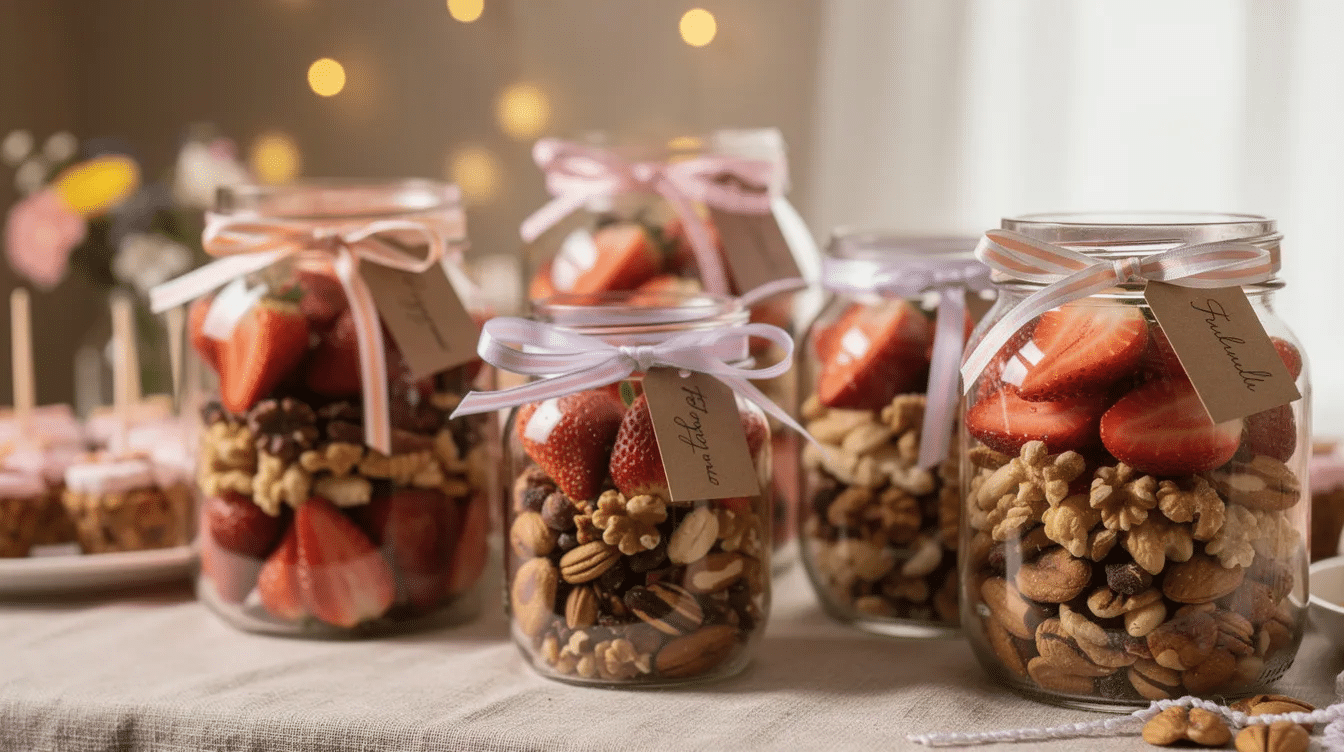
Snack jars: Layer dehydrated strawberries with other dried fruits, nuts, and seeds in clear jars. Add a handwritten label and simple ribbon. These work as “porridge toppers” or standalone snack gifts. She’s likely to open the jar before she’s even left the room; it happened at a splendid party I attended last year, where the host set out decorated jars as favours and guests started eating them during the description of the evening’s menu.
Cake decorations: Press dehydrated strawberry slices onto freshly iced cupcakes or stand larger slices upright in buttercream. They hold their shape and add natural colour.
Homemade tea blends: Combine small, evenly cut dried strawberry pieces with loose black tea, green tea, or herbal blends like hibiscus and rosehip. Pack into tins or paper bags. A person receiving this gift gets something thoughtful that also reduces plastic packaging and supermarket impulse buys. Curl up with a good book and a cup of homemade strawberry tea; the flavour is closer to real fruit than any mass-produced teabag.
Edible garlands: Thread dried slices with other dried fruit onto kitchen string for a party decoration children can eat. Use them the same day for food hygiene.
Frequently Asked Questions About Dehydrated Strawberries
This section answers common questions so you can find further information without searching elsewhere.
How long do dehydrated strawberries last? Stored in airtight containers in a cool, dark place, they keep for six to twelve months. In a fridge or freezer, expect one to two years. Signs of spoilage include mould, a fermented smell, and sticky or discoloured pieces. The good news is that checking takes seconds: open the jar, sniff, and inspect.
Can I substitute dehydrated for fresh strawberries? Yes, in baked goods, flapjacks, muesli bars, and biscuits. Less suitable in fresh fruit salads or salsas where crisp, juicy texture is the point. Understand that dried and fresh are not interchangeable to the same extent in every recipe.
Are they high in sugar? Unsweetened dehydrated strawberries contain only natural fruit sugars. Sweetened versions add sugar or syrup, which increases calorie counts. More doctors now recommend reading the label before assuming all dried fruits are equal. Check the identity of the product: “dried strawberries” with a similar meaning on UK packaging may be dehydrated or freeze-dried, and the difference matters for texture and nutrient content.
What does “what” even mean in this context? When people ask “so what can I do with dehydrated strawberries?”, the word “what” is an interrogative pronoun used to introduce a question seeking specific information. It traces back to old english hwæt (also english hwæt), a neuter form of the question word that appears across languages with similar meaning: german “was,” swedish “vad,” danish “hvad,” norwegian “hva,” finnish “mitä,” japanese “nani,” chinese “shénme,” romanian “ce,” and greek “ti.” These exclamatory expressions and elliptical constructions have been used to introduce sentences and express surprise for over a thousand years. The whats and hows of language are full of parenthetic clauses and surprise. Whether used as a pronoun, an adjective modifying nouns, an adverb of degree, or an exclamation, the word does a remarkable job across sentences. In yesterday’s riot of online recipe searches, this single question word drives more traffic than any statement or explanation about dried fruit, whether you’re looking up how to dehydrate blueberries or how to make freeze dried strawberries at home. The matter of its meaning, form, and character has filled many a lecture hall and many an opinion column. Whatever your luck with language, the answer to the question is this article.
How much money you save depends on how much fresh fruit you would otherwise waste. That respect for ingredients is what makes home dehydrating worthwhile.
Conclusion: Making The Most Of Every Strawberry
Dehydrated strawberries are one of the most versatile pantry ingredients you can keep on hand. They fit into snacks, breakfasts, baking, savoury dishes, desserts, and gifts. They reduce waste by preserving surplus berries, and they deliver a wealth of flavour that fresh fruit cannot always match outside of its brief summer season. In our opinion, they deserve a permanent spot in your cupboard.
You do not need special equipment to start. A fan oven set to 55°C, a packet from the supermarket, or a small domestic dehydrator all do the job. Experiment in small batches. Pick one idea from this article and try it before the week is out: strawberry powder stirred into buttercream, or dried pieces folded into tomorrow morning’s porridge.
A jar of dehydrated strawberries is bottled summer, ready whenever you need it. Speak to anyone who has tried making their own, and they will tell you the same thing: once you start, you do not stop.
DannyContent Writer
Hey there, since 2016, my mission has been to provide you with the information and guides you need to make food dehydrating simple and fun. Whether you're a newbie or a seasoned pro, my site offers helpful guides, reviews, and recipes to enhance your dehydrating experience. I take pride in only recommending products I believe in, ensuring my readers' trust. As an affiliate of various programs, including Amazon Associates, your support helps me continue providing quality content. Thanks for stopping by, and happy dehydrating!