We earn a commission if you make a purchase, at no additional cost to you.
09/22/2026 04:39 pm GMT
🍊 Dehydrated Food Info Finder — Temperatures & Drying Times
Choose a category, then pick a food to see its drying temperature and time.
⚠️ Safety Disclaimer: Drying times are estimates and vary based on slice thickness, food moisture content, humidity, and your dehydrator model. Always check for doneness before storing — food should feel dry, leathery, or brittle with no moist spots. Improperly dried food can harbour mould and bacteria. For meat and poultry, follow USDA safe internal temperature guidelines: beef and pork to 160°F (71°C), poultry to 165°F (74°C). Use a food thermometer when in doubt. Store all dehydrated foods in airtight containers in a cool, dark place and discard anything showing moisture, mould, or off odours.
What Size Oxygen Absorbers for Mason Jars? (Exact CC Guide + Chart)
Choosing the right oxygen absorber size for your mason jar doesn’t need to be complicated. The answer comes down to jar volume, how tightly you pack your food, and a willingness to round up rather than guess low. This guide gives you exact cc pairings for every common jar size, a simple calculation method for unusual containers, and the practical steps to seal everything properly.
Key Takeaways
Standard recommendations are 50cc for a half-pint jar and 100cc for a pint jar. For quart jars, use 200–300cc depending on how full they are and how dense the food is.
Oxygen absorber size is measured in cubic centimeters (cc) and must match the air volume inside the mason jar, not the weight of the food. Oxygen absorbers are sized by the volume of oxygen they can remove measured in cubic centimeters.
Using a slightly larger oxygen absorber size is generally acceptable for added protection. Extra absorbers simply become inactive once all the oxygen is consumed, so oversizing causes no harm.
Only use oxygen absorbers with low-moisture, low-oil dry foods (under roughly 10% moisture). Oxygen absorbers are ineffective with moist foods, and items like sugar and salt normally do not need them.
They extend the shelf life of dried foods significantly, prevent oxidation that degrades food quality, and reduce oxygen levels to less than 0.01%.
How Oxygen Absorber Sizes Work (CC, Volume & Mason Jars)
Every oxygen absorber packet is labeled with a cc rating that tells you exactly how many cubic centimeters of oxygen it can bind. Since cc equals milliliters (ml), a 100cc absorber can theoretically capture about 100 ml of oxygen gas. The key to choosing the right absorber size for any mason jar is understanding the relationship between jar volume, headspace, and the oxygen fraction of air.
Air is approximately 21% oxygen by volume. That means an 8 oz jar (about 237 ml total) doesn’t need a 237cc absorber. You only need enough cc to capture roughly 20% of the jar’s remaining air volume, then round up for leaks and imperfect packing.
Oxygen absorbers work through iron powder inside the packet, which reacts with oxygen and moisture in the air, converting O₂ into iron oxide. Once the reaction is complete, the absorber becomes inactive.
Common rules of thumb exist, such as 300cc per gallon for mylar bags, but glass mason jars typically have less headspace than flexible bags, so their absorber needs are slightly lower per container.
Absorber size is not tied to food weight in ounces or pounds. It’s tied entirely to empty air space inside the sealed container after you fill it with dried food.
Different brands (PackFreshUSA, Oxy-Sorbs, etc.) use the same cc system, so a 100cc oxygen absorber from any reputable, food grade brand is interchangeable for sizing purposes.
Recommended Oxygen Absorber Sizes for Common Mason Jars
This is your quick reference cheat sheet. Use these pairings to choose the right absorber size for standard canning jars used in home food storage without needing any math.
4 oz (125 ml) and 8 oz (250 ml) half-pint jars: Use a 50cc oxygen absorber when filled with dried food and minimal headspace. 50cc absorbers work well in small jars like spice jars and small containers of dehydrated herbs.
12 oz jelly jars and 16 oz (500 ml) pint jars: Use 100cc absorbers for pint containers. If you’re storing loosely packed or very airy foods, stepping up to 150–200cc is acceptable and provides added protection.
24 oz and 32 oz (quart size / 950 ml) mason jars: Use 200cc absorbers for quart containers as a baseline. For a quart jar, 300cc is generally sufficient when food is fluffy or the jar isn’t packed tightly. You can use 100cc absorbers for quart-sized mason jars packed very densely with rice or wheat berries. Oxygen absorbers can be combined to meet required capacity depending on jar size, so two 100cc packets in a quart jar is a perfectly valid approach.
48 oz / 1.5 quart and 64 oz (half-gallon) jars: Recommend 400–500cc total. Two 200–250cc packets work well for long term storage of dry staples. 500cc may be used for larger jars when you want extra margin.
If your jars are only three-quarters full or contain especially fluffy dried food like leafy herbs or freeze dried berries, always use the larger end of each range. When jars are packed tightly with small items like rice, lentils, or wheat berries, the headspace is smaller and the lower recommendation is usually enough. If you’re mixing foods of different densities in one jar, treat it as “airy” and choose the higher cc option.
How to Calculate Absorber Size for Any Mason Jar
Most readers can rely on the standard recommendations above. But if you have an unusual jar size or custom setup, or are working with buckets and mylar, a broader guide to using oxygen absorbers for food storage can help you think through container choice and total cc needs.
Estimate the jar’s total volume in milliliters. Then subtract the space taken by your tightly packed food (roughly 70–85% of the jar for most granules and small beans). Treat the remaining 15–30% as air. Finally, take about 20% of that air volume as your oxygen target, and choose a cc size at or above that number.
Dense food example: A 32 oz quart jar is approximately 950 ml total. Filled 85% with long-grain rice, that’s about 800 ml of food, leaving roughly 150 ml of air. Oxygen is about 20% of air, so roughly 30 ml of oxygen needs removal. A 100cc absorber already has more than enough capacity. In practice, home preservers often choose 200–300cc to cover leaks and packing gaps.
Fluffy food example: That same quart jar filled about 60% with freeze dried strawberries holds roughly 570 ml of food, leaving about 380 ml of air and approximately 80 ml of oxygen. Here, a 200–300cc absorber is justified even though the jar is the same size.
When in doubt about unusual jar shapes or variable packing, choose the next absorber size up. Properly packed foods can be stored for years with oxygen absorbers, and the small extra cost of a larger packet is always worth it compared to losing a jar of stored food.
What Foods in Mason Jars Need Oxygen Absorbers (and Which Don’t)
Oxygen absorbers in mason jars are only appropriate for low-moisture, low-oil dry foods intended for long term food storage. Some pantry items either don’t benefit or can become unsafe if stored with absorbers. If you’re focusing specifically on dehydrated ingredients, a dedicated guide on storing dehydrated food in mason jars for long-term freshness walks through jar prep, filling, and sealing in more detail. They help maintain flavor, color, and nutritional content of food, but only when the food itself is suitable.
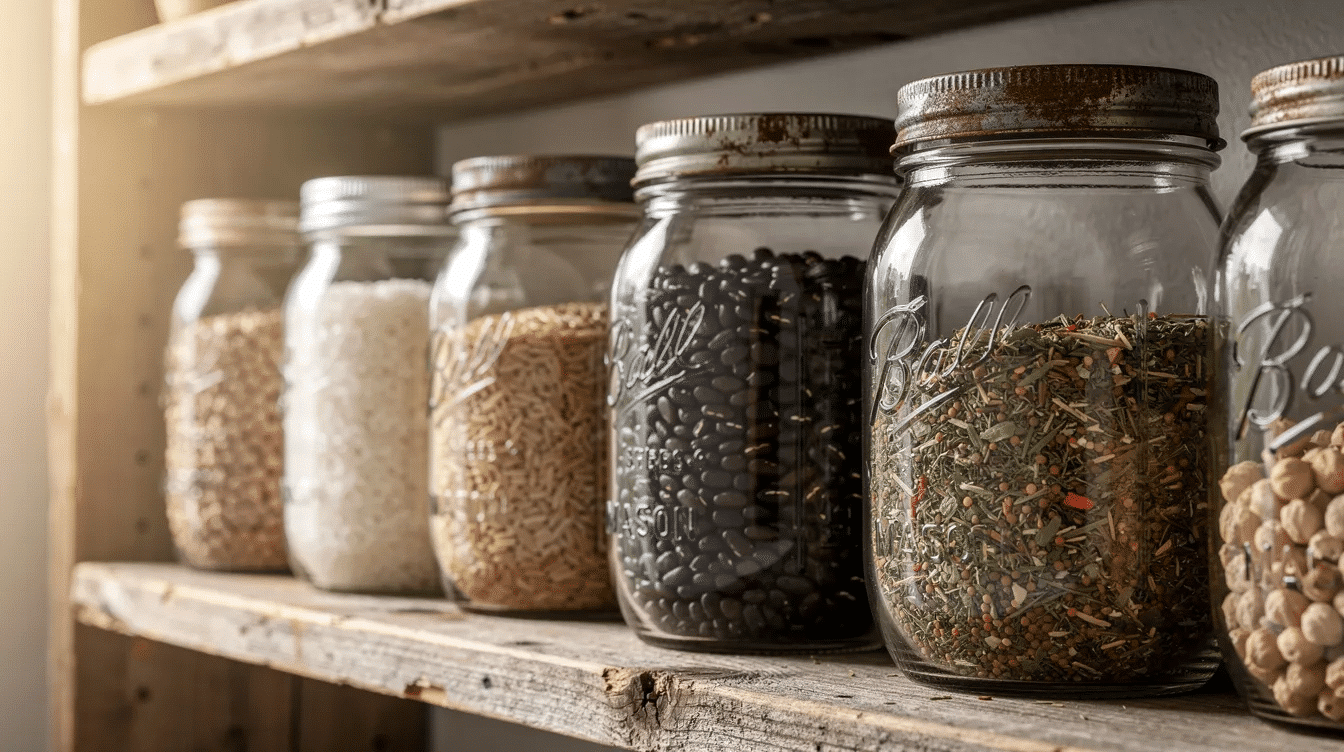
Dry beans, lentils, chickpeas, and whole grains like wheat berries, rice, barley, and oats, alongside snacks like dried fruit that benefit from airtight containers designed for dried fruits
Dry baking ingredients like flour and rolled oats intended for storage beyond 1–2 years, along with other dry goods and dry staples, including items that dehydrate better when you use non-stick dehydrator sheets on your trays
Foods to avoid with oxygen absorbers:
High-moisture or home-canned wet foods, which require proper canning methods, not absorbers
High-oil foods like nuts, seeds, granola, and whole-wheat flour if the goal is 10+ years of storage, due to rancidity risk from natural fat oxidation
Brown sugar, plain salt, and similar items that can harden or do not require oxygen removal
Sugar and salt are shelf-stable when kept in airtight containers. Adding oxygen absorbers can cause rock-hard clumping, so standard lids and dry conditions are sufficient. Powdered milk and cocoa can be stored with absorbers only when fully dehydrated, and many home preservers prefer mylar bags for these powders rather than glass jars.
Step-by-Step: Using Oxygen Absorbers in Mason Jars
Here’s a practical walkthrough for filling mason jars with dried foods and adding oxygen absorbers correctly. The goal is to remove oxygen, create an airtight seal, and preserve freshness for years.
Preparation:
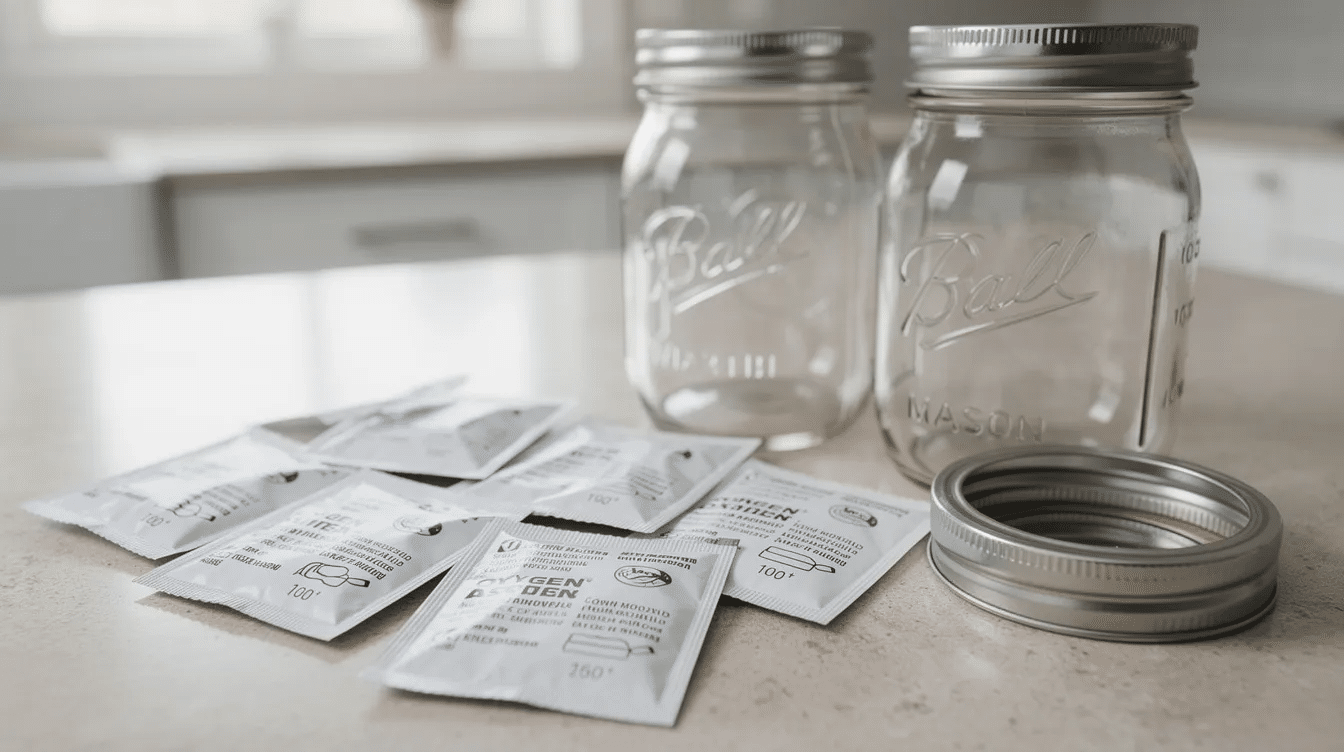
Wash and fully dry mason jars and two-piece lids. Any residual moisture can compromise food preservation and affect long term results.
Gather food grade, fresh oxygen absorber packets in the sizes chosen from earlier sections. Store oxygen absorbers in their sealed package until jars are ready. Oxygen absorbers should be used immediately after opening.
Arrange jars, funnels, and labels so that once the absorber package is opened, you can work quickly; many home preservers also keep a reliable vacuum sealer for dried food storage nearby to pack excess portions.
Filling and adding the absorber:
Fill jars as full as possible to minimize headspace and reduce air trapped inside, leaving about ½–1 inch of space at the top.
Gently tap jars to settle contents and reduce trapped air pockets between beans, rice, or vegetables; combining this with vacuum sealing dehydrated food for maximum shelf life can further reduce residual air in some setups.
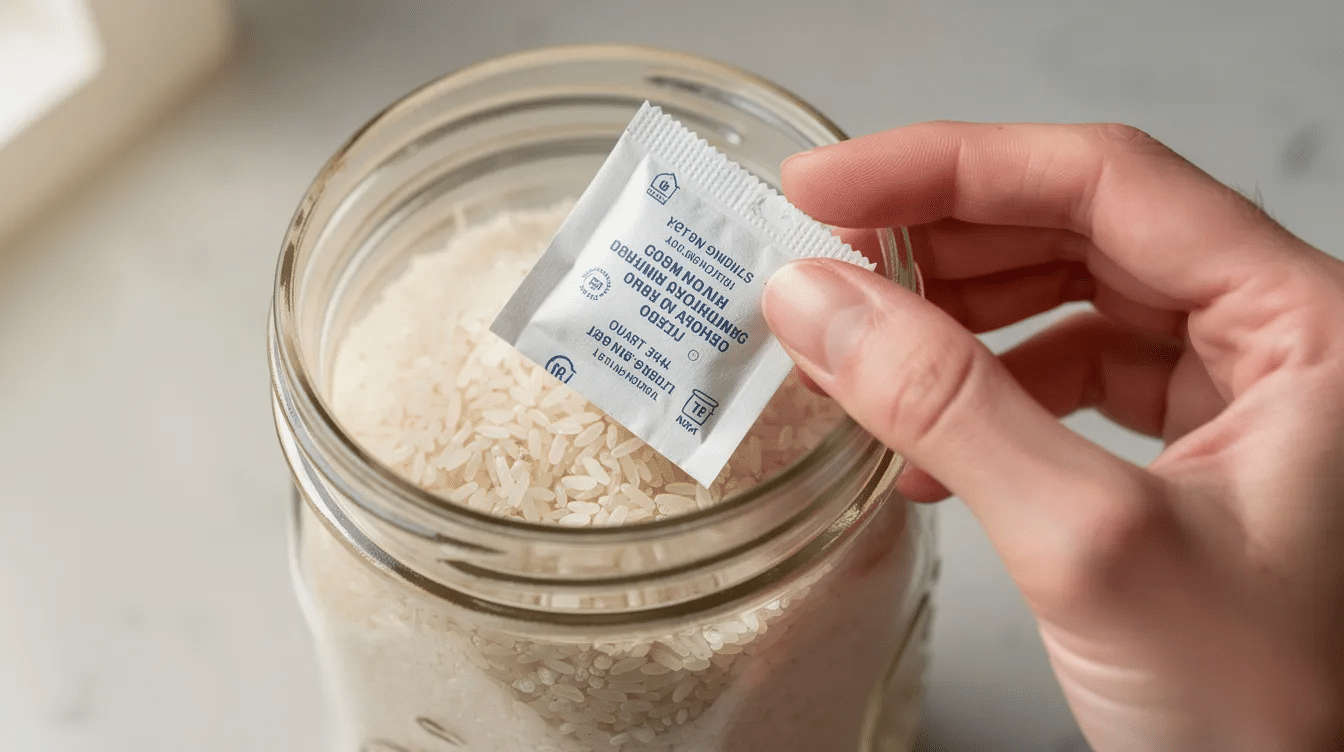
Open the sealed package, remove the needed packets, and place one absorber on top of the food in each jar. You can toss in an extra packet if you want a safety margin.
Sealing and storage:
Immediately wipe rims and apply lids and rings, tightening to fingertip tightness for a properly sealed jar.
Place any leftover absorbers into a small, clean mason jar or mylar bag and seal it promptly to preserve absorber life.
Store filled jars in a cool, dark place (ideally under 75°F / 24°C) and dry place like a pantry or cupboard away from direct sunlight, heat, and temperature swings.
After sealing, lids may “tug down” slightly over 12–48 hours as oxygen is consumed. Oxygen absorbers reduce oxygen to less than 0.01%, but a lack of a dramatic “pop” doesn’t mean the absorber failed if you used the right amount.
Mylar Bags vs Mason Jars: When to Use Each with Oxygen Absorbers
Both mylar bags and mason jars work with oxygen absorbers, but they serve different roles in a home food storage system. Understanding when to use each helps you avoid wasted money and wasted food.
Mason jar advantages:
Ideal for smaller portions of dried foods like herbs, spices, dehydrated garlic, and short-term rotation items, especially when you use space-saving tools like a hanging dehydrator for preserving herbs and produce
Reusable, see-through, and easy to open and reseal for everyday pantry access
Excellent for organizing a working pantry while still benefiting from oxygen removal and freshness
Mylar bag advantages:
Superior light barrier and puncture resistance when paired with food grade buckets for bulk storage
Lighter and more space-efficient for large emergency food storage, including vacuum sealed bags and off-site locations
When to use which:
Use mason jars for up to a couple of quarts of a given dried item you’ll access regularly, like a quart of dehydrated onions or a pint of dried fruits; they’re also perfect for dehydrated meal-in-a-jar recipes for adventures.
Use mylar bags with corresponding absorber sizes for 5–25 lb bags of staples you plan to keep in a sealed package for 5–20 years.
Many preppers combine both: bulk in mylar or buckets for deep long term storage, and smaller portions in mason jars for daily use, all using fresh, food grade oxygen absorber packets. Some also pair a vacuum sealer with vacuum sealing for an added layer of protection, though oxygen scavengers alone handle oxygen exposure effectively in a properly sealed container.
Common Mistakes with Oxygen Absorbers in Mason Jars (and How to Avoid Them)
Even experienced home preservers make errors that can undermine shelf life and lead to spoilage. Here are the most common pitfalls and how to fix them.
Absorber sizing mistakes:
Using tiny 20–30cc absorbers in pint or quart jars. This leaves too much oxygen behind for true long term preservation. Always match the right amount of cc to your jar size.
Reusing old, hardened absorbers instead of checking for flexibility and freshness. If a packet feels rock-hard, it has already reacted and won’t absorb anything more.
Ignoring headspace and airy foods, choosing the smallest recommended size instead of rounding up to the next cc level.
Process mistakes:
Leaving absorber packets sitting on the counter for 20–30 minutes while filling jars. They begin reacting with ambient air immediately, so work quickly once the package is open.
Filling jars with foods that are not fully dried (still pliable or sticky). Even with oxygen removed, moisture enables mold growth. Oxygen absorbers are not a substitute for proper drying.
Using oxygen absorbers with inappropriate foods like brown sugar and salt, resulting in rock-hard clumps with no real benefit.
Storage and safety errors:
Failing to store leftover absorbers in airtight jars or sealed containers. You can store oxygen absorbers in a cool, dry place for up to two years if they remain in an unopened, sealed bag.
Storing filled mason jars in hot garages or on sunny windowsills, where heat, light, and temperature fluctuations shorten shelf life despite oxygen removal.
Leaving oxygen absorber packets where children or pets could reach them. While they contain iron and are not highly toxic, they can have sharp edges on packaging and should be kept out of reach. Also consider silica gel packets, which are sometimes confused with oxygen absorbers but serve a different purpose as desiccants. Silica gel removes moisture, not oxygen, and is food safe when used in the right context.
The golden rule: when in doubt, go one size up on your absorber and one size down on your jar. It’s always easier to store in smaller jars than to salvage food from a jar that wasn’t sealed properly.
FAQ: Using Oxygen Absorbers in Mason Jars
These frequently asked questions cover nuances about using oxygen absorbers in mason jars that weren’t fully addressed in the main sections above.
How do I know if my oxygen absorber in a mason jar is still working?
Fresh absorbers feel soft and powdery inside the packet. If the packet is rock-hard throughout, it has likely fully reacted and should not be used for new jars. Many brands include indicator dots that change color (often pink to blue or vice versa) when oxygen is present, giving you a visual cue about whether your oxygen absorbers good and fresh. Even if a sealed jar lid doesn’t “pop” inward dramatically, a properly sized, fresh absorber can still be doing its job. Focus on absorber condition and storage date rather than lid feel alone.
Can I open a mason jar, use some food, and then add a new oxygen absorber?
Once you open a jar, the original long term seal is broken and your stored food is exposed to fresh air. You can add a new absorber if the remaining food is still fully dry, but each opening resets the storage clock. For frequently accessed foods, it’s better to store in several small jars (for example, multiple pints instead of one quart) so you use up each jar shortly after opening. If you do add a new absorber, treat it like a fresh packing: check dryness, fill to the appropriate level, and then seal and store in a cool, dark place again.
How long does food in mason jars with oxygen absorbers actually last?
Properly dried, low-fat foods in mason jars with correctly sized absorbers and good storage conditions can often last 5–10 years depending on the food type. High-oil items like nuts or brown rice usually have a shorter shelf life (often 1–3 years) even with reduced oxygen exposure due to natural fat oxidation. Cool temperatures, darkness, and consistently dry conditions are just as important as the right absorber size for maximizing shelf life.
Is it safe to use more than one oxygen absorber in a single mason jar?
Yes, using multiple absorbers in one jar is completely safe. They simply stop reacting once all the oxygen is consumed. Doubling up (for example, two 100cc packets in a quart jar for a combined 200cc) is a common practice when you’re unsure about headspace or absorber freshness, and it offers extra margin without harming the food. The main concern isn’t “too many” absorbers but accidentally using old or previously exposed packets that no longer have full oxygen-binding capacity.
Should I use both oxygen absorbers and desiccant packets together in mason jars?
Desiccants like silica gel remove moisture, while oxygen absorbers remove oxygen. They can safely be used together in jars for very dry foods and serve complementary purposes in food preservation. This combo is especially useful for items sensitive to both humidity and oxygen, such as dehydrated herbs or crunchy freeze dried snacks, provided they are thoroughly dried first. Desiccant size is chosen based on moisture risk, not oxygen volume, and it does not replace the need for correctly sized oxygen absorber packets in long term storage. Using both in different sizes gives you control over two separate threats to your food at once.
DannyContent Writer
Hey there, since 2016, my mission has been to provide you with the information and guides you need to make food dehydrating simple and fun. Whether you're a newbie or a seasoned pro, my site offers helpful guides, reviews, and recipes to enhance your dehydrating experience. I take pride in only recommending products I believe in, ensuring my readers' trust. As an affiliate of various programs, including Amazon Associates, your support helps me continue providing quality content. Thanks for stopping by, and happy dehydrating!