We earn a commission if you make a purchase, at no additional cost to you.
09/22/2026 04:39 pm GMT
🍊 Dehydrated Food Info Finder — Temperatures & Drying Times
Choose a category, then pick a food to see its drying temperature and time.
⚠️ Safety Disclaimer: Drying times are estimates and vary based on slice thickness, food moisture content, humidity, and your dehydrator model. Always check for doneness before storing — food should feel dry, leathery, or brittle with no moist spots. Improperly dried food can harbour mould and bacteria. For meat and poultry, follow USDA safe internal temperature guidelines: beef and pork to 160°F (71°C), poultry to 165°F (74°C). Use a food thermometer when in doubt. Store all dehydrated foods in airtight containers in a cool, dark place and discard anything showing moisture, mould, or off odours.
Shelf Life of Dehydrated Foods: How Long They Really Last and How to Extend It
Understanding the shelf life of dehydrated foods is essential whether you’re preserving garden harvests or building an emergency pantry. The good news? Properly packaged dehydrated food stored properly in ideal conditions can have a long shelf life of dehydrated foods, lasting anywhere from a few years to several decades.
For home-dehydrated foods kept in cool, dark areas with good packaging, expect these realistic ranges: dried fruits maintain quality for 1–3 years, dehydrated vegetables last 1–5 years, and cooked beans and grains can stretch 5–10 years when well sealed. Homemade jerky has a much shorter window—just 1–2 months in glass jars, though vacuum sealed bags in the freezer extend this to about 1 year.
Professionally packaged products tell a different story. Commercially dehydrated staples in #10 cans or mylar bags typically last 10–15 years. Freeze dried foods with proper oxygen absorbers can maintain quality for 20–30+ years when stored below 75°F.
At-a-glance shelf life by category:
Food Type
Home-Dehydrated
Professionally Packaged
Fruits
1–3 years
5–10 years
Vegetables
1–5 years
10–15+ years
Meats/Jerky
1–2 months (pantry)
1–2 years (frozen)
Grains/Beans
5–10 years
20–30+ years
Dairy/Eggs
Shorter
3–5+ years
Herbs
1–3 years
1–3 years
These estimates depend mainly on moisture content, oxygen exposure, light, storage temperature, and fat content. The rest of this article breaks down how to manage each factor for both home dehydrators and those purchasing long term food storage supplies.
What is dehydrated food and how is it different from freeze-dried?
Dehydrated food has had 80–95% of its water removed through heat and airflow using electric dehydrators, ovens, or solar methods. The dehydration process makes food lighter, more compact, and shelf-stable while concentrating flavor. Textures change noticeably—dehydrated fruits become chewy, vegetables turn brittle, and jerky gets tough and fibrous.
The key differences from freeze dried products:
Residual moisture: ~5–10% in dehydrated vs. ~1–4% in freeze dried
Texture: Leathery/chewy vs. crisp/crunchy
Rehydration: Slower (often needs hot water or boiling water) vs. nearly instant
Typical shelf life: Shorter vs. significantly longer
For example, dried apple rings are leathery and rehydrate slowly, while freeze-dried apple slices are crisp and reconstitute within minutes.
Main factors that control the shelf life of dehydrated foods
The dehydration process slows food spoilage but doesn’t halt it completely. Using a reliable food dehydration chart helps ensure foods are dried to safe moisture levels, but quality still declines over time depending on how you store food, and several chemical reactions continue working against you.
The five major enemies of long term storage are:
Moisture (enables microbial growth)
Oxygen (causes premature oxidation)
Light (triggers photodegradation)
Temperature (accelerates all reactions)
Pests and physical damage
Food type and fat content also matter significantly—low-fat plant foods last decades while fatty meats or dairy have much shorter lives.
Moisture: the number-one enemy
Excess moisture is the primary cause of food spoilage in stored dehydrated foods. Any remaining moisture or reabsorbed humidity allows mold growth, yeast, and bacteria to flourish, potentially creating dangerous mycotoxins.
Proper dryness looks like this:
Fruits: leathery but not sticky
Vegetables: brittle, snapping when bent
Jerky: tough and fibrous with no soft spots
No condensation visible inside containers after sealing
Before long term storage, condition dried fruits in glass jars for 7–10 days, shaking daily to redistribute moisture. If condensation appears, return food to the dehydrator. High ambient humidity can slowly rehydrate foods in packaging that isn’t truly airtight.
Light and photodegradation
UV and visible light break down vitamins A, C, and several B vitamins while fading colors and changing flavor over months. Understanding the nutritional value of dehydrated foods helps put these changes in perspective. Both sunlight and strong indoor lighting damage dehydrated foods in clear containers or plastic bags.
Protect your food storage by using:
Opaque mylar bags
Metal #10 cans
Food-grade buckets
Glass jars stored in dark cupboards
Color fading often signals early nutritional value loss, even when food remains safe to eat.
Oxygen and oxidation
Oxygen triggers fat oxidation, producing rancid off-odors and destroying vitamins over time. High-fat dried foods like nuts, seeds, oily meats, and whole-grain flours are especially vulnerable, but vacuum sealing dehydrated foods can greatly slow this process.
Oxygen absorbers work by removing residual oxygen from sealed containers, slowing both oxidation and insect activity. They’re appropriate for low-moisture, low-oil foods like grains, beans, and many vegetables inside mylar bags or cans.
Important: Never use oxygen absorbers with moist or very oily foods—this creates botulism risk. Also, half-empty airtight containers allow more oxygen exposure; repack into smaller containers when possible.
Temperature: cool and stable wins
Each 10°F drop in storage temperature roughly doubles shelf life. Professional emergency food testing occurs at 70–75°F, meaning hotter storage significantly shortens real-world performance.
Recommended ranges:
Ideal: 50–60°F (10–16°C) for long term food storage
Acceptable: Up to 70–75°F (21–24°C)
Avoid: Hot attics, garages, sheds exceeding 90°F
Better storage spots include basements, interior closets, and under-bed storage in climate-controlled rooms. Temperature stability matters too—constant cool conditions beat frequent swings.
Insects, rodents, and physical damage
Pantry moths, weevils, ants, and rodents can breach packaging, introduce moisture, and contaminate food. Sturdy, pest-resistant packaging is essential for food safety and for achieving the longer shelf life of dehydrated foods that many people expect from their storage systems.
Protective measures include:
Food-grade buckets with tight lids
5–7 mil thick mylar bags inside buckets
Metal #10 cans
Storage off the floor on shelves or pallets
Inspect stock every 6–12 months for webbing, larvae, beetles, or chew marks. Crushed bags or punctured mylar let moisture and oxygen in, dramatically shortening storage time.
Food type and fat content
Not all dehydrated foods last equally. Group your inventory by realistic shelf-life potential:
Very long (10+ years): Grains, beans, lentils, rice, low-fat vegetables like carrots, onions, bell peppers
Medium (3–7 years): Most dehydrated fruits, tomato products, bananas, berries
Short (1–3 years or less): Meats, dairy, high-fat items, milled whole grains — especially in the case of dehydrated meat shelf life
Removing moisture doesn’t neutralize fats—oils go rancid even in properly dried products. Low-fat, single-ingredient plant foods are your best candidates for truly long-term planning.
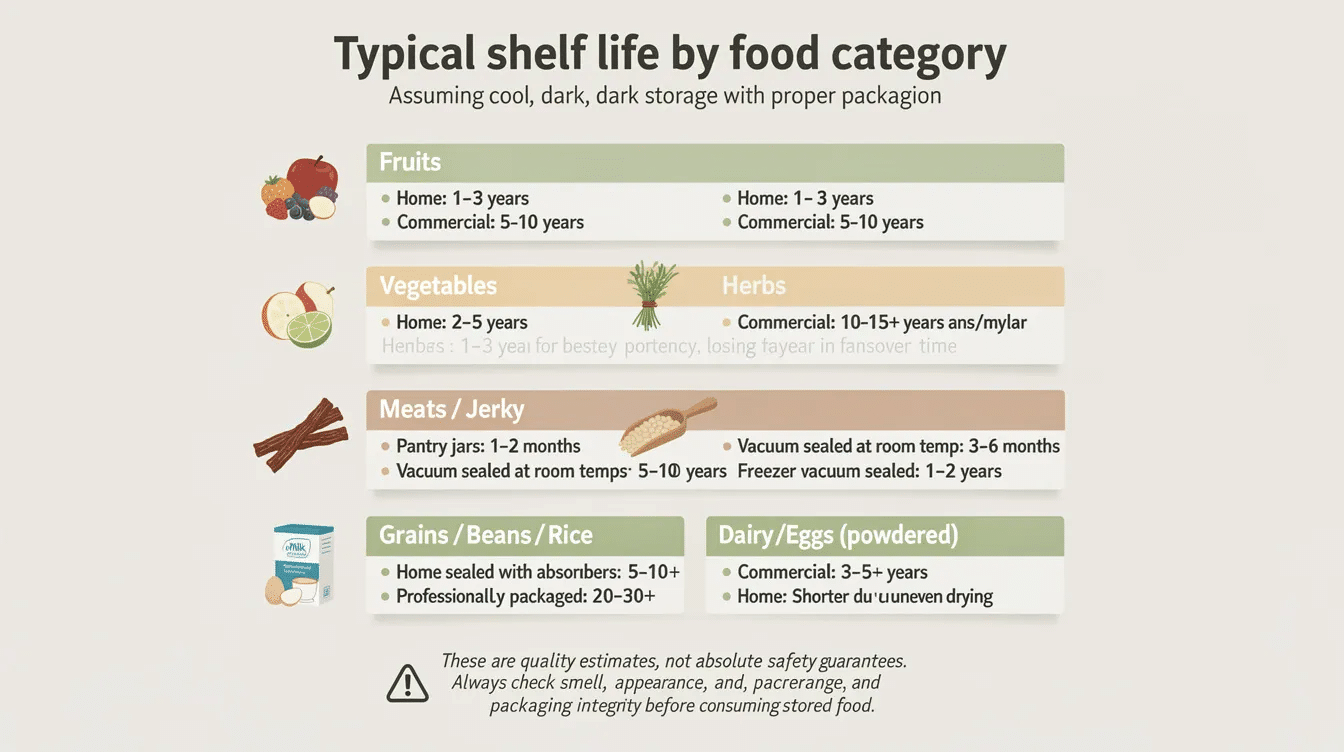
Typical shelf life by food category
Here’s a practical reference for common dehydrated foods, assuming cool, dark storage with proper packaging; choosing the best foods to dehydrate for long-term storage will help you build a pantry that matches these ranges:
Fruits:
Home: 1–3 years
Commercial: 5–10 years
Vegetables:
Home: 2–5 years
Commercial: 10–15+ years in cans/mylar
Herbs:
1–3 years for best potency, losing flavor over time
Meats/Jerky:
Pantry jars: 1–2 months
Vacuum sealed at room temp: 3–6 months
Freezer vacuum sealed: 1–2 years
Grains/Beans/Rice:
Home sealed with absorbers: 5–10+ years
Professionally packaged: 20–30+ years
Dairy/Eggs (powdered):
Commercial: 3–5+ years
Home: Shorter due to uneven drying
These are quality estimates, not absolute safety guarantees. Always check smell, appearance, and packaging integrity before consuming stored food.
Best practices for storing dehydrated foods long term
Your storage habits often matter more than the dehydration process itself. Proper technique can mean the difference between food lasting a few years versus a decade or more, while reducing waste and maintaining nutritional value.
Pick the right packaging
Different containers serve different purposes:
Container Type
Best For
Limitations
Glass jars
Short-term, frequent access
Light exposure, breakage risk
Vacuum sealed bags
Meats, medium-term storage
Not pest-proof alone
Mylar bags (5–7 mil)
Long-term bulk storage
Requires oxygen absorbers
#10 cans
Lab-tested long-term
Higher cost, can’t reseal
Food-grade buckets
Pest protection for bags
Need inner mylar liner
Keep all packaging clean and dry. Seal quickly after filling to minimize moisture and oxygen exposure so you can capture the full benefits of dehydrating food. Properly packaged dried foods dramatically outlast loosely stored alternatives.
Open absorber packages only when ready to use. Fill and seal bags within minutes. Store unused absorbers in airtight jars. Absorbers becoming warm or firm is normal—it means they’re working.
Choosing the best storage location
Ideal storage conditions: cool completely, dry, dark place, minimal temperature swings.
Good locations:
Interior bedroom closets
Basements with humidity control
Under-bed storage in climate-controlled rooms
Dedicated pantry away from appliances
Poor choices:
Garages and attics
Near water heaters
Laundry rooms
Exterior walls that get hot
Store goods off the floor on shelves or pallets for easier inspection and reduced moisture risk.
Labeling, dating, rotation, and inspection
Label everything with product name, processing date, and approximate “best by” date. Use FIFO (first in, first out) rotation—place newer items behind older stock so you naturally use the oldest first.
Conduct quality checks every 6–12 months looking for:
Bulging or swelling packages
Rust, tears, or seal failures
Condensation inside containers
Off-odors or insect activity
If problems appear, discard compromised items without tasting. Identify the cause—humidity, pests, or heat—and repackage unaffected foods. Using stored dehydrated foods regularly in everyday cooking keeps your stock fresh and rotated.
Signs your dehydrated food has gone bad
Shelf life estimates are guidelines, not guarantees. Always perform sensory checks before eating long-stored foods, especially other foods like meats and dairy.
Discard immediately if you notice:
Visible mold or fuzzy growth
Moisture or cloudiness inside packaging
Rancid, sour, or musty smells
Insects, larvae, or webbing
Slime or unusual color changes
Swelling or bulging packages
Cosmetic changes like slight color fading or minor texture hardening are generally acceptable. However, never taste food that looks or smells suspicious. Some toxins like those from botulism may not produce obvious odors—this is why packaging integrity and moisture levels matter so much for food poisoning prevention.
Planning a practical dehydrated food pantry
Building a balanced pantry means blending short-, medium-, and long-term items for both everyday convenience and emergency preparedness. Start with foods you actually eat regularly—what foods can be dehydrated ranges from onions and peppers to tomato slices, mushrooms, apples, and bananas—and consider dehydrating frozen vegetables to expand your options that rotate naturally through normal cooking.
Mix your storing dehydrated foods with freeze dried staples, canned goods, and bulk dry staples like rice, oats, and beans. This covers different time horizons: daily use items, 1–5 year supplies, and 10–25+ year emergency reserves.
Start small with a few jars or mylar bags of favorite ingredients. Expand to larger buckets or cases once you’ve dialed in your storage space and rotation habits. Backpacking trips and camping offer excellent opportunities to test your preserved foods before relying on them long-term.
Key takeaways on dehydrated food shelf life
Home-dehydrated fruits and vegetables typically last 1–5 years; professionally packaged versions extend to 10–25+ years under ideal conditions
Moisture and temperature are your primary enemies—store dried foods in a dark place below 75°F with controlled humidity
Mylar bags with oxygen absorbers inside buckets provide the gold standard for longer period storage of dry, low-fat staples
Meats, high-fat foods, and home-processed items without robust packaging belong in the “use within a few years” category
Regular inspection and FIFO rotation prevent waste and ensure food safety
Careful storage transforms the dehydration process into a reliable, low-waste food preservation strategy for both everyday cooking and emergencies
DannyContent Writer
Hey there, since 2016, my mission has been to provide you with the information and guides you need to make food dehydrating simple and fun. Whether you're a newbie or a seasoned pro, my site offers helpful guides, reviews, and recipes to enhance your dehydrating experience. I take pride in only recommending products I believe in, ensuring my readers' trust. As an affiliate of various programs, including Amazon Associates, your support helps me continue providing quality content. Thanks for stopping by, and happy dehydrating!