We earn a commission if you make a purchase, at no additional cost to you.
09/22/2026 04:39 pm GMT
🍊 Dehydrated Food Info Finder — Temperatures & Drying Times
Choose a category, then pick a food to see its drying temperature and time.
⚠️ Safety Disclaimer: Drying times are estimates and vary based on slice thickness, food moisture content, humidity, and your dehydrator model. Always check for doneness before storing — food should feel dry, leathery, or brittle with no moist spots. Improperly dried food can harbour mould and bacteria. For meat and poultry, follow USDA safe internal temperature guidelines: beef and pork to 160°F (71°C), poultry to 165°F (74°C). Use a food thermometer when in doubt. Store all dehydrated foods in airtight containers in a cool, dark place and discard anything showing moisture, mould, or off odours.
Liquid Dehydrator: How to Dry Liquids, Sauces & Powders Safely
Turning soups, broths, and even liqueurs into shelf-stable powders might sound like commercial kitchen magic, but it’s surprisingly accessible with a standard food dehydrator. The secret isn’t a specialized machine—it’s the right trays and technique. Whether you want to create instant broth for backpacking trips, concentrated tomato powder for your spices rack, or Campari-infused sugar for cocktails, a liquid dehydrator setup opens up possibilities that go far beyond dried fruit and jerky.
This guide walks you through the equipment, methods, and safety practices you need to dehydrate liquids successfully at home.
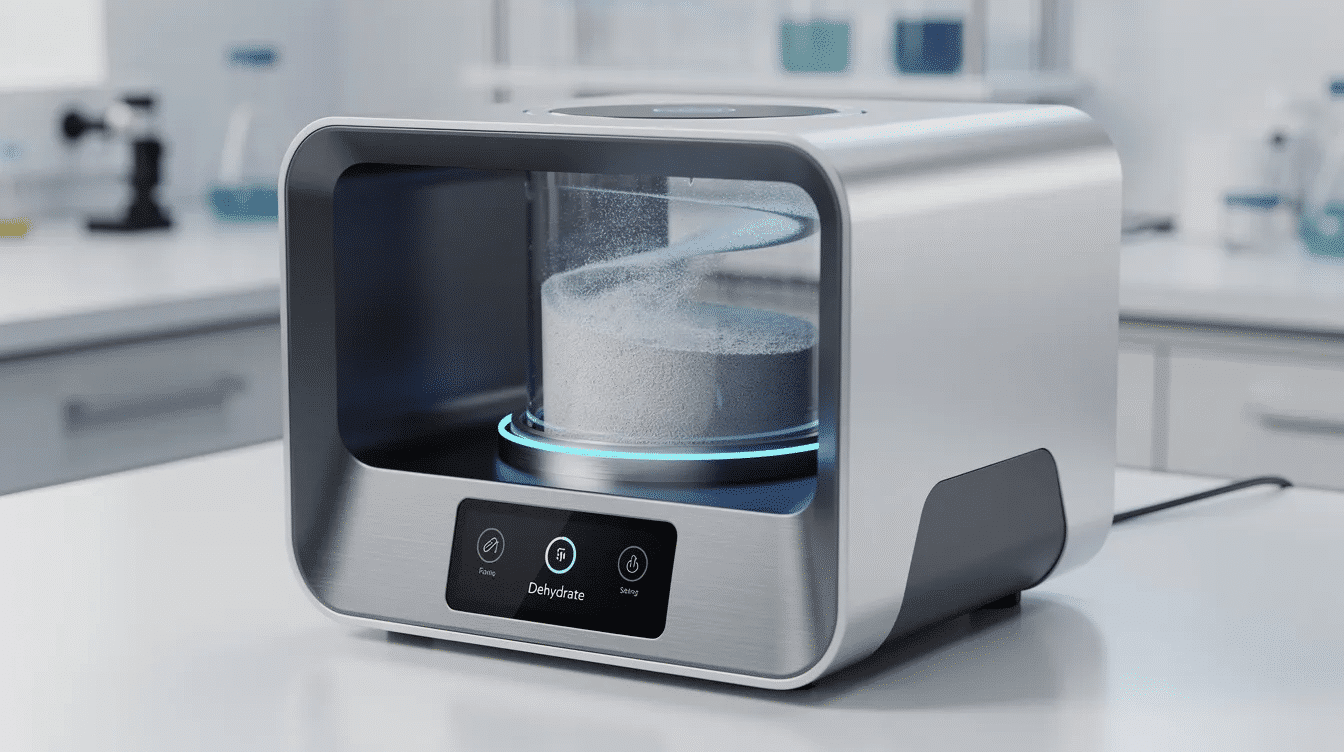
A liquid dehydrator isn’t a separate machine—it’s a standard dehydrator paired with solid, non-perforated trays or silicone sheets designed to contain liquids during the drying process. This setup allows you to transform soups, broths, sauces, fruit purees, and even liqueurs into leathers, brittle sheets, or fine powders without the mess of liquid dripping through mesh trays.
Home users generally rely on popular 2023–2025 models from manufacturers like Excalibur (the 9-tray unit with rear-mounted fan), Nesco Snackmaster (round trays with top-mounted fan), and Cosori’s premium CP267-FD (square format compatible with lipped silicone mats). If you’re deciding between these brands, a detailed Cosori vs Excalibur dehydrator comparison can help match features to your liquid-drying needs. For larger batches, commercial stainless-steel units from Dehydrators America offer 10–20 trays and handle higher volumes efficiently.
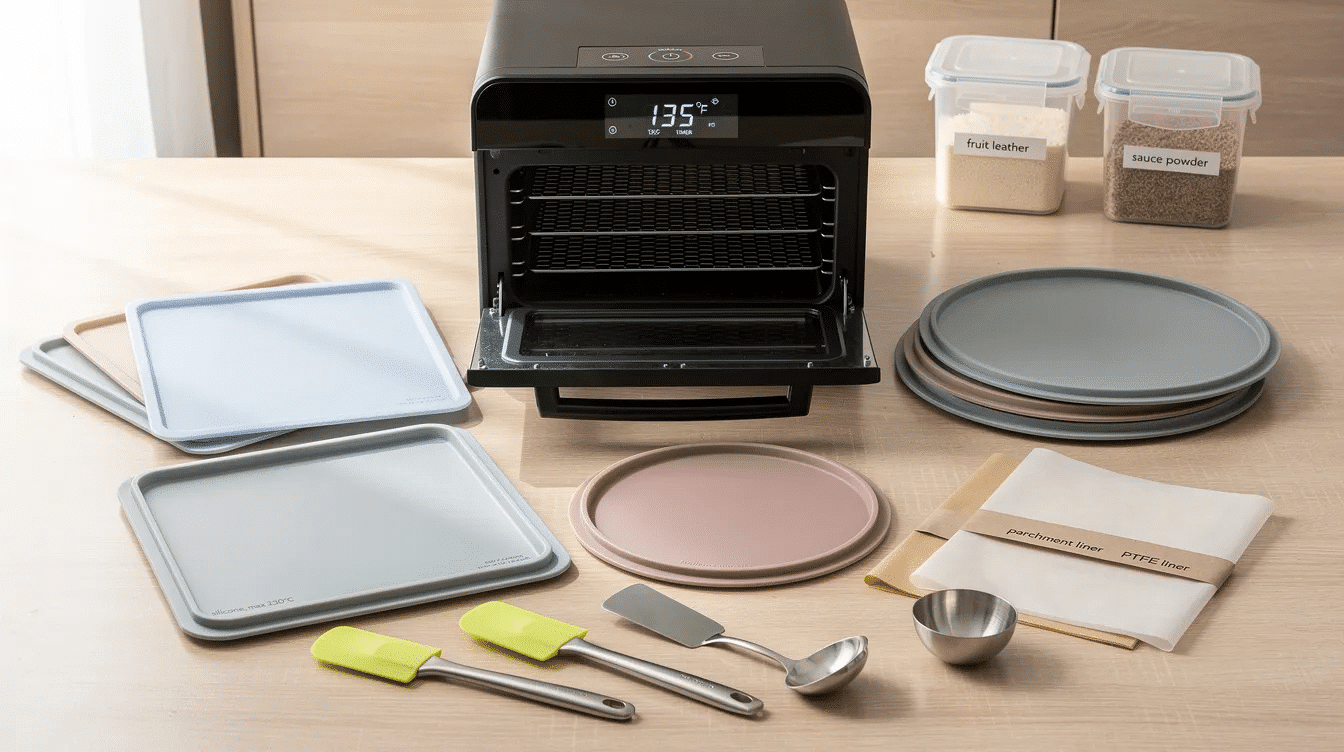
No special “liquid-only” machine exists on the market. Instead, you create a liquid dehydrator setup by adding: food-grade silicone mats with raised edges, solid plastic or stainless trays, or parchment paper liners that prevent spills while allowing air circulation.
The three core uses for this setup include fruit leather from purees, concentrated powders from broths or coffee, and drying liqueurs like Campari into flavored sugar crystals. Each application follows similar principles but requires different temperatures and drying times based on the liquid’s sugar, alcohol, and water content.
How Liquid Dehydration Works
The science behind dehydrating liquids is straightforward: you’re removing water through low-temperature evaporation, typically between 125–145°F (52–63°C). At these temperatures, the heating element warms air that the fan circulates across a thin liquid layer spread on solid trays. This preserves flavor and nutrients while reducing water activity below 0.6—the threshold where bacteria and mold can’t grow, assuming you follow proper food dehydration temperature guidelines for each ingredient type.
Modern dehydrators differ in airflow design. Excalibur models use rear-mounted fans that push air horizontally across all trays, creating even heat distribution. Nesco units feature top-mounted fans that blow air downward, which can create slight hot spots requiring tray rotation every few hours. Understanding your unit’s air circulation pattern helps you anticipate where liquids might dry faster, and broader reviews of the best food dehydrators can give you a sense of how different models balance airflow, capacity, and control for liquid-heavy recipes.
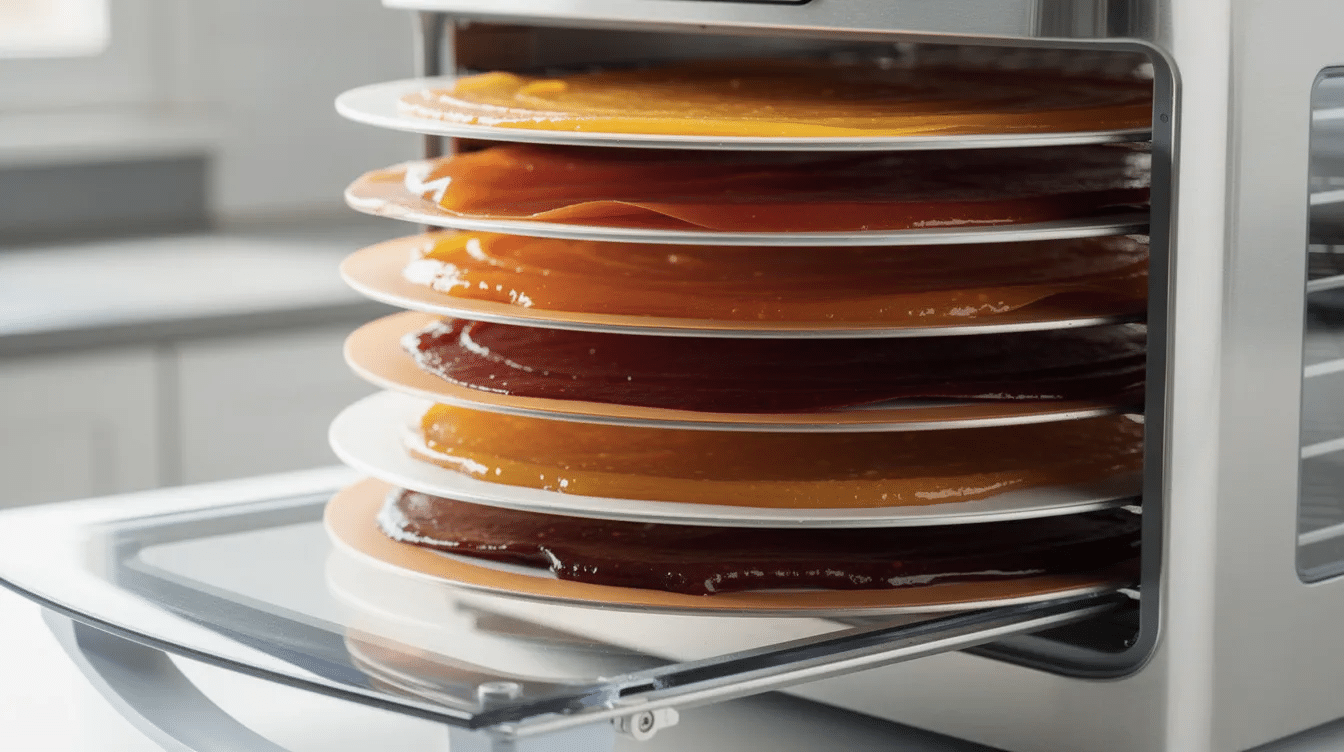
Drying times vary dramatically based on what you’re processing. Tomato sauce spread into a leather takes 8–12 hours at 135°F. Vegetable or chicken broth needs 10–16 hours at 145°F to become brittle sheets you can grind into powder. Liqueurs like Campari require patience—24–36 hours at 135–140°F because alcohol evaporates slowly and the high sugar content keeps the material tacky.
Thin liquids like broth, coffee, or juices dry faster than thick purees from fruit or mashed vegetables. Thicker layers always need more time and may require mid-drying rotation of trays to prevent uneven results. Sugar-rich and alcohol-rich liquids present the biggest challenge. They attract ambient moisture and can remain sticky even after extended drying. For these, plan an extra 4–6 hour “conditioning” run at low heat, and consider flipping the material halfway through using a mesh screen to ensure both sides dry completely.
Essential Equipment for a Liquid Dehydrator Setup
The key to successful liquid dehydration is pairing a reliable dehydrator with the right trays, liners, and storage containers. You don’t need expensive specialty gear—just the correct accessories matched to your machine’s dimensions.
Core equipment to consider:
Temperature-controlled dehydrator: Look for units with adjustable temperature from 95–165°F. Home models with 5–9 trays (Excalibur, Cosori, Nesco) work well for most users, and a solid beginner’s guide to using a food dehydrator can help you master basic techniques before moving into liquids. Commercial 10–20 tray stainless-steel units suit larger production runs.
Solid non-perforated trays: These prevent liquids from dripping. Excalibur trays measure 14” x 14”, while Nesco Snackmaster uses 13” round trays. Always measure your unit’s internal rack dimensions before purchasing.
Food-grade silicone sheets with raised edges: The edge height matters—aim for 1–1.5 cm lips to contain liquids. Standard sizes include 11” x 11” for square machines and 13” diameter for round units. Silicone is rated to 446°F (230°C), far exceeding the typical dehydrator max of 165°F.
Parchment paper and PTFE non-stick sheets: These line perforated dehydrator trays when you don’t have solid options. They’re disposable alternatives that still prevent stick and mess, though reusable dehydrator sheets and solid liners are often more economical and versatile over time.
Spreading tools: Silicone spatulas, offset spatulas, and small ladles help you spread liquids evenly at the critical 2–4 mm thickness needed for efficient drying.
Optional accessories that improve efficiency:
Digital thermometer-hygrometer to monitor room humidity (ideal: 40–60% RH)
Kitchen scale accurate to 1g for measuring yield before and after dehydration
Many standard dehydrators ship with only mesh or perforated trays designed for apple slices, beef jerky, and herbs. If you don’t want to purchase brand-specific solid trays, you can create your own liquid-safe trays using materials you likely have at home.
For square dehydrators (Excalibur-style):
Cut heavy-duty aluminum foil or 40–45 cm wide parchment paper into a 30 x 30 cm square
Fold up 1–2 cm walls on all four sides, pressing the corners firmly to create a shallow pan
Secure corners with small paperclips or bulldog clips if needed
Place this DIY tray directly on top of your rigid factory tray before adding any liquid
For round dehydrators (Nesco-style): If you mainly dry fruit as well, a dedicated guide to dehydrating fruit and fruit leathers will help you adapt these tray hacks to sweet, sugar-rich mixtures.
Cut parchment into a circle matching your tray diameter
Create a reinforced ring of aluminum foil along the outer edge to act as a wall
Press the foil ring firmly against the tray’s existing rim to catch liquids
Never fill trays while they’re off the machine and then carry them over—you’ll create a mess. Instead, slide the dehydrator rack out like an oven shelf and fill in place using a ladle. This easy way prevents spills and ensures even distribution.
Using a Liquid Dehydrator for Powders (Re-Drying & Clump Prevention)
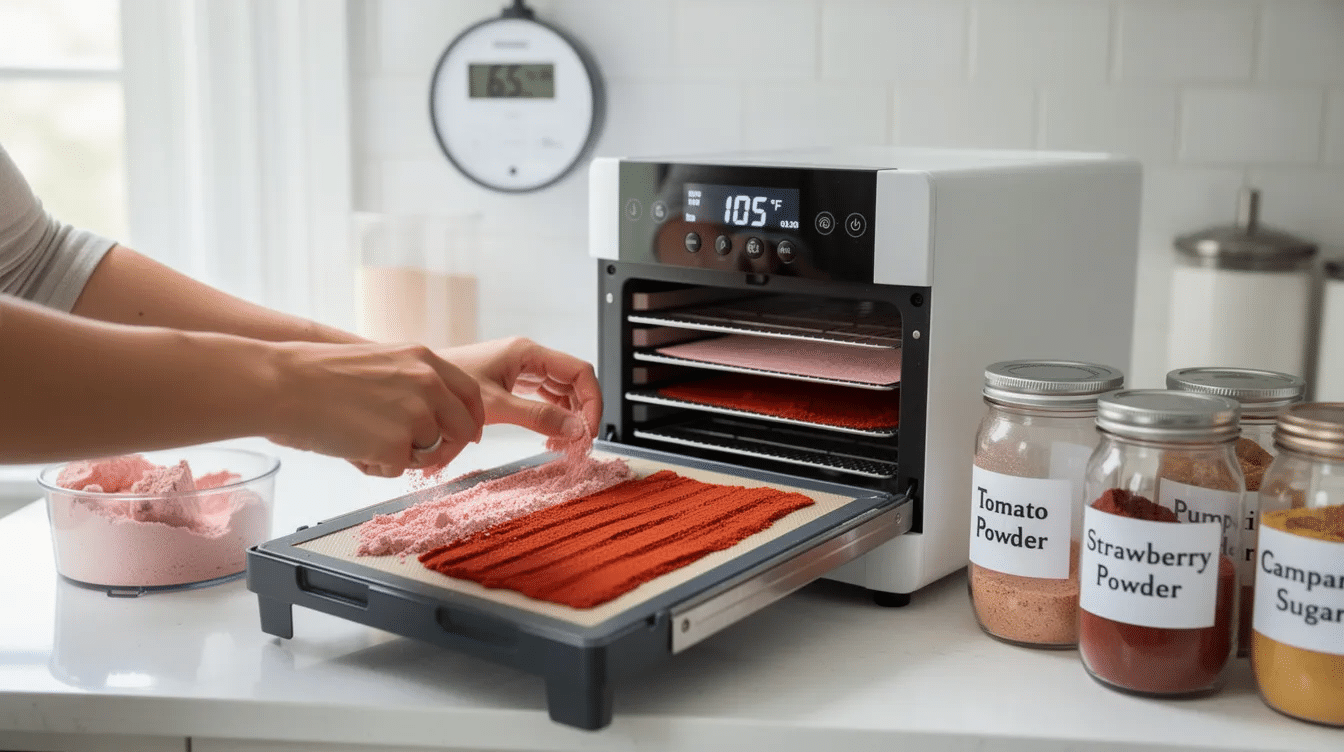
Homemade dehydrated powders—tomato, berry, pumpkin, broth, even liqueur sugars—tend to clump over time. A liquid tray setup lets you safely re-dry them back into free-flowing consistency.
Why clumping happens:
Sugar-rich powders like strawberry, mango, or Campari sugar are hygroscopic, meaning they attract moisture from the air. Storing them in large jars with lots of headspace in humid kitchens (60–70% RH) accelerates caking. Even properly dried powders can absorb enough moisture over a night to become solid blocks.
Simple re-drying workflow:
Break clumps by hand or pulse briefly in a food processor—don’t grind to fine powder yet
Spread the powder in a very thin layer (no visible ridges) on a silicone mat or parchment-lined solid tray
Dry at 95–115°F (35–46°C) for 2–4 hours to drive off surface moisture without degrading volatile aromatics
Turn off the fan before opening the dehydrator to avoid a cloud of powder blowing into your kitchen
Once fully dry, cool the powder completely before transferring to storage. Use small, airtight glass jars or vacuum-sealed packets with 1–2g food-safe desiccant sachets. Smaller containers mean less air exposure each time you open them—better for powder that you’ll use over months.
Drying Liquids Like Liqueurs, Coffee, and Broth
Beyond fruit leather, a liquid dehydrator setup transforms beverages and stocks into intense flavor concentrates. Bartenders use these for rimming glasses, hikers appreciate lightweight taste boosters, and home cooks create MSG-free bouillon from scratch—much like they might use dehydrated meats for lightweight, long-lasting protein on the trail or in emergency stores.
Liqueurs (Campari, Limoncello, Amaro):
Pour 8 fl oz (240 ml) of Campari or similar bitter liqueur onto a solid tray. Dry at 135–140°F (57–60°C) for 24–36 hours. The alcohol evaporates slowly, and the high sugar content keeps things tacky—patience matters here. Yield is approximately 80–90g of infused sugar crystals that you can grind into powder for cocktail dishes or desserts. For liqueurs above 40% ABV, dilute with simple syrup first to aid evaporation. Always operate in a well-ventilated kitchen when dehydrating alcohol.
Coffee and Espresso:
Brew strong coffee using any standard 2024–2026 home machine
Pour a thin 1–2 mm layer onto a silicone liquid tray
Dry at 135°F (~57°C) for 8–14 hours until completely brittle
Grind to a fine, instant-coffee-style powder and rehydrate with hot water when needed
Chicken or Vegetable Broth:
Reduce broth on the stovetop first to concentrate flavor and reduce overall liquid volume
Spread a 1–2 mm layer on lined trays
Dry at 145°F (63°C) for 10–16 hours until glassy and dry
Break into shards and process into bouillon-style powder
This homemade stock powder contains no additives—just pure, concentrated flavor. Store in small containers and reconstitute with hot water for soups, stews, and sauces. The yield from 2 cups of reduced broth is typically 100–200g of powder depending on original concentration.
Choosing Liquid Trays and Accessories for Your Dehydrator
Purpose-made liquid trays and silicone mats save time compared to DIY hacks, especially if you’re dehydrating liquids regularly or processing larger batches. When you’ve purchased the right accessories, the whole process becomes super easy.
Selection criteria:
Factor
What to Look For
Fit
Measure internal rack dimensions. Common sizes: 14” x 14” (Excalibur), 11” x 11” (many commercial units), 13” round (Nesco)
Edge height
1–2 cm lips for liquids; lower edges work fine for powders only
Match shape (square vs. round) and consider fan position (rear vs. top)
Practical buying tips:
Prioritize multi-pack sets of 4–6 mats so you can run several liquid trays simultaneously
Example scenario: Running 6 trays of tomato leather in a 9-tray dehydrator, with 3 empty trays for airflow
Check compatibility notes for models released 2020–2025; manufacturers now commonly list mat dimensions in product specifications
Maintenance:
Never use sharp knives on silicone surfaces
Hand-wash with warm soapy water
Dry mats thoroughly before storing to prevent mold or off-odors
Rigid polypropylene trays may require 10–15 minute hot water soaks for stuck-on sugary residues
Safety, Cleaning & Storage Best Practices
Liquid dehydration is low-risk when done properly, but attention to hygiene, drying temperature, and storage conditions prevents waste and ensures your dehydrated food stays safe to consume.
Food safety essentials:
Pre-cook all meat- or poultry-based liquids (bone broth, chicken stock, beef drippings) to a rolling simmer before dehydrating
Maintain dehydrator temps at or above 145°F (63°C) when drying any liquid derived from animal products
Discard any batch that smells off, shows visible mold, or remains sticky after extended drying and complete cooling
For seafood-based broths, apply the same pre-cooking and temperature standards
Cleaning guidance:
Remove dried sheets by gently flexing silicone mats away from the material
Soak sticky residues (sugary liqueur crystals, fruit purees) in hot water for 10–15 minutes before scrubbing
Avoid harsh abrasives that damage non-stick coatings
Clean trays after each use to prevent flavor cross-contamination between batches
Storage recommendations:
Product
Container
Shelf Life
Storage Conditions
Fruit leather
Airtight container or wrapped in parchment
6–12 months
Cool, dark place
Powders (vacuum-sealed)
Vacuum bag with oxygen absorber
1–2 years
Under 70°F (21°C)
Broth/sauce powders
Glass jar with desiccant
12 months
Minimize jar opening
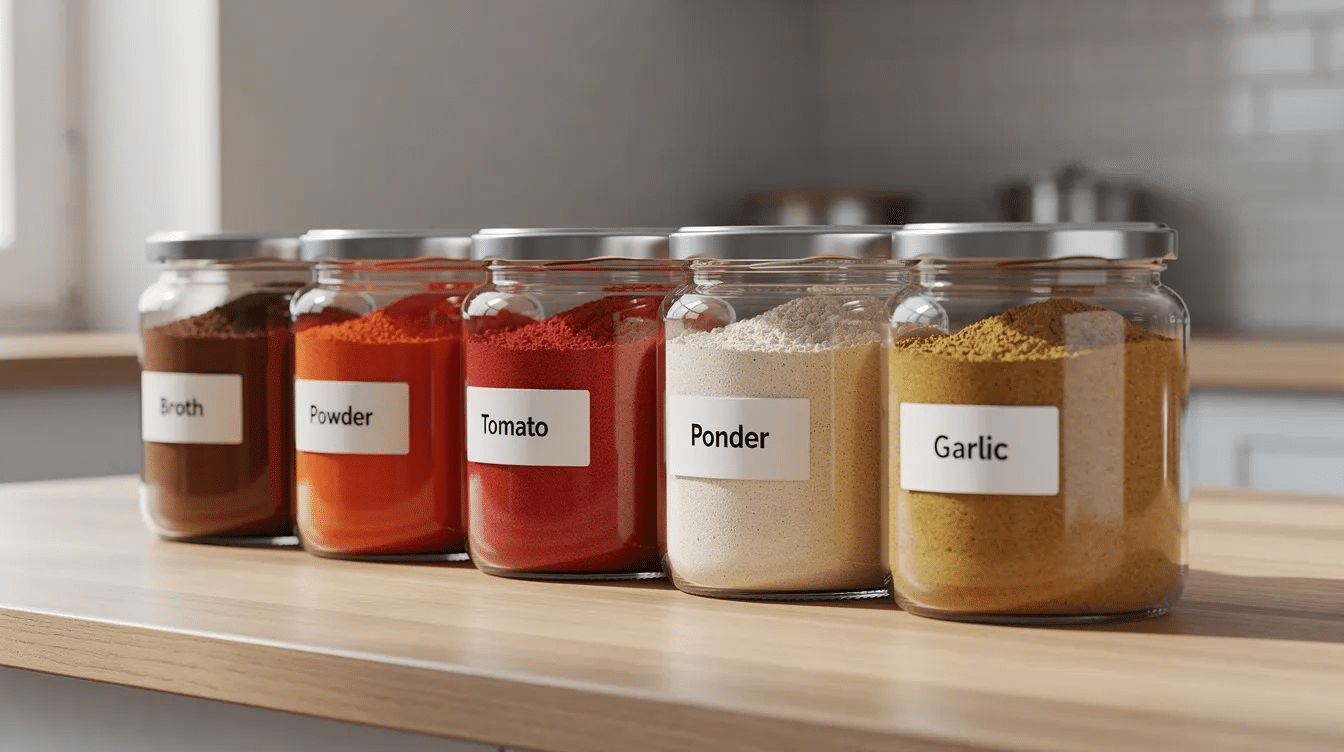
Label every jar or package with product name, dehydrator temperature, drying date, and approximate shelf-life. Example: “Tomato Leather – 135°F – July 2026 – Use within 12 months.”
This simple habit prevents mystery containers and helps you track which methods and temperatures yield the best results. Store grains and other dry foods similarly for consistent organization.
With the right setup, your standard dehydrator becomes a versatile tool for creating concentrated flavors, reducing food waste, and building a pantry of shelf-stable ingredients. Start with a simple recipe—tomato paste spread into leather or vegetable broth dried to powder—and expand from there as you master the process.
DannyContent Writer
Hey there, since 2016, my mission has been to provide you with the information and guides you need to make food dehydrating simple and fun. Whether you're a newbie or a seasoned pro, my site offers helpful guides, reviews, and recipes to enhance your dehydrating experience. I take pride in only recommending products I believe in, ensuring my readers' trust. As an affiliate of various programs, including Amazon Associates, your support helps me continue providing quality content. Thanks for stopping by, and happy dehydrating!