We earn a commission if you make a purchase, at no additional cost to you.
09/22/2026 04:39 pm GMT
🍊 Dehydrated Food Info Finder — Temperatures & Drying Times
Choose a category, then pick a food to see its drying temperature and time.
⚠️ Safety Disclaimer: Drying times are estimates and vary based on slice thickness, food moisture content, humidity, and your dehydrator model. Always check for doneness before storing — food should feel dry, leathery, or brittle with no moist spots. Improperly dried food can harbour mould and bacteria. For meat and poultry, follow USDA safe internal temperature guidelines: beef and pork to 160°F (71°C), poultry to 165°F (74°C). Use a food thermometer when in doubt. Store all dehydrated foods in airtight containers in a cool, dark place and discard anything showing moisture, mould, or off odours.
Is Almond Bark Vegan Friendly? (Ingredients, Brands, and Easy Alternatives)
Whether you’re a chocolate lover preparing for the holidays or simply looking for a quick vegan treat, almond bark seems like an obvious choice. But the answer to whether it’s vegan friendly isn’t straightforward. The term itself creates confusion, and ingredients vary wildly between products.
Let’s break down exactly what you’re dealing with and how to find—or make—bark that fits a plant-based life.
Most store-bought almond bark coating products are not vegan. They typically contain milk-derived ingredients like whey, nonfat milk powder, or casein for texture and creaminess.
Here’s the catch: “almond bark” refers to two different things. One is the confection coating blocks you find in baking aisles (brands like CandiQuik). The other is actual chocolate almond bark candy made from melted chocolate and nuts. The ingredients differ significantly.
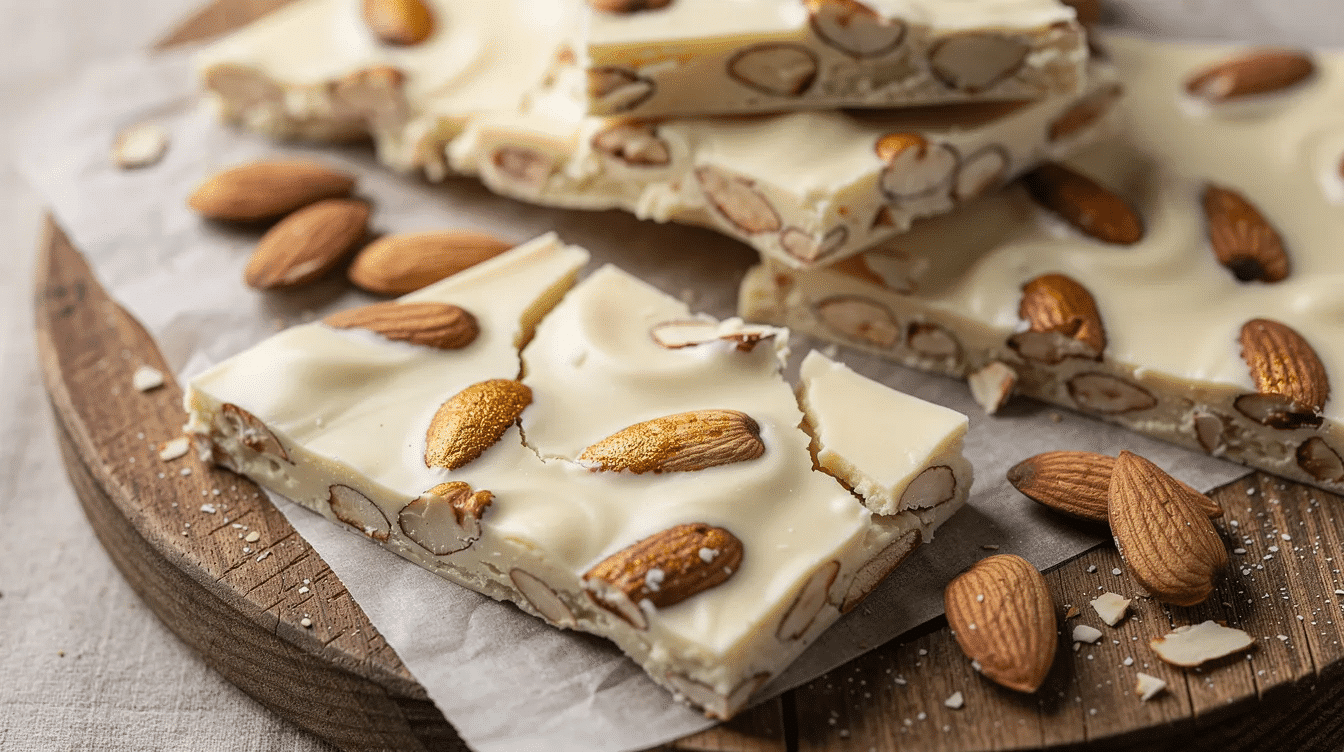
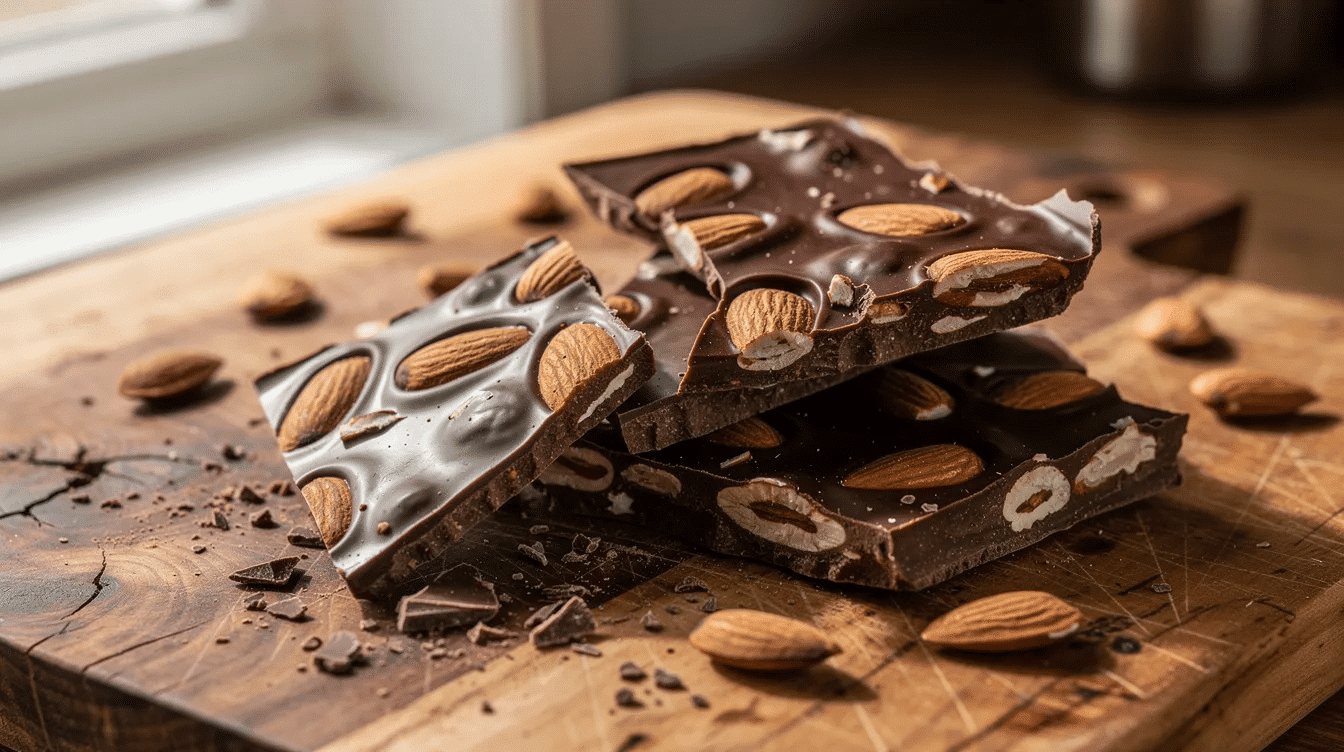
Dark chocolate almond bark can be vegan when made with dairy free dark chocolate and no animal-derived additives. White chocolate versions are almost never vegan.
The bottom line: often not vegan by default, sometimes accidentally vegan, and the easiest solution is checking labels carefully or making your own with dairy-free dark chocolate chips and roasted almonds.
What Exactly Is Almond Bark?
The term “almond bark” means different things depending on context, and this matters for vegans.
Two main definitions:
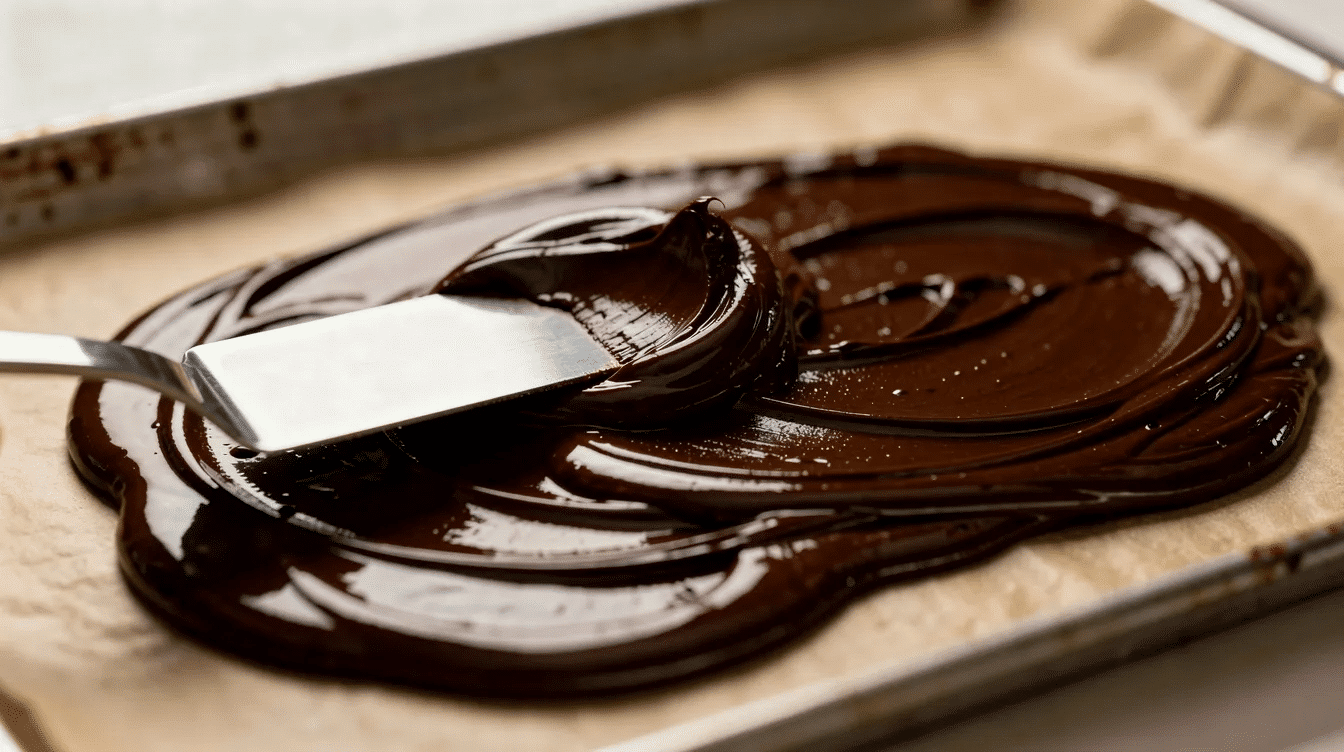
Chocolate bark candy: Melted chocolate mixed with whole or chopped almonds, spread thin, chilled, and broken into large pieces. This traditional confection can easily be made vegan with the right chocolate.
Candy coating blocks: Vanilla or chocolate-flavored coating squares sold in US baking aisles since the early 2000s. These are engineered from sugar and hydrogenated vegetable oils—not real chocolate—and frequently contain milk powder or whey for a smooth melt.
Traditional candy bark made from true dark chocolate plus almonds? Simple to make vegan. Those convenient coating blocks marketed as easy-melt alternatives? Usually contain dairy, even when the packaging doesn’t scream “milk chocolate.”
Same name, very different ingredient lists.
Common Almond Bark Ingredients (And Which Are Not Vegan)
Understanding what’s in almond bark helps you spot problems quickly.
Store-bought coating ingredients:
Ingredient
Vegan Status
Sugar
Usually yes, but some US sugar uses bone char processing
Palm/soybean oil
Plant-based, though palm oil raises ethical concerns
Soy lecithin
Vegan emulsifier
Natural flavors
May contain dairy derivatives—check with brand
Whey, milk powder, casein
Not vegan
Lactose, milk fat
Not vegan
Chocolate bark candy ingredients:
Dark chocolate sounds safe, but a high cocoa percentage doesn’t guarantee vegan status. Up to 40% of dark chocolate bars contain dairy traces like butterfat or milk solids. Always verify.
Add-ins like almonds, tree nuts, seeds, and dried fruit are naturally vegan unless coated with honey, confectioner’s glaze (shellac from lac bugs), or gelatin.
White almond bark coating is almost never vegan. It relies on dairy for that creamy color and texture.
Cross-contamination statements like “may contain milk” indicate shared equipment, not intentional ingredients. Most vegans accept these products, though strict adherents may prefer to avoid them.
Is Almond Bark Vegan? Different Types Compared
No blanket answer applies—it depends entirely on which version you’re dealing with.
Homemade vegan dark chocolate bark: When made with certified dairy-free chocolate and plant-based toppings, it’s fully vegan. Recipe bloggers have shared reliable vegan almond bark recipes since around 2015 using 60-80% dark chocolate.
Store-bought candy coating (vanilla or chocolate): Often non-vegan due to whey or nonfat dry milk. Some store brands skip dairy but lack certification. Formulas change year to year, so check every time you buy.
Pre-packaged chocolate almond bark candy: Holiday tins and bulk bins typically use milk chocolate or dark chocolate containing milk fat. Usually not vegan.
Specialty vegan brands: Companies like Chocolate Shoppe produce explicitly vegan almond bark using organic almonds, cocoa butter, non-bone-char sugar, and soy lecithin. Look for products marked “vegan,” “dairy free,” and kosher pareve in natural food stores or online retailers, especially November through Christmas.
How to Read Labels: Spotting Non-Vegan Almond Bark
Efficient label reading saves time and prevents mistakes.
Red flag ingredients (definitely not vegan):
Milk, skim milk, nonfat milk, milk powder
Whey, whey protein, casein, caseinate
Butter, butterfat, ghee
Cream, lactose, yogurt powder
Proceed with caution:
Natural flavors (contact brand if no vegan label)
Sugar (may use bone char; strict vegans prefer organic)
Palm oil (technically plant-based but ethically debated)
Vegan-friendly indicators:
“Certified Vegan” logo
“Dairy Free” or “Plant-Based”
Kosher pareve (no dairy or meat, though check for egg or honey)
If the allergen statement says “contains milk,” it’s not vegan. “May contain traces of milk” refers to shared equipment—most vegans accept this.
Save ingredient photos when you find a vegan-friendly brand. Formulations change without announcement.
Always verify add-ins are egg free and contain no gelatin, confectioner’s glaze, or dairy. Cook mode prevent any issues by checking every ingredient label.
Storing, Serving, and Gifting Vegan Almond Bark
Almond bark works perfectly as a make-ahead treat for any occasion.
Storage: Keep in an airtight container at room temperature (under 72°F) for up to one week or two. In warmer months, store in the refrigerator to prevent bloom or melting.
Serving: Break into bite-sized pieces and serve on a plate for parties. Pairs delicious with coffee or plant-based hot chocolate.
Gifting: Layer pieces in mason jars or confection boxes with parchment between layers. Tag clearly with “vegan” and “dairy free” plus ingredients for family and friends with allergies.
Batch-prep in early December for Christmas and year-end holidays. Properly stored bark keeps its sweetness and crunch throughout the season.
FAQ: Almond Bark and a Vegan Lifestyle
Does “may contain milk” make a product non-vegan? No—this indicates cross-contact from shared equipment, not intentional ingredients. Most vegans accept these products, though some prefer avoiding them.
Is all dark chocolate almond bark vegan? No. Many dark chocolates include milk fat or butter oil. Always check labels regardless of cocoa percentage.
What’s the difference between vegan, dairy free, and lactose free?
Dairy free: no milk ingredients
Lactose free: removes milk sugar but may contain milk proteins—not necessarily vegan
Vegan: excludes all animal-derived ingredients including milk, honey, and gelatin
Is palm oil acceptable for vegans? Technically plant-based, but ethically controversial due to deforestation. Some vegans avoid it; others look for RSPO-certified sustainable sourcing.
What’s the simplest way to guarantee vegan almond bark? Make it yourself using clearly labeled dairy-free vegan chocolate and whole almonds. One thing is certain: homemade gives you complete control over every ingredient.
DannyContent Writer
Hey there, since 2016, my mission has been to provide you with the information and guides you need to make food dehydrating simple and fun. Whether you're a newbie or a seasoned pro, my site offers helpful guides, reviews, and recipes to enhance your dehydrating experience. I take pride in only recommending products I believe in, ensuring my readers' trust. As an affiliate of various programs, including Amazon Associates, your support helps me continue providing quality content. Thanks for stopping by, and happy dehydrating!