We earn a commission if you make a purchase, at no additional cost to you.
09/22/2026 04:39 pm GMT
🍊 Dehydrated Food Info Finder — Temperatures & Drying Times
Choose a category, then pick a food to see its drying temperature and time.
⚠️ Safety Disclaimer: Drying times are estimates and vary based on slice thickness, food moisture content, humidity, and your dehydrator model. Always check for doneness before storing — food should feel dry, leathery, or brittle with no moist spots. Improperly dried food can harbour mould and bacteria. For meat and poultry, follow USDA safe internal temperature guidelines: beef and pork to 160°F (71°C), poultry to 165°F (74°C). Use a food thermometer when in doubt. Store all dehydrated foods in airtight containers in a cool, dark place and discard anything showing moisture, mould, or off odours.
How To Use Reusable Canning Lids (Step-By-Step Guide For 2026)
If you’ve been frustrated by metal lid shortages or tired of buying new canning lids every season, you’re not alone. Reusable canning lids have become a practical solution for home canners looking to reduce waste, save money, and build a more resilient preserving routine. This guide walks you through everything you need to know about using reusable lids safely and successfully.
Quick Answer: How To Use Reusable Canning Lids, Step by Step
Before diving into the details, here’s the fast overview. Modern reusable lids like Tattler, Harvest Guard, and similar two-piece plastic-and-rubber systems work in both a water bath canner and pressure canner, following the same tested recipes as conventional metal lids.
The basic sequence:
Inspect canning jars, lids, and rubber rings for chips, cracks, or nicks
Wash everything in hot soapy water and rinse well
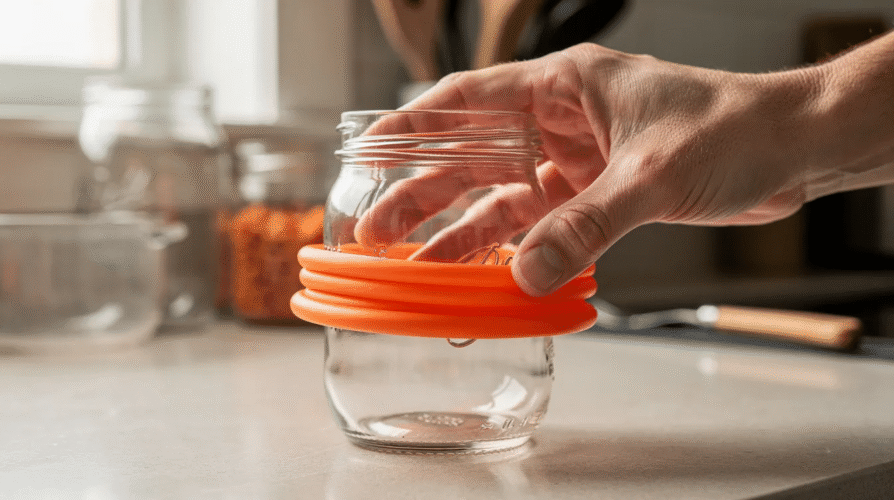
Place the rubber gasket ring on the clean jar rim, center the plastic lid on top, and add the metal band finger-tight, then loosen about a quarter inch turn
Process jars using the same times and pressures as tested recipes for disposable lids
When jars come out of the canner, work quickly—finish tightening bands firmly while hot jars are still above 180°F
Let jars cool naturally for 12–24 hours, then check seals and remove metal screw bands for storage
The rest of this article expands on safety, troubleshooting, and brand-to-brand differences for 2024–2026 era reusable lids.
What Are Reusable Canning Lids?
Reusable canning lids are multi-use alternatives to the single-use metal flats most home canners know from brands like Ball or Kerr. Unlike conventional lids with their one-time plastisol sealing compound, reusable systems rely on separate components designed to last for dozens of canning cycles.
The best-known North American styles currently on the market include:
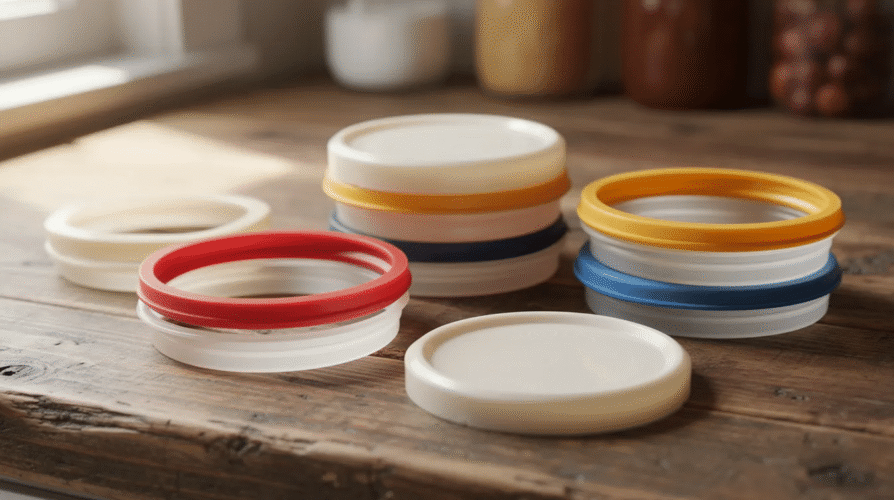
Two-piece plastic disk + rubber gasket systems (e.g., Tattler lids, Harvest Guard): A rigid, BPA free plastic lid paired with a separate rubber ring that sits on the jar rim
All-glass lid systems (e.g., Weck jars from Germany): Glass lids with reusable rubber rings held by stainless steel clips during processing
These lids are designed to withstand many canning cycles. Plastic lids often last indefinitely if undamaged, while rubber rings typically need replacement after 6–20 uses depending on pressure canning frequency. Materials are typically BPA free plastic or glass plus silicone or rubber seals that won’t rust or react with acidic foods like tomatoes and pickles.
Sizes match standard Mason jars: regular-mouth and wide-mouth lids fit Ball, Kerr, Bernardin, and similar glass canning jars. Weck jars require their own proprietary sizes. The canning process itself—recipe, processing time, altitude adjustments—stays the same; only the lid assembly and tightening procedure differ.
Why Choose Reusable Canning Lids in 2026?
The 2020–2022 supply chain disruptions changed how many home canners think about canning supplies. Metal lid shortages drove prices up over 300% in some regions, with scalping on resale markets making it difficult to find new lids at reasonable prices. By 2023, regional shortages persisted, and ongoing global supply concerns for aluminum and plastisol continue into 2026.
Cost Savings
The math works in your favor over time:
Item
Approximate Cost
Per-Jar Cost (Year 1)
Per-Jar Cost (Year 3+)
12 Tattler lids + rings
$30–40
$2.50–3.33
Under $0.10
12 disposable metal flats
$10–15
$0.80–1.25
$0.80–1.25
For a canner processing 200 jars annually, reusable lids recoup costs in 2–3 seasons, dramatically reducing per-jar expenses afterward.
Environmental Benefits
Each plastic lid offsets 50+ disposable lids over its lifetime. That translates to diverting thousands of metal lids from landfills over a decade, with less packaging and transportation compared to regularly buying new canning lids.
Reliability and Resilience
User forums report long-term success rates comparable to metal lids—over 95% seals when technique is mastered. Many experienced home canners have been using Tattler lids for 5–10+ years across both water bath and pressure canning methods. Having a few hundred reusable lids on hand protects against future supply volatility.
Trade-offs to consider: Higher initial cost, a learning curve (initial failure rates of 10–20% for novices), and the fact that many people still prefer disposable lids for gifts and sales.
Types of Reusable Canning Lids and How They Work
Not all reusable lids are identical. Understanding the main systems helps you choose what fits your canning routine.
Sealing mechanism: The gasket sits on the jar rim, the flat lid goes on top, and the metal band holds the stack in place during processing. As the jar cools, steam escapes through the deliberately bit loose band, creating a vacuum seal that pulls components tight against the rim.
Harvest Guard recommends simmering both lids and gaskets for 10 minutes before use. Tattler’s current instructions suggest scalding assembled sets in hot water scooped from the canner—hot but not boiling—just before application.
Glass Lid Systems (Weck Jars)
Components:
Heavy glass lid with a grooved underside
Reusable rubber ring
2–3 stainless steel clips
Sealing mechanism: Clips hold the lid during processing. After cooling, clips are removed, and the vacuum alone holds the lid securely. The seal test differs—you lift gently by the lid or observe the rubber ring’s tab popping inward rather than waiting for a “pop.”
Compatibility Note
System
Compatible Jars
Interchangeable?
Tattler/Harvest Guard
Standard Mason (Ball, Kerr, Bernardin)
Yes, fits existing glass jars
Weck
Weck jars only
No, requires dedicated jars
Safety Basics: Using Reusable Lids With Modern Canning Guidelines
Safety standards from USDA and the National Center for Home Food Preservation remain the same regardless of lid type. Reusable lids must always be used with:
Tested, modern recipes from reliable sources (e.g., USDA Complete Guide to Home Food Preservation)
Correct processing methods: water bath for high-acid foods, pressure canning for low-acid foods like meats, beans, and most vegetables
Processing times and pressures do not change because a lid is reusable. The same altitude adjustments apply—for example, increase pressure above 1,000 ft according to tested guidelines (add 5 minutes processing time per 1,000 feet above 1,000 ft for water bath, or use 15 psi with a weighted gauge above 1,000 ft).
Before you start:
Inspect jar rims using a flex test for nicks or chips—discard damaged jars
Use only jars designed for canning, not repurposed food product jars
Check that rubber gaskets show no cracks, stiffening, or stretching
After sealing:
Store without metal bands in a cool (50–70°F), dark place
Label with product and date (e.g., “Apple Pie Filling, Sept 2026”)
Use home-canned goods within 1–2 years for best quality
Step-By-Step: How To Use Reusable Canning Lids
This is the core tutorial for Tattler and Harvest Guard-style reusable Tattler lids. Weck procedures differ and follow the glass lid system’s clip-based method outlined earlier.
Part 1: Preparation
Wash glass jars, lids, rubber rings, and metal screw bands in hot soapy water; rinse thoroughly
Inspect rubber rings for cracks, stiff spots, or stretching—discard damaged rings
Keep rubber rings in hot water (not boiling, around 180°F) so they’re flexible when you need them
Following manufacturer’s instructions, Tattler suggests scalding in hot water scooped from the canner; Harvest Guard recommends simmering 10 minutes
Part 2: Assembling Jars
Fill jars with prepared food, following recipe-specific head space:
Quarter inch for jams and jellies
Half inch for many pickles
1–1¼ inches for low-acid pressure-canned foods like broth or beans
Remove air bubbles with a non-metal tool and adjust headspace as needed
Wipe the jar rim carefully with a clean, damp cloth; use vinegar for greasy various foods like meat or broth to remove food residue
Place the softened rubber ring on the smooth surface of the jar rim
Center lid (the plastic disk) on top
Add screw band and tighten until the jar begins to twist on the counter, then back off about a quarter turn counterclockwise
This bit loose fit is critical—it allows steam to escape during processing while preventing water ingress.
Part 3: Processing
Place jars on rack in your canner (water bath canner or pressure canner)
Process for the recipe’s recommended time, adjusted for altitude
No extra time or pressure is needed for reusable lids—process exactly as you would with conventional metal lids
Part 4: Cooling and Post-Processing Tightening
When processing is finished (and pressure has dropped naturally for pressure canners), remove jars carefully to a towel or cooling rack
Within 5 minutes, while jars are still very hot, firmly tighten each metal band using a gloved hand or cloth—this step ensures a good seal forms
Let jars sit undisturbed for 12–24 hours
Part 5: Checking Seals
After cooling, remove metal bands
Perform the seal test: grasp the lid edges with your index finger and thumb, then try to lift straight up
A securely sealed jar will hold the lid firmly; an unsealed lid lifts off easily
Refrigerate any unsealed jars immediately and use promptly, or re-process within 24 hours with a new rubber ring
Troubleshooting Seal Failures With Reusable Lids
Some learning curve is normal. Most seal failures stem from a few correctable issues, and experienced users report that failures drop dramatically after the first few batches.
Common causes and fixes:
Problem
Cause
Fix
Steam trapped
Bands tightened too much before processing
Practice the jar-twist method; loosen ¼ turn
Vacuum doesn’t form
Bands not tightened firmly enough after processing
Tighten within 5 minutes while jars are hot
Partial seal
Incorrect headspace
Follow recipe specifications exactly
Lid lifts easily
Chips or debris on rim
Inspect rims; wipe with vinegar for fats
Repeated failures
Worn rubber rings
Replace after 6–20 uses or at visible wear
Track patterns: If one jar fails, it may be random. If many fail (over 20% of a batch), review your technique for headspace, correct tightness, and ring condition.
Real-world example: In 2025, a batch of 14 jars tomato sauce yielded 3 failures from pre-tightening. Adjusting to a stricter ¼-turn vent before processing solved the issue in subsequent batches.
Never force a questionable seal or attempt to reuse canning lids on a jar that has unsealed after weeks on shelf. Discard low-acid foods showing any signs of spoilage; carefully inspect high-acid jar contents for mold, bubbling die, or off-odors.
Care, Cleaning, and Storage of Reusable Lids and Rings
Maximizing the life of your reusable lids comes down to simple routines at the end of each preserving season.
After Each Use
Wash lids and rubber rings by hand with mild dish soap in warm soapy water
Avoid dishwashers—high heat and harsh chemicals can warp plastic and degrade rubber
Skip abrasive scrubbers that scratch surfaces
For stubborn odors (pickle residues), use a baking soda paste
Rinse thoroughly and air-dry completely before storage
Off-Season Storage
Store in a cool, dry place away from direct sunlight (60–75°F)
Keep rubber rings unstacked to avoid compression and deformation
Use labeled containers: “Regular-mouth lids, 50 count, bought 2024”
Annual Inspection
Before each main canning season, inspect all components:
Check rubber gaskets for cracks, stiffness, thinning, or permanent stretching
Examine plastic lids for warping or cracks
Note that plastic lids often outlast multiple sets of rings if undamaged
Well-cared-for reusable systems purchased in 2020–2022 continue performing strongly in 2026, demonstrating their long-term value.
Special Considerations: Pressure Canning vs. Water-Bath With Reusable Lids
High-quality reusable lids are designed for both water bath and pressure canning, including long processing times of 75–90 minutes for meat or 20–25 minutes for vegetables at 10–15 psi.
Water Bath Canning
Common uses include jams, jellies, pickles, fruit, and tomato products with added acid. Headspace is often smaller (quarter inch to half inch), making precise filling and proper rim wiping especially important.
Pressure Canning
Typical low-acid food products include green beans, corn, potatoes, stocks, chili, and meats. Key considerations:
Follow tested times and pressures exactly
Allow full natural depressurization (10–30 minutes post-cycle) before removing jars
Have dial gauges calibrated annually
The ¼-turn-back / tighten-after-processing technique is especially critical, as trapped steam needs an escape path during the high-pressure cycle
Example: In October 2025, 7 quarts of chicken broth were successfully canned using reusable lids in a 23-quart pressure canner for 25 minutes at 11 psi (dial gauge, 2,100 ft altitude). All jars achieved a proper airtight seal.
Using Reusable Lids for Everyday Storage and Non-Canning Uses
Reusable lids extend their value beyond the preserving season into everyday kitchen use.
Refrigerator and Pantry Storage
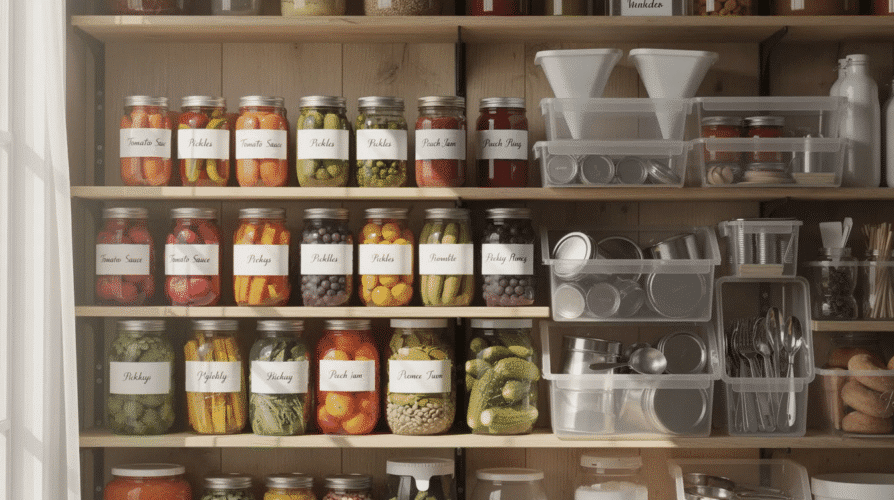
Use on opened jars of pickles, sauces, and jams in the fridge, and pair them with airtight containers for dried fruits in your pantry for flexible storage options
Organize hardware, craft supplies, and office items in labeled glass jars
Temporary storage for fermentation projects (though fermentation requires different safety considerations and often an airlock)
While these uses are helpful, tested preservation methods remain the primary focus. Don’t confuse everyday storage with safe canning practices.
Frequently Asked Questions About Reusable Canning Lids
These questions come up frequently for home canners switching to reusing lids in 2024–2026.
How many times can I reuse the lids and rings? Plastic lids can last dozens of uses—potentially indefinitely if undamaged. Rubber rings typically need replacement after 6–20 uses depending on frequency of pressure canning, which subjects them to higher heat stress. Inspect before each use.
Do I need to heat or simmer reusable lids before use? It depends on the brand. Tattler’s 2026 instructions recommend scalding in hot (not boiling) water. Harvest Guard suggests simmering both lids and gaskets for 10 minutes. Always follow the manufacturer’s instructions for your specific lids.
Can I mix reusable lids with metal lids in the same canner load? Yes. Each jar follows its own technique—reusable lids need the ¼-turn loosening before and tightening after, while new canning lids (metal) follow standard finger-tight application.
Are reusable lids approved by USDA or extension services? USDA doesn’t “approve” specific brands, but the processing parameters are identical. Manufacturers design their lids to work with tested canning procedures, and when used correctly, they seal properly using the same times and pressures.
Can I use reusable lids on electric pressure cookers or multi-cookers? No. Devices like Instant Pot have not been tested and approved for pressure canning per untested pressure profiles. Use only dedicated canners for home canning.
How do I know when to replace the rubber rings? Visible wear (cracks, thin spots, permanent stretching, stiffening) and repeated seal failures are key indicators. If seals fail consistently even with proper technique, replace the rings.
What’s the difference between used lids and worn-out lids? Used lids are simply lids that have been through canning cycles but remain in good condition. Worn-out lids show physical damage or cause consistent seal failures. The former can be reused; the latter should be replaced.
Start with a small test batch—6–8 jars of jam or broth—to get comfortable before relying on reusable lids for your entire harvest.
Conclusion: Building a Reliable Canning Routine With Reusable Lids
Reusable canning lids offer a practical path to more sustainable, cost-effective home food preservation. They reduce waste, save money over time, and buffer against future lid shortages while following the same modern safety standards as conventional lids.
To get started:
Begin with one or two sizes (regular-mouth for pints and quarts covers most needs)
Practice the tighten-then-loosen, then post-processing tightening method until it feels natural
Keep notes on each session: date, recipe, headspace, number of seals vs. failures
The savings on canning supplies add up quickly, and within a few batches, the technique becomes second nature. Whether you’re preserving apple pie filling, pressure canning broth, or putting up a summer’s worth of pickles, reusable canning lids can become a reliable part of your long-term canning plans from 2026 onward.
DannyContent Writer
Hey there, since 2016, my mission has been to provide you with the information and guides you need to make food dehydrating simple and fun. Whether you're a newbie or a seasoned pro, my site offers helpful guides, reviews, and recipes to enhance your dehydrating experience. I take pride in only recommending products I believe in, ensuring my readers' trust. As an affiliate of various programs, including Amazon Associates, your support helps me continue providing quality content. Thanks for stopping by, and happy dehydrating!